What Is a Transcript of Deposition? A Practical Guide
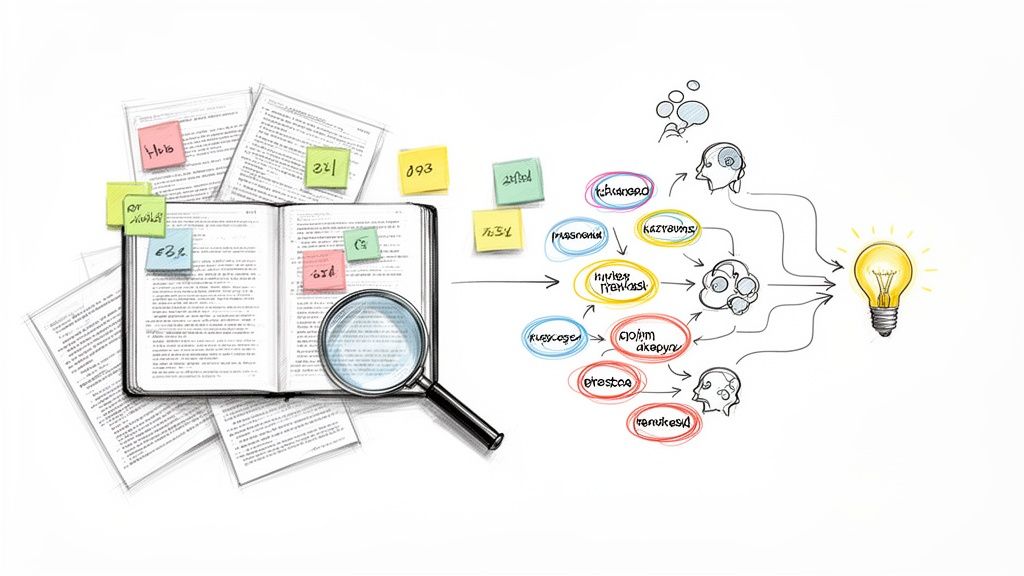
You open a file expecting a few pages of notes and instead get a document that feels endless. The witness answers stretch on. Lawyers interrupt each other. Exhibits get mentioned by number, then revisited much later. Somewhere in that stack is the one answer that changes the story.
That’s the usual first encounter with a transcript of deposition.
For lawyers, it’s routine. For journalists, researchers, compliance teams, and anyone studying recorded testimony, it can feel like walking into a conversation halfway through and being told the details matter. They do. A deposition transcript is often the closest thing you’ll get to a high-fidelity written record of what someone said under oath, in real time, before anyone had a chance to rewrite it into a cleaner narrative.
A smart reader doesn’t need a law degree to use one well. You need to know what the document is doing, how it’s built, where it can mislead you, and how to turn dense pages into something you can analyze effectively. That’s often where the challenge lies.
The Most Important Document You Have Not Read Yet
A reporter gets a transcript from a source after a high-profile business dispute. A researcher finds excerpts attached to a court filing. A paralegal inherits a witness file with hundreds of pages of testimony and a deadline. The first reaction is usually the same. This is too much text, too little context, and no obvious place to start.
That reaction makes sense because a deposition transcript doesn’t read like a normal article, memo, or interview. It reads like raw speech that has been frozen on the page. It includes the useful answers, the evasions, the clarifications, the awkward pauses, and the moments where a witness says more than they meant to.
That rawness is exactly why the document matters.
A deposition transcript is often where polished public messaging starts to crack. A spokesperson may sound confident in a press release, but under oath the language becomes narrower. A witness may remember a timeline clearly in one setting and struggle with it in another. Those differences can matter whether you’re building a lawsuit, reporting a story, checking an expert’s consistency, or reviewing an internal investigation.
A good transcript gives you something rare. Not a summary of what happened, but the actual verbal trail people left behind.
If you’ve ever worked from a rough interview recording, you already understand the value. The transcript of deposition is that idea in a more formal setting. It’s built to preserve speech exactly enough that other people can later test what was said, compare it to documents, and decide what it means.
Once you stop seeing it as a wall of legal text and start seeing it as structured evidence, the document gets much easier to use.
What Exactly Is a Transcript of Deposition
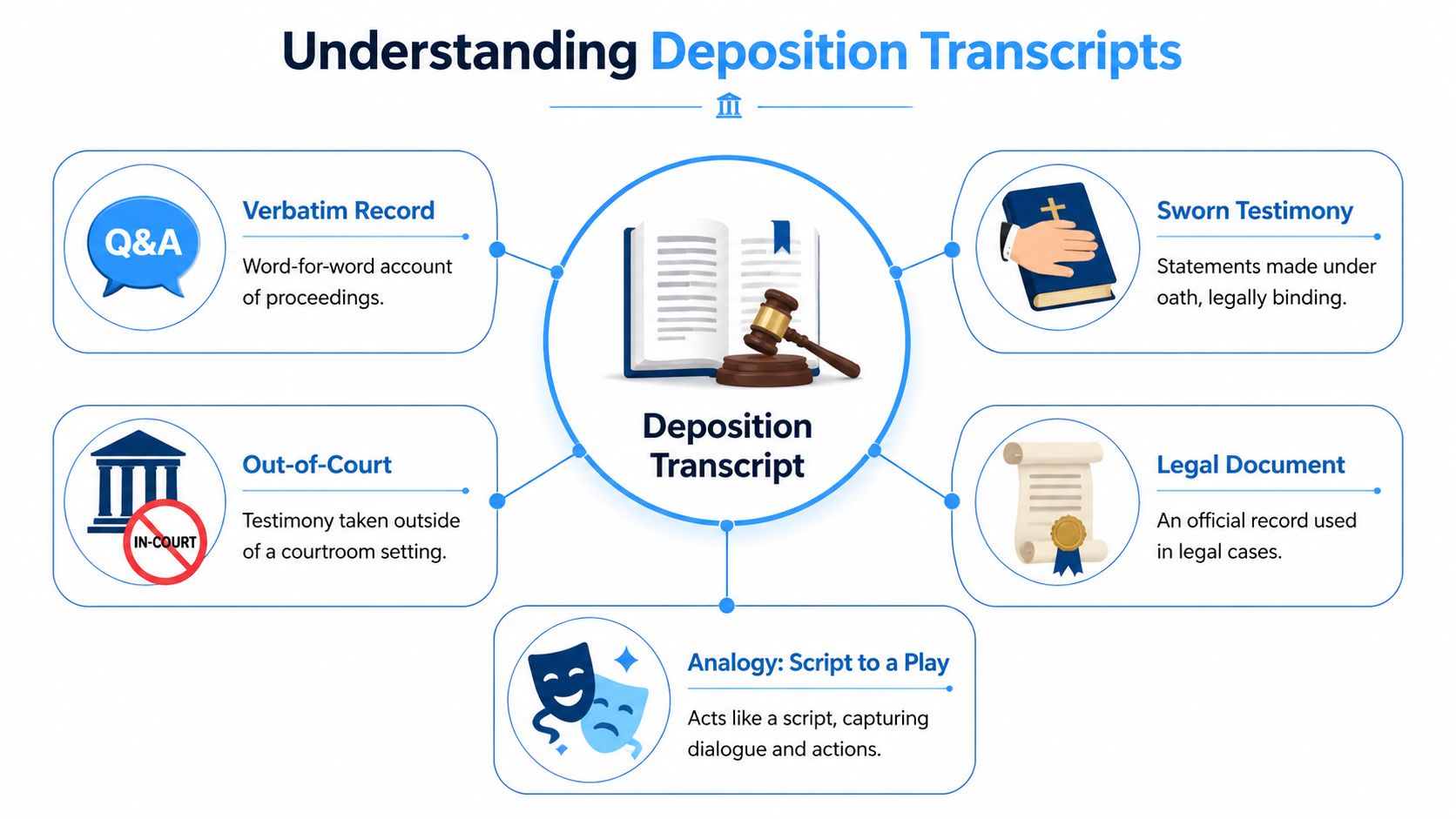
A transcript of deposition is the official written record of testimony given under oath outside the courtroom. Think of it as a time machine for spoken words. It captures what was said, who said it, and the order in which it happened, so later readers don't have to rely on memory or interpretation.
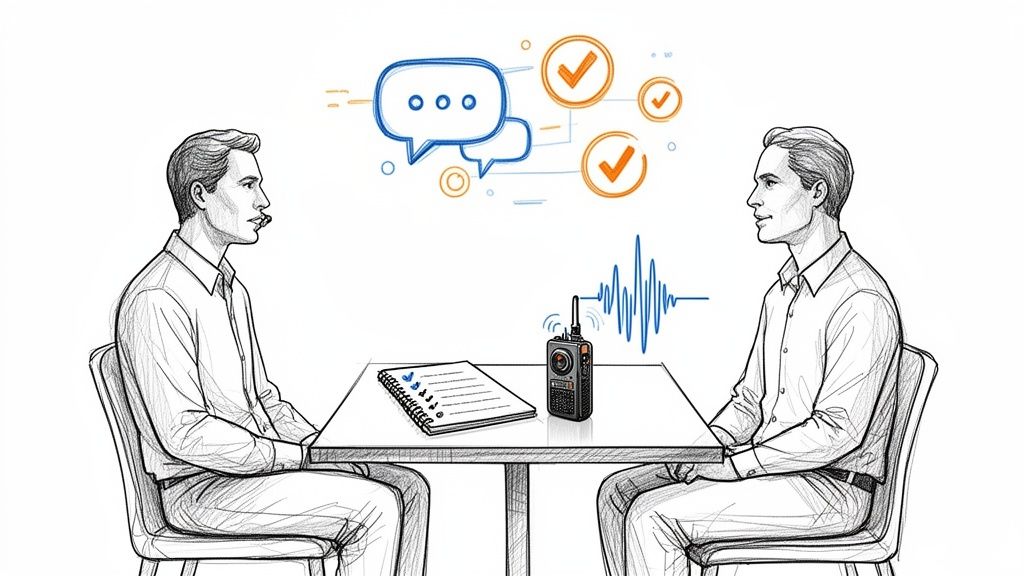
In practical terms, a deposition is a question-and-answer session. Lawyers ask a witness questions before trial. A court reporter records the proceeding verbatim. The final transcript becomes a stable reference point for later work such as motion practice, witness preparation, impeachment, and factual review.
What makes it different from ordinary notes
Meeting notes tell you what someone thought was important. A deposition transcript tells you what was said.
That distinction is the whole point. Depositions became formalized in modern U.S. civil procedure with the Federal Rules of Civil Procedure adopted in 1938, which established oral testimony under oath outside court as part of discovery, with testimony transcribed verbatim to prevent misinterpretation and preserve it for later use, as described in U.S. Legal Support’s guide to deposition transcripts.
Three features give the document its legal weight:
- It is sworn testimony. The witness is under oath.
- It is verbatim. The goal is to capture the words as spoken, not a cleaned-up paraphrase.
- It is durable. Once prepared and certified, it becomes a reference other people can cite precisely.
If you're not a lawyer, the easiest analogy is a script to a real-life exchange. But unlike a movie script, nobody edits for clarity or drama. The messiness stays in because the messiness can be meaningful.
Why lawyers care so much about exact wording
A deposition transcript freezes a witness’s story at a specific moment. That matters because memory changes, people hedge, and narratives become more polished over time. If a witness later says something different, lawyers may compare the later statement to the deposition transcript.
That’s why small wording differences can matter. “I think so” is not the same as “yes.” “I don’t recall” is not the same as “that never happened.” A good reader learns to watch for those distinctions.
Why non-lawyers should care too
Journalists and researchers often deal with the same core problem lawyers do. You have a long spoken record and need to determine what’s reliable, what’s ambiguous, and what deserves closer review.
A transcript of deposition helps because it gives you:
| What you need | What the transcript provides |
|---|---|
| A stable record | A written account that can be revisited |
| Clear attribution | Identification of speakers in the exchange |
| Searchable facts | Names, dates, phrases, and exhibit references |
| Context for quotes | The question before the answer, and the answer after it |
Used well, a deposition transcript isn't just a legal artifact. It's a structured source document for serious analysis.
Decoding the Anatomy of a Deposition Transcript
Most transcripts look intimidating because they follow a rigid format. Once you know the parts, they become easier to understand. You stop reading linearly and start reading strategically.

The front matter is doing real work
A formal transcript usually begins with identifying information. In federal settings such as the Court of Federal Claims, transcripts must follow specific formatting requirements, including 8.5 x 11 inch paper, left-margin binding, a detailed title page, and an index listing witnesses and page citations for direct, cross, redirect, and recross examination, according to the Court of Federal Claims transcript format requirements.
That opening material isn't decoration. It answers basic but essential questions:
- What case is this?
- Who testified?
- When and where did it happen?
- Which volume are you looking at?
- Where can you find a specific witness or exhibit?
If you're reviewing multiple files, this is the metadata layer. Skip it and you can misattribute the testimony before you even start.
The page and line numbers are the map
Every transcript reader needs to learn one habit early. Don't cite by page alone if the page has line numbers. In legal work, people often refer to testimony by page and line because that points to the exact location.
That precision matters for a simple reason. A witness may say something important in one sentence, then qualify it two lines later. If you quote loosely, you can distort the testimony without meaning to.
Practical rule: Treat page-line references like GPS coordinates. “Page 42, lines 8 to 14” is much more reliable than “somewhere on page 42.”
What you’ll usually see inside the body
The body of a transcript often looks repetitive at first. That’s normal. It’s built for reference, not literary flow.
Common elements include:
- Question and answer markers such as “Q” and “A”
- Colloquy, which is lawyer-to-lawyer or lawyer-to-reporter discussion on the record
- Objections, which can affect how you interpret an answer
- Exhibit references, often tied to documents shown to the witness
- Breaks and resumptions, showing pauses in the proceeding
For non-lawyers, colloquy is often the most confusing part. You may be reading a witness answer and suddenly find a side argument about form, privilege, or whether a question was clear. That interruption is part of the official record too.
The certification page matters more than most readers realize
At the end, you’ll typically find the court reporter’s certification. It affirms the transcript as an accurate record of the proceeding. That certification helps distinguish an official transcript from a mere typed version of an audio file.
You may also encounter an errata sheet. That’s a mechanism for correcting errors after the transcript is prepared. The witness can review the transcript and note changes, usually with reasons. If you’re analyzing testimony closely, don’t ignore the errata. A changed answer can become a story in itself.
A simple way to read one efficiently
If your goal is analysis rather than courtroom use, this sequence works well:
- Read the cover and index first so you know the cast, date, and structure.
- Scan exhibit mentions to identify document-heavy portions.
- Mark turning points where the witness changes certainty, adds detail, or retreats.
- Track exact citations for anything you may quote later.
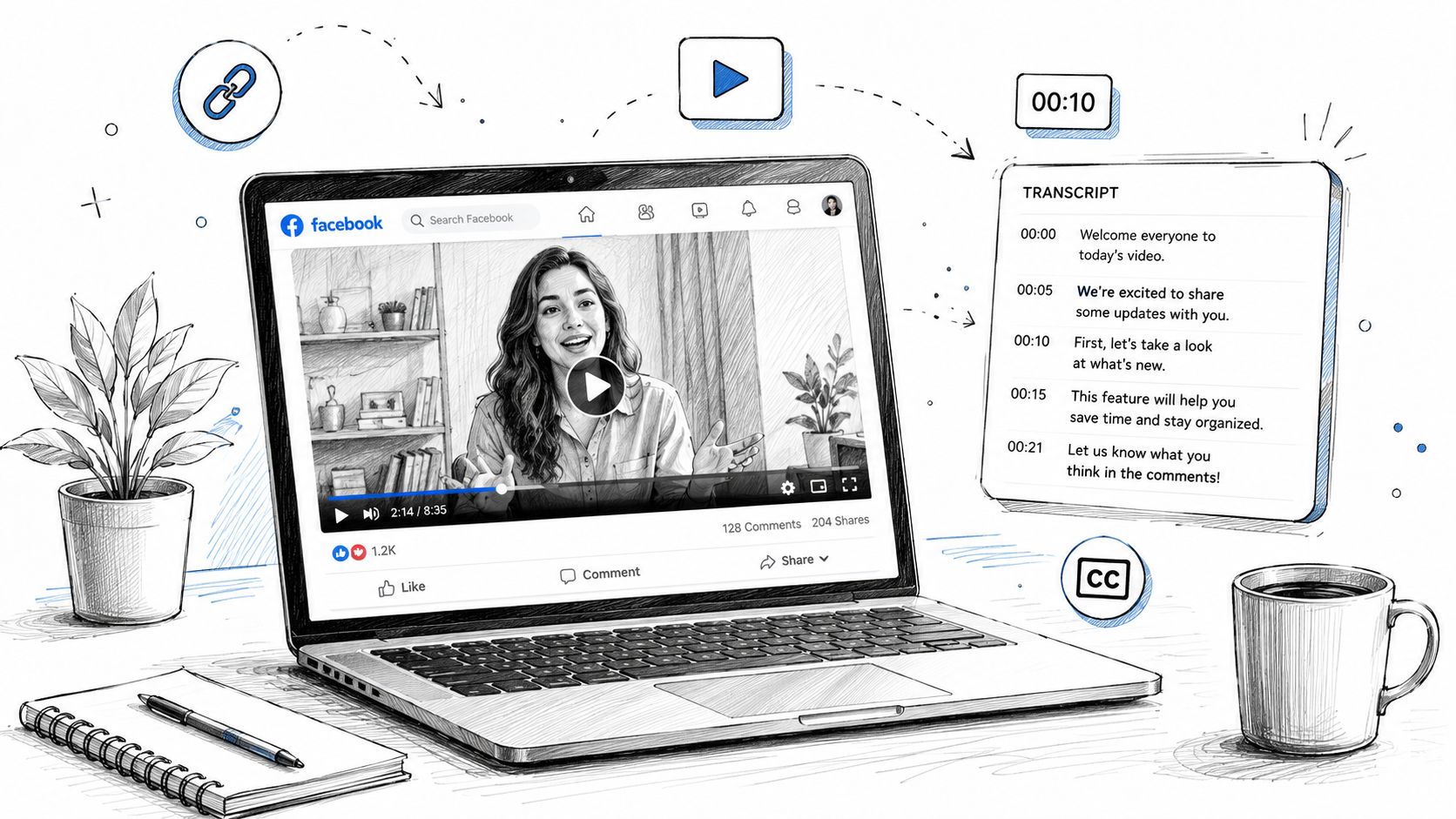
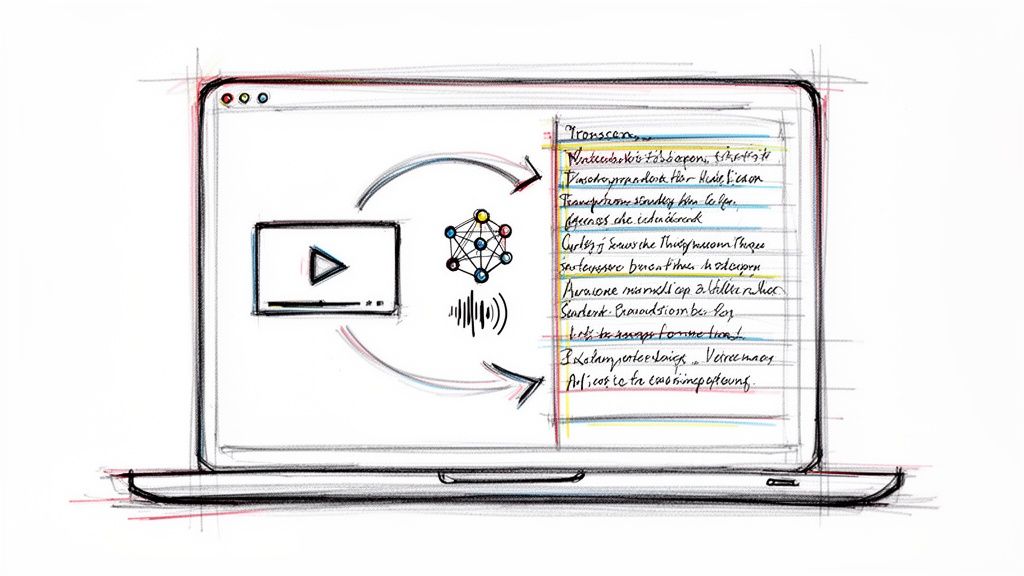
- Compare transcript text to audio or video when available, especially if speaker identity or timing seems unclear. A timecoded workflow helps, and tools discussed in this guide to transcription with timecode show why synchronized review is often faster than reading a static PDF alone.
Once you understand the anatomy, the transcript stops looking like legal clutter. It starts looking like a structured database of spoken evidence.
Who Creates Transcripts and Why It Matters
The authority of a transcript of deposition doesn't come only from the words on the page. It comes from the process used to capture them.
In traditional practice, a court reporter creates the record. That person isn't there to summarize, interpret, or improve anyone’s grammar. Their job is to preserve the proceeding accurately and impartially. That neutrality is a big part of why the finished transcript carries evidentiary weight.
Verbatim means more than “close enough”
A high-quality deposition transcript captures spoken language as it occurred, including stutters, filler words, repetitions, and verbal pauses. That level of detail matters because cleaning up the language can change meaning or remove cues that help readers interpret uncertainty, hesitation, or evasion, as explained in SpeakWrite’s discussion of deposition transcription.
If that sounds overly strict, consider two versions of the same answer:
- “Yes.”
- “Uh, yes, I think so.”
Those are not the same answer. A polished rewrite hides doubt that may matter later.
Why speaker attribution is not a small issue
A transcript is only useful if readers can trust who said what. In a deposition, several people may speak on the record. Lawyers interrupt. Witnesses overlap. Someone may answer before an objection is finished. If attribution is wrong, the record becomes harder to use and easier to challenge.
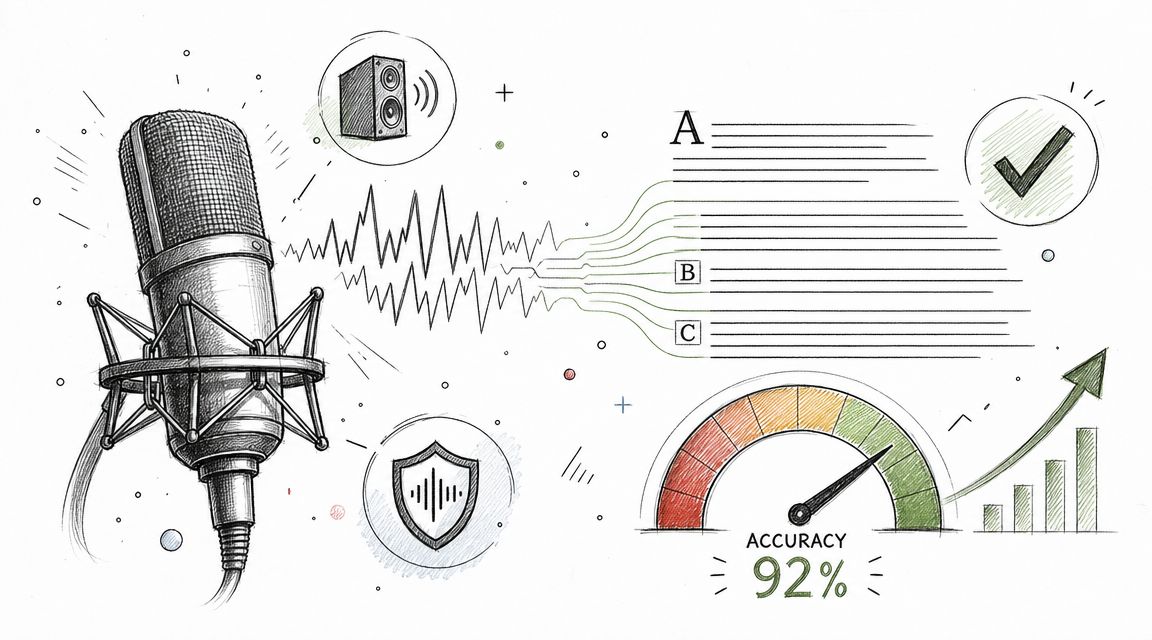
That’s one reason legal teams care so much about process and review. It’s also where newer transcription systems can help. Tools that focus on speaker separation and transcript generation, such as those described in this overview of creating a transcript, are useful because they make speaker identity easier to verify against the underlying recording.
The transcript is not just text. It is text tied to accountability.
Certified transcript versus ordinary recording
A recording captures sound. A certified transcript captures sound in a form built for citation, review, and legal use.
That difference matters beyond courtrooms. Journalists, compliance teams, and researchers often start with video or audio and then need a version they can search, annotate, compare, and quote accurately. The legal world solved that problem long ago by insisting on a formal written record with chain-of-custody style discipline around who prepared it and how.
So when you ask why one transcript is trusted more than another, the answer is more than accuracy. It's accuracy plus independence, formatting discipline, and a recognized method for preserving speech without editorial spin.
How to Obtain and Access Deposition Transcripts
The hardest part for many non-lawyers isn't reading a deposition transcript. It's figuring out whether they can get one at all.
That confusion happens because deposition transcripts live in two different worlds. One is private discovery between parties in a case. The other is the public court record, where only some testimony appears.

If you are part of the case
If you're a lawyer, party, paralegal, or authorized support professional working on the matter, the usual path is direct. The transcript is typically ordered from the court reporting agency or litigation support provider that handled the deposition.
In that setting, access is governed by the case process, protective orders, and the reporting vendor’s distribution rules. You usually aren't “finding” the transcript so much as receiving or ordering the official copy through the normal chain of litigation communications.
A few practical questions help before you request it:
- Was the deposition transcribed, videotaped, or both
- Is there a rough draft and a final certified version
- Are exhibits included with the transcript package
- Is the transcript subject to confidentiality restrictions
Those details affect how usable the file will be once you have it.
If you are not part of the case
For journalists, researchers, or interested members of the public, the answer is more conditional. A deposition transcript often isn't publicly available just because it exists. Access usually depends on whether the transcript, or excerpts from it, were filed with the court or otherwise became part of the public judicial record.
That’s why you may find only selected pages attached to a motion rather than the full testimony. In practice, public access often follows use, not creation.
A sensible path looks like this:
- Check the court docket for filings that attach deposition excerpts.
- Review motion papers because summary judgment filings often include pinpoint transcript citations and selected pages.
- Ask the clerk or records office what is available in the file.
- Check whether sealing or redaction orders apply.
- For agency matters or government contexts, ask whether a records request process applies.
This short explainer gives a useful visual orientation before you start searching:
What to expect when you do find one
Publicly accessible deposition material is often partial, not complete. You may get only the pages relevant to a motion. Those pages can still be valuable, but they can also be misleading if you don't know what came before and after.
If you only have an excerpt, read it like a clip, not a full conversation. The key answer may depend on a setup question that isn't included.
For non-lawyers, that’s the most important mindset shift. Access is often fragmentary. Treat every excerpt as a piece of a larger record, not the whole record.
Modern Workflows for Analyzing Transcripts
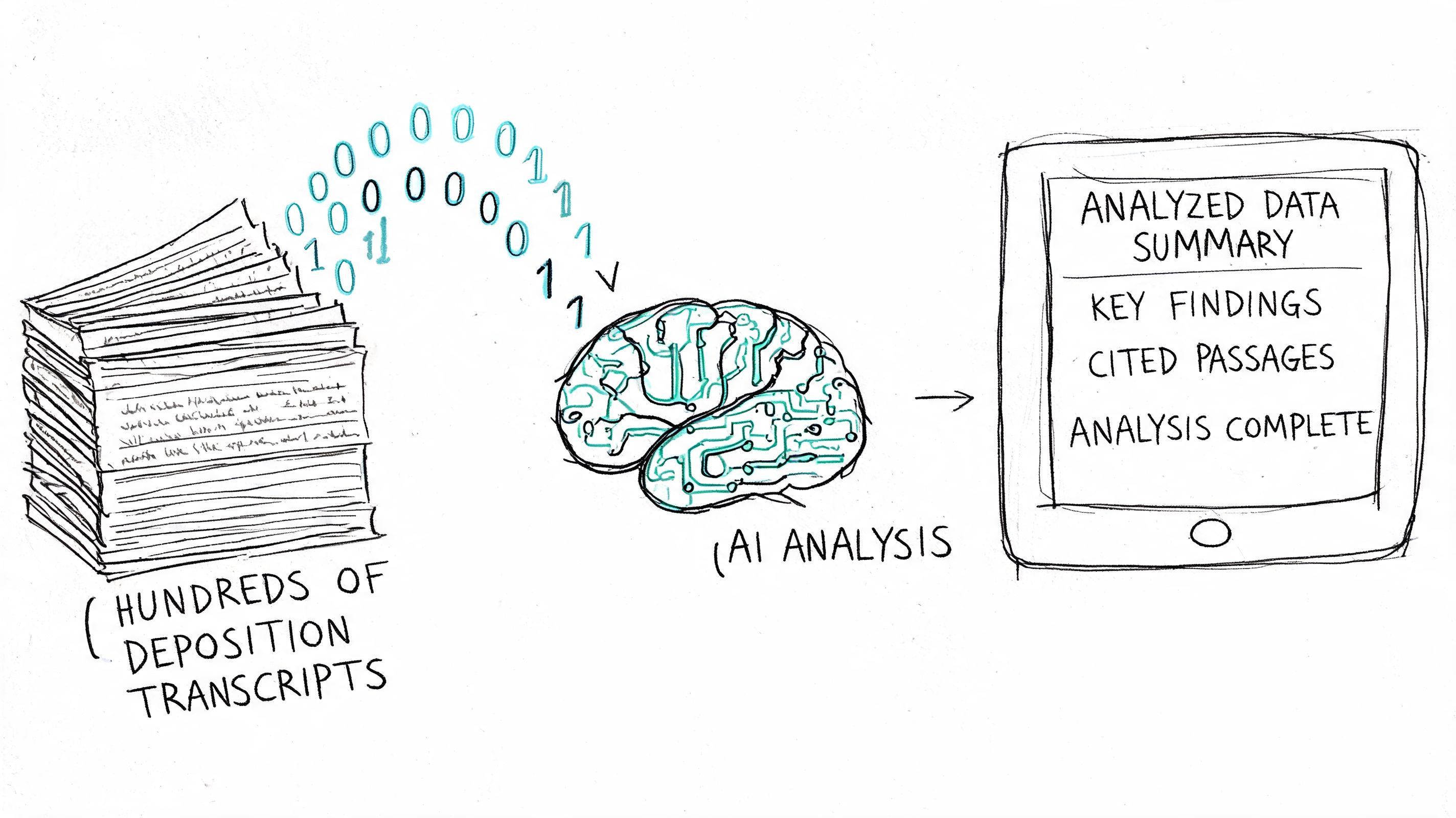
The old way to work with a transcript of deposition is straightforward and painful. Print it, highlight it, add tabs, build a chronology by hand, then write a summary. That still works. It just doesn’t scale well when the transcript runs to hundreds of pages and a standard summary may need to compress roughly 10 pages of testimony into 1 page of summary, as described in MOS Medical Record Review’s explanation of deposition summaries.
That compression target tells you something important. The problem isn't only reading. The problem is extracting signal from volume.
A modern analysis workflow
If you’re not preparing a trial notebook, you can borrow the legal world’s discipline without copying all its manual habits. A practical workflow looks like this:
Start with clean text and stable speaker labels
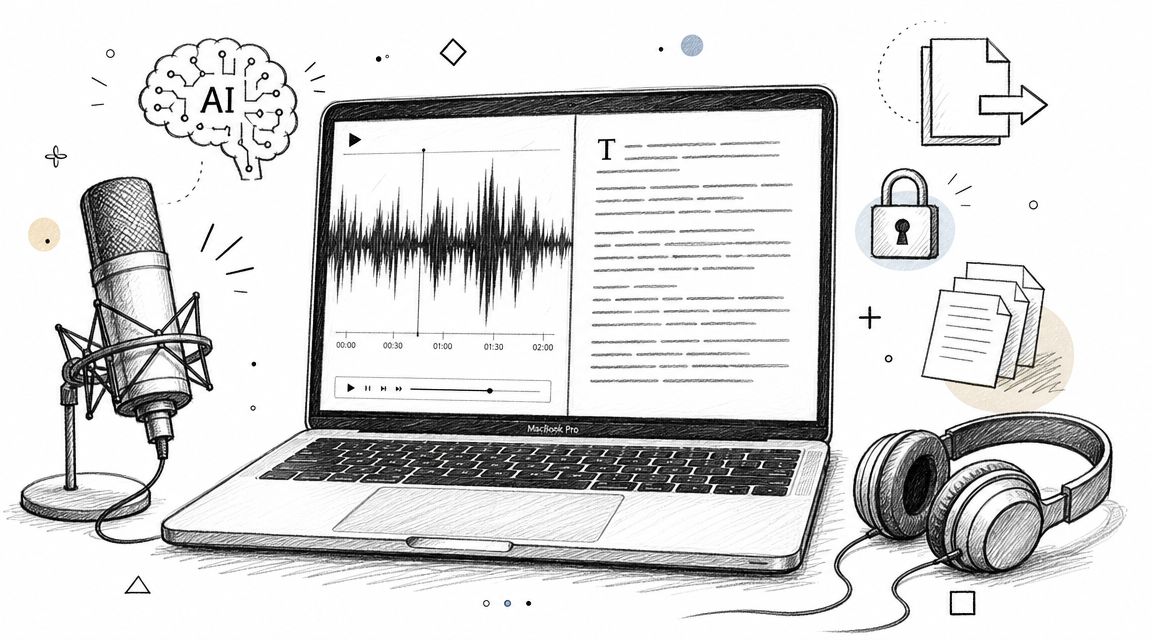
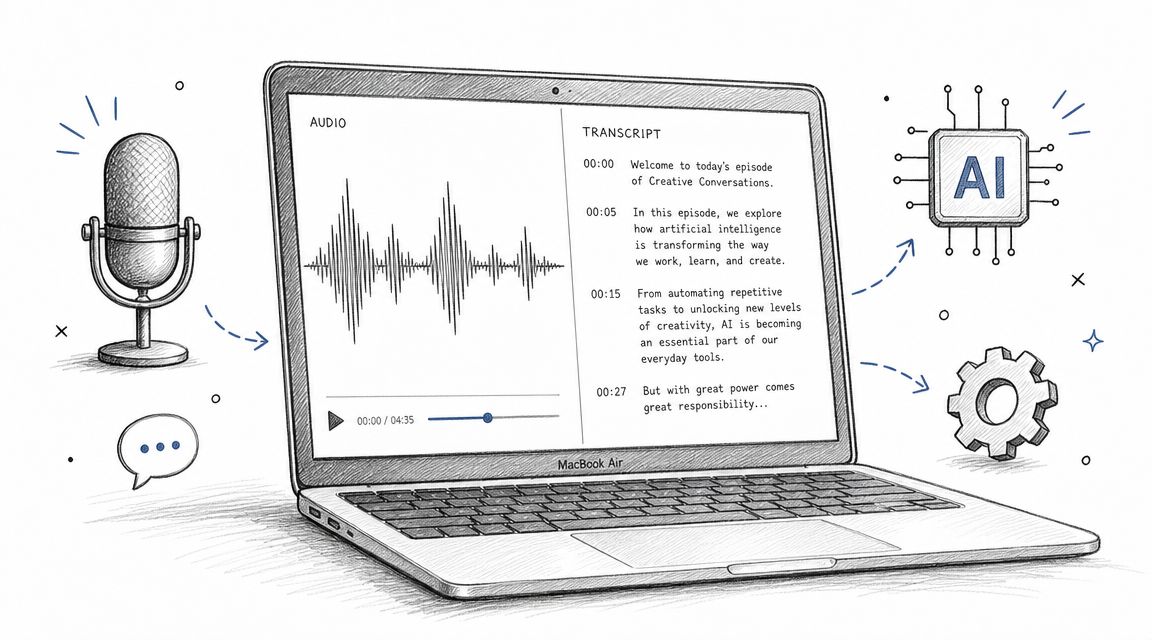
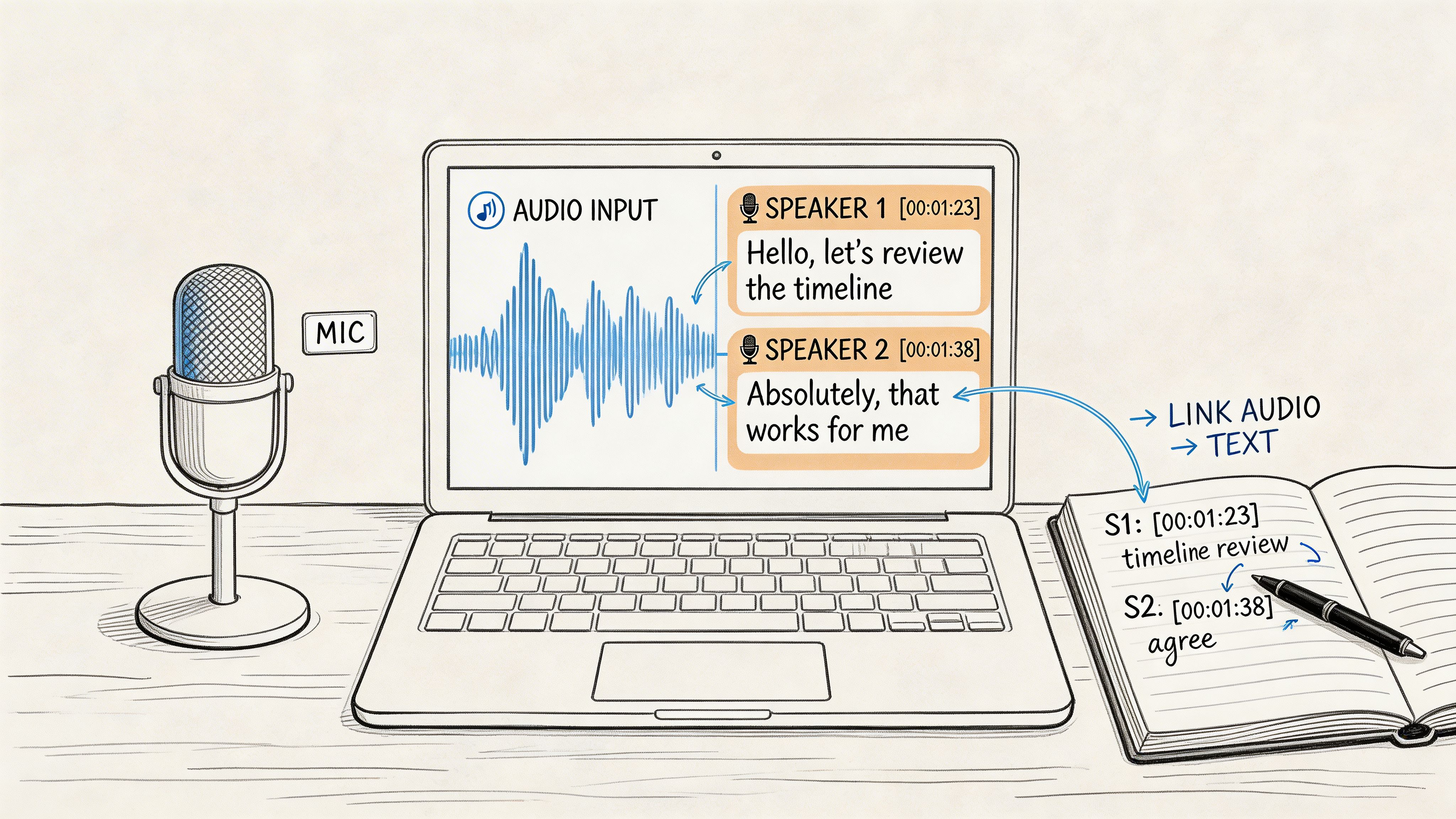
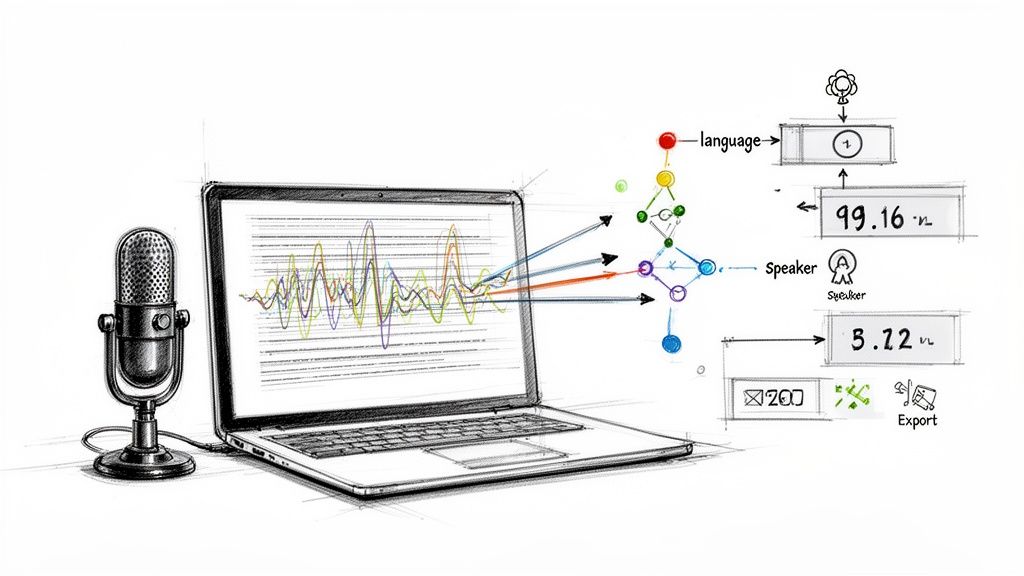
If you begin from PDF only, convert it to searchable text. If you begin from audio or video, create a transcript with speaker identification and timestamps. The point is to produce a record you can interrogate instead of merely scroll through.
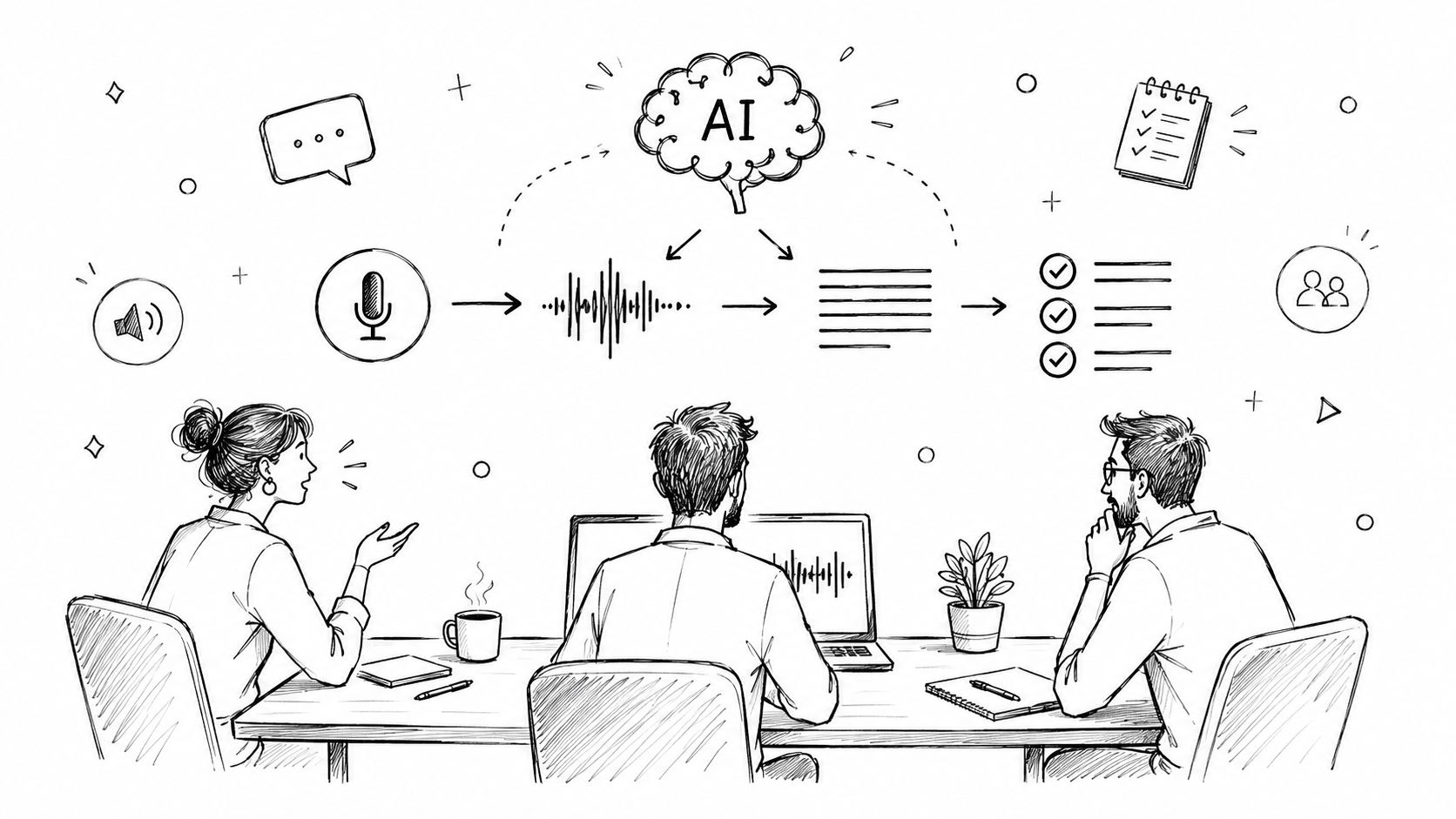
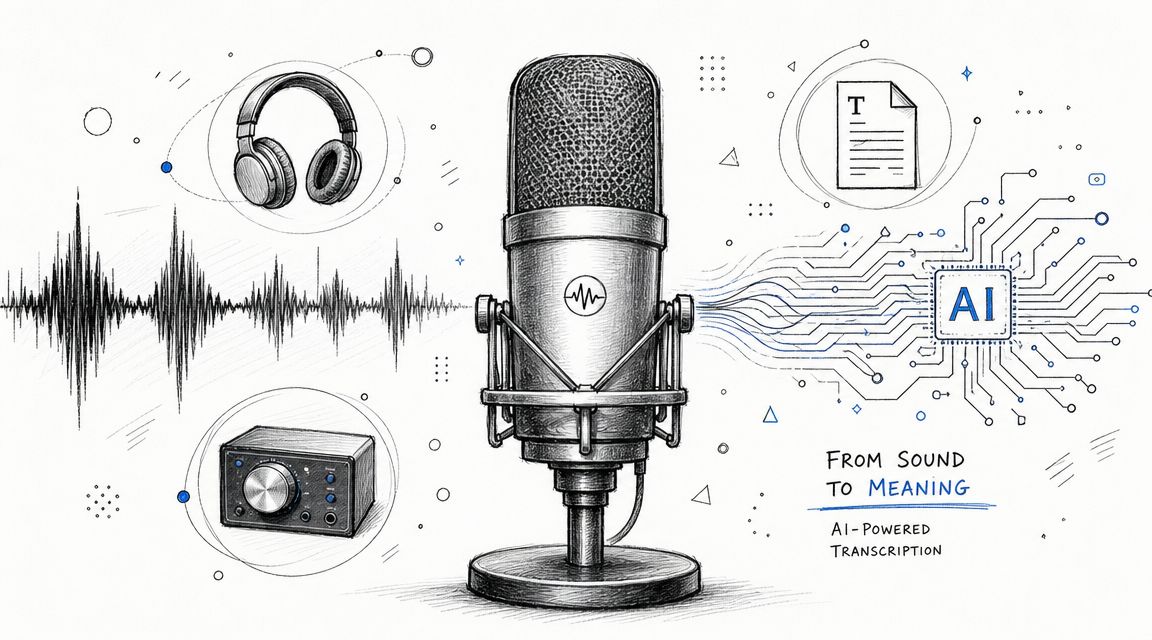
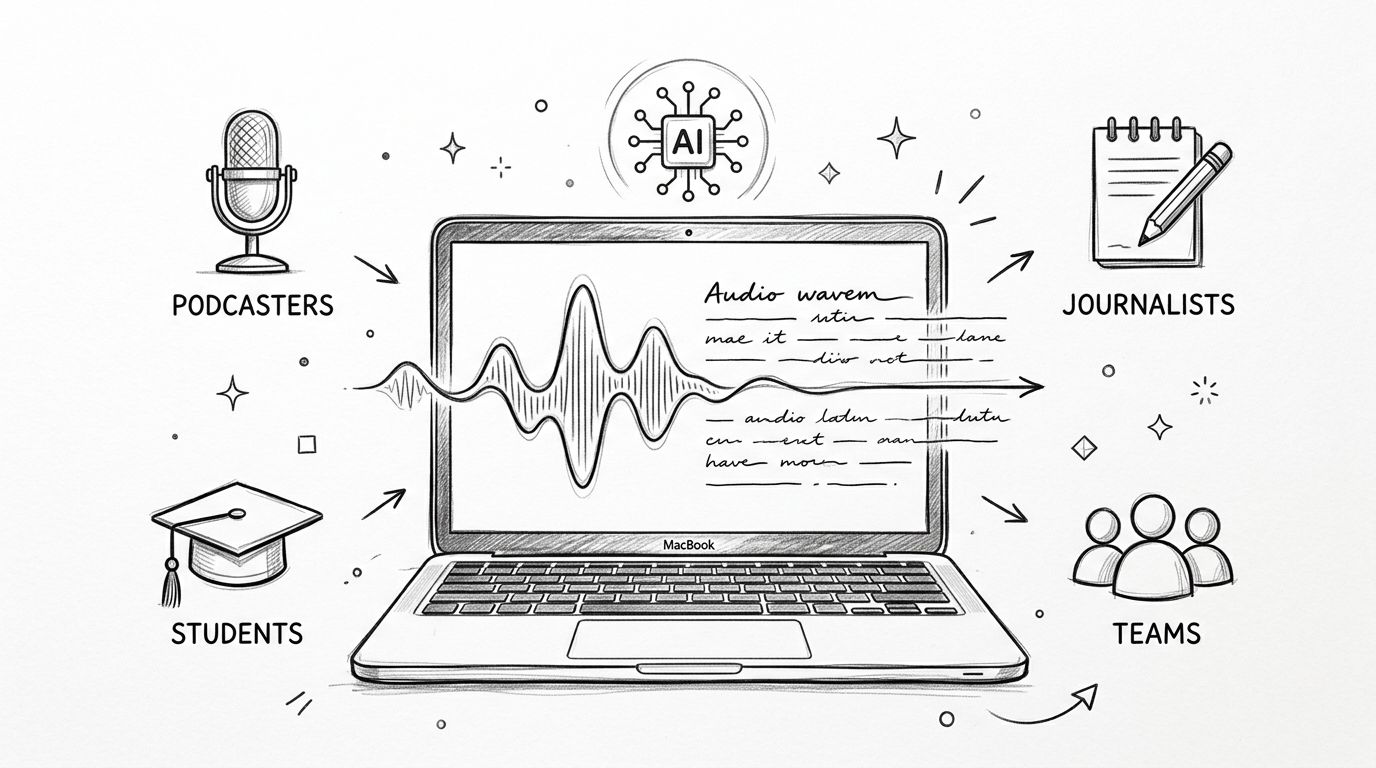
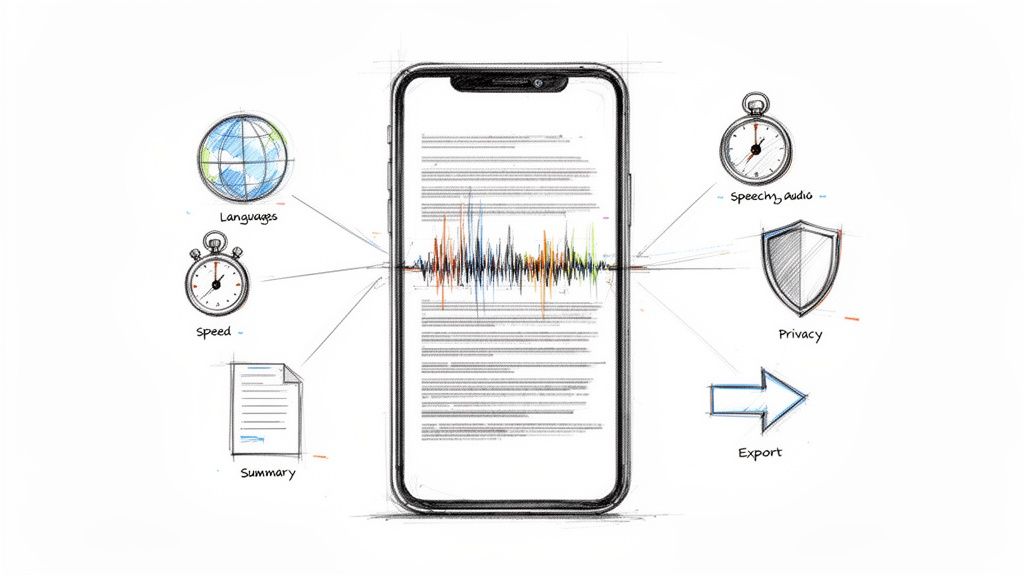
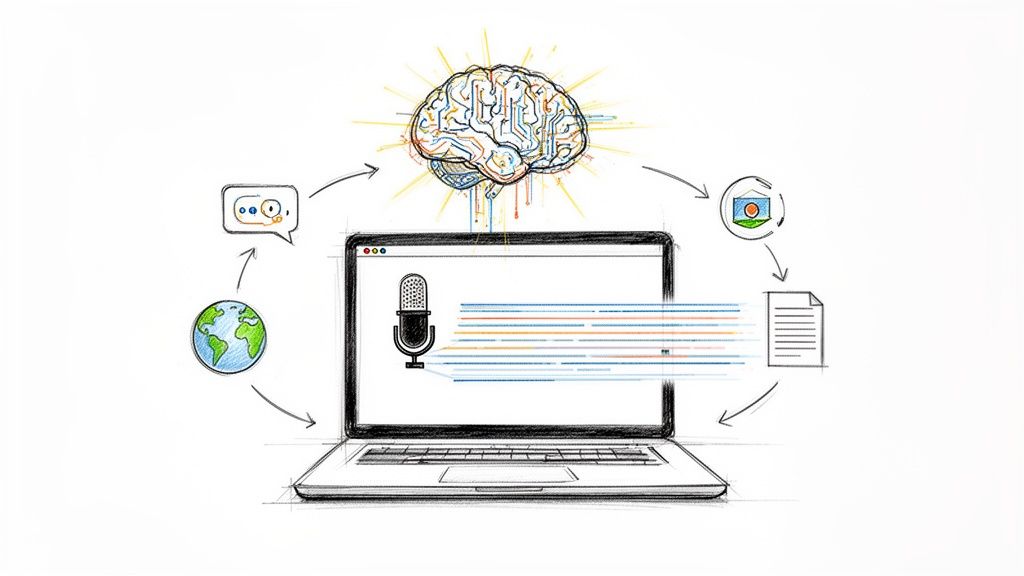
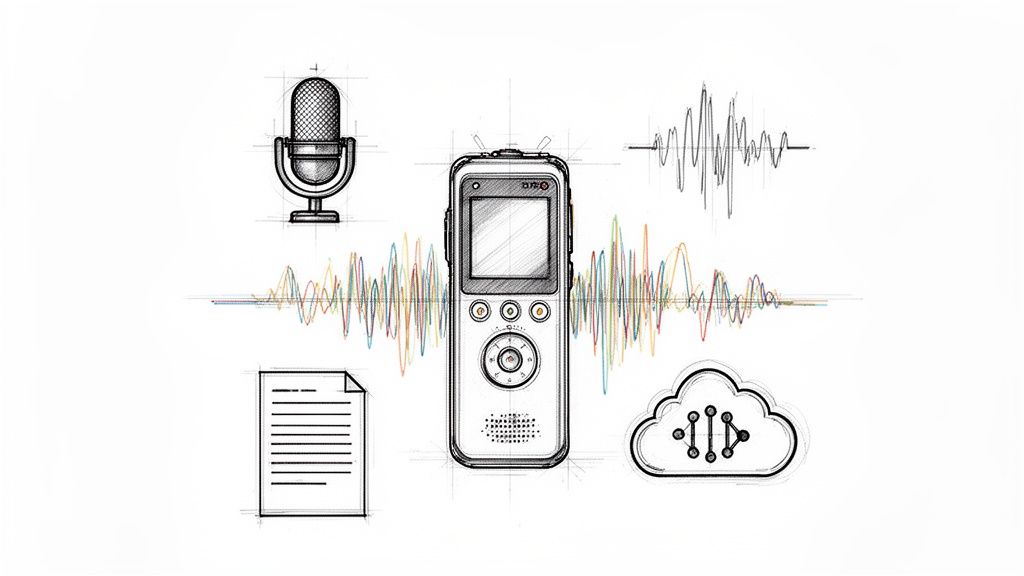
AI-assisted tools are particularly useful. In a research or content-analysis setting, Whisper AI can process long-form audio and video, identify speakers, add timestamps, and export searchable text for later review. That doesn’t replace legal certification, but it does make large spoken records easier to inspect and summarize.
Build a coding layer on top of the text
Once the transcript is searchable, tag for the things that matter in your context:
- Timeline markers such as dates, meetings, and sequence changes
- Admissions where a witness confirms a fact plainly
- Hedging language such as “I think,” “maybe,” or “I don’t recall”
- Document references tied to exhibits or prior communications
- Contradictions between earlier and later answers
If you’ve done qualitative research, this process will feel familiar. The difference is that deposition transcripts often require more attention to exact phrasing. A useful companion method appears in this practical guide on how to analyze qualitative interview data, because the same core skill applies. You are turning spoken material into themes, patterns, and evidence trails.
Don’t summarize too early
Many readers make the same mistake. They try to summarize while they are still discovering what matters. That often produces vague notes like “witness uncertain on timeline” instead of a precise observation tied to actual testimony.
A better sequence is:
| Stage | What to do | Why it helps |
|---|---|---|
| First pass | Mark names, dates, disputed events | Builds orientation |
| Second pass | Tag admissions, denials, uncertainty | Separates fact from posture |
| Third pass | Compare against exhibits and other testimony | Finds tension points |
| Final pass | Write compressed summary with citations | Produces something reusable |
This mirrors how legal teams work when they create deposition summaries, designated excerpts, or witness outlines. The value comes from structured reduction, not from skimming faster.
Search is useful, but comparison is where insight lives
A transcript becomes powerful when you compare it against something else.
That “something else” might be:
- another witness’s testimony
- an email exhibit
- a timeline of public statements
- an internal report
- a regulatory filing
- a video recording of the same exchange
For example, in financial disputes, deposition testimony often makes more sense when paired with underlying discovery records and issue-specific frameworks. If you’re trying to understand how testimony can connect to broader evidence in investor cases, this guide to proving broker misconduct is a useful example of how practitioners organize discovery materials into a theory of the case.
The practical payoff
For lawyers, this workflow shortens review and sharpens preparation. For journalists, it helps separate quote-worthy lines from legally significant context. For researchers, it turns a dense verbatim record into analyzable data.
A transcript is most valuable after you stop treating it as a document and start treating it as a dataset with speakers, timestamps, claims, and contradictions.
That’s the bridge between legal procedure and modern content analysis. The formal world gives you a highly structured record. Modern tools help you search it, code it, summarize it, and revisit it without losing the exact language that made it valuable in the first place.
Common Pitfalls and How to Avoid Them
People assume transcripts are clean because they look formal. In practice, many are messy in ways that matter.
The most common problem is false confidence. A page can look polished while still containing ambiguity about who spoke, what was interrupted, or whether a key phrase was transcribed from poor audio. That risk grows in remote proceedings, especially when multiple people talk at once.
Overlapping speech is harder than it looks
One of the least discussed problems in transcript work is overlapping speech and video alignment. Manually resolving overlap and synchronization issues can increase production time by 20 to 30 percent, according to the discussion summarized from Naegeli’s guide to deposition transcripts. Even if you're not producing the official transcript, that difficulty affects your review because unclear overlap can distort attribution and timing.
If you suspect overlap, don’t rely on text alone. Check the recording if you have it. Listen for interrupted answers, unfinished objections, and side comments that may have been compressed awkwardly into the written page.
Other errors that trip readers up
A few recurring issues deserve extra caution:
- Redactions without context. If names, medical details, or business terms are removed, the logic of an exchange can become hard to follow.
- Excerpt bias. A filed excerpt may highlight a dramatic answer while omitting the qualifier that came right before it.
- Acronyms and technical shorthand. Witnesses often use internal jargon that makes sense only to insiders.
- Video and text mismatch. If the transcript and the video feel out of sync, trust your discomfort and investigate.
A simple prevention habit is to maintain a running glossary of names, abbreviations, and exhibit numbers while you read. That small step saves a surprising amount of backtracking.
What to do when a witness is difficult
Some transcript problems aren’t technical. They come from the person being questioned. Evasive witnesses create sprawling answers that bury the point, and combative questioning can make the record harder to parse. If you want to understand how practitioners think about controlling difficult testimony, this guide for military cross-examination is useful as a reading aid even outside that specific context. It sharpens your eye for how questioning style affects the record you later read.
When you approach transcripts with that awareness, you make fewer mistakes. You stop assuming the page is self-explanatory and start testing how the record was created.
From Legal Record to Actionable Intelligence
What starts as a dense legal document often turns out to be one of the clearest records of how a person explained events when precision mattered. That’s why the transcript of deposition has value far beyond litigation.
For a lawyer, it supports case strategy. For a journalist, it can test public claims against sworn testimony. For a researcher, it offers a structured verbal record that’s richer than a polished statement and more stable than memory. For someone trying to understand next steps after testimony in a civil matter, practical resources such as these Mattiacci Law personal injury resources help show how deposition testimony fits into the broader life of a case.
The key is to read the document for what it is. Not a story someone prepared afterward, but a preserved exchange with structure, constraints, and consequences. Once you know how to decode the format, verify the speakers, handle the messy parts, and summarize the substance, the transcript becomes much less intimidating.
It becomes useful.
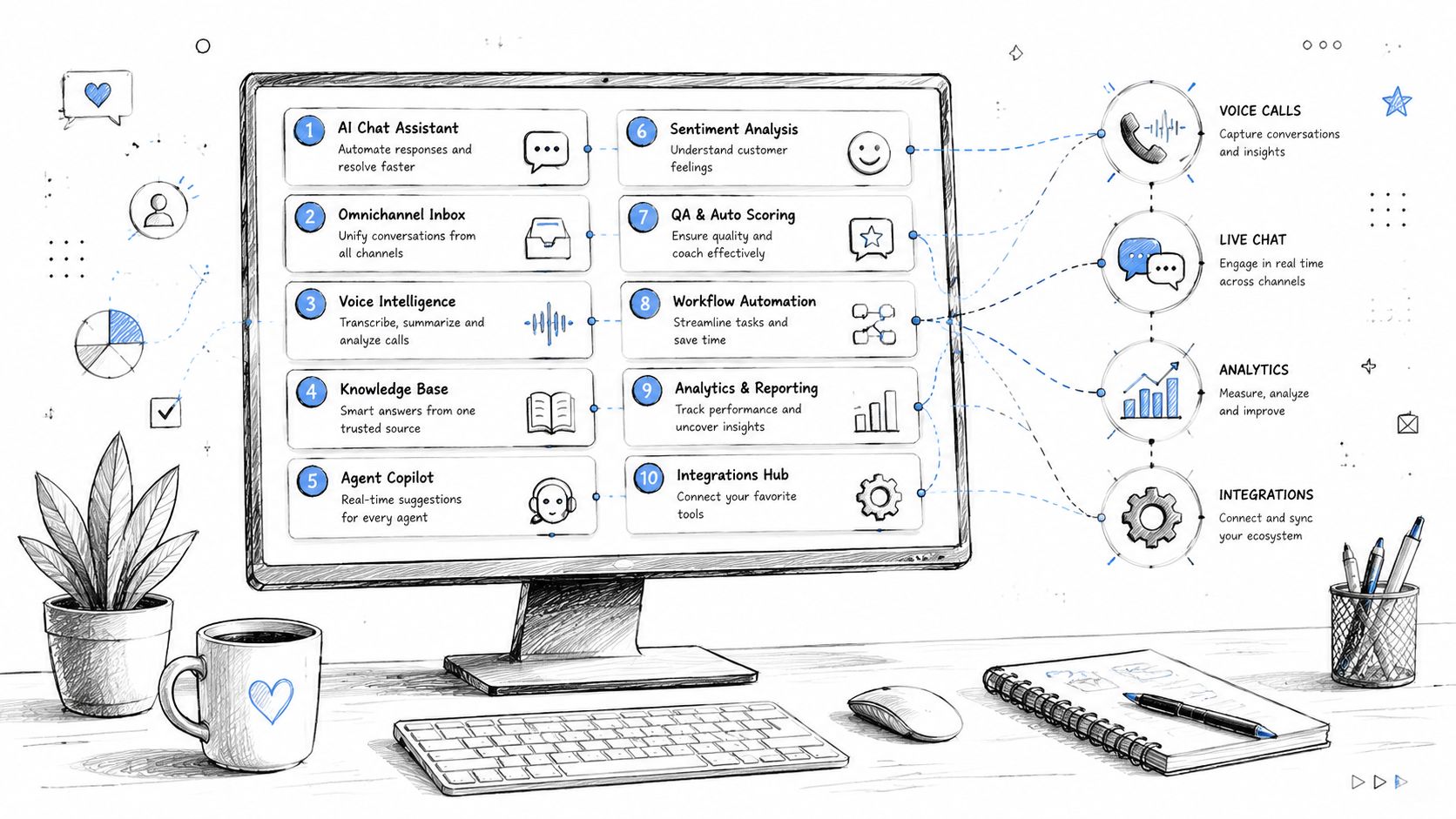
If you regularly work with interviews, hearings, witness recordings, or other long spoken material, Whisper AI can help turn audio and video into searchable transcripts with speaker labels, timestamps, summaries, and exportable text. That makes it easier to review testimony, pull themes, and move from raw recordings to usable analysis without doing every step by hand.