Effective Check In Meeting Strategies for 2026
You’re probably dealing with one of two meeting problems right now.
Either your team has too many “quick syncs” that somehow eat half the day, or you’ve got the opposite problem: people are working hard, but small issues sit unnoticed until they become missed deadlines, confused priorities, or frustrated teammates. In both cases, the root issue is usually the same. The meeting exists, but the structure doesn’t.
A good check in meeting fixes that. It isn’t a bloated status parade, and it isn’t a hidden performance review. It’s a short, repeatable way to keep work visible, surface blockers early, and make sure people leave with clarity instead of more ambiguity.
I’ve seen check-ins fail in predictable ways. They drift into problem-solving, the loudest person takes over, nobody captures decisions, and by next week the same blocker shows up again because no one followed through. I’ve also seen them work beautifully. When the format is tight and the follow-up is reliable, a check-in can become the most useful meeting on the calendar.
The End of Pointless Status Updates
Everyone knows the meeting. Seven people join. One person starts reciting updates already posted in Slack, someone else goes deep on a minor issue, two people are clearly answering email, and the meeting ends without a real decision. Work pauses, but nothing moves.
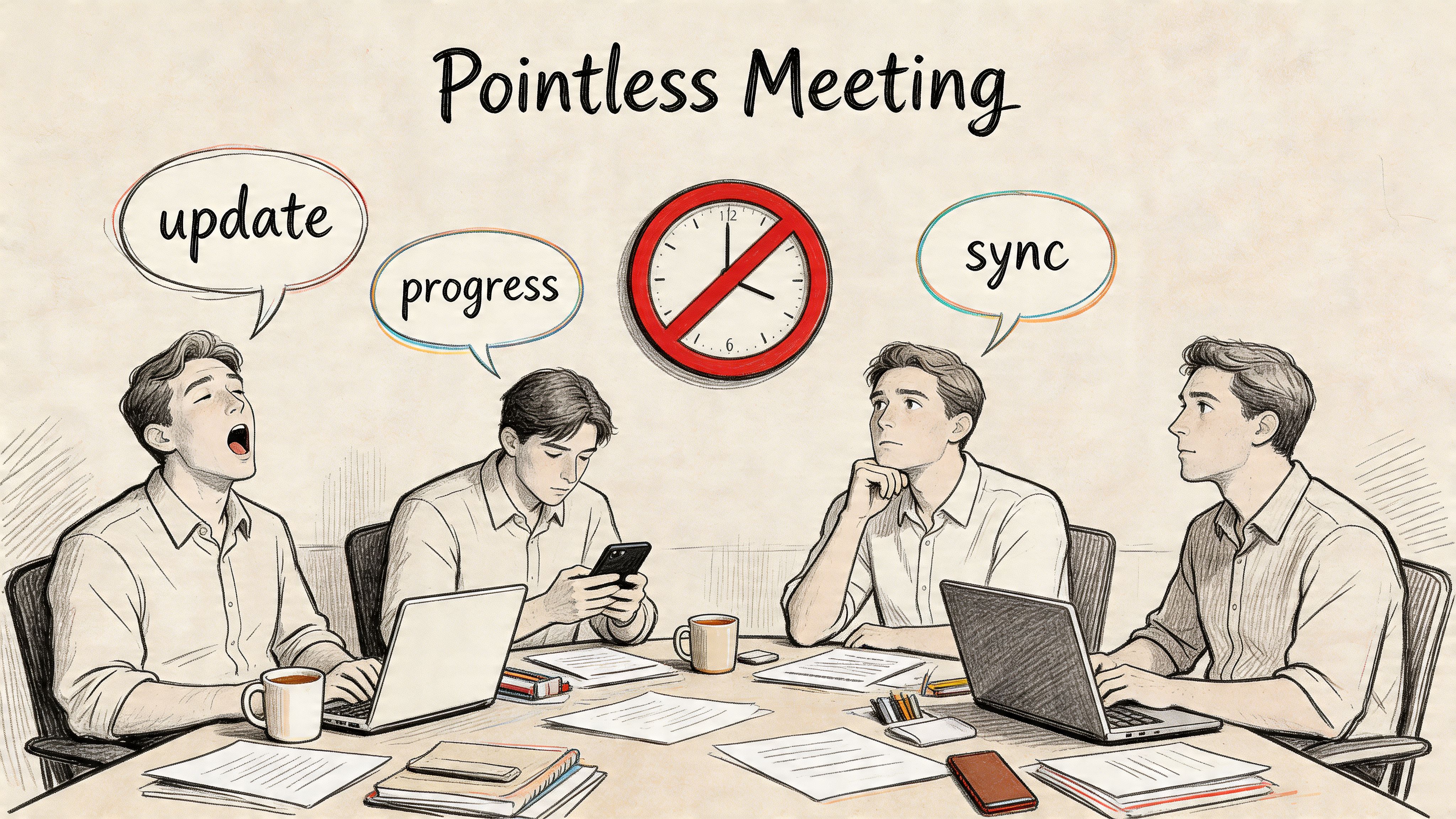
That kind of meeting isn’t a small annoyance. It’s a repeated tax on attention. In the U.S. workforce, approximately 55 million meetings are held each week, with 83% of employees spending up to one-third of their workweek in them, and only 37% of meetings having a clear agenda, according to these meeting statistics from Rev.
The worst status meetings usually share three traits:
- They report work instead of advancing it: People say what they did, but nobody leaves with a clearer path.
- They mix too many goals: Alignment, feedback, troubleshooting, planning, and performance all get shoved into one call.
- They depend on memory: Decisions aren’t captured well, so the same questions return next week.
Practical rule: If your meeting could be replaced by reading a project board aloud, it isn’t a useful check-in.
A real check in meeting feels different. It’s brief. It has a narrow purpose. People know what they’re expected to share, and the facilitator protects the scope. Instead of wandering through every possible issue, the group identifies what matters now: where work stands, what’s next, and what’s stuck.
That sounds simple, but simple is exactly why it works. Teams don’t need more ceremonial calendar invites. They need a reliable rhythm that keeps execution clean.
What Is a Check In Meeting and Why It Matters
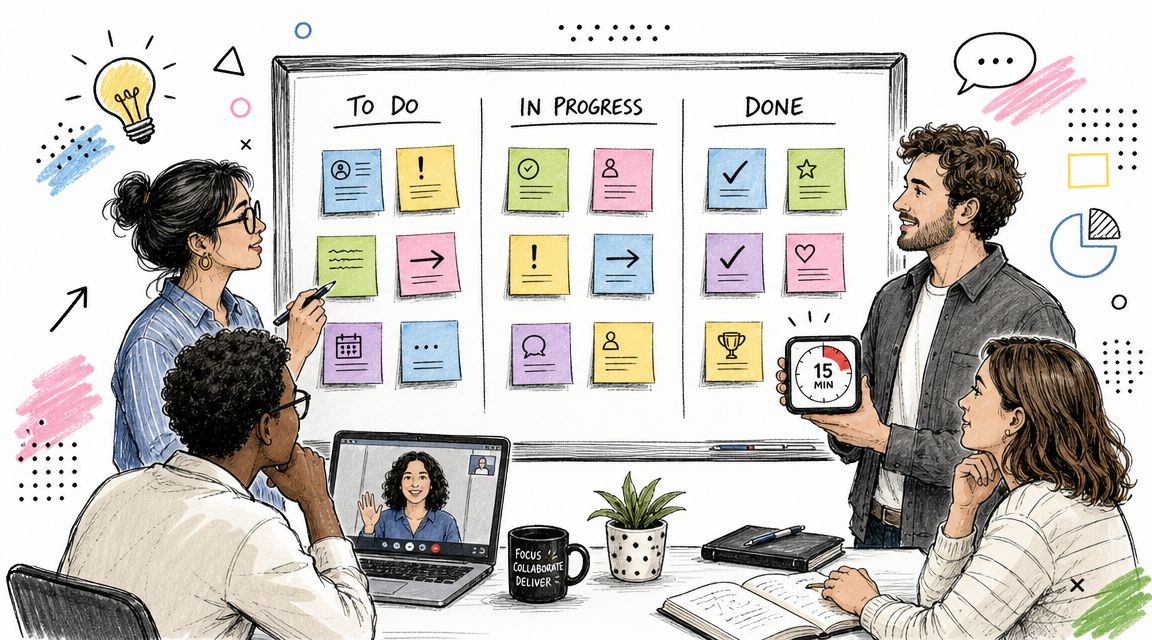
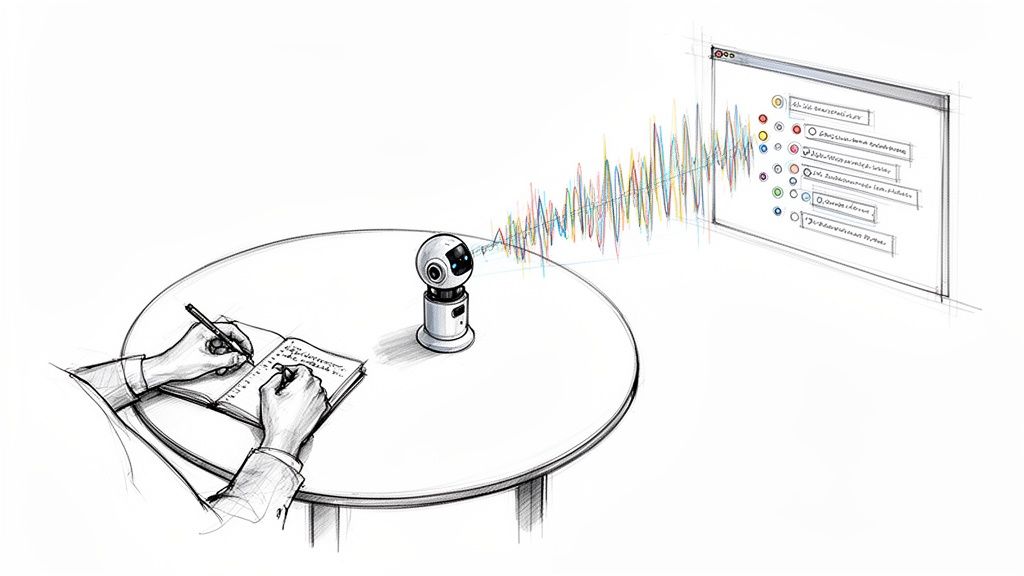
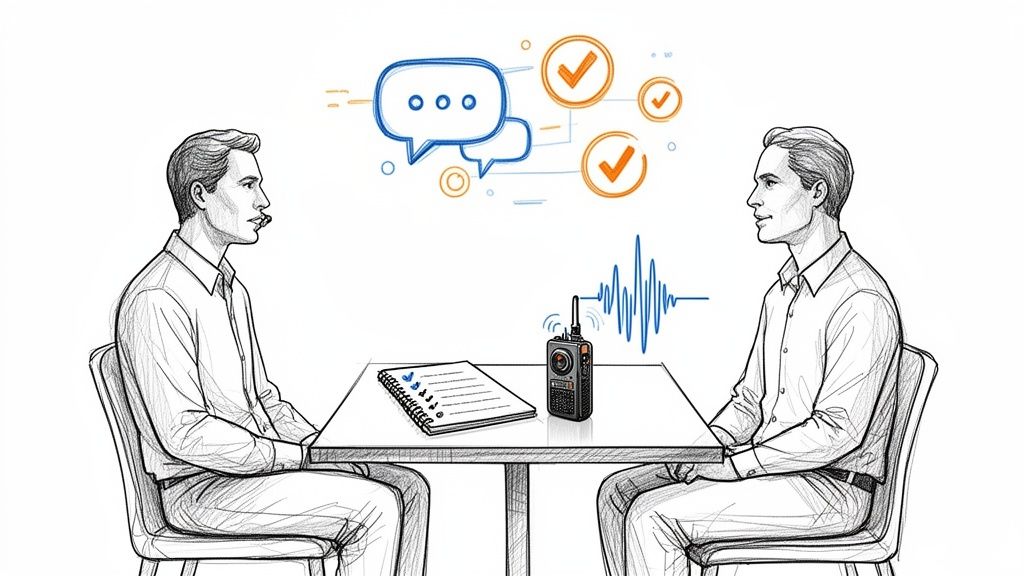
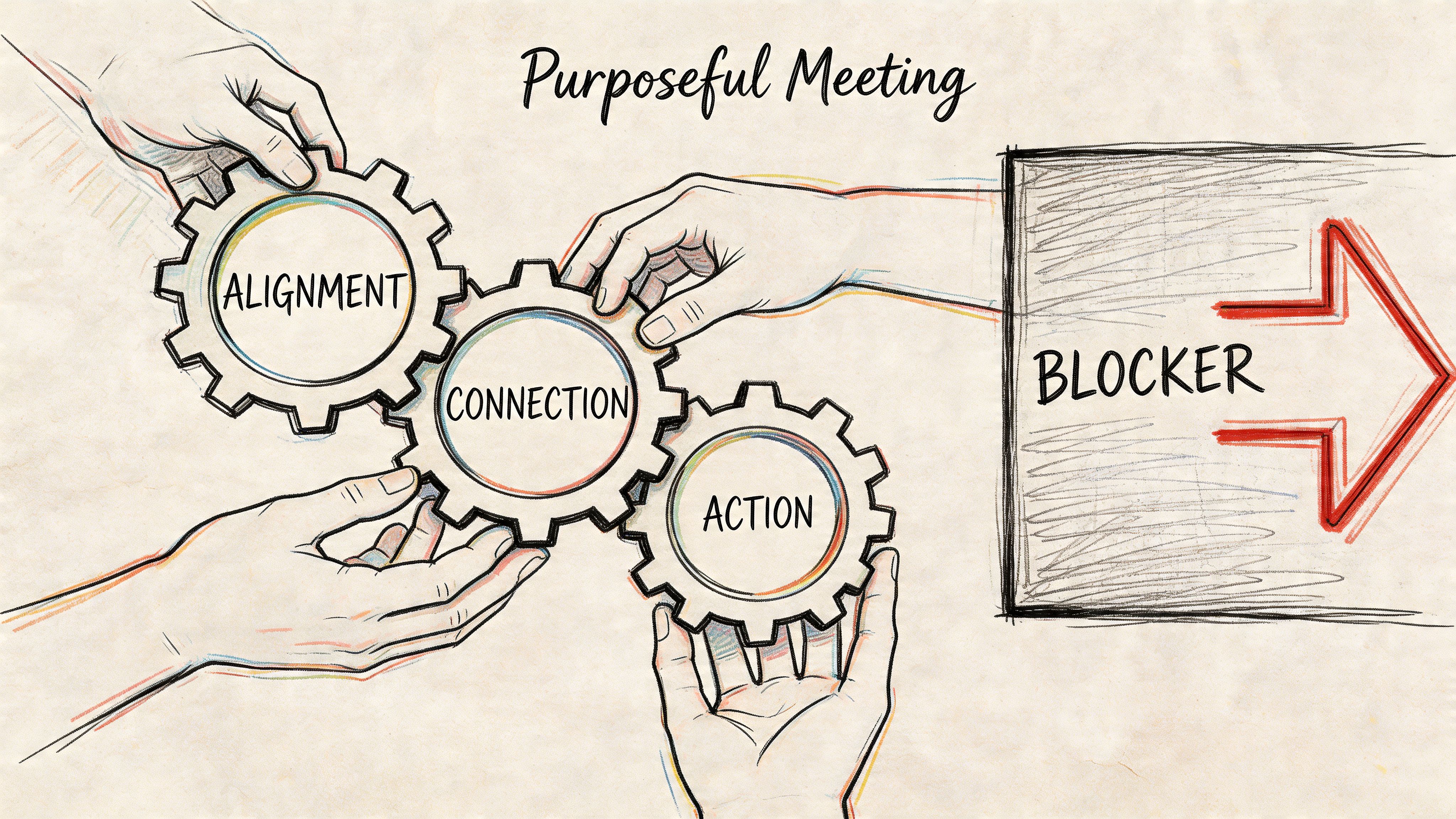
A check in meeting is a short meeting designed to keep people aligned and supported. The best way to think about it is a pit stop, not a road trip. You pull in, assess quickly, fix what needs fixing, and get back to the work.
That distinction matters because many managers misuse check-ins as surveillance. People feel they’re being asked to justify every hour or defend every decision. Once that happens, honesty disappears. Team members stop mentioning uncertainty, and the meeting becomes theater.
What a check-in is actually for
A strong check-in serves three functions at once.
First, it creates alignment. Everyone leaves knowing what matters right now.
Second, it creates connection. Even a brief round of speaking gets people in the room mentally present.
Third, it creates early warning. Small blockers surface while they’re still manageable.
The power of pre-session alignment isn’t theoretical. Johns Hopkins University research on surgical teams found that implementing a simple pre-operation check-in reduced the average number of complications and deaths by 35%, as summarized in this review of the power of check-ins. Business teams aren’t operating rooms, but the underlying principle carries over cleanly. When people speak early, clarify roles, and raise concerns before the work intensifies, outcomes improve.
A check-in works best when people treat it as a place to reveal friction, not hide it.
That’s why the tone matters as much as the template. If the meeting punishes candor, the format won’t save it.
What good check-ins produce
When a team runs check-ins well, several practical things start happening:
- People flag blockers sooner: Problems stop sitting unaddressed for days.
- Managers hear context, not just output: You learn whether someone is stuck, stretched, or unclear.
- Work gets coordinated with less drama: Fewer last-minute surprises, fewer duplicate efforts.
- Trust builds through repetition: People learn that raising an issue leads to support, not blame.
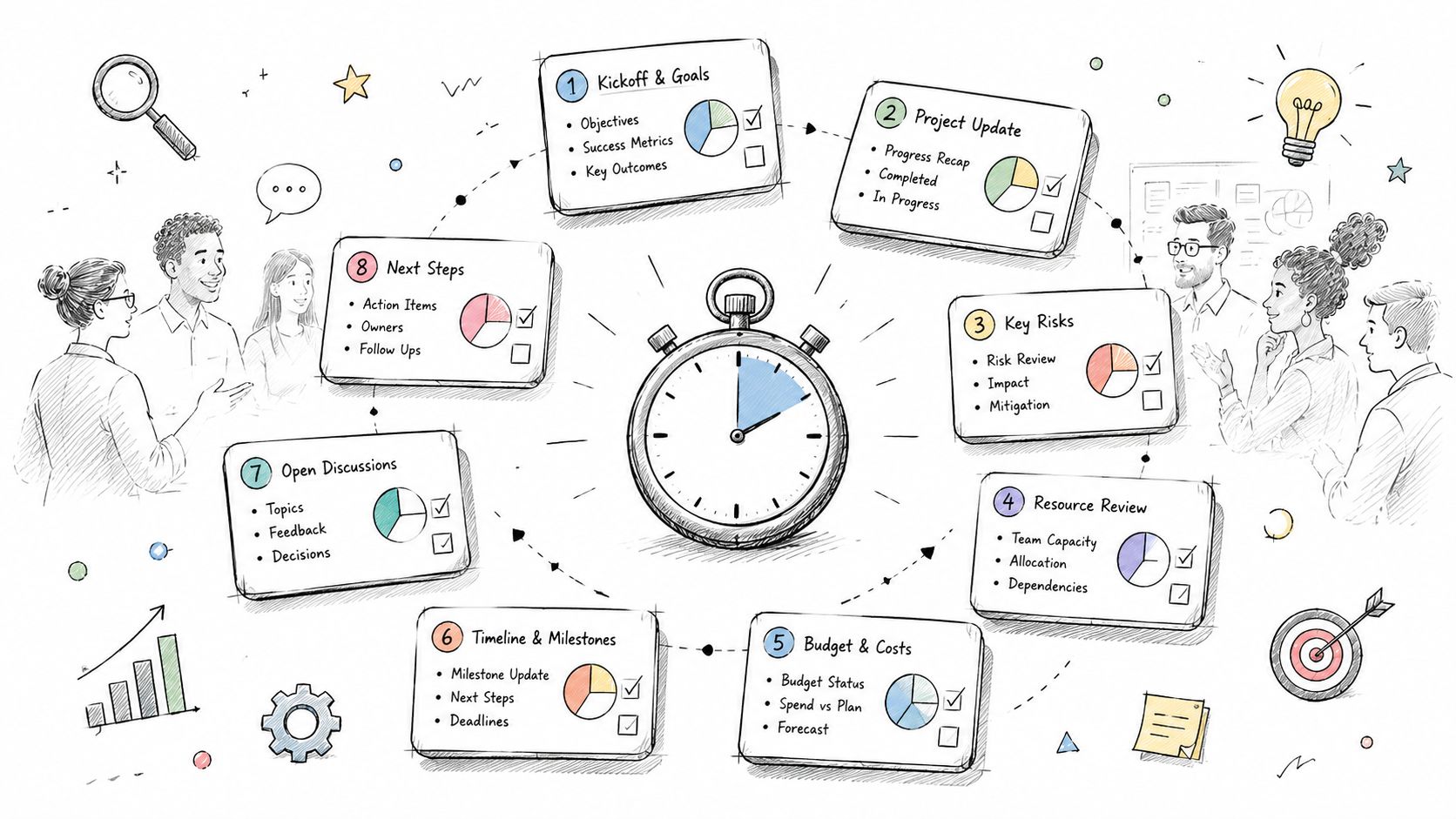
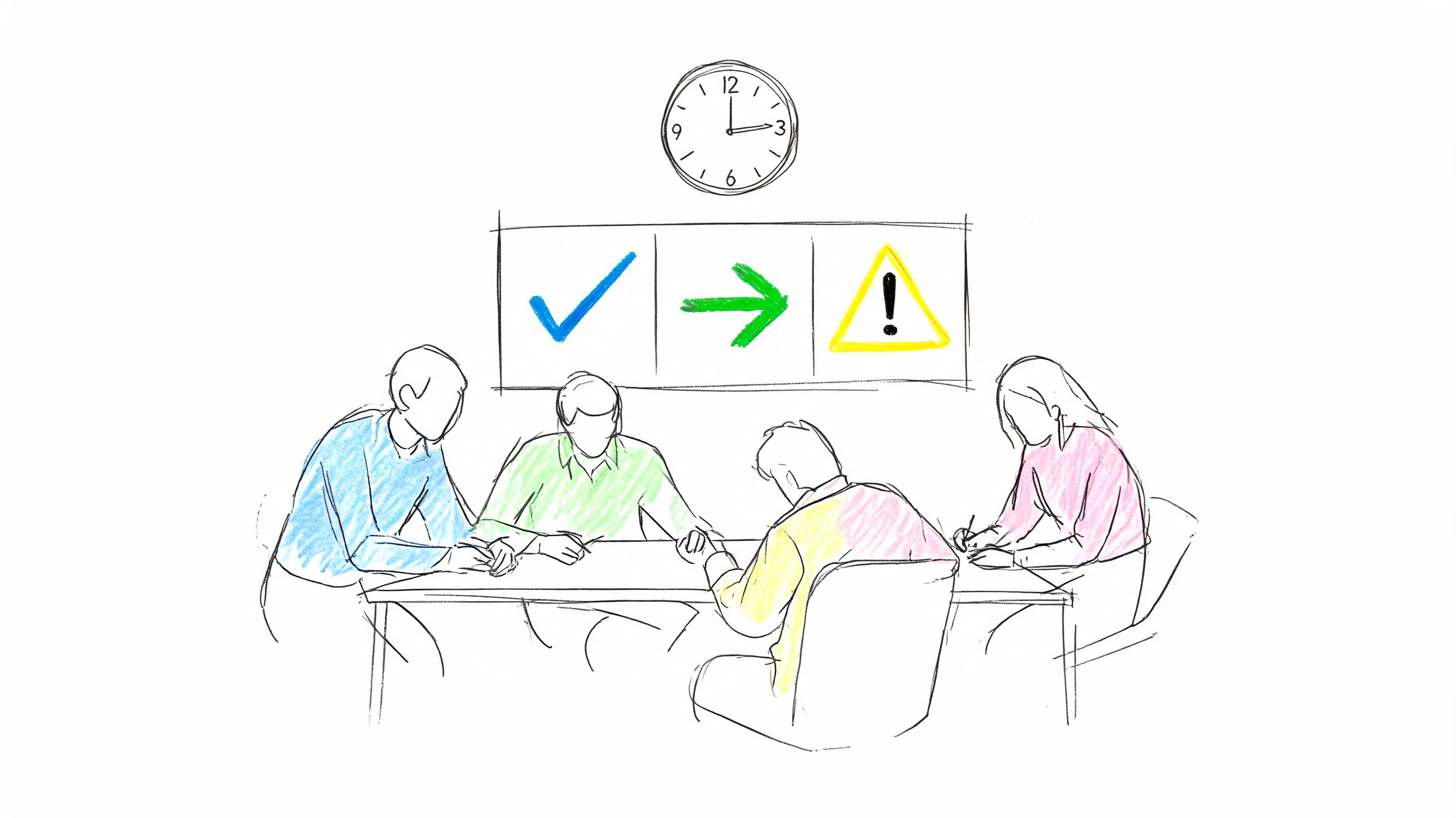
A short visual example helps here:
What doesn’t work is turning the check-in into the place where every topic gets solved. That’s where good intent becomes meeting sprawl. A useful check-in identifies what needs attention. It doesn’t try to do all the attention itself.
The Three Essential Check In Meeting Formats
Not every check in meeting should look the same. Teams get into trouble when they run one format for every purpose. Daily execution, weekly coordination, and individual support need different rhythms.
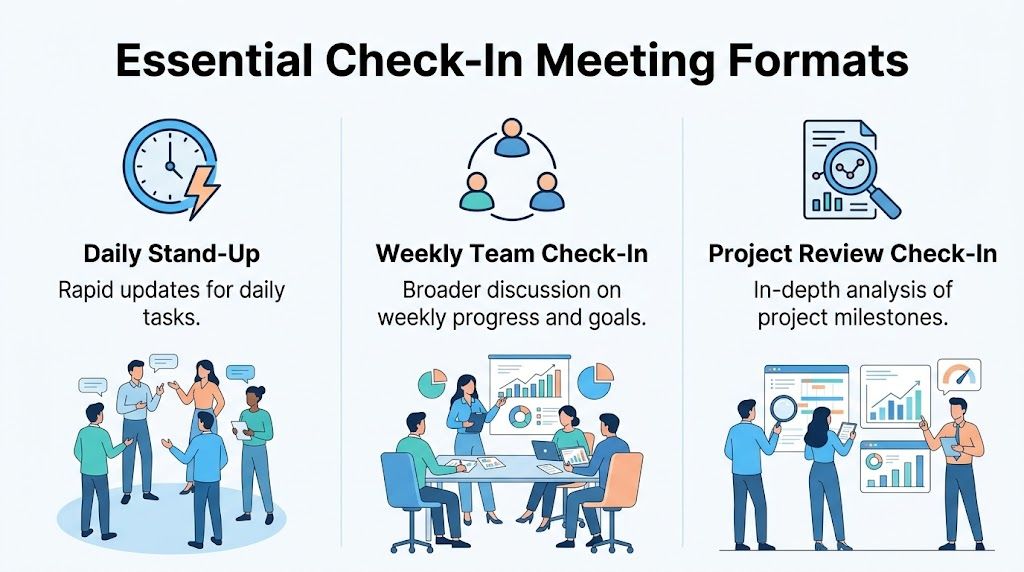
Check-In Meeting Formats at a Glance
| Format | Primary Goal | Frequency | Typical Duration |
|---|---|---|---|
| Daily stand-up | Fast coordination on immediate work | Daily | Short and tightly time-boxed |
| Weekly team check-in | Review progress, priorities, and support needs | Weekly | Moderate length |
| 1:1 check-in | Coaching, context, and individual support | Weekly or regular cadence | More flexible and conversational |
Daily stand-up
This is the leanest format. The daily stand-up exists to keep work moving, not to unpack every challenge in detail. It works best with teams that have interdependent tasks, fast-moving deadlines, or handoffs that can easily slip.
The trap is turning it into a mini project review. Don’t. If one issue needs a deeper conversation, note it and move on.
Good daily stand-ups are usually strongest when they feel almost mechanical in the best sense. Everyone knows the sequence, everyone keeps it tight, and nobody treats the call as a stage for long explanations.
Weekly team check-in
This operating rhythm delivers the support teams need. It gives enough room to spot changes in priorities, compare progress across functions, and ask for help before the week gets away from you.
A weekly check-in is where managers often overreach. They cram in performance feedback, roadmap debate, and tactical troubleshooting. The result is a meeting that feels important but leaves people overloaded.
Use this format for team-wide clarity. If a problem deserves deeper treatment, spin it into a separate working session with the right people.
Keep the whole team in the room only for what the whole team needs to hear.
1:1 check-in
This is the most human format and the easiest one to get wrong. A 1:1 check-in shouldn’t feel like a manager collecting updates they could have read elsewhere. It should help the employee think better, prioritize better, and ask for support without posturing.
Nuance finds its place. Energy levels, confidence, role clarity, friction with stakeholders, development goals, and concerns that wouldn’t surface in a group all show up here if the relationship is solid.
A useful way to choose the right format:
- Use a daily stand-up when speed and coordination matter more than discussion.
- Use a weekly team check-in when the team needs shared visibility across work.
- Use a 1:1 when context, coaching, and trust matter most.
If you try to make one format do all three jobs, you’ll get the weaknesses of each and the benefits of none.
Sample Agendas and Scripts for Effective Check Ins
Most check-ins don’t fail because the team is unwilling. They fail because the prompt is vague. “Any updates?” invites rambling, sandbagging, or silence. A better meeting starts with better framing.
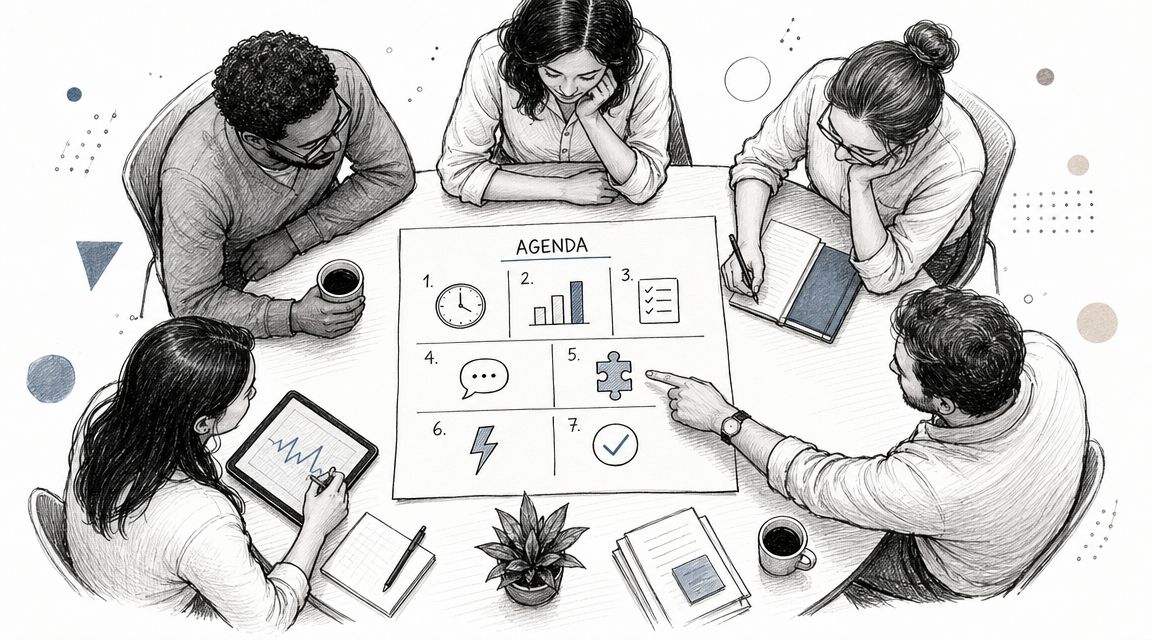
The strongest agenda is narrow by design. Effective check-ins focus on three categories: current status, near-term goals, and blockers, and they are not meant for deep problem-solving, as explained in Boardwise’s guidance on check-in rounds.
Daily stand-up script
Use this when the team needs quick operational visibility.
- What did you complete since the last check-in?
- What are you focused on next?
- What’s blocked, delayed, or unclear?
That’s enough. If someone starts diving into root-cause analysis, cut in politely and park it for after the meeting with the specific people involved.
A clean opener sounds like this:
“Keep this to current status, next step, and blockers. If something needs problem-solving, I’ll capture it for follow-up.”
Weekly team sync agenda
A weekly team check in meeting benefits from a slightly broader structure, but the discipline is the same.
- Opening round: One sentence on current priority
- Priority review: What moved, what slipped, what changed
- Risk scan: Where support is needed this week
- Commitments: Owner and next step for each issue that needs follow-up
This is also where preparation pays off. If you want your prompts to be sharper, reviewing recent notes before the meeting helps. A practical way to do that is building a simple pre-read habit or using a system inspired by meeting preparation workflows so you’re not asking people to repeat information you should already know.
1:1 prompts that get better answers
The 1:1 format needs more room for judgment. If you ask only task questions, you’ll get task answers. If you want insight, ask questions that reveal condition as well as progress.
Try prompts like these:
- “What’s taking more energy than it should?”
- “What’s still fuzzy right now?”
- “Where do you need my help instead of my visibility?”
- “What’s one thing we should address before it becomes a bigger issue?”
These questions work because they lower the pressure to sound fully in control.
A simple boundary that saves the meeting
Use this rule in every format:
| If the topic is... | Do this |
|---|---|
| A quick update | Handle it in the check-in |
| A blocker that needs visibility | Capture it and assign follow-up |
| A deep decision or analysis | Schedule a separate session |
| Personal coaching or sensitive feedback | Move it to a 1:1 |
People often think a better agenda means adding more items. Usually it means removing the wrong ones.
Facilitation Best Practices to Keep Meetings on Track
The agenda doesn’t run the meeting. The facilitator does. That’s why two teams can use the same format and get completely different results.
Poor facilitation makes a check-in feel like a public recital. Strong facilitation keeps it useful, brief, and safe enough for honest reporting. The manager or meeting lead doesn’t need to dominate. They need to guard the purpose.
Prepare just enough to ask better questions
Preparation is often the difference between a shallow check-in and a useful one. Research shows that managers who spend just 2 minutes reviewing a direct report’s recent work and notes before a check-in ask significantly better questions and can surface problems 40-60% earlier than managers who don’t prepare, according to Muchskills’ check-in guidance.
That tracks with day-to-day management reality. When a manager comes in cold, they ask generic prompts and get generic answers. When they’ve reviewed recent notes, they can ask, “Last week you mentioned a dependency on design approval. Did that get resolved?” That question goes somewhere.
The habits that keep the meeting clean
A few facilitation behaviors matter more than anything fancy:
- Time-box each speaker: Don’t let one person consume the room.
- Use a parking lot: If a topic needs debate, capture it and move on.
- Clarify blockers fast: Ask what kind of help is needed, from whom, and by when.
- Close with commitments: Don’t end on discussion. End on ownership.
If nobody leaves knowing who will do what next, the meeting was only conversation.
What not to do
The common mistakes are easy to spot once you’ve seen them a few times.
- Don’t perform active listening without action: People notice quickly when they raise the same issue every week.
- Don’t let the check-in become a manager-facing report: The team should gain value too.
- Don’t reward polished updates more than truthful ones: That encourages hiding risk.
- Don’t solve everything live: The urge is understandable. The result is drift.
A good facilitator is part traffic controller, part translator. They help the group distinguish between information, concern, and decision. Once people trust that distinction, meetings get shorter and better.
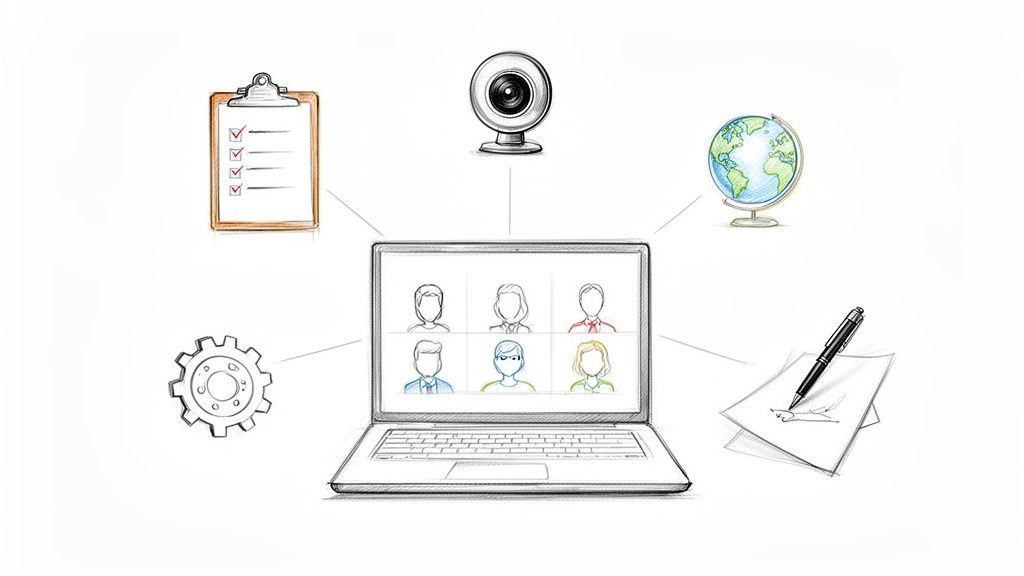
Adapting Check Ins for Hybrid and Remote Teams
A lot of teams still assume a check in meeting has to happen live on Zoom or Google Meet. That’s not always true, and in some teams it’s the wrong default.
The challenge is bigger now because work is more distributed. Despite 58% of U.S. workers being hybrid in 2025, many teams struggle with remote engagement, and a 2025 Owl Labs survey found that 40% of remote workers feel disengaged in synchronous check-ins, according to Matt Munson’s discussion of check-ins.
Live isn’t always better
Synchronous check-ins are useful when the team needs fast coordination, emotional nuance, or quick escalation. They’re less useful when time zones clash, people are context-switching heavily, or half the room is in-office while the other half is trying not to talk over each other.
That’s why async options deserve more respect than they usually get.
Consider rotating between formats:
- Async written check-ins: Good for routine updates that don’t need real-time discussion
- Short video check-ins: Useful when tone matters but scheduling is messy
- Hybrid live check-ins: Best when the topic really benefits from immediate interaction
A lot of the friction shows up in the familiar challenges hybrid teams face, especially uneven participation and communication gaps between in-office and remote staff.
Ground rules that help distributed teams
Remote and hybrid teams usually improve when they set explicit norms instead of relying on vague etiquette.
- Define response windows: If async check-ins are due by a certain time, say so.
- Rotate facilitators: This prevents one location or personality from controlling the rhythm.
- Separate update-sharing from issue-solving: Async can handle the first. Live time can handle the second.
- Document decisions in one place: Remote confusion often comes from scattered follow-up.
The practical test is simple. If your live check-ins leave remote people quieter, less informed, or less likely to raise problems, the format needs work. Convenience for the organizer isn’t the same as effectiveness for the team.
Automate Your Notes and Action Items with Whisper AI
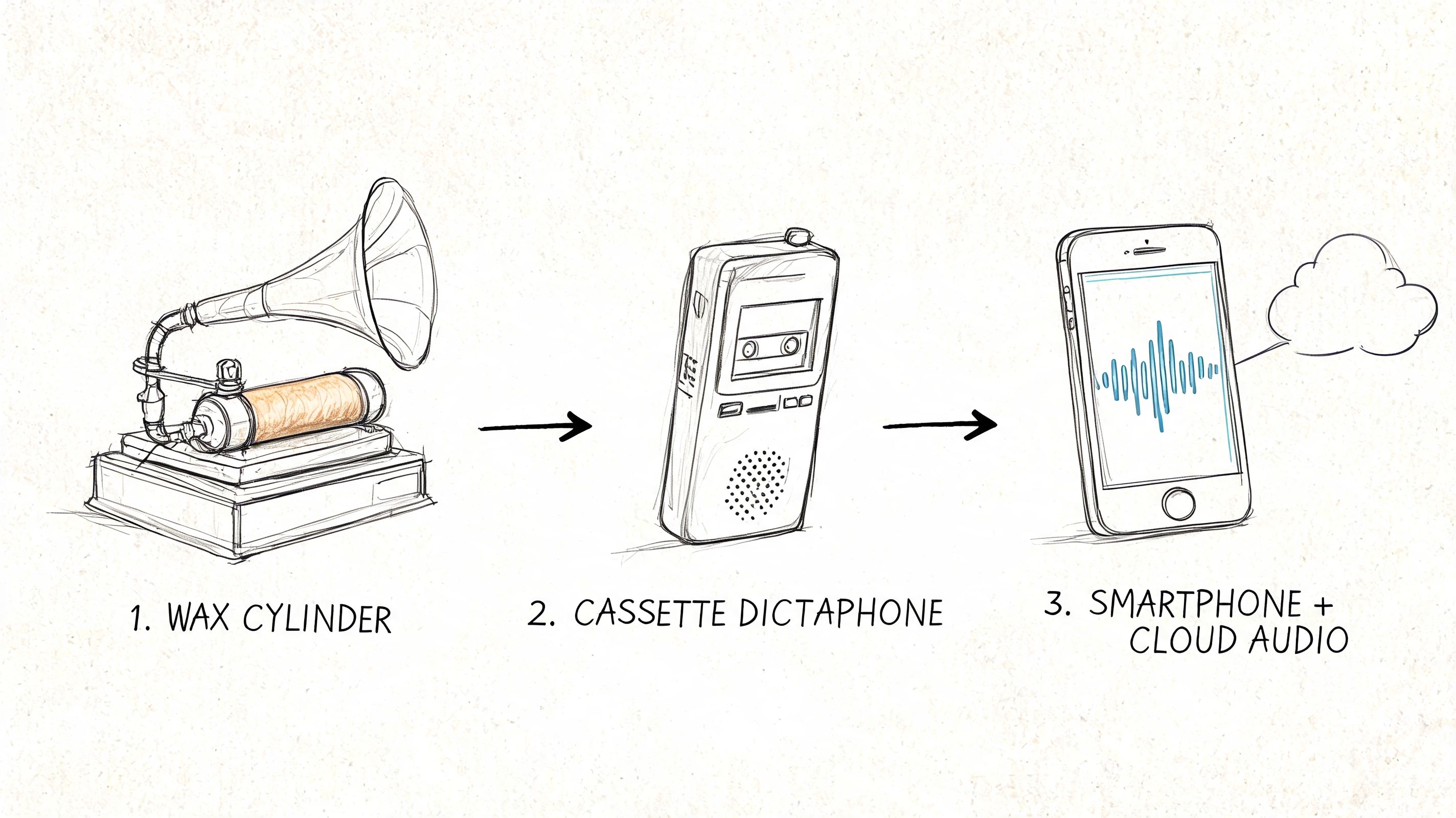
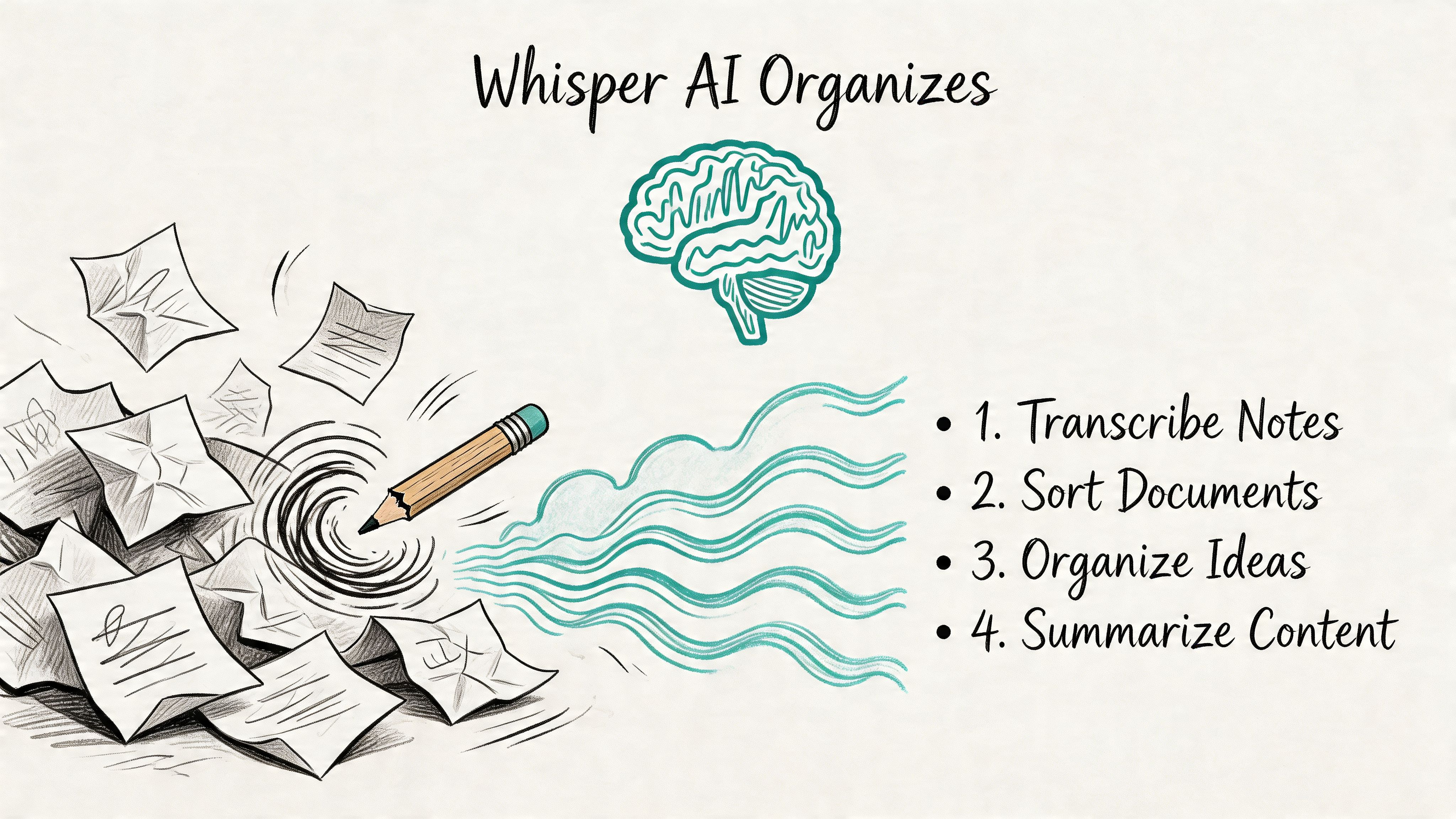
Even well-run check-ins break down after the meeting. People talk, align, agree on next steps, and then the details disappear into scattered notes, partial memory, or someone’s unfinished draft in Google Docs.
That’s where automation becomes useful. Not because note-taking is glamorous, but because follow-through depends on it.
A workflow that actually helps
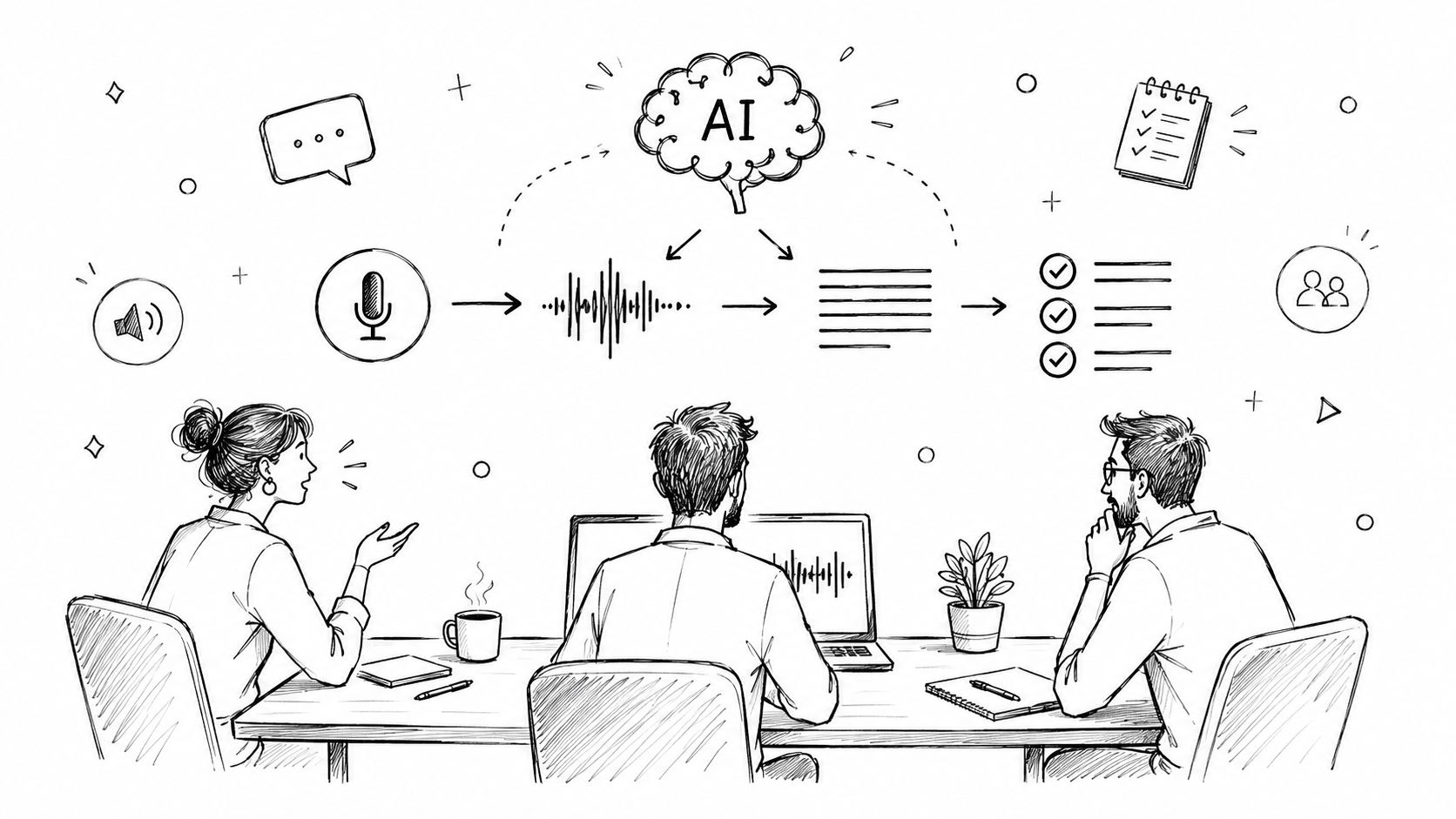
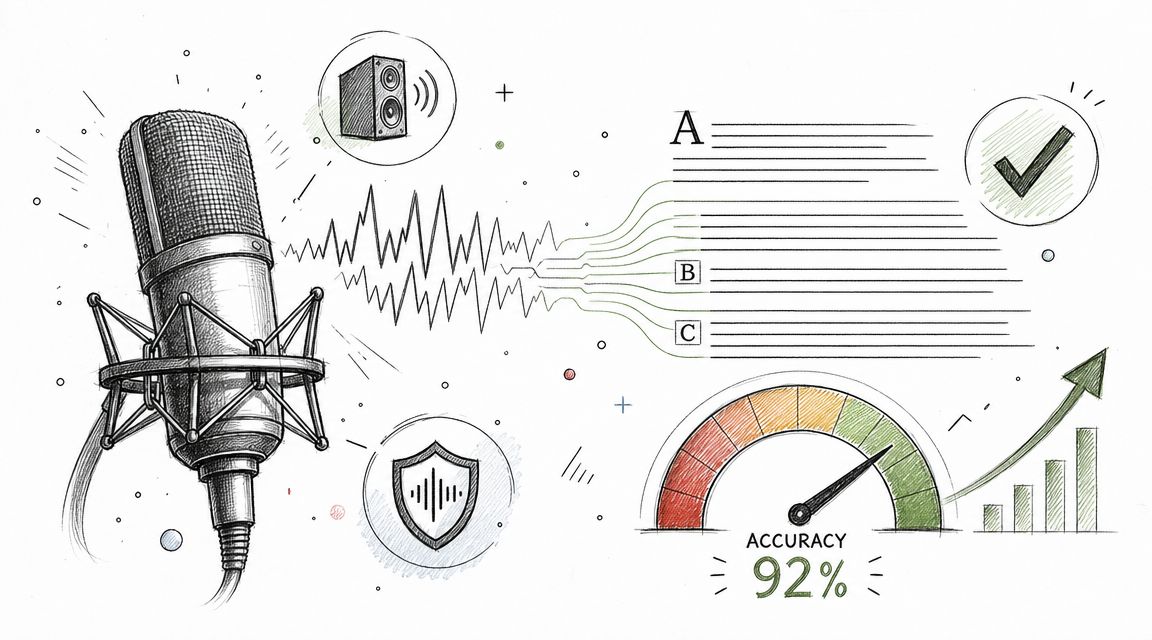
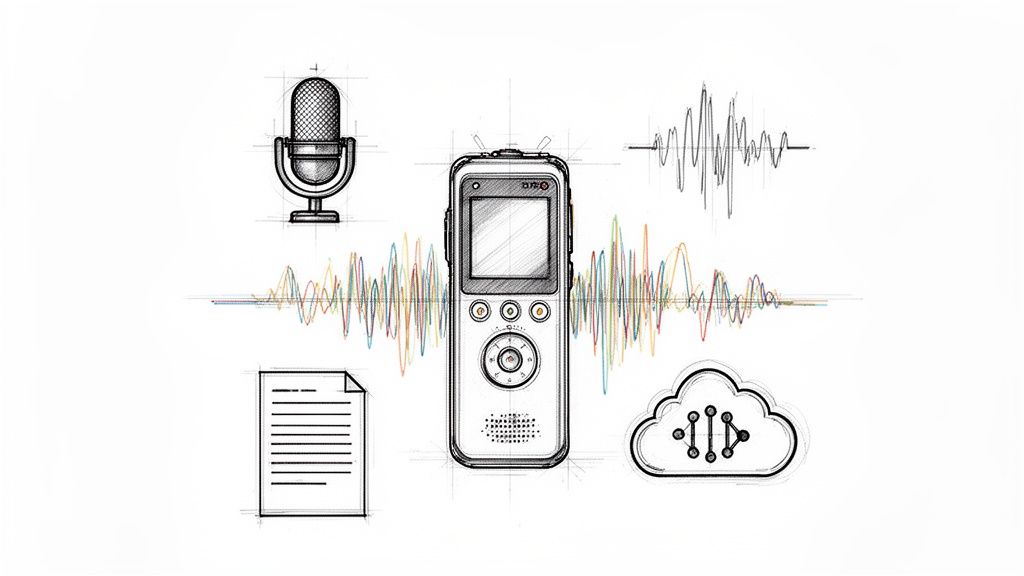
If you want your check in meeting to lead to action, use a simple post-meeting system:
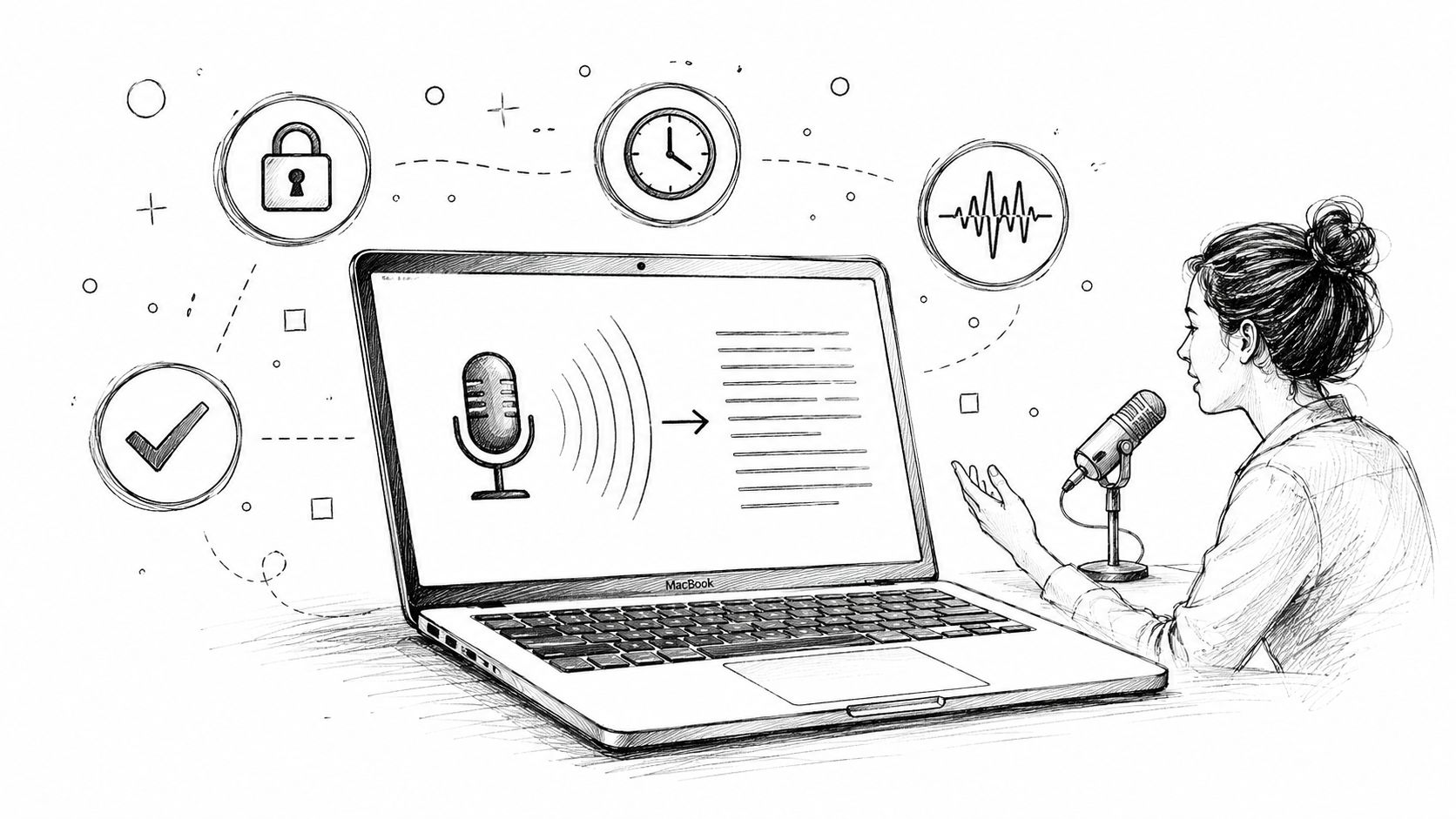
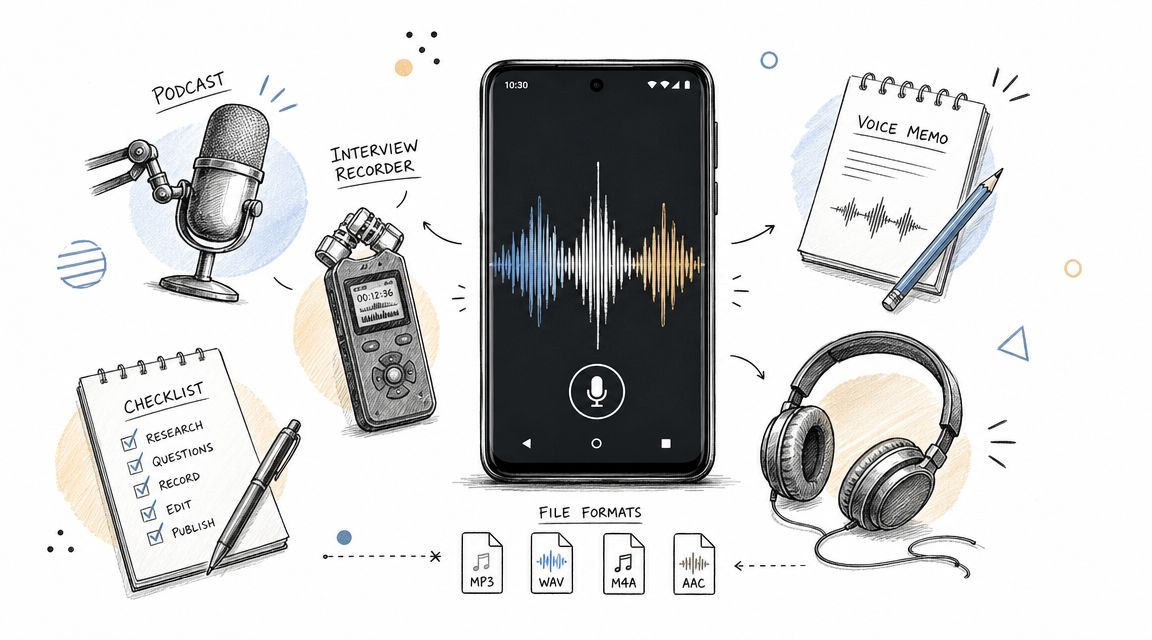
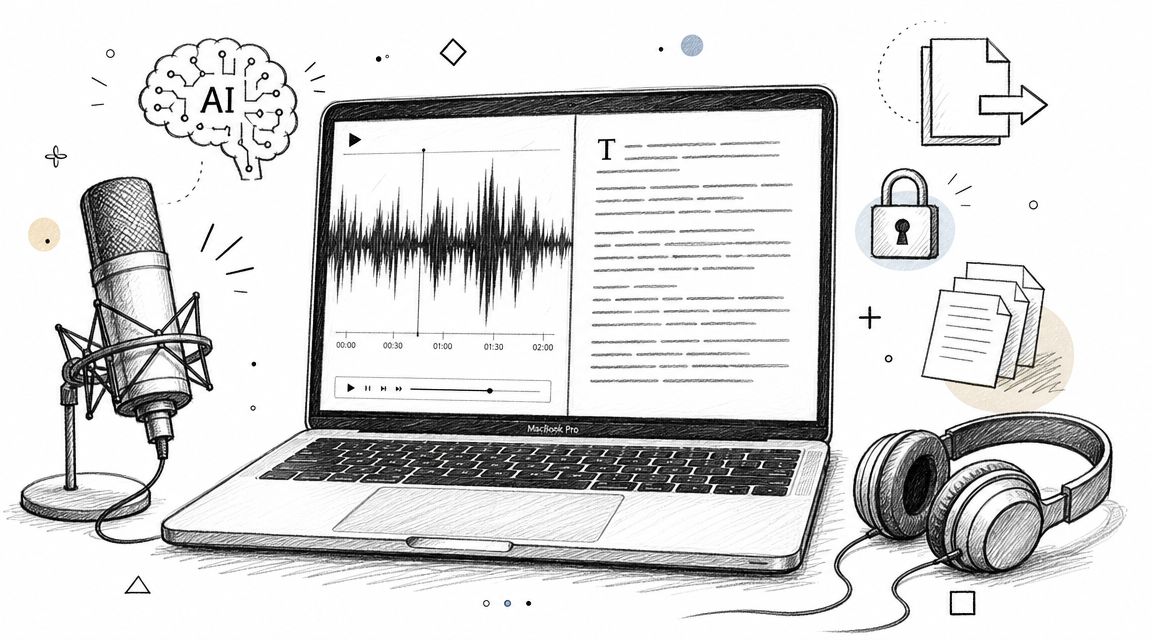
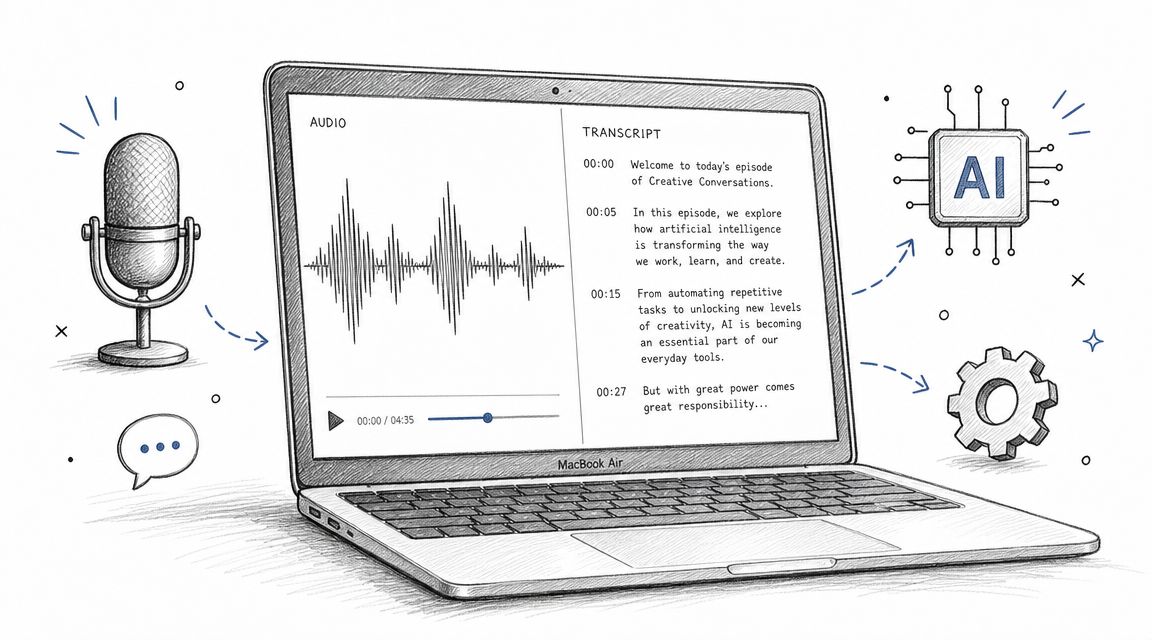
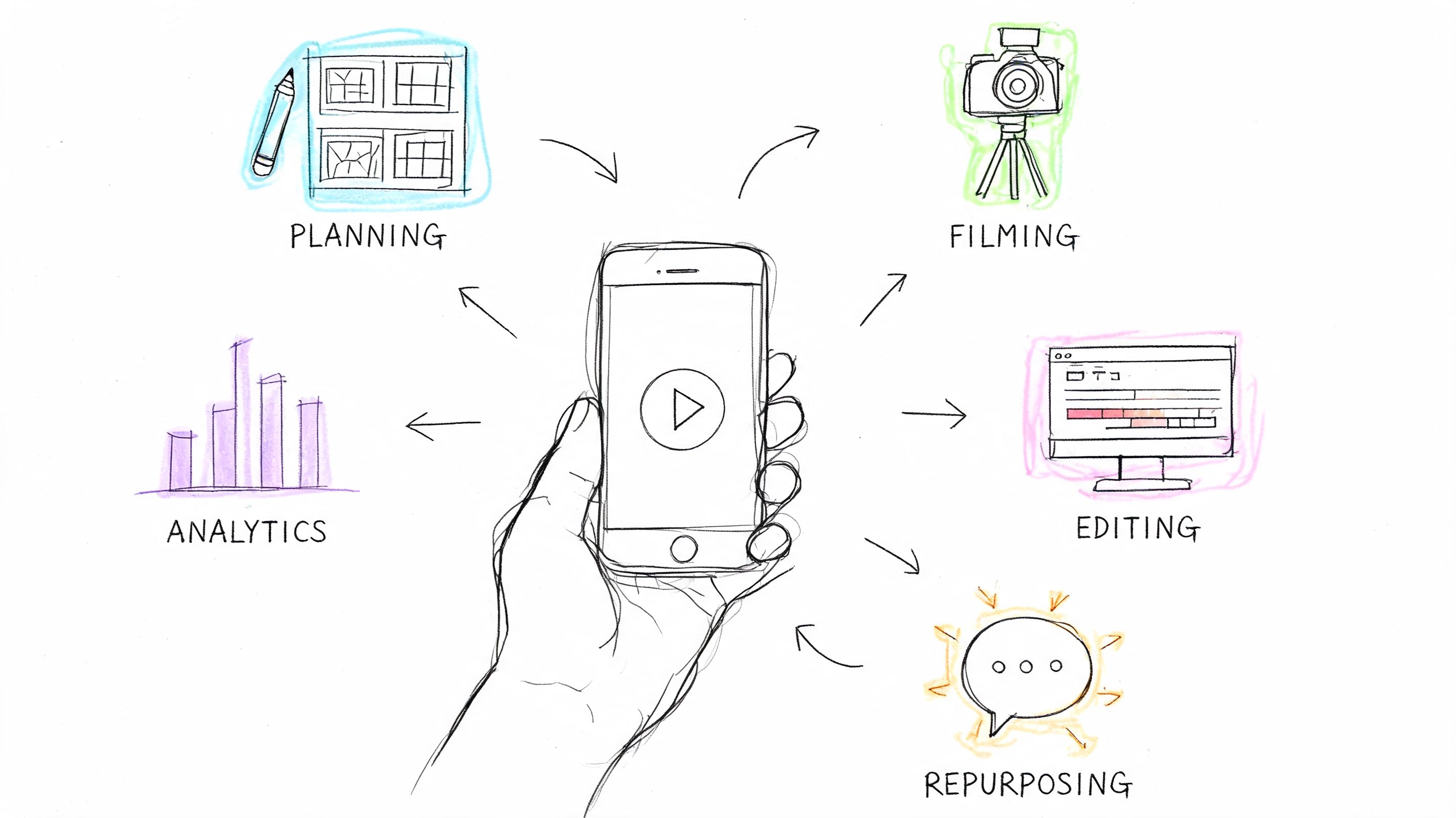
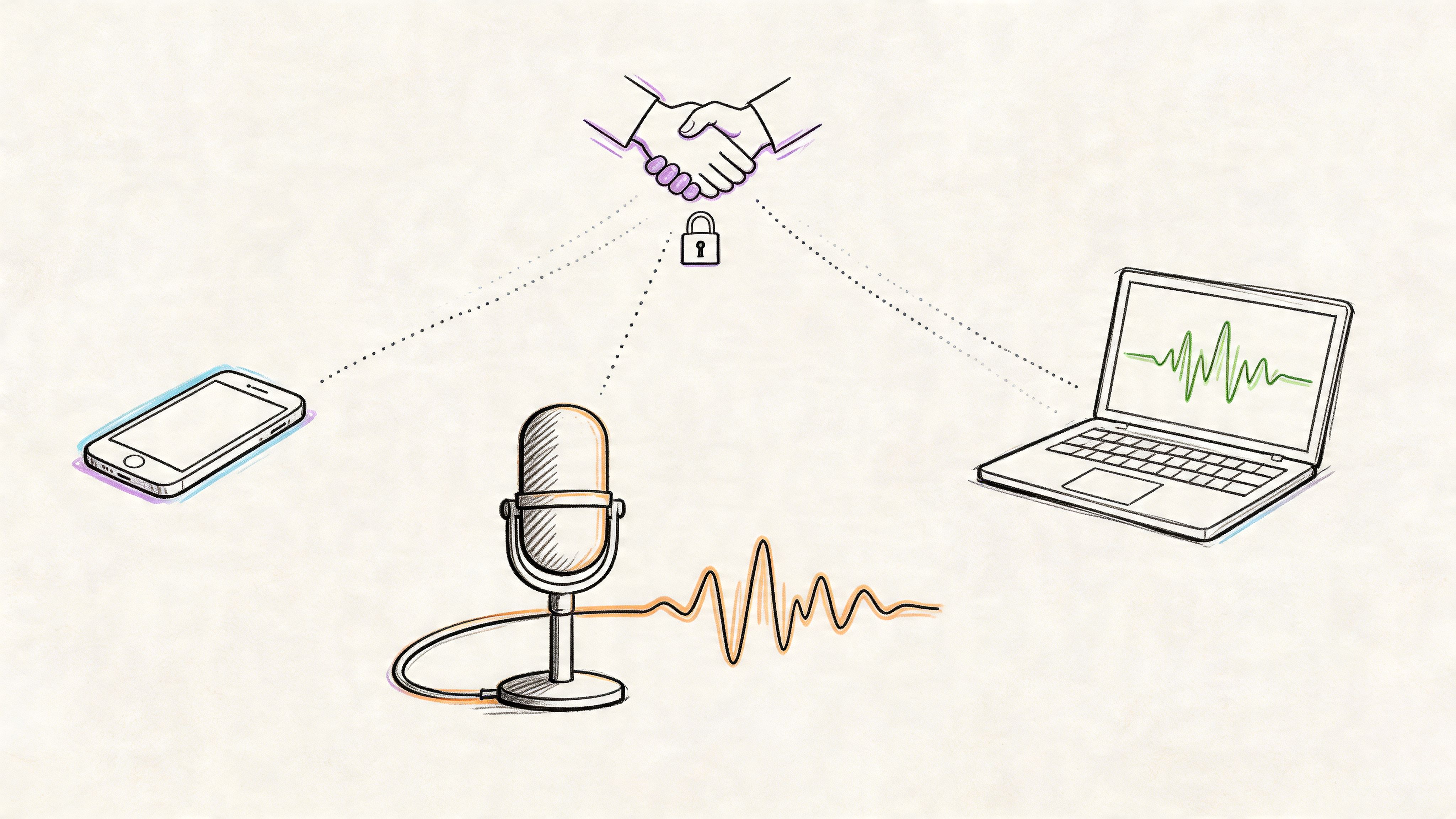
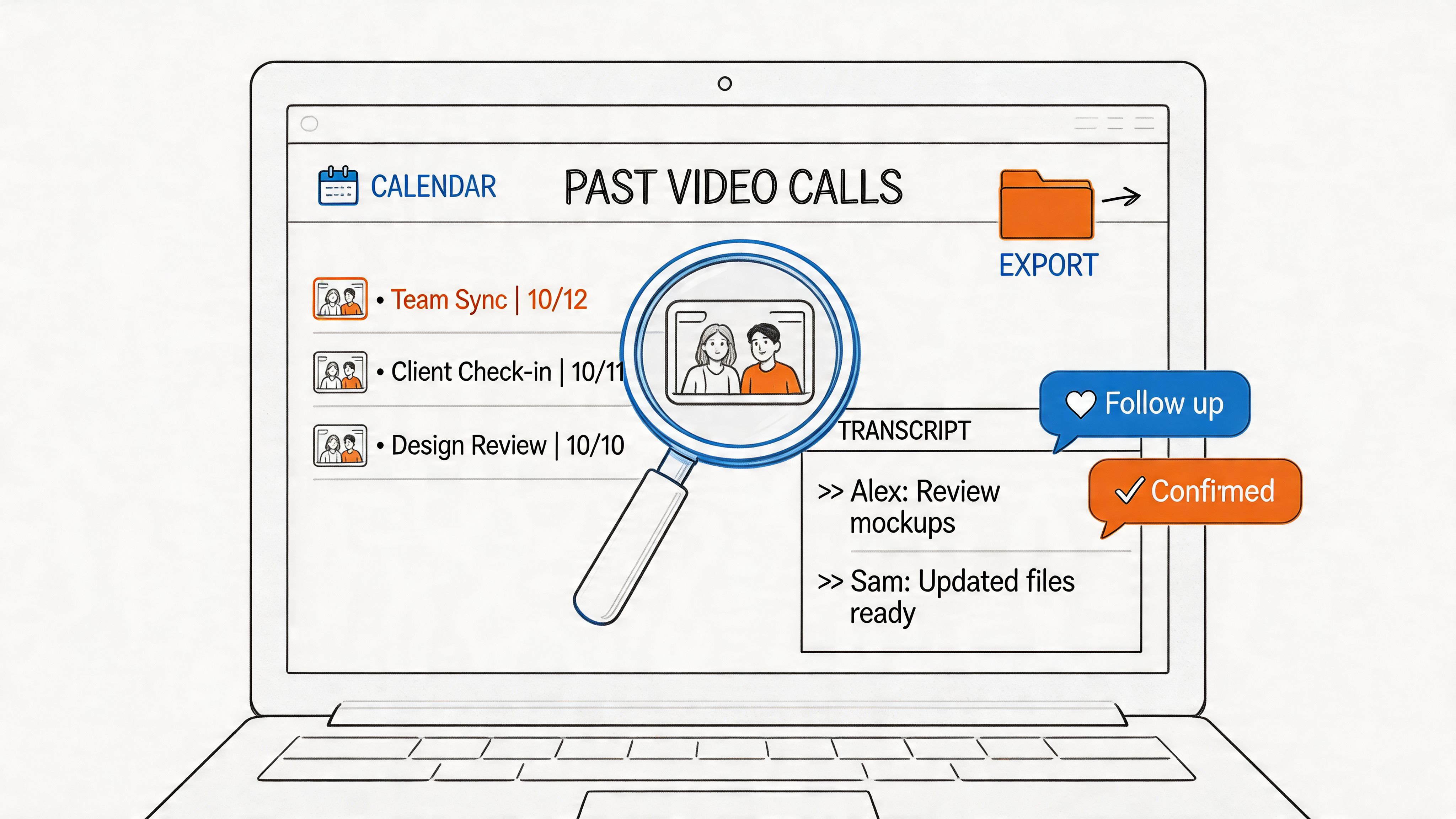
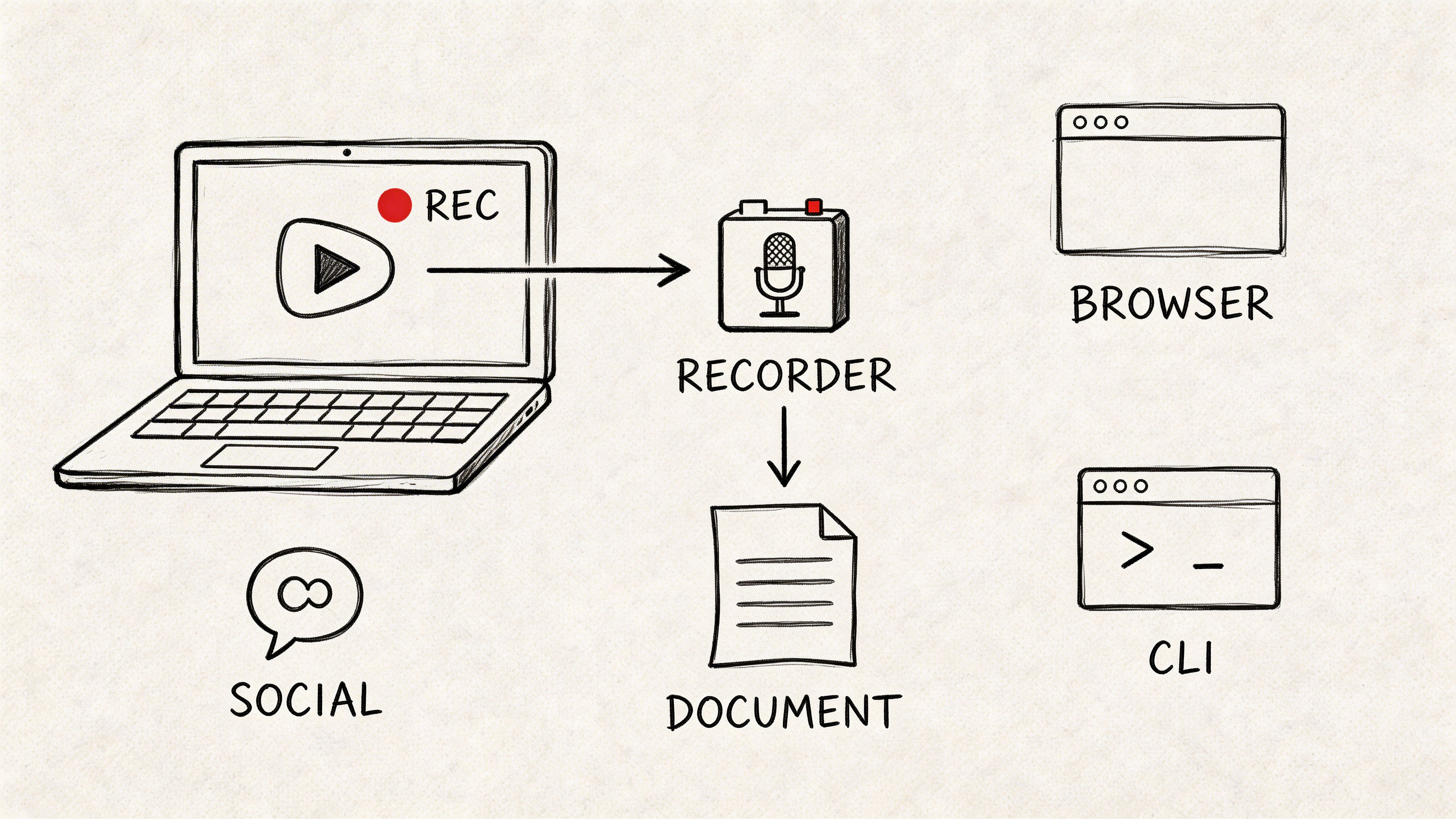
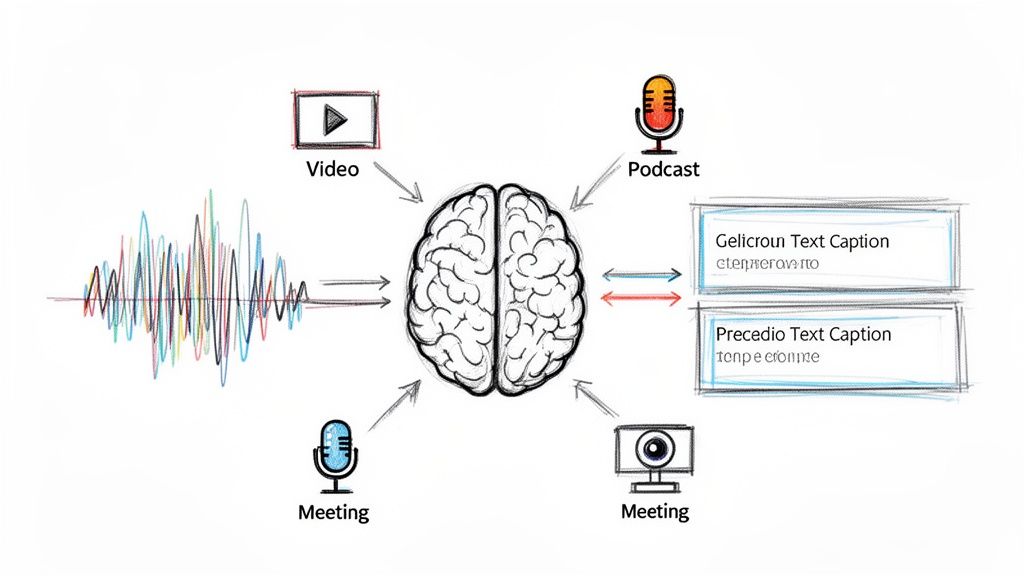
- Record the meeting audio or video
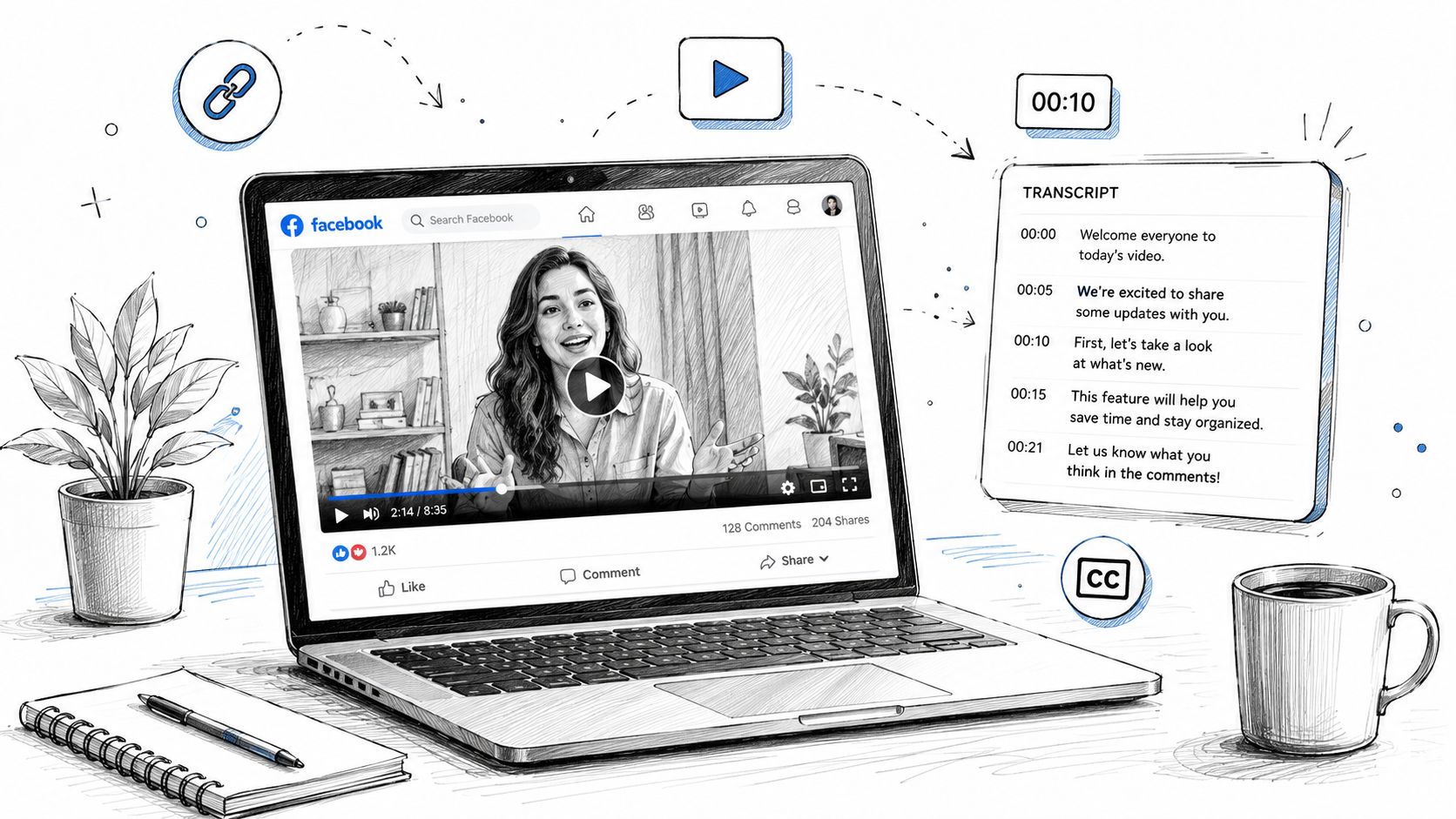
- Upload the file or meeting link into your transcription workflow
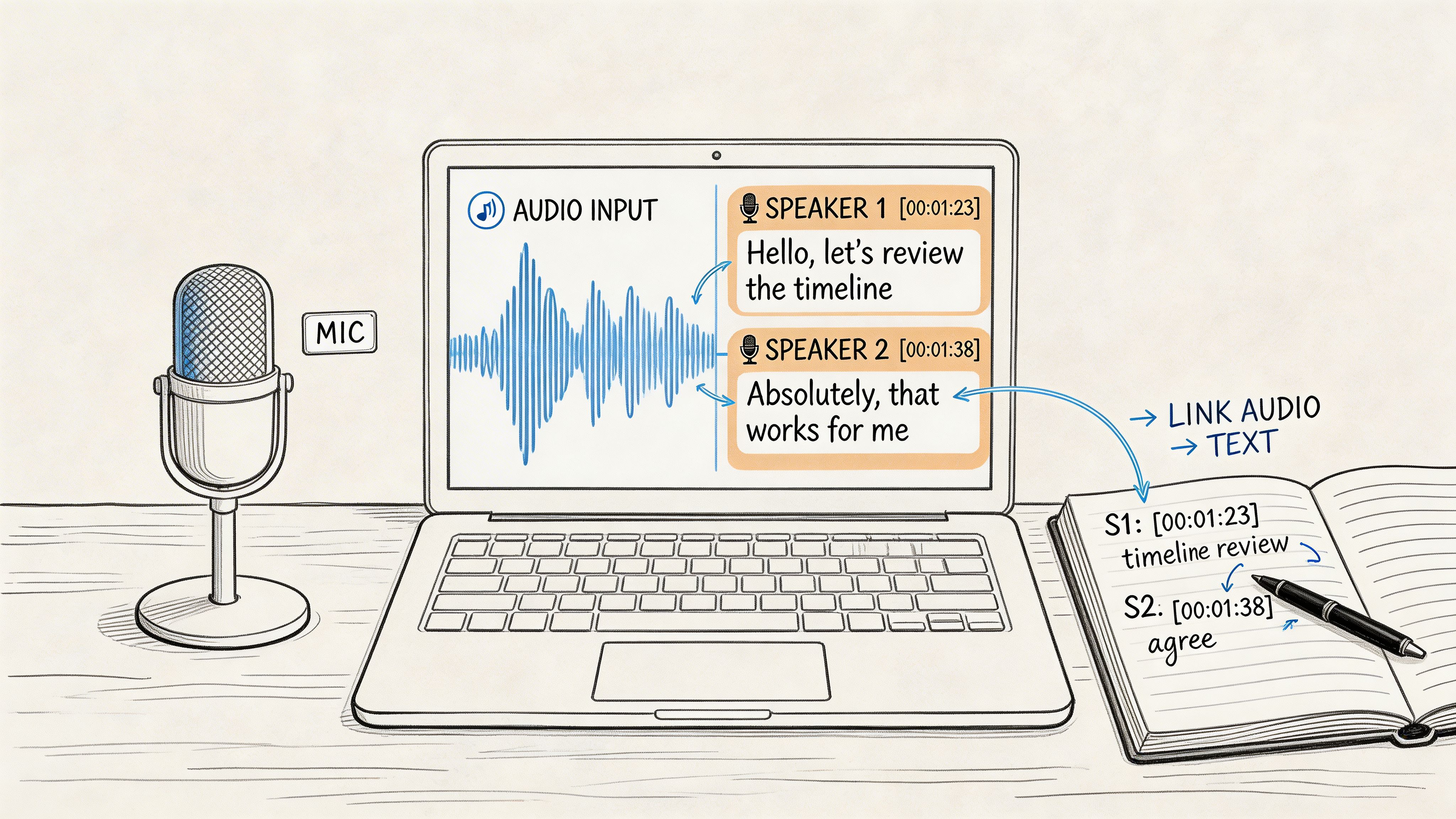
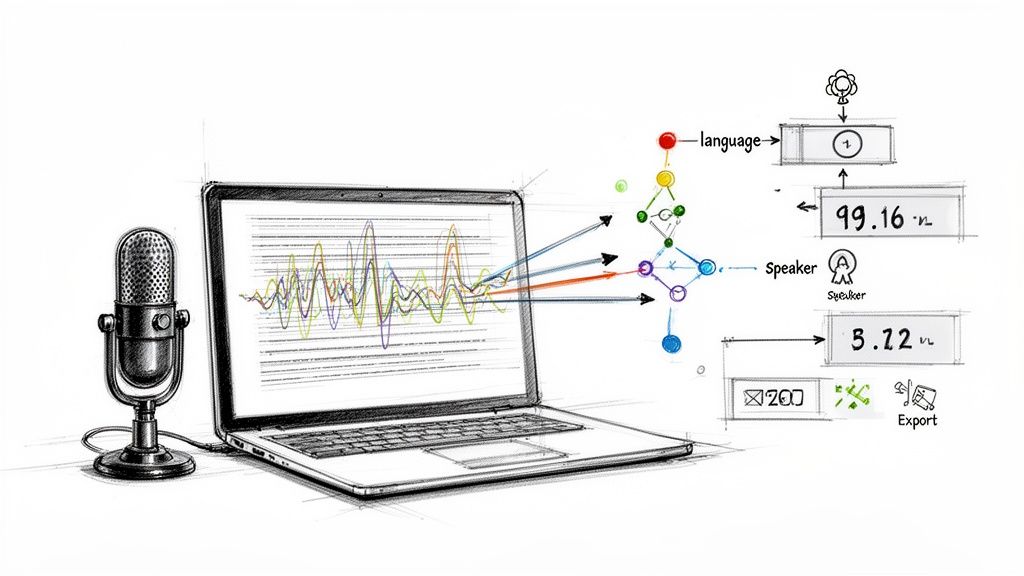
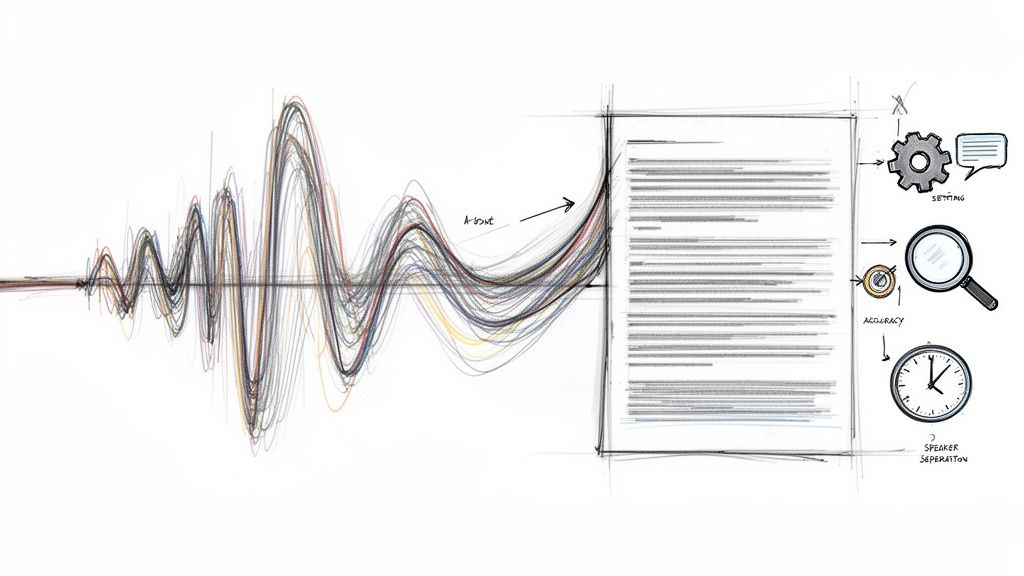
- Review the transcript with speaker labels and timestamps
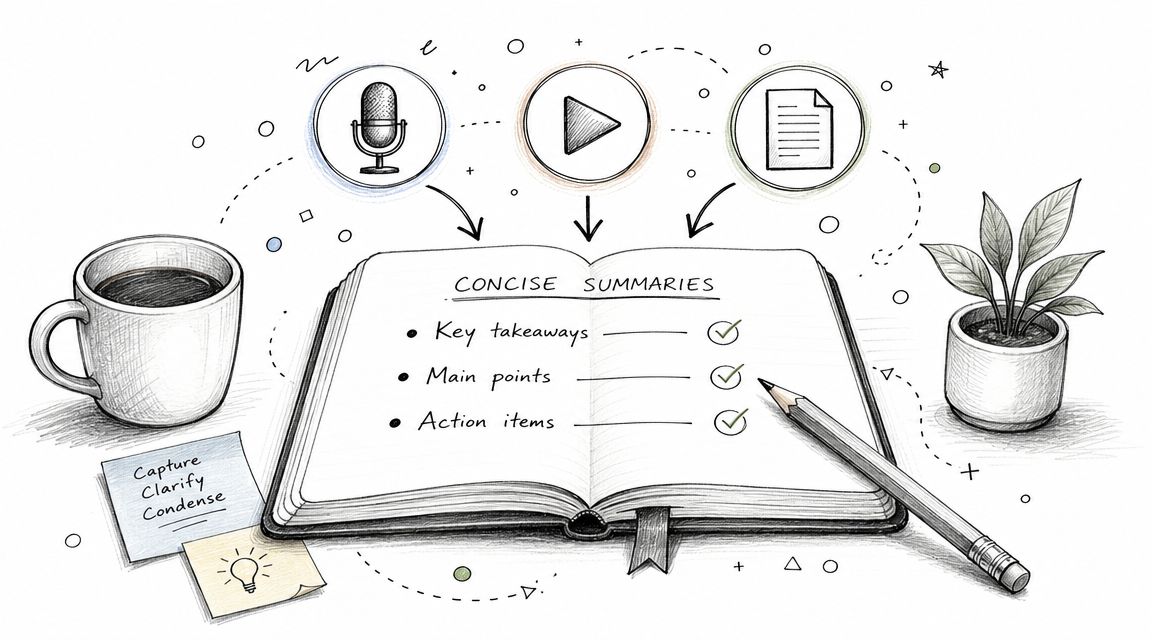
- Generate a summary for key points
- Pull out action items, owners, and deadlines
- Share the cleaned follow-up in your team’s working channel
This works because it removes the weakest link in most team rituals: manual recall. The meeting no longer depends on one person taking perfect notes while also participating.
What to capture after every check-in
The output should be short enough to read and specific enough to act on.
A practical follow-up note usually includes:
- Decisions made: What changed, if anything
- Open blockers: What still needs resolution
- Assigned actions: Who owns the next step
- Timing: When the follow-up is expected
- Watch items: Issues to revisit in the next check-in
If your team is experimenting with office setups and routines that enhance the hybrid work environment, this kind of structured documentation matters even more because people aren’t absorbing context from the same physical room every day.
Where AI fits without getting in the way
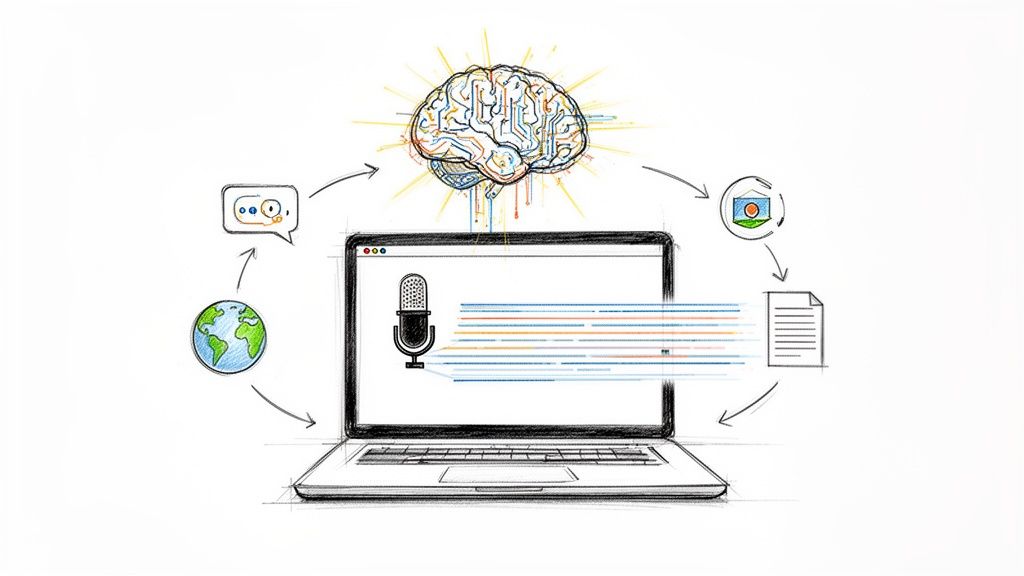
AI is most helpful when it handles the mechanical parts of meeting follow-up. It shouldn’t replace judgment. It should remove friction.
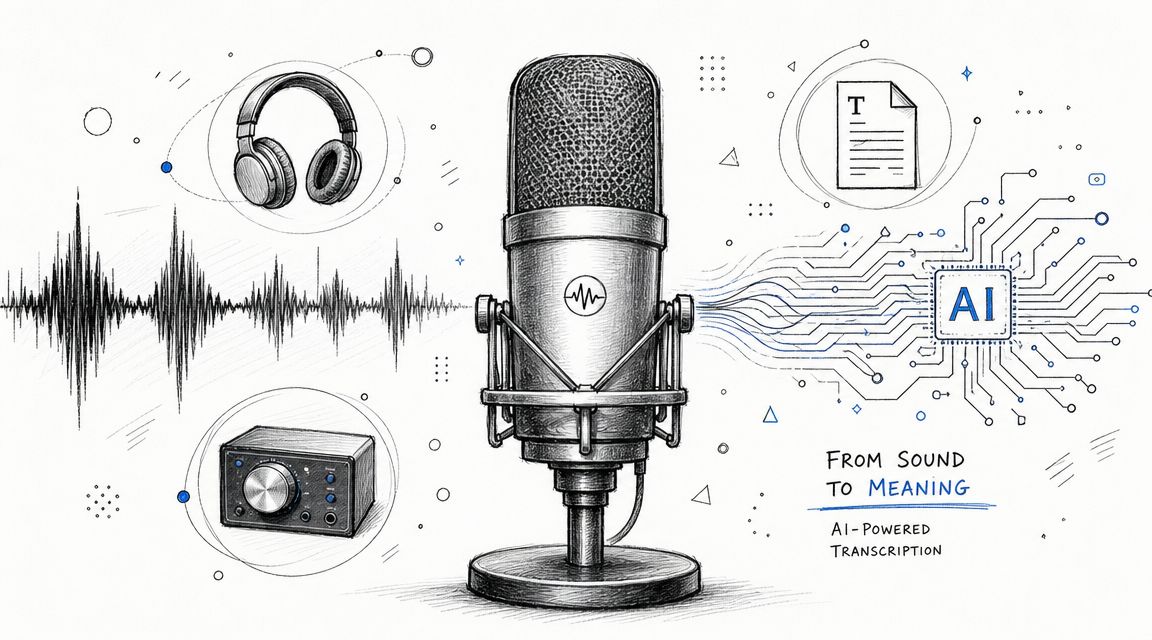
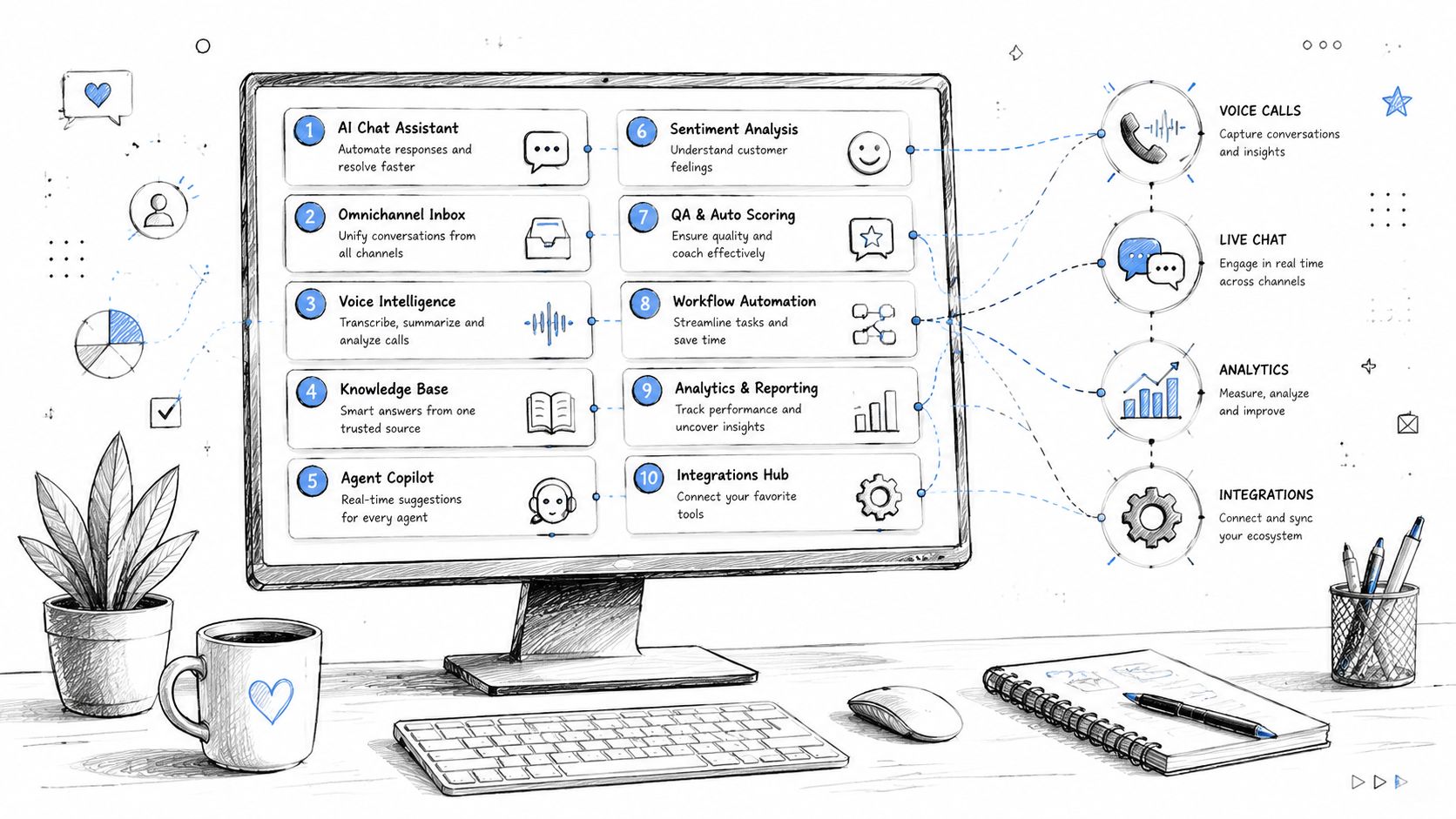
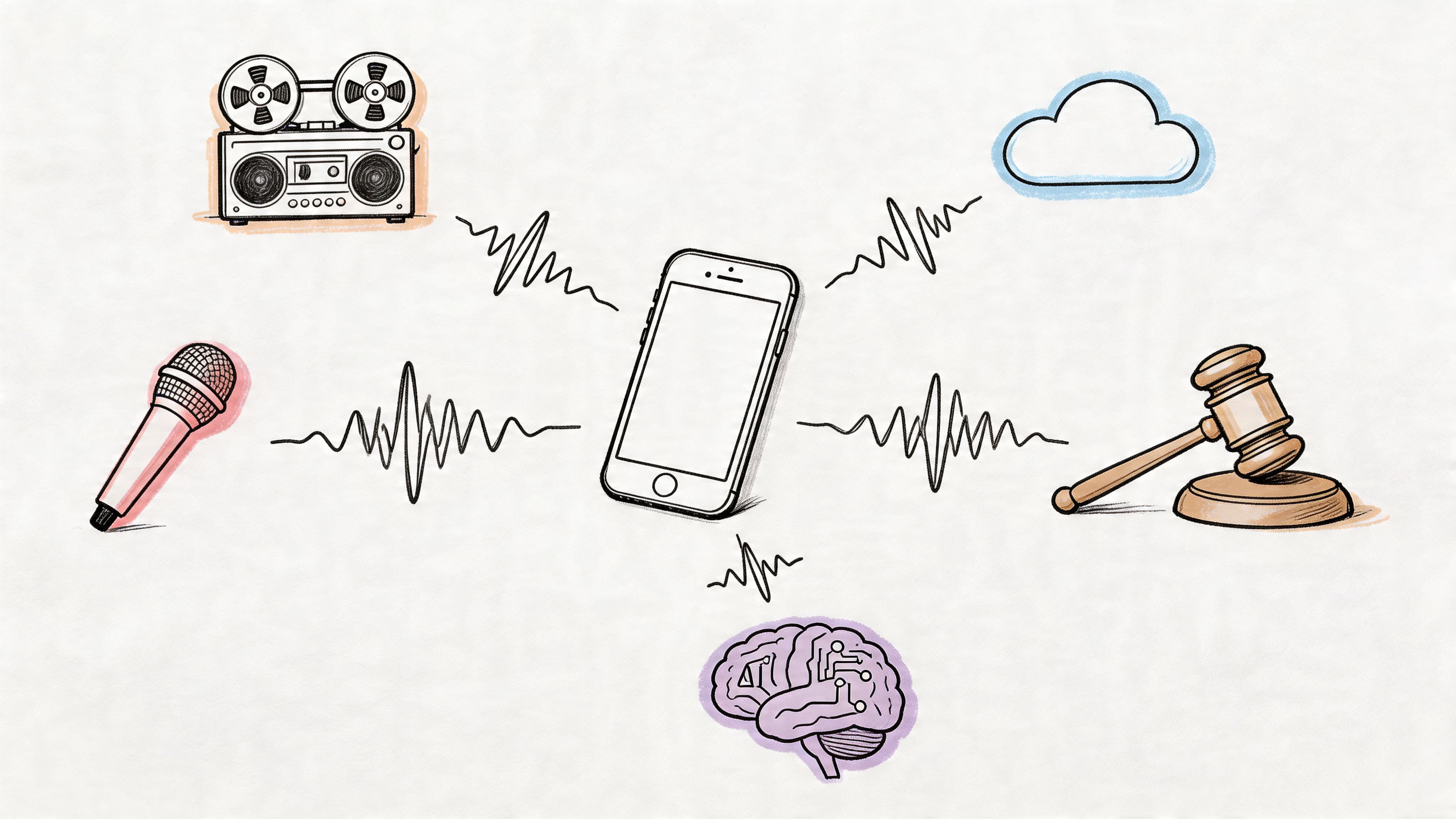
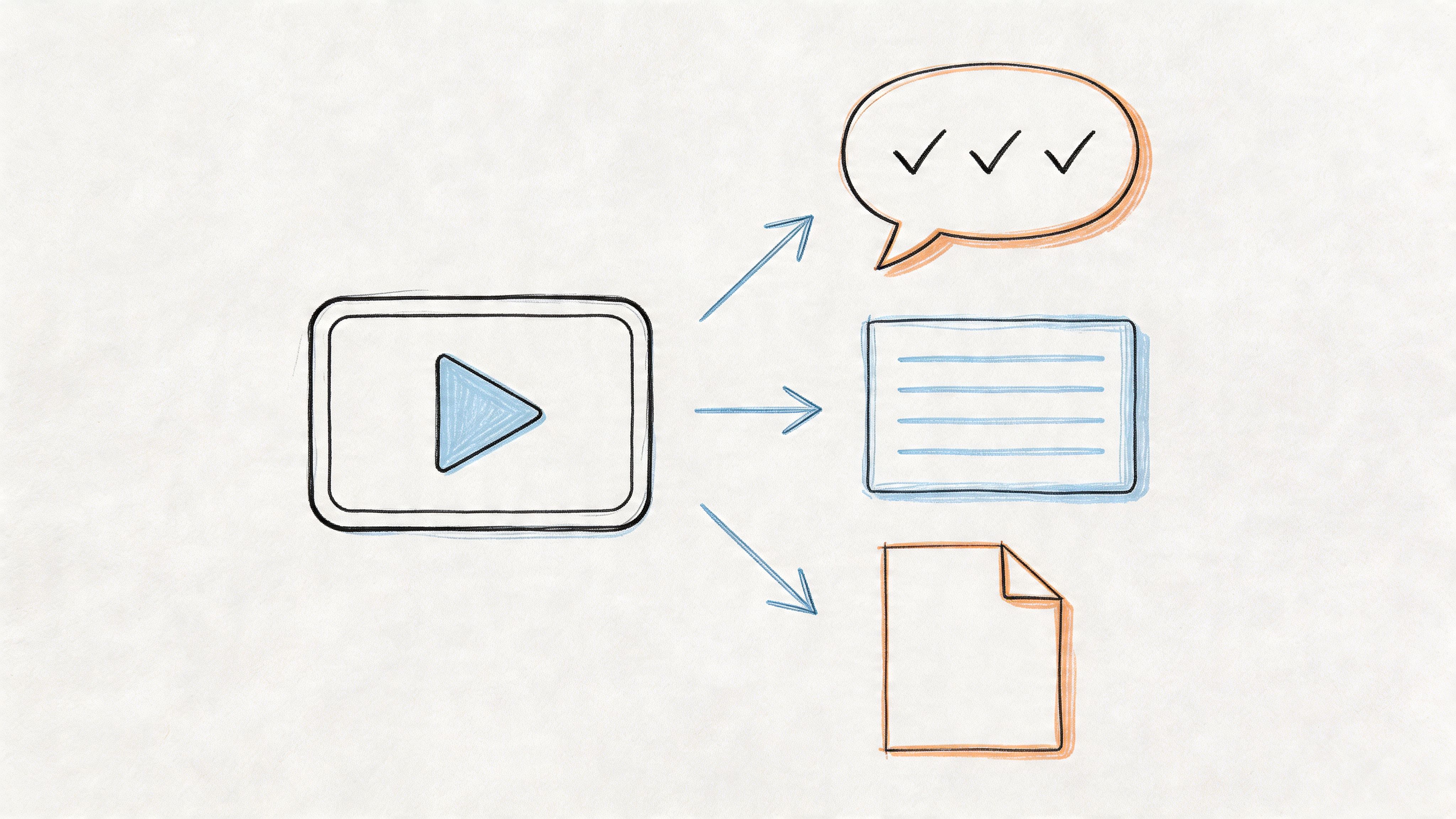
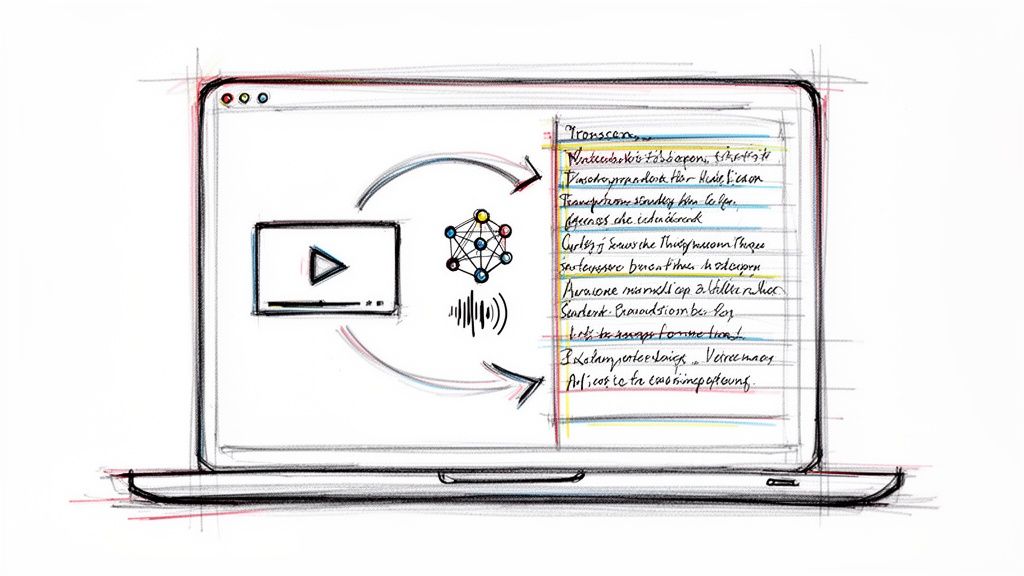
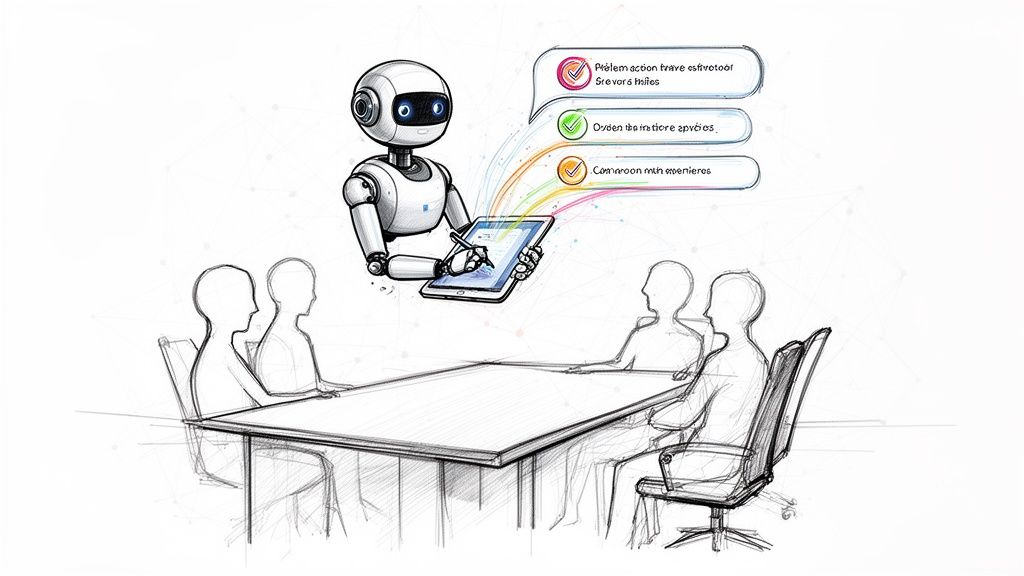
For example, a good workflow can transcribe the meeting, summarize discussion themes, and extract action items so the manager only needs to verify accuracy and send the final version. That’s much better than spending the next half hour trying to reconstruct who agreed to what.
For teams exploring this approach, a practical starting point is reviewing examples of AI for meeting notes and then applying the same structure consistently across weekly team syncs, stand-ups, and 1:1 recaps.
The best meeting note system is the one your team will actually trust enough to use next week.
If the notes are incomplete, late, or inconsistent, people stop relying on them. Once that happens, the check-in loses half its value.
Turn Your Check Ins into a Strategic Advantage
A good check in meeting isn’t extra process. It’s one of the simplest ways to reduce confusion, catch risk early, and keep a team coordinated without constant supervision. The format matters, the facilitation matters, and the follow-through matters just as much as the conversation itself.
Start small. Tighten one recurring meeting. Strip it back to status, near-term goals, and blockers. Time-box it. Capture actions clearly. Then improve the follow-up so next week starts with facts instead of fuzzy memory.
If you want more consistency after the meeting, use a simple action item tracking template so ownership and deadlines don’t vanish the moment the call ends.
The teams that get the most from check-ins don’t treat them as ceremony. They treat them as operating discipline.
If you want a faster way to turn recordings into transcripts, summaries, and usable follow-up notes, try Whisper AI. It helps teams capture meeting content, pull out action items, and keep check-ins from disappearing into the post-meeting void.