A Guide on How to Improve Reading Comprehension Skills
Improving your reading comprehension isn't just about recognizing words on a page; in my experience, it's about actively wrestling with the text to pull out its meaning. I've found the best way to do this is by combining a few key habits: growing your vocabulary, intentionally building up your background knowledge on different subjects, and using active reading strategies like questioning and summarizing as you go.
Why You Struggle to Retain What You Read
Ever get to the bottom of a page—or worse, a whole chapter—and realize you have no idea what you just read? It’s a frustratingly common experience, and it happens for a simple reason: seeing words isn't the same as understanding them.
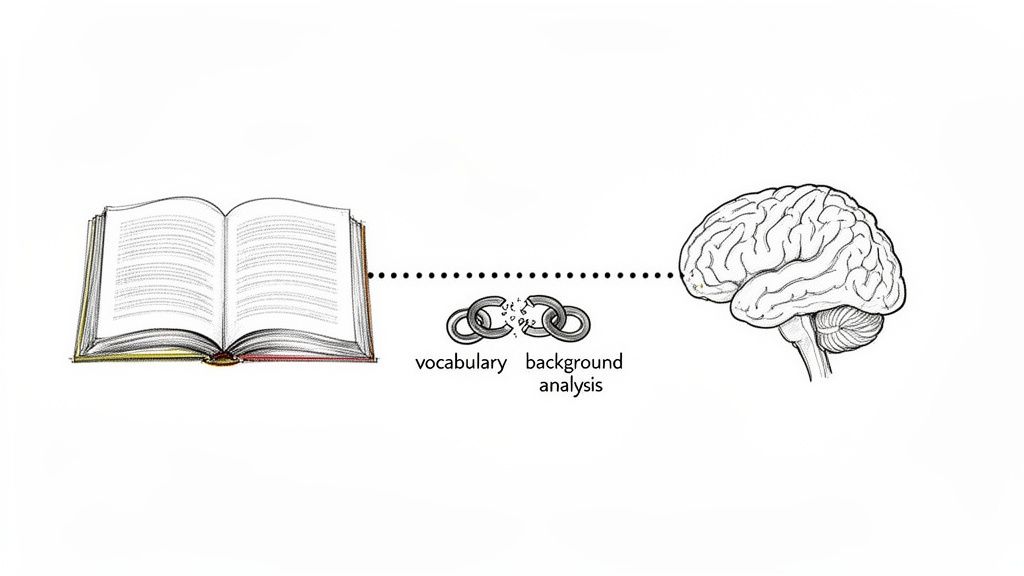
Reading is just the first step: decoding letters and words. Comprehension is the real work—the mental heavy lifting of piecing those words together to build actual meaning.
The gap between seeing and understanding is where the trouble starts. If the core components of comprehension aren't there, the words just sit on the page, never quite connecting into a clear thought. It's like trying to build a bridge with a few key support beams missing. The whole structure is bound to collapse.
The Foundations of Understanding
To really get what you're reading, your brain relies on a few critical components. When any one of these is shaky, the whole process can break down. This is why a dense academic paper feels completely different from a novel you can't put down.
Let's break down these foundational pillars. Each one plays a distinct but interconnected role in helping you build meaning from text.
Key Pillars of Reading Comprehension
If you're reading something and it just isn't sticking, chances are one of these pillars is the weak link. It’s what makes reading an article on quantum physics feel like listening to a conversation in a language you don’t speak—you might catch a word here and there, but the real meaning is lost.
Why Consistent Practice is Non-Negotiable
Another huge hurdle is simply not reading enough. Like any other skill, comprehension gets rusty without regular practice. The drop in daily reading is having a real impact; recent data reveals that 54% of U.S. adults read below a 6th-grade level.
The good news is that building a consistent reading habit is a powerful way to fight this. The more you read, the more you naturally build the vocabulary and inference skills you need for deeper understanding. For a closer look at these trends, check out the latest findings on literacy from The Nation's Report Card.
Strengthening these pillars takes conscious effort. It’s not about reading faster; it’s about reading smarter. By engaging with what you read, making connections, and actively building your mental library, you can turn words on a page into knowledge that actually sticks. Many of these techniques are the same ones used in effective study sessions, and you can learn more in our guide on how to improve note-taking skills.
Master Active Reading Strategies
Ever read a full page only to realize you absorbed absolutely nothing? That’s passive reading. It’s like having music on in the background—you can hear it, but you aren’t really listening. Your eyes move across the words, but your mind is a million miles away.
The fix is to become an active reader. This means turning a one-way street of information into a two-way conversation with the author. It's not just a mindset shift; it's about using practical, hands-on techniques that force your brain to grapple with the material. This is how you build the habits for deep understanding and long-term retention.
Engage Before You Read a Single Sentence
Believe it or not, your work starts before you even read the first paragraph. A few minutes of prep can make a massive difference in what you get out of a text. This initial survey builds a mental framework, giving all the new information a place to land.
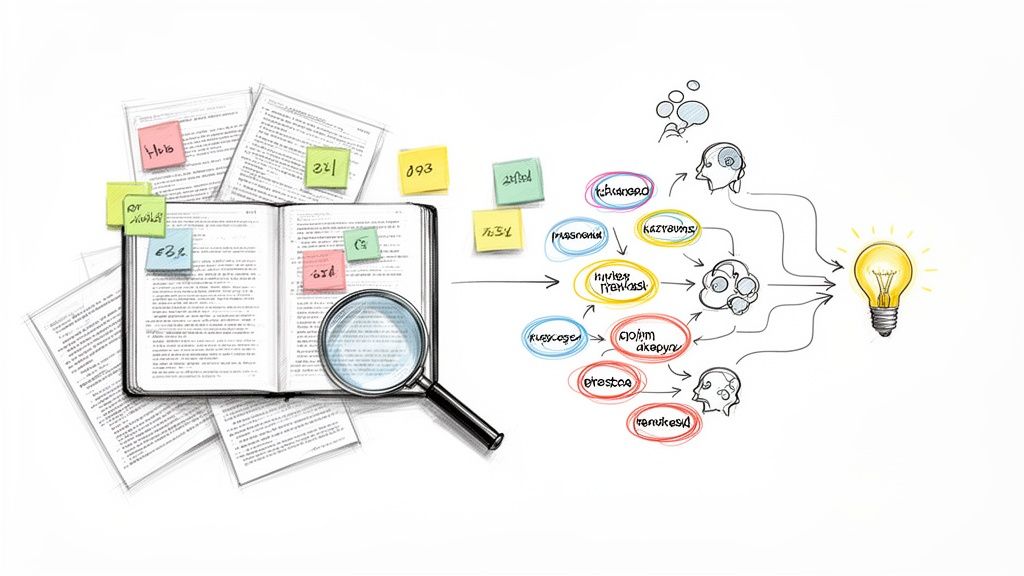
Start by simply scanning the material. Look at the headings, subheadings, any bolded words, and check out the images or charts. This quick preview gives you a high-level map of the content. You're not going in blind.
Next, turn those headings into questions. If a section is called "The Economic Impact of Automation," mentally ask, "So, what are the economic impacts of automation?" This simple trick primes your brain to hunt for specific answers as you read, which keeps you focused and gives your reading a clear purpose.
Turn Reading Into a Conversation
Once you dig in, the goal is to keep that engagement going. You have to fight the urge to let your eyes just glaze over the text. The best way to do that is to make notes, ask questions, and summarize as you go.
This whole process is often called annotation, and it’s really about creating a dialogue with the text. Your notes are a physical record of your thoughts, questions, and ideas.
- Highlight with purpose: Don't just paint entire paragraphs yellow. Zero in on the main idea of a section or a single, powerful supporting detail.
- Write in the margins: This is where the real thinking happens. Jot down questions, connect an idea to something you already know, or quickly summarize a dense paragraph in your own words.
- Flag confusing parts: Put a question mark next to anything that doesn't make sense. This is your reminder to come back to it later or look it up.
Annotation forces you to slow down and think critically about what the author is actually saying. It changes reading from a passive activity into an active process of discovery.
Good annotation is a skill, but it's one of the most powerful tools for boosting comprehension. To see different styles in action, you can get some great ideas from our collection of note-taking examples.
Use a Proven Framework for Tough Texts
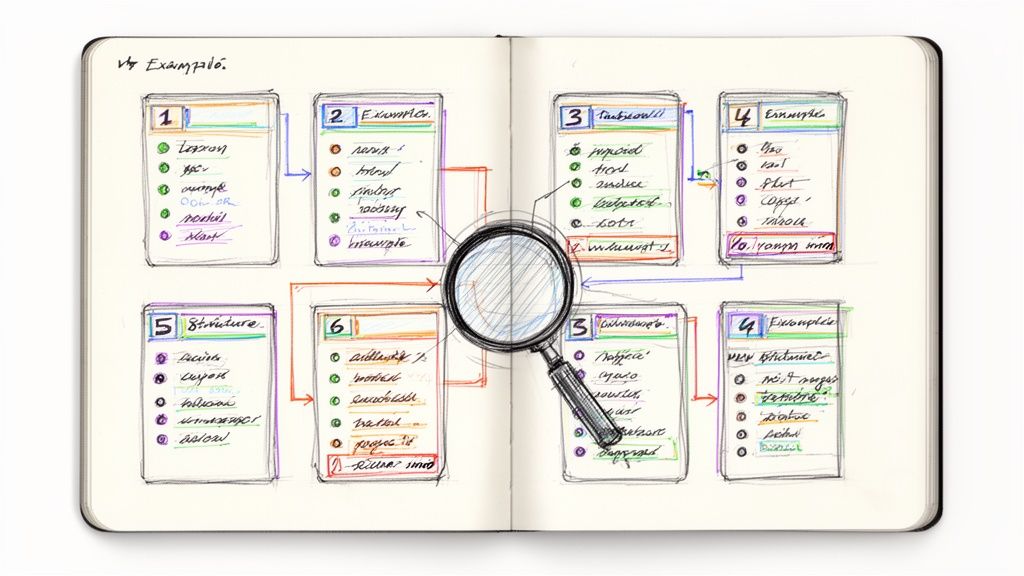
For dense or really challenging material, having a structured approach can be a lifesaver. One of the most effective methods out there is SQ3R: Survey, Question, Read, Recite, and Review. It’s a time-tested system for breaking down any reading material.
This framework carves the reading process into manageable steps, making sure you engage with the content on multiple levels. Let’s walk through a real-world scenario.
Imagine you're a marketing manager who needs to get up to speed on a lengthy industry report before a big meeting tomorrow.
- Survey: First, you spend five minutes skimming the executive summary, headings, and charts. You just want the gist.
- Question: You turn the main section titles ("Market Trends," "Competitive Analysis") into direct questions ("What are the key market trends?" "Who are our top competitors?").
- Read: Now you read the report one section at a time, actively looking for the answers to the questions you just formed. You highlight key stats and make quick notes.
- Recite: After each major section, you look away and try to summarize its main points out loud or in a few quick bullets. No peeking.
- Review: When you’re done, you glance over all your notes, mentally walking through the report's main arguments to lock them in.
This process guarantees you don't just passively scan the information. To explore more strategies like this, there are great resources on how to develop reading comprehension skills. By combining these active techniques, you'll build a powerful toolkit for tackling any text that comes your way.
Building Your Vocabulary and Background Knowledge
If active reading strategies are the engine, then vocabulary and background knowledge are the fuel. It's that simple. You can't possibly make sense of a text if the words are a mystery or the core ideas are completely alien to you. Building these two pillars isn't a one-and-done task; it's a continuous process that pays off every single time you read.
I like to think of it as building a mental map. Every new word you learn is a landmark, and every bit of background knowledge is a new road connecting different parts of your brain. The more detailed that map becomes, the easier it is to navigate unfamiliar territory and find your way to true understanding.
Go Beyond the Dictionary Definition
Just looking up a word is not enough. I’ve found that true vocabulary building happens when you understand a word’s nuances and see how it behaves in the wild. The most effective way to learn words is within their natural habitat—the sentences and paragraphs where they actually live.
When a new word pops up, don’t just sprint to the dictionary. Pause and look at the words around it. What’s the tone of the sentence? The surrounding context gives you clues that a simple definition just can't provide.
For example, you might be reading a financial analysis and come across the word "arbitrage." The text will probably be talking about buying and selling assets in different markets. Suddenly, the dry definition—"the simultaneous buying and selling of securities..."—clicks into place because you’ve seen it in a real-world scenario.
Break Words Down to Figure Them Out
Here’s a powerful trick I use all the time: I break words into their component parts. So many English words are just combinations of Greek and Latin roots, prefixes, and suffixes. If you learn these common building blocks, you can make surprisingly accurate educated guesses about words you've never seen before.
Let’s try it with the word "monolithic."
- Mono-: A prefix meaning "one" or "single."
- Lith: A root word meaning "stone."
- -ic: A suffix meaning "having the characteristics of."
Put them together, and "monolithic" literally means "like a single stone." Even without a dictionary, you can figure out it describes something massive, solid, and uniform. This little skill turns intimidating vocabulary into solvable puzzles.
Be Strategic About Building Background Knowledge
Vocabulary is crucial, but it's only half the story. Background knowledge gives your brain the framework it needs to hang new information on. It's that "ah, I've seen something like this before" feeling that makes a dense article suddenly feel manageable.
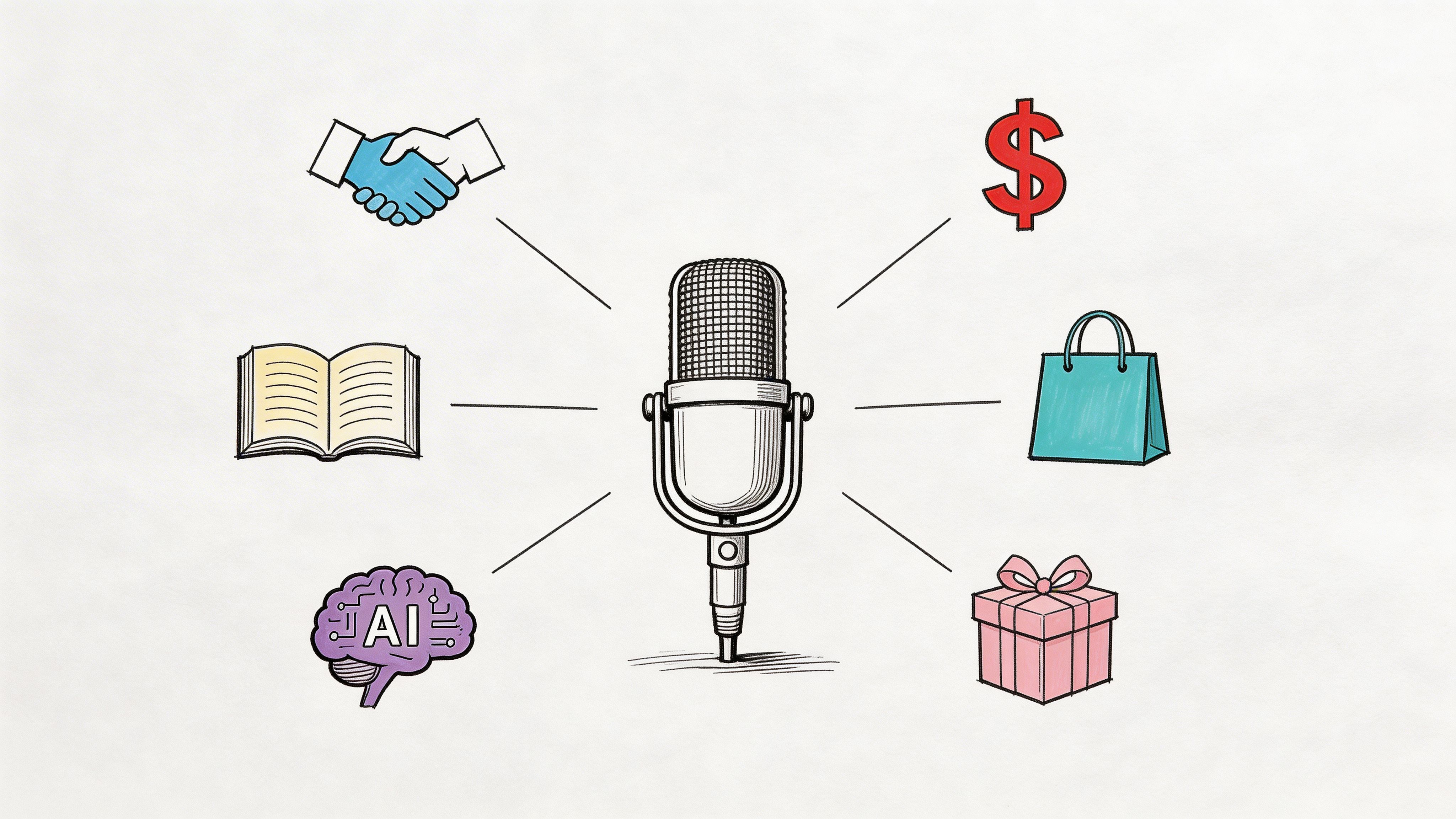
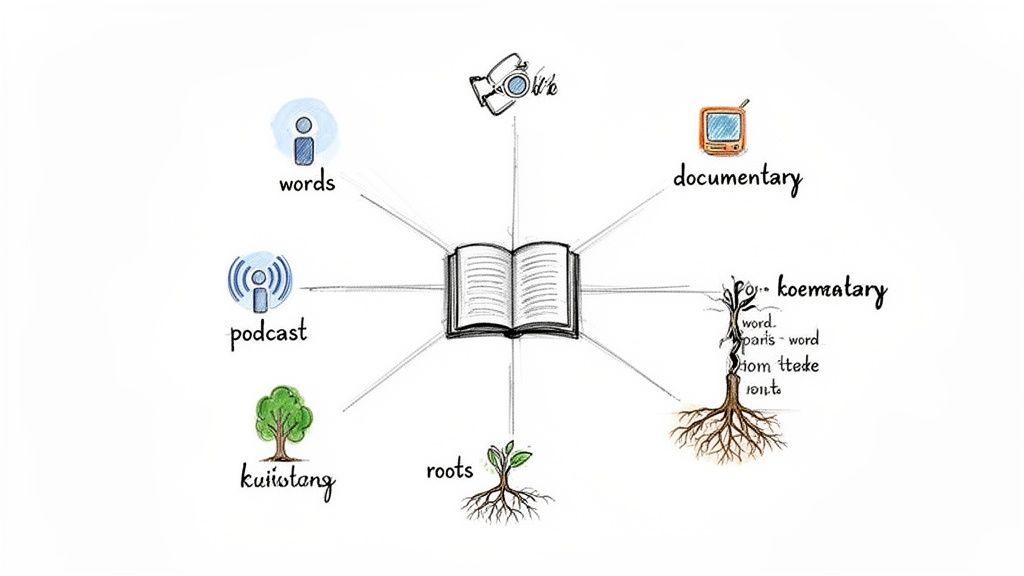
The key is to build this knowledge with purpose, especially in areas that are important to you. If you're a content creator trying to get up to speed on AI, you can't just hope you'll absorb what you need. You have to actively immerse yourself in that world.
The goal isn't to become an expert in everything overnight. It's about creating a rich, interconnected web of knowledge in your chosen field, making each new piece of information you read easier to place and understand.
This kind of strategic learning transforms reading from a chore into a reward. Every article or podcast adds another layer to your understanding, which makes the next one even easier to get through. This is the secret to how to improve reading comprehension skills for the long haul.
Create a Knowledge "Diet"
To make this feel less abstract, map out a simple plan for how you'll take in new information. Don't just click on random articles; be deliberate. Think about the formats you enjoy and build a routine around them.
Here’s what a practical plan might look like for a social media manager wanting to get smarter about digital marketing:
- Read Foundational Content: Each week, read two or three in-depth articles from trusted sources like HubSpot or Search Engine Journal. Use your active reading strategies to pull out key takeaways.
- Listen to Industry Experts: Use your commute to listen to podcasts like "Social Media Marketing Podcast." This is a fantastic way to hear how experts talk and what they're focused on.
- Watch High-Level Discussions: Once a week, watch a YouTube interview with a marketing executive. This gives you a better handle on high-level strategy and where the industry is headed.
Mixing up the formats like this keeps things from getting stale and helps you build a much more complete mental model of your field. When you consistently feed your brain high-quality information, you’re laying a foundation that makes everything you read more accessible and meaningful.
Think Like a Detective: Sharpening Your Critical Thinking and Inference Skills
Truly getting a text means you have to do more than just read the words on the page. It’s about becoming a detective—reading between the lines to figure out what the author isn't saying outright. This is where inference and critical thinking come in, and they're the skills that turn you from a passive reader into an active thinker.
When you start to think critically about your reading, you begin to see the subtle choices an author makes. The specific words they pick, how they put a sentence together, and what evidence they include (or conveniently leave out) all work together to shape the message. Developing this critical eye is crucial for evaluating everything from a news article to a research paper.
Uncover the Author's Purpose and Tone
Every piece of writing has a purpose. The author might be trying to inform, persuade, entertain, or even warn you. Your first job as a critical reader is to figure out that underlying goal. The biggest clue you have is the author's tone—their attitude about the subject.
Is the language detached and objective, or is it emotional and trying to get a rise out of you? An academic paper will stick to neutral language to present facts. On the other hand, an opinion column might use urgent, loaded words to stir up a strong reaction.
Look at these two sentences describing the same event:
- Example 1: "The company initiated a strategic restructuring, resulting in the elimination of approximately 500 positions."
- Example 2: "The corporation callously fired 500 loyal workers in a desperate bid to cut costs."
The first one uses a neutral, corporate tone to simply inform. The second uses an emotional, critical tone ("callously," "desperate") to convince you the company's actions were wrong. Being able to spot this difference is a huge step in improving your reading comprehension because it reveals the author's bias and their real agenda.
Practice Making Inferences from Clues
Inference is all about drawing logical conclusions based on the evidence in the text, mixed with what you already know about the world. Authors rarely spell everything out for you; they expect you to connect the dots yourself.
Think of it like being a juror. You're given pieces of evidence (the text), and you have to use logic to arrive at a verdict (the inference). A story might not say a character is angry, but if it describes him with "clenched fists, a furrowed brow, and a sharp, clipped tone," you can easily infer his emotional state.
A great way to build this skill is to constantly ask yourself "why?" Why did the author add this specific detail? Why is this character acting this way? These questions force you to hunt for clues and make educated guesses based on what you're given.
For some great, practical strategies on how to develop critical thinking skills, you can find resources that walk you through simple activities to do at home. The habit of asking "why" and then seeking out the answers is something you can build over time with a little practice.
Break Down Arguments to Find the Real Message
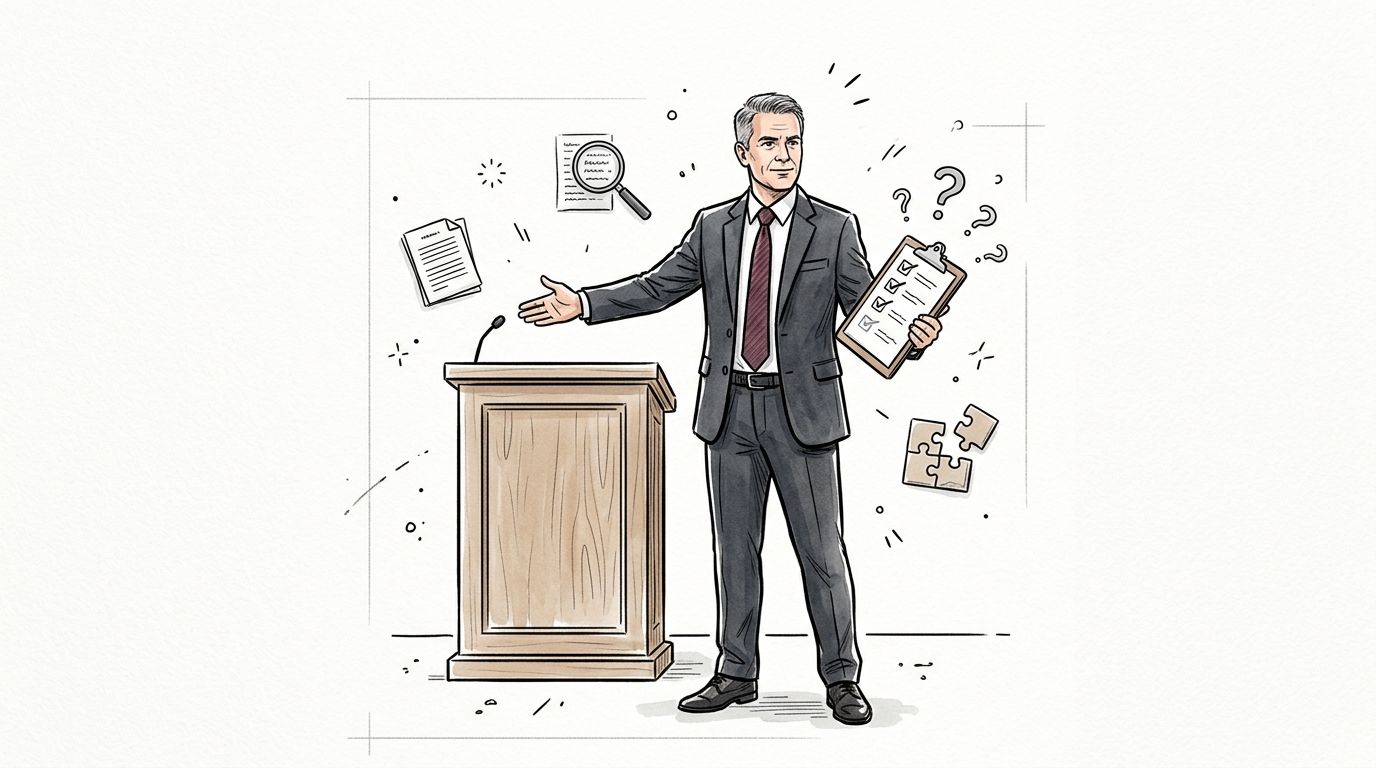
When you're reading something persuasive, like a marketing email or a political ad, your mission is to take the argument apart. Every argument has a central claim and some supporting evidence. Your job is to separate them and decide if the evidence actually holds up the claim.
Let's dissect a classic marketing line: "9 out of 10 dentists recommend our toothpaste."
A critical reader's mind should immediately jump to a few questions:
- Which dentists? Were they paid? Were they a random sample?
- How many were actually surveyed? Was it literally ten dentists, or was it a thousand?
- What was the real question? Were they asked to recommend it over using nothing at all, or was it compared to a major competitor?
This kind of analysis helps you see past the persuasive fluff and judge the argument on its own merits. By questioning the evidence, you can figure out if a claim is solid or just clever wording. This is what it means to move beyond simply taking in information to actively questioning and validating it—the core of great comprehension.
Using AI Tools for Comprehension Practice
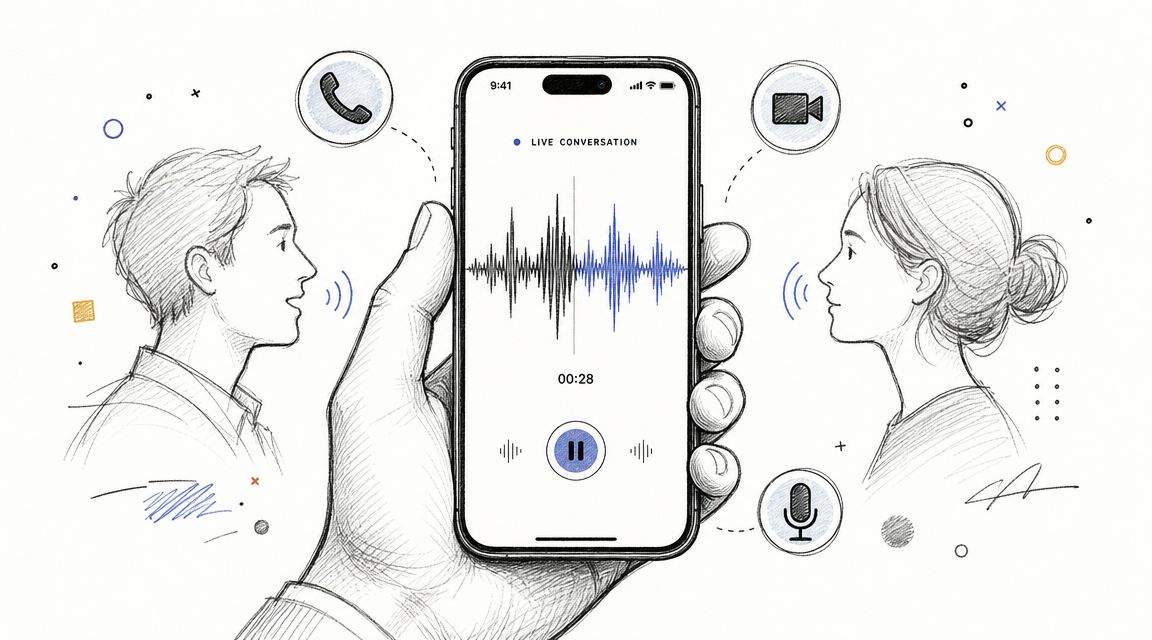
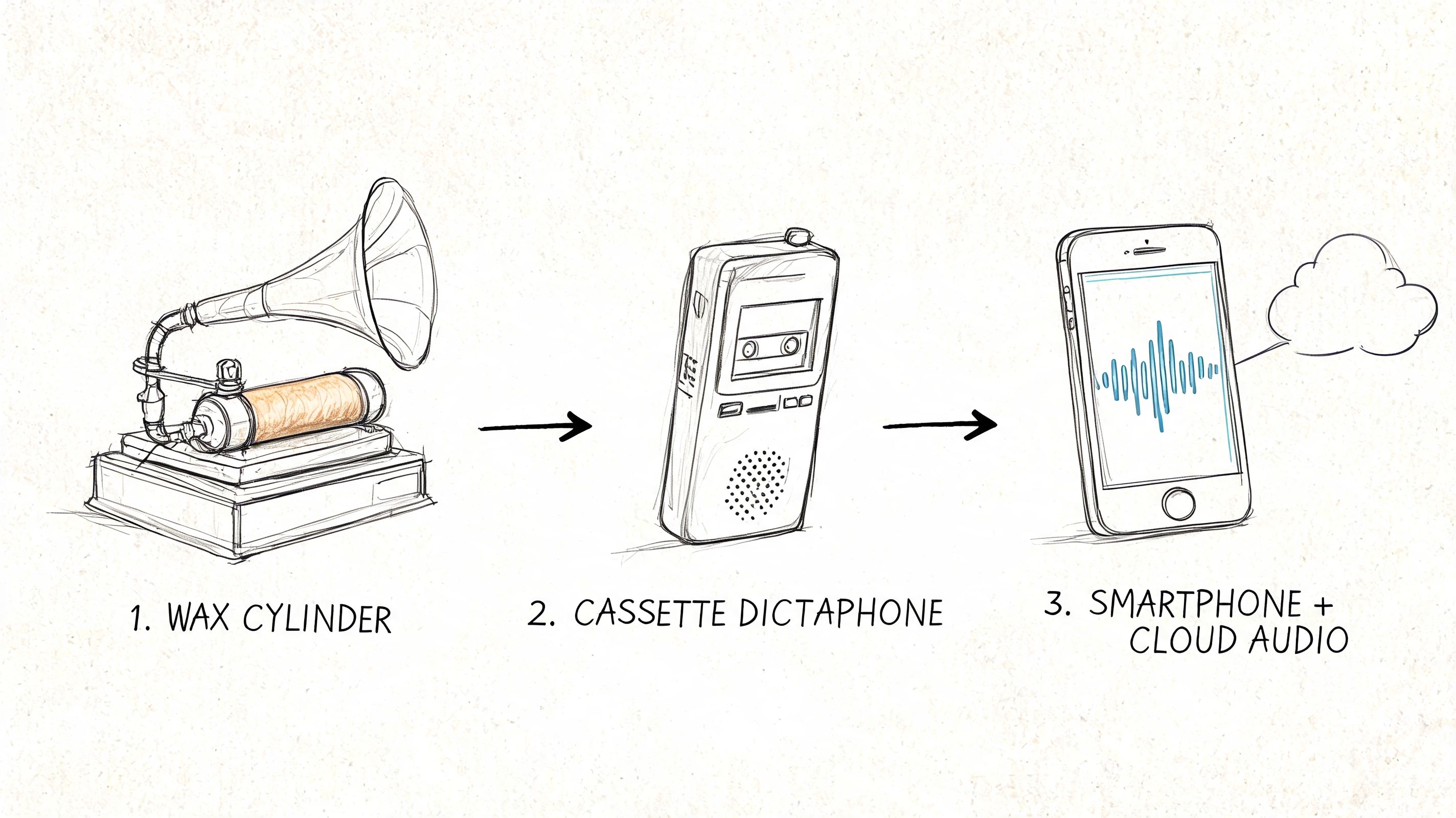
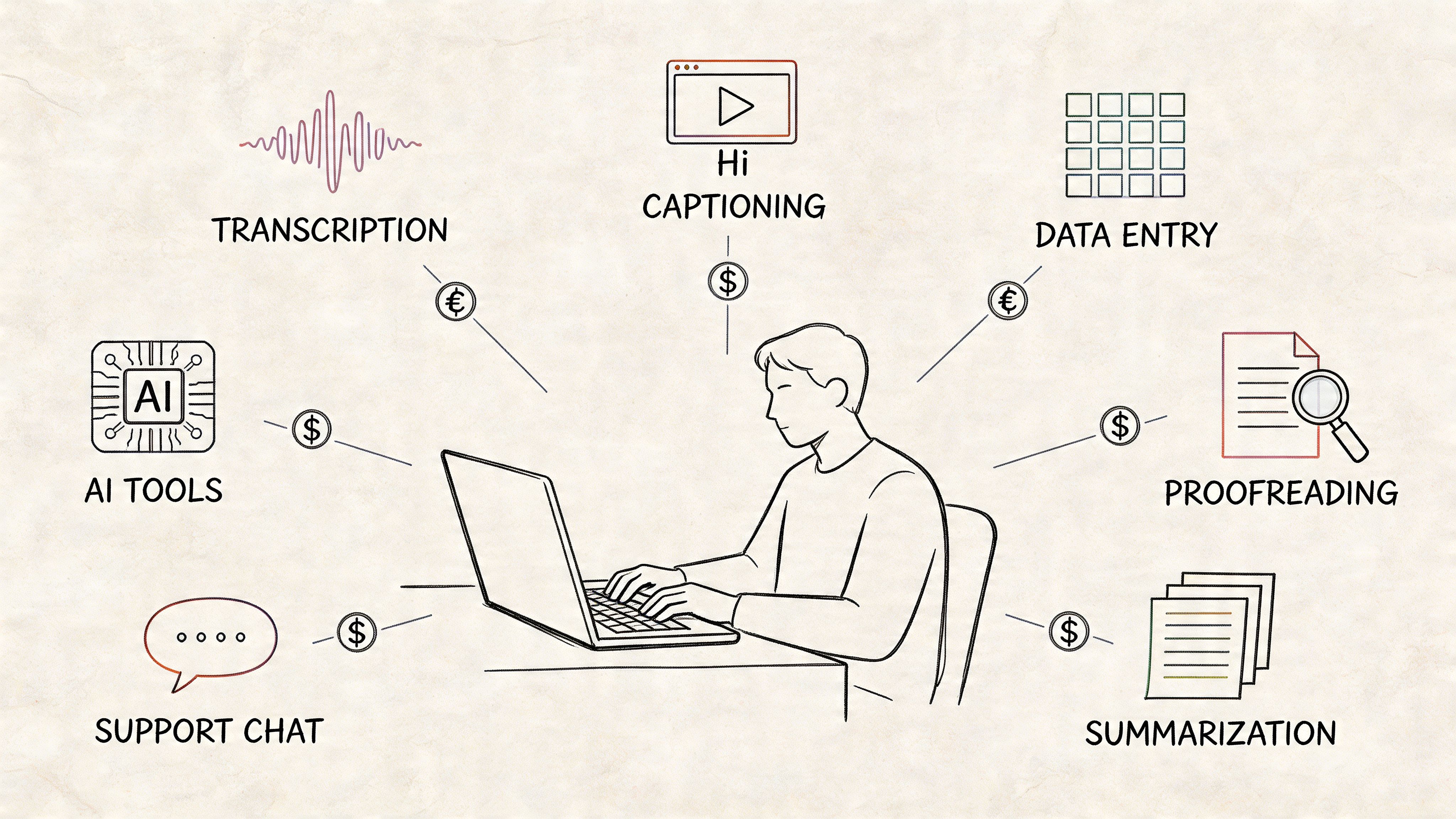
So much valuable information today comes from audio and video. Think about all the industry-leading podcasts, expert interviews, and in-depth conference talks available online. This content is a goldmine for learning, but what if you could also turn it into a powerful tool for sharpening your reading comprehension?
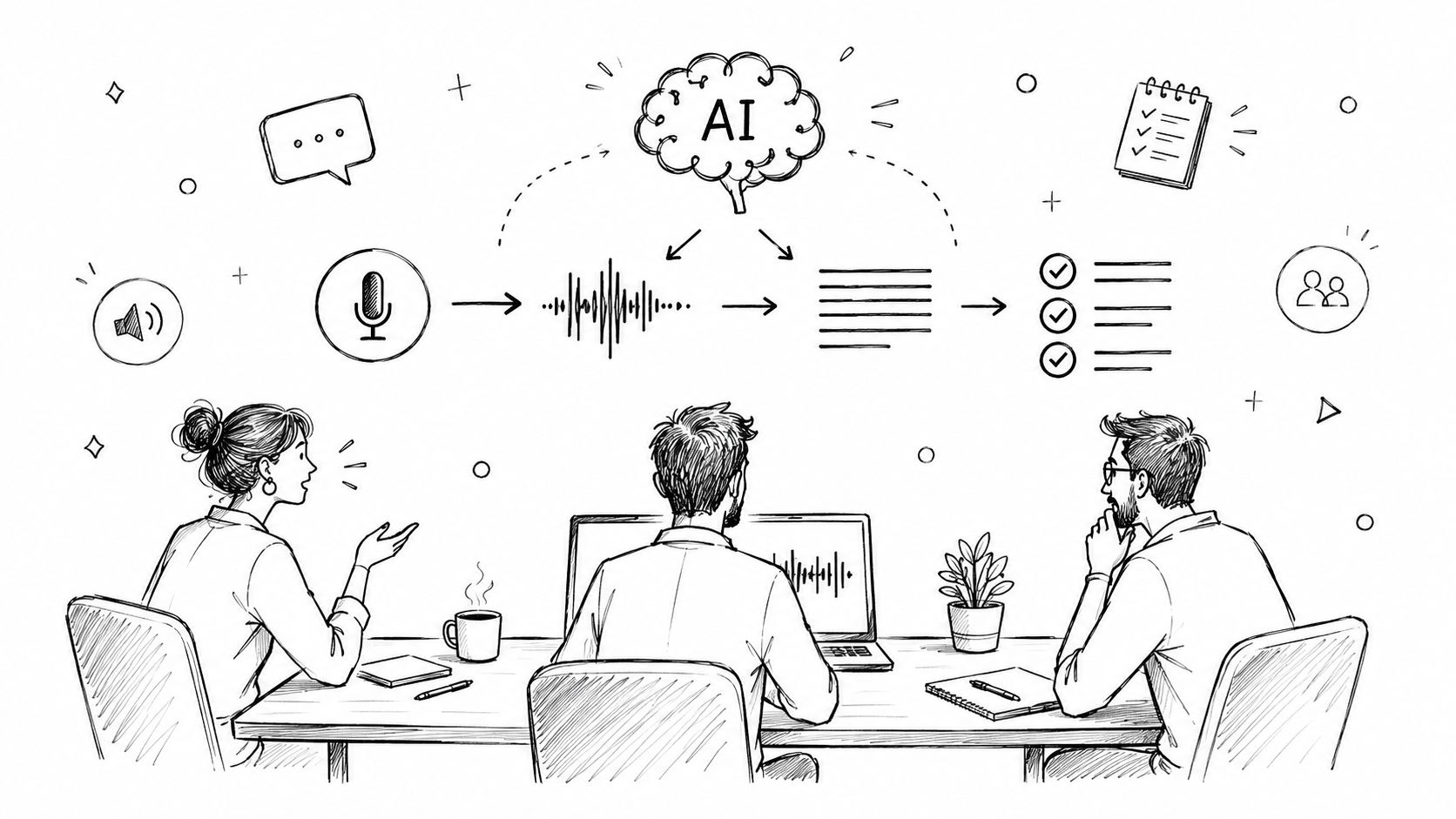
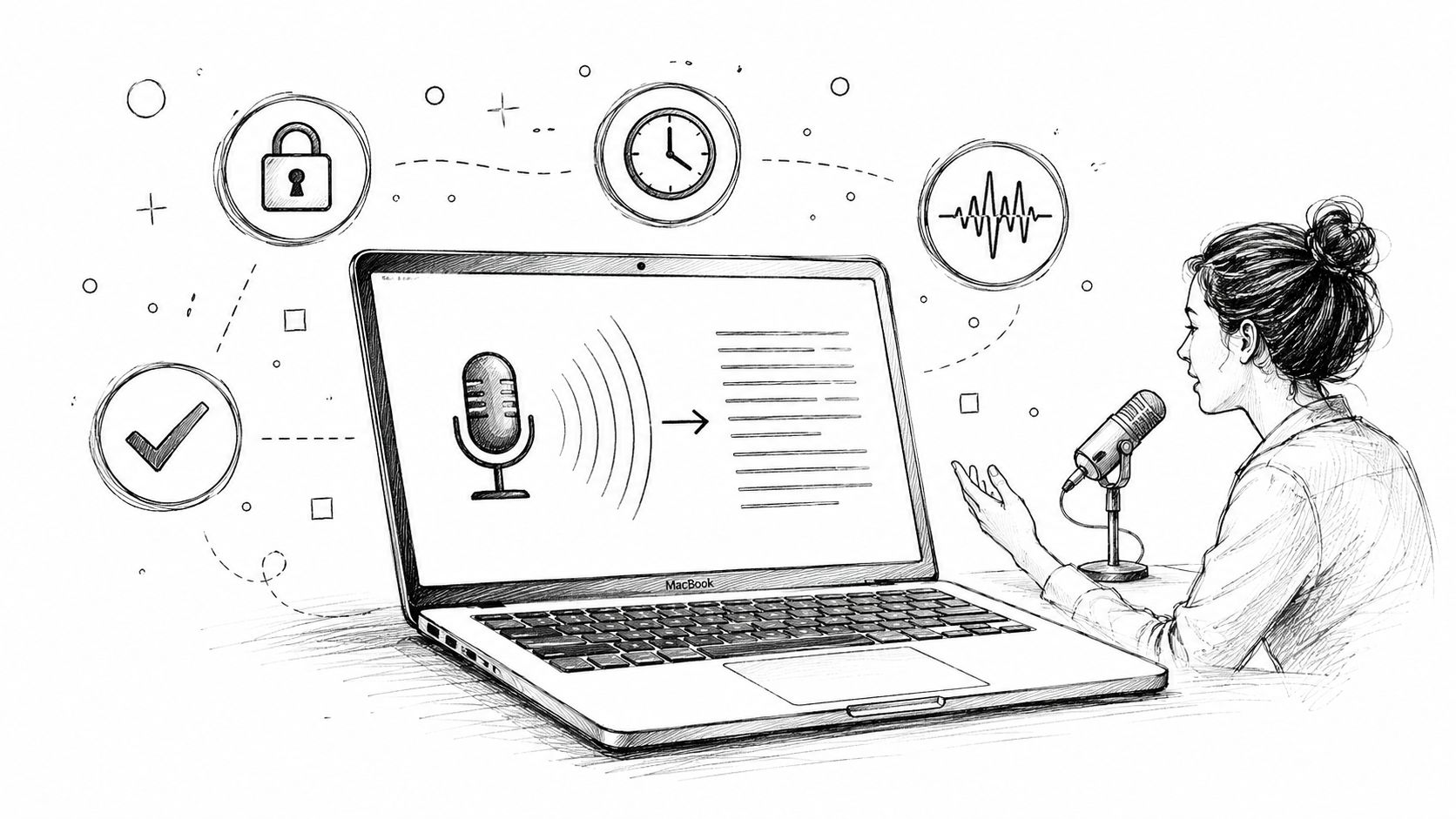
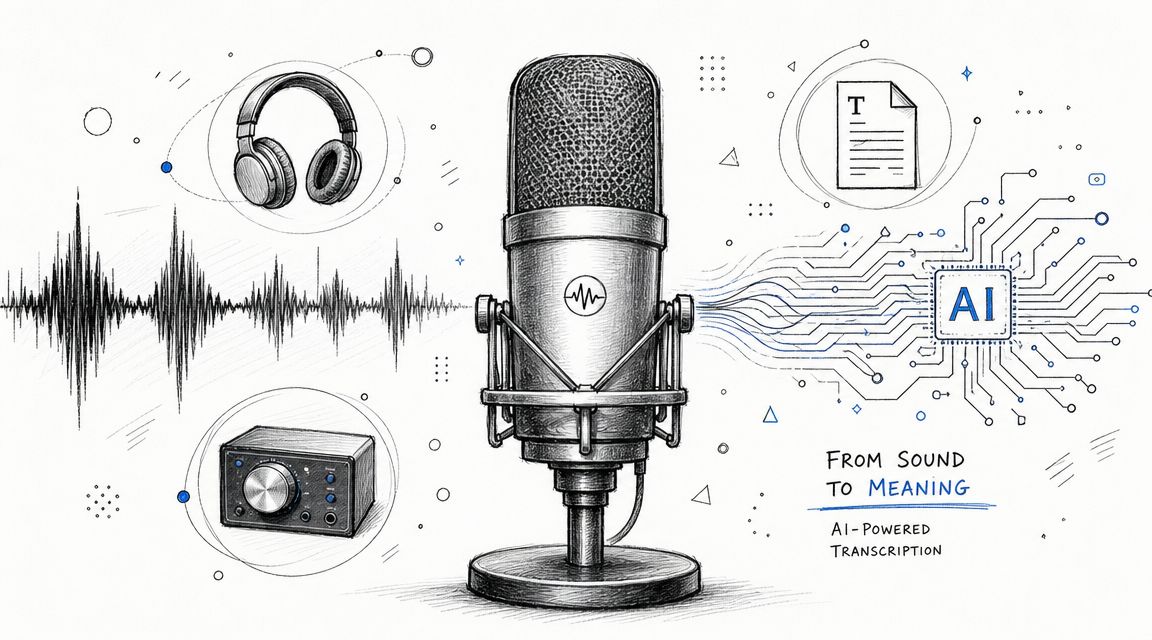
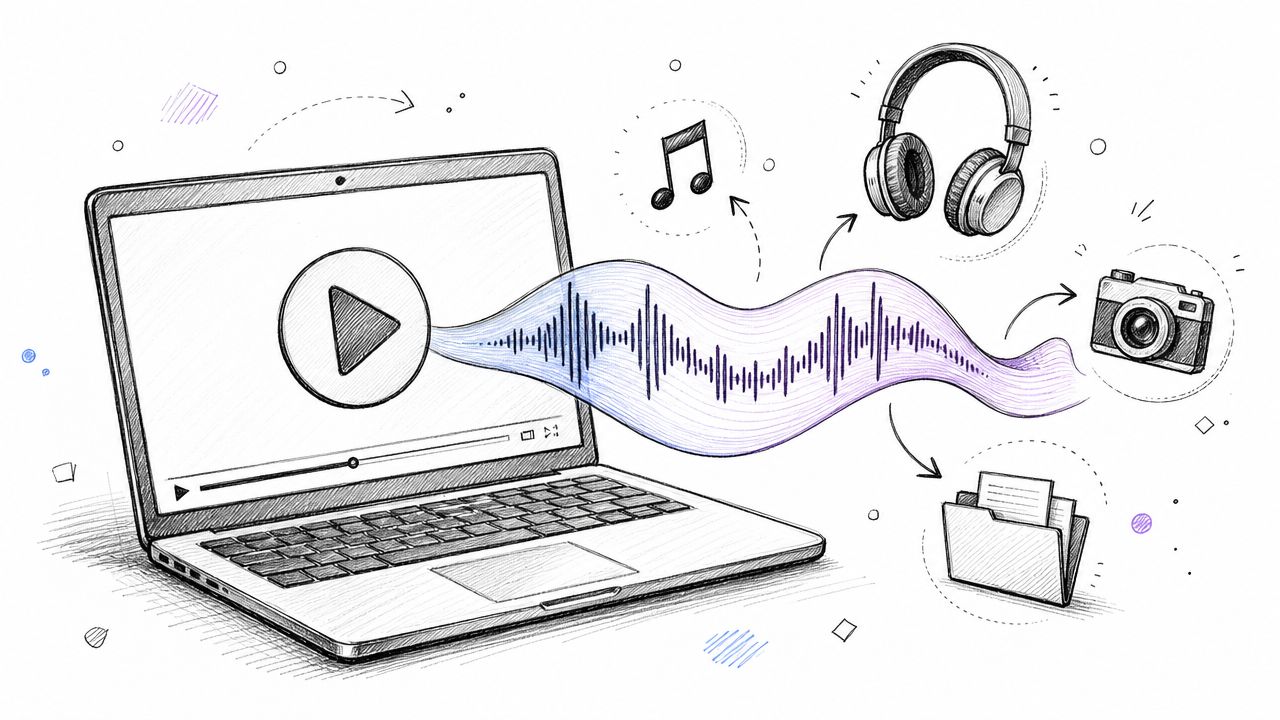
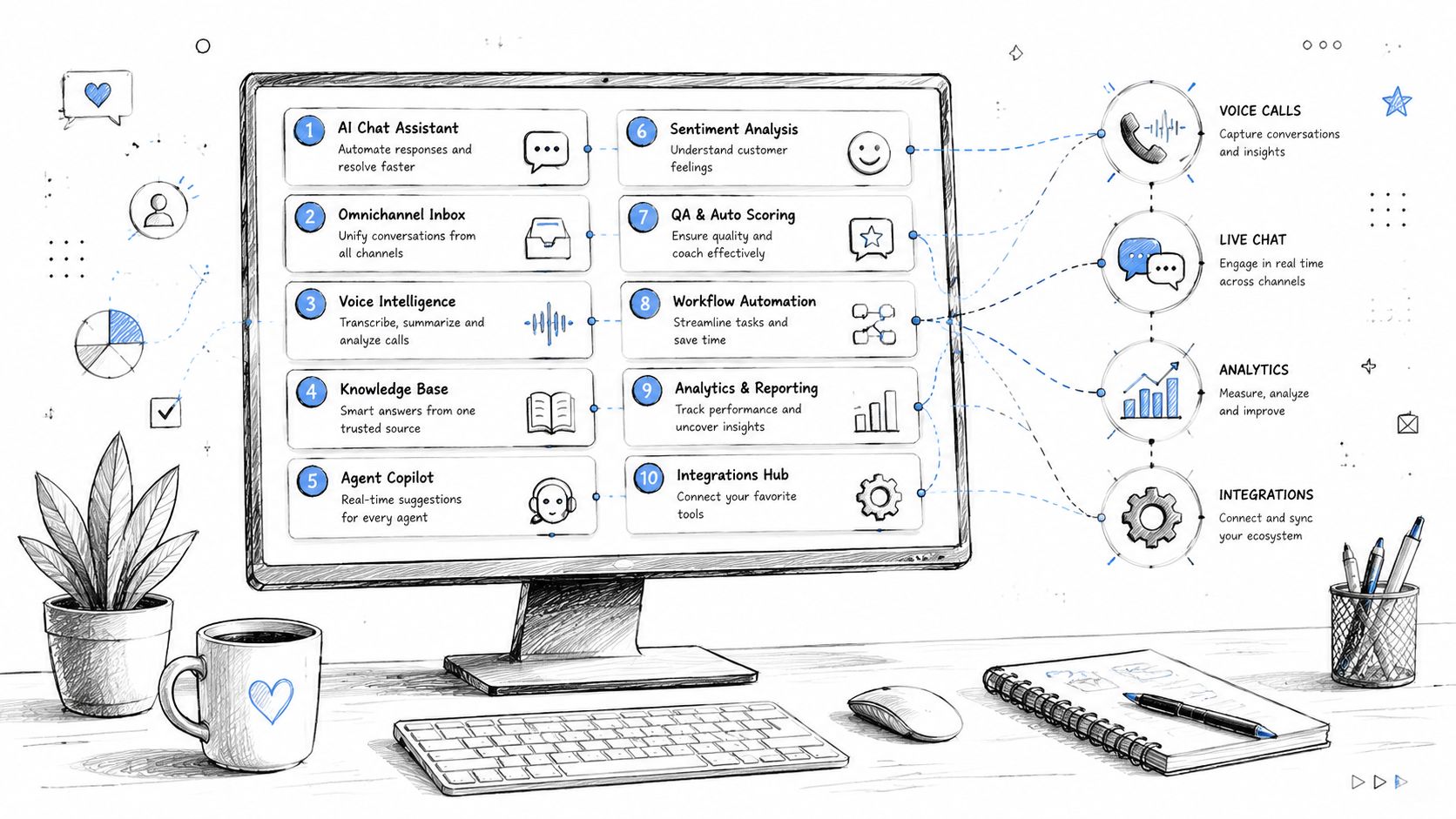
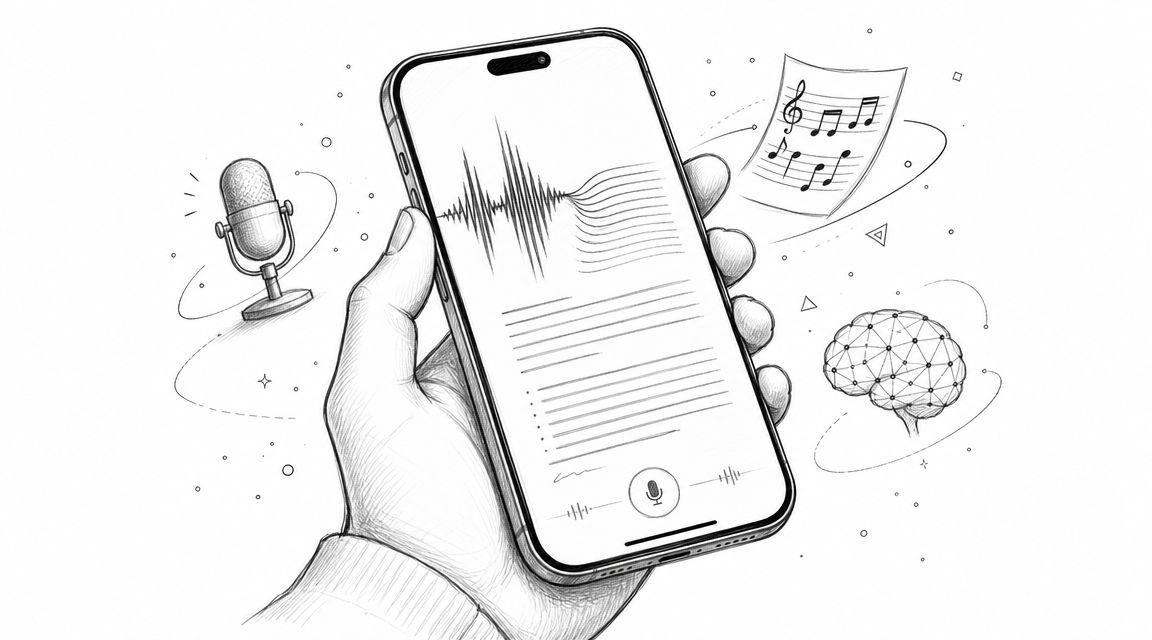
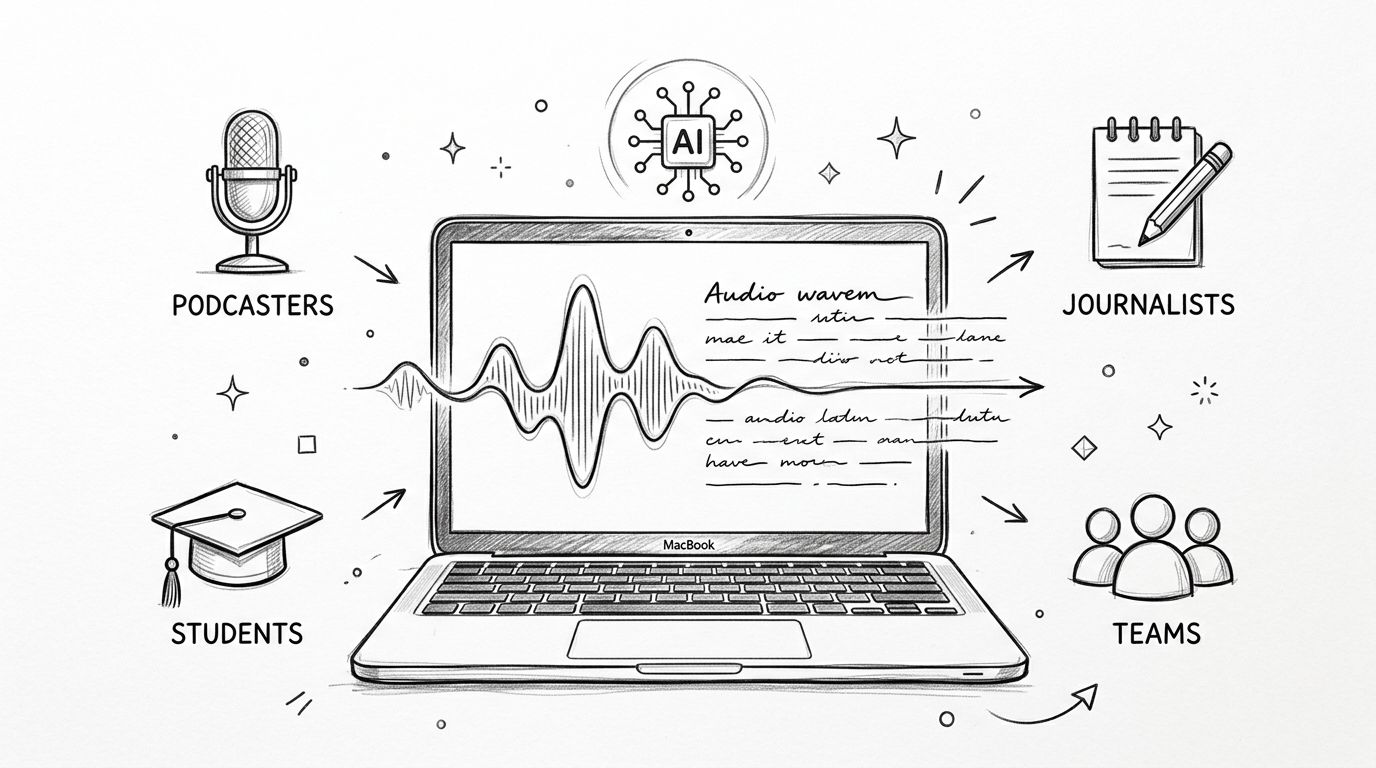
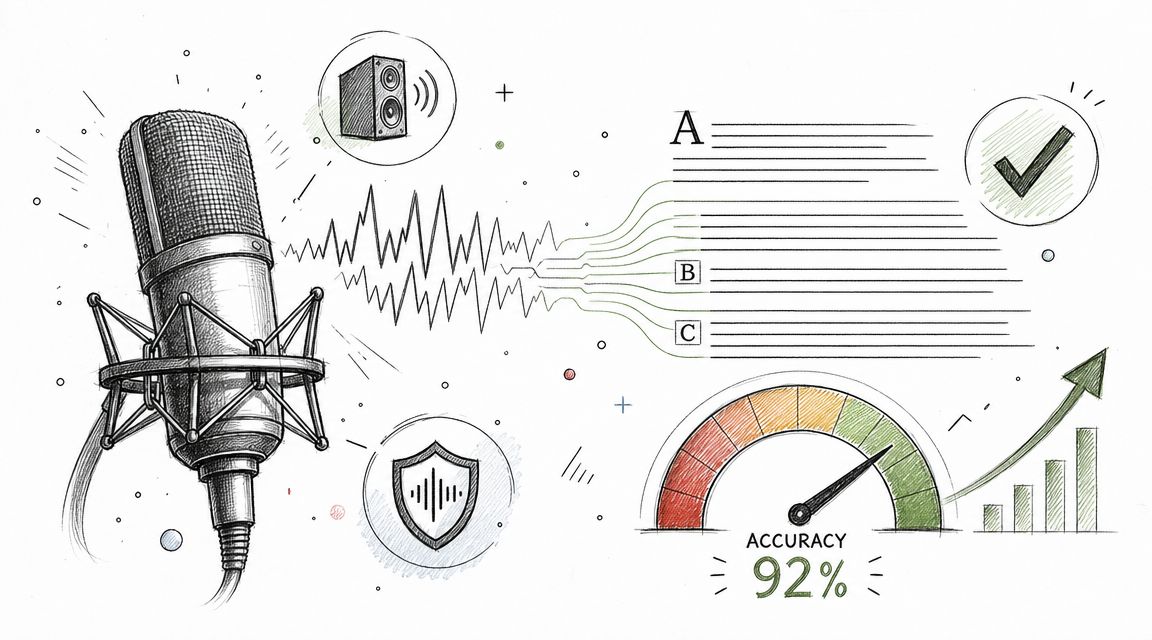
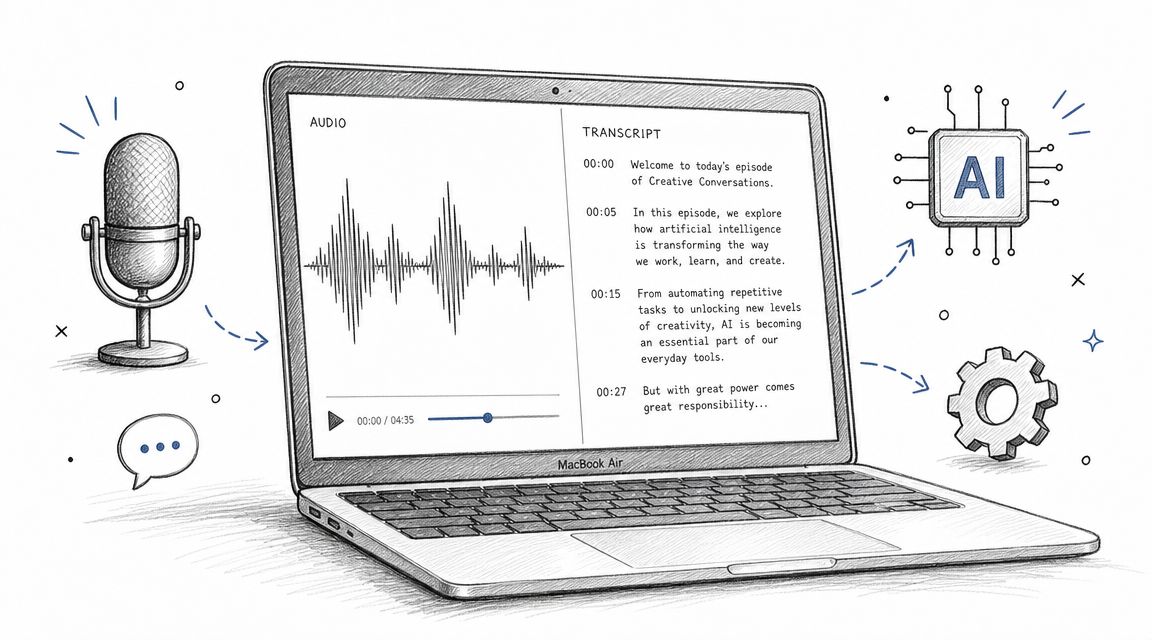
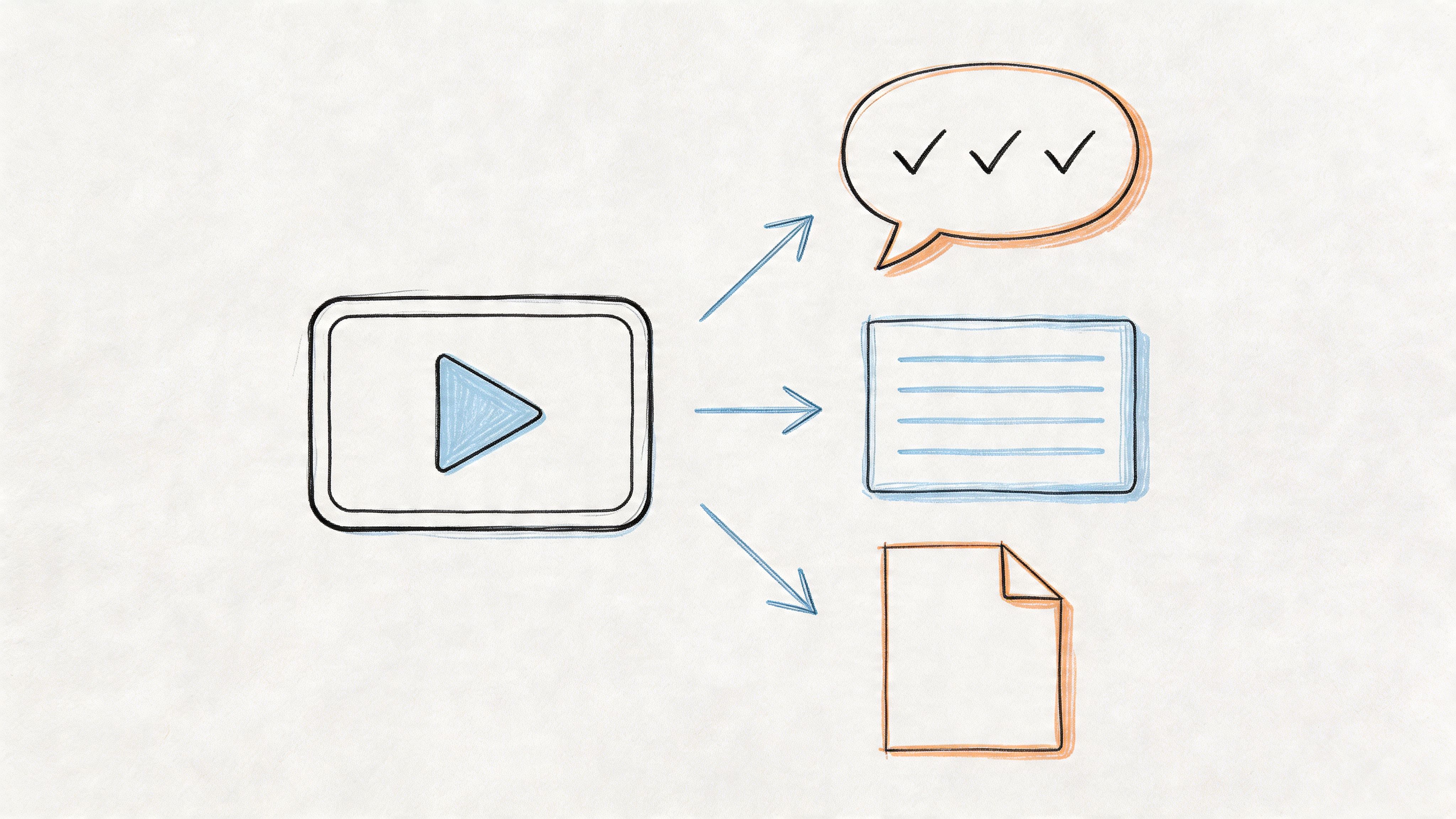
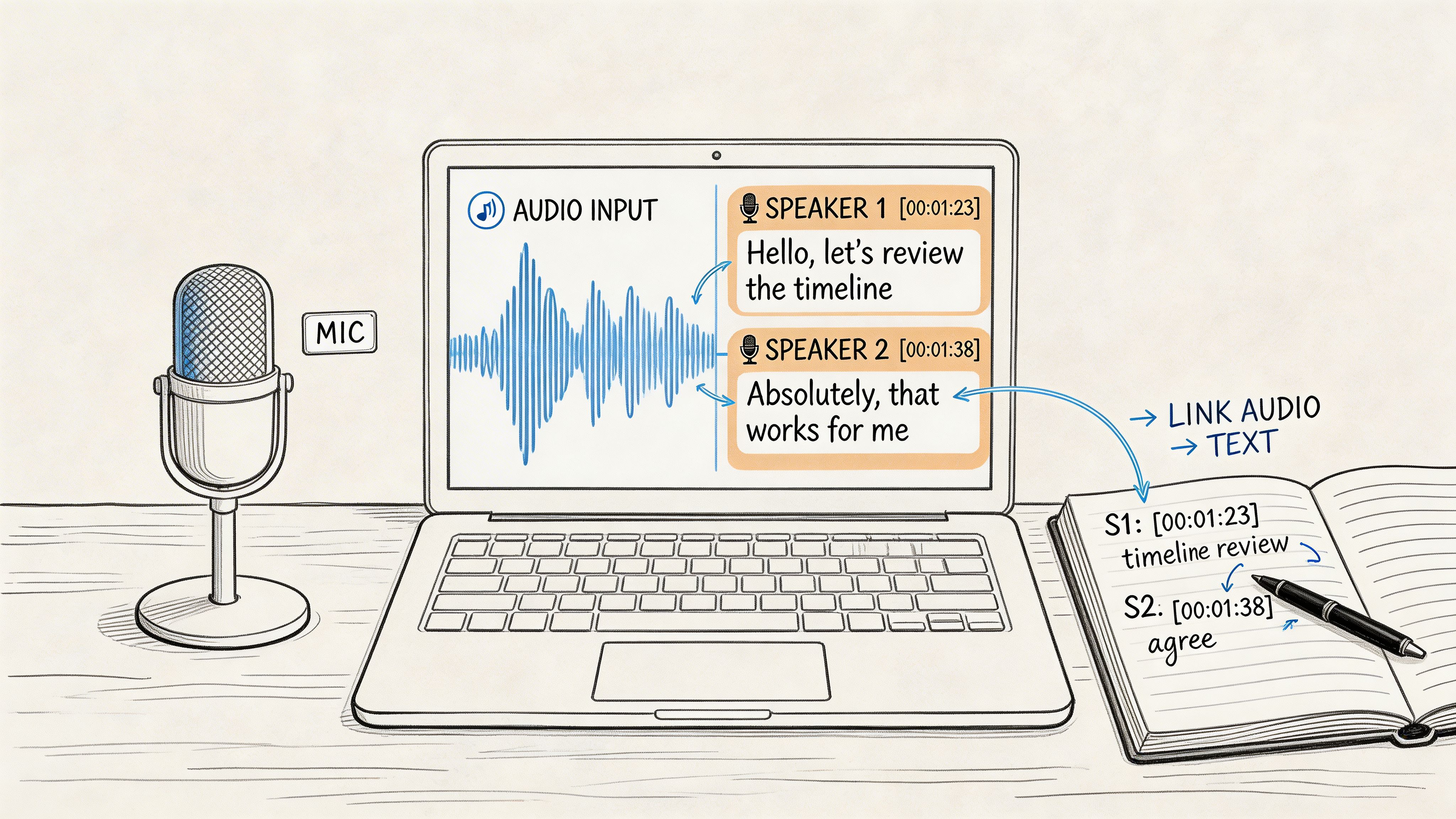
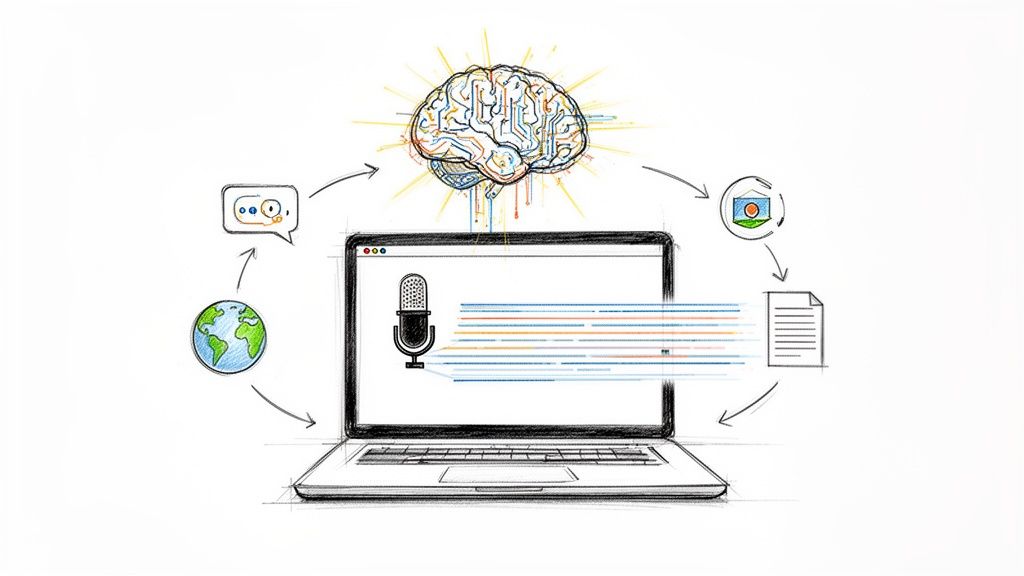
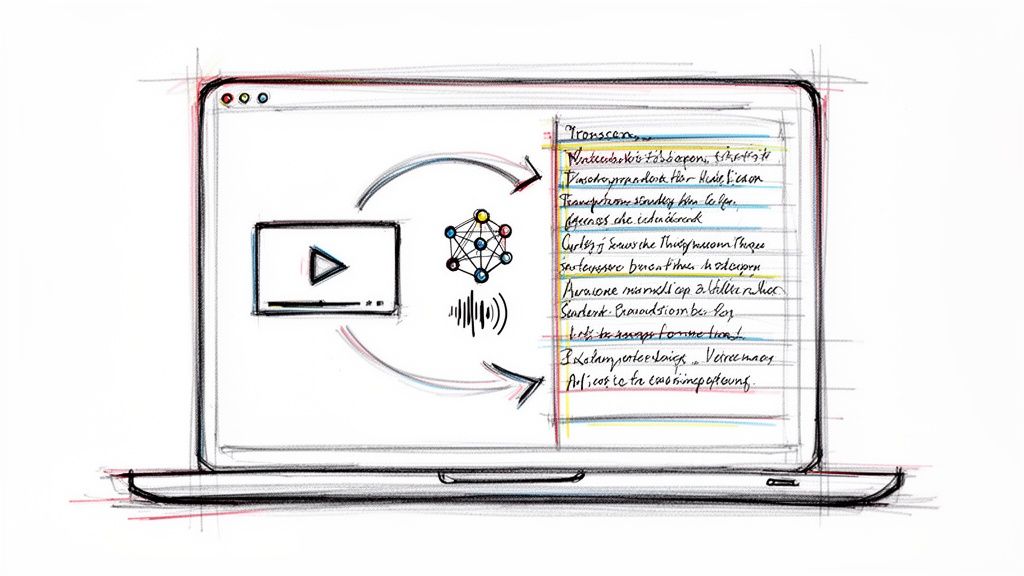
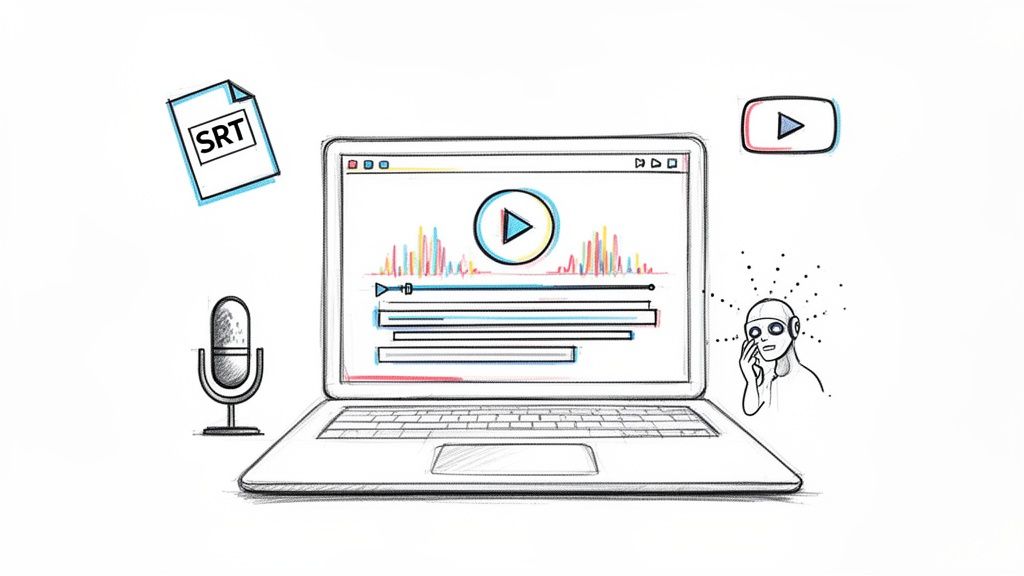
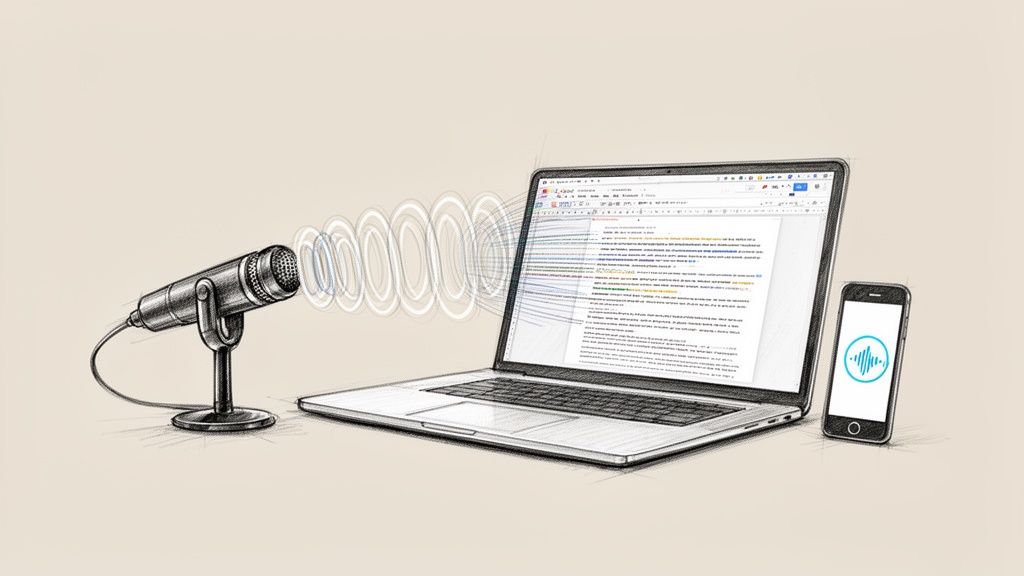
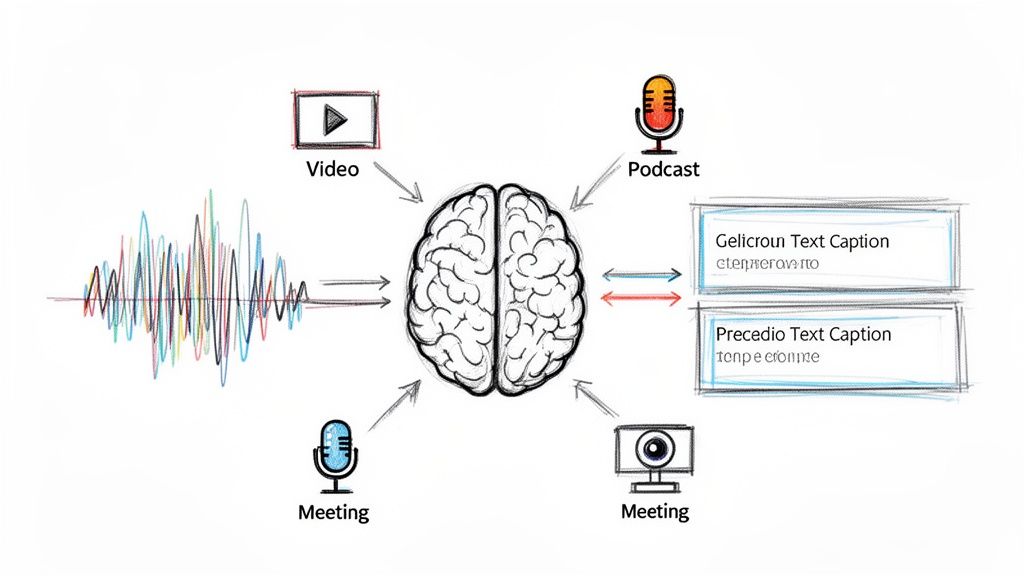
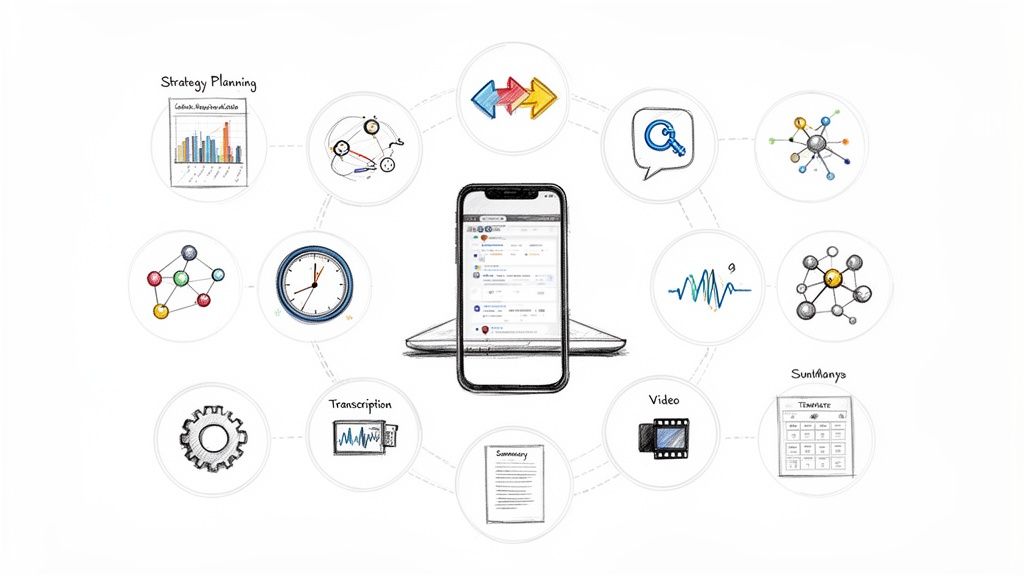
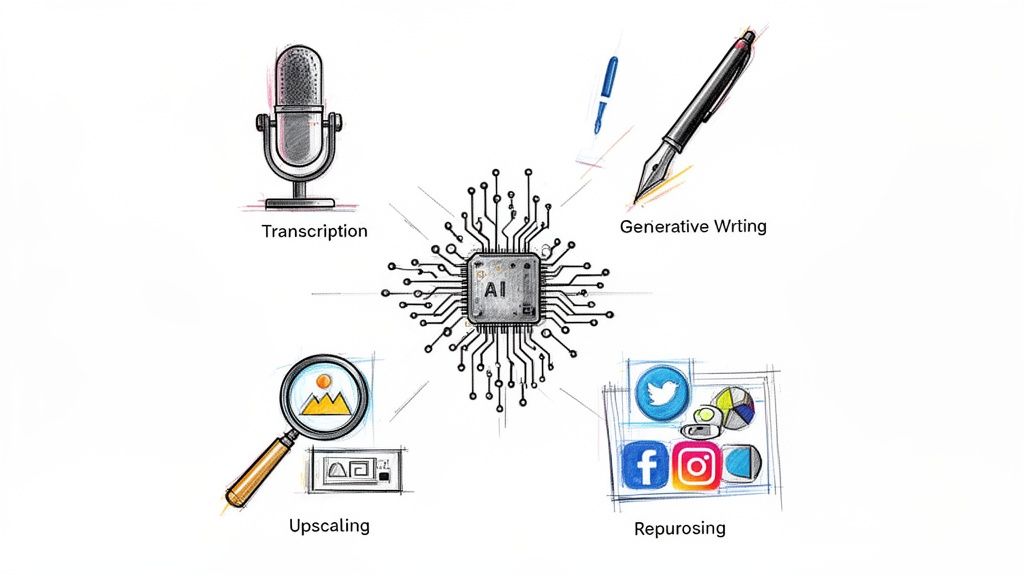
With modern AI, this isn't just possible—it's incredibly easy. These tools can take almost any audio or video file and generate a clean, accurate transcript in minutes. Suddenly, you have a limitless supply of practice material on subjects you actually care about, turning passive listening into an active reading workout.
This is a game-changer for busy professionals and students. Instead of slogging through generic practice texts, you can work with content that's directly relevant to your field, making the entire process more efficient and genuinely interesting.
Turning Audio and Video Into Reading Practice
The whole process is pretty straightforward and easy to slot into your weekly routine. It's really just about finding content that grabs you, using an AI tool to get it in text form, and then applying all those active reading strategies we’ve talked about. You’re effectively bridging the gap between the content you already consume for work or fun and the deliberate practice needed to get better at reading.
Let’s walk through a real-world example. Imagine a social media manager stumbles upon a trending video interview with a top marketing influencer. To truly unpack the message for a client report, a quick watch-through just won't cut it.
Here’s a simple workflow they could follow:
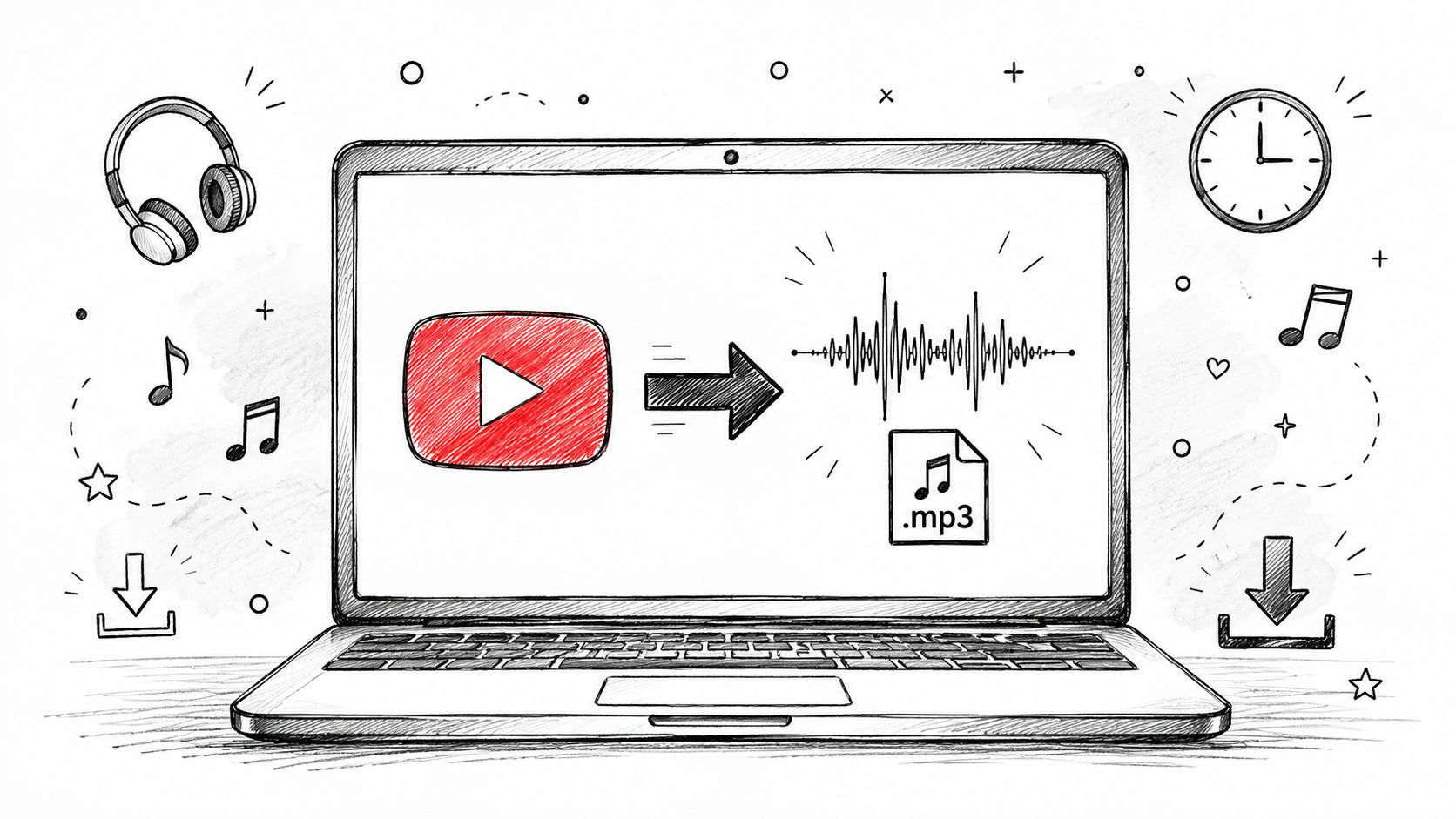
- Find Relevant Content: They grab the link to a 30-minute YouTube interview discussing the future of social media trends.
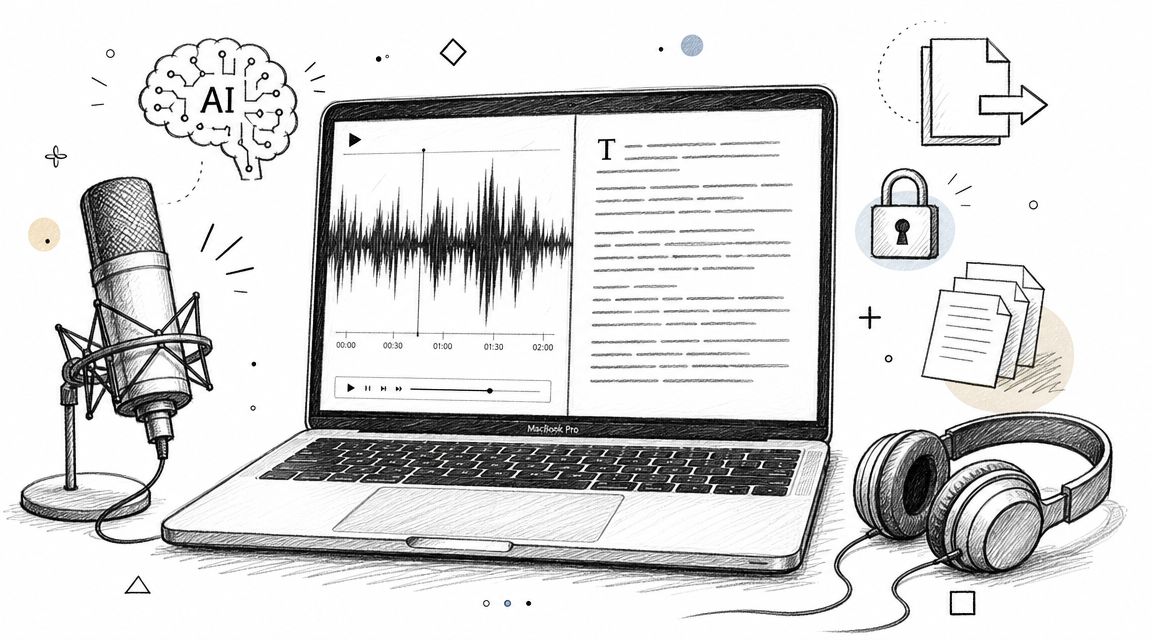
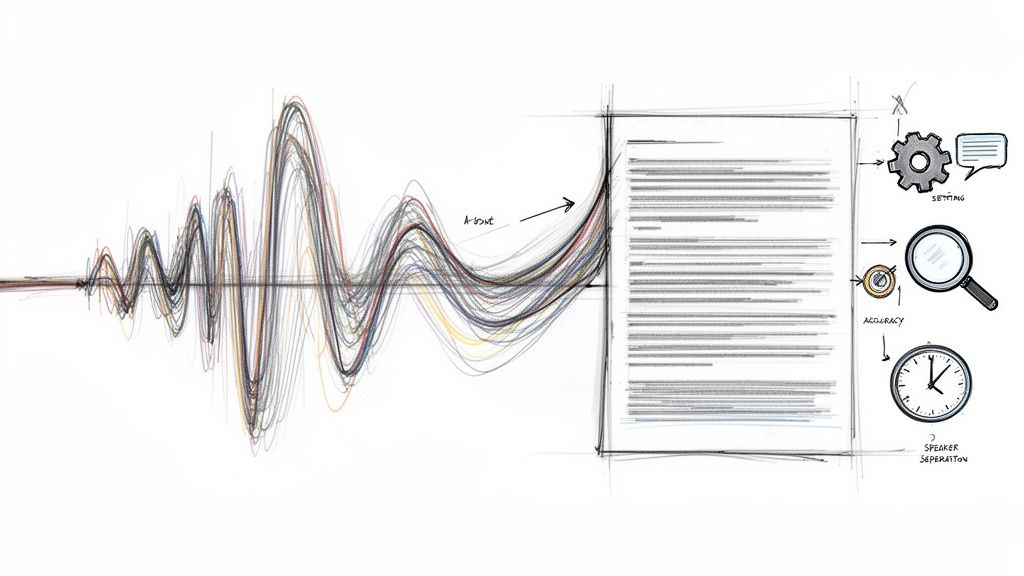
- Generate a Transcript: Using an AI tool, they get a full, word-for-word transcript. This instantly converts the spoken dialogue into a document they can really dig into.
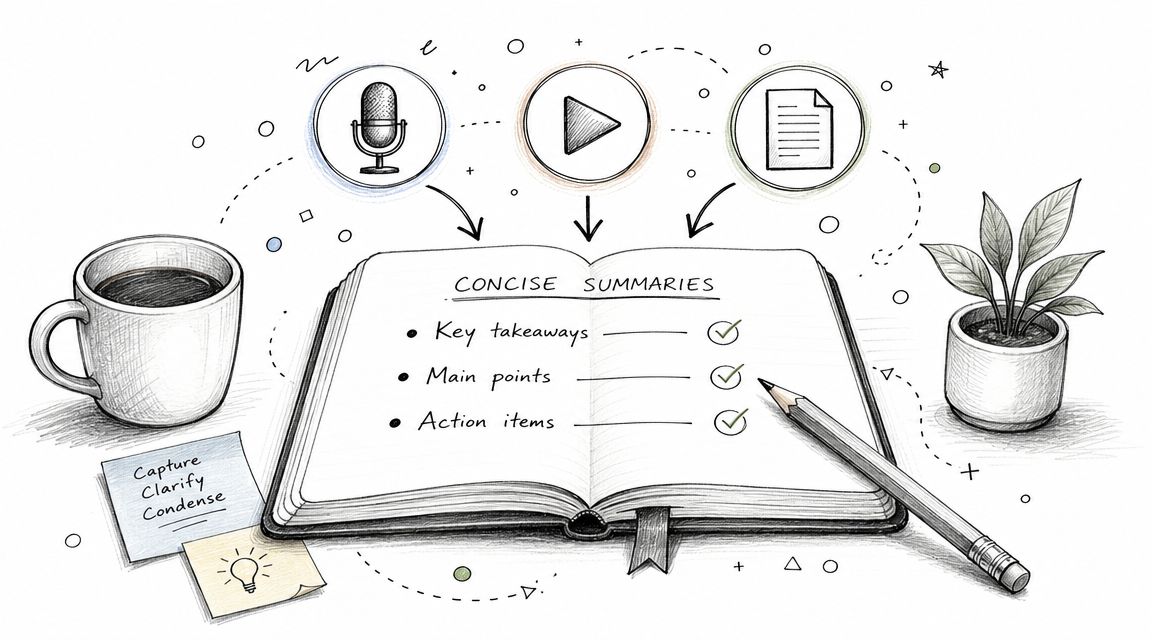
- Create a Summary: The tool can also generate a quick summary and some bullet-point highlights, giving them the main takeaways at a glance.
- Practice Active Reading: Now for the real work. They can read through the full transcript, highlighting key strategies, scribbling questions about the influencer's assumptions in the margins, and summarizing each major section in their own words.
This approach transforms a passive viewing experience into a deep, analytical dive. The manager not only extracts crucial insights for their job but also gets targeted practice in critical reading and analysis. If you want a more detailed guide on this, check out our article on using a YouTube video summarizer.
Deconstructing Content with AI-Generated Text
Once you have a transcript, you've got a perfect playground for comprehension practice. You can treat it just like any other challenging article, report, or chapter. The goal is to move beyond just understanding the words and start digging into the structure, purpose, and underlying message.
This is where AI-generated highlights come in handy as a starting point.
An automated summary lets you quickly grasp the main arguments before you roll up your sleeves and dive into a detailed analysis of the full text.
With the transcript in hand, you can start running specific drills to build your skills:
- Pinpoint the Main Idea: Read through a section of the transcript and try to boil its core message down to a single sentence.
- Analyze the Speaker's Tone: Pay close attention to word choice. Does the speaker sound confident, hesitant, persuasive, or purely objective? Highlight specific words and phrases that give away their attitude.
- Evaluate the Evidence: How does the speaker back up their claims? Are they using hard data, personal stories, or logical reasoning? Make notes on whether their arguments feel solid or flimsy.
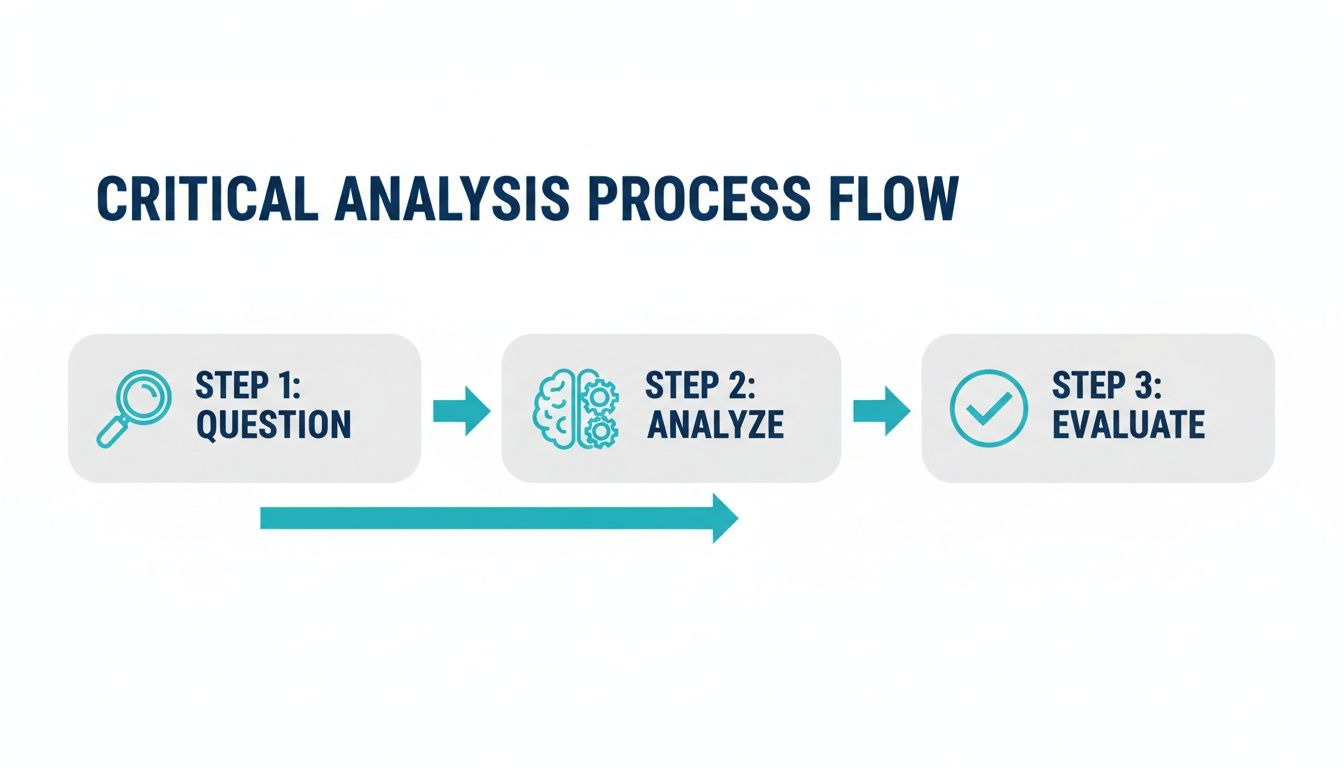
This flow—from questioning the material to analyzing its components and evaluating its claims—is the heart of active reading. And now you can apply it directly to practice materials you’ve created yourself.
By consistently turning engaging audio and video into text for analysis, you build a personalized learning system. You're not just practicing reading; you're mastering content that actually matters to you, which makes the skill development feel much more natural and rewarding.
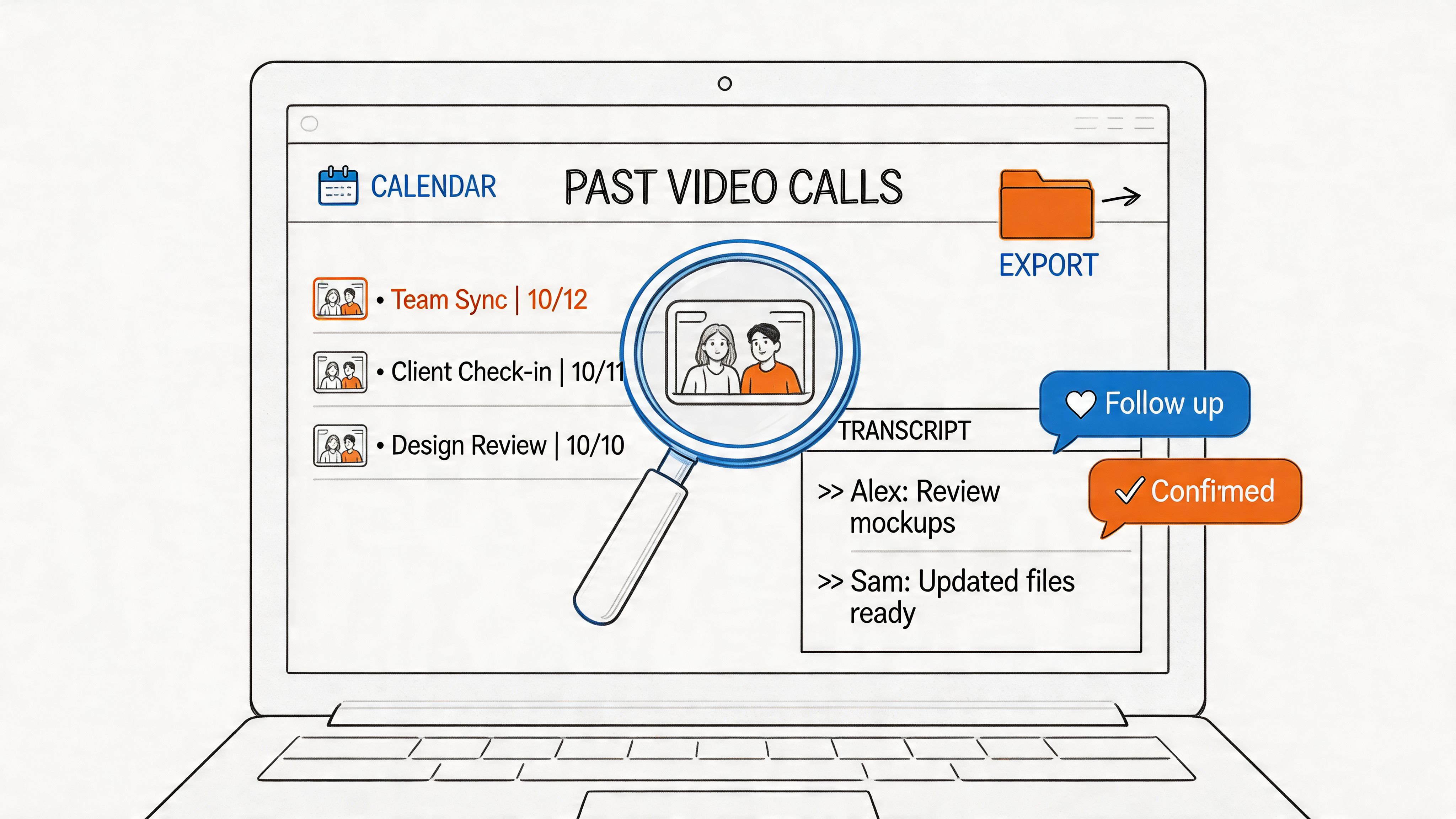
This method is particularly powerful for students who need to review recorded lectures. Transcribing a lecture allows them to search for key terms, highlight confusing concepts to ask about later, and build out much more detailed study guides. It turns a one-off lecture into a reusable, searchable learning asset—a key strategy for anyone wondering how to improve reading comprehension skills in an academic setting.
Answering Your Top Questions About Reading Comprehension
Even with the best strategies in hand, you're bound to run into some questions along the way. Let's tackle some of the most common ones I hear from people working on their reading skills.
How Long Until I Actually See a Difference?
This is the big one, isn't it? While everyone's timeline is a little different, the good news is you don't have to wait forever. With consistent daily practice, you can start feeling a real difference pretty quickly.
If you can carve out just 20-30 minutes of focused, active reading each day, you'll likely notice tangible gains in just a few weeks. The key word there is consistency. It's the small, daily efforts that build on each other, leading to major leaps in your reading speed, understanding, and memory over a few months.
If I Can Only Do One Thing, What Should It Be?
If I had to boil it all down to a single, powerful habit, it would be active questioning. This one shift can completely change your relationship with what you read, turning it from a passive chore into an active investigation.
You're essentially starting a conversation with the text. By constantly asking questions, you force your brain to stay plugged in.
- Before you start: "What do I think this is going to be about? What do I already know?"
- As you read: "What's the core message here? Do I agree with this point?"
- When you finish: "What are the three biggest ideas I should remember from this?"
This mental back-and-forth is the very heart of deep, effective comprehension.
Is It Cheating to Use AI for a Skill Like Reading?
Not at all. Think of AI as a practice accelerator, not a crutch. It doesn't do the hard cognitive work for you, but it can make your practice sessions way more effective and interesting.
AI opens up a world of reading material that's perfectly matched to what you actually care about.
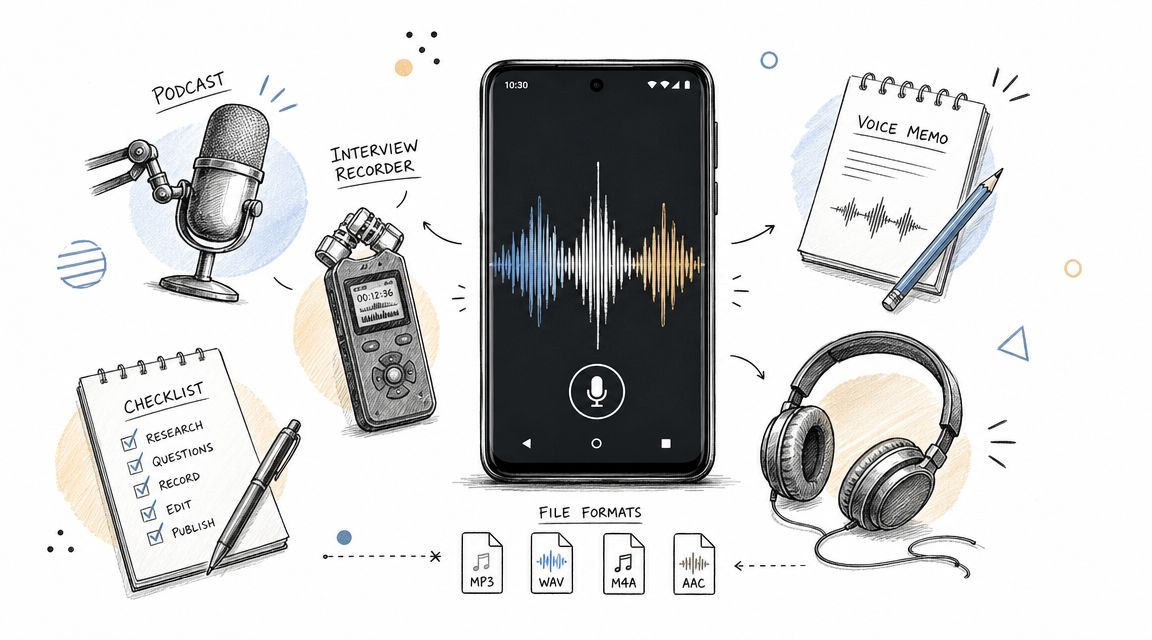
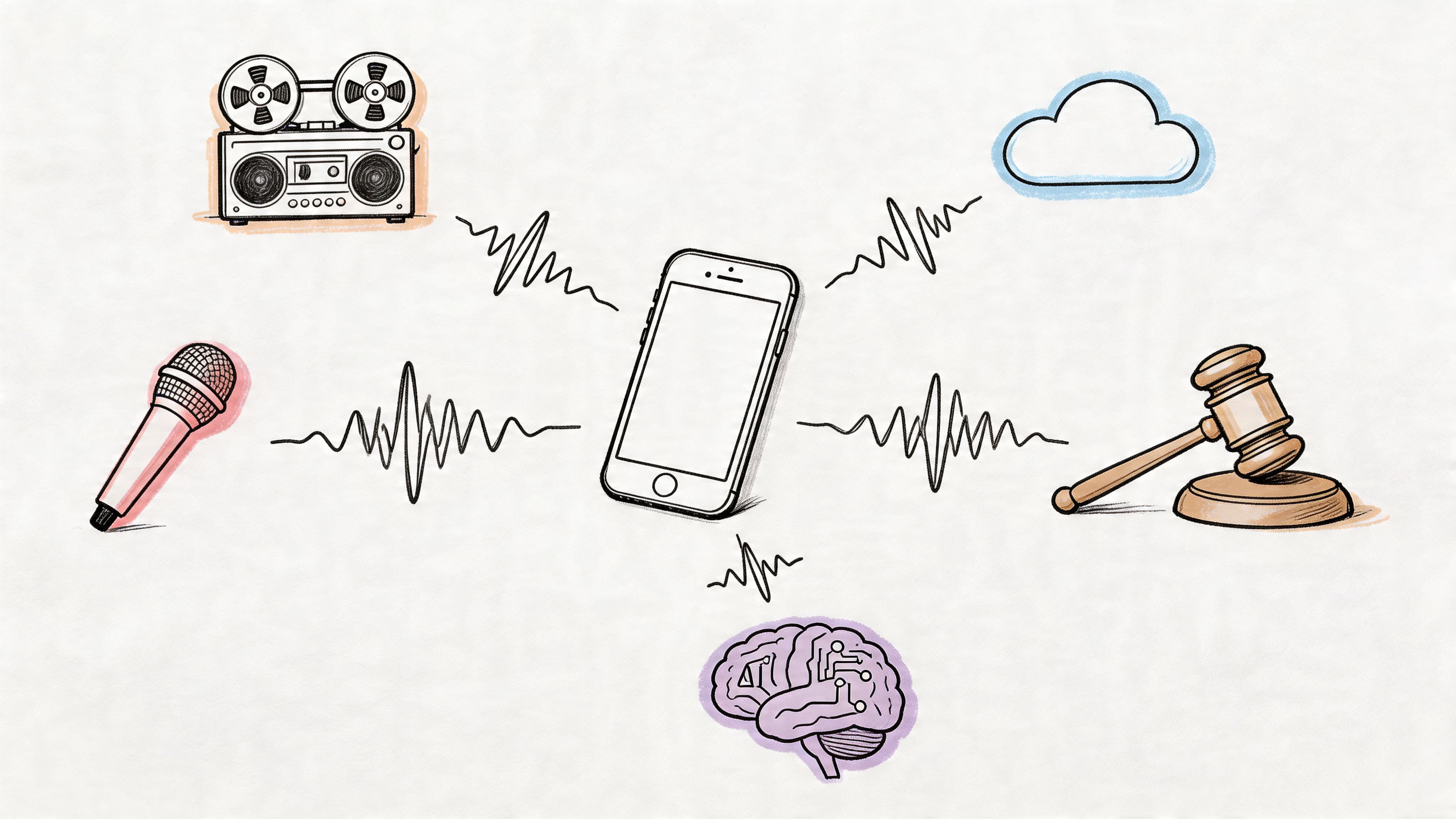
AI tools can take audio and video content you already love—like a favorite podcast, an expert interview, or a lecture—and instantly turn it into text. This lets you practice your active reading skills on topics you're genuinely curious about, which makes the whole process feel less like a chore and more like a discovery.
When you connect skill-building with your passions, your motivation stays high.
How Do I Stop My Mind From Wandering When I Read?
Distraction is the number one enemy of comprehension. The first step is simple but crucial: create a space that’s just for reading. Put your phone in another room and turn off the TV.
From there, try a technique like the Pomodoro Method. Read with 100% focus for 25 minutes, then give yourself a 5-minute break to stretch or grab a drink. This trains your brain to concentrate in short, powerful bursts.
Sometimes, engaging another sense helps too. Try reading a tricky passage aloud or even just tracing the words with your finger or a pen. It sounds simple, but it can be surprisingly effective at keeping your mind anchored to the page.
Ready to turn your favorite podcasts and videos into powerful practice materials? With Whisper AI, you can instantly generate accurate transcripts, summaries, and key highlights from any audio or video file. Start creating your own tailored reading exercises and accelerate your learning today by visiting https://whisperbot.ai.