How to Grow Your Podcast Audience From Scratch
Before you hit "publish," the real work of growing a podcast audience begins. The secret isn't just about marketing; it's about building a show so genuinely useful that people can't help but talk about it. This comes down to locking in your niche, nailing a unique format, and being crystal clear about the value you provide from the very first episode. This is the foundation that fuels real word-of-mouth growth.
Build a Show Listeners Can't Ignore
Before you dive into promotion or stare at analytics, you need to ask a brutally honest question: is my podcast actually recommendable?
The number one reason podcasts stall is because people stop talking about them. Word-of-mouth is still the single most powerful growth engine. No amount of ad spend can replace a friend telling another friend, "You have to listen to this show."
Creating a show that sparks those conversations starts with a rock-solid foundation. Without it, your best promotional efforts will fizzle out. The goal isn't just to churn out content; it's to create an experience that feels like it was made specifically for your ideal listener.
Define Your Ideal Listener Persona
Trying to create a podcast for "everyone" is a classic mistake that guarantees you'll connect with no one. The best, most beloved shows are built for a single person. And I don't mean a vague demographic—I mean a complete persona with real challenges, specific goals, and distinct tastes.
"Make a show for one person, a single person. Maybe it’s a person that you know, and I guarantee you will do a better show, even without any research if you just have that ideal audience, that ideal human in your mind."
Get granular when building this persona. Ask yourself:
- What's their name? What does their average day look like?
- What’s the one big problem they're facing that my show can help solve?
- What's their sense of humor? What kind of tone makes them lean in?
- Where do they hang out online? What other podcasts, books, or shows do they already love?
Once you have this "listener avatar" in your mind, every decision—from the topics you choose to the inside jokes you make—should be run through their filter. This focus makes listeners feel like you're talking directly to them.
Craft a Compelling and Unique Format
Your show's format is its DNA. It’s what separates you from the thousands of other interview or solo shows in your category. People can skim a blog post if they just want information; your job as a podcaster is to make the delivery of that information entertaining and engaging.
Think about which structure will serve your content and your listener best:
- Solo Host: This is perfect for building a strong, personal connection. You're the expert, the guide, sharing your stories and insights directly with the listener.
- Co-hosted Show: The magic here is in the chemistry. The back-and-forth between two hosts can create a dynamic, fun, and layered conversation, with each person bringing a unique perspective.
- Interview-Based: Bringing on guests is a great way to introduce new ideas, but it takes real skill to steer the conversation beyond a generic Q&A and uncover genuine insights.
- Narrative Storytelling: This is the format of choice for many true-crime and investigative journalism hits. It involves weaving a gripping story, often over multiple episodes, to keep listeners hooked.
Whichever path you choose, be ruthless in your editing. Your listener's time is their most valuable asset, so respect it. Cut every tangent, every "um," and every section that doesn't add value. Exploring the best podcast editing software can be a game-changer for getting that professional, polished sound.
Establish Your Unique Value Proposition
Your value proposition is your promise to the listener. It answers the question: "Why should I spend 30 minutes of my life with your show instead of any other?"
This goes beyond just your topic. It’s your unique angle, the specific benefit you deliver, or the fresh perspective you bring.
For instance, instead of a vague description like "A podcast about marketing," a killer value proposition would be: "The 15-minute marketing podcast for busy founders who need actionable tips, not fluff." This immediately tells me the format, the target audience, and the core benefit. Your entire brand—from your cover art to your intro music—should echo this promise, making your show instantly memorable.
Master Podcast SEO and Get Discovered
Word-of-mouth is essential, but it can be slow. If you're serious about building an audience, you need to make your show discoverable where people are actually looking for new content—and that means search engines and podcast apps. This is where getting smart about podcast SEO pays off.
Before diving in, it’s helpful to understand what SEO in digital marketing is all about. It’s not about tricking algorithms; it's about signaling to search engines what your content is about so they can show it to the right people. Think like your ideal listener: what phrases would they type into Google or Spotify to find a show like yours?
Your episode titles and show notes are prime real estate. A vague title like "Episode 42: A Chat with Jane" does absolutely nothing for you.
Instead, frame your title around the core problem you solve or the key takeaway from the conversation. Something like "How to Double Your Email List in 30 Days with Jane Doe" is infinitely better. It's specific, packed with relevant keywords, and promises a clear benefit, making it much more likely to surface in search.
Unlock Your Audio with Transcripts
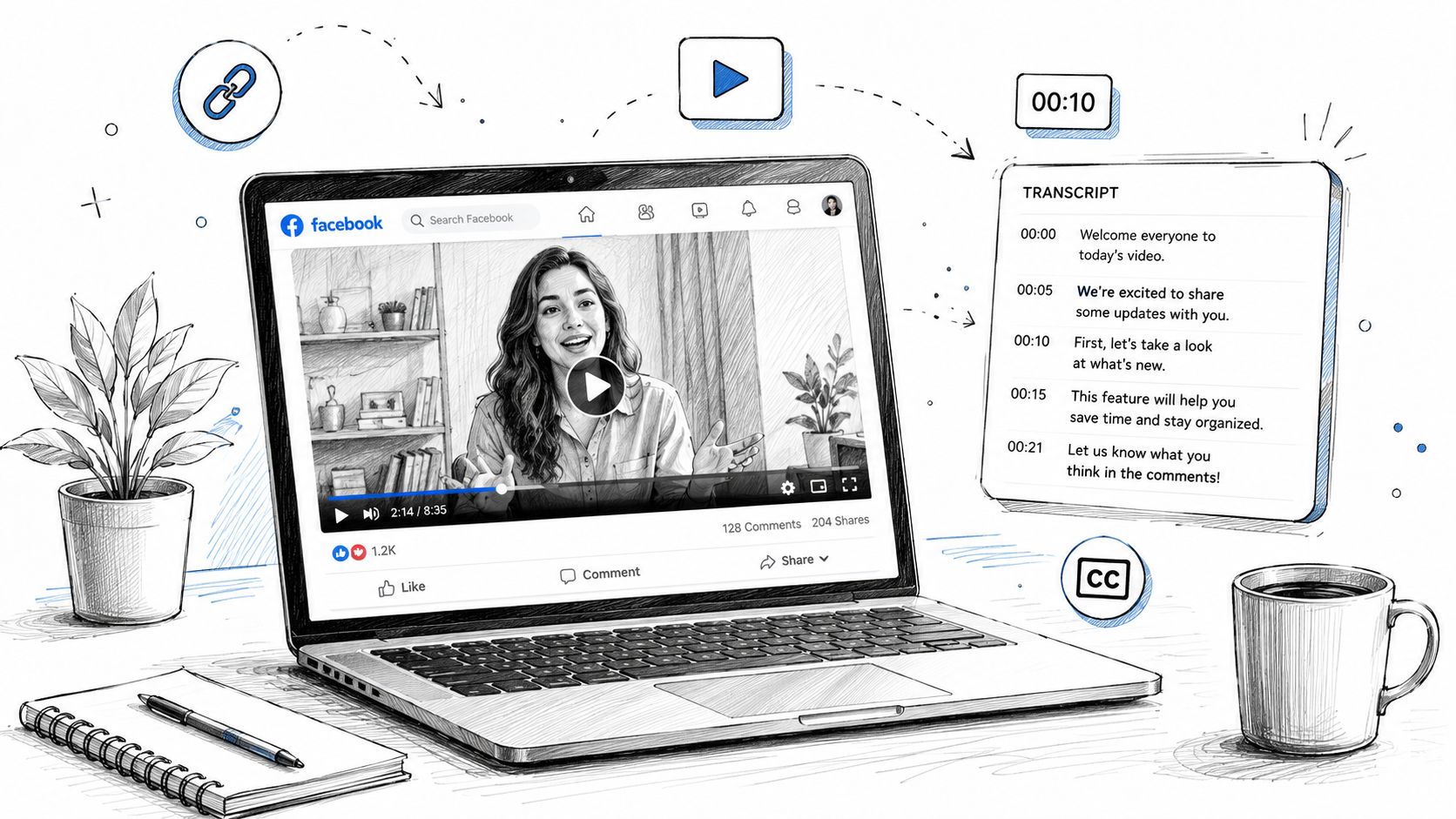
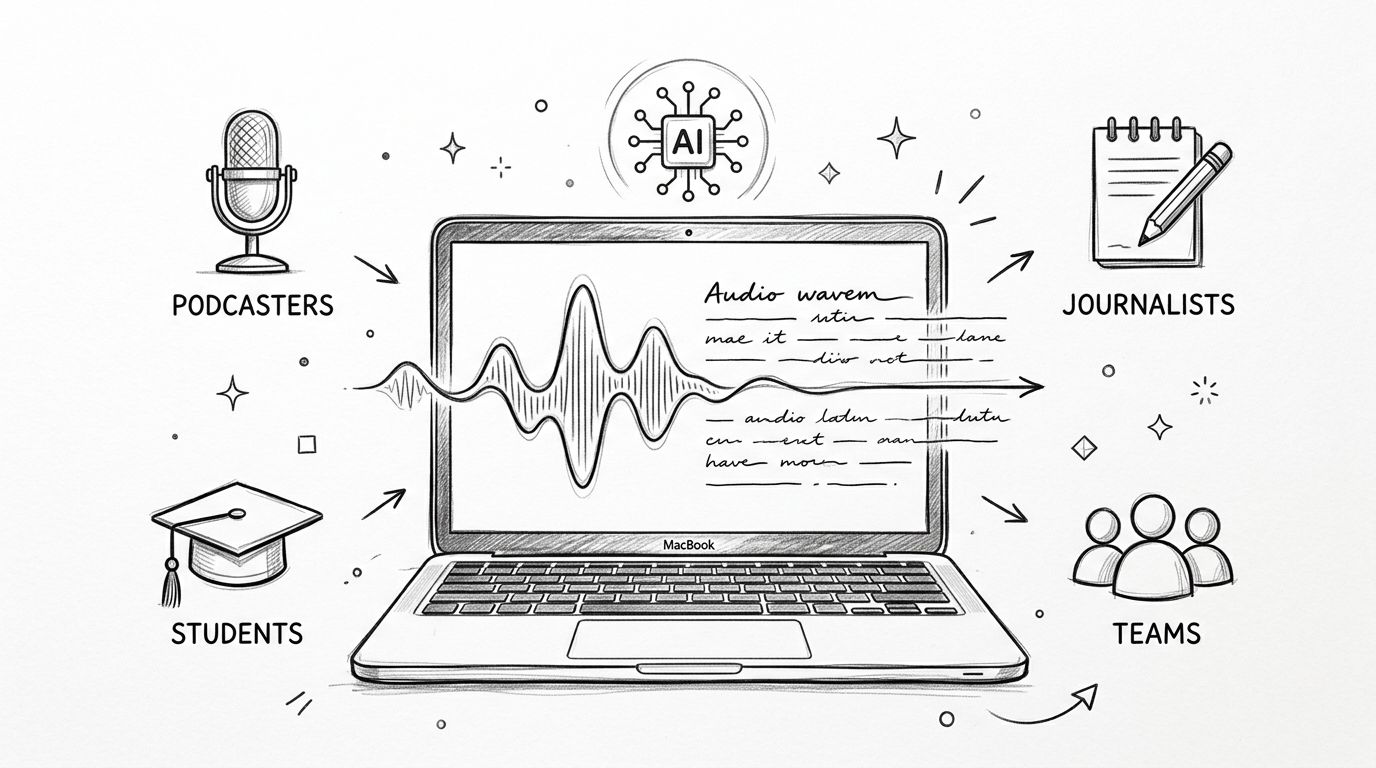
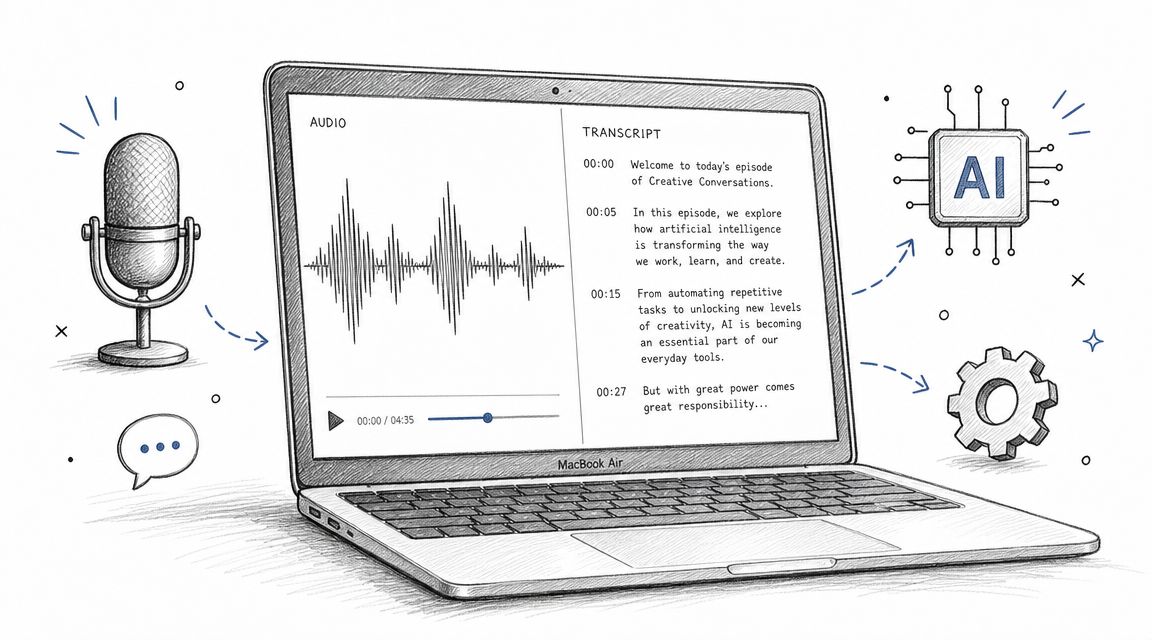
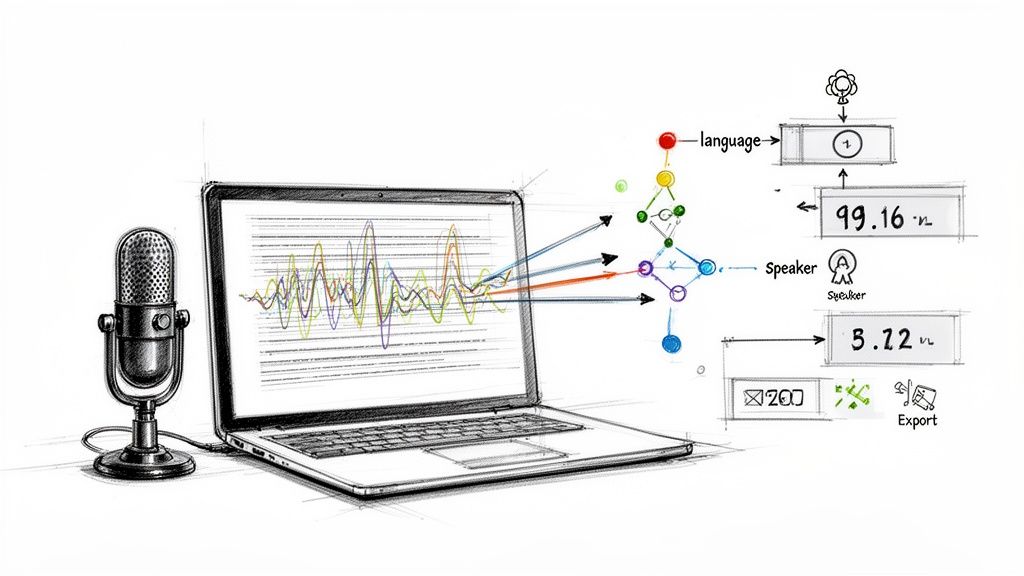
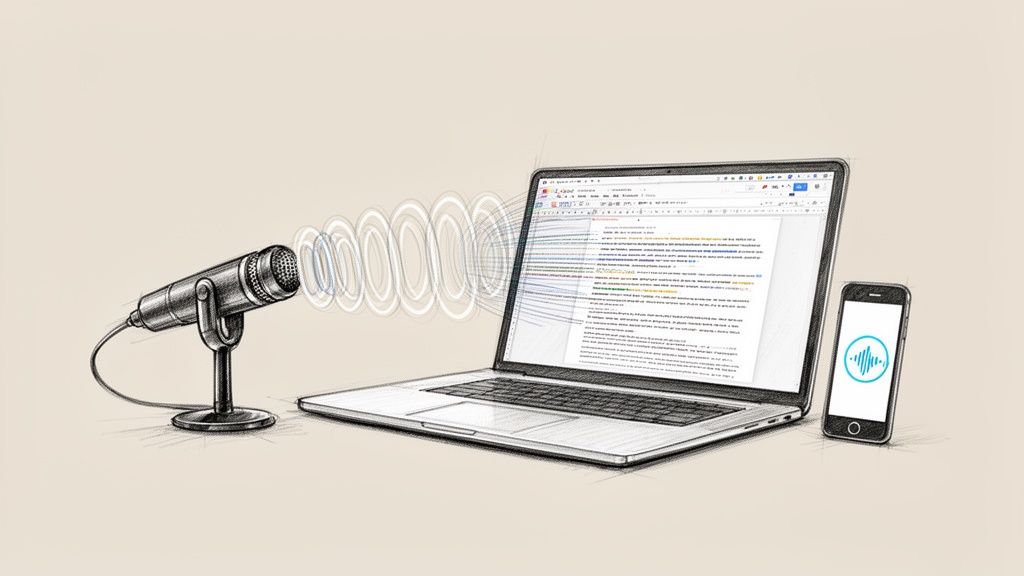
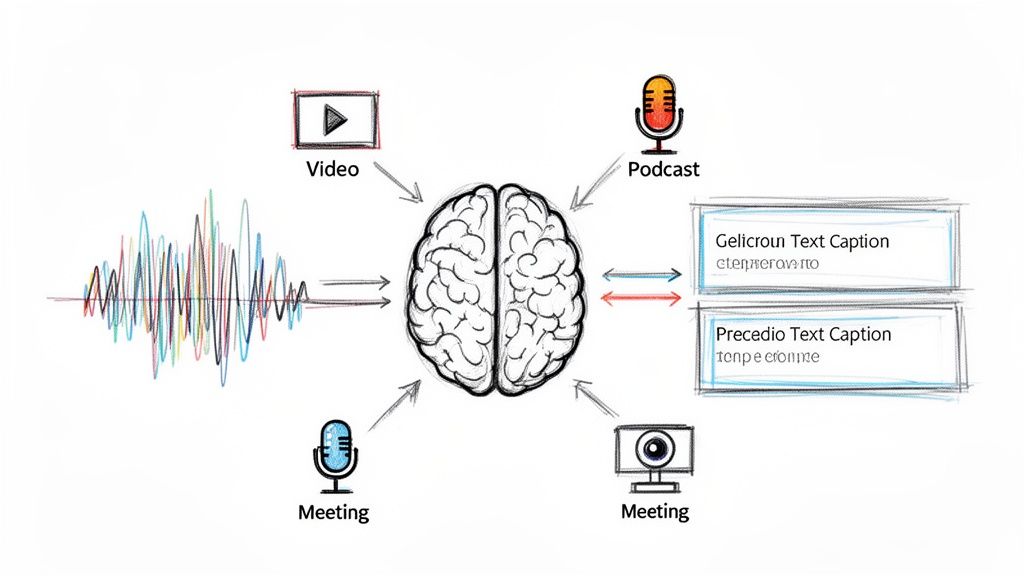
One of the biggest missed opportunities for most podcasters is episode transcripts. Search engines can't "listen" to your audio files, but they can crawl text. By transcribing your episodes, you make every single word you speak searchable. Your entire back catalog becomes a powerful discovery engine.
Think about it. Someone might search for a specific, niche topic you only mentioned for five minutes in an episode from a year ago. Without a transcript, that content is invisible. With one, your show can pop up in their search results, attracting a highly qualified, super-interested new listener.
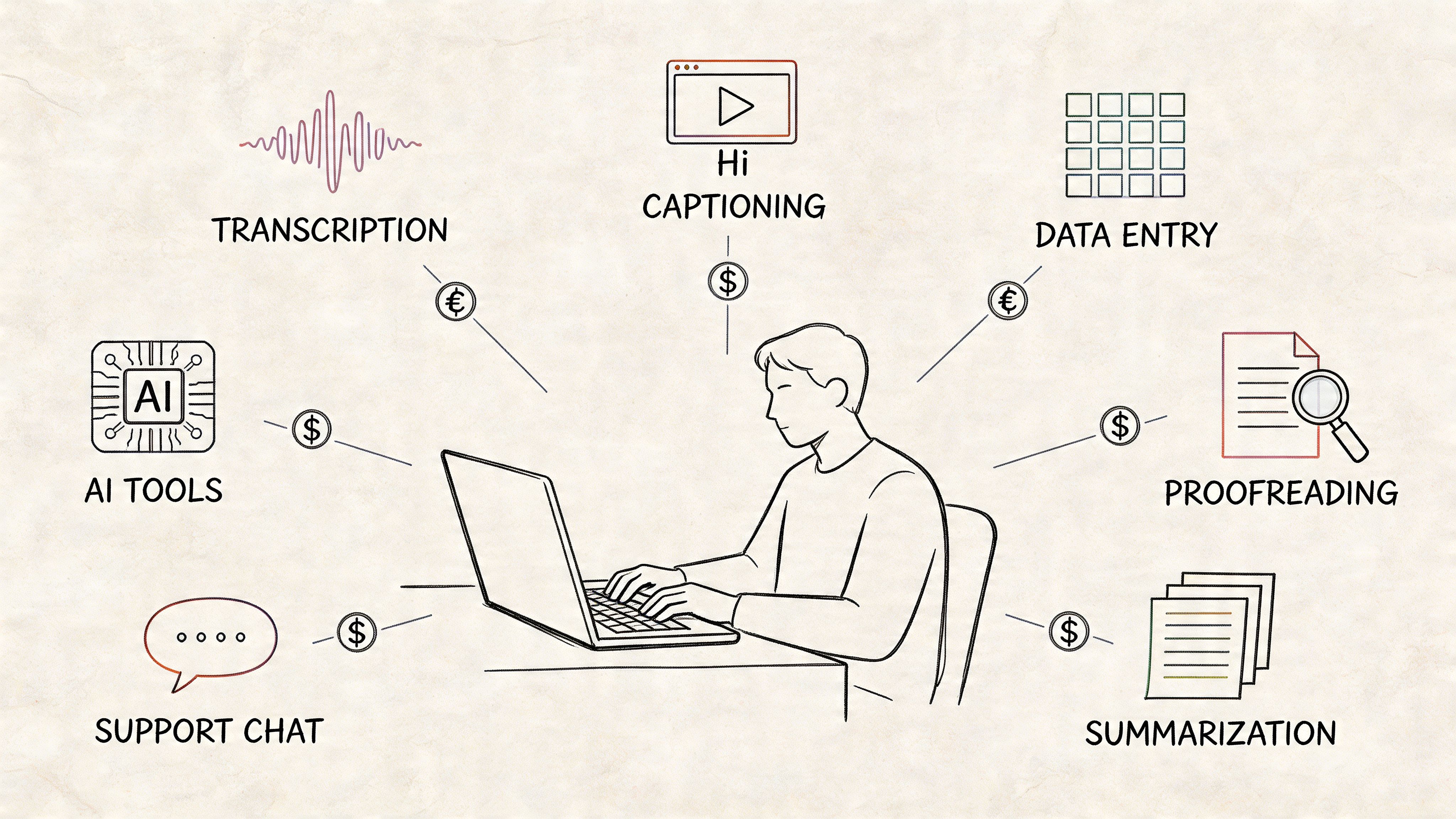
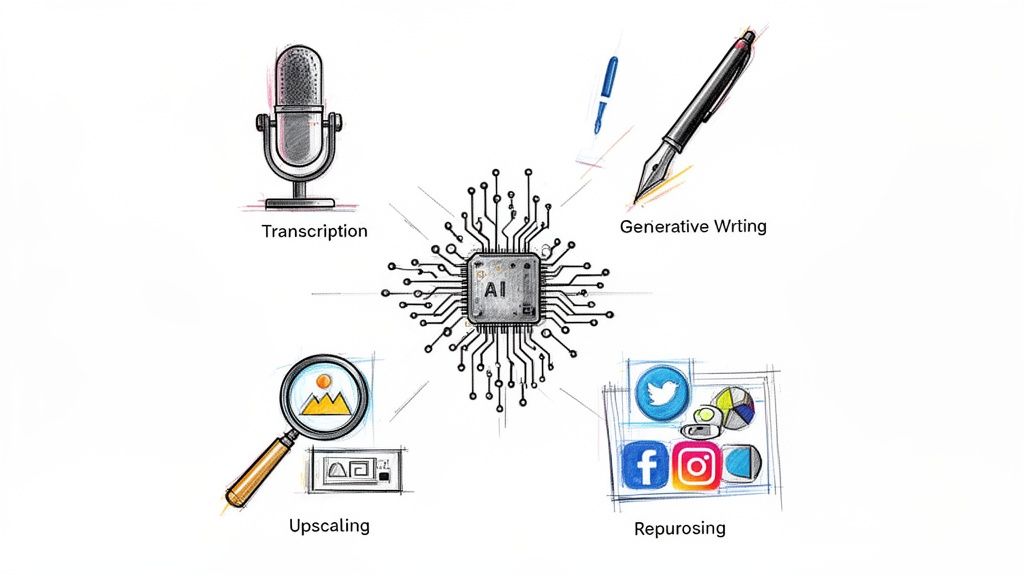
This used to be a tedious, expensive process, but AI tools have changed the game.
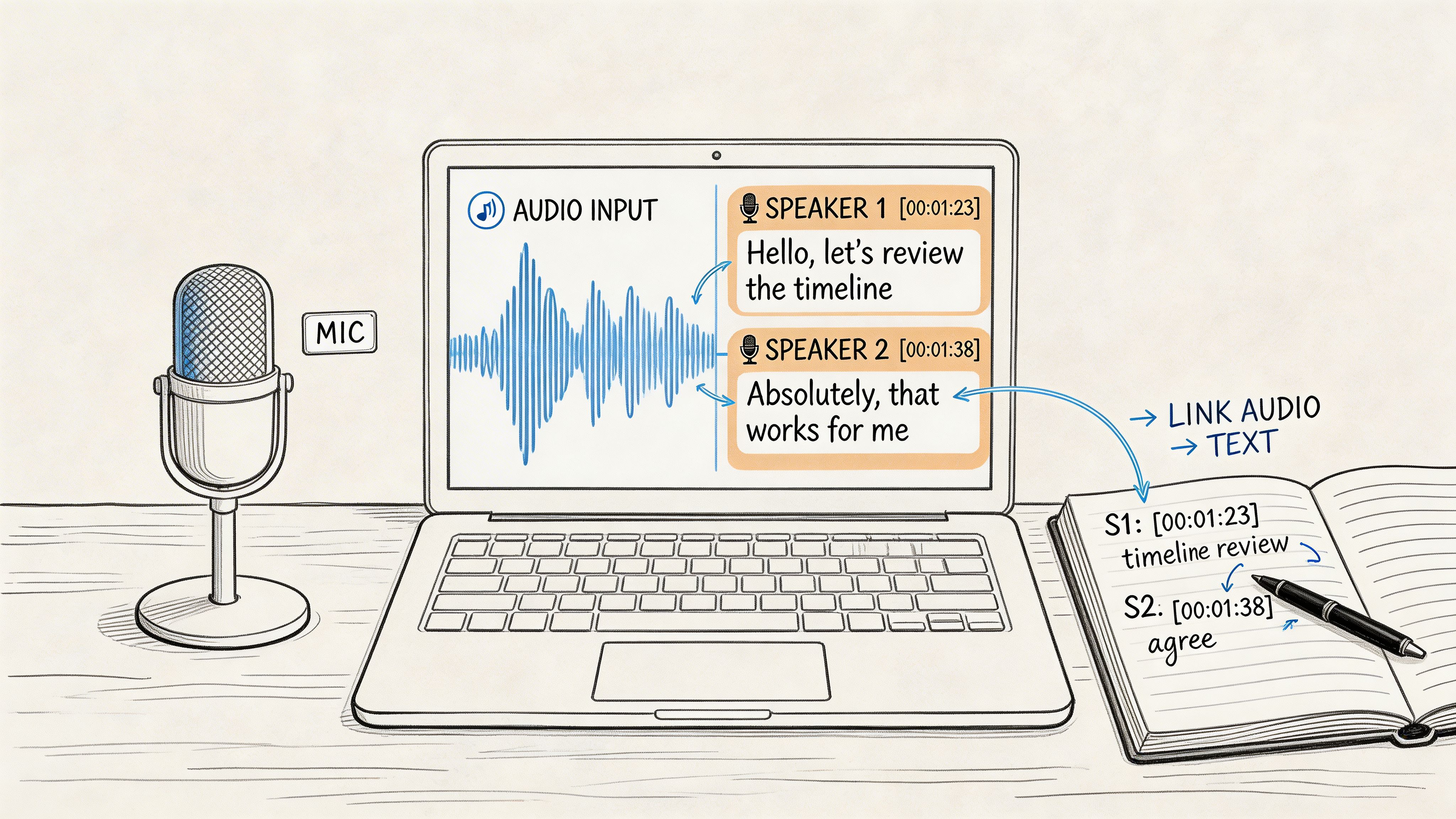
- Just upload your episode's audio file into a tool like Whisper AI.
- In minutes, you get back a highly accurate, timestamped transcript.
- Post that full transcript on your website as a blog post. You've just created a dense, keyword-rich asset that Google can index.
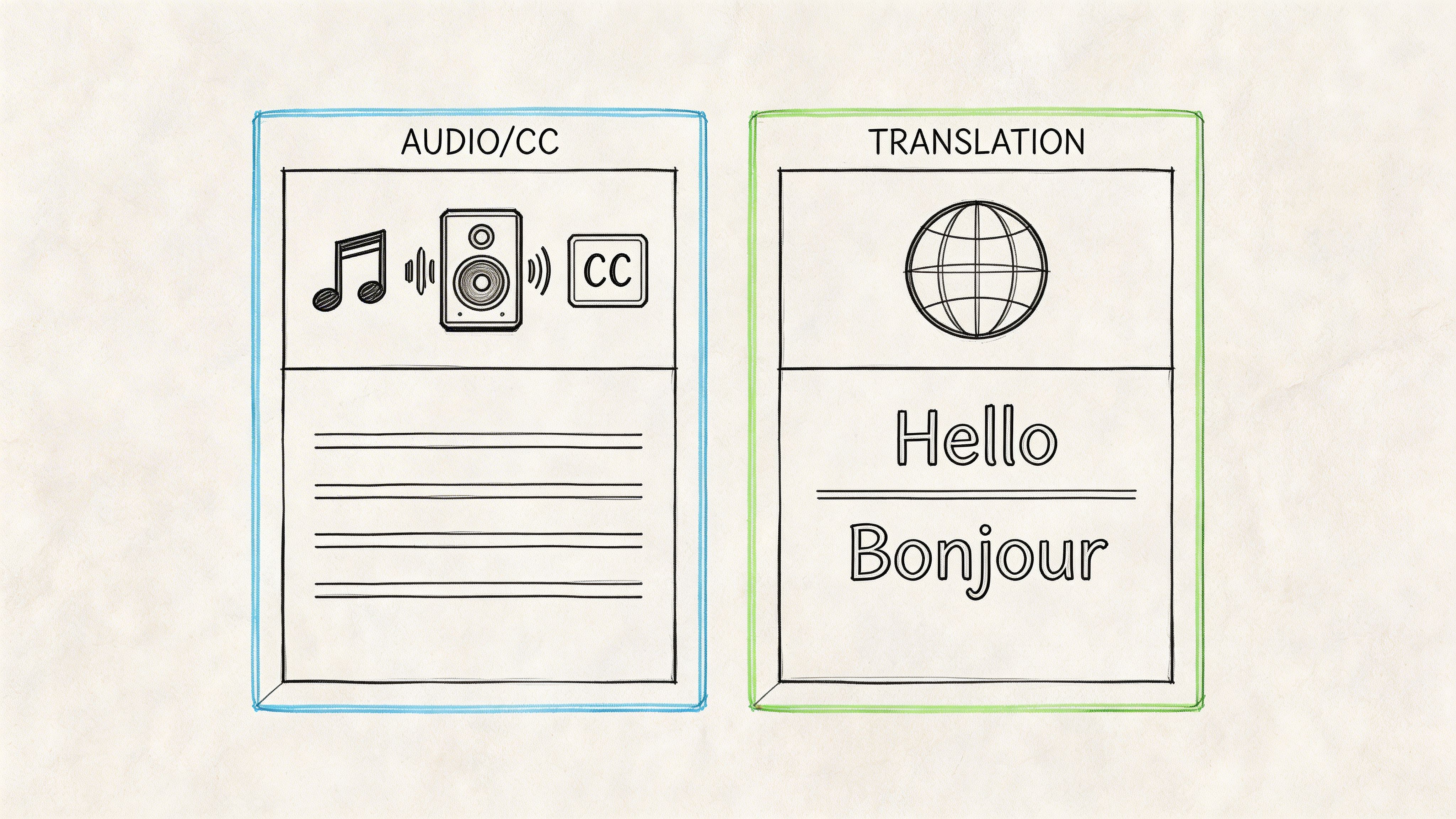
Transcripts aren't just for search engines. They make your content accessible to a wider audience, including people who are hearing-impaired or those who simply prefer to read.
Optimize Directly on Podcast Platforms
Beyond Google, you have to play the game on the podcast platforms themselves. Apple Podcasts, Spotify, and others have their own search algorithms that rely heavily on the metadata you provide.
Start with your show's categories. Don't just pick something broad like "Business." Drill down. If your show is about marketing, choose "Business > Marketing" to attract a much more targeted audience.
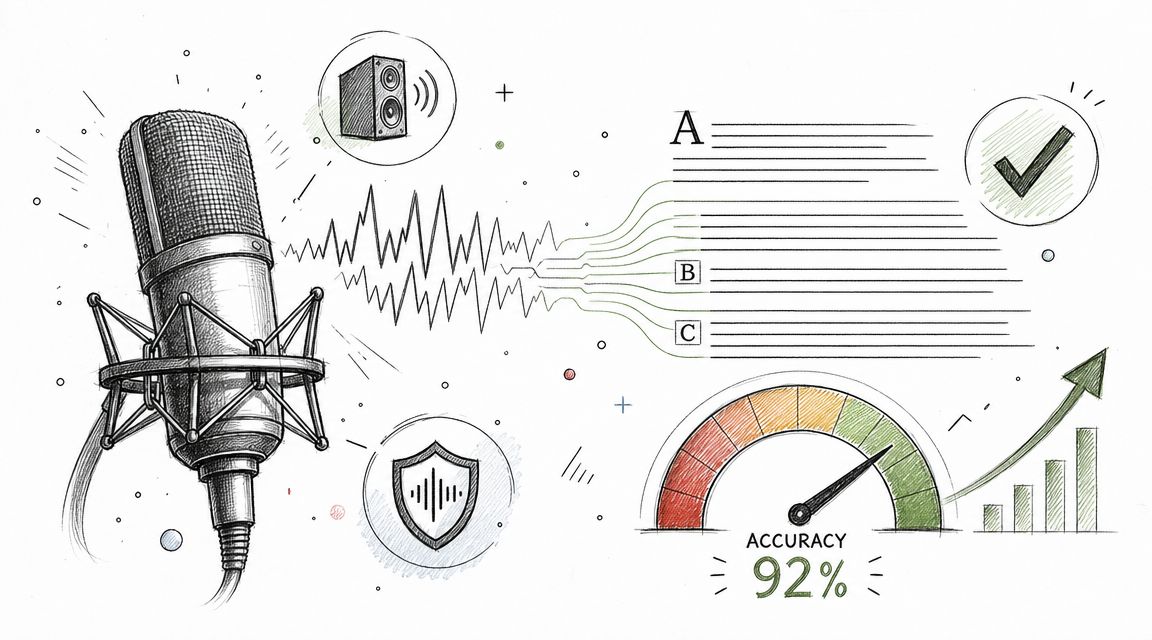
And don't sleep on YouTube. Research shows that about 33% of weekly U.S. podcast listeners find new shows on YouTube, making it the top platform for discovery. What's more, podcasters who use AI for tasks like transcription have seen a 45% jump in listenership, partly due to better recommendations.
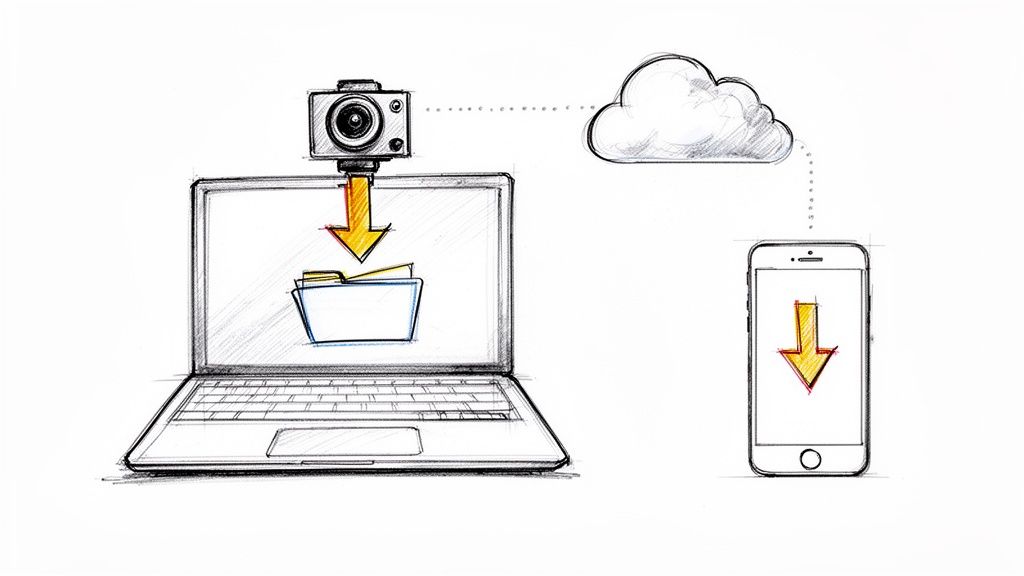
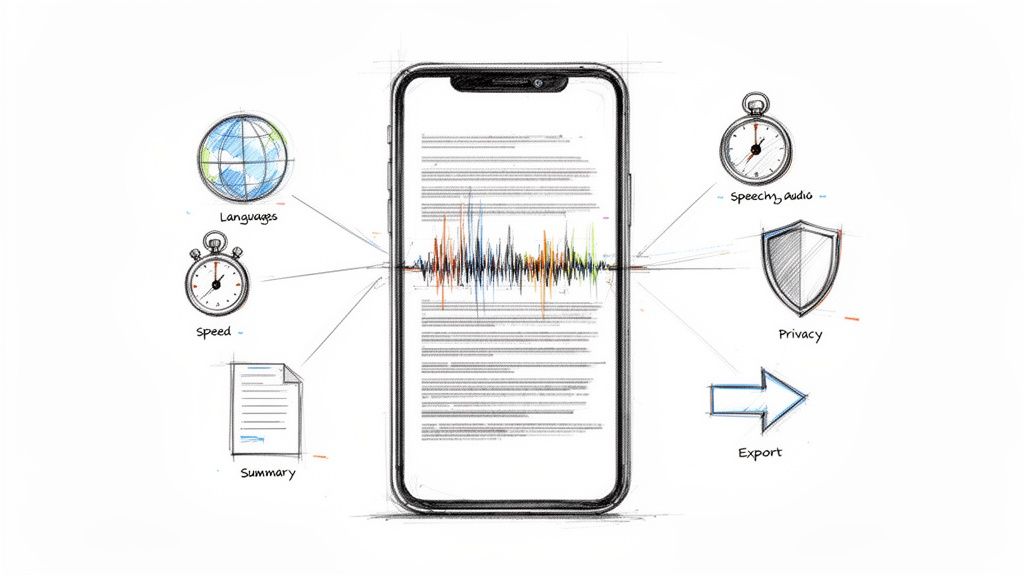
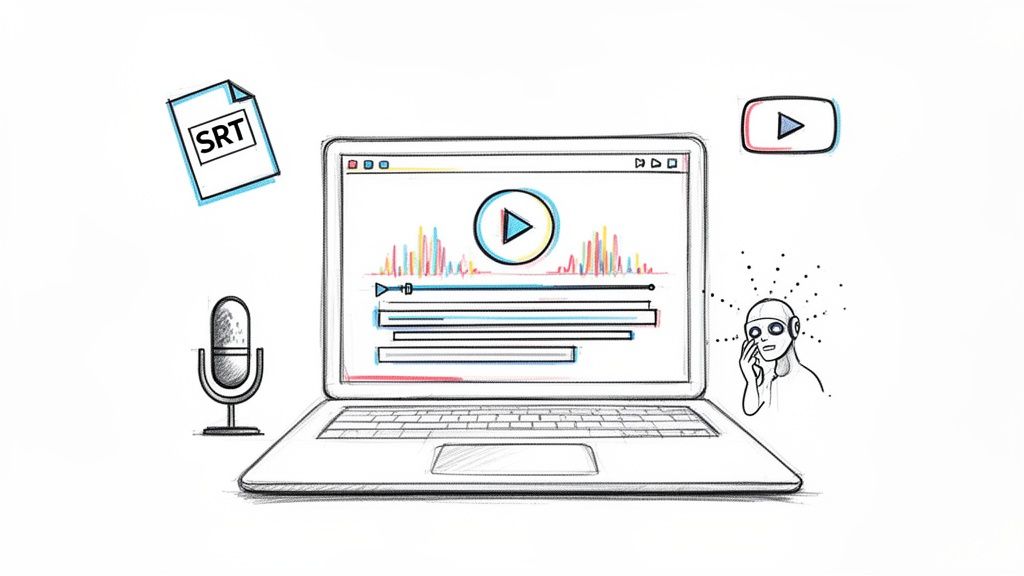
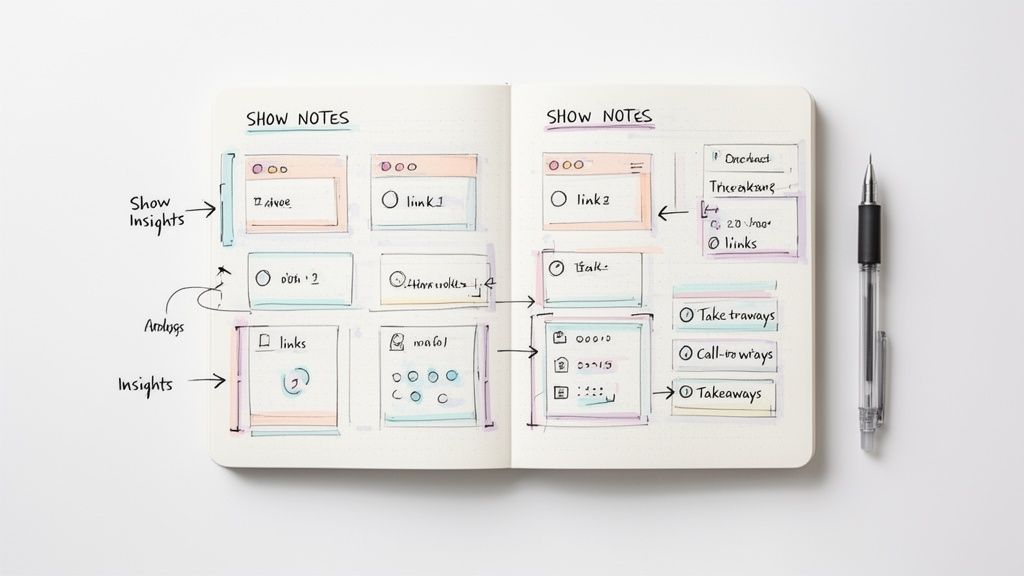
You don't need a full video production studio. Creating a simple video with your cover art and the full audio, then uploading it to YouTube with the transcript in the description, opens up a massive new channel for people to find you. You can even use AI for podcast summaries and show notes to make this process even faster.
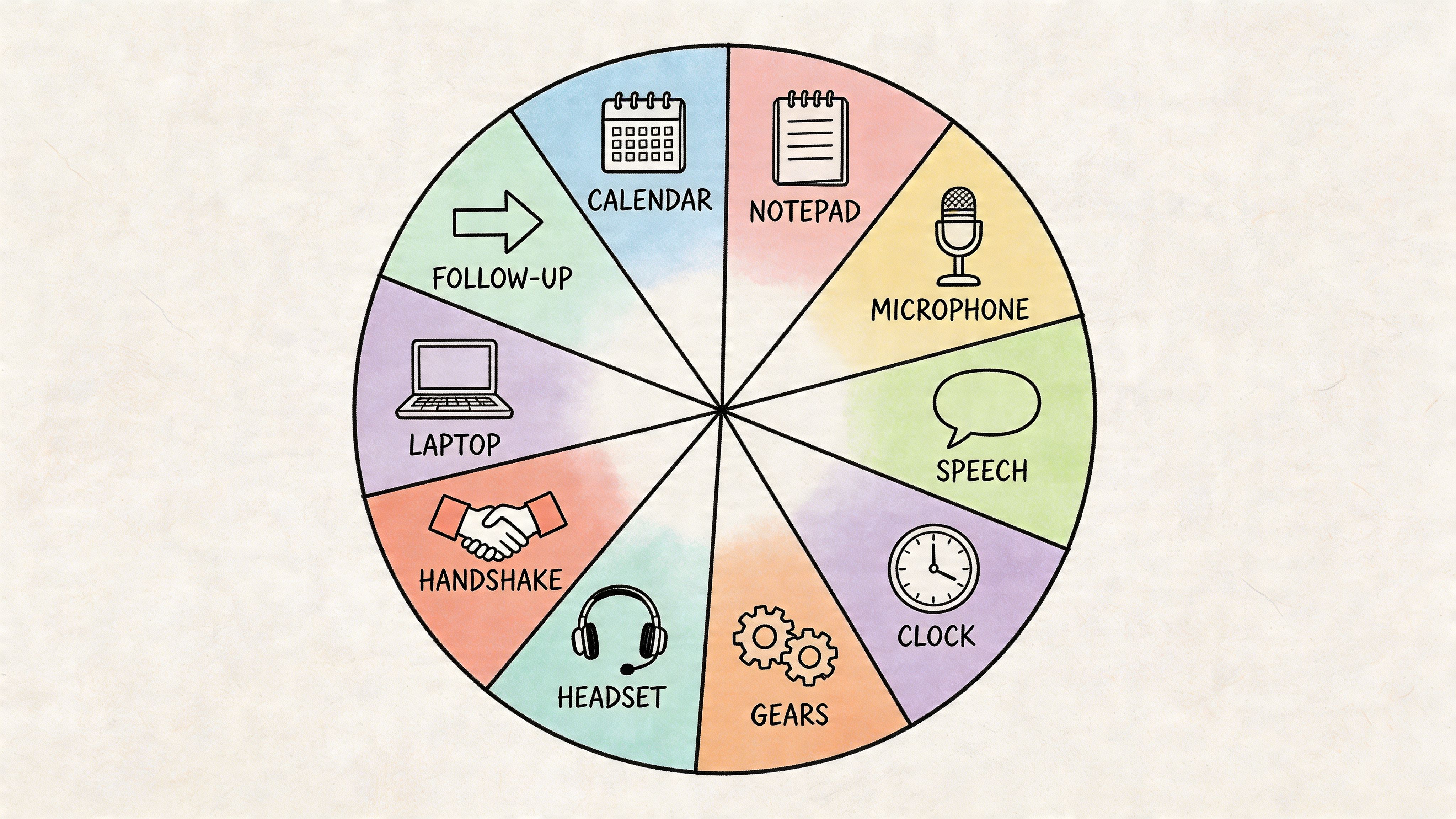
To help you stay on track, I've put together a quick checklist of the essential SEO actions you should take for every single episode.
Podcast SEO Checklist
This table breaks down the core tasks that will make the biggest impact on your show's discoverability. Think of it as your pre-publish ritual.
Making these simple steps a non-negotiable part of your workflow will transform your podcast from a piece of audio that disappears after launch into a long-term asset that constantly works to bring new listeners into your world.
Turn One Episode Into a Content Goldmine
If you're treating your hour-long podcast episode as a one-and-done piece of content, you're leaving a massive amount of growth on the table. This is one of the biggest missed opportunities I see with new and even established podcasters.
The magic happens when you stop thinking of your episode as a single asset and start seeing it as a rich source of raw material. The secret to explosive reach is breaking that one episode down into dozens of smaller, bite-sized pieces for every platform. This is how you meet potential listeners where they already are—scrolling through TikTok, watching YouTube Shorts, or reading articles on LinkedIn.
Think Like a Content Marketer, Not Just a Podcaster
Your goal is to create a web of entry points that all lead back to your show. What grabs attention on Instagram Reels is completely different from what works in a blog post or on Twitter. You have to adapt.
Instead of just dropping a link with the generic "new episode is live!" caption, you need to offer a genuine taste of the value packed inside. This approach piques curiosity and provides real, standalone value, which encourages the shares, comments, and follows that fuel your growth.
Here are a few ways to slice and dice a single episode:
- Short Video Clips (TikTok, Reels, Shorts): Snip out that 30-60 second moment where you or a guest tells a powerful story, drops a surprising statistic, or has a hilarious exchange. Add captions, and you've got perfect short-form video content.
- Audiograms (Instagram, Facebook): Take a compelling audio-only snippet and overlay it with a dynamic waveform and a branded image. These are fantastic for sharing powerful insights that don't need a video component.
- Quote Graphics (Twitter, LinkedIn): Pull the most thought-provoking, tweetable lines from the conversation. Design them into clean, visually appealing graphics that are easy to read and share.
- Detailed Blog Posts: As we touched on earlier, your full transcript is an SEO powerhouse. You can also craft summary blog posts that distill the key takeaways for people who would rather read than listen.
The most powerful repurposed content never feels repurposed. It feels like it was made specifically for the platform it’s on. A 20-second clip that makes someone stop and think will always outperform a generic promo post.
Building a Scalable Workflow with AI
I know what you're thinking: "This sounds like a ton of work." A few years ago, you'd be right. Manually transcribing an hour of audio and then scrubbing through it to find the best parts could easily eat up your entire afternoon.
This is where technology becomes your secret weapon. Tools like Whisper AI can shrink that entire process down to just a few minutes.
This efficiency makes a real content repurposing strategy possible, especially if you're a solo creator or running a lean team. It eliminates the friction that prevents most podcasters from ever getting started. You can dive deeper into building a system that works for you by exploring different content repurposing strategies and finding a good fit.
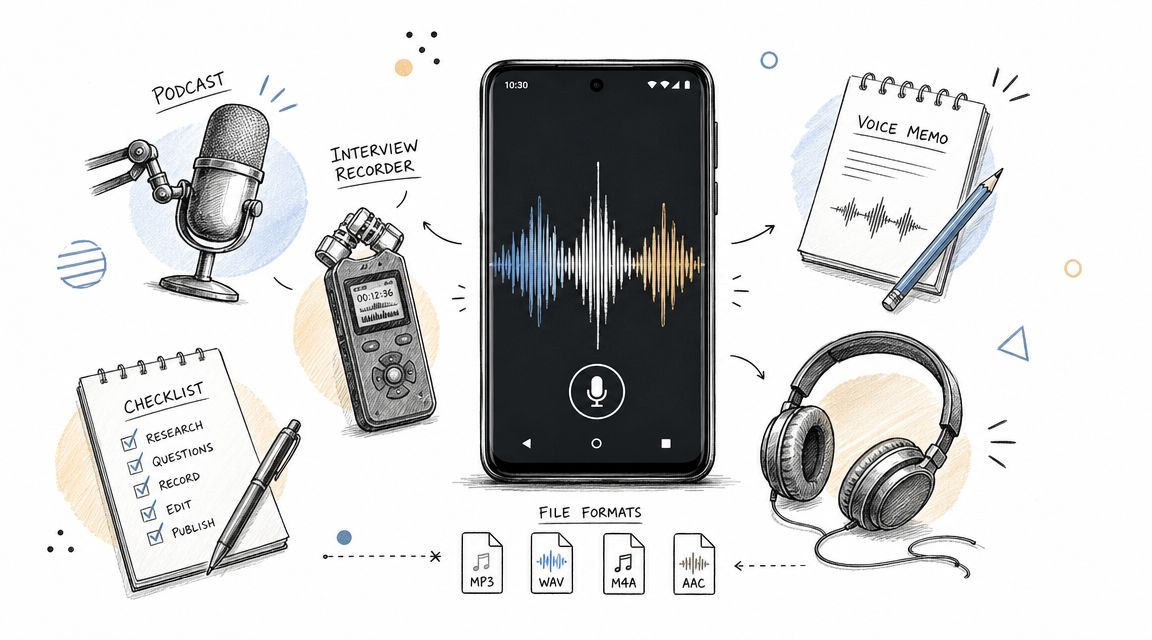
Here’s a simple workflow you can use today:
- Get Your Transcript Instantly: Once your episode edit is locked, upload the final audio file to Whisper AI. You'll have a highly accurate transcript back in minutes.
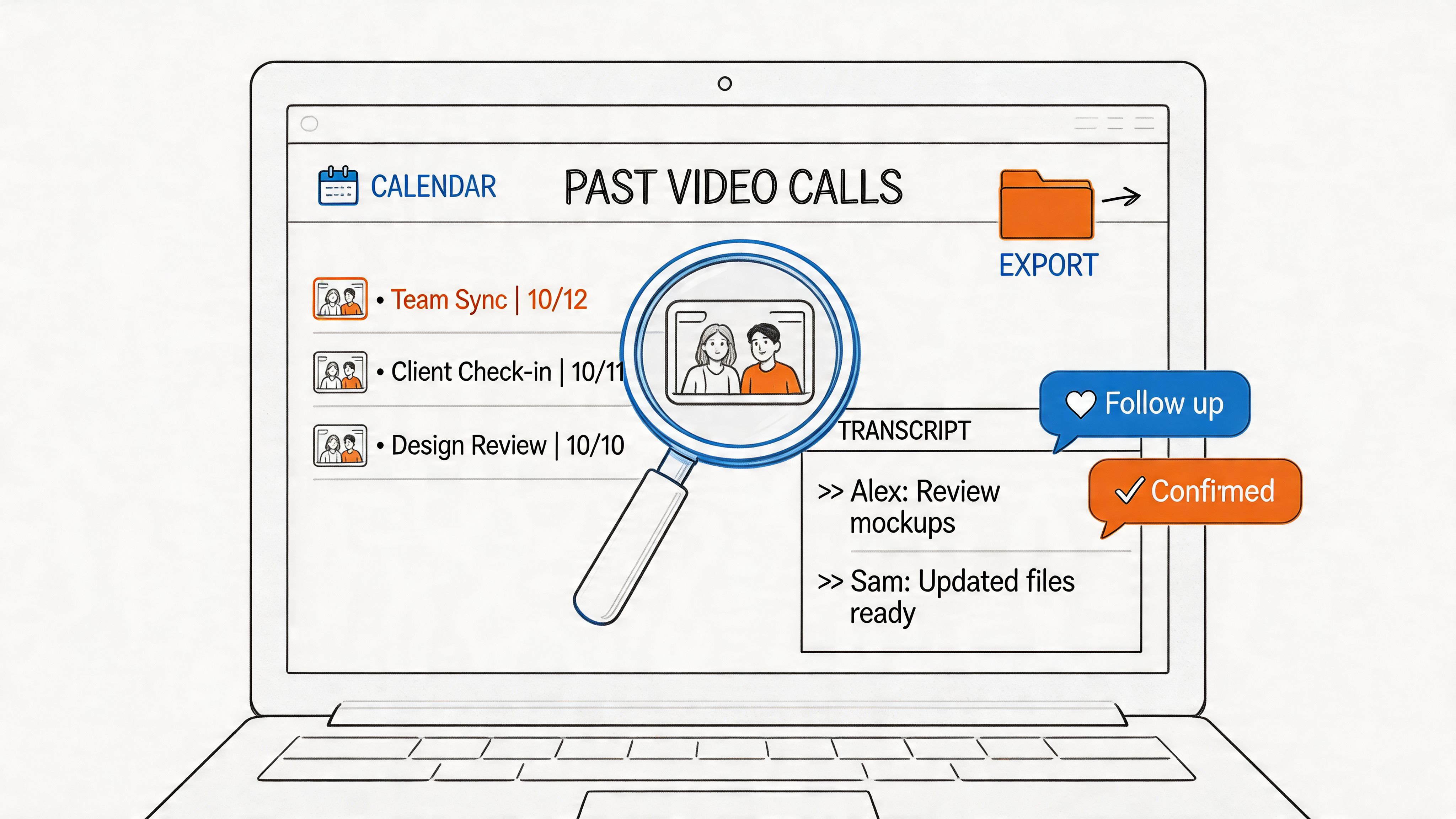
- Spot the Highlights: Scan the text. It's much faster than re-listening. Look for those golden nuggets—emotional stories, actionable tips, surprising data points, or funny moments. The transcript makes them jump right off the page.
- Export and Create: After you've identified your best clips, export the text. You can now copy-paste it to create perfect video captions, text for your quote cards, or pull-quotes for your blog post.
By making this a core part of your production process, you turn repurposing from a tedious chore into a powerful growth engine. Each clip, quote, and audiogram becomes another doorway, inviting a potential fan to discover your show. This is how you stop just publishing episodes and start truly building an audience.
Leverage Guests and Cross-Promotions for Growth
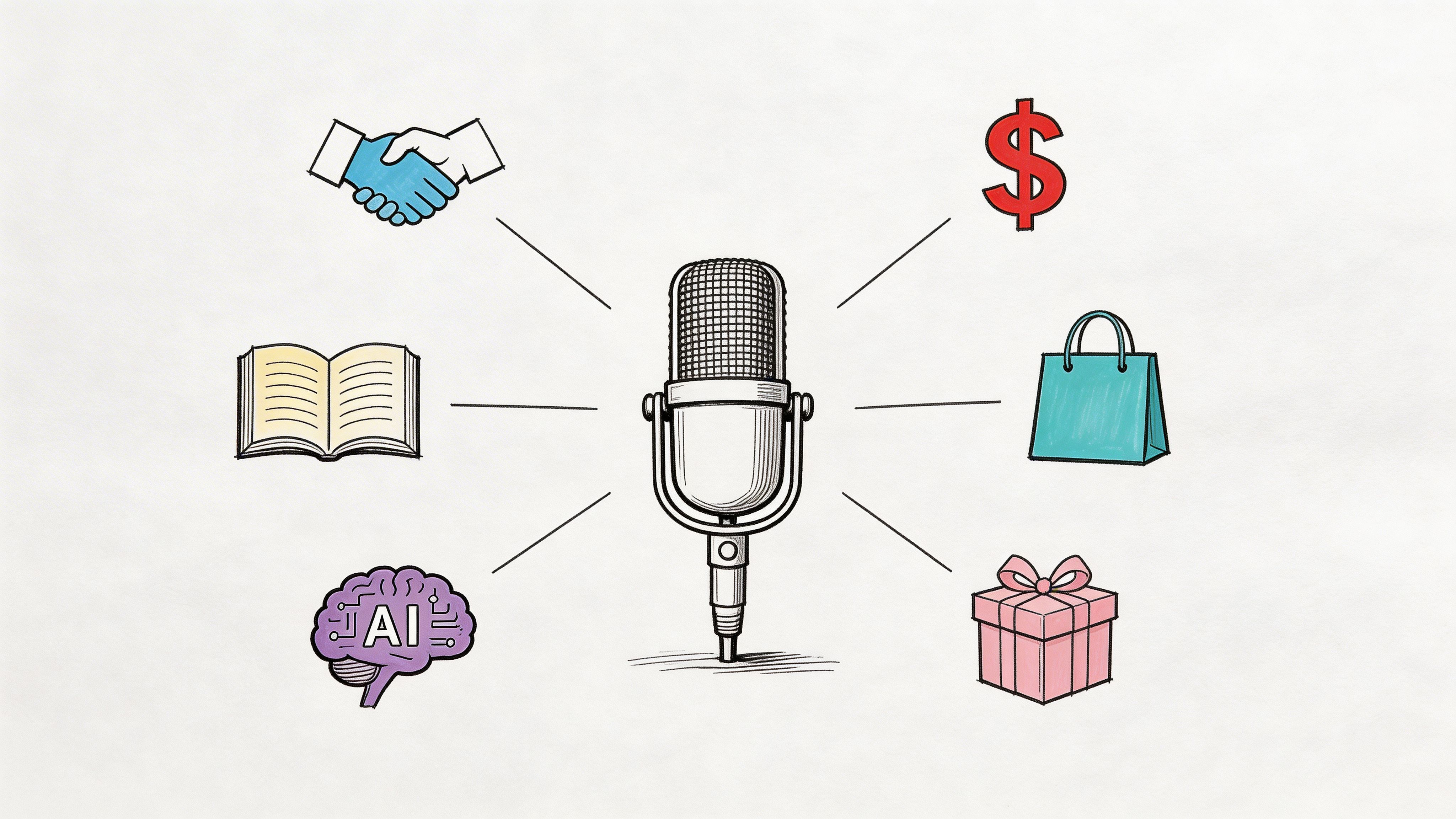
One of the fastest ways to grow your podcast is to tap into an audience that someone else has already built. It's a massive shortcut. Instead of starting from zero, you're borrowing trust and getting in front of listeners who are already interested in your niche.
When done right, collaborations aren't just about a quick spike in downloads. They’re about creating genuine connections that turn borrowed listeners into your own long-term fans. The core idea is simple: find people who are already talking to your ideal listeners and create something awesome together. The best collaborations are always a win-win.
Secure Guests Who Bring an Audience
Inviting guests onto your show is a classic move, but its success hinges entirely on your strategy. It’s not enough to book someone just because they're interesting. For actual growth, you need to target guests who have an existing, engaged community that looks a lot like the listener persona you've worked so hard to define.
Honestly, a guest with 1,000 true fans is way more valuable than one with 100,000 passive followers.
When you're vetting potential guests, think about alignment, not just the size of their following.
- Audience Overlap: Do their followers actually care about your topics? The perfect guest is someone who can solve a problem or speak to an interest your listeners already have.
- Engagement Level: Take a look at their social media or email list. Are people commenting, asking questions, and interacting? That's the sign of a healthy community that will actually show up when the guest promotes your episode.
- Promotion Mindset: Do they have a track record of actively sharing their media appearances? A guest who views the interview as a mutual opportunity is going to be your best partner.
Your outreach has to be better than the generic templates flooding everyone's inboxes. Personalize your pitch to prove you’ve actually done your homework.
A great pitch isn’t about what the guest can do for you; it’s about what you can do for their audience. Frame the interview as an opportunity for them to share their expertise with a new, highly relevant group of people who are eager to learn from them.
This simple shift in framing shows you respect their time and positions your podcast as a valuable platform, not just another obligation.
Become a Valued Guest on Other Shows
Now, let's flip the script. Being a guest on other podcasts is arguably even more powerful for growing your own audience. When you appear on another show, you’re getting a warm introduction from a host their audience already knows and trusts. It's a direct pipeline to new, pre-qualified listeners.
The key here is to be strategic. Pitching yourself to a top-tier podcast right away is a long shot. Instead, find shows that are maybe a step or two ahead of you in audience size but still squarely in your niche. You want to find a place where your expertise is the perfect fit and provides incredible value to their specific listeners.
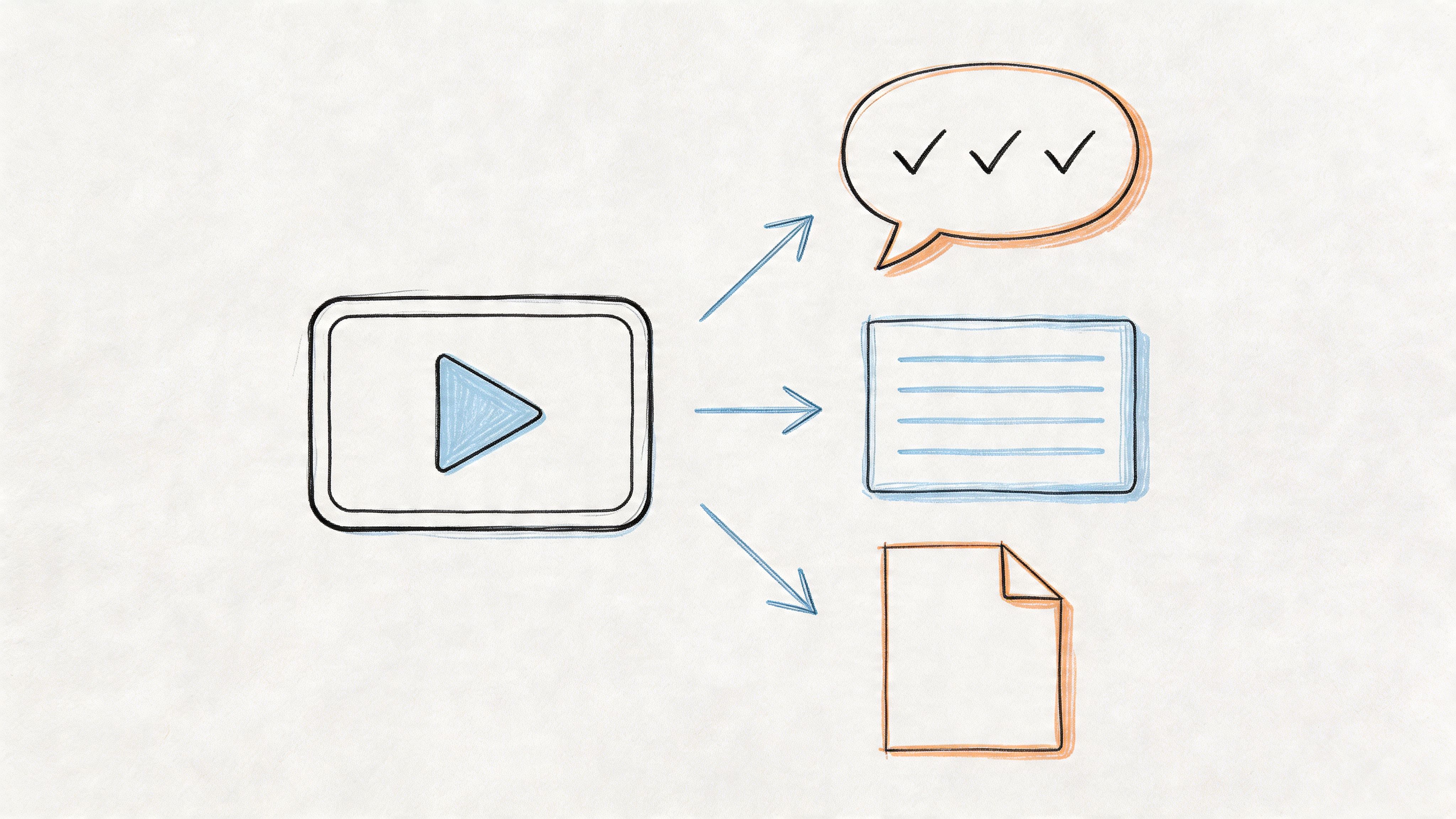
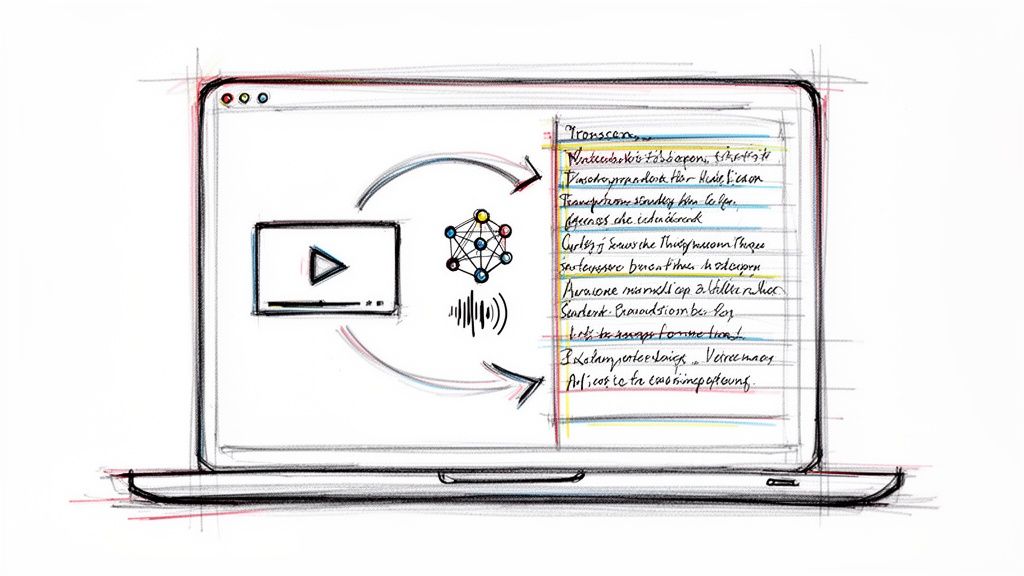
And when you do land that guest spot, you want to make it ridiculously easy for the host—and your own team—to promote the episode. This is where repurposing comes in.
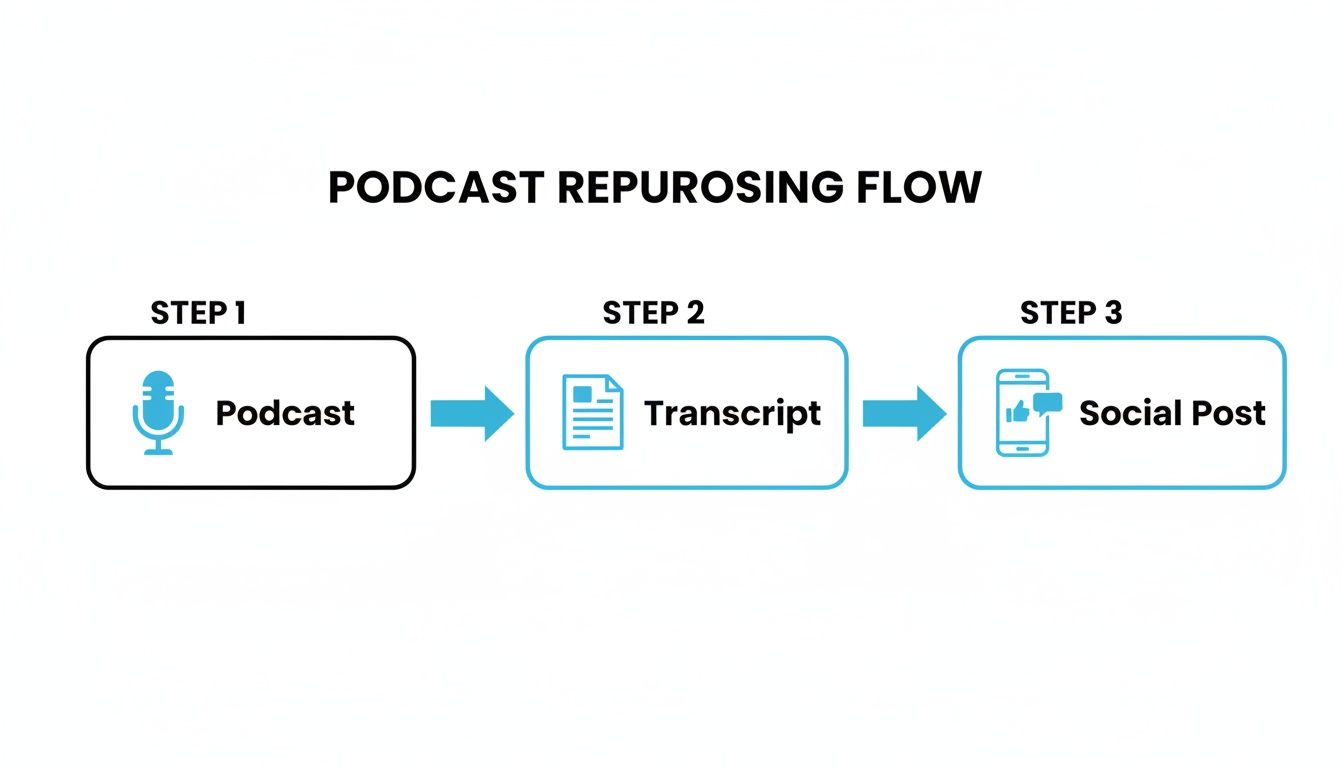
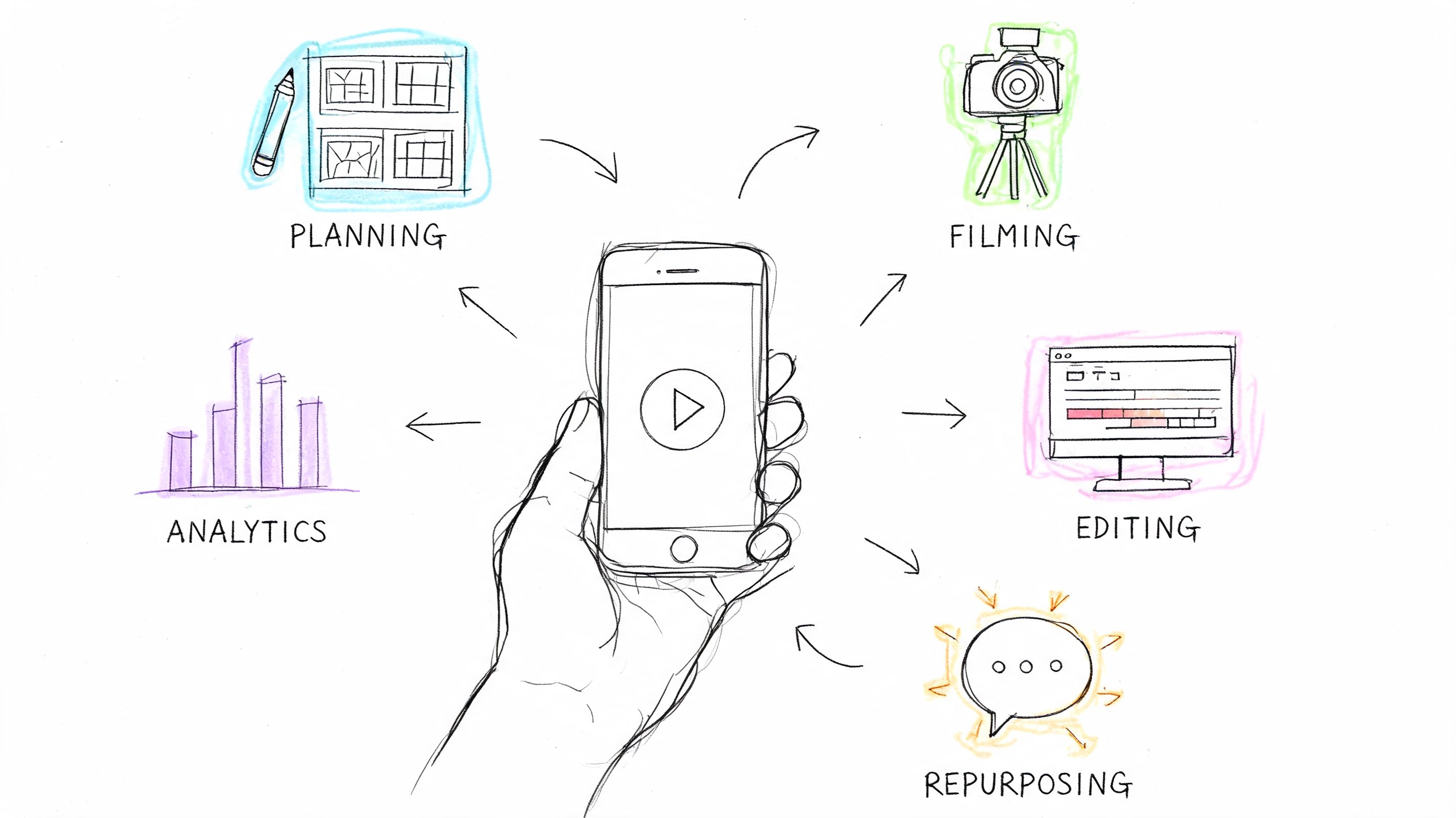
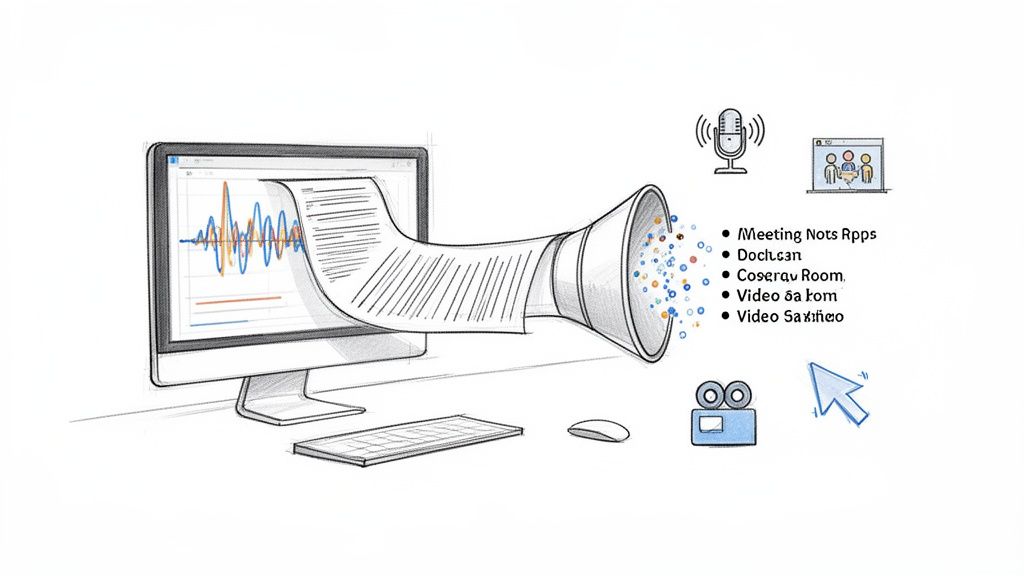
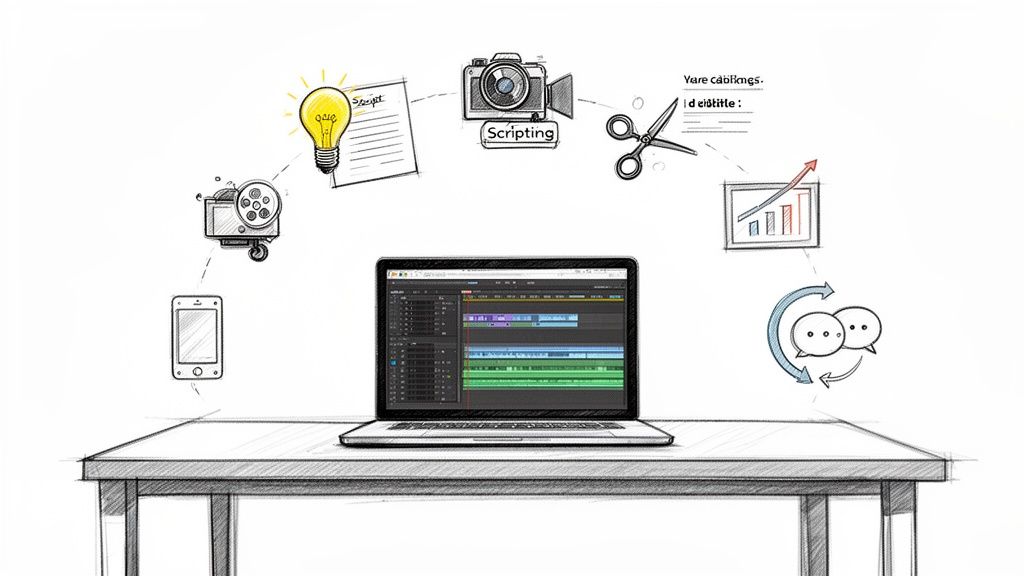
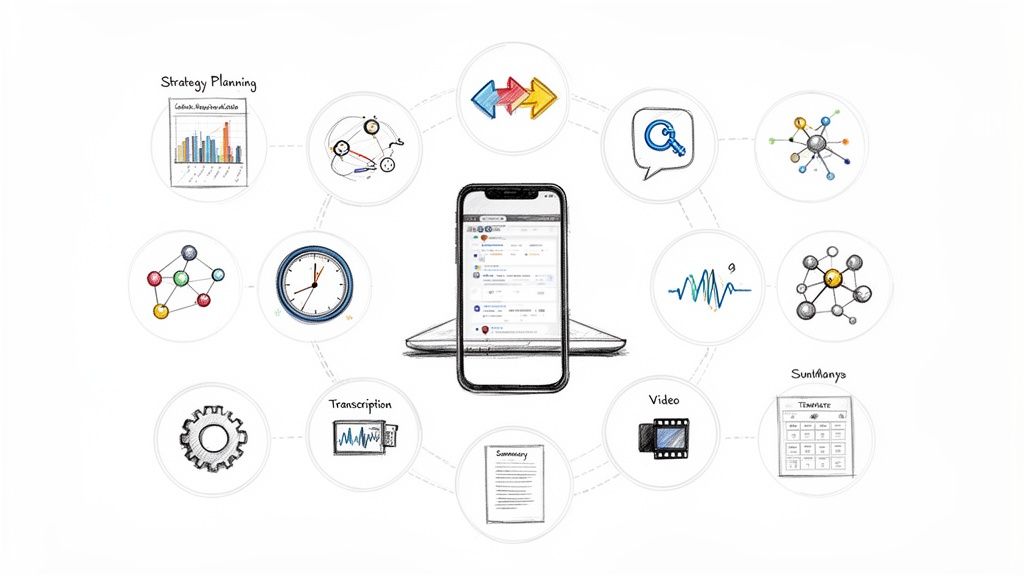
This workflow shows exactly how your raw audio can be turned into engaging clips and posts, which is a critical part of making any guest strategy work.
Use Promo Swaps and Feed Drops
Beyond formal guest appearances, there are a couple of simpler ways to collaborate that are often easier to set up.
- Promo Swaps: This is exactly what it sounds like. You and another podcaster agree to run a short promo for each other's show in an episode. This works best when your shows are similar in size and audience. It’s a low-effort, high-impact recommendation.
- Feed Drops: This is a bit more involved, but incredibly effective. A feed drop is when you publish one of their best episodes in your feed, and they do the same for you. It gives their audience a full taste of your show's value without them having to go search for it.
These kinds of cross-promotions build real goodwill within the podcasting community. When listeners hear your show pop up on multiple shows they trust, it cements your credibility and makes checking you out a total no-brainer. This is how to grow a podcast audience through community, not just competition.
Turn Listeners Into a Thriving Community

If you're only chasing download numbers, you're missing the bigger picture. The real magic happens when you stop broadcasting at an audience and start building a community with them.
A passive listener is nice, but an engaged fan is your show's most powerful growth engine. These are the people who share your episodes, leave rave reviews, and generate the authentic, word-of-mouth buzz that algorithms can't replicate. The goal is to evolve your podcast from a one-way street into a lively, two-way conversation.
Build Your Most Valuable Asset: Your Email List
Social media platforms are fickle. Their algorithms can change overnight, and your reach can plummet without warning. Your email list, on the other hand, is something you actually own. It’s a direct line to your most loyal listeners, making it a non-negotiable tool for any podcaster serious about growth.
But how do you get people to sign up? A weak "subscribe to my newsletter" plea won't cut it. You need to offer a genuinely compelling reason, and that’s where a great lead magnet comes in. Think of it as an irresistible freebie that solves a real problem for your ideal listener.
Here are a few ideas that work:
- Exclusive Checklists: Just finished an episode on launching a side hustle? Offer a downloadable PDF outlining the first 10 steps.
- Bonus Audio: Share a fun 5-minute pre-show chat or a deep-dive segment you had to cut for time.
- Actionable Templates: If you run a business podcast, a ready-to-use email outreach template or project planning spreadsheet is pure gold.
- Resource Guides: Compile all the books, tools, and articles you mentioned in a popular episode into one handy document.
The trick is to make the lead magnet feel like a natural extension of the episode's content. When you do that, signing up becomes a no-brainer.
Foster a Two-Way Conversation
Once you have their attention, it’s time to make them feel like they're part of the show. The best podcasts cultivate a sense of belonging, turning passive listeners into active participants. This is your chance to transform your social media channels from broadcast megaphones into vibrant community hubs.
It's time to move beyond the basic "new episode is live!" posts. Start creating content that sparks discussion and actually invites a response. This won't just improve your engagement metrics; it will give you a treasure trove of feedback and ideas for future episodes.
Your listeners want to be part of the show, not just consumers of it. Actively featuring their voices and ideas is the fastest way to build unbreakable loyalty.
Ready to make it happen? Try weaving these interactive elements into your routine:
- Run Interactive Polls: Let your audience vote on next week’s episode topic or weigh in on a point you debated in the latest show.
- Host Q&A Sessions: Dedicate a segment to answering listener questions submitted through email or social media. Nothing makes an audience feel more valued than being heard.
- Share User-Generated Content: Did a listener create fan art, write a thoughtful summary, or leave an insightful comment? Share it and give them a shout-out!
- Create a Dedicated Space: For your most passionate fans, a private community on a platform like Discord or a Facebook Group can be a game-changer. This is where the conversation can thrive long after an episode ends.
By consistently engaging like this, your podcast transforms from a monologue into a dialogue. When listeners see their feedback directly shaping the show, their connection deepens, turning them into true evangelists. This is how you build a podcast audience that doesn't just listen—it sticks around.
Use Your Analytics to Make Smarter Decisions
If you're just guessing what your audience wants, you're flying blind. Real, sustainable podcast growth happens when you stop making assumptions and start letting data guide your decisions.
This is about creating a tight feedback loop. It means moving beyond a quick glance at total downloads and digging into the stories your analytics are telling you about listener behavior.
What to Track and Where to Find It
Your podcast host (like Transistor or Buzzsprout) and the dashboards on Spotify for Podcasters or Apple Podcasts Connect are your best friends here. You need to focus on the metrics that show you how people are actually listening.
These are the numbers that really matter:
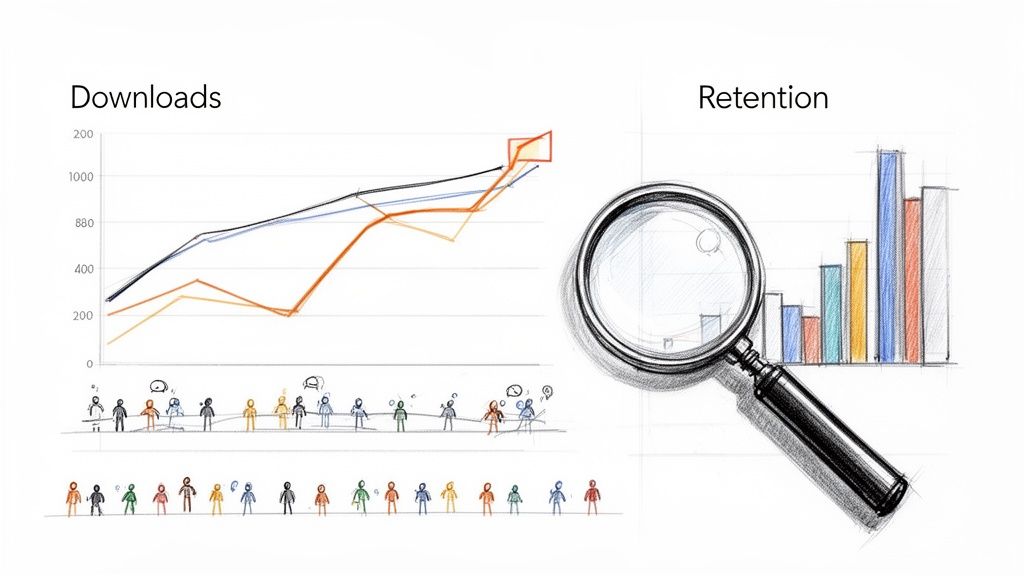
- Downloads per Episode: Don't just look at the total. Check the numbers for each new episode over its first 30 days. This gives you a true apples-to-apples comparison to see which topics, guests, or formats are hitting the mark.
- Audience Retention: This is arguably your most important metric. Where are the drop-off points? Seeing where you lose people’s attention is a direct roadmap for what to fix.
- Listener Demographics: Knowing the age, gender, and location of your listeners is gold. It helps you tailor your content, find the right sponsors, and even decide which guests to book next.
The point isn't just to look at data—it's to find patterns. If you consistently see a 20% drop-off around the 10-minute mark, that's not a coincidence. It's a signal that your intro or first segment isn't hooking people effectively.
To really get this right, you have to measure marketing campaign effectiveness and look past the vanity metrics to find what's actually driving growth.
Turning Insights Into Action
Data doesn’t do you any good if you don't act on it. Let's say you notice an episode featuring a certain guest got 50% more downloads in its first month than your average. That's not just a nice number; it's a huge clue.
It tells you loud and clear that your audience is hungry for that specific topic or expert. Your next move is obvious: plan a follow-up, find similar guests, or create a mini-series around that theme.
This is how you take the guesswork out of content creation. You give your audience more of what they've already proven they love, and that’s the surest path to getting them to stick around.
Answering Your Top Podcast Growth Questions
When you're trying to figure out how to grow your podcast, a lot of the same questions tend to pop up. It's normal to wonder about timelines, formats, and where to focus your energy. Let's tackle some of the most common questions I hear from podcasters.
How Long Does It Really Take to Grow an Audience?
Everyone wants a magic number, but the honest answer is... it depends. That said, most podcasters who are publishing consistently (think weekly) start to see real, meaningful traction somewhere in the 6-12 month range.
The first few months can feel like a grind. Growth is slow and often relies on your personal network and whatever initial promotion you can muster. But the real acceleration happens once you get your systems down for things like SEO, repurposing content, and collaborating with others.
The single most important thing you can do in those early days is stay consistent. It’s how you build momentum and, more importantly, trust with your listeners.
Should I Bother With a Video Podcast?
If you have the bandwidth for it, yes, absolutely. Publishing a video version of your podcast on YouTube is one of the most powerful growth moves you can make. It exposes your show to a massive audience that isn't just scrolling through Apple Podcasts or Spotify.
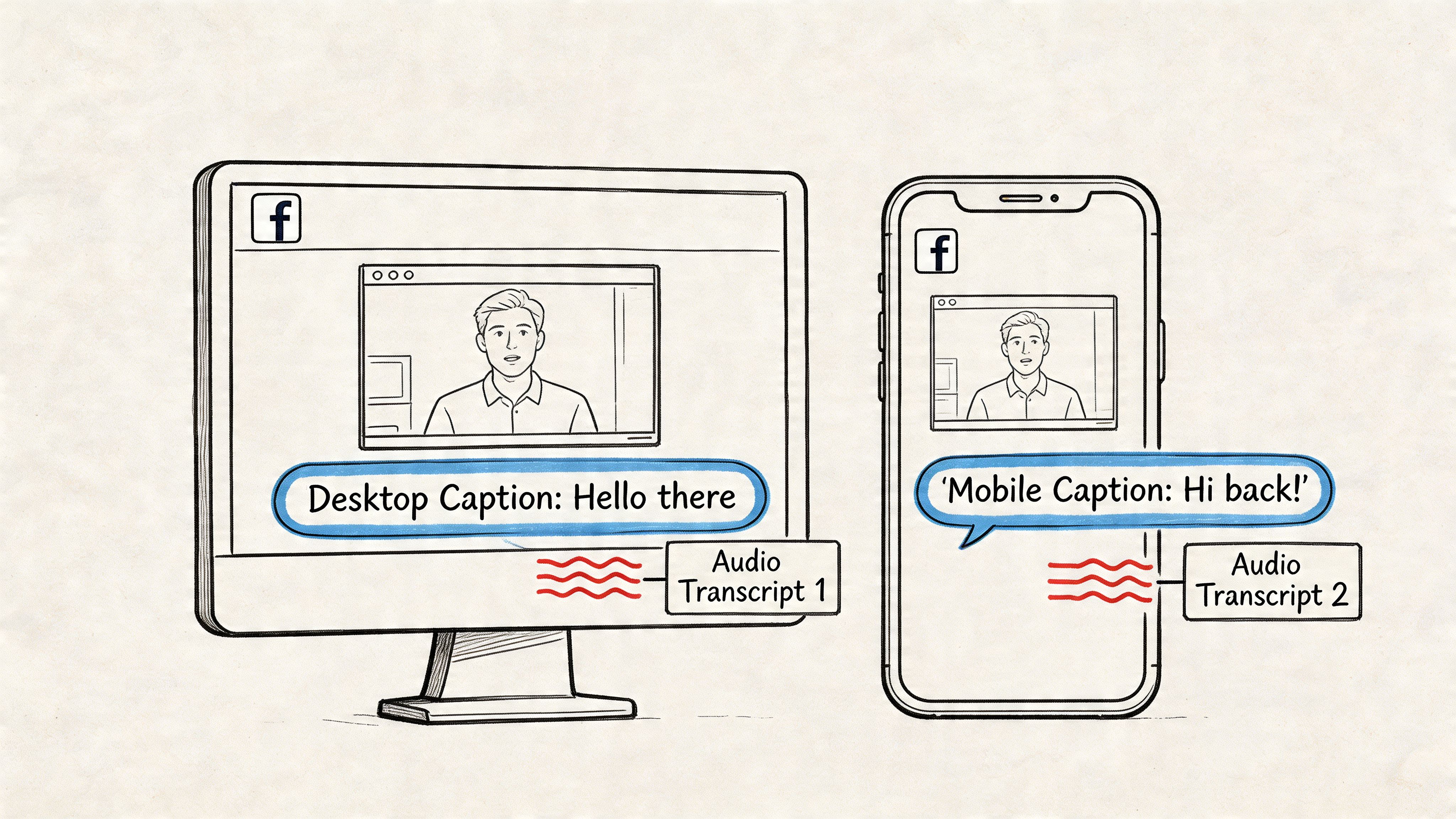
And it doesn't have to be a multi-camera, professionally lit production. A simple static image with your high-quality audio can still get picked up by the YouTube algorithm. The key is to use tools to generate accurate captions—this is huge for YouTube's SEO and makes your content accessible to everyone.
What's More Important: Finding New Listeners or Keeping the Ones I Have?
This is a classic question, and the answer is that you need to focus on both, but at different stages. When you're just starting out, acquisition is the name of the game. You simply need to get people listening to build any kind of foundation.
But long-term, sustainable growth is all about retention. A loyal, engaged audience is your true engine for growth. They're the ones who will share your episodes, leave those coveted five-star reviews, and support you if you ever decide to monetize.
Think of it this way: use smart discovery tactics to attract new listeners, but always obsess over creating amazing content that makes them want to stick around for the long haul.
Ready to turn your audio into searchable, shareable content in minutes? Whisper AI makes transcription, highlight extraction, and repurposing effortless, so you can focus on creating and growing. Start transforming your podcast workflow today at https://whisperbot.ai.