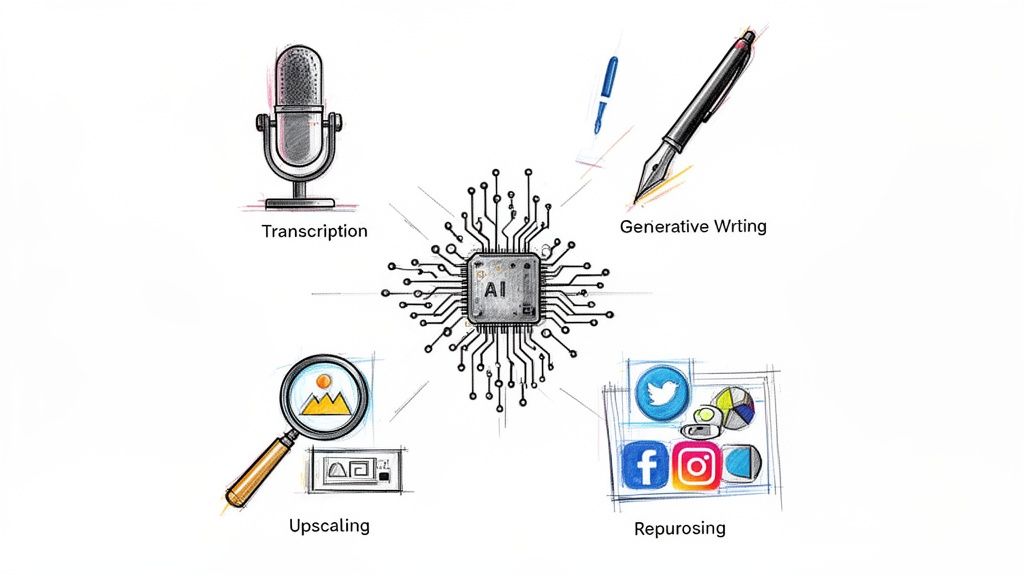
10 Smart Content Repurposing Strategies to Maximize Your Reach
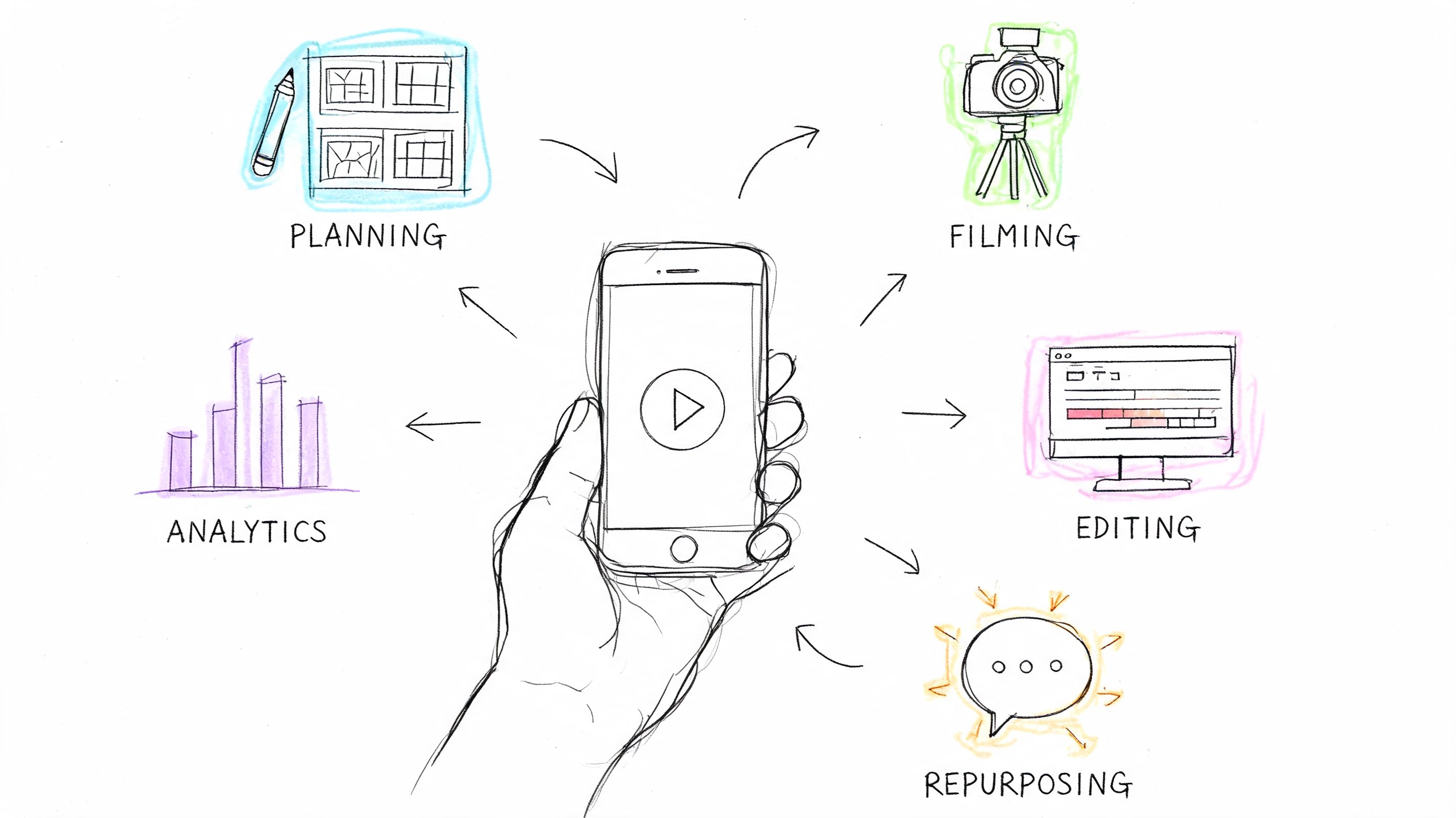
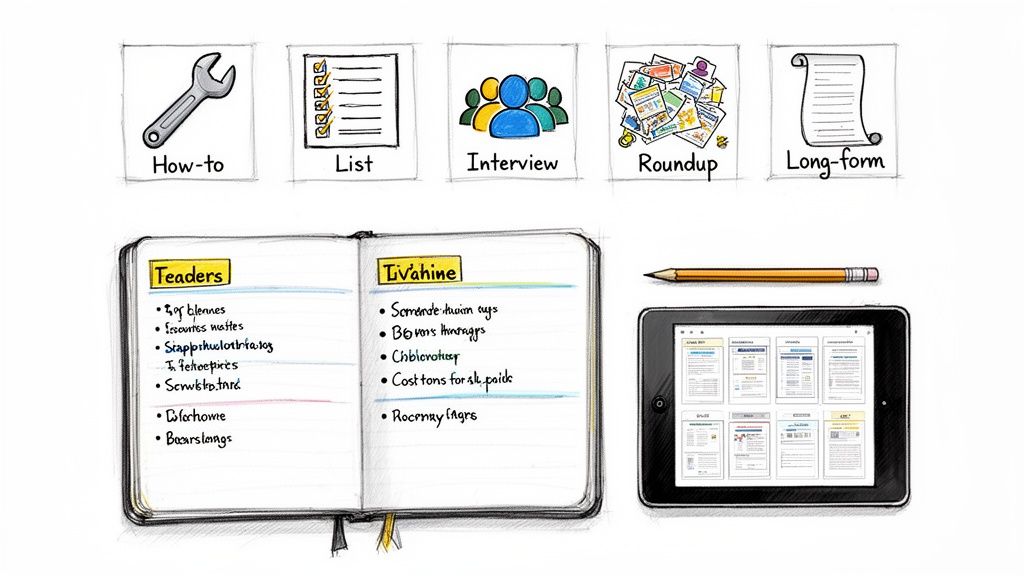
You've invested hours, maybe even days, crafting that perfect piece of content—a deep-dive blog post, a comprehensive webinar, or an engaging podcast episode. But once it's published, what happens next? Letting it sit idle is like using a powerful tool only once. The most successful creators and brands I've worked with understand a crucial secret: the real magic happens when you stop thinking in terms of single-use content and start embracing strategic multiplication.
This is where smart content repurposing comes in. It's the practice of taking one asset and transforming it into multiple formats to reach a wider audience across different platforms. By doing this, you maximize the value of your initial effort, reinforce your message, and maintain a consistent presence without the burnout of constant creation. To truly unlock this superpower and extend your reach even further, consider incorporating a powerful content syndication strategy alongside these efforts.
This article provides a comprehensive, experience-based guide to the most effective content repurposing strategies. We'll move beyond generic advice and give you actionable workflows and real-world examples, showing you how a single asset can be transformed into a dozen pieces of content. This will help you maximize your reach, save countless hours, and dominate your niche without constantly starting from scratch.
1. Turn Your Blog Post into Social Media Snippets
This foundational content repurposing strategy involves deconstructing a comprehensive, long-form blog post into a series of smaller, shareable assets for social media. Instead of letting a valuable article sit passively on your site, you actively break down its key components to engage audiences on platforms like LinkedIn, Twitter, Instagram, and even TikTok. This approach maximizes the reach of your original research and effort, driving targeted traffic back to the source.
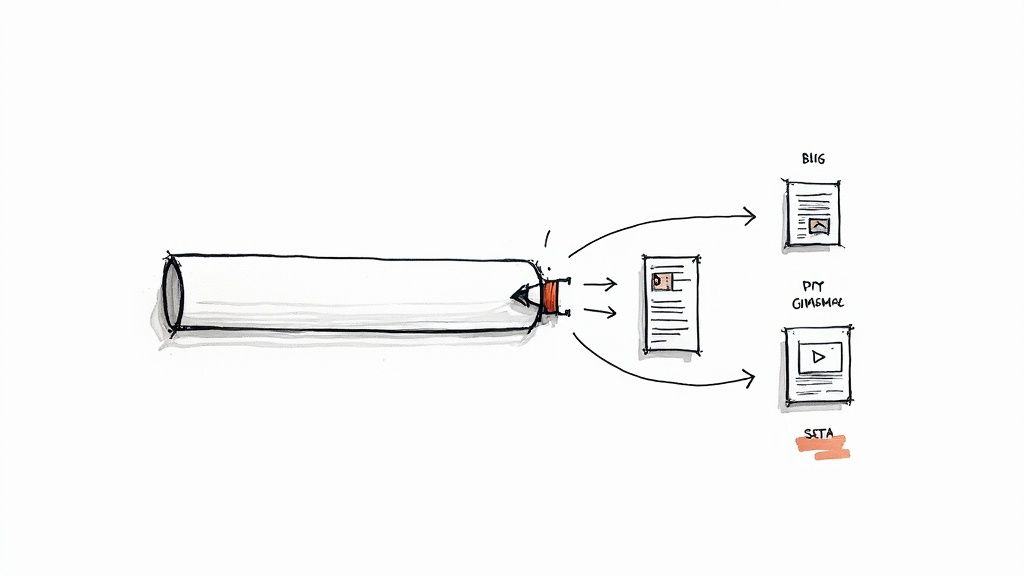
By atomizing a single blog post, you can create a full social media calendar. A 2,000-word guide can yield dozens of individual posts, from quote graphics and statistical infographics to quick video summaries and text-based threads. This method ensures your content finds the right audience in the right format, dramatically boosting visibility and engagement. For a deeper dive into distilling core ideas, you can explore techniques on how to write an objective summary.
How to Implement This Strategy
- Extract Key Data: Pull out the most compelling statistics, quotes, and key takeaways. Create simple graphics or carousels for each point. For example, HubSpot often converts blog data into clean, shareable LinkedIn infographics.
- Create Twitter Threads: Turn the main sections or a numbered list from your blog into an engaging Twitter thread. Each tweet can represent a single point, with the final tweet linking back to the full article.
- Design Quote Cards: Use a tool like Canva to place impactful quotes from your article onto branded templates for Instagram and Facebook.
- Develop Short-Form Video: Summarize a key concept from your post in a 30-60 second video for TikTok, Instagram Reels, or YouTube Shorts. Use on-screen text to highlight the main points.
2. Convert Your Video Content into Podcast Episodes
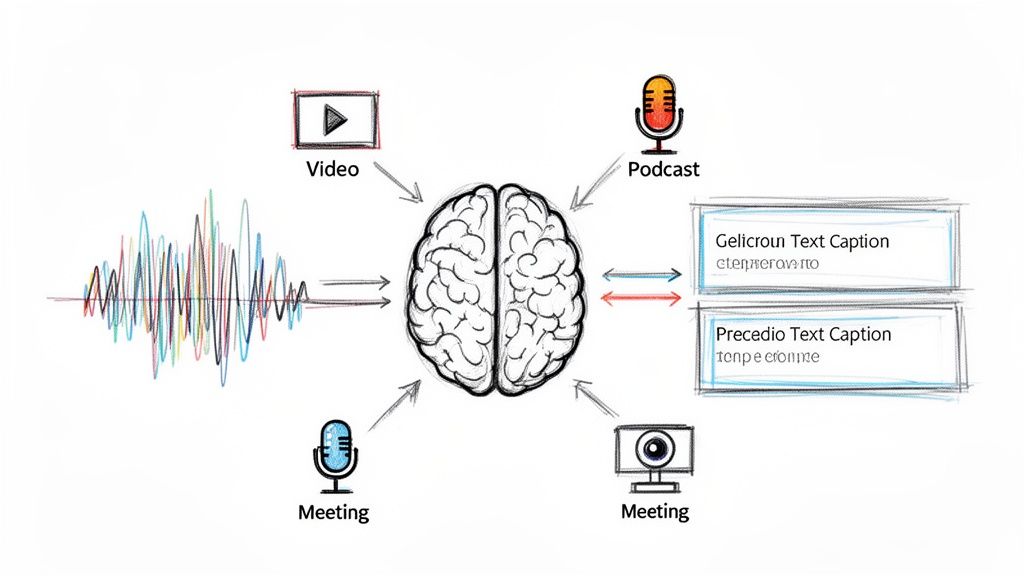
One of the most effective content repurposing strategies involves stripping the audio from your video content to create standalone podcast episodes. This technique allows you to reach a new audience segment that prefers consuming content on the go, such as during commutes, workouts, or while multitasking. By converting webinars, interviews, or YouTube videos into audio format, you maximize the value of your original production efforts with minimal additional work.
This approach taps into the massive growth of audio-first platforms like Spotify and Apple Podcasts, extending your brand's reach significantly. A detailed video tutorial or an in-depth interview already contains a complete narrative arc, making it a perfect candidate for an audio-only experience. This method not only saves time but also positions your expertise on an entirely new channel, reinforcing your authority in your niche. You can even streamline creating show notes and summaries by using an AI podcast summarizer.
How to Implement This Strategy
- Extract and Clean the Audio: Use video editing software or an online tool to separate the audio track from your video file. Clean it up by removing long pauses, mistakes, and irrelevant sections, and ensure the volume levels are consistent.
- Add Podcast-Specific Elements: To create a polished, branded experience, add a unique podcast intro and outro with music. This helps establish a distinct identity for your audio show, separate from the video source.
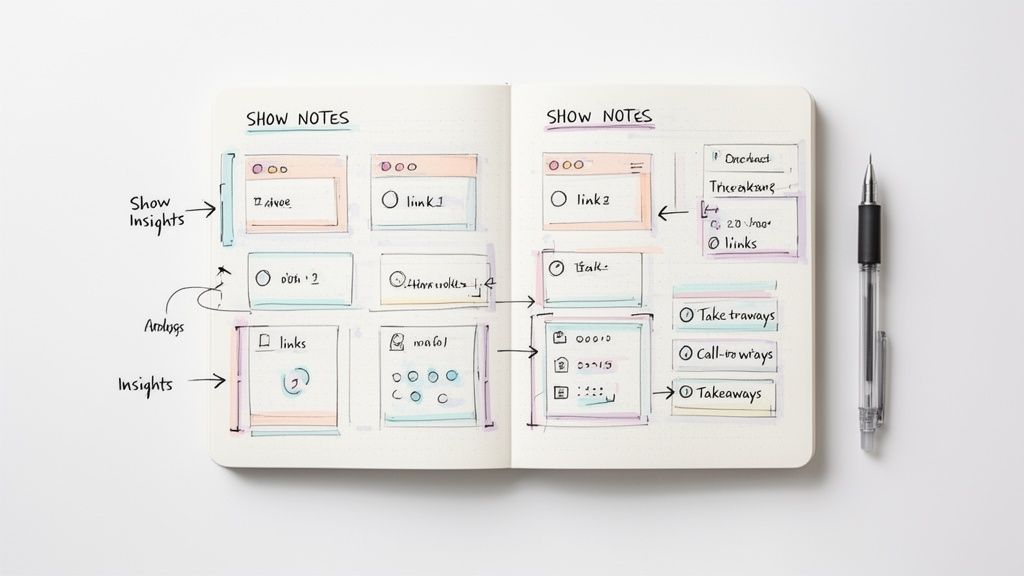
- Create Detailed Show Notes: For each episode, write comprehensive show notes that include key takeaways, links to resources mentioned, and a full transcript. This enhances the listener experience and improves your podcast's SEO.
- Distribute to Major Platforms: Submit your new podcast to all major directories, including Apple Podcasts, Spotify, and Google Podcasts, to ensure maximum discoverability for your repurposed content.
3. Bundle Your Long-Form Content into an eBook or Lead Magnet
This content repurposing strategy involves bundling multiple related blog posts or guides into a single, cohesive eBook or downloadable PDF. By compiling your most valuable evergreen content, you create a premium resource that can be used as a powerful lead magnet. This tactic transforms existing assets into a high-value offer that builds your email list while providing your audience with a comprehensive, easily digestible package.

Instead of letting individual articles sit separately, compiling them gives them new life and a higher perceived value. This approach is perfected by companies like HubSpot, whose free guides are often collections of their top-performing blog content, and Moz, with its renowned "Beginner's Guide to SEO." The resulting asset feels substantial and justifies the user's decision to exchange their contact information for it. For those ready to take their compiled content to the next level, a comprehensive guide on how to publish an ebook can be invaluable.
How to Implement This Strategy
- Identify a Core Theme: Review your existing content and group articles around a specific topic, such as "Beginner's Guide to Podcasting" or "Advanced Social Media Analytics."
- Update and Consolidate: Refresh the selected posts with the latest statistics, examples, and insights. Edit them to ensure a consistent flow, adding an introduction, conclusion, and transition paragraphs.
- Design and Format Professionally: Use a tool like Canva or Adobe InDesign to create a professional-looking eBook with a compelling cover, clear chapter divisions, and branded formatting.
- Create a Dedicated Landing Page: Build a simple, high-converting landing page to gate the eBook. Clearly outline the value proposition and include a form to capture leads.
4. Repurpose a Webinar into a Blog Post, Lead Magnet, and Social Content
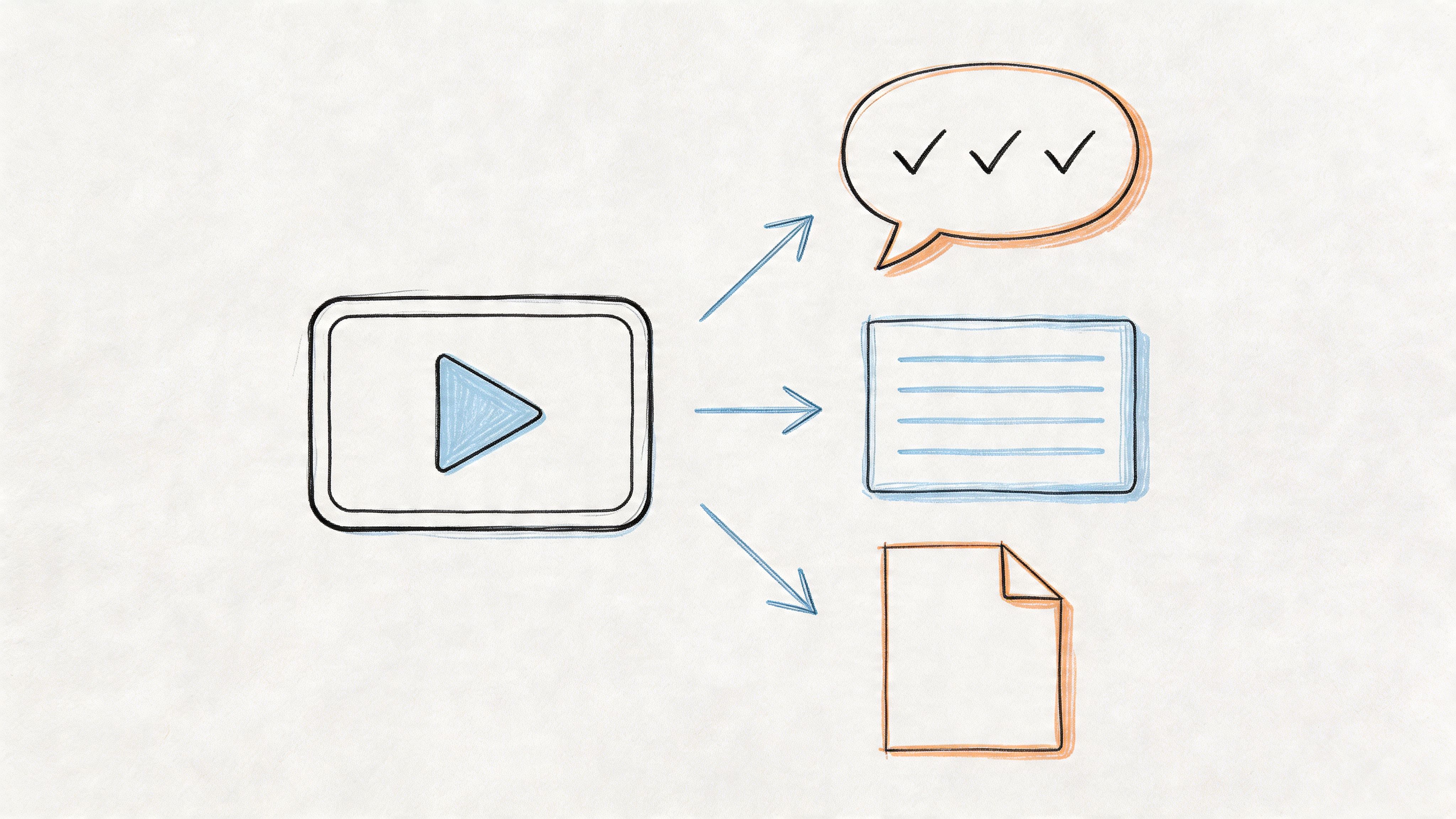
This comprehensive content repurposing strategy transforms a single webinar into a powerful content engine. Instead of letting your recorded event gather digital dust, you can systematically break it down into multiple valuable assets, including a detailed blog post, a downloadable lead magnet, and a series of social media clips. This approach maximizes the return on investment for your webinar production, ensuring the insights reach a broader audience long after the live event has ended.
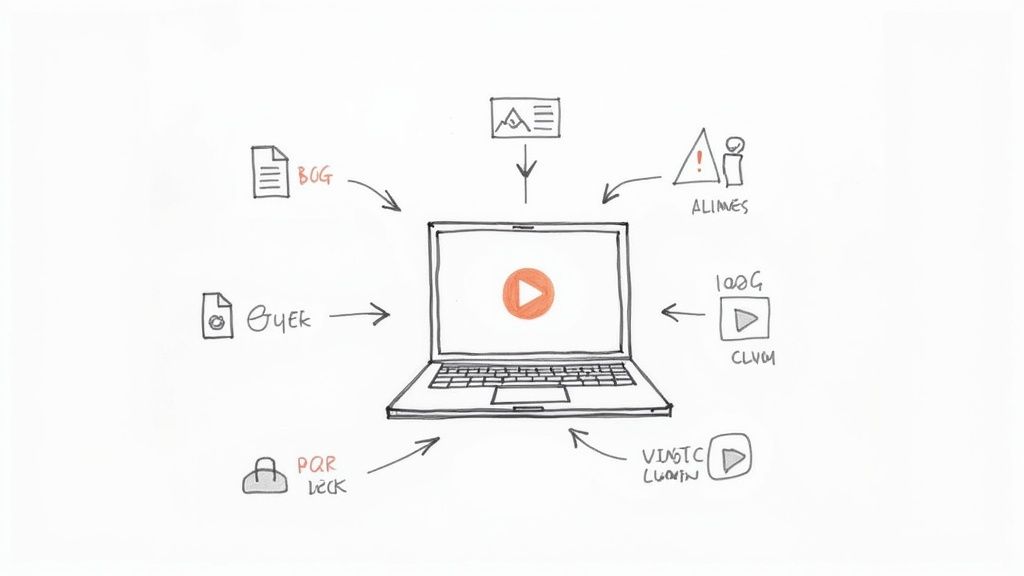
By deconstructing an hour-long webinar, you can generate 5-10 distinct pieces of content. This method not only extends the lifespan of your original presentation but also caters to different audience preferences. Some people prefer reading an in-depth article, others want a quick video highlight, and many will exchange their email for a valuable resource like your presentation slides. Companies like ConvertKit and ActiveCampaign master this by turning their educational webinars into a complete ecosystem of evergreen content that nurtures leads and builds authority.
How to Implement This Strategy
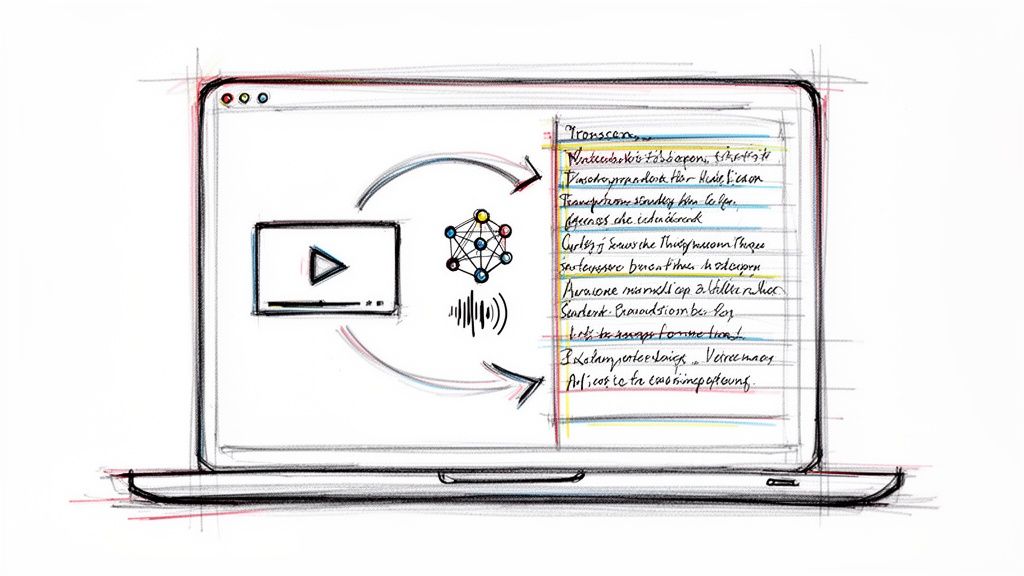
- Transcribe for a Blog Post: Use a transcription service to get a full text version of the webinar. Edit and format this transcript into a comprehensive, SEO-optimized blog post, adding headings, images, and links to create a readable, high-value article.
- Create a Lead Magnet: Package the webinar slides, along with any key resources or checklists mentioned, into a polished PDF. Offer this as a downloadable lead magnet on the blog post and in social promotions to capture new leads.
- Clip Short-Form Videos: Identify the most impactful 30-90 second segments from the webinar, such as a key insight, a surprising statistic, or an answered audience question. Edit these into vertical videos for Instagram Reels, TikTok, and YouTube Shorts.
- Develop a Nurture Sequence: Extract the core teaching points from the webinar and turn them into a follow-up email sequence for attendees and new leads. Each email can expand on a single topic, driving engagement and moving subscribers through your funnel.
5. Turn Your Data and Research into Infographics and Reports
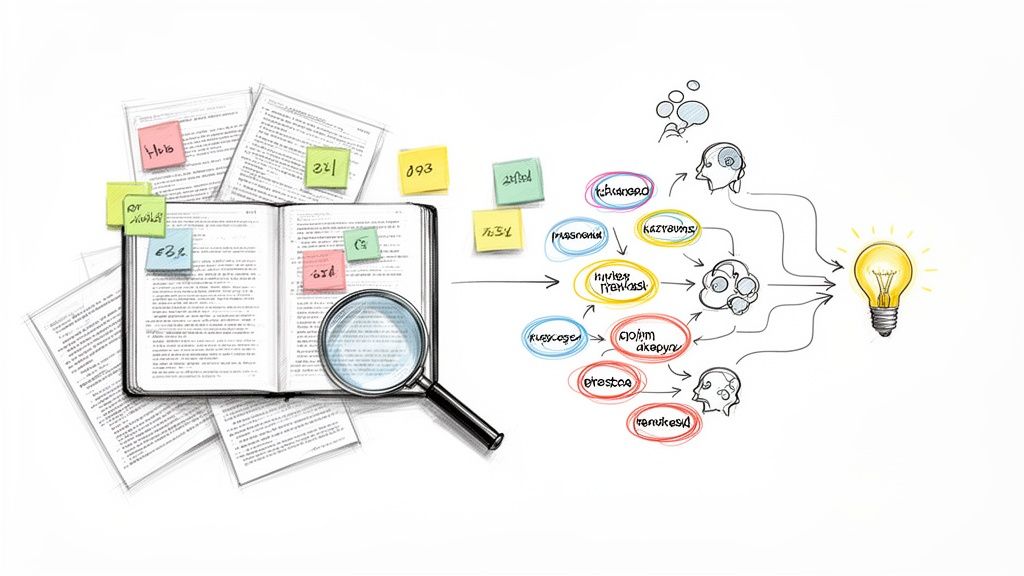
This strategy transforms complex data, research findings, and statistics into visually engaging infographics and downloadable reports. Instead of burying valuable insights in dense text or spreadsheets, you convert them into shareable, digestible visuals that capture attention and simplify complex topics. This approach makes your original research more accessible, significantly boosting its shareability on visual platforms like Pinterest and LinkedIn and attracting valuable backlinks.
By packaging data visually, you create a powerful asset that stands on its own. A single industry survey can be repurposed into a main report, several standalone infographics highlighting key trends, and a series of social media data visualizations. This is one of the most effective content repurposing strategies for establishing authority and generating evergreen content that others will cite and share for years to come.
How to Implement This Strategy
- Identify a Core Narrative: Review your data and identify the most compelling story or surprising trend. An effective infographic isn’t just a collection of numbers; it guides the viewer through a clear narrative.
- Visualize Key Statistics: Use tools like Canva or Piktochart to create charts, graphs, and icons that represent your key data points. Companies like Statista excel at turning a single statistic into a clean, understandable chart.
- Design for Multiple Platforms: Create both vertical versions of your infographic for Pinterest and mobile viewing, and horizontal layouts for embedding in blog posts and presentations.
- Bundle into a Gated Report: Combine multiple data visualizations and add deeper analysis to create a comprehensive report. Offer this as a downloadable asset in exchange for an email address to generate leads.
6. Adapt Customer Case Studies for Multiple Content Formats
This strategy transforms a single customer success story into a powerful, multi-channel marketing asset. Instead of publishing a case study as a static PDF, you expand it into various formats like video testimonials, blog posts, social media highlights, and even podcast interviews. This method leverages your most valuable asset, a happy customer, to build social proof and credibility across your entire marketing ecosystem.
By atomizing one in-depth case study, you can generate a diverse range of content that resonates on different platforms. For instance, the detailed metrics from a written case study can become a compelling infographic for LinkedIn, while a powerful quote can be turned into a branded graphic for Instagram. This approach to content repurposing strategies ensures your customer success stories reach a wider audience, reinforcing trust at every touchpoint.
How to Implement This Strategy
- Create Video Testimonials: Film a high-quality interview with your customer, focusing on their challenges and the results they achieved. Slack excels at turning its case studies into polished, emotionally resonant video testimonials.
- Develop In-Depth Blog Posts: Write a detailed narrative that walks readers through the customer’s journey. Structure it with a clear problem, solution, and results framework, highlighting specific metrics.
- Design Shareable Social Proof: Extract key statistics and impactful quotes to create carousels, infographics, or short video clips for social media. Shopify’s social feeds often feature success stories to inspire aspiring entrepreneurs.
- Host a Webinar or Podcast: Invite the customer to share their story in a live webinar or a podcast interview. This provides a dynamic, authentic format for prospects to learn from a peer’s experience.
7. Expand Twitter Threads into Blog Posts and Collections
This content repurposing strategy flips the typical flow by transforming viral or insightful Twitter threads into comprehensive, SEO-friendly blog posts and organized collections. Instead of breaking down long-form content, you expand on concise, high-engagement ideas that have already been validated by a social audience. This approach capitalizes on the authentic voice and proven interest of the original thread, giving it a permanent, searchable home on your website.
By elaborating on a popular thread, you can add depth, context, and new research to an idea that has already captured attention. Entrepreneurs like Naval Ravikant have seen their threads compiled into entire blogs and books, demonstrating the immense value locked within this format. It’s an efficient way to develop experience-based content that directly addresses user interest while significantly boosting your site's authority and organic traffic.
How to Implement This Strategy
- Identify High-Performing Threads: Monitor your analytics to find Twitter threads with significant engagement, such as high likes, retweets, and thoughtful replies. These are your prime candidates for expansion.
- Expand Each Tweet into a Section: Treat each tweet in the original thread as a sub-heading or key point for your blog post. Flesh out each idea with more detail, examples, data, and visuals.
- Compile Threads into Collections: Use a tool like Wakelet or Thread Reader App to gather multiple related threads into a single, cohesive collection or guide. This can be published as a "mega-post" or offered as a downloadable lead magnet.
- Optimize for Search Engines: Rewrite the content to include relevant keywords, craft a compelling, SEO-friendly title, and add structured data. Embed the original tweets within the post to add social proof and connect the two pieces of content.
8. Convert Your YouTube Videos to Blog Posts with Embedded Video
This strategy transforms your dynamic YouTube content into a comprehensive, SEO-friendly blog post. By transcribing your video and building a written article around it, you cater to audiences who prefer reading over watching. Embedding the original video within the post creates a powerful, multi-format asset that boosts time on page and serves different learning preferences.
This dual-format approach is one of the most effective content repurposing strategies for discoverability. Your content can now rank on Google through the blog post and on YouTube through the video, doubling its visibility. SEO-focused brands like Ahrefs and SEMrush frequently publish detailed blog posts that mirror their popular video guides, capturing traffic from both search engines simultaneously. For a complete guide on this process, you can explore the steps for converting YouTube video to text.
How to Implement This Strategy
- Transcribe and Clean: Use a tool like Whisper AI to get an accurate transcription of your video. Edit the text for clarity and flow, transforming spoken language into polished written content.
- Structure as a Blog Post: Organize the transcript with clear H2 and H3 headings, bullet points, and short paragraphs. Add an introduction and conclusion to frame the content effectively.
- Embed and Add Timestamps: Place the YouTube video embed near the top of the post. You can also include timestamped links that jump users to specific moments in the video, enhancing the reader experience.
- Expand and Optimize: Add more detail, context, images, and graphics that weren't in the original video. Optimize the entire post for relevant keywords to improve its search ranking.
9. Create a Social Media Series from Your Email Newsletter
This content repurposing strategy transforms your curated email newsletters into a cohesive social media series. Instead of treating your newsletter as a closed-loop communication channel, you deconstruct its most engaging segments to create a multi-part campaign for platforms like LinkedIn, Twitter, and Instagram. This approach not only extends the life and reach of your hard work but also acts as a powerful teaser, encouraging social followers to subscribe for the full, exclusive experience.
By breaking down a single newsletter, you can fuel a week's worth of social content. For instance, a deep dive into a market trend can become a series of daily posts, each revealing a different data point or insight. This method builds anticipation and provides value to your social audience while constantly funneling them toward your primary subscription goal, making it a highly efficient growth tactic used by brands like Morning Brew and The Hustle.
How to Implement This Strategy
- Segment Your Newsletter: Identify the distinct sections of your newsletter, such as a main story, quick-hit news items, or a featured resource. Each segment can become a standalone post or part of a themed series.
- Create Cliffhangers: Share an intriguing part of your analysis on social media but hold back the full conclusion. End your post with a strong call-to-action like, "We shared the full breakdown with our subscribers this morning. Sign up at the link in bio to get the next one."
- Develop Platform-Specific Threads: Convert the main narrative of your newsletter into a Twitter thread or a LinkedIn carousel. Use each tweet or slide to present a single idea, building a story that culminates in a link to your newsletter archive or sign-up page.
- Highlight Exclusive Content: Use graphics to pull out a compelling quote or statistic from your newsletter. Frame it as "exclusive content for our subscribers" to create a sense of FOMO (fear of missing out) and drive new sign-ups.
10. Expand Your Cornerstone Content into a Topic Cluster
This advanced SEO strategy transforms a single, comprehensive "cornerstone" or "pillar" article into a powerful network of interconnected content. Instead of one massive guide covering every angle of a topic, you deconstruct it into a central pillar page and multiple, more specific "cluster" posts. Each cluster post explores a subtopic in detail and links back to the main pillar, creating a highly organized and authoritative content hub.
This model signals to search engines that you have deep expertise on a subject, significantly improving your topical authority and search rankings for a wide range of related keywords. Pioneered by platforms like HubSpot and Moz, this is one of the most effective content repurposing strategies for long-term organic growth. It turns a single asset into a strategic framework that captures traffic from broad and long-tail searches alike.
How to Implement This Strategy
- Identify Pillar and Cluster Topics: Start with a broad, high-volume topic for your pillar content (e.g., "Beginner's Guide to Digital Marketing"). Then, break it down into specific subtopics for your cluster posts (e.g., "SEO for Small Business," "Email Marketing Basics," "Social Media Content Strategy").
- Develop the Pillar First: Write an exhaustive guide (often 3,000+ words) that provides a comprehensive overview of the main topic. This page should link out to all of your future cluster posts.
- Create Detailed Cluster Posts: Write individual, in-depth articles for each subtopic. These should be optimized for more specific, long-tail keywords. Crucially, each cluster post must link back to the main pillar page.
- Establish a Strong Internal Linking Structure: Ensure the pillar links to every cluster page, and every cluster page links back to the pillar. You can also interlink relevant cluster pages to strengthen the network. Ahrefs does this masterfully, creating a web of content around core SEO concepts.
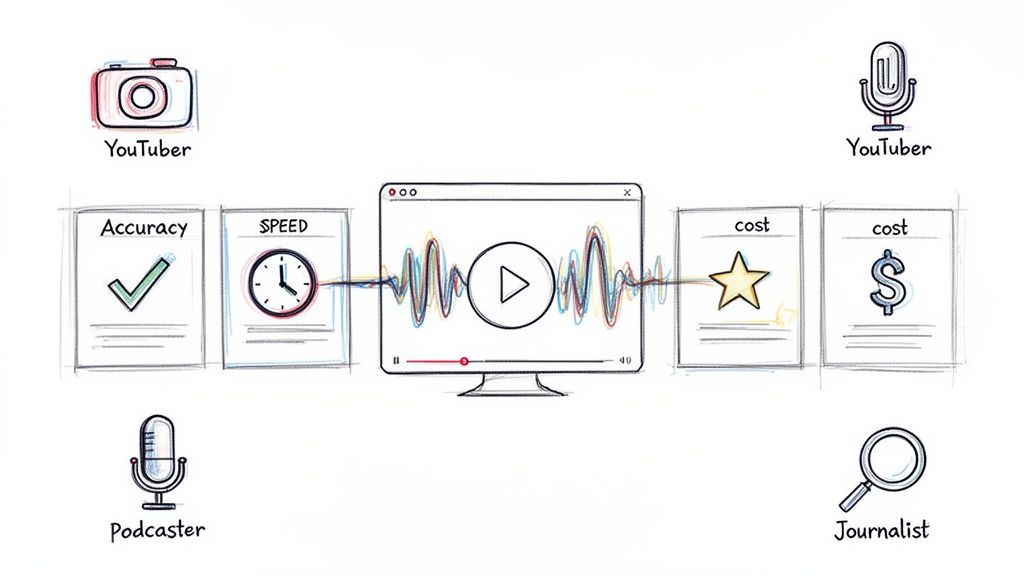
10-Point Content Repurposing Comparison
Building Your Content Repurposing Engine
I've shared a wide array of powerful content repurposing strategies, from turning webinar recordings into blog posts to transforming YouTube videos into social media clips. The common thread connecting every tactic is a fundamental shift in perspective: stop seeing your content as a series of one-off projects and start viewing it as a library of valuable, reusable assets. Each piece of cornerstone content, whether it's a deep-dive podcast, a data-rich report, or a customer case study, is not a final destination. It is the raw material for a sprawling, interconnected content ecosystem.
This approach isn't about working harder; it's about working smarter. The true power of these content repurposing strategies lies in their ability to amplify your message exponentially. A single, well-researched video can fuel your social media for weeks, generate a high-converting lead magnet, become the foundation for a series of blog posts, and even populate an FAQ page. This multi-channel presence builds brand authority, improves SEO through topic clusters, and meets your audience where they are, all without the relentless pressure of the content treadmill.
From Strategy to Action: Your Next Steps
Adopting a repurposing mindset is the most significant upgrade you can make to your content workflow. Instead of feeling overwhelmed by the thought of implementing all these ideas at once, focus on building a sustainable system.
- Start Small and Build Momentum: Choose just one high-performing piece of existing content. It could be your most downloaded podcast episode or your most-viewed YouTube video.
- Select Two or Three Strategies: Pick two or three repurposing tactics from this list that feel most achievable and relevant to your goals. For instance, transcribe your video, pull out key quotes for Twitter, and create a short video clip for Instagram Reels.
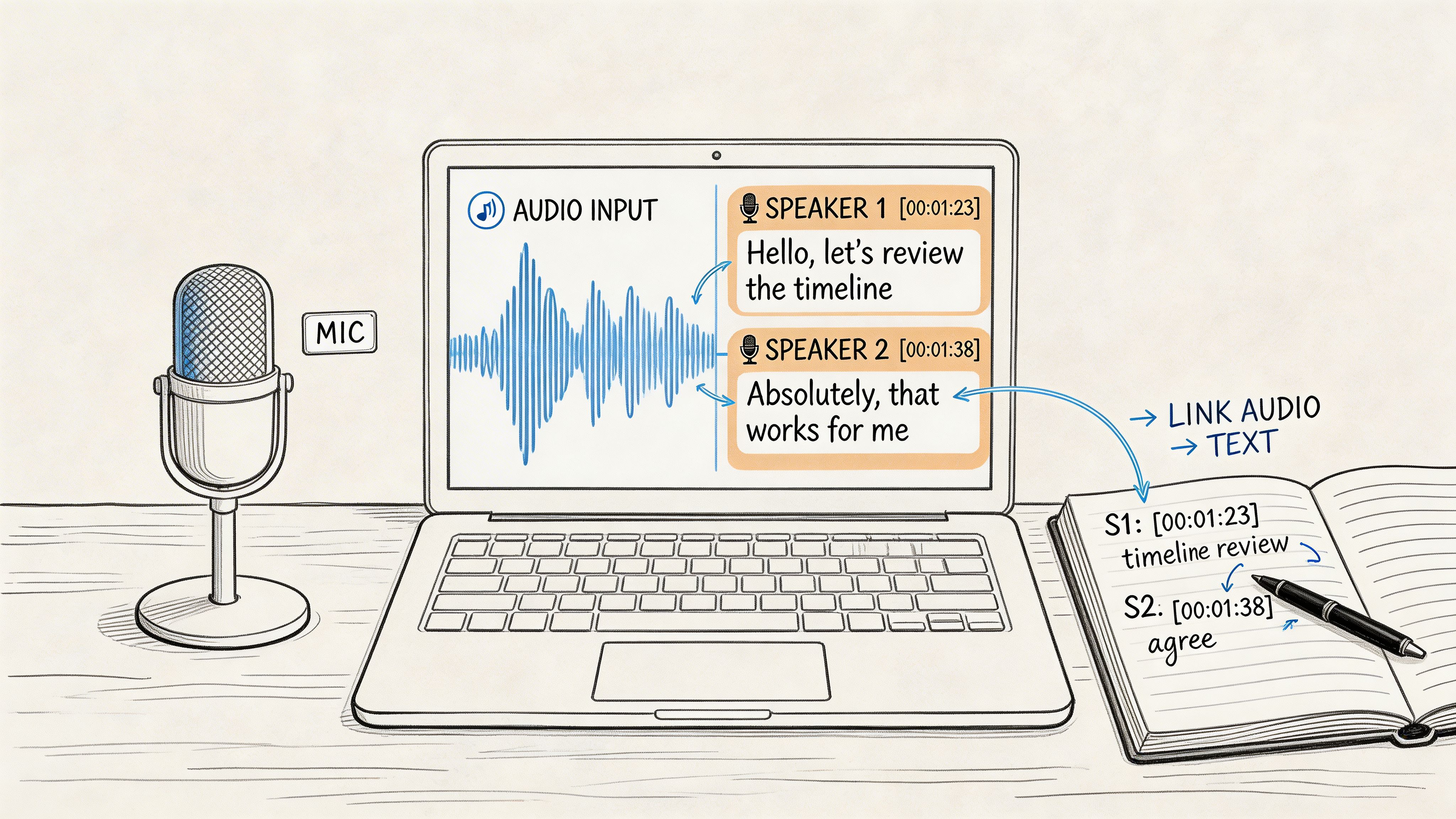
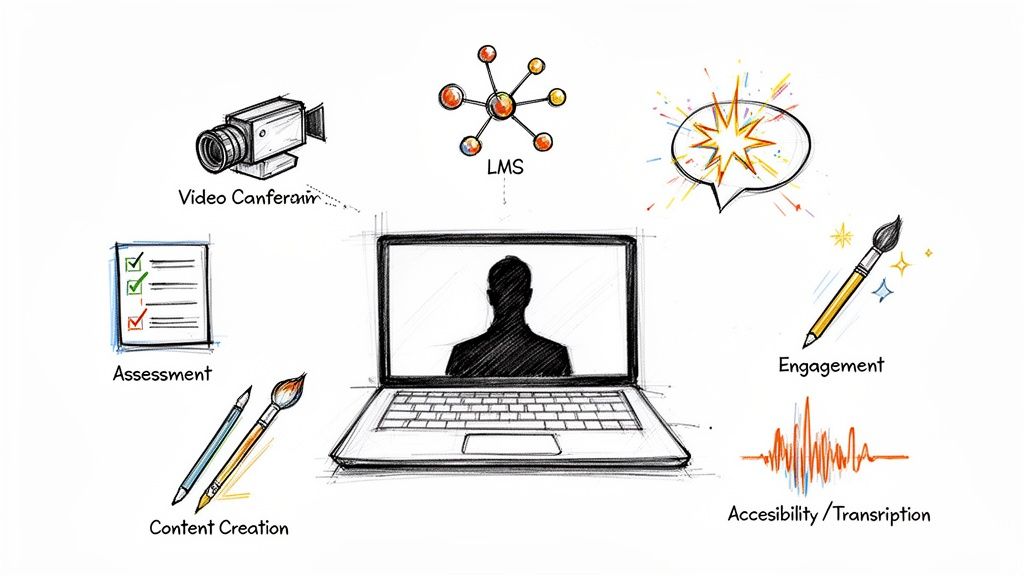
- Integrate Smart Tools: This is where you gain your unfair advantage. Leverage AI-powered tools to handle the heavy lifting. Transcribing an hour-long interview manually can take days; an AI tool can do it in minutes, providing you with the text, speaker labels, and timestamps needed to create articles, show notes, and social captions instantly.
By focusing on this methodical process, you move from theory to practical application. You build a repeatable engine that consistently extracts maximum value from your creative efforts. The goal is to make these content repurposing strategies a natural, integrated part of your creation process, not an afterthought. You will soon find that you are reaching a wider audience, driving more engagement, and achieving your goals more efficiently than ever before. The content is already there; it's time to unlock its full potential.
Ready to build your own content repurposing engine? Start by eliminating the most time-consuming step with Whisper AI. Get fast, incredibly accurate transcriptions, summaries, and speaker-labeled exports from your audio and video files in minutes. Sign up today and experience how effortless it is to turn your core content into a dozen new assets at Whisper AI.