A Smarter Interview Notes Template to Hire Top Talent
An interview notes template is a standardized document that hiring managers use to evaluate every candidate using the same criteria. It’s the difference between relying on fuzzy memory after a long day of interviews and making sharp, data-driven decisions based on consistent, objective evidence.
Why Your Interview Notes Are Costing You Great Hires
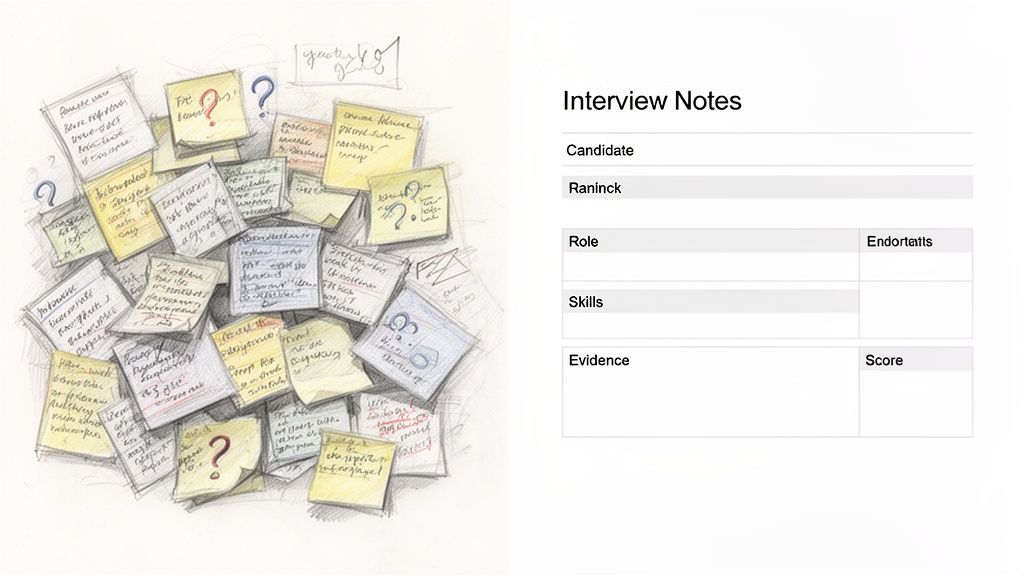
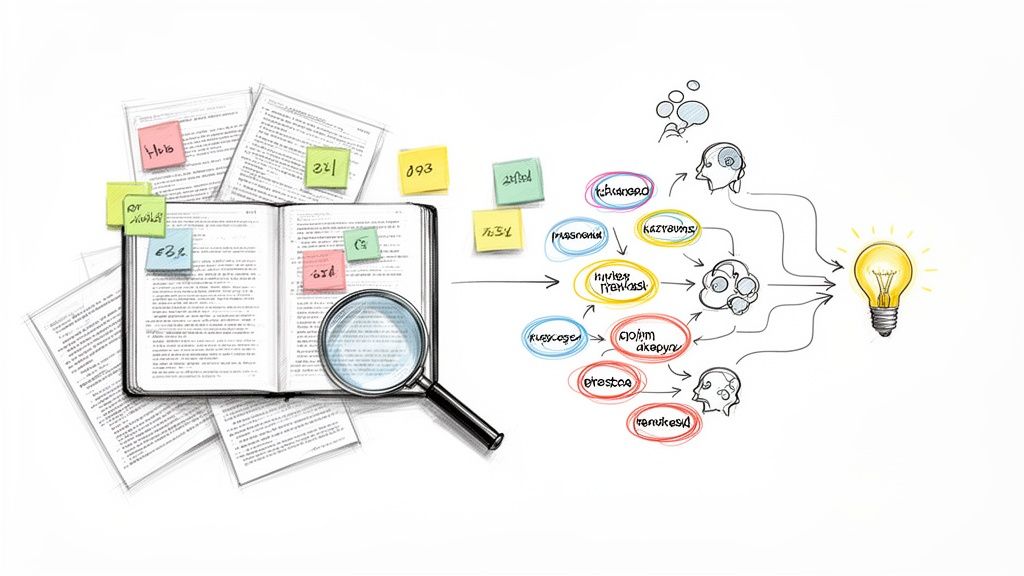
We’ve all been there. You finish a long day of back-to-back interviews and stare down at a messy pile of sticky notes and half-finished sentences. When all you have are scribbled comments and vague impressions, trying to recall key details or fairly compare candidates feels impossible.
This kind of disorganization isn't just an inconvenience—it actively costs you top talent.
Unstructured note-taking almost always leads to decisions based on "gut feelings" instead of actual evidence. This subjective approach is a breeding ground for unconscious bias, causing you to overlook highly qualified people who just didn't fit a personal mold. In a market this competitive, you can’t afford to lose a great hire because your notes failed you.
Moving from Subjectivity to Data-Driven Decisions
This is where a good interview notes template changes everything. Instead of random jottings, you suddenly have a structured framework built to capture specific, relevant information from every single conversation.
That consistency is what allows for a true apples-to-apples comparison between candidates. It forces every interviewer to evaluate people against the same core competencies and requirements for the job. Not only does this methodical approach lead to better decisions, but it also creates a defensible hiring record, which is great for protecting your organization.
The real power of a template is objectivity. It forces you to anchor your evaluation in specific evidence—what the candidate actually said and did—rather than how you felt about them in the moment.
The Real Cost of Inconsistent Hiring
In today's tough hiring climate, the stakes are incredibly high. Consider that 69% of organizations are already struggling to hire full-time employees. Solid documentation is a massive advantage.
On top of that, recent reports show offer acceptance rates have plummeted to just 51%. That’s a huge drop, and it shows how poor note-taking can lead to mismatched hires and, ultimately, lost talent.
Using a well-designed interview notes template is a genuinely strategic move. By leveling up how you document and evaluate interviews, you can make smarter, fairer, and more effective hiring decisions. If you're looking to polish your documentation process, you might find some useful tips in our guide on how to improve note-taking skills.
Designing Your Ideal Interview Notes Template
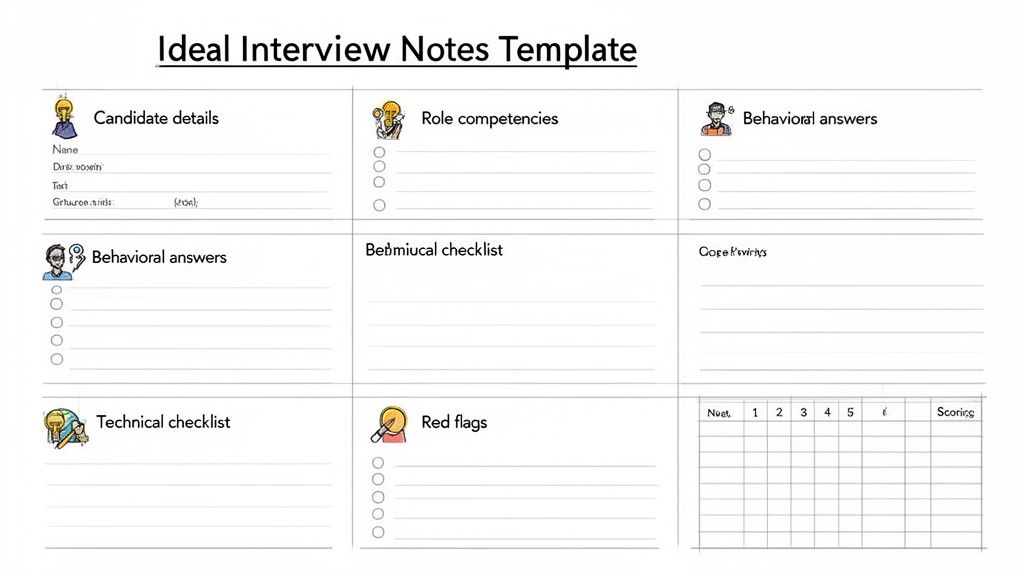
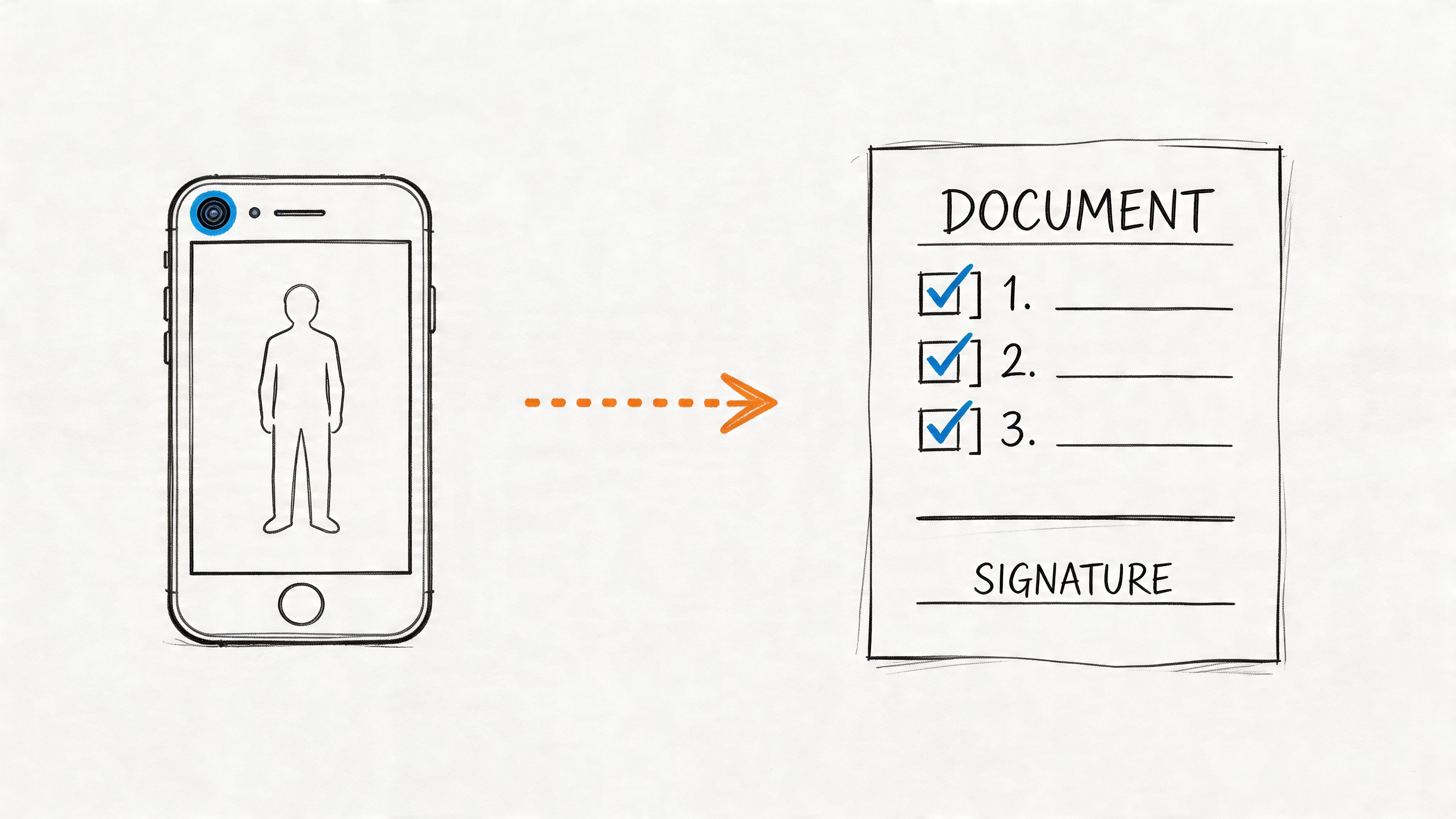
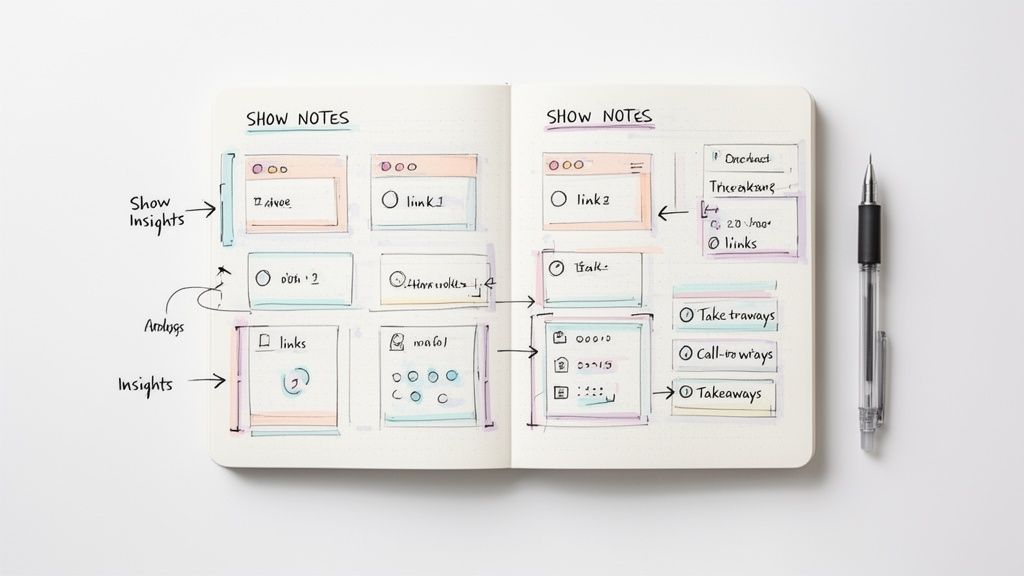
A great template isn't just a blank page to scribble on; it's a strategic tool. Think of it as the blueprint for a consistent, fair, and insightful interview process. Building a truly useful interview notes template is about creating a structure that guides you to capture evidence, not just gut feelings.
The real trick is finding the balance between structure and flexibility. You need a solid framework so that every interviewer is measuring candidates against the same critical benchmarks. But you also need enough freedom to let the conversation flow naturally. After all, you want to collect comparable data without making the interview feel like a robotic interrogation.
Getting the Basics Right
First things first, let's cover the essentials. It sounds simple, but you'd be surprised how often basic logistical details get missed in the rush of back-to-back interviews. A dedicated header section ensures that anyone who looks at your notes later has all the context they need in one glance.
Make sure you have clear spots for:
- Candidate Information: Their full name, contact info, and the exact role they’re up for.
- Interview Logistics: The date, time, names of the interviewers, and which stage this is (e.g., phone screen, final panel).
- Quick Links: A handy place to drop links to their resume, portfolio, or LinkedIn profile.
Nailing this foundational part of the template saves you from administrative headaches down the line and keeps everything tidy from the get-go.
Building Your Evaluation Framework
This is where your template really starts to work for you. It's time to move beyond generic fields and break down the job requirements into specific, measurable competencies. A clear grasp of soft skills vs hard skills is invaluable here, as it helps you create distinct buckets for evaluation.
Instead of a vague line item like "Technical Skills," get specific. For a software engineer role, you might create prompts for "Data Structures Knowledge," "System Design Approach," or "Code Readability." For a marketing manager, this could be "Campaign Strategy," "Data Analysis," and "Content Creation."
A dedicated section for Behavioral Competencies is just as important. List the core traits you need for the role—things like collaboration, problem-solving, or initiative. Under each one, leave space to jot down the specific examples the candidate shares. Pushing yourself to capture their stories using the STAR method (Situation, Task, Action, Result) ensures you’re recording hard evidence, not just a fleeting impression.
The best templates are living documents. Don't be afraid to add, remove, or rephrase sections after a few interviews. What looks good on paper might feel clunky in practice, so continuous refinement is essential for creating a tool that truly works for your team.
For a clearer picture, here’s a breakdown of the crucial sections to include in your template for consistent and thorough candidate evaluation.
Key Components for an Effective Interview Notes Template
By structuring your template this way, you create a repeatable process that helps remove bias and focuses every interviewer on what truly matters for the role.
Weaving the Template into Your Hiring Process
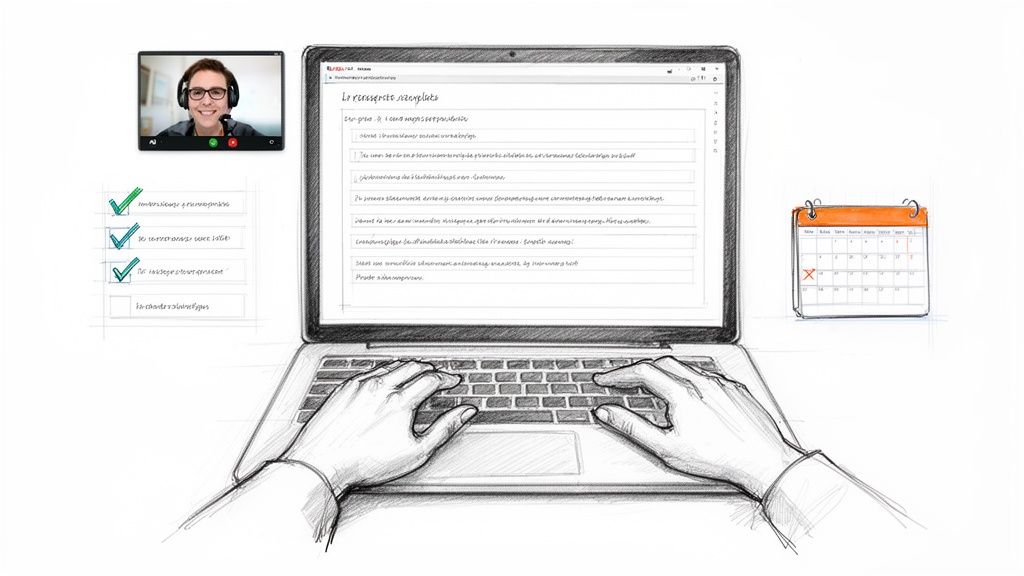
Having a solid interview notes template is a great first step, but it only really works if everyone on the team actually uses it. If only half your interview panel adopts it, you’re stuck with the same old inconsistent feedback. The goal is to make this template a standard, non-negotiable part of how you hire.
Getting your team on board starts with explaining why this matters. Don't just email the file and hope for the best. Show them how it makes their jobs easier by cutting down on bias, making post-interview debriefs more productive, and leading to better hiring decisions backed by real evidence. A quick training call to walk through the template can make all the difference.
Taking Better Notes Without Being Distracted
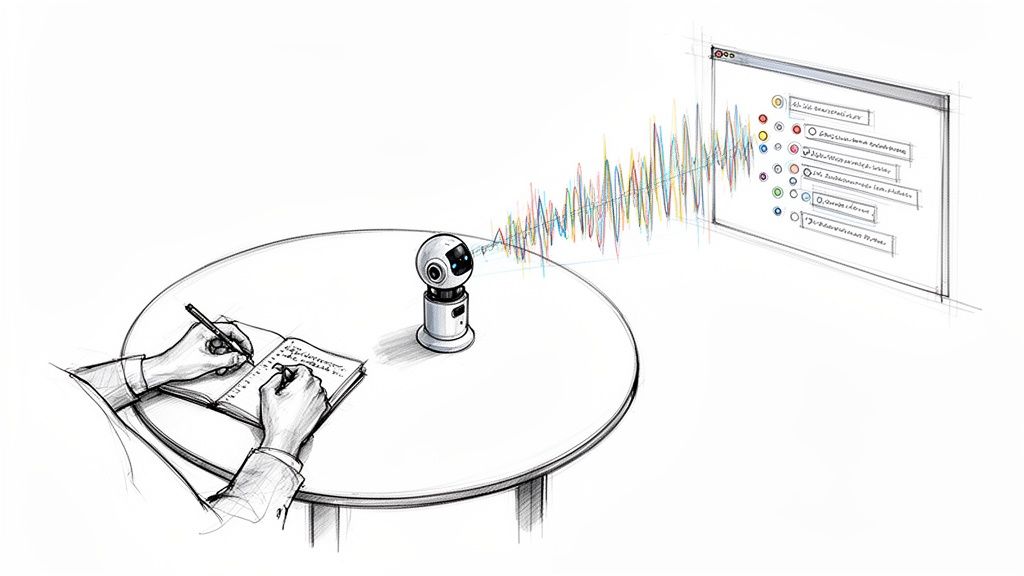
Let's be honest, taking detailed notes while trying to have a genuine conversation is tough, especially on a video call. The last thing you want is to be so busy typing that you miss a candidate's cues.
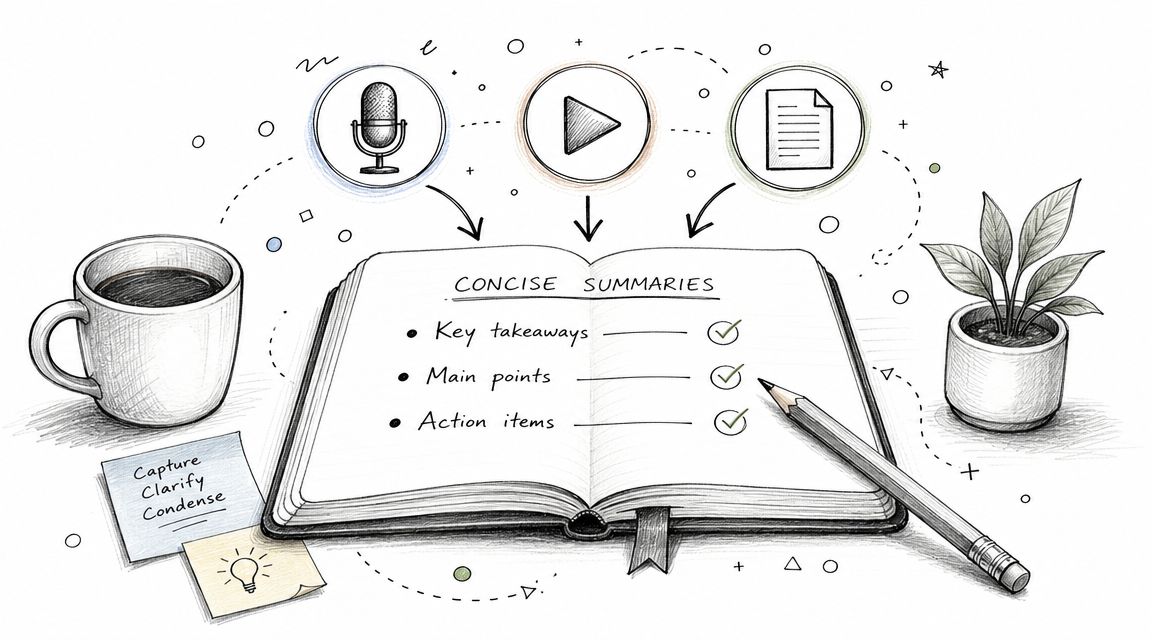
The trick is to capture just enough information during the interview to properly fill out the template afterward. Encourage your team to stick to shorthand and bullet points instead of trying to write perfect sentences.
- Capture the proof: Instead of "good team player," write down the specific example they gave about a project conflict they resolved.
- Listen for keywords: Jot down terms from the job description or your core values as the candidate mentions them.
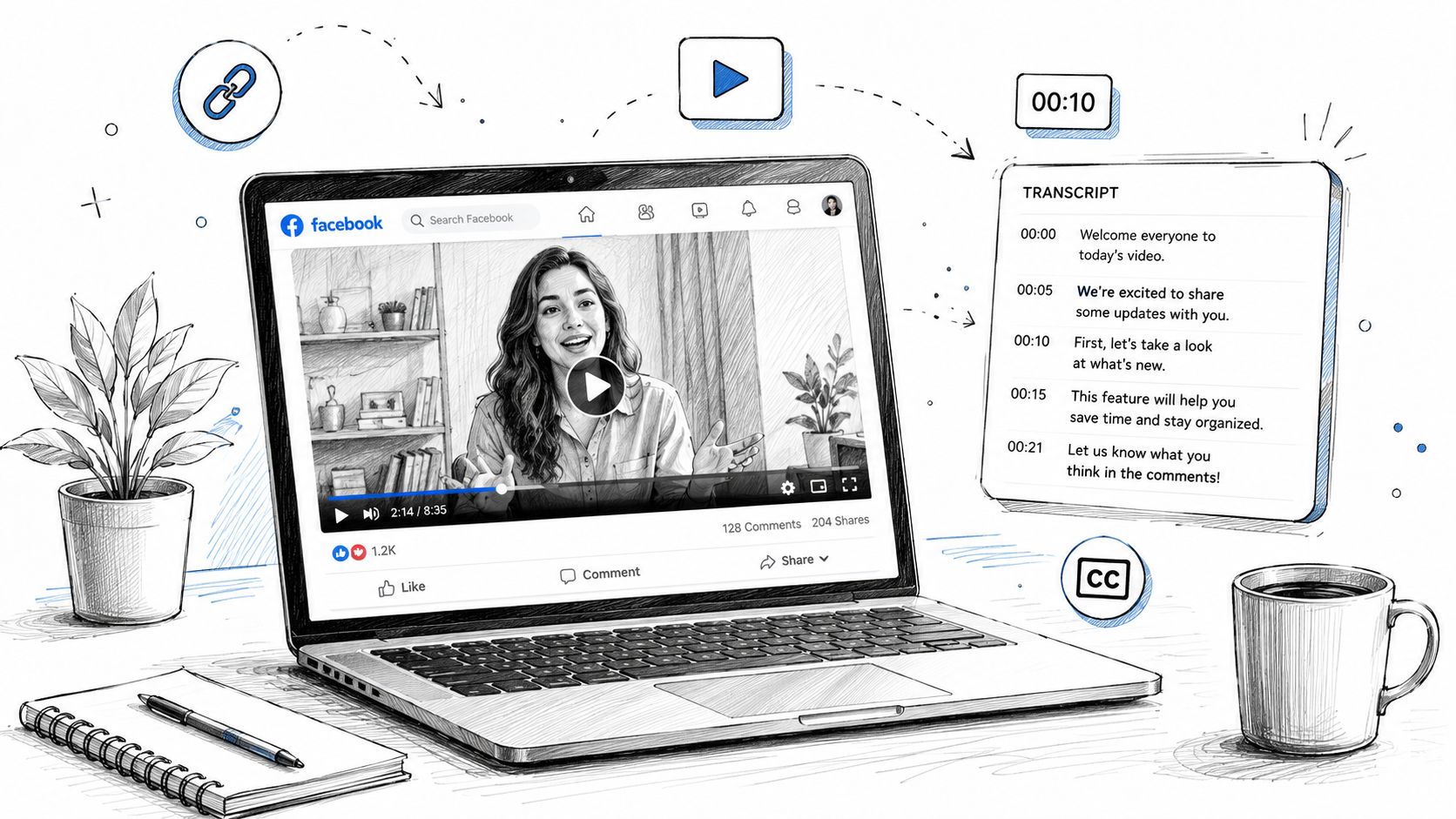
- Timestamp key moments: If a candidate gives a fantastic answer on a video call, just note the time (e.g., 15:32). You can jump right back to it later.
This keeps the focus on the candidate, not on your keyboard.
A good template doesn't turn an interview into a robotic checklist. It's a framework that frees you up to be more present and truly listen, because you know exactly what information you need to capture.
Let Technology Do the Heavy Lifting
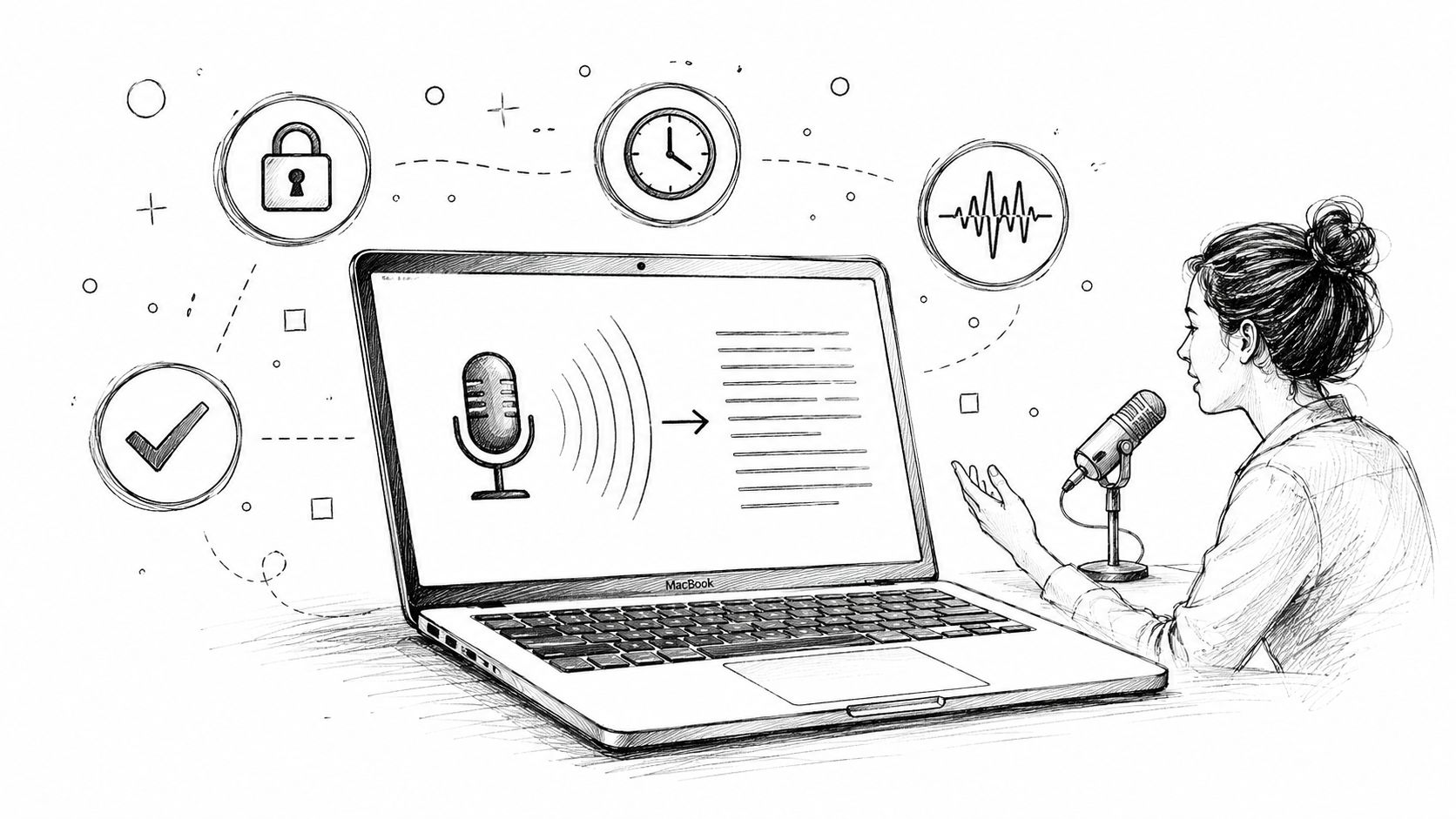
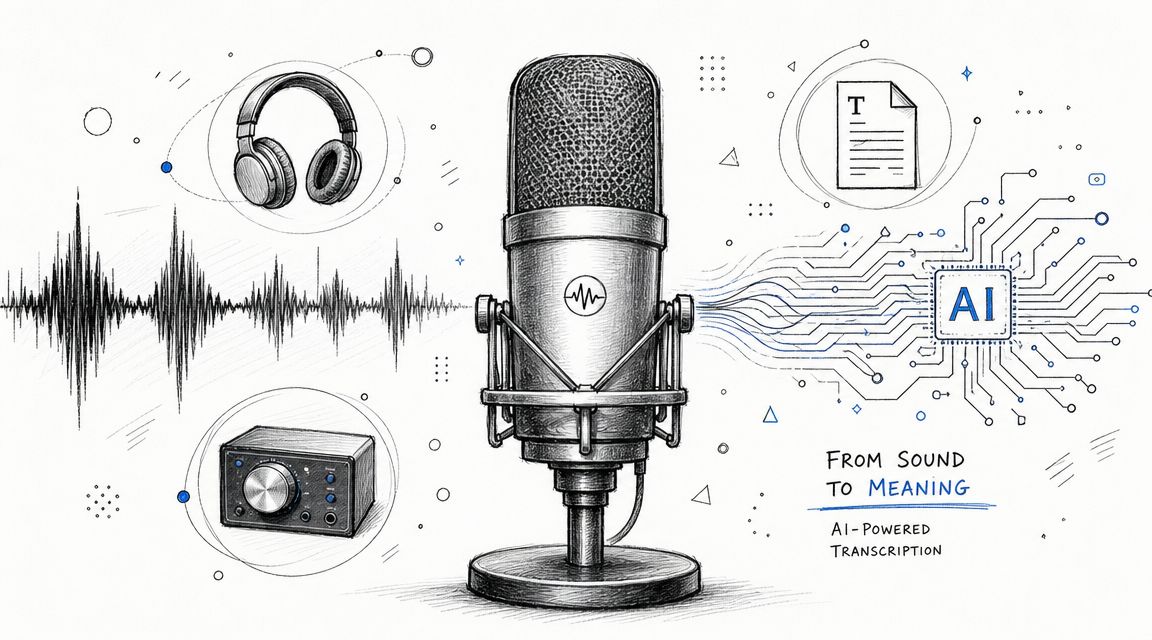
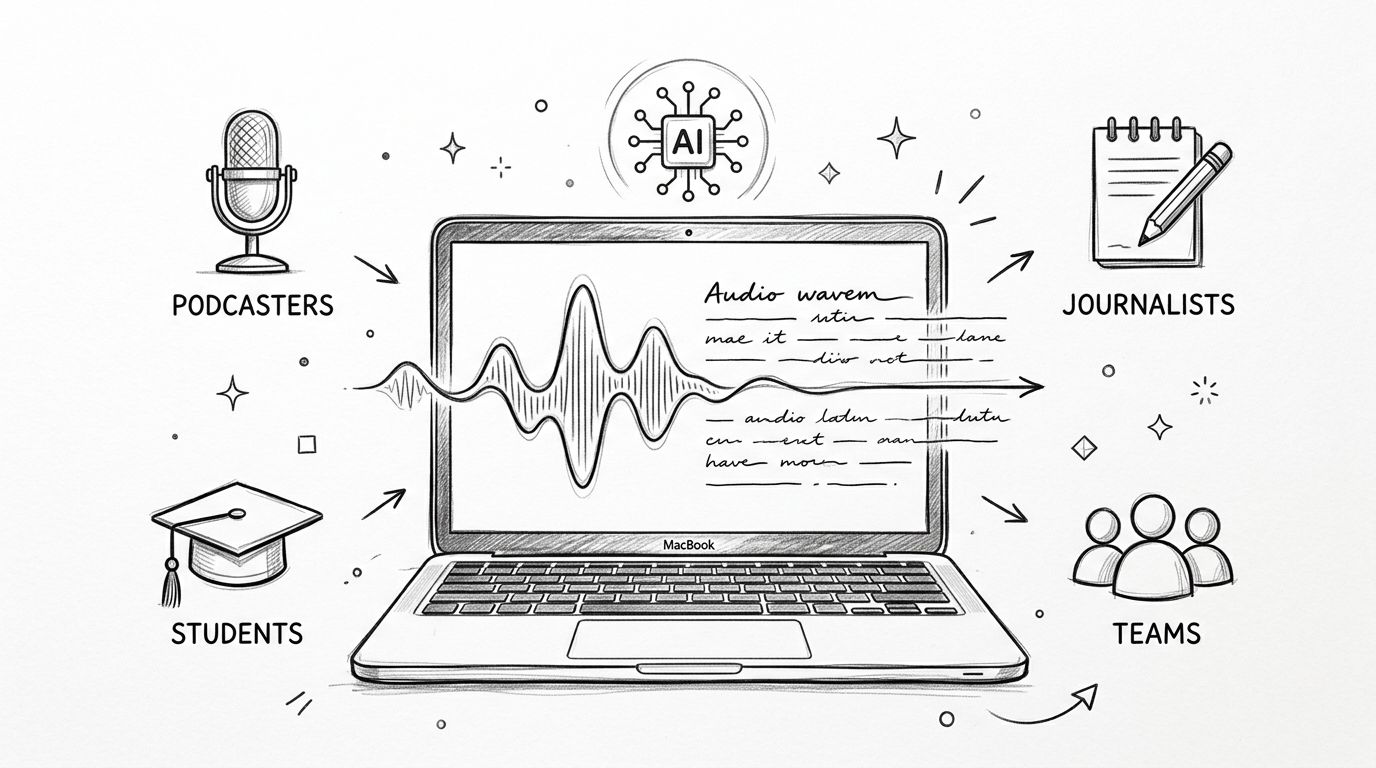
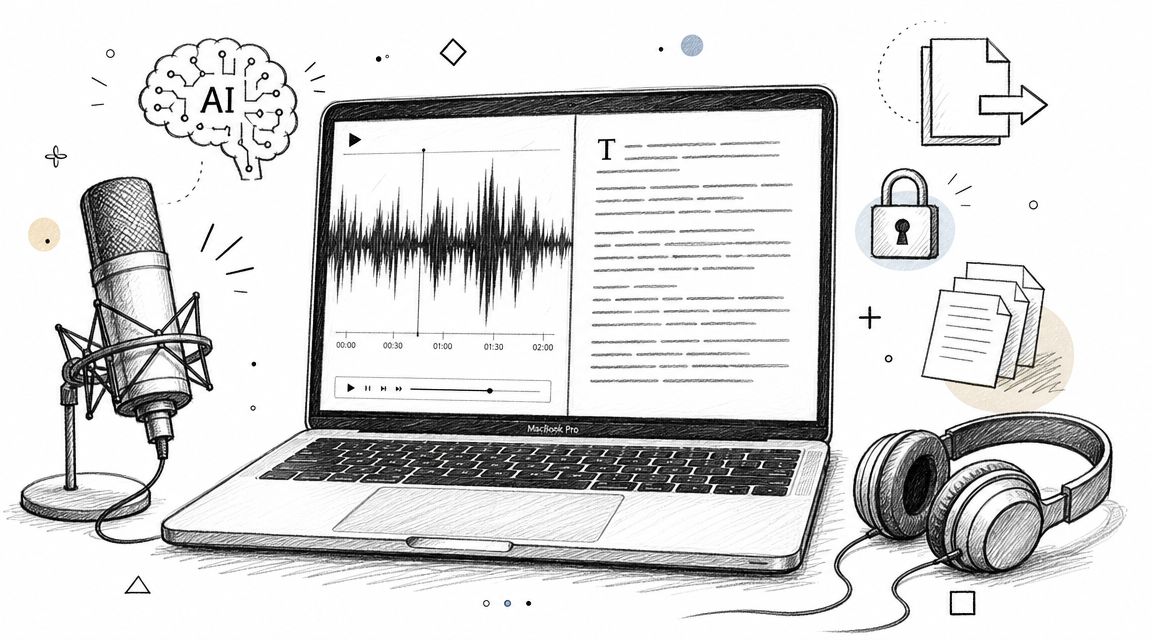
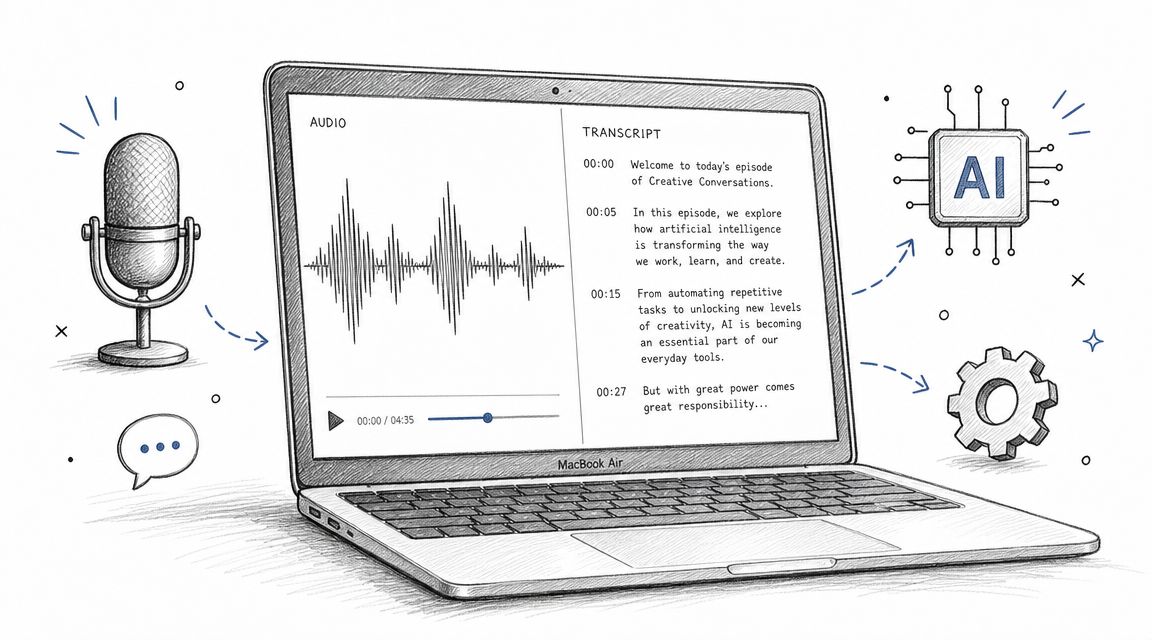
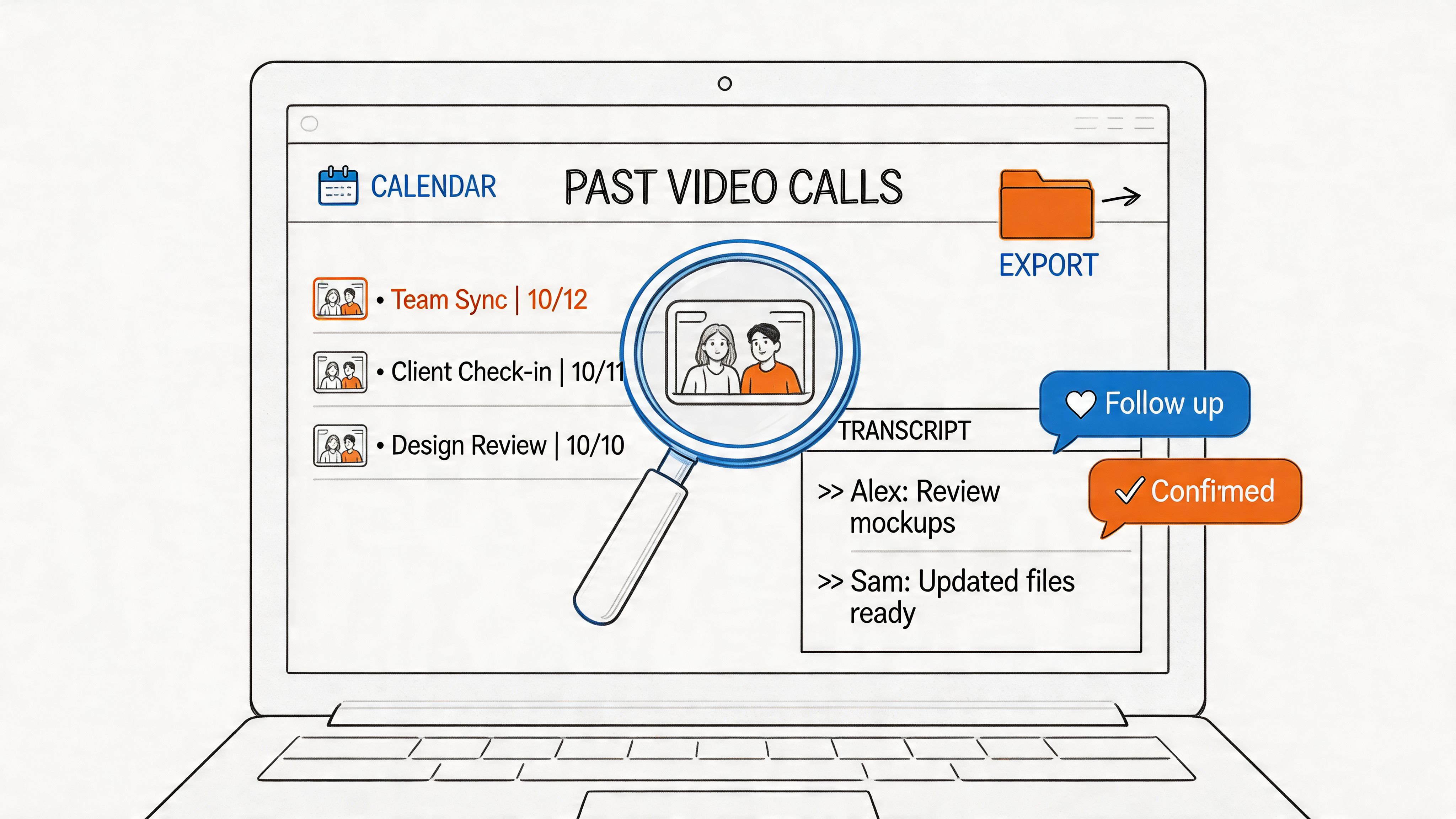
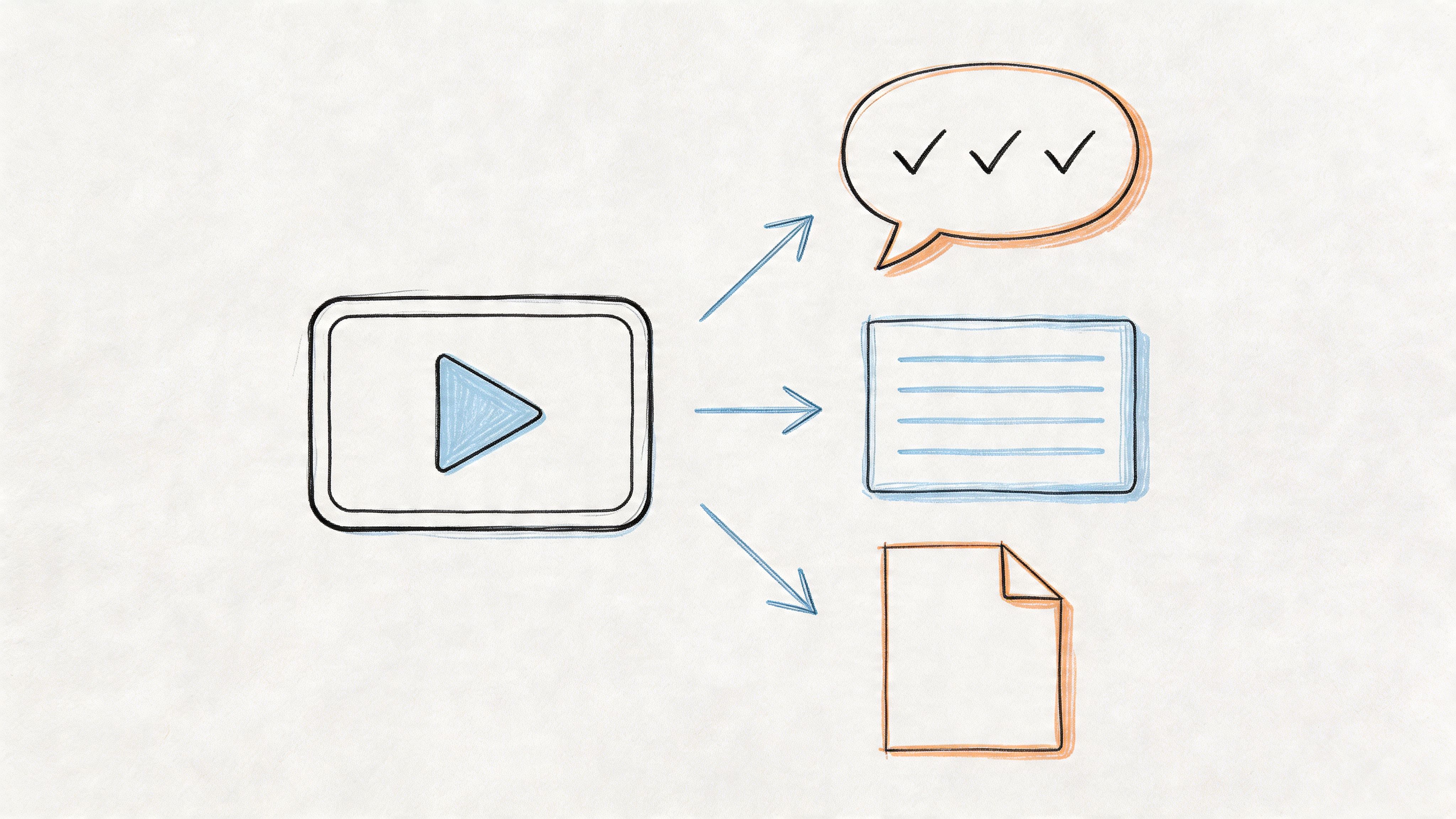
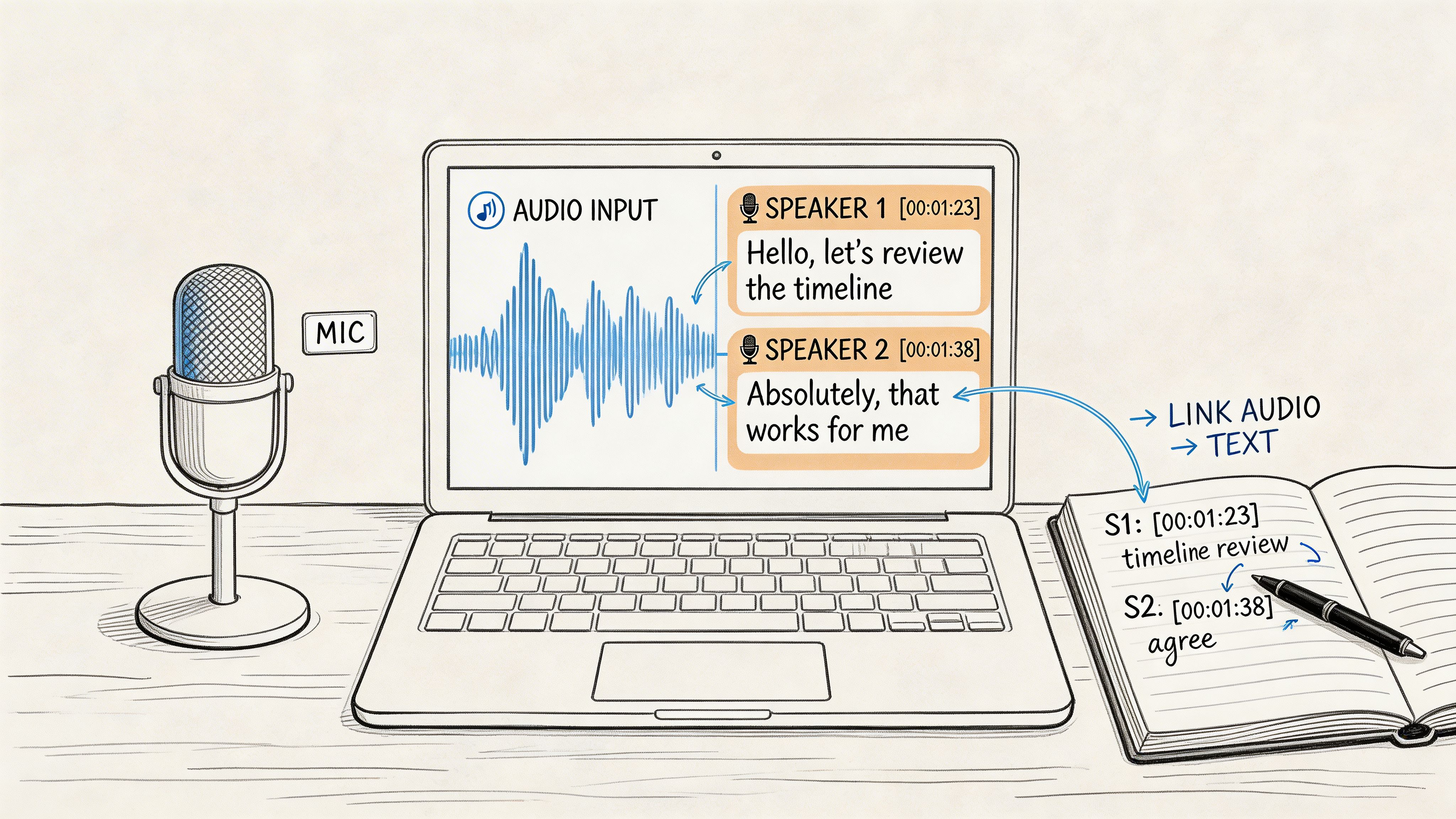
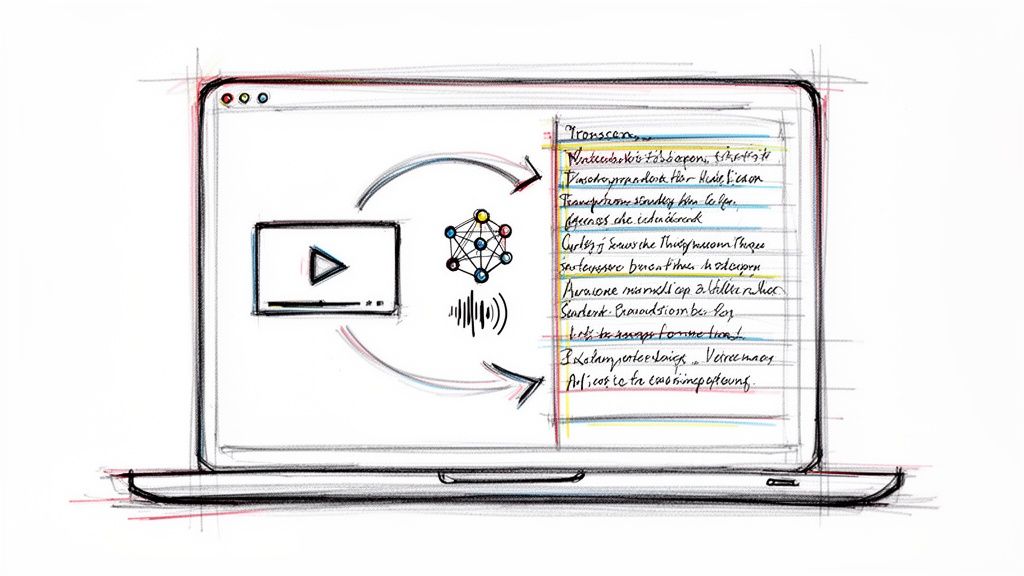
This is where things get a lot easier. Modern tools can completely overhaul how you handle interview notes. Imagine using an AI tool to record and transcribe your video calls automatically. It creates a perfect, searchable transcript without you having to lift a finger.
This frees the interviewer to focus 100% on the conversation, building rapport and digging deeper into the candidate's experience.
After the interview, filling out the interview notes template becomes a simple copy-and-paste job. You can pull direct quotes and detailed examples straight from the transcript, making your notes incredibly accurate and rich with detail. If you want to learn more about this approach, we have a complete guide on how to properly transcribe an interview. It’s a small change that ensures no critical details slip through the cracks.
Using Notes for Fair and Unbiased Decisions
Let’s be honest: unconscious bias is one of the toughest hurdles in hiring. Even with the best intentions, it's easy to make snap judgments based on a shared alma mater or a common interest. Before you know it, those feelings can cloud your evaluation of a candidate's actual qualifications.
This is where a structured interview notes template becomes your best defense. It's a simple but powerful tool that forces every hiring decision to be tied back to concrete evidence.
Instead of just going with a vague "good feeling," you have to point to specific examples and behaviors that match what you're looking for in the role.
By standardizing the questions you ask and how you record the answers, you start to systematically pull personal impressions out of the equation. The focus shifts from how much you like someone to how well their skills and experience actually fit the job's demands.
Keeping Post-Interview Discussions on Track
This structured approach really proves its worth during the post-interview debrief. When everyone on the hiring panel shows up with a completed template, the conversation immediately becomes more objective. You'll find yourself discussing documented evidence against a clear scoring rubric, not just debating subjective feelings.
To get the most out of your notes, you need to dig into how candidates respond to specific scenarios. I've found that paying close attention to answers for common consulting behavioral interview questions is especially revealing, as they often uncover core competencies that go way beyond technical skills.
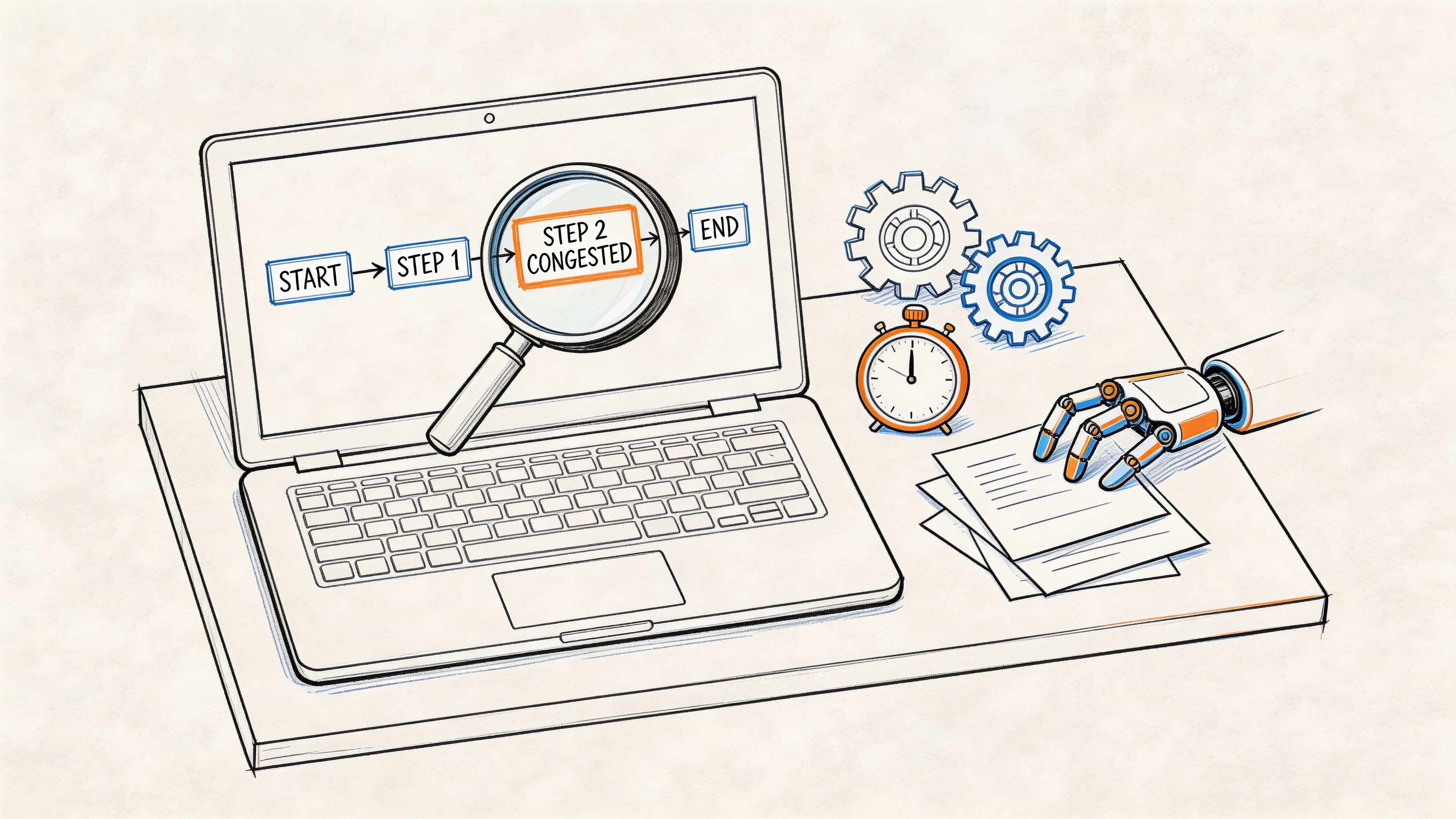
The data backs this up, too. Using templates with clear KPIs can slash evaluation time by 45% and cut bias by 28%. Those are significant gains, especially when 69% of companies are struggling to hire the right people.
Ultimately, a well-used template creates a clear audit trail for every decision. Every hire is backed by consistent, documented evidence, which leads to better outcomes and a much more equitable process for everyone involved. For a deeper dive, check out our guide on how to write an objective summary.
Tailoring Your Template for Different Roles
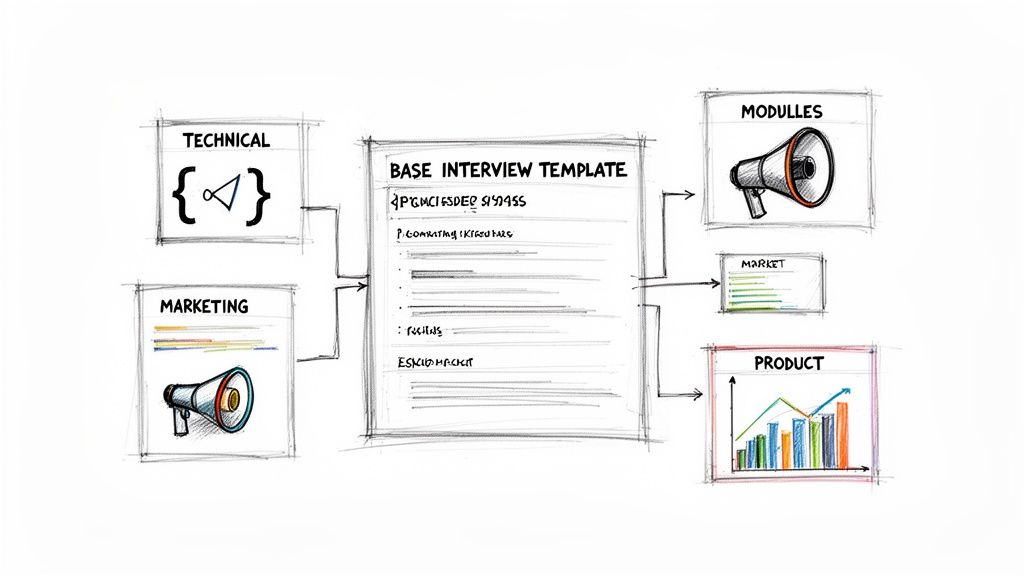
Let's be honest, a one-size-fits-all interview is a waste of everyone's time. The questions you’d ask a software engineer are worlds apart from what you’d ask a marketing director. This is where your interview notes template needs to be flexible.
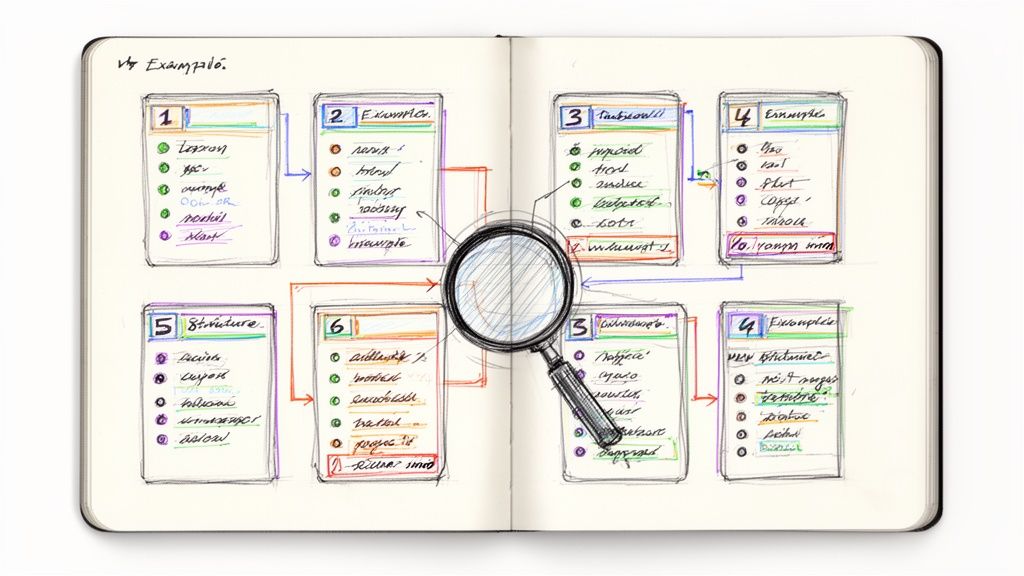
The best way I’ve found to handle this is to treat my main template as a solid foundation. From there, I build out specialized "modules" that snap onto that core structure. This gives me a consistent process but also allows for the kind of deep, role-specific questions that uncover real talent. You wouldn't use the same rubric to judge a coding challenge and a brand strategy presentation, right?
Building Role-Specific Modules
So, what does this look like in practice?
For a technical role, I’ll add a module specifically for scoring a coding challenge. It’s not just about whether the code works; it’s about how they got there. My notes section here prompts me to look for:
- Problem-solving approach: Did they jump right into coding, or did they stop to think and break down the problem first?
- Code clarity and efficiency: Is the solution clean, readable, and performant? Or is it a mess I'll have to untangle later?
- Testing and debugging: Did they mention edge cases? Can they explain how they'd test their own solution?
On the other hand, if I’m interviewing a product manager, I'll swap in a case study module. That section is all about capturing their thought process, business acumen, and how they navigate ambiguity.
The Most Important Template of All: Validating Your Idea
Perhaps the most crucial custom template you'll ever create is for product-market fit interviews. When you're in the early stages, testing a concept with potential users, your notes aren't about hiring someone—they're about the survival of your idea. The whole point is to capture user pain points to see if you’re even solving a real problem.
Don't just gloss over this part. A staggering 42% of startups fail because they build something nobody needs. A dedicated interview notes template for these conversations forces you to capture the raw, unfiltered feedback necessary to build something people actually want. This is how you can use structured notes to guide your product-market fit interviews and validate your next big idea.
Have More Questions? We've Got Answers
Even the most seasoned hiring managers have questions when fine-tuning their interview process. Let's tackle a few of the most common ones that pop up when building out an interview notes system.
How Detailed Should My Interview Notes Be?
This is a classic balancing act. You want enough detail to remember the "why" behind your rating, but not so much that you're just writing down every word they say. Your goal is to capture evidence, not a full transcript.
Think of it this way: instead of writing "good communicator," jot down, "Clearly explained a complex project to a non-technical stakeholder using a simple analogy." See the difference? One is an opinion; the other is a fact you can point to. If you use an AI tool to record the call, you can focus entirely on capturing these high-value insights instead of trying to keep up.
The sweet spot for detail is evidence, not transcription. Focus on capturing the proof behind your evaluation—the specific examples, quotes, and behaviors that justify your assessment. This makes post-interview debriefs objective and data-driven.
What Are the Biggest Mistakes People Make When Taking Notes?
I see two major pitfalls all the time. The first is writing vague, subjective comments that are riddled with bias. The second is failing to capture concrete examples to back up those comments. You end up with notes that are basically useless for making a real comparison.
Another huge mistake is inconsistent note-taking. If you ask one candidate for three examples and another for only one, you're not running a fair race. Also, be extremely careful to avoid writing down anything legally risky—notes about a candidate's age, family status, or other protected characteristics are a massive liability. Always tie your notes directly back to the skills and competencies in the job description.
Should I Use a Digital Tool or Just Stick With Pen and Paper?
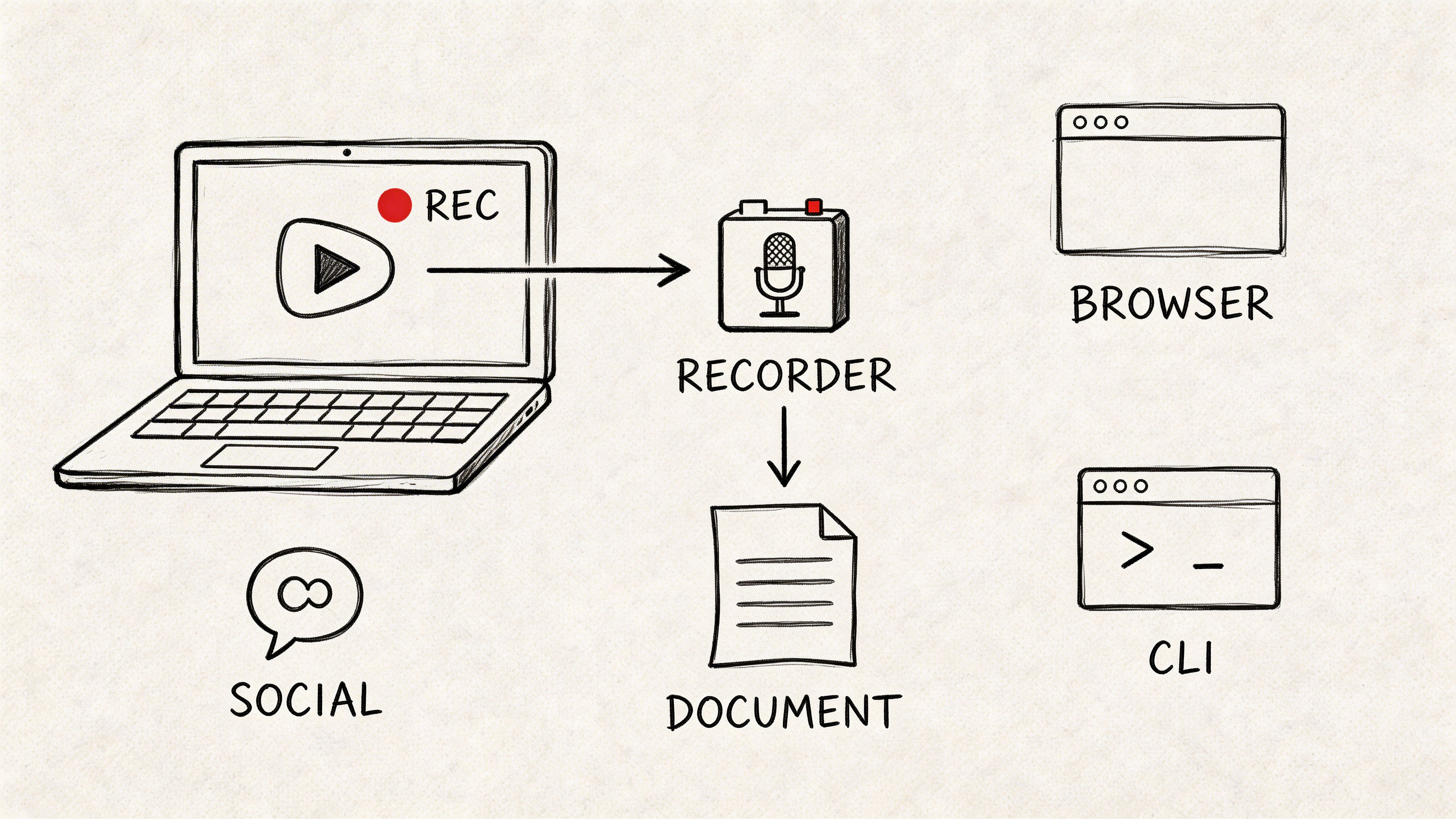
Look, I get the appeal of a pen and paper, but for a modern hiring workflow, digital tools are just far more practical. Whether it's a shared Google Doc, a template inside your applicant tracking system (ATS), or an AI transcription service, the benefits are hard to ignore.
Here’s why going digital wins:
- Easy to share: No more scanning or trying to read someone's handwriting.
- Searchable: Instantly find keywords or specific answers.
- Automated: A full transcript means you never miss a key detail and have a single source of truth for every interview.
Ready to make your interview notes smarter, faster, and more accurate? Whisper AI automatically transcribes your video calls, creating a perfect, searchable record you can use to populate your template with ease. Try Whisper AI today and transform your hiring process.