8 Incredible Feature Article Example Breakdowns for Aspiring Writers
Ever stared at a blank page, wondering how to turn a good idea into a great feature story? You're not alone. I've often seen writers struggle to move beyond simple facts and create an immersive, narrative-driven piece that truly captivates an audience. From my experience coaching writers, the common hurdles are structuring a compelling narrative, weaving in facts seamlessly, and keeping readers engaged from the first sentence to the last. This isn't just about reporting; it's about the deliberate craft of storytelling.
This article provides a direct path to understanding that craft. Drawing from years of analyzing what makes exceptional writing work, I will dissect several powerful feature article examples. This isn't a simple summary; it's a deep, experience-based analysis of what makes them effective. You will find clear, actionable breakdowns that reveal the underlying structure, specific writing techniques, and strategic decisions behind each piece.
Think of this as a practical blueprint, not just a list. For every feature article example, we'll show you:
- The strategic framework the author used to build their narrative.
- Specific writing tactics you can immediately identify and learn from.
- Actionable takeaways to help you apply these methods to your own projects.
This guide is designed to answer the core question for any aspiring writer, journalist, or content creator: "How do I write a feature article that makes a genuine impact?" Let’s break down the masterpieces to build your own.
1. Example 1: The Character Profile - "Snow Fall: The Avalanche at Tunnel Creek" by John Branch (The New York Times)
Our first feature article example is the Pulitzer Prize-winning digital masterpiece, "Snow Fall." Published by The New York Times, this piece details the harrowing experience of a group of expert skiers caught in a deadly avalanche at Tunnel Creek. It serves as a gold standard for character-driven narrative nonfiction, demonstrating how to build suspense and develop characters under extreme pressure.
"Snow Fall" masterfully blends technical details about snow science and backcountry skiing with a deeply human story. This approach makes it a prime case study for writers looking to transform a complex or niche topic into a gripping, emotionally resonant narrative that connects with a broad audience. It's a powerful example of how to make readers feel the biting cold and the weight of life-or-death decisions.
Strategic Analysis
John Branch’s work is exceptional for its pacing and structure. From my analysis, the article's non-linear unfolding—weaving backstory and expert commentary into the present-tense action of the avalanche—is key to its success. This structure constantly provides new context and keeps the reader hooked.
The most notable feature is its groundbreaking use of multimedia. Parallax scrolling, interactive maps, video interviews, and subtle audio effects are integrated directly into the text. These aren't just decorations; each element deepens the reader's understanding and immersion, making the experience feel immediate and visceral.
Key Insight: The power of "Snow Fall" lies in its ability to make the reader a participant rather than a spectator. By combining rich character development with interactive media, the story moves from a simple report into a memorable, multi-sensory experience.
Actionable Takeaways
You can apply the principles from this feature article example even without a massive budget. Here's how I've adapted these techniques for smaller projects:
- Pacing is Everything: Build tension by alternating between fast-paced action and slower moments of character reflection or exposition. Cut away from the main action to provide background, then return to the crisis.
- Show, Don't Just Tell: Instead of just stating that the skiers were experts, Branch shows their expertise through their dialogue, actions, and equipment choices. Use concrete details to build character and credibility.
- Integrate Simple Media: You don't need a full development team to enhance your story. Use high-quality photos, embed relevant YouTube clips, or use simple blockquotes and formatting to break up text and guide the reader's eye.
Read the full article: "Snow Fall" on The New York Times website
2. The How-To Guide - "YouTube Creator Guide: Converting Long-Form Video Content into Shareable Social Assets"
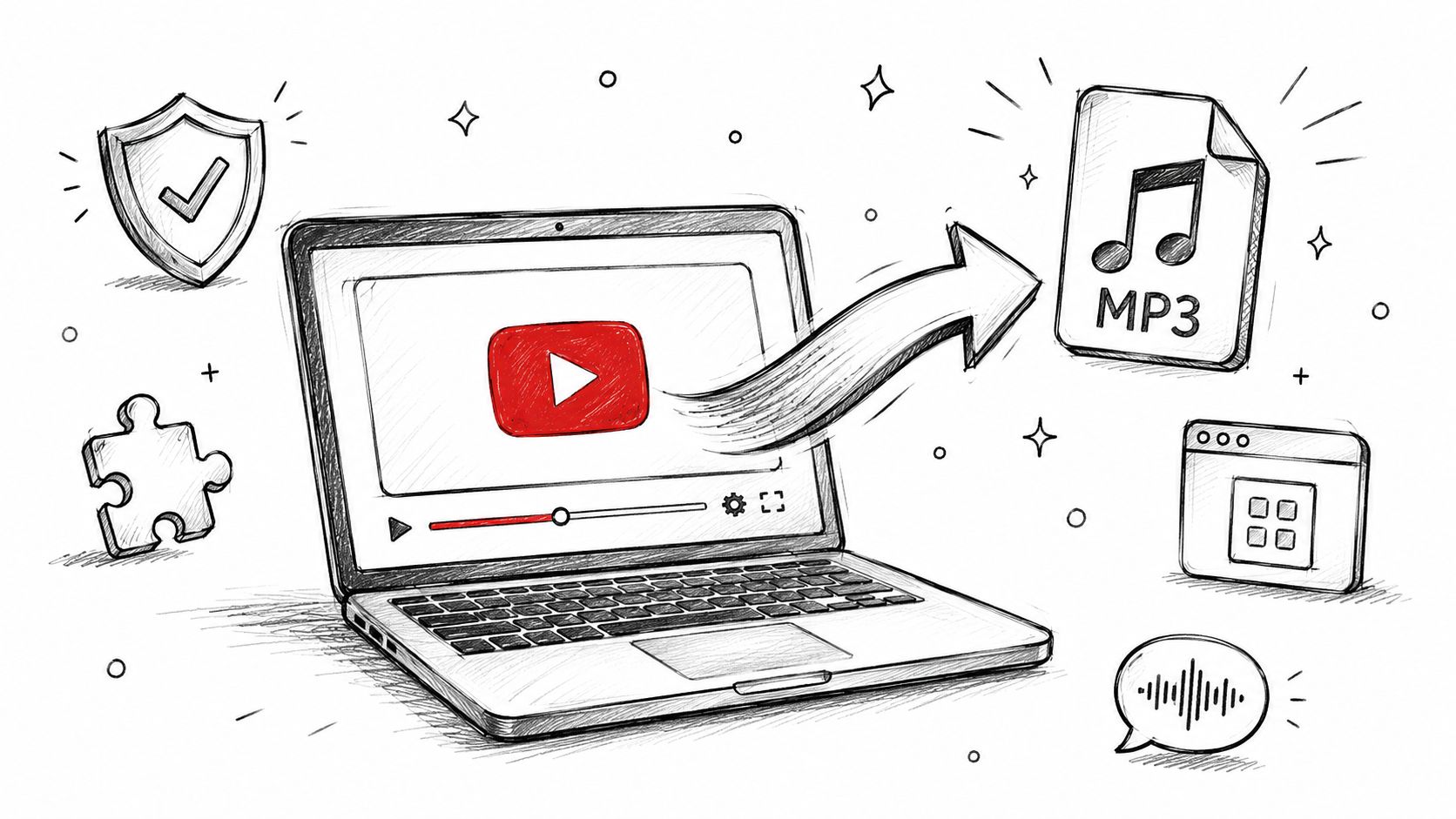
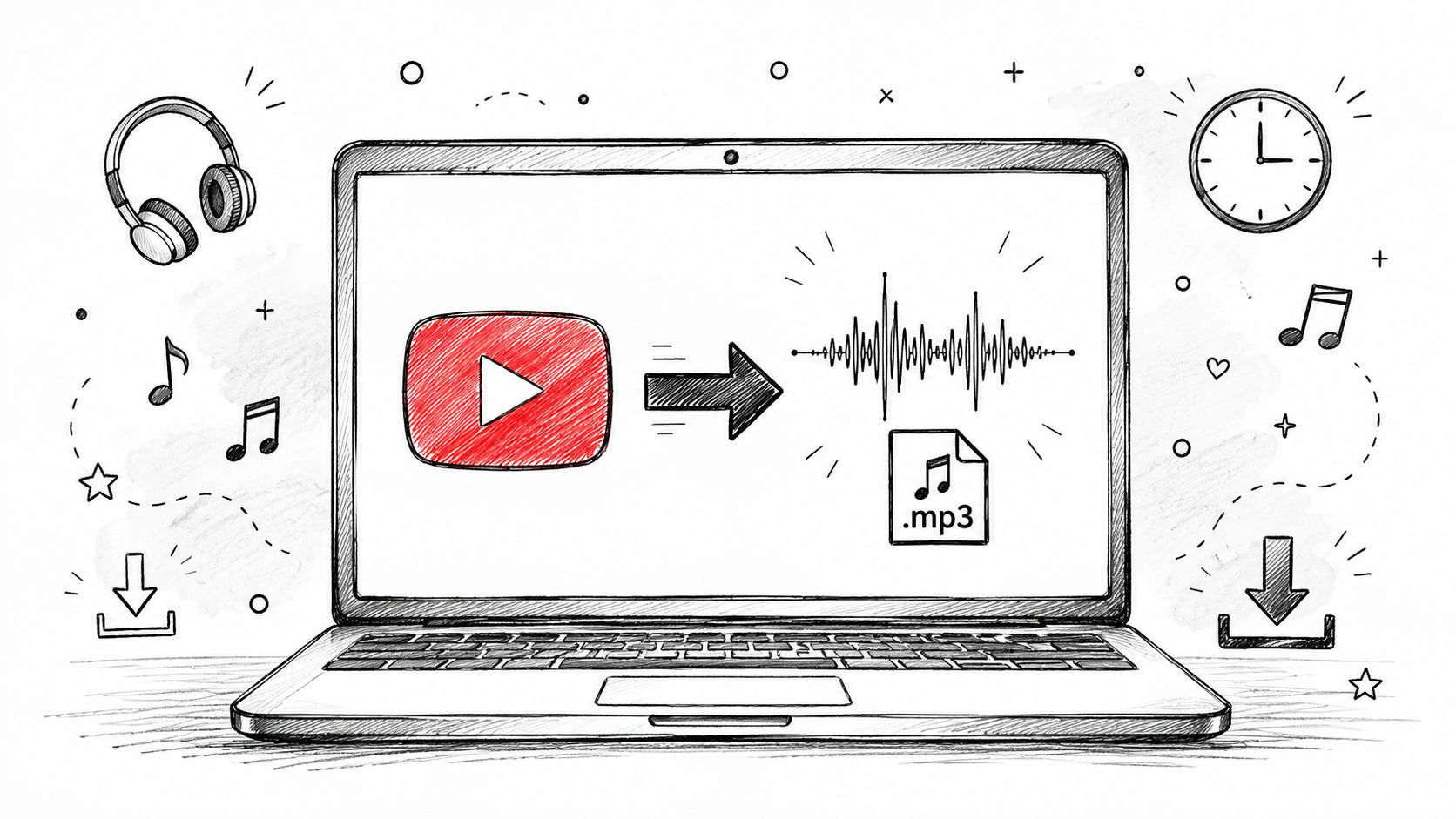
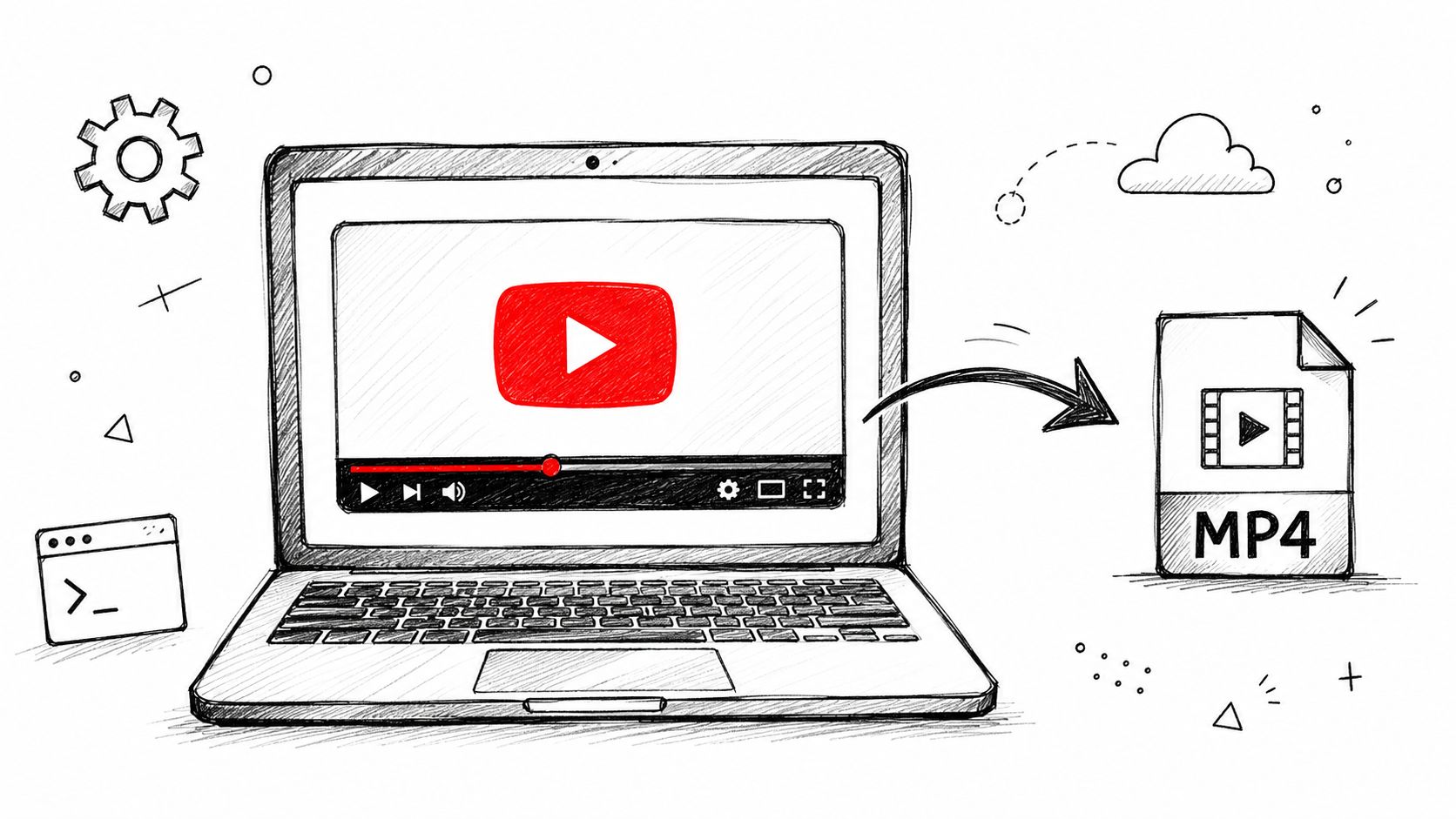
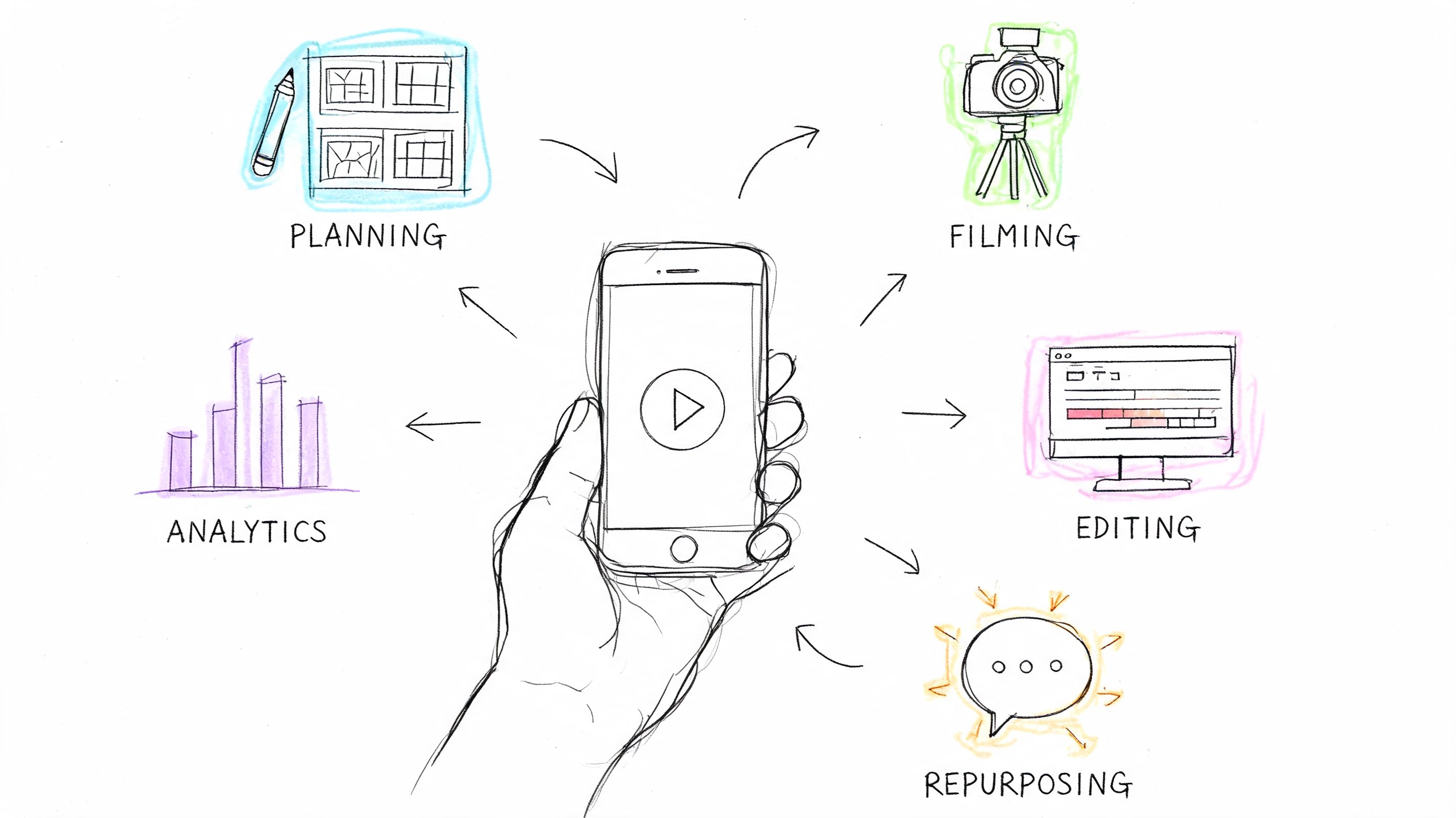
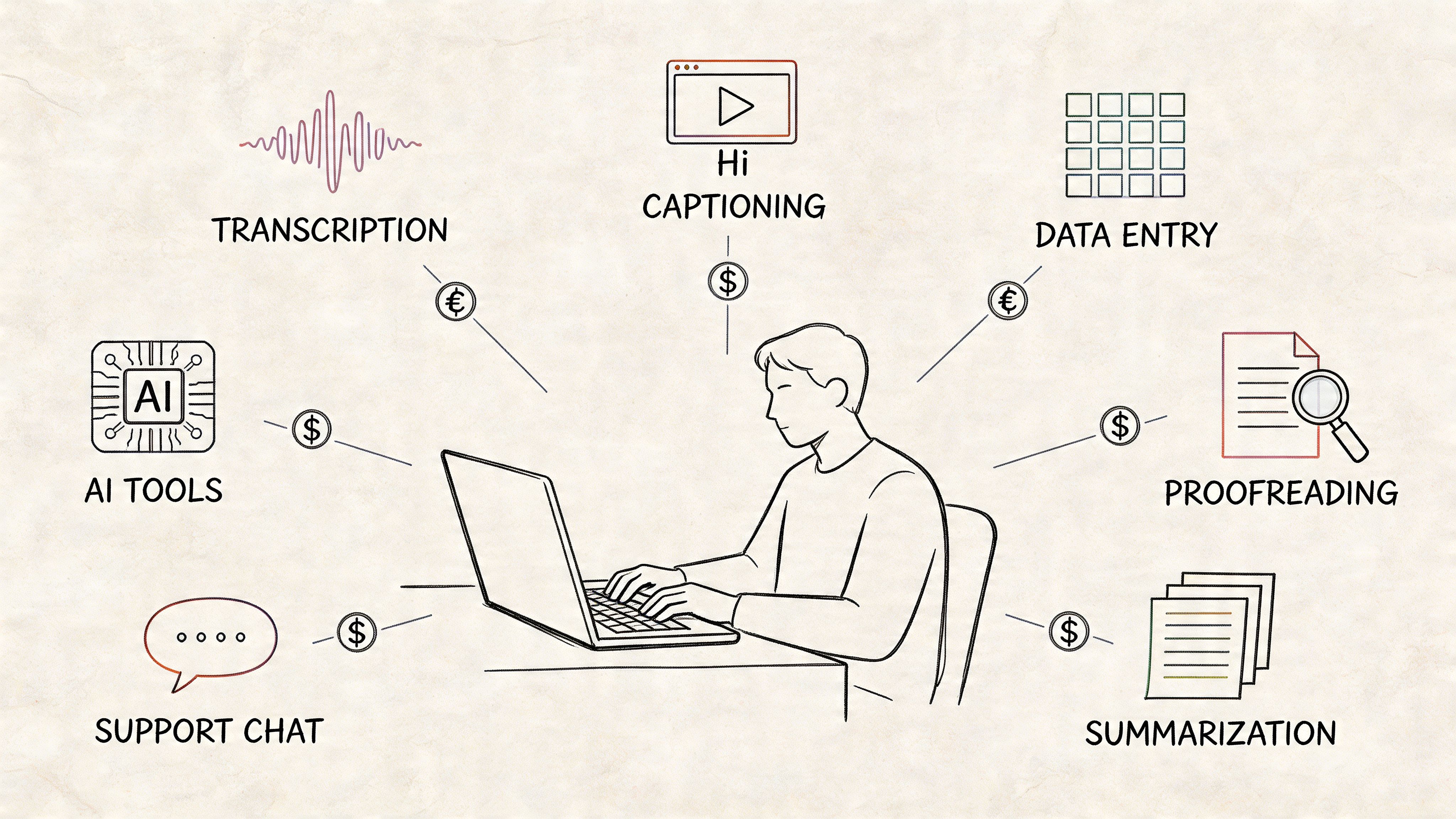
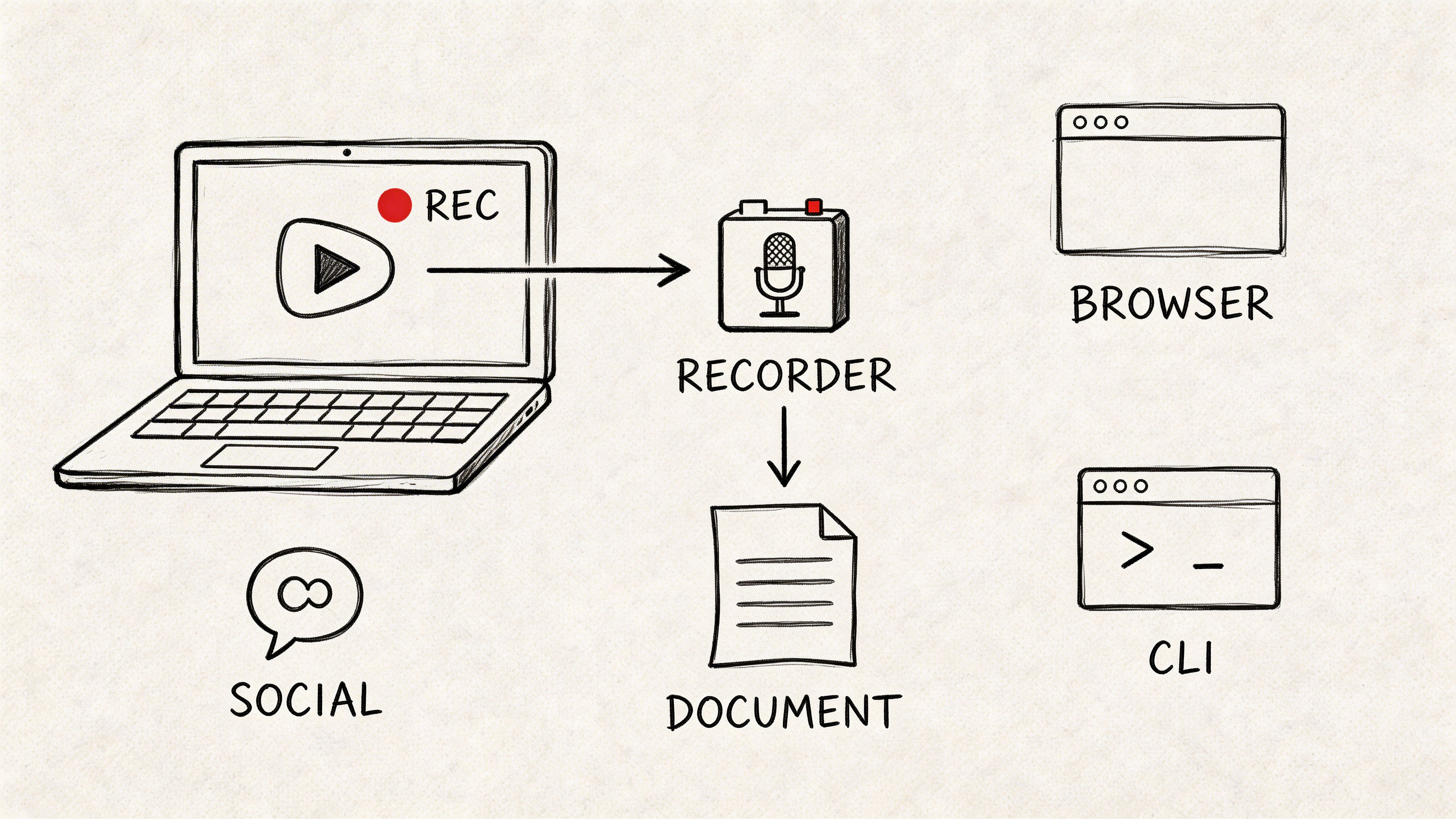
This type of feature article functions as a practical, step-by-step guide, directly answering a question for a specific community. This example, which I developed for YouTube creators, explains how to repurpose long-form video content into short, shareable clips for platforms like TikTok, Instagram Reels, and YouTube Shorts. It focuses on using AI transcription to efficiently find viral-worthy moments—a core challenge I've seen busy creators face.
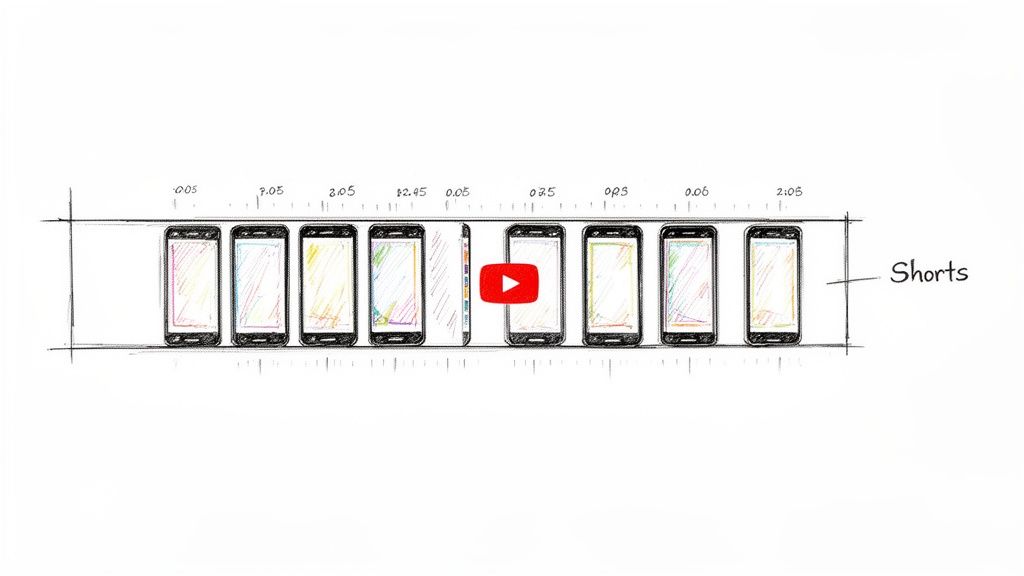
The strength of this feature article example lies in its direct utility. It doesn't just present a concept; it offers a clear, repeatable workflow that solves a real-world problem, namely content burnout and the pressure to be present on multiple platforms. By showing creators how to extract more value from work they've already done, it provides immediate and measurable benefits, making it a powerful model for service-oriented journalism.
Strategic Analysis
The article’s effectiveness comes from its clear structure and direct problem-solving approach. My experience shows that identifying a pain point (creating more content for more platforms) and presenting a specific, tool-based solution (AI transcription to find and clip highlights) is highly effective. This turns a time-consuming manual task into a manageable and automated process.
Its strategic value is in empowering the reader. Instead of just describing a trend, it provides the "how," "what," and "why." The inclusion of diverse use cases, from educational channels creating study guides to gamers making highlight reels, broadens its appeal and helps different types of creators see themselves in the solution. This is an excellent example of a feature article that serves as a resource.
Key Insight: A successful "how-to" guide doesn't just give instructions; it builds confidence. By breaking down a complex process and showing tangible outcomes (like increased reach), the article moves the reader from being overwhelmed to feeling capable and equipped.
Actionable Takeaways
You can write an effective guide by focusing on reader empowerment and clear, sequential steps. Here are techniques I've personally tested:
- Start with the Problem: Clearly state the reader's pain point in the introduction. I always make sure to show I understand their challenge before presenting the solution.
- Offer a Clear Workflow: Use numbered lists or distinct steps to guide the reader through the process. For this topic, the workflow is: transcribe the video, identify key moments with timestamps, and export clips.
- Use Specific Examples: Don't just say "repurpose content." Show it. Mention extracting a controversial quote for a Reel, creating a 60-second tutorial for a Short, or compiling multiple highlights into a promotional video. Getting specific about how to caption YouTube videos, for instance, provides a concrete skill.
Read a related article: How to Caption YouTube Videos
3. Example 3: The Data-Driven Investigation - "How to Analyze Interview Data" by WhisperBot
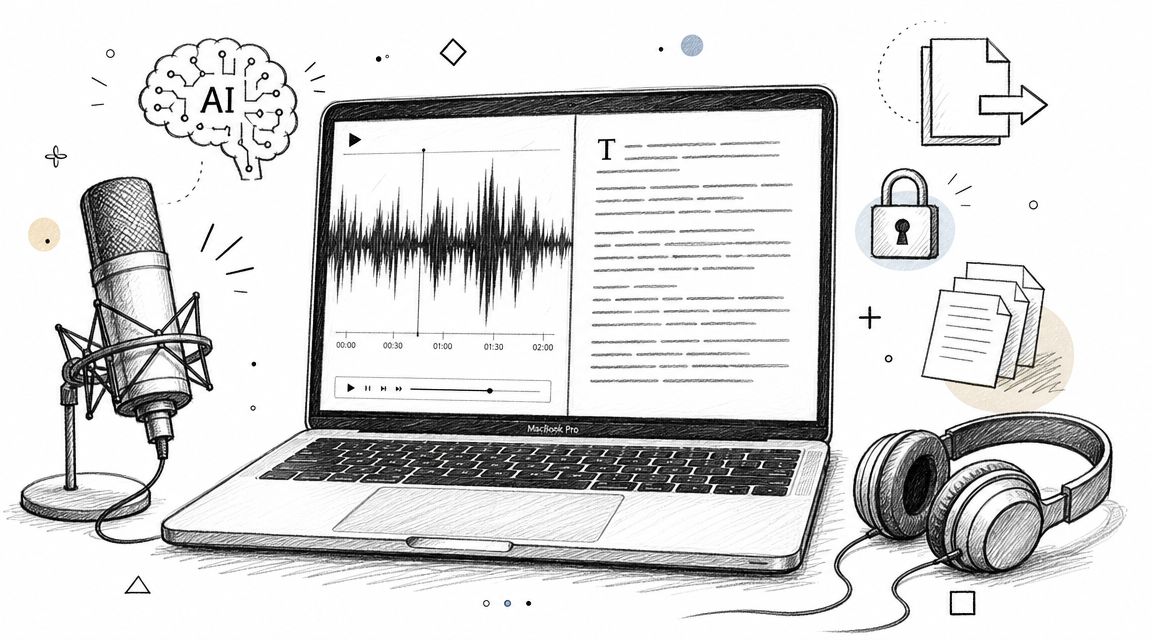
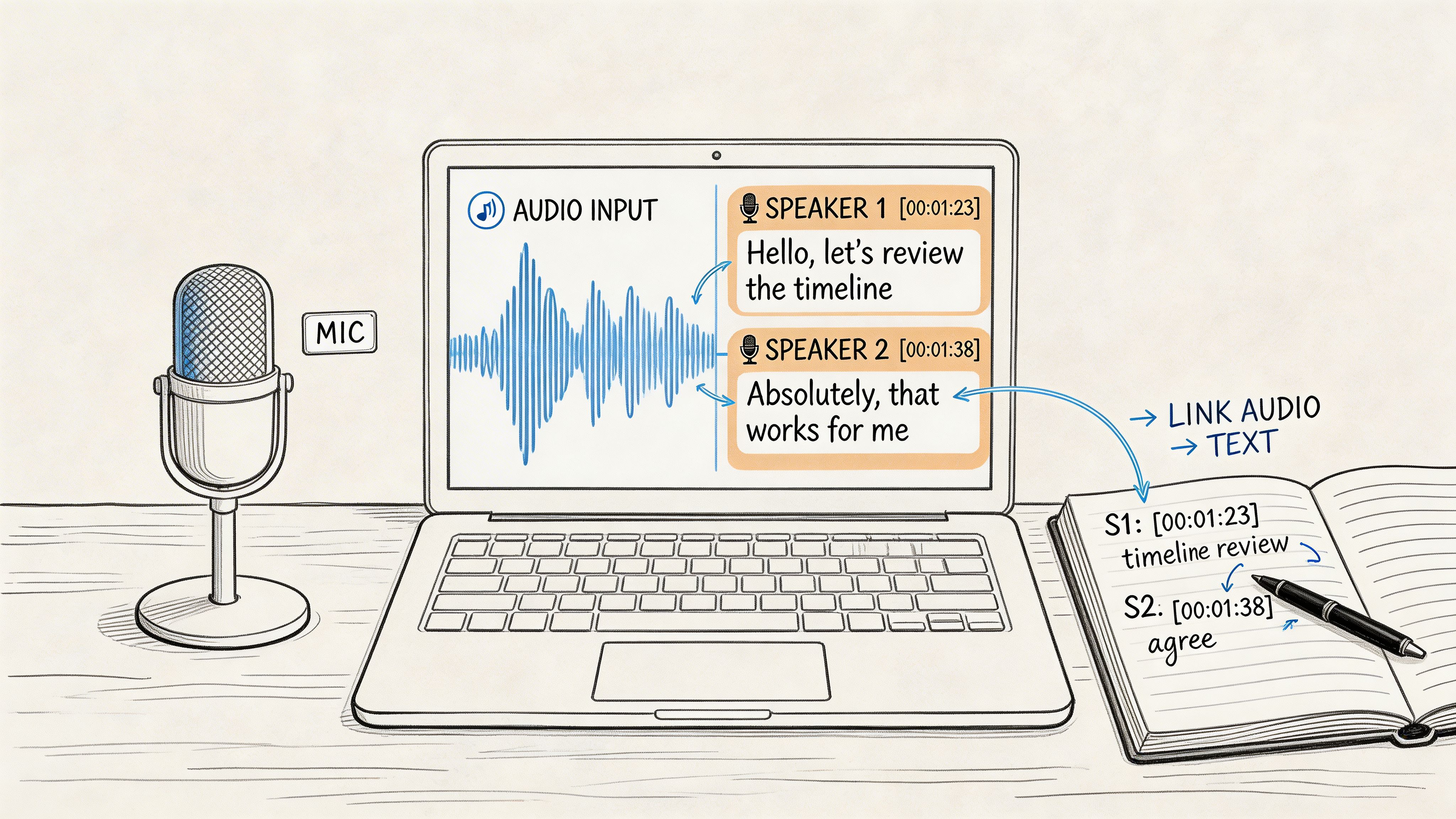
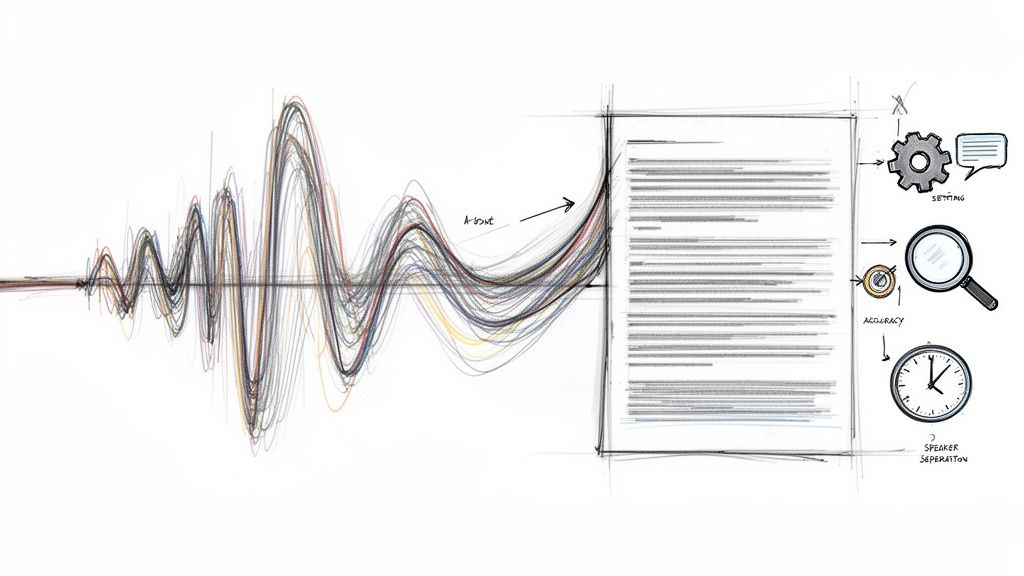
Our third feature article example is a modern, data-driven approach that turns qualitative interviews into a searchable, analyzable asset. While not a traditional narrative, this type of article functions as an investigative tool, explaining a process that underpins many documentaries and in-depth journalistic works. It details how AI transcription can transform hours of raw interviews into a structured database for finding quotes, themes, and patterns.
This model is critical for writers, journalists, and researchers dealing with large volumes of source material, such as 100+ hours of footage for a documentary or dozens of interviews for a book. By explaining the workflow for organizing, searching, and mining this data, the article demonstrates how to build a strong, evidence-based narrative efficiently. This approach is a powerful feature article example of how to manage complexity and extract meaning from a mountain of information.
Strategic Analysis
The strength of this article lies in its utility and direct application. It isn't telling a story; it's teaching a method that enables others to tell better stories. It presents a workflow that moves from disorganized raw footage to a clean, searchable archive. Based on my experience with investigative projects, this is the behind-the-scenes work that makes award-winning journalism possible.
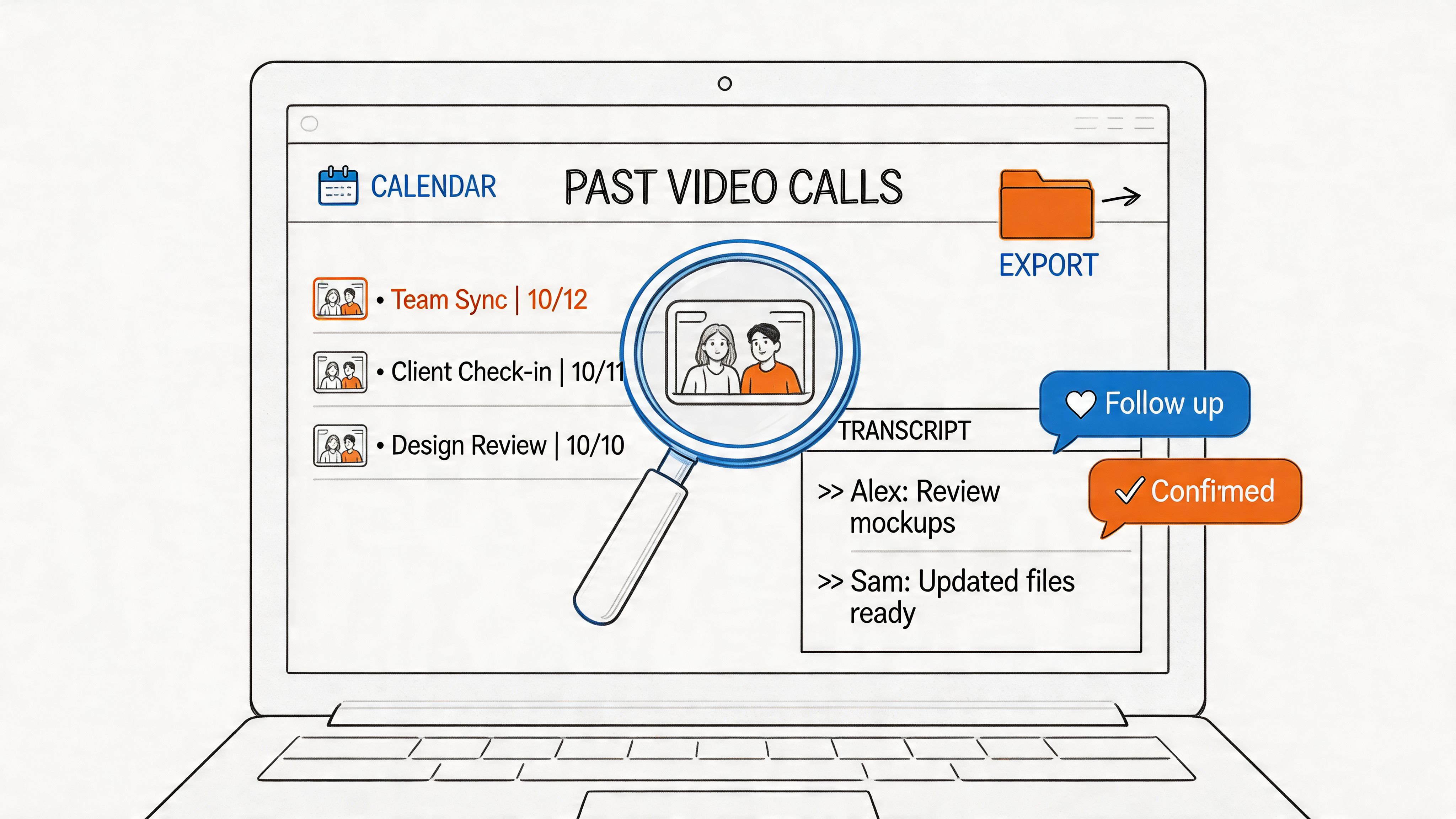
Instead of a narrative arc, its structure is a step-by-step process. The core strategy is transforming an overwhelming task—manually scrubbing through interviews—into a manageable, query-based system. For instance, documentary teams I've worked with can search for a specific theme like "mistrust" and instantly pull every mention from all interviewees, allowing them to build a cohesive narrative segment.
Key Insight: The power of this method is in its ability to reveal connections and contradictions that are invisible in isolation. By treating interviews as a collective dataset, a writer can quickly corroborate facts, identify conflicting accounts, and uncover subtle, recurring themes that form the backbone of a compelling feature.
Actionable Takeaways
You can apply these data-management principles to any project involving multiple sources or interviews, even without advanced AI tools. These are methods I use constantly:
- Create a Central "Quote Bank": After each interview, I transcribe key quotes and organize them by theme in a simple document or spreadsheet. This creates a searchable resource you can draw from during the writing process.
- Use Thematic Tagging: As you review your material, tag sections with keywords (e.g., "financial-struggle," "childhood-memory"). This allows you to quickly group related content from different sources, accelerating your analysis. You can learn more about how to analyze interview data to find these themes.
- Summarize, Don't Just Transcribe: For each interview, write a one-paragraph summary of the key points and a bulleted list of the most powerful quotes. This makes your material much easier to navigate when you're structuring your article.
Read the full article: "How to Analyze Interview Data" on the WhisperBot blog
4. The Explainer Article - "Meeting Minutes & Business Documentation: From Recorded Meetings to Actionable Summaries"
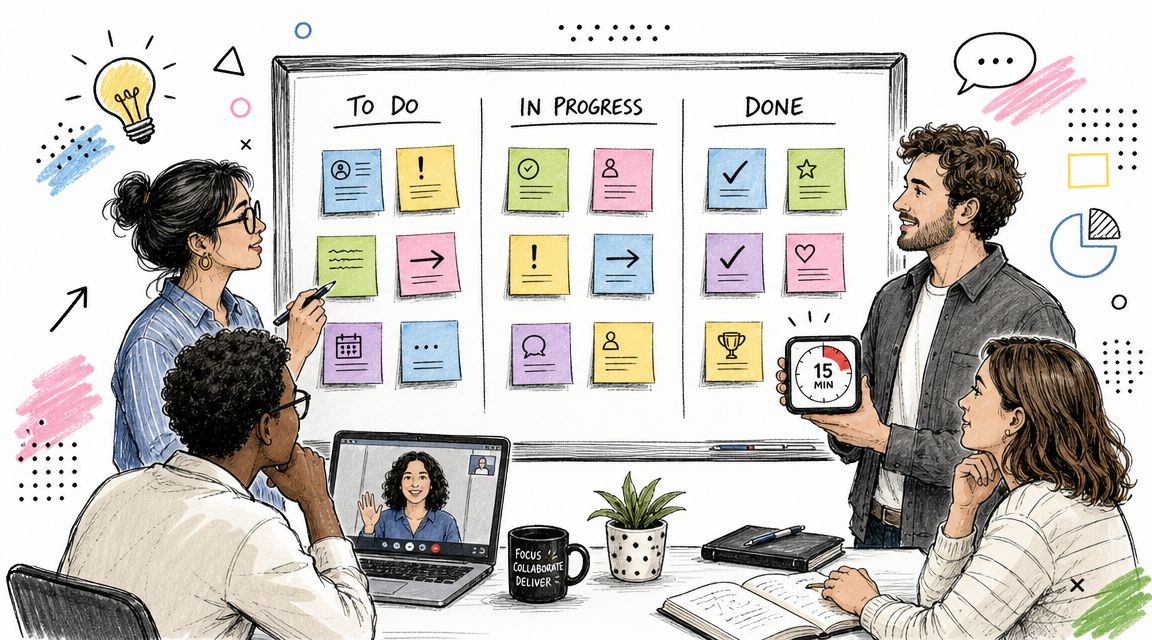
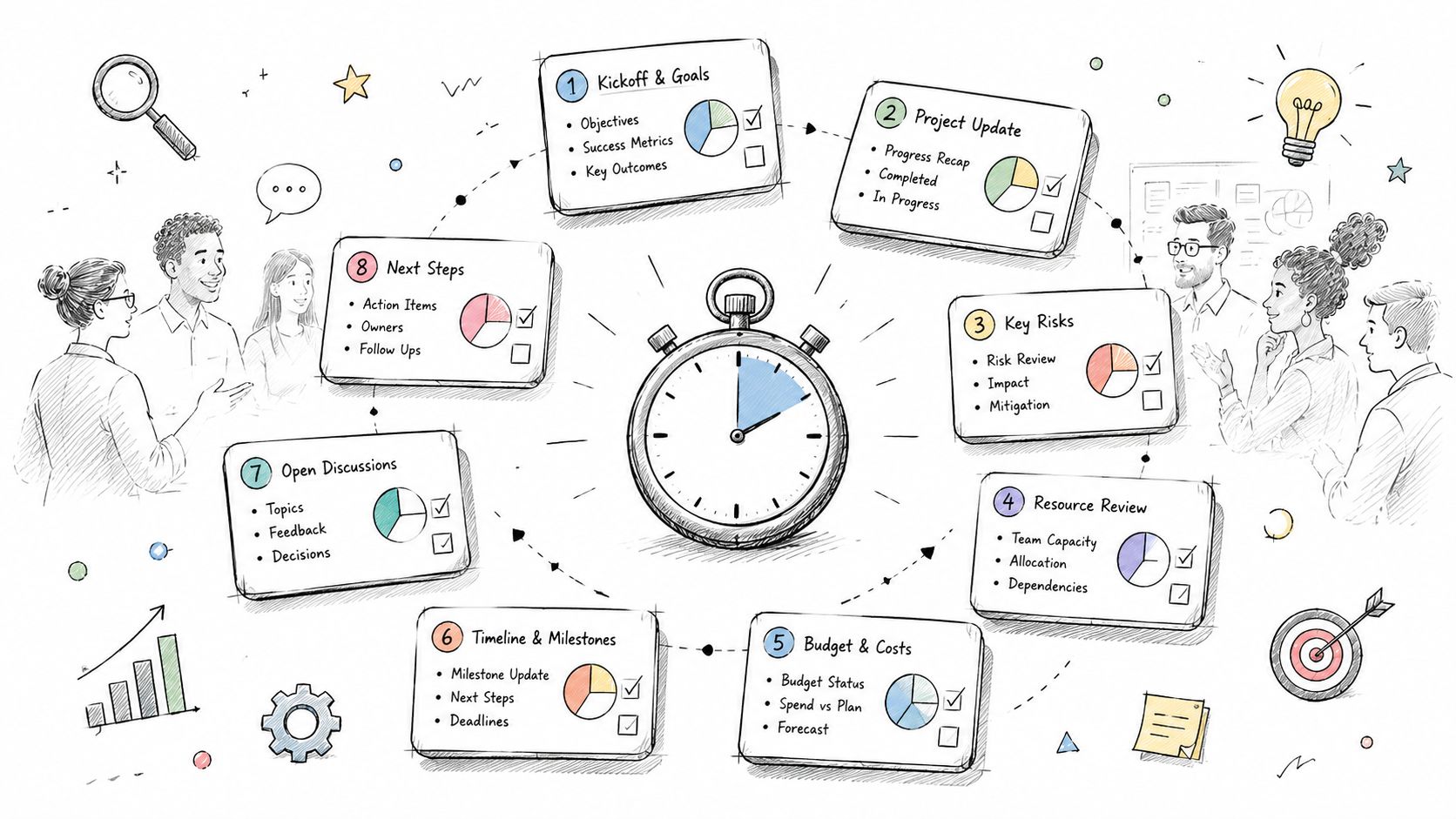
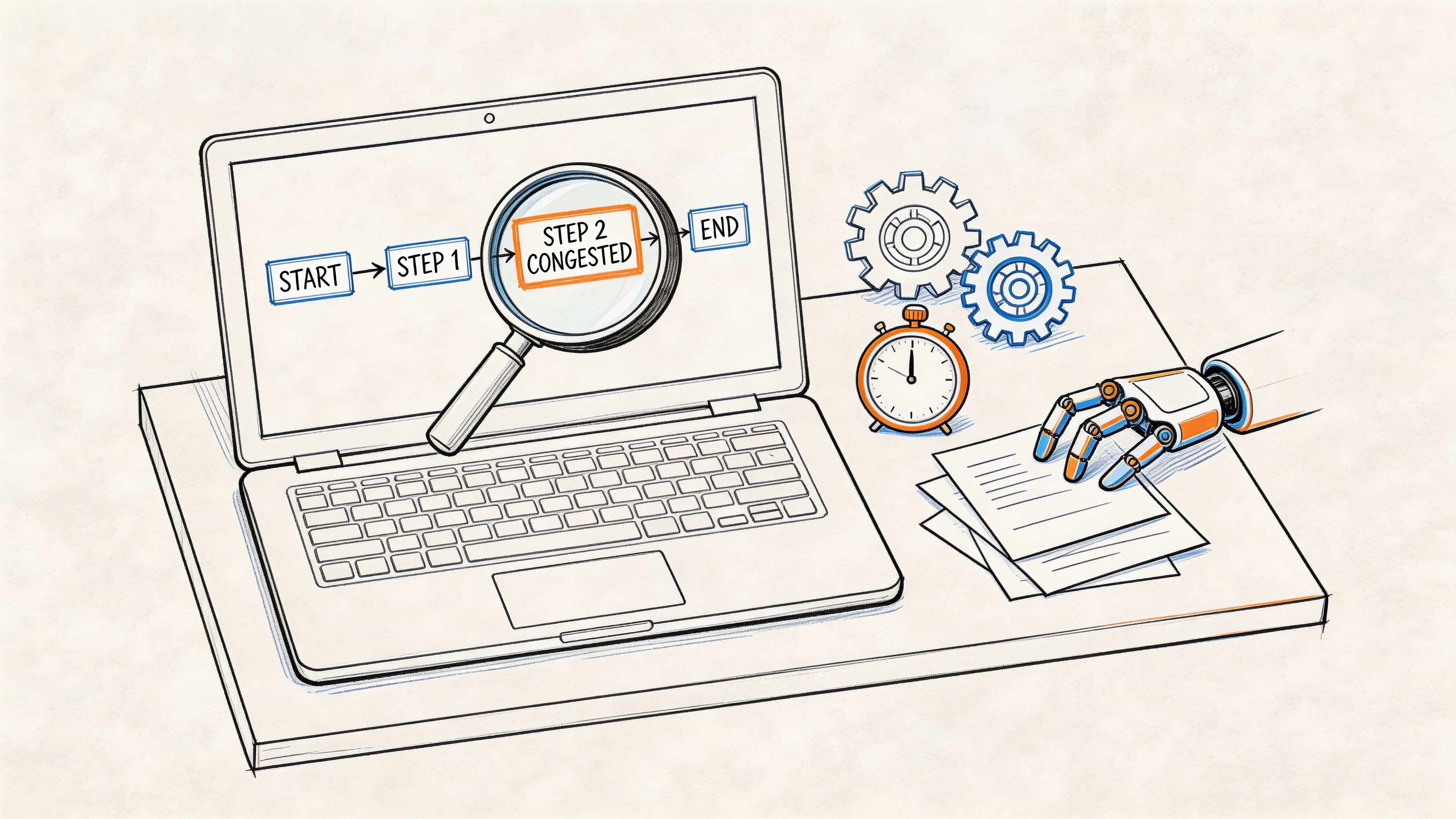
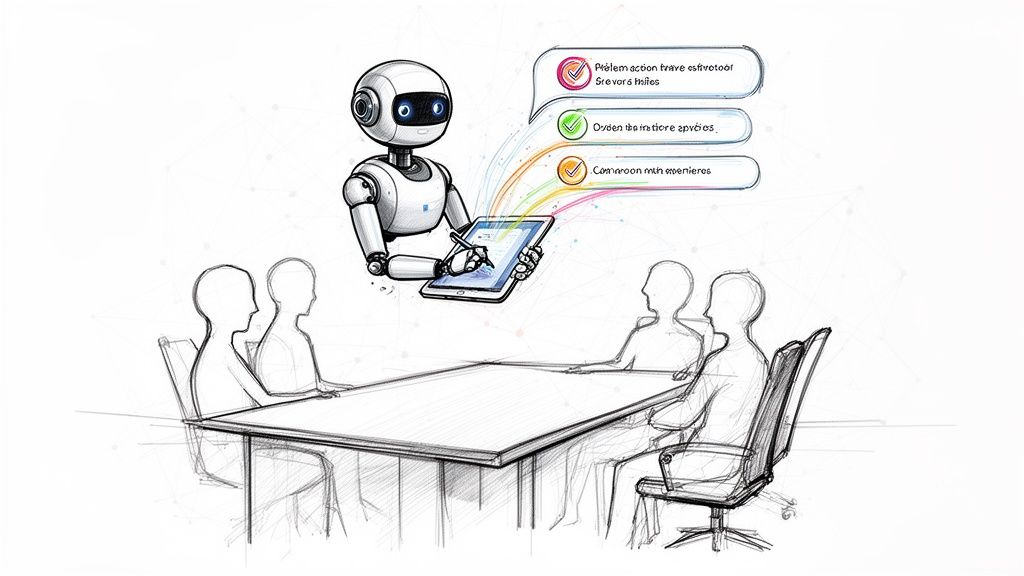
Shifting from narrative nonfiction, our next feature article example explores the practical, solution-oriented explainer. This type of article addresses a specific problem for a defined audience, positioning a process or technology as the definitive solution. A prime example is an article detailing how AI transcription can automate business meeting documentation, a common pain point I've helped modern teams solve.
This kind of feature article speaks directly to professionals-project managers, remote teams, and executives-who are losing valuable time to manual note-taking. It outlines a clear problem (inefficient meetings, lost action items) and presents a tangible, step-by-step solution (using AI to record, transcribe, and summarize). It serves as a strong model for writers aiming to create high-value, service-oriented content that solves a real-world business challenge.
Strategic Analysis
The strength of this article type is its direct utility. It doesn't just inform; it equips the reader. By focusing on a specific workflow—transforming a recorded Zoom call into a structured summary with assigned action items—the article provides immediate value. I have found that structuring content on a logical progression from problem to solution to application is most effective.
This approach is particularly effective in B2B content marketing. It frames a technology not as a complex tool but as a simple fix for a frustrating, universal issue. Examples like remote teams using transcripts for asynchronous alignment or client service teams documenting calls for CRM integration make the benefits concrete and relatable. The content moves from a general concept to a specific, actionable strategy.
Key Insight: The power of the explainer article lies in its ability to build authority by solving a reader's problem. It demonstrates expertise not by telling, but by showing a clear, replicable process that delivers a measurable result, like reclaiming hours once spent on administrative tasks.
Actionable Takeaways
You can apply the principles from this feature article example to create content that provides genuine utility and drives action. Here's a proven method:
- Structure Around a Problem/Solution: I always start by clearly identifying a common pain point in the introduction. Then, I dedicate the body of the article to explaining the proposed solution in detail, and conclude with the positive outcomes.
- Use Specific, Relatable Scenarios: Don't just say AI transcription is useful. Show how an HR department uses it to document formal meetings or how an executive team maintains a searchable decision log. Concrete examples make the benefits tangible.
- Provide Clear, Step-by-Step Instructions: Guide the reader through the process. For instance, instruct them to "Ask the AI to extract decisions and action items" or "Export summaries directly to your project management tool." Action-oriented language empowers the reader to implement the solution immediately.
5. The Explanatory Feature - "How to Turn Lectures into Study Guides" (Conceptual)
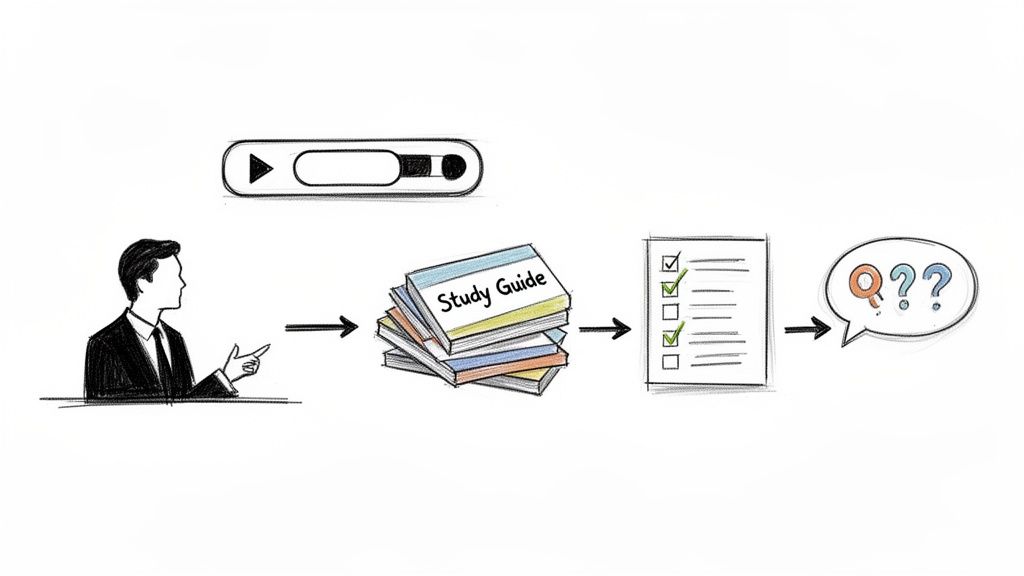
While not a single published article, this concept represents a powerful type of explanatory feature that has gained significant traction. This feature article example is built around a practical solution: turning educational content like lectures and videos into actionable study materials using AI transcription. It’s an ideal model for articles that aim to solve a specific, tangible problem for their audience, blending a "how-to" guide with an exploration of new methods.
This approach details how students and educators can convert audio or video recordings into searchable text. From there, they can find key concepts, generate summaries, and even create practice quizzes. This framework is perfect for writers aiming to produce content that offers direct, experience-based value, showing readers exactly how to achieve a desired outcome.
Strategic Analysis
The strength of this article type lies in its direct utility and problem-solving focus. It moves beyond theory by providing a clear, step-by-step process that readers can immediately apply. The narrative is structured around a central pain point—inefficient studying—and presents a modern, accessible solution.
Based on my experience creating educational content, its success comes from demonstrating the "before and after." I find it effective to illustrate the old, cumbersome method of manual note-taking and contrast it with the speed and organization offered by AI-powered tools. This structure makes the benefits clear and compelling, whether for medical students cramming for exams or language learners analyzing native speaker conversations.
Key Insight: A great explanatory feature doesn't just inform; it empowers. By breaking down a complex process into simple, repeatable steps, the article becomes an indispensable tool for the reader, building authority and trust.
Actionable Takeaways
You can create a powerful explanatory feature by focusing on a clear, user-centric process. Here are the steps I follow:
- Structure Around a Problem-Solution Arc: I always start by clearly defining the problem your audience faces (e.g., "I can't keep up with lecture notes"). Then, I introduce the solution and walk through the implementation step-by-step.
- Use Mini-Case Studies: Instead of just listing benefits, show them in action. I use short examples like "A medical student used this to create a glossary of terms from a two-hour lecture" or "A course creator provided transcripts, boosting student engagement."
- Provide a "Recipe" of Tips: Conclude with a clear, bulleted list of actions the reader can take. For example, ask an AI to generate practice questions, create flashcards from summaries, or organize transcripts by topic for quick review.
Read more about the concept: This is a conceptual example, but you can see it in practice on platforms like Coursera which provide transcripts for their video lessons.
6. The How-To Guide - "One Video, Eight Pieces of Content: The Smart Creator's Blueprint"
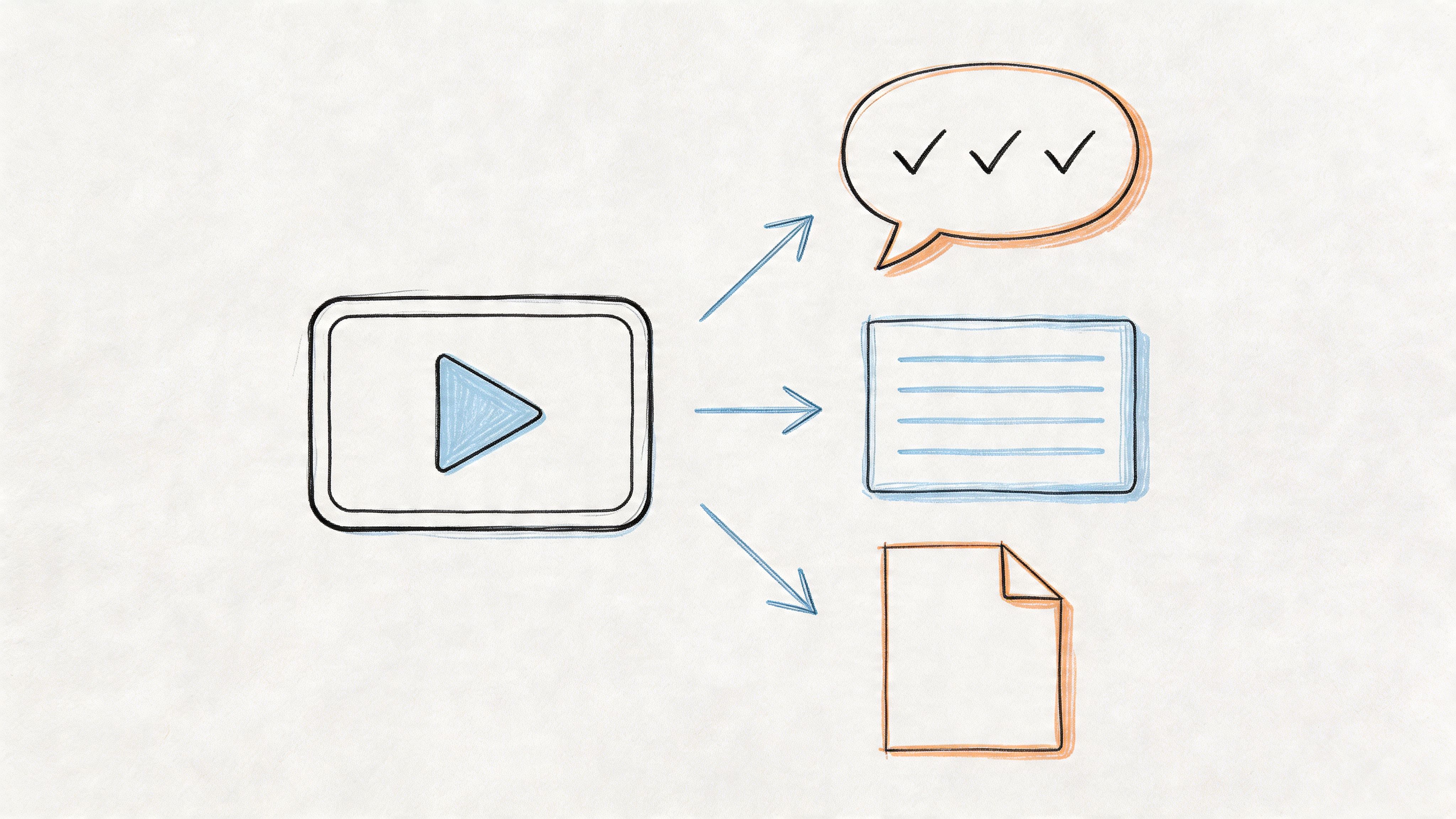
This type of feature article functions as a practical how-to guide, designed to solve a specific problem for a professional audience. Our example, "One Video, Eight Pieces of Content," targets content marketers and social media managers struggling to maintain a consistent publishing schedule. It provides a step-by-step blueprint for content repurposing, showing how one long-form video can be multiplied into numerous assets.
The article breaks down a complex workflow into a simple, repeatable process. It explains how to use AI transcription to convert a webinar or podcast into a text document, which then becomes the raw material for blog posts, social media updates, email newsletters, and more. This strategic feature article example is valuable because it offers a direct, experience-based solution to a common business challenge: creating more content with less effort.
Strategic Analysis
The strength of this article lies in its direct utility and structured format. It doesn't just present a theory; it provides a replicable system. The content is organized logically, starting with a "source" asset (the video) and then detailing each "derived" asset that can be created from it. This makes the information easy to follow and implement immediately.
In my experience, moving beyond broad advice is key. This article focuses on specific tactics. It includes prompts for AI tools, templates for social media carousels, and methods for extracting quotes. This level of detail builds trust and demonstrates genuine expertise, positioning the author or publication as a credible authority in the marketing space. The article is effective because it anticipates reader questions and answers them with clear, actionable steps.
Key Insight: The article's power comes from its framing as a "blueprint." It transforms a useful tip into a complete operational system, empowering readers by giving them a process they can own and adapt. This shifts the focus from simple advice to a valuable business asset.
Actionable Takeaways
You can apply the principles from this feature article example to create your own high-value how-to guides. Here's a method I've found successful:
- Structure as a System: Frame your advice as a repeatable process or blueprint. Use numbered steps, checklists, or flowcharts to guide the reader from problem to solution.
- Provide Specific Tools and Prompts: Don't just say "use AI." I recommend specific tools (like transcription services) and provide concrete examples, such as "Ask the AI to generate 10 key takeaways formatted for a LinkedIn post."
- Create Mini-Templates: Embed small, reusable templates directly within your article. For instance, offer a content repurposing checklist that outlines all potential content pieces that can be derived from one source.
Read more on the concept: Search for "content repurposing frameworks" on marketing blogs like HubSpot or the Content Marketing Institute.
7. Example 7: The Explainer/Advocacy Piece - "Accessibility & Compliance"
While not a single article, this type of feature article example focuses on explaining a complex topic with a clear call to action, often seen in pieces about accessibility. These articles break down legal requirements like the Americans with Disabilities Act (ADA) and Web Content Accessibility Guidelines (WCAG) into understandable terms for content creators and businesses. Their goal is to advocate for inclusive design by demonstrating its dual benefits: legal compliance and audience expansion.
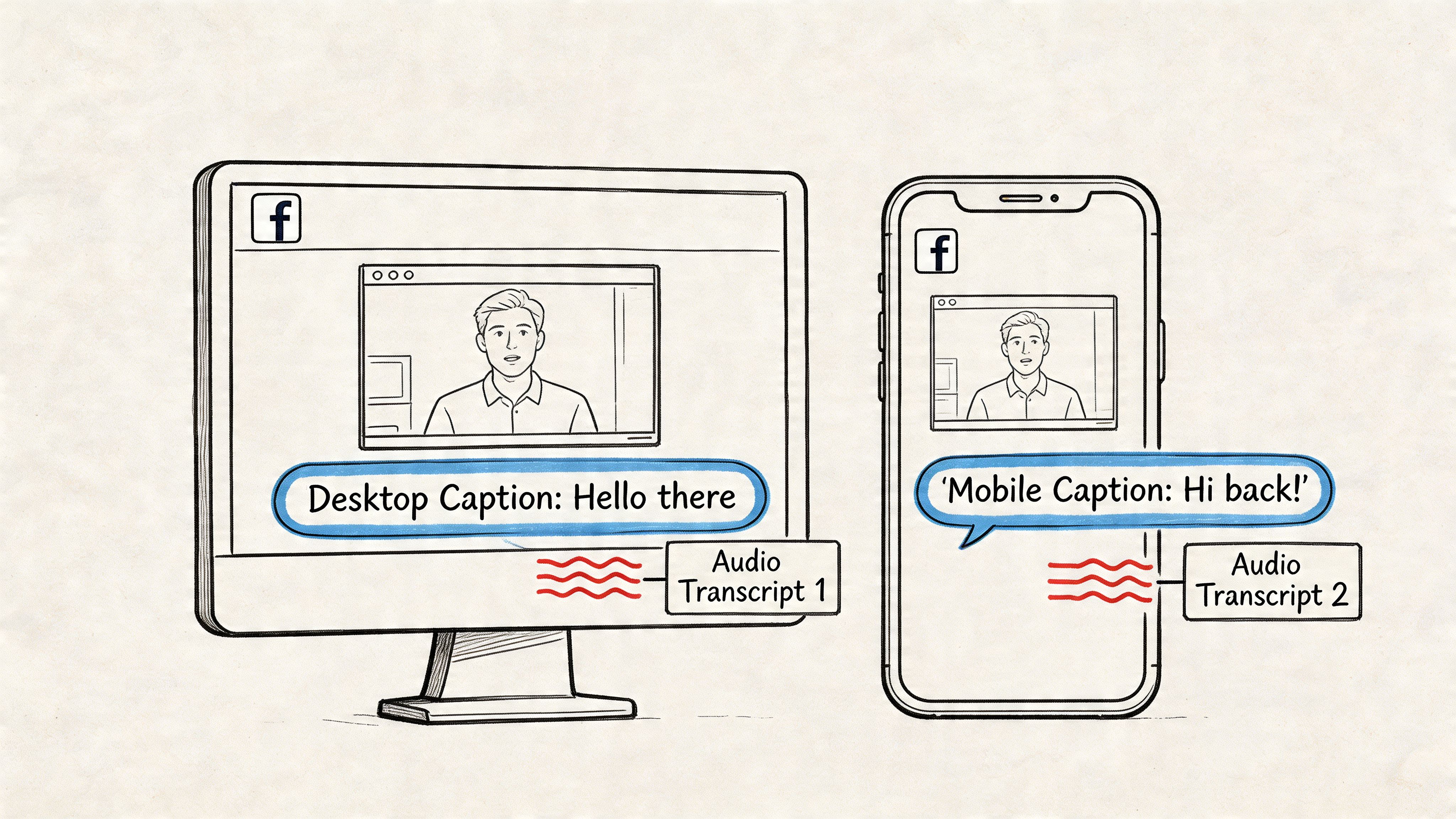
This genre masterfully turns a dry, technical subject into a compelling argument for ethical and strategic business practices. By framing accessibility not as a burden but as an opportunity, these articles show writers how to build a persuasive case. They connect abstract legal standards to concrete outcomes, like reaching deaf or hard-of-hearing audiences and improving SEO through practices like video captioning and transcription.
Strategic Analysis
The strength of this feature article example lies in its direct, problem-solution framework. The article first identifies a common business challenge: navigating accessibility laws and reaching a wider audience. It then presents a clear solution, such as using AI transcription to generate captions and transcripts, explaining how this single action solves multiple problems at once.
These pieces often use case studies from various sectors, such as government agencies captioning public announcements or tech companies making their video content globally accessible. From my own work in this area, I can confirm this adds credibility and demonstrates the real-world application of the advice. The structure is designed to be highly practical, moving from "why you should care" to "how you can do it."
Key Insight: The most effective advocacy articles make the "right thing to do" also the "smart thing to do." By linking regulatory compliance with tangible business benefits like better SEO and a larger audience, the argument for accessibility becomes almost undeniable.
Actionable Takeaways
You can apply the principles from this advocacy-style feature to persuade your audience on any topic. Here is my go-to approach:
- Frame the Problem and Solution: Clearly define a pain point your audience faces. Then, present your main idea as the direct, efficient solution to that specific problem.
- Use Diverse Evidence: Don't rely on one type of proof. I combine legal facts (WCAG standards), business benefits (SEO improvement), and human-centric examples (supporting diverse learners) to build a multi-faceted and robust argument.
- Make It a Workflow, Not a Chore: Position your recommendation as a simple integration into existing processes. For instance, present captioning not as an extra step but as a standard part of the video publishing workflow. This makes adoption seem easier.
Read more on the topic: Learn about Web Content Accessibility Guidelines (WCAG)
8. The How-To Guide: "Social Media Strategy: Repurposing Long-Form Content for Viral Short-Form Moments" (Conceptual Example)
Our eighth feature article example shifts from narrative to a highly practical how-to guide. This type of article serves a direct need, teaching a specific skill: turning long-form content like podcasts and webinars into viral short-form videos. While this isn't a single published piece, it represents a common and valuable format I've seen across marketing blogs and industry publications. It targets social media managers and creators looking for efficient ways to fuel their content calendars.
These articles explain how to systematically mine existing assets for engaging clips, optimize them for platforms like TikTok and Instagram Reels, and maintain a consistent posting schedule. They are a perfect feature article example for writers who want to establish authority in a niche by providing clear, step-by-step instructions that solve a pressing problem for their audience. The goal is to empower the reader with a repeatable system.
Strategic Analysis
The strength of a great how-to guide lies in its clarity and structure. My own process involves breaking down a complex workflow, like content repurposing, into manageable steps. It often begins by establishing the "why," explaining the value of content atomization before moving into the "how," with sections on identification, extraction, editing, and scheduling.
Successful versions of this article use real-world examples to illustrate their points, such as influencers creating daily Reels from a single podcast episode or a news organization pulling key soundbites for social media. This makes abstract advice feel concrete and achievable. The best guides also incorporate modern tools, such as AI transcription and clipping software, to show readers how to work smarter, not harder.
Key Insight: The power of this feature format is its direct utility. It’s not about telling a story; it’s about giving the reader a blueprint for success. By organizing expert advice into a logical, easy-to-follow process, the article becomes an indispensable resource the reader will bookmark and return to.
Actionable Takeaways
You can build a powerful how-to feature by focusing on structure and practical value. Here’s what works for me:
- Create a Logical Flow: Structure your article like a process. Use clear headings for each step: 1. Sourcing Your Content, 2. Identifying Key Moments, 3. Editing for Each Platform, and 4. Scheduling and Distribution.
- Use Visuals to Clarify: Incorporate screenshots, short GIFs, or checklists to break up text and demonstrate technical steps. For a topic like video editing, showing a sample workflow is far more effective than just describing it.
- Provide Specific Tools and Tactics: Don't just say "find good clips." Instruct readers to use AI summary tools to spot emotionally charged moments or to A/B test different clip lengths (e.g., 15 seconds vs. 45 seconds) to see what performs best on a specific platform.
Explore this strategy: Learn more about content repurposing from HubSpot's blog
Feature Article: 8-Example Comparison
| Scenario | 🔄 Implementation Complexity | ⚡ Resource / Effort | 📊 Expected Outcomes (⭐) | Ideal Use Cases | 💡 Key Advantages / Tips |
|---|---|---|---|---|---|
| Podcast Transcription & Monetization | Medium — initial setup, file uploads, speaker detection | Moderate — good audio, minor editing, platform integrations | High — searchable archives, multi-format repurposing, extra revenue streams ⭐⭐⭐⭐ | Podcasters, creators repurposing audio, social media teams | Extract timestamped quotes, create show notes and social clips |
| YouTube Creator Guide | Medium — direct ingestion, clip extraction workflow | Low–Moderate — clear audio, review for brand-critical clips | High — unlock viral moments, short-form pipeline, better discoverability ⭐⭐⭐⭐ | YouTubers, interview channels, educators | Use timestamped highlights, auto summaries for descriptions |
| Interview & Documentary Workflow | Medium–High — large archives, theme/topic extraction | High — long recordings, careful data handling, collaboration tools | Very high — faster research, searchable quotes, citable archives ⭐⭐⭐⭐⭐ | Journalists, researchers, documentary filmmakers | Use full-text search and topic extraction, verify accents/accuracy |
| Meeting Minutes & Business Documentation | Low–Medium — integrate with meeting tools, privacy policies | Low — routine recordings, brief review for action items | High — consistent documentation, clear action items, accountability ⭐⭐⭐⭐ | Business teams, PMs, remote organizations | Auto-extract decisions/owners, export to PM tools for follow-up |
| Student Study Strategy | Low — lecture capture and summary generation | Low–Moderate — lecture audio, export for study formats | High — condensed study guides, quizzes, accessible review materials ⭐⭐⭐⭐ | Students, educators, course creators | Generate practice questions, create glossaries and flashcards |
| Content Marketing Repurposing | Medium — templates, bulk processing, platform adaptation | Moderate — planning, bulk exports, quality control | High — increased content velocity, consistent messaging, SEO gains ⭐⭐⭐⭐ | Marketing teams, agencies, thought leaders | Build repurposing templates, use AI summaries for headlines |
| Accessibility & Compliance | Medium — org-wide captioning workflows, security controls | Moderate — multilingual exports, accuracy review, legal input | Very high — legal compliance, broader reach, reduced liability ⭐⭐⭐⭐⭐ | Businesses, media companies, educational institutions | Review captions for compliance, implement captions as standard practice |
| Social Media Strategy | Medium — clip identification, platform-specific optimization | Moderate — batch processing, scheduling, creative edits | High — more frequent optimized posts, extended content lifespan ⭐⭐⭐⭐ | Social media managers, influencers, content marketers | Schedule strategically, A/B test clip lengths and formats |
Your Blueprint for Writing an Unforgettable Feature Article
After dissecting a wide range of content strategies, from turning podcasts into revenue streams to transforming meeting minutes into actionable plans, a clear pattern for creating exceptional content emerges. The eight examples we've explored, whether focused on YouTube monetization or academic study guides, all demonstrate a core principle: the best content isn't just delivered, it's engineered. It’s built on a foundation of structure, brought to life with purpose-driven details, and anchored by a deep understanding of what the audience needs to see, hear, or feel.
Your primary takeaway from this guide is to move beyond the surface-level act of simply presenting information. Instead, focus on building an experience for your audience. Whether you are a YouTuber creating social assets, a social media manager looking for viral moments, or a student creating a study guide, your goal is to make your audience feel a sense of clarity and accomplishment. The tactics we've analyzed aren't just for feature writers; they are universal content creation strategies.
From Analysis to Action: Your Next Steps
The journey from a raw idea to a polished piece of content can feel daunting, but the examples in this article provide a clear roadmap. Each breakdown offers a structural template and a list of key techniques that you can directly apply to your own projects. Think of these as your building blocks.
- Revisit the Structures: Which example's structure best fits your current project? The "Problem, Agitation, Solution" framework from our content marketing example? Or the chronological narrative used in the documentary workflow breakdown? Choose a structure to give your content a solid spine.
- Identify Your "Golden Quotes": Every great piece of content has those perfect, impactful moments. For journalists, it's a powerful quote; for marketers, it’s a shareable soundbite. The key is finding them efficiently. As you review your source material, such as interviews or recorded meetings, actively hunt for these narrative-defining nuggets.
- Layer in the Details: Remember the accessibility example, where small details made the content usable for a wider audience? Details are what separate generic content from a truly valuable resource. Use specific data, direct quotes, and concrete steps to build credibility and provide real utility.
- Focus on the Human Element: Even in a business context, like creating meeting summaries, the most effective content connects on a human level. It addresses pain points, provides clear next steps, and makes complex information easy for people to understand and act upon.
The Power of a Repeatable Workflow
Mastering these concepts isn't just about creating one great piece of content. It’s about developing a repeatable system that saves you time and improves your output consistently. When you have a reliable workflow for organizing research, identifying key insights, and structuring your narrative, you free up mental energy to focus on the creative aspects of your work.
This systematic approach is valuable whether you're a solo creator aiming to grow your brand or part of a larger team managing complex projects. A strong process ensures consistency and quality. As you refine your skills and build your portfolio, you'll also want to think about the best ways to get your work in front of an audience. Exploring different avenues, from traditional media to independent routes, is a key part of a writer's journey, and understanding the mechanics of self-publishing success can open up new opportunities for your finished work.
Ultimately, every feature article example and content strategy we have analyzed points to one truth: powerful content is born from a blend of solid structure and compelling detail. Take these blueprints, apply the techniques, and start building your own unforgettable content.
Ready to find the narrative-defining moments in your own audio and video files? Whisper AI can transcribe hours of recordings in minutes, making it simple to search your interviews, meetings, and lectures for those perfect quotes and key insights. Start building your next great story faster at Whisper AI.