A Daily Scrum Meeting Agenda That Isn't a Waste of Time
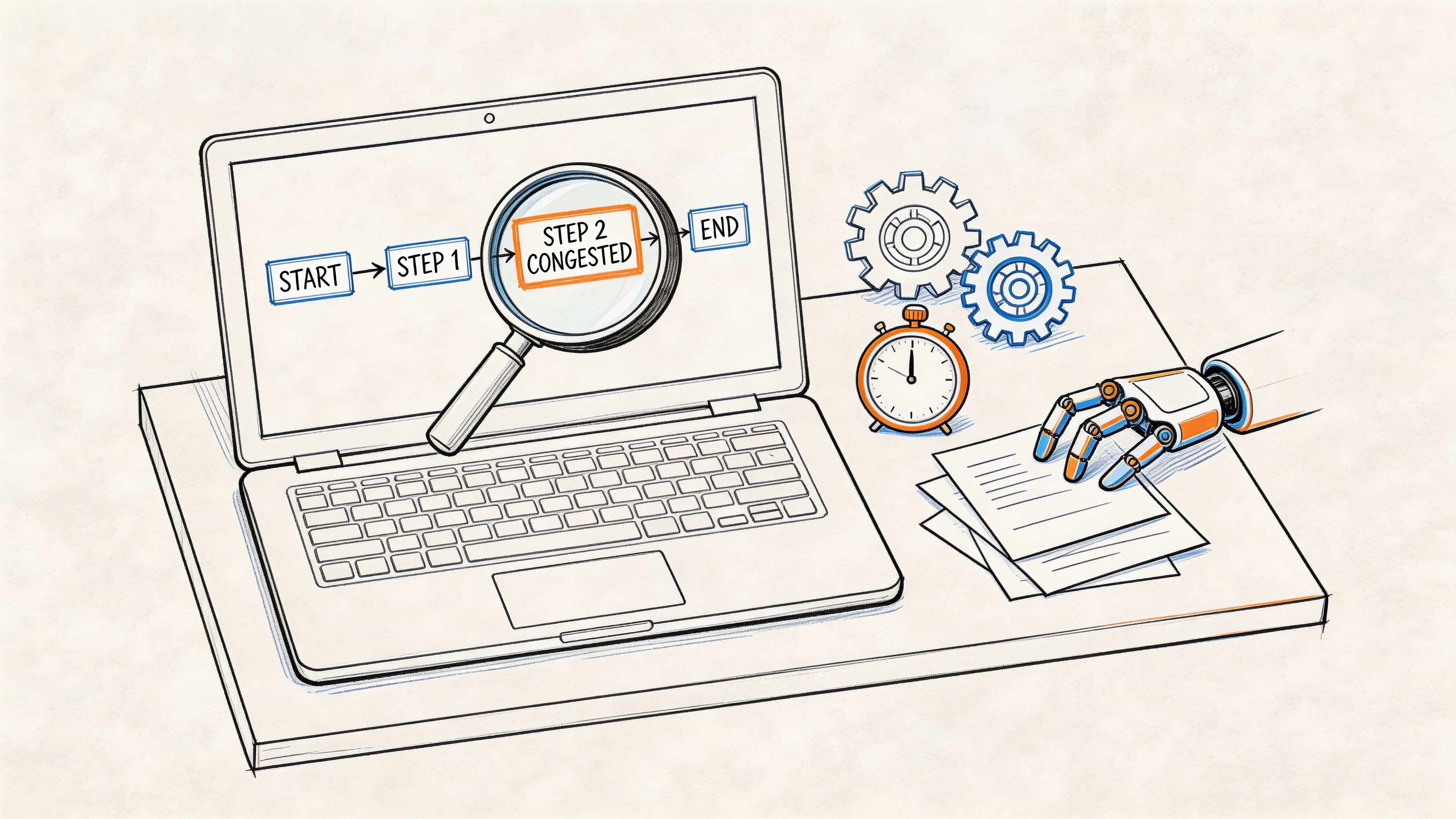
Your calendar says the daily scrum is fifteen minutes. Your team knows that. You know that. Yet somehow it turns into a half-hour status recital where one person explains Jira tickets in painful detail, two people are still joining the call, someone starts solving an API issue live, and everybody else checks Slack.
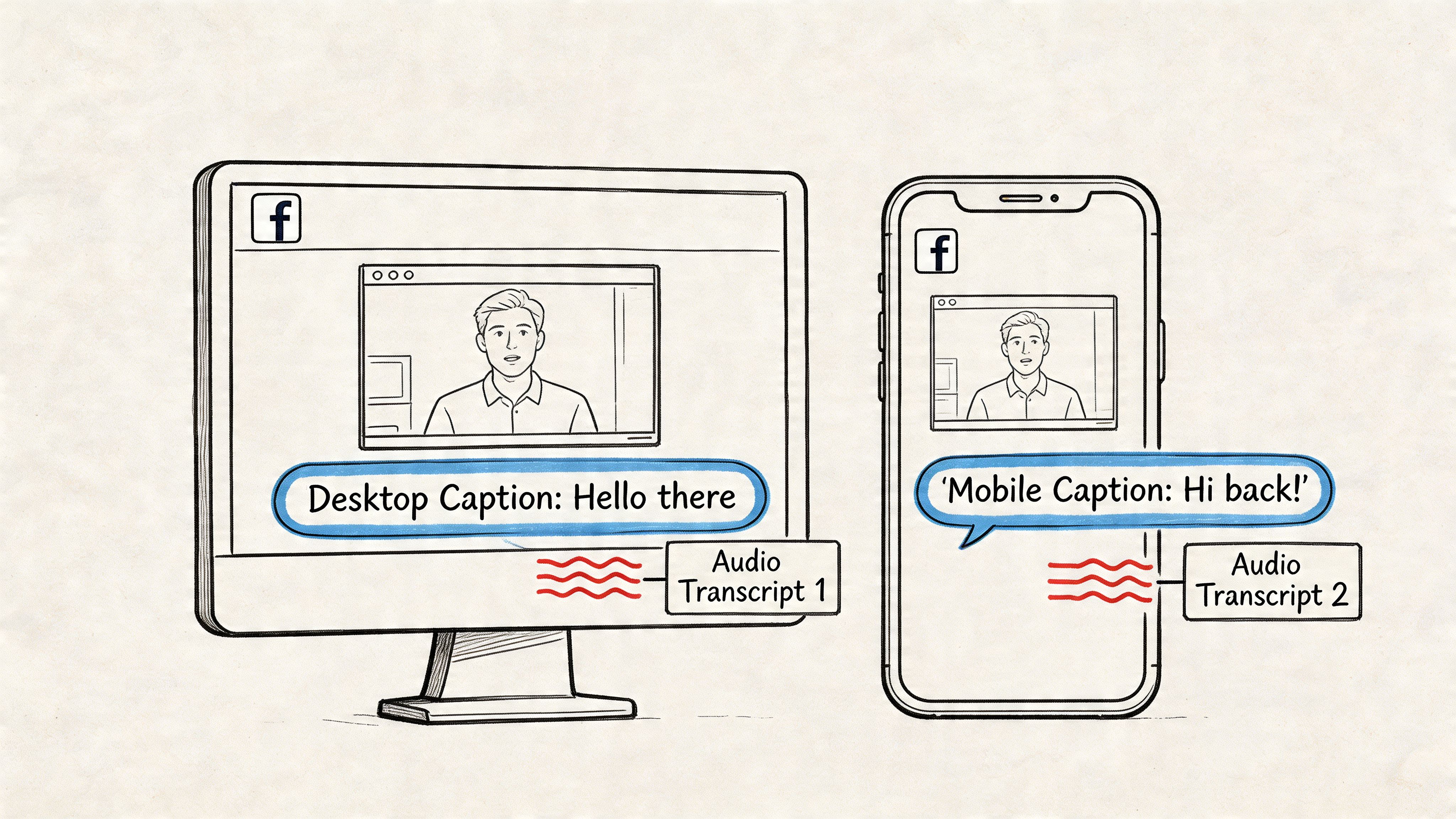
That version of the daily scrum drains energy because it asks people to attend a meeting that doesn't help them work. It feels repetitive, managerial, and disconnected from the sprint goal. In remote and hybrid teams, it gets worse. Cameras are off. The board isn't visible. Time zones split the team. Updates become fragmented, and blockers surface too late.
A good daily scrum meeting agenda fixes that. It gives developers a fast way to inspect progress, adapt the day's plan, and expose obstacles before they become sprint damage. Done well, it is one of the most impactful habits a Scrum team can build.
Why Your Daily Scrum Feels Like a Chore
Most bad daily scrums share the same symptoms. People talk to a manager instead of to each other. Updates sound like mini performance reviews. The meeting tries to solve every blocker in real time. By minute twelve, attention is gone. By minute twenty, people resent the ritual.
I've seen teams keep the ceremony but lose the purpose. They still meet every day, but nobody leaves with a clearer plan. The board hasn't moved, dependencies stay fuzzy, and the same blocker appears three mornings in a row because no one owns the follow-up.
That failure usually starts with one basic mistake. The meeting stops being a team coordination tool and becomes a broadcast.
A daily scrum should help the team decide how to make the next twenty-four hours count.
The timebox matters because it forces discipline. The daily scrum is strictly time-boxed to 15 minutes, and Resolution's summary of Scrum Institute research says that teams that stick to that limit see a 30% increase in productivity along with stronger collaboration. The number matters less than the mechanism. Short meetings require clear updates, active listening, and deferred deep dives.
What chore-like scrums usually look like
- Status theater: People narrate activity instead of discussing movement toward the sprint goal.
- Problem-solving detours: One blocker swallows the whole meeting.
- Passive attendance: Team members wait for their turn rather than listening for dependencies.
- No follow-through: Blockers get mentioned, then disappear into the void.
- Remote drift: On video calls, weak facilitation turns silence into disengagement fast.
If your daily scrum feels stale, you probably don't need a new ritual. You need a cleaner agenda, firmer facilitation, and a format that fits how your team works now.
The Foundation of an Effective Daily Scrum
The daily scrum only works when the team agrees on what it is and what it isn't. It is not a management status meeting. It is a short planning conversation for the people doing the work. The developers use it to inspect progress toward the sprint goal and adjust the plan for the day.
That distinction sounds small, but it changes behavior immediately. When people think they're reporting upward, they optimize for sounding busy. When they know they're coordinating with peers, they surface risks earlier and ask for help sooner.
Transparency inspection and adaptation in real terms
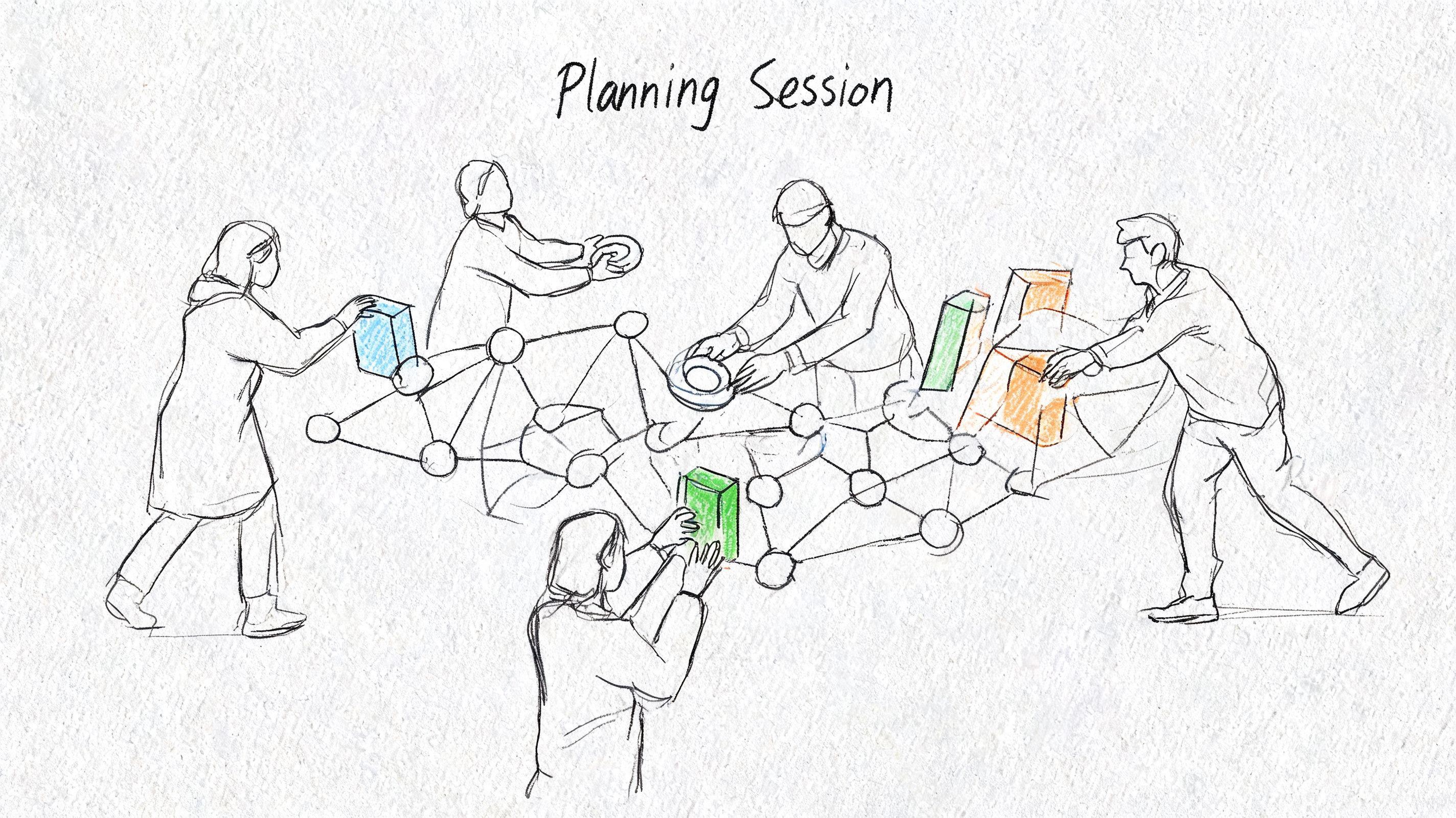
Scrum language gets abstract fast, so it helps to translate it into what happens in the room or on the call.
| Pillar | What it means in a daily scrum | What it doesn't mean |
|---|---|---|
| Transparency | Everyone can see where work stands, what changed, and what's blocked | Reading a ticket list aloud |
| Inspection | The team checks whether current work still supports the sprint goal | Auditing individual effort |
| Adaptation | People change the day's plan based on new information | Waiting until tomorrow to react |
A solid daily scrum meeting agenda should make those three things visible in minutes. If it doesn't, the team is spending time without gaining control.
Who does what
The cleanest daily scrums are clear on roles.
- Developers participate actively: They share progress, surface blockers, and adjust their plan together.
- The Scrum Master facilitates when needed: They protect the format, coach the team away from anti-patterns, and help remove impediments after the meeting.
- The Product Owner may attend: Useful when quick context helps, but they shouldn't dominate.
- Stakeholders can observe: If they turn the meeting into a reporting session, the format breaks.
Practical rule: If people are speaking to the loudest person in the room instead of to the team, the daily scrum has already gone off track.
The operating rules should be simple. Meet at the same time when possible. Keep the board visible. Talk in relation to the sprint goal. Save problem-solving for after the scrum with only the relevant people. If your team needs a refresher on basic meeting discipline, these rules for a meeting are a useful baseline.
What good looks like
A strong daily scrum has a distinct feel. It is brief, specific, and slightly forward-leaning. People talk about what changed, what matters today, and where help is needed. Nobody performs. Nobody rambles. Nobody mistakes attendance for alignment.
When teams get that foundation right, the actual agenda becomes much easier to run.
Crafting Your 15-Minute Agenda Template
Teams should choose one of two formats and stick with it long enough to build muscle memory. The first is the classic three-question structure. The second is walking the board. Both can work. The wrong move is blending them into a mushy check-in that has no clear flow.
The classic format is popular for a reason. LogRocket's overview of the daily scrum notes that the three-question agenda, introduced in the first Scrum Guide in 2010, is used by over 90% of agile teams as their core structure for daily synchronization.
Option one with the classic three questions
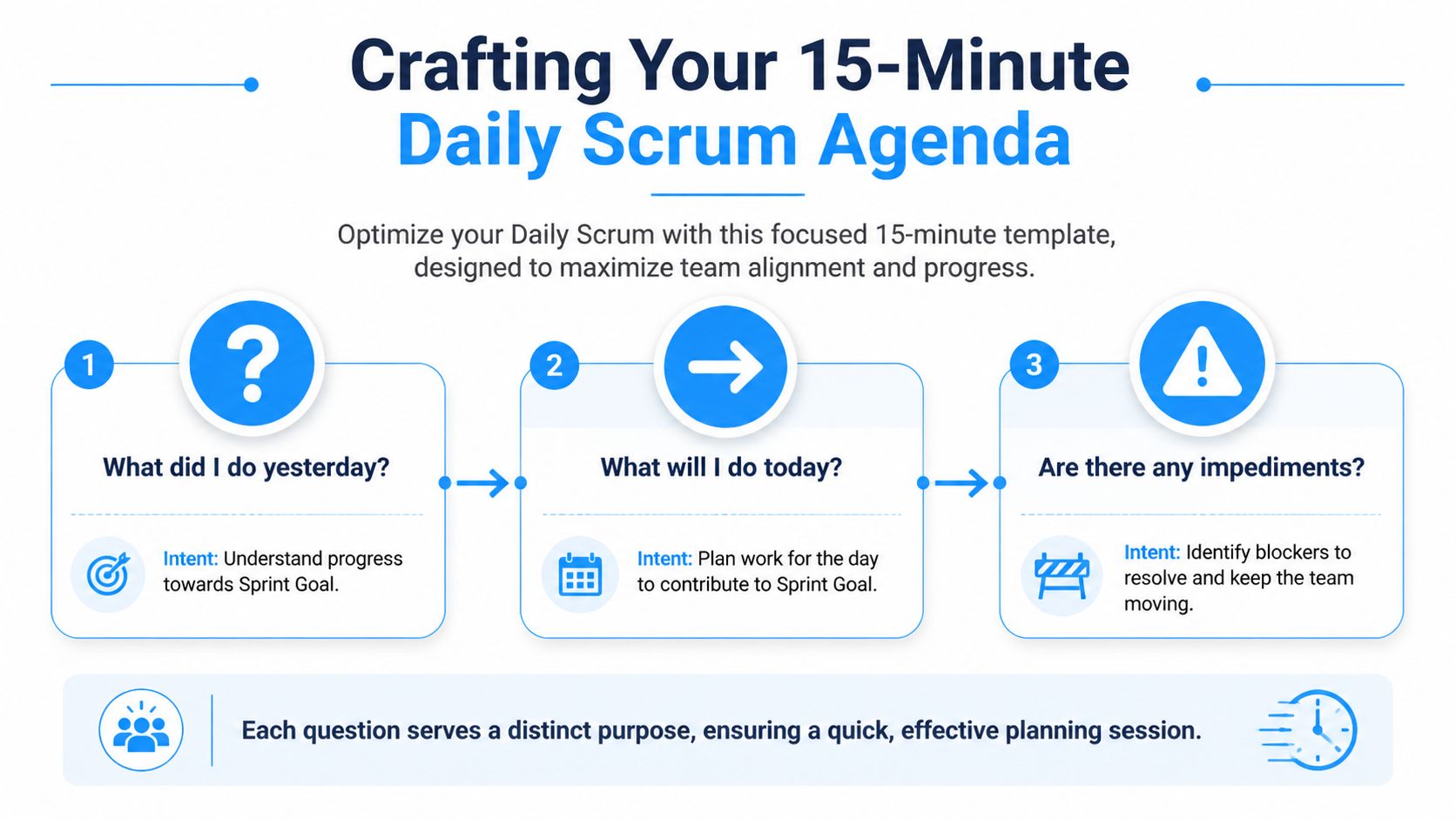
This works best when the team is still learning how to keep updates concise or when work is highly interdependent but not easily visualized from a board alone.
What did I accomplish yesterday toward the sprint goal?
What will I do today toward the sprint goal?
What impediments are blocking me?
The wording matters. "Toward the sprint goal" keeps the update anchored in value, not busyness. If someone says, "I answered emails and cleaned up some notes," the natural follow-up is whether that moved sprint work forward. That isn't harsh. It's clarifying.
Use this format well by tightening the intent behind each question:
- Yesterday: Share completed movement that matters to the team, not every task touched.
- Today: State the most relevant next move so teammates can spot overlap or dependency.
- Impediments: Name blockers plainly enough that the right people can stay after and resolve them.
Option two with walking the board
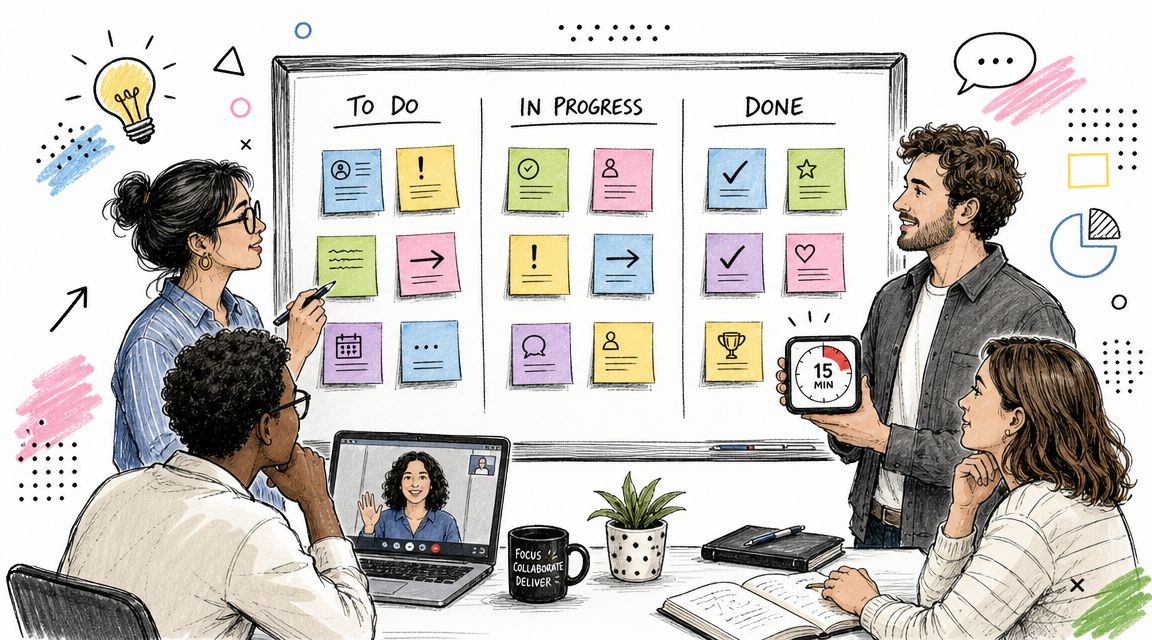
Walking the board works better for teams with a mature visual workflow, especially when work-in-progress is creeping up and finishing matters more than starting. Instead of going person by person, the team reviews items on the board from right to left, usually starting closest to done.
That sequence changes the conversation. It asks, "What needs to happen to get this item finished?" instead of, "What did each individual do?" That tends to pull attention toward flow, handoffs, and stuck work.
A simple comparison makes the trade-off clear:
| Format | Best for | Watch out for |
|---|---|---|
| Three questions | Teams building daily scrum discipline, mixed experience levels, less visual workflows | Can drift into personal status updates |
| Walking the board | Teams with a clear board, strong collaboration habits, focus on finishing work | Can ignore hidden blockers if facilitation is weak |
If your team already lives in Jira, Azure DevOps, Trello, or Linear, walking the board often feels more natural than round-robin updates. If your meetings still meander, a simple check-in meeting structure can help you reset the cadence.
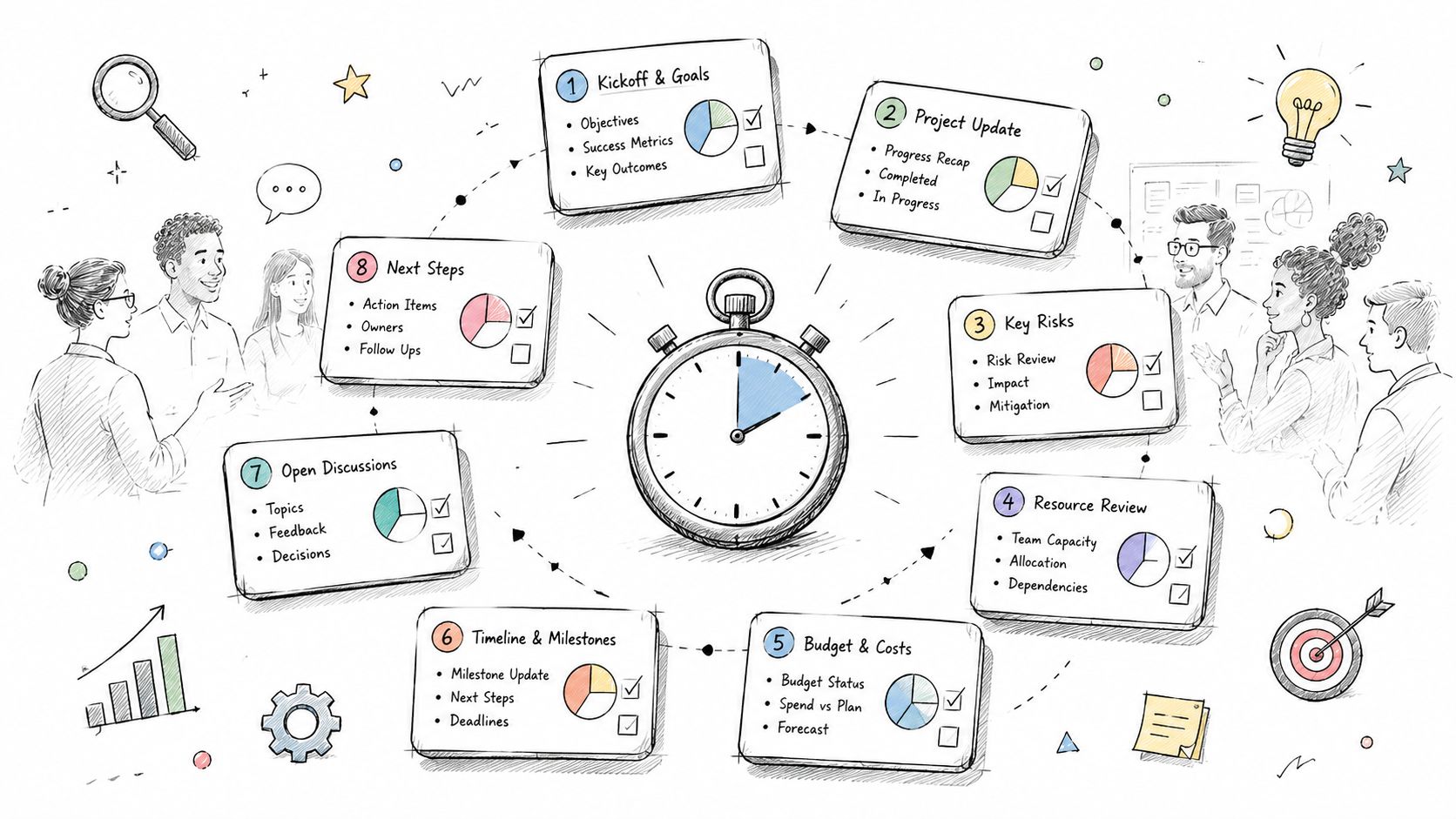
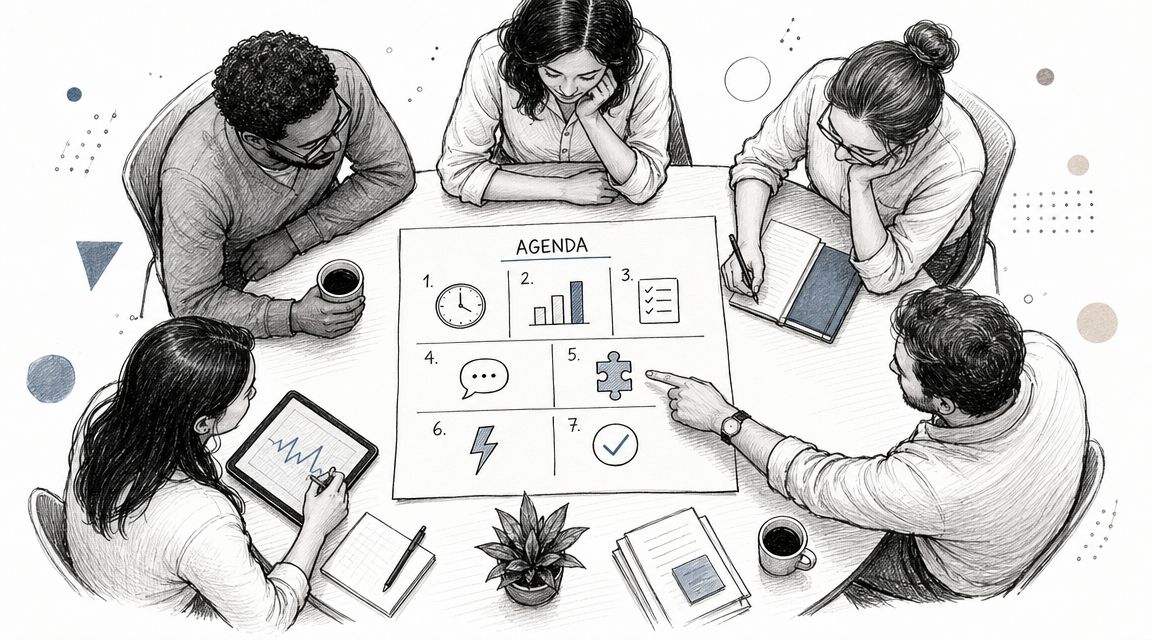
A usable 15-minute template
Try this structure:
- Open with the sprint goal
Keep it visible. One sentence is enough. - Run one format only
Don't switch mid-meeting. - Capture blockers without solving them
Name owners for follow-up. - End with immediate coordination
Clarify who syncs after the call.
Don't ask for complete histories. Ask for what's changed since the last scrum that affects today's plan.
A daily scrum meeting agenda isn't good because it is standard. It's good when it helps the team make better decisions before work starts.
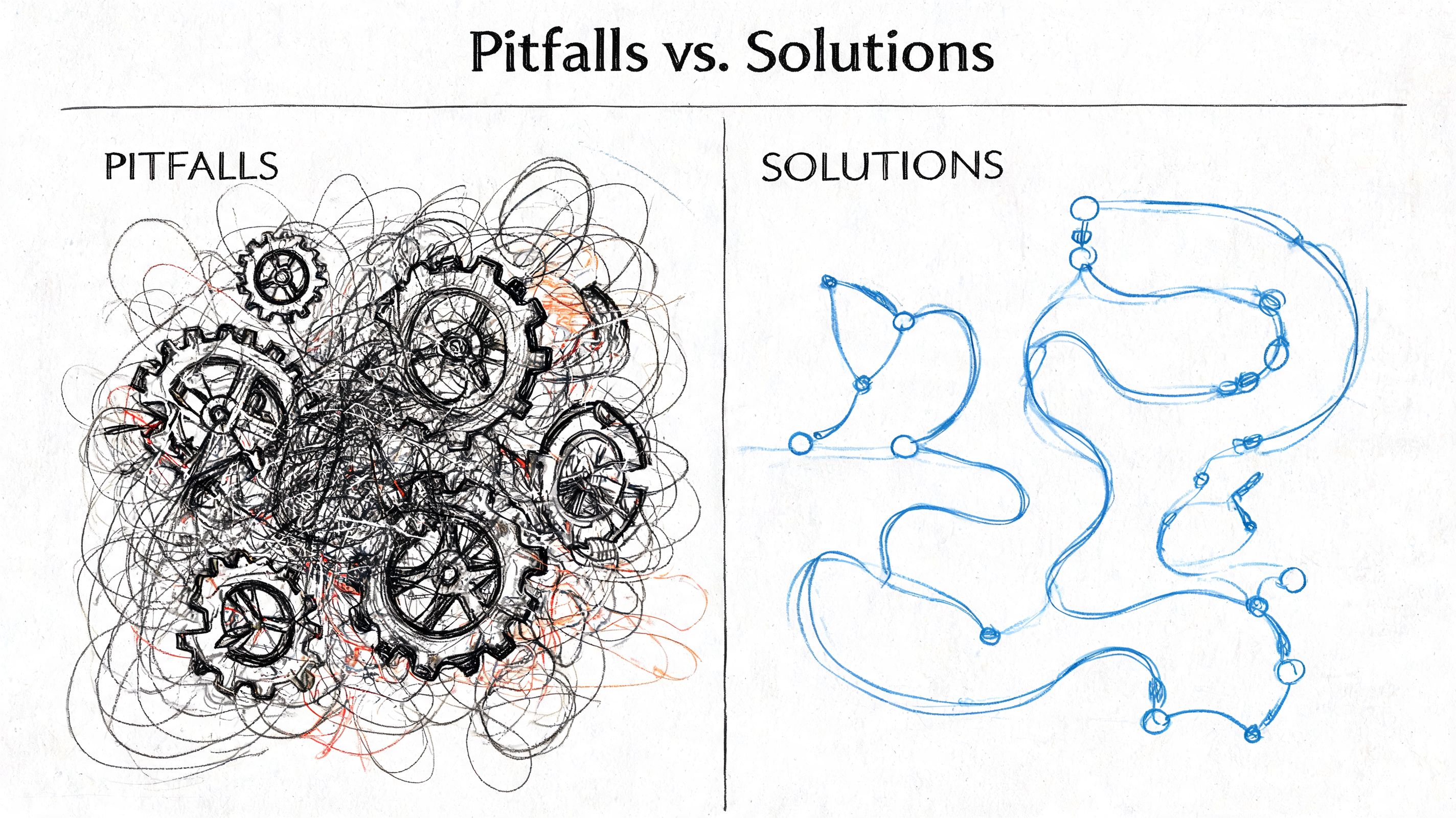
Common Daily Scrum Pitfalls and How to Sidestep Them
Most daily scrum failures aren't mysterious. They are predictable habits that teams tolerate until the meeting loses all value. Once you can name the anti-pattern, it becomes much easier to correct.
Mountain Goat Software's guidance on daily scrums calls out two of the biggest problems. Teams drift into problem-solving discussions in 60% of non-disciplined teams, and report-outs to absent managers can reduce psychological safety by 40%. The fix is straightforward. Use a parking lot for follow-ups and rely on Scrum Master facilitation to keep the meeting on track.
Anti-pattern one with problem-solving in the meeting
This is the classic derailment. Someone mentions a blocker. Two engineers start debugging live. The rest of the team watches a conversation that doesn't involve them.
Use a parking lot instead. Write down the issue, note who needs to stay back, and move on.
- Call the issue out: "This needs a follow-up after the scrum."
- Assign the right people: Not everyone needs to stay.
- Keep the promise: If the follow-up never happens, the team stops trusting the parking lot.
Anti-pattern two with updates aimed at management
When people talk as if they are defending their day, the daily scrum becomes theater. You can hear it in the language. Long explanations. Defensive detail. Lots of "I was busy with..." and very little about team movement.
The correction is behavioral, not technical.
| Bad signal | Better prompt |
|---|---|
| "Tell me what you worked on" | "What changed that affects the sprint goal?" |
| "Why isn't this done yet?" | "What's blocking progress and who can help?" |
| "Give us a status update" | "What should the team know before we start today?" |
Anti-pattern three with routine lateness and overrun
A scrum that starts late teaches the team that the ceremony is optional. A scrum that overruns every day teaches the team that the timebox is fake.
Fix that with a few blunt rules:
- Start on time: Don't wait for the last person.
- Keep updates short: If someone needs context every day, the board or backlog likely needs cleanup.
- Use a visible timer: It changes behavior without constant policing.
If a daily scrum regularly needs more than the allotted time, the meeting usually isn't the core problem. The workflow is.
Anti-pattern four with disengaged remote attendees
Hybrid teams create a special kind of dead air. The people in the room talk to each other. The people on video become tiny boxes. Nobody notices that one teammate hasn't said anything useful for three days.
Scrum Masters can reduce that by being deliberate:
- Make the board the focal point: Not the conference table.
- Rotate speaking order: Especially when the same people always go first.
- Ask for crisp blocker language: "Waiting on QA access" is actionable. "Still sorting something out" is not.
The daily scrum doesn't need charisma. It needs discipline, clarity, and a format people can trust.
Adapting the Daily Scrum for Remote and Hybrid Teams
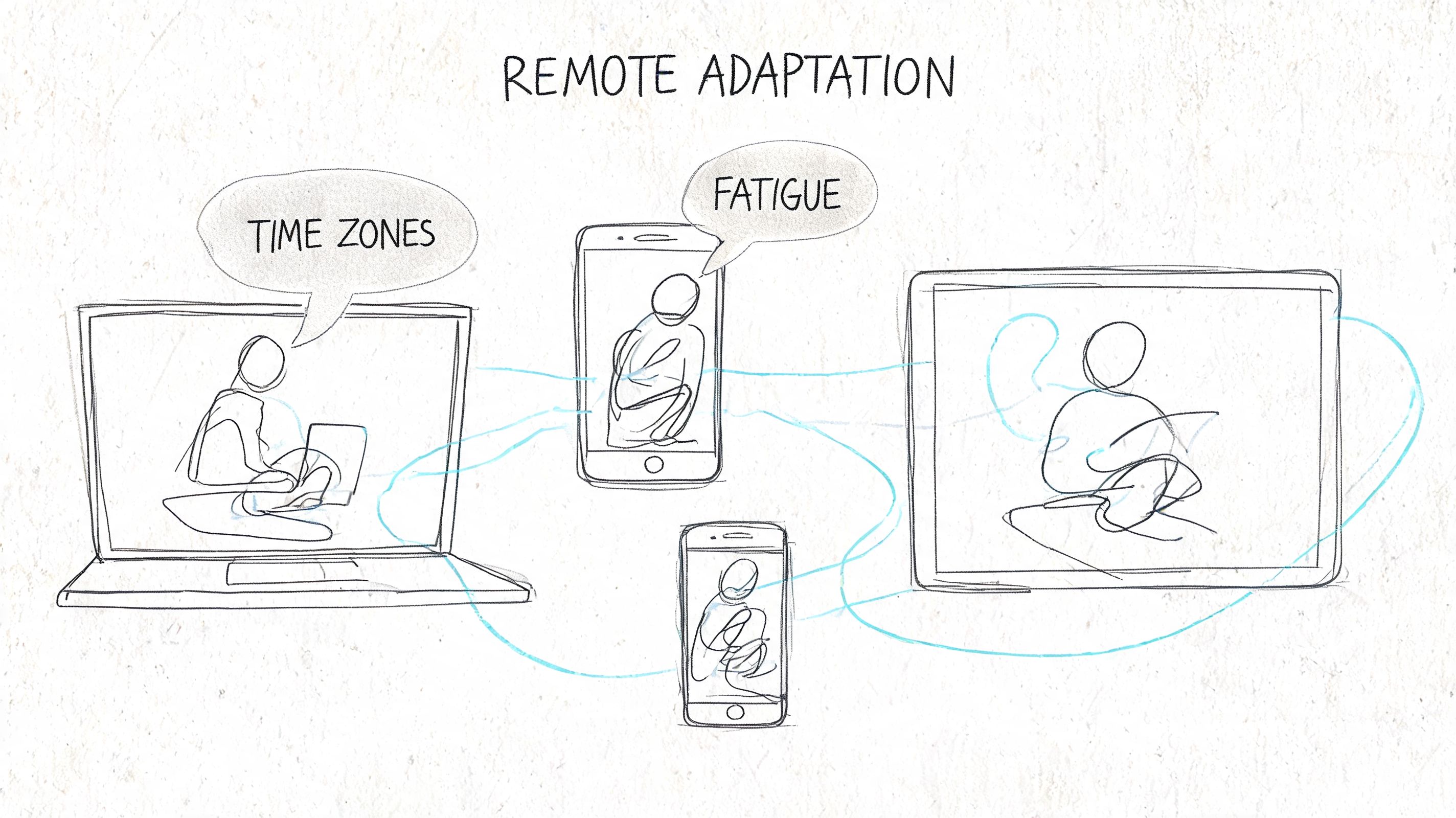
Remote and hybrid teams break a lot of old stand-up assumptions. People aren't gathered around one physical board. Working hours don't always overlap. Video calls stack up. By the time the daily scrum starts, some team members are already drained.
That doesn't mean the daily scrum meeting agenda stops mattering. It means the format has to match reality.
What changes in distributed teams
In person, weak facilitation can sometimes hide behind physical presence. Remote, every flaw becomes obvious. If the board isn't shared, people lose the thread. If half the team joins outside their best working hours, updates get mechanical. If every issue requires a live meeting, time zones start dictating who gets heard.
The answer isn't to abandon the ritual. It's to separate what must be synchronous from what can be asynchronous.
A practical hybrid approach looks like this:
- Synchronous for coordination: Use live time for blocker triage, fast decisions, and dependency checks.
- Asynchronous for raw updates: Let people submit progress notes before the meeting window.
- Shared workspace for visibility: Keep updates tied to the board, not buried in chat threads.
When async stand-ups actually make sense
Async stand-ups are often treated like a fallback. For distributed teams, they can be the best option if they are designed well. The common failure is that teams replace a live scrum with a Slack thread and assume transparency will somehow survive.
It usually doesn't. Text updates get skimmed. Blockers lack context. Nobody reviews patterns across days. Important details disappear into scrollback.
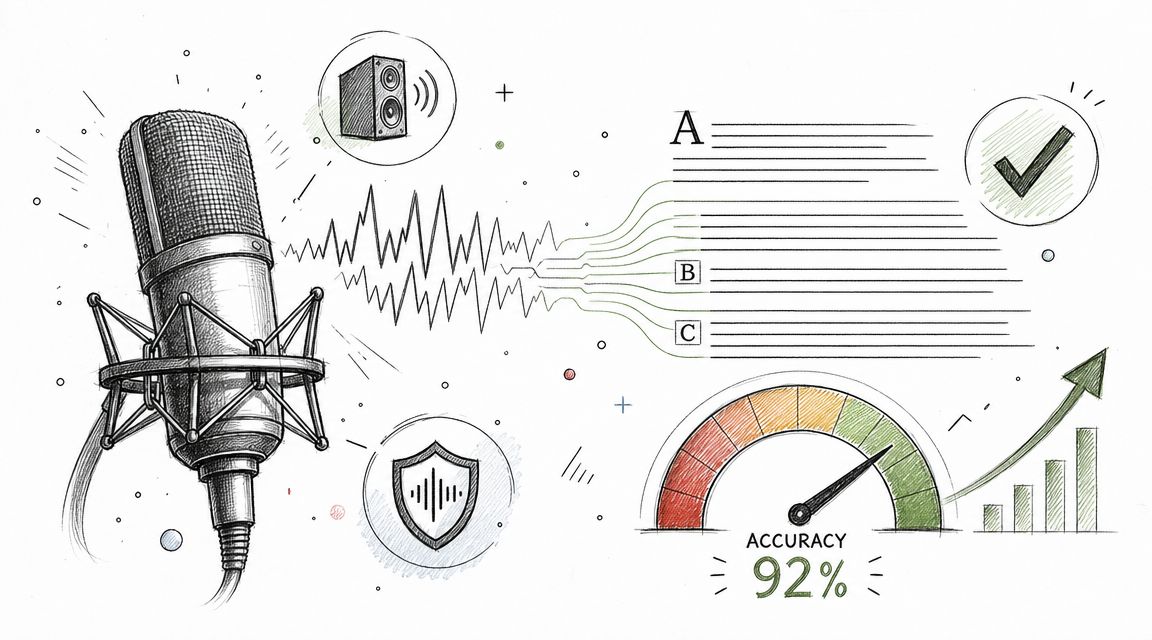
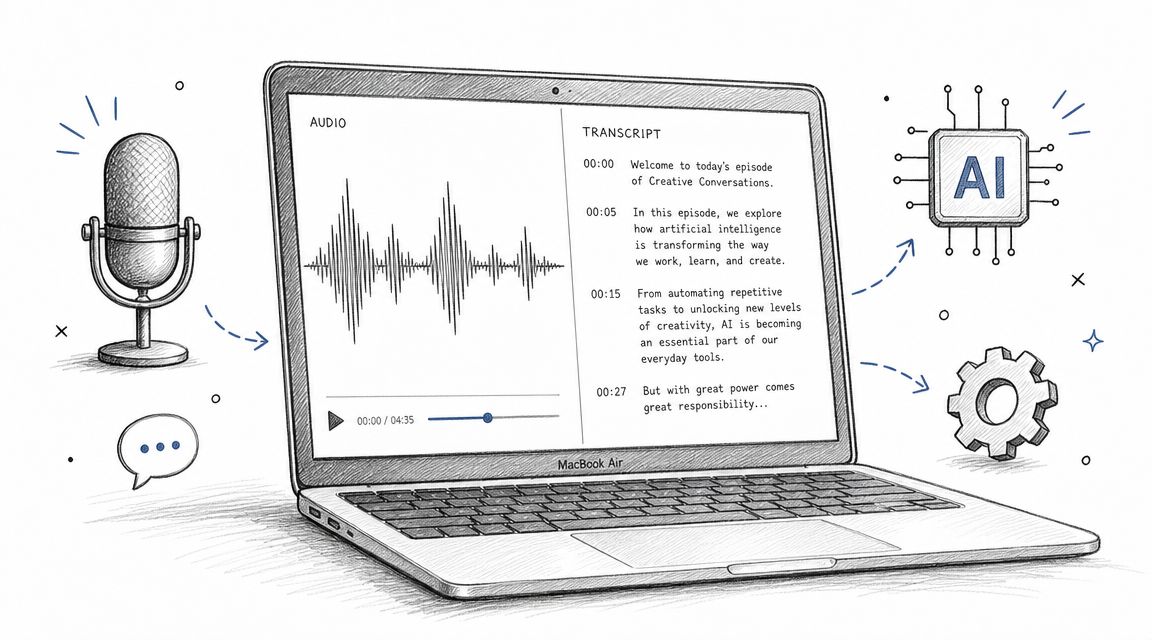
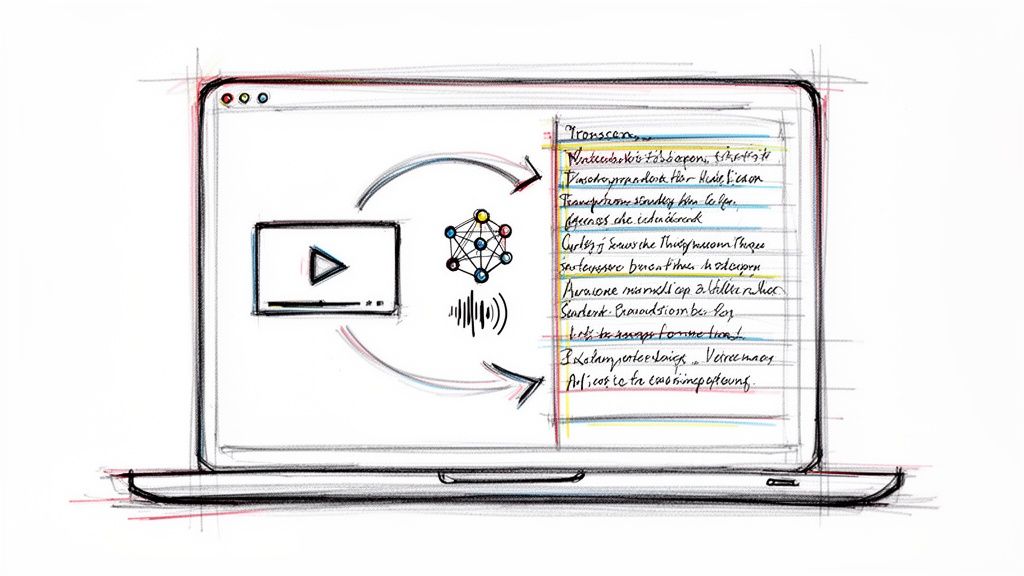
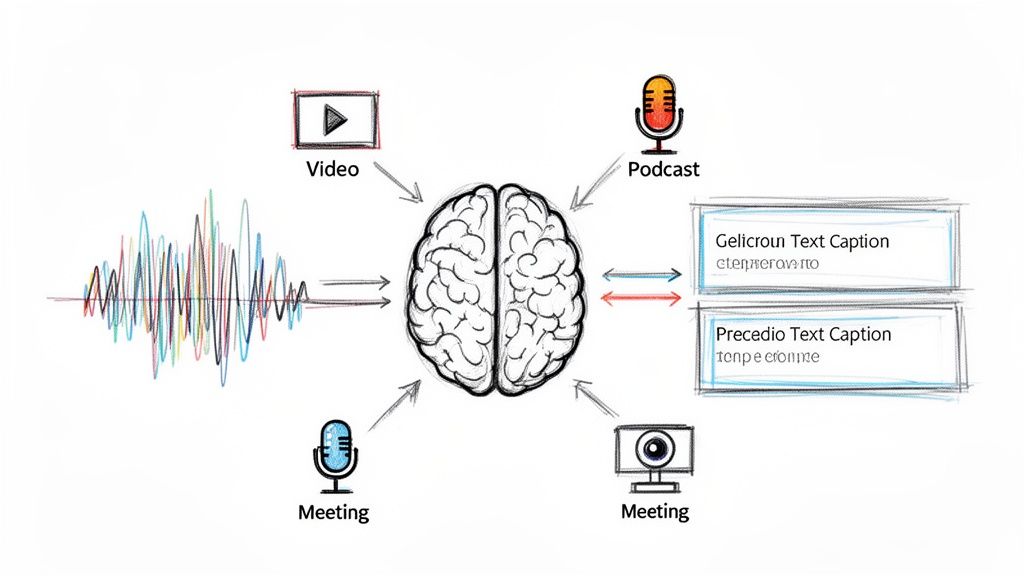
Spinach's discussion of scrum agendas points out that existing guidance on asynchronous scrums often lacks detail on how to preserve transparency and problem-solving. A better approach is to use AI transcription and summarization on short audio or video updates so unstructured communication becomes searchable and analyzable.
A workable async model is simple:
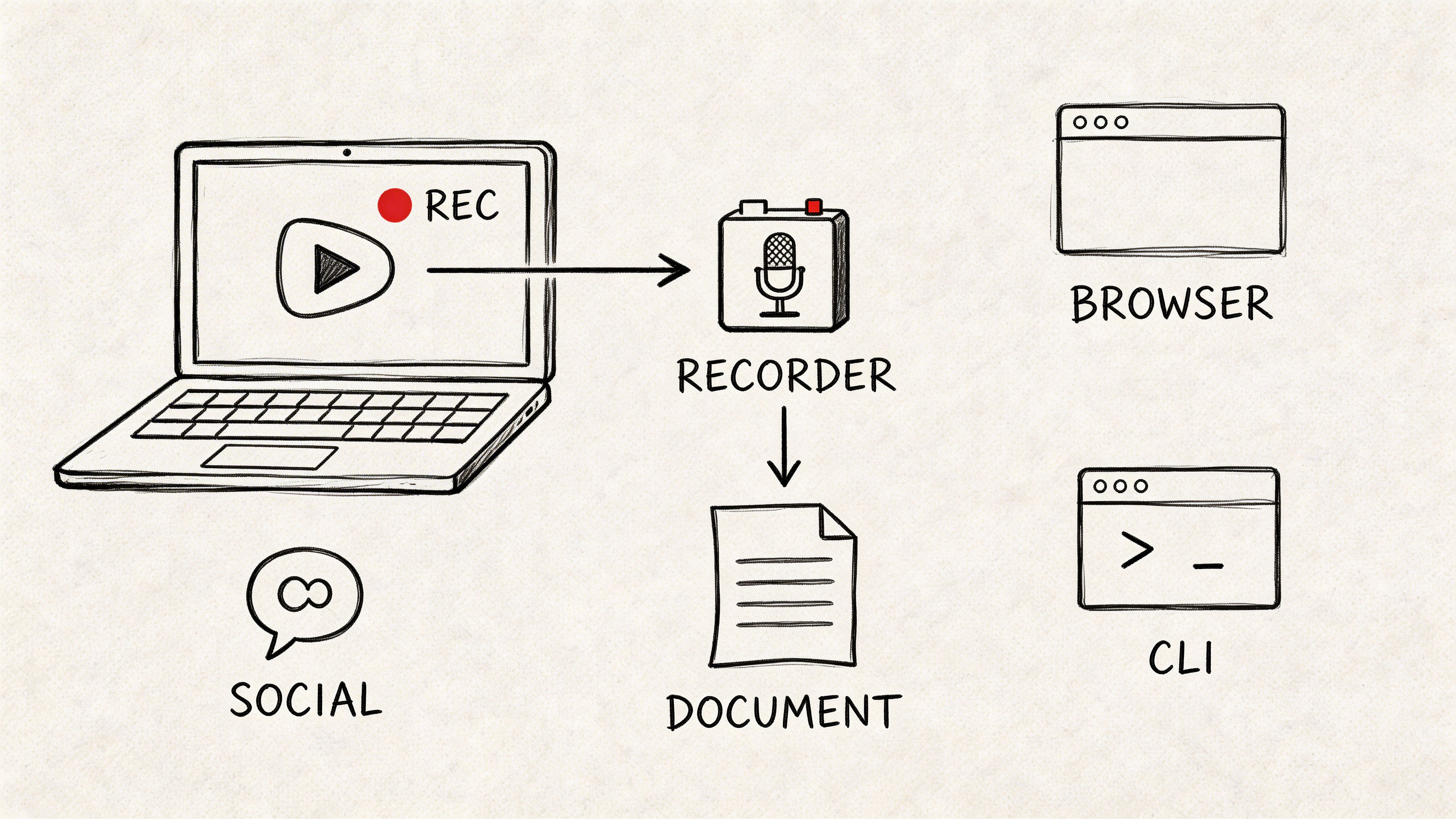
- Each team member records a short update
Audio or video is often faster and clearer than typing. - The update follows a fixed prompt
Progress, plan, blocker. - The team reviews a summary before overlap hours
That keeps live time focused on decisions, not recaps. - Only blocker owners join a short follow-up
Everyone else gets their time back.
To see how teams explain and coach distributed stand-up habits in practice, this short video gives a useful reference point:
A remote-friendly playbook that holds up
Remote teams need more than etiquette. They need structure that reduces ambiguity.
| Situation | Better move |
|---|---|
| Limited overlap hours | Collect async updates first, then run a shorter live blocker session |
| Hybrid room plus remote callers | Share the board on screen for everyone, even the people in the room |
| Frequent context loss | Keep a written summary tied to each day's updates |
| Repeated blockers across days | Review trends in retrospectives, not just single incidents |
The strongest remote teams treat the daily scrum as a coordination system, not a call on the calendar. They make updates easy to submit, easy to review, and easy to act on. That's the difference between "we checked in" and "we adapted."
Beyond the Meeting Capturing Notes and Action Items
A weak daily scrum leaves behind nothing except vague memory. Somebody mentioned a blocker. Someone else offered help. There was a side topic that needed follow-up. By lunchtime, half of it is gone.
That is why manual note-taking often fails. The Scrum Master shouldn't have to split attention between facilitation and transcription. Team members shouldn't have to choose between listening and documenting. When people type frantically during the scrum, the meeting gets worse for everyone.
Why manual notes create friction
Manual notes usually break in predictable ways:
- They miss nuance: Shortcuts and paraphrasing strip out context.
- They depend on one person: If that person is absent, the record disappears.
- They aren't searchable enough: Teams rarely revisit scattered notes when patterns emerge.
- They separate action from evidence: The blocker list ends up in one place, the details in another.
What a better capture process looks like
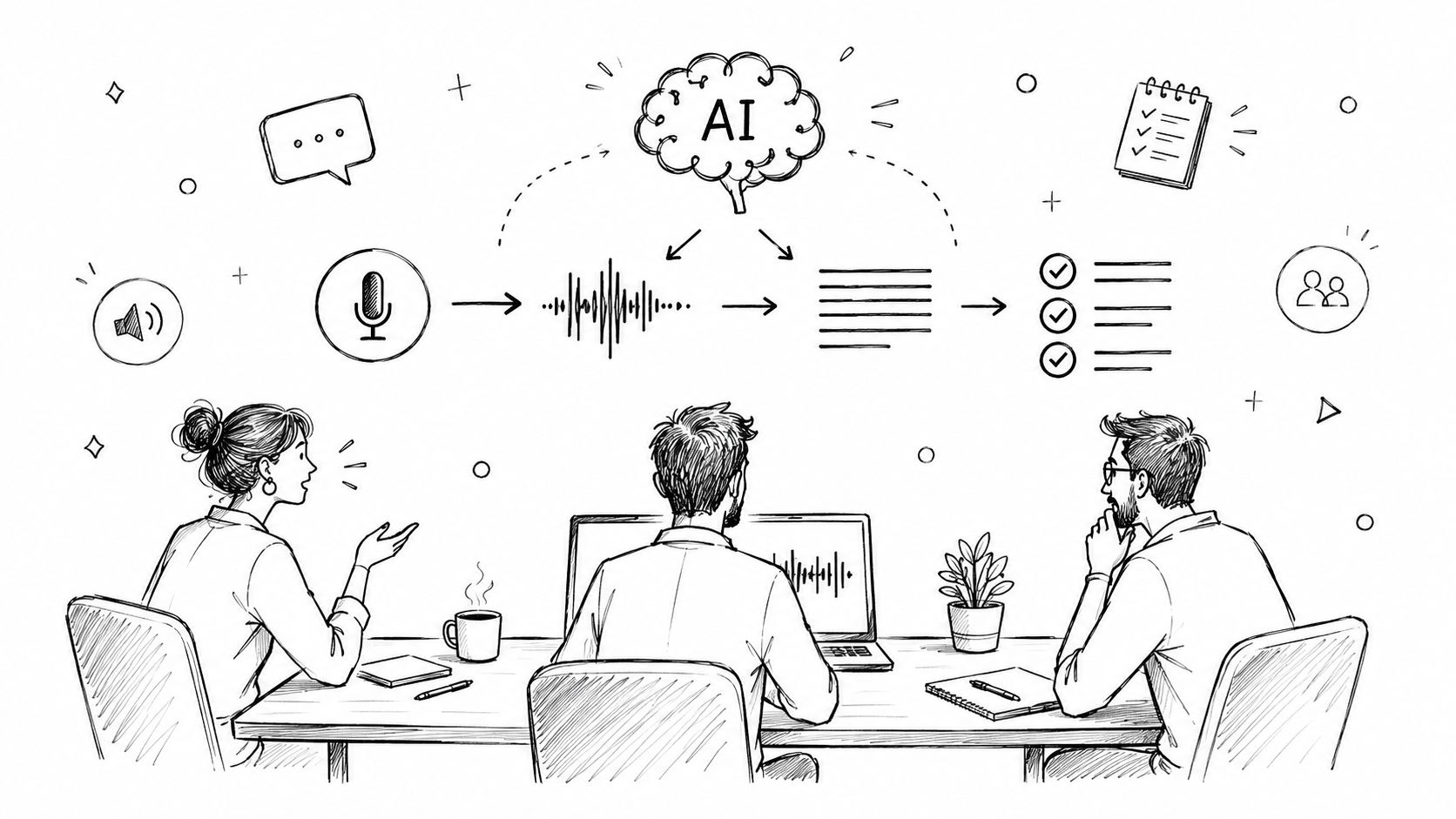
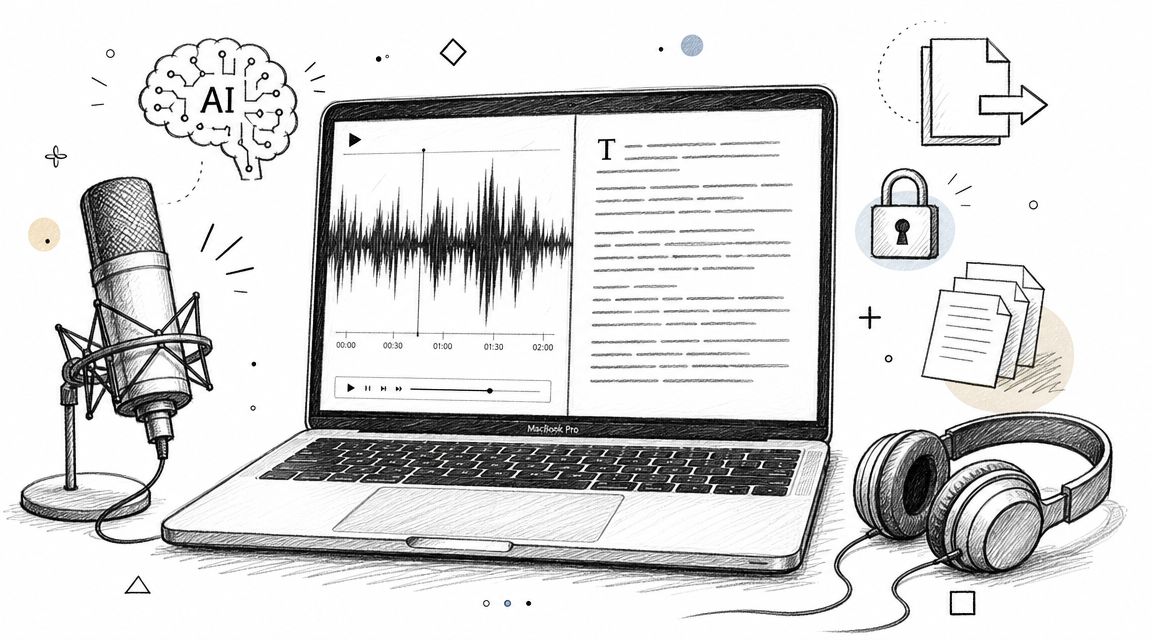
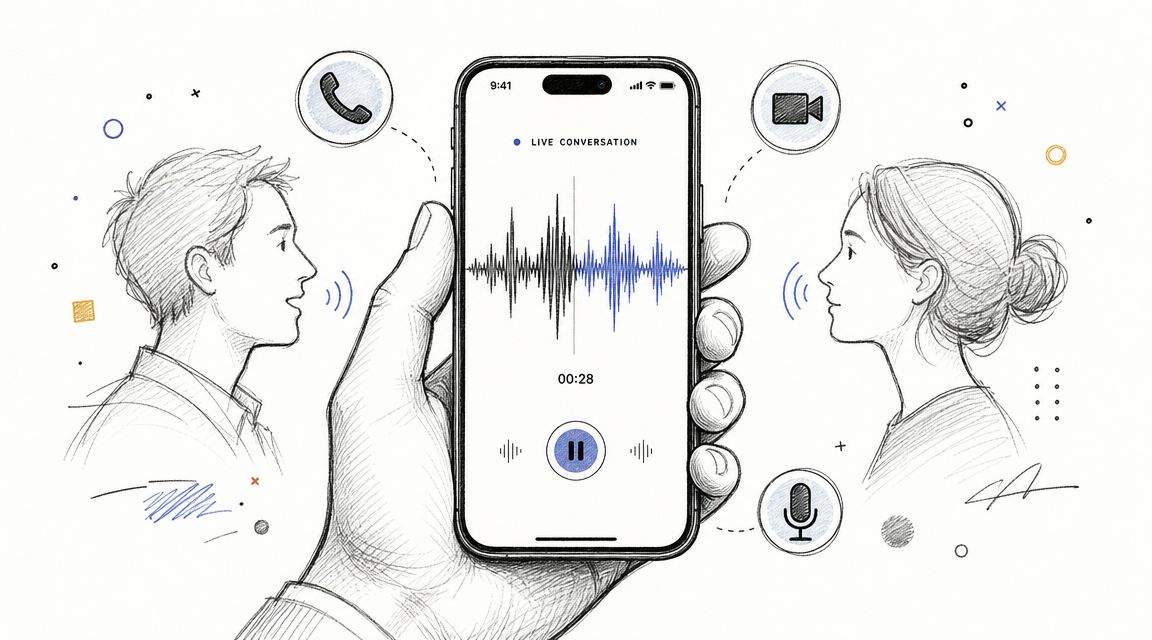
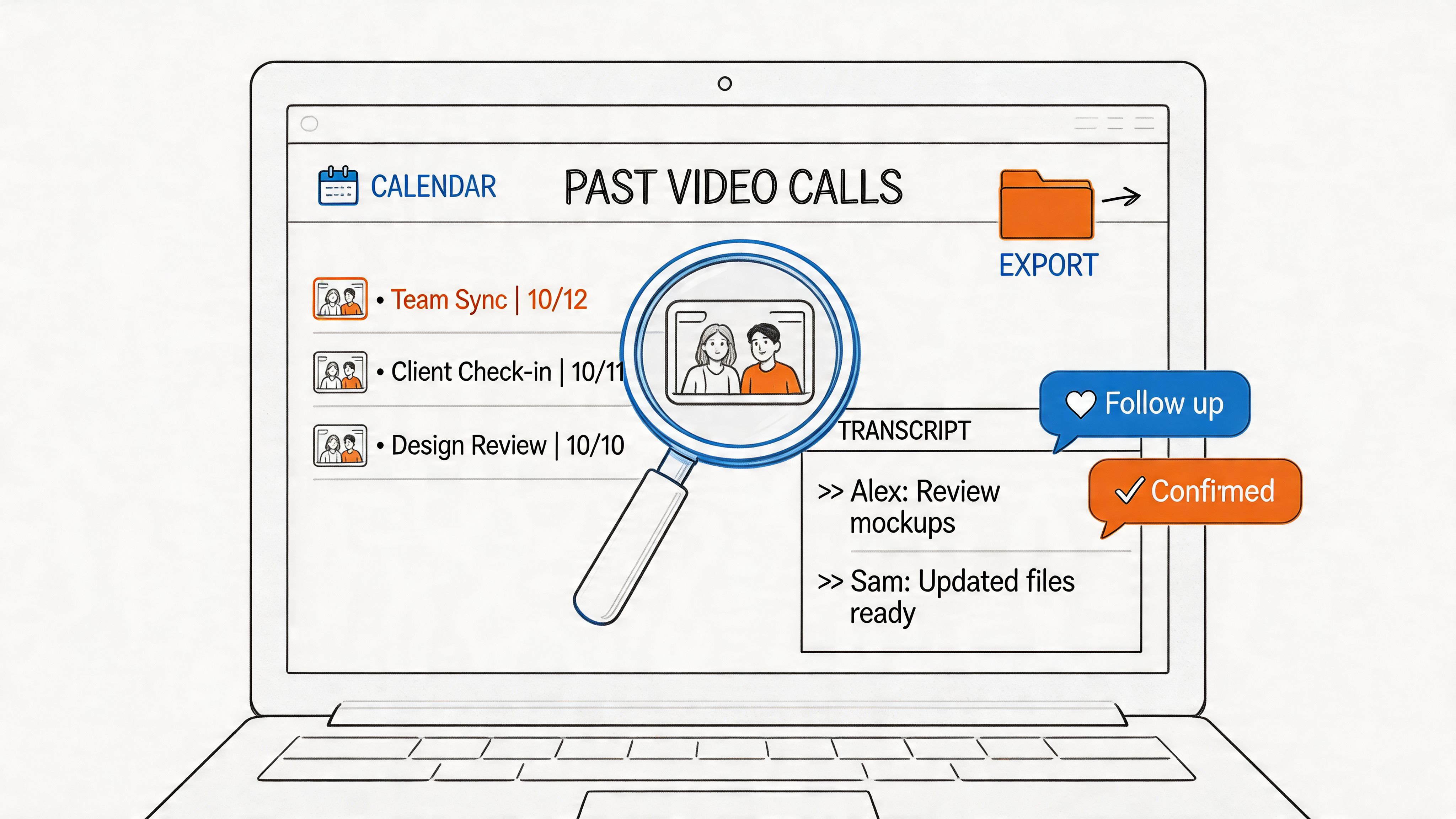
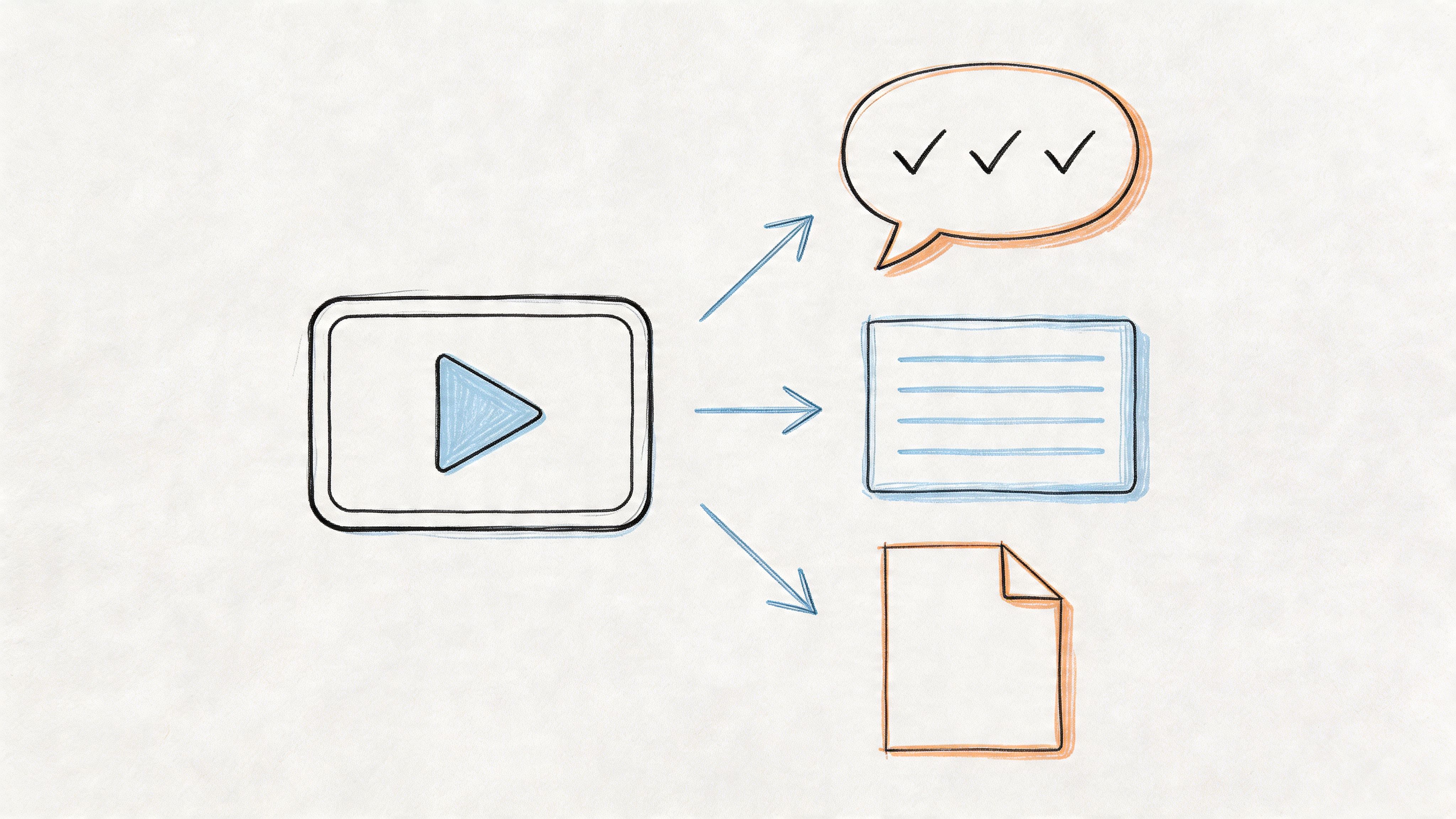
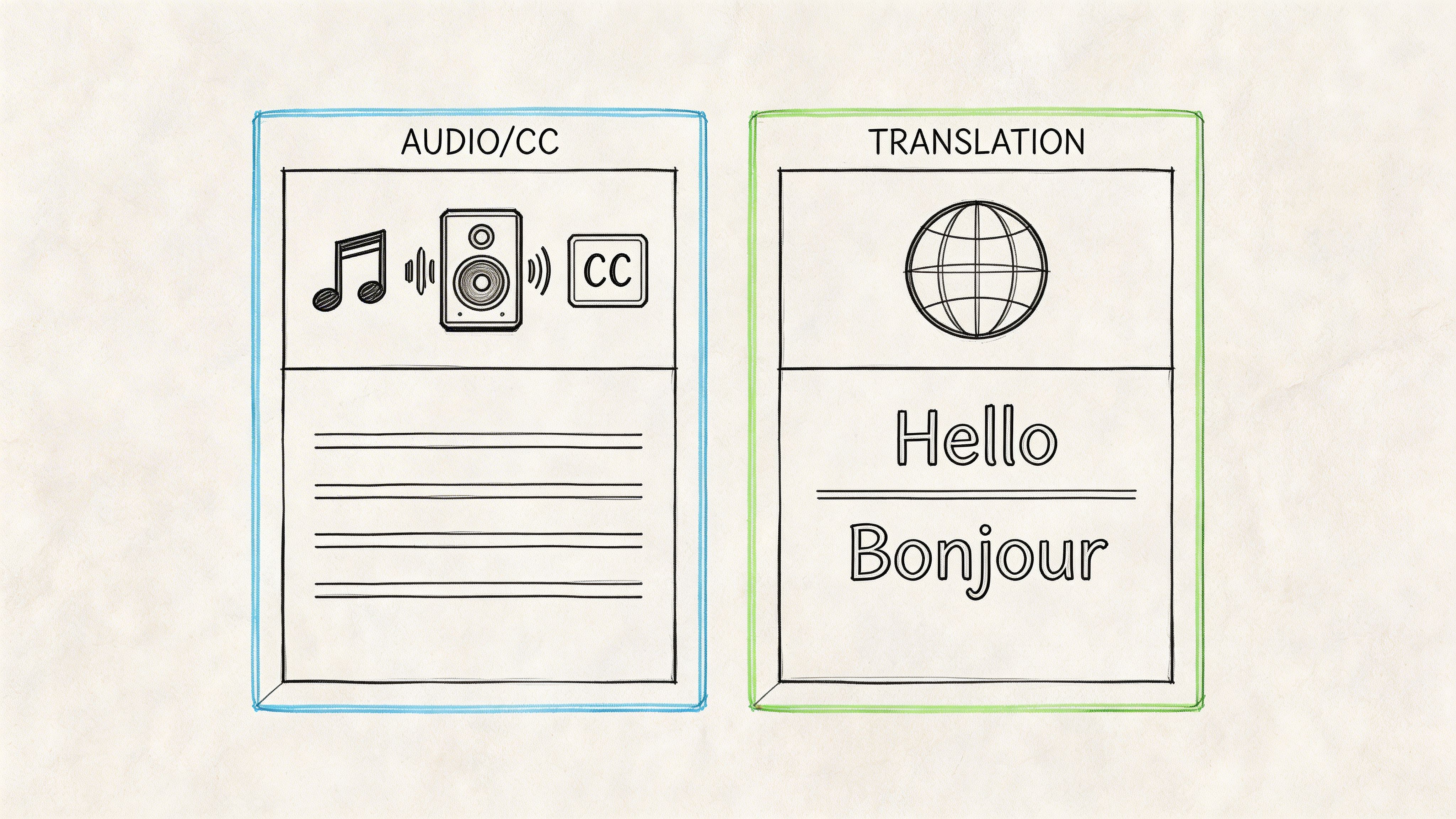
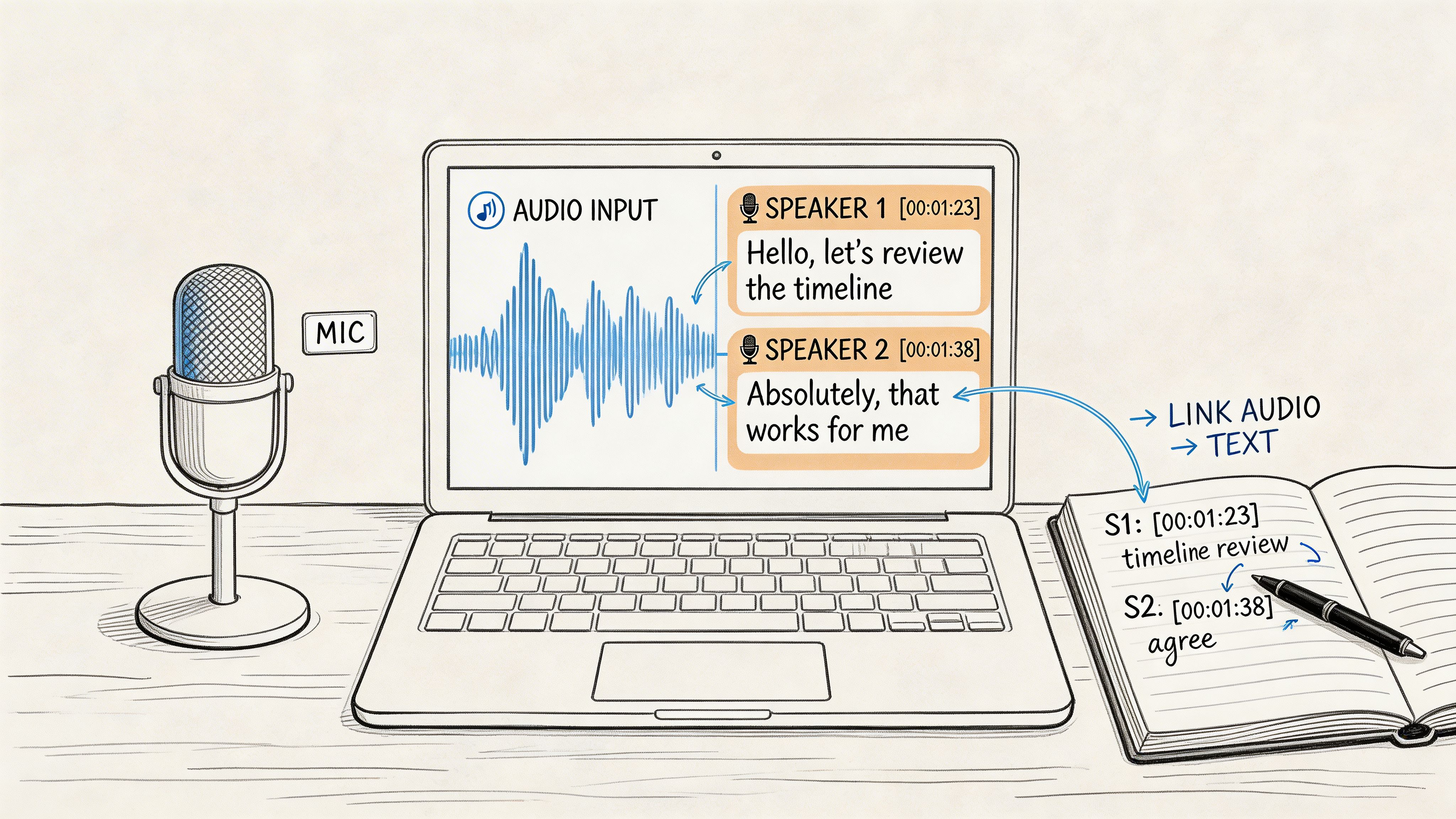
For remote and hybrid teams, recording the conversation and turning it into a transcript and summary is far more reliable. That approach does three useful things at once. It preserves the discussion, keeps people present during the meeting, and creates a usable record for follow-up.
A good output after the scrum should include:
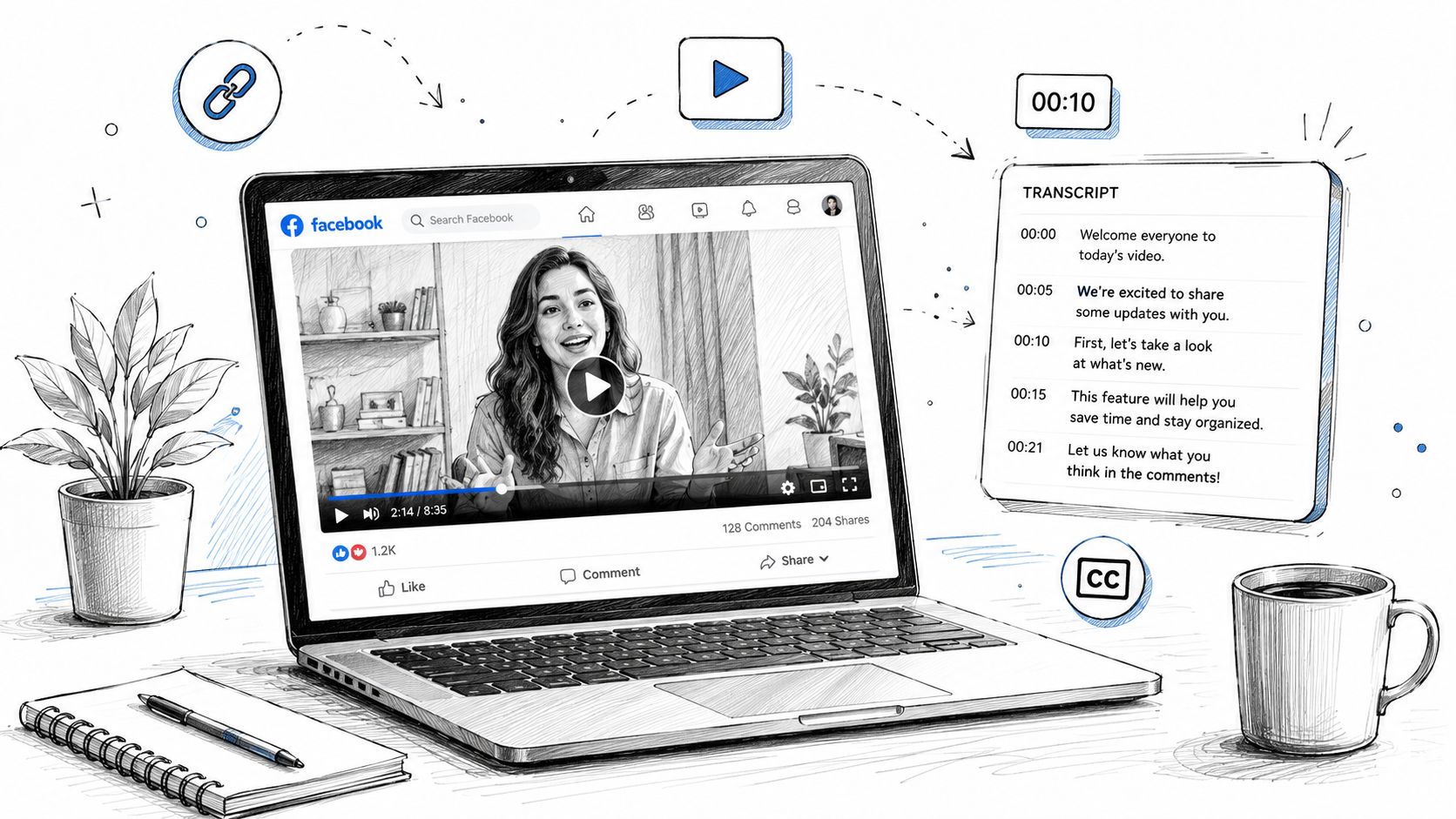
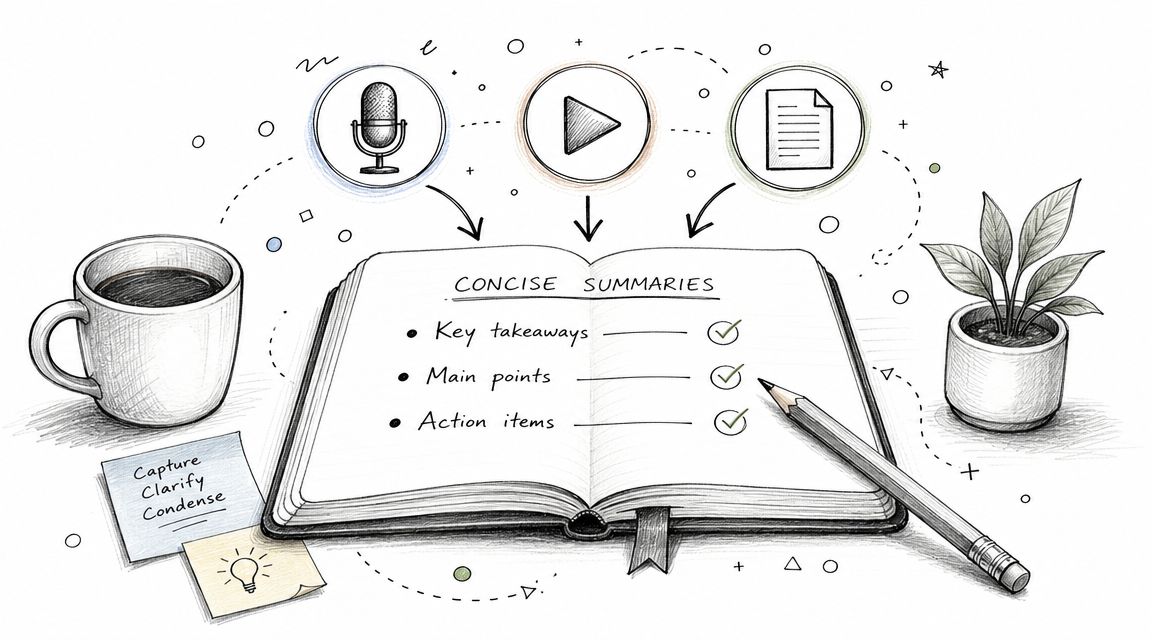
- A transcript: Helpful when someone needs exact wording or missed the meeting.
- A concise summary: Fast enough for stakeholders or teammates to scan.
- An action list: Blockers, owners, and parking lot items in one place.
If your team needs a cleaner way to standardize follow-ups, this meeting action items template is a practical starting point.
The best notes from a daily scrum don't read like minutes. They read like a short operational log of what changed and what happens next.
What to capture and what to ignore
Not every spoken sentence deserves preservation. Capture decisions, dependencies, blockers, and promised follow-ups. Ignore filler, repetition, and side commentary. A useful record should answer four questions quickly: what moved, what is blocked, who owns the next step, and what needs a separate conversation.
That keeps the daily scrum from evaporating the moment the call ends.
Frequently Asked Questions about the Daily Scrum
What if the whole team can't meet at the same time
Use an asynchronous format with a fixed submission window and a shared summary that everyone reviews. Then hold a shorter live follow-up only for blocker resolution or urgent coordination. The key is keeping visibility high, not forcing everyone into a call that doesn't fit their working hours.
Does the Scrum Master have to attend every daily scrum
Not always. Mature teams can run their own daily scrum well without active Scrum Master facilitation every day. But if the meeting slips into status reporting, lateness, or rambling problem-solving, the Scrum Master should step back in and coach the habit.
What's the difference between a daily scrum and a status meeting
A daily scrum is peer coordination around the sprint goal. A status meeting is usually a report upward. If people are trying to justify their effort instead of adapting today's plan together, you're holding the second one.
Should the Product Owner speak during the daily scrum
Sometimes, but sparingly. If a quick clarification helps the team move, fine. If the Product Owner starts redirecting work or turning the scrum into backlog review, it stops being useful.
What should happen right after the daily scrum
Only the necessary follow-ups. That might be a blocker huddle between two developers, a quick Product Owner clarification, or a Scrum Master action on an impediment. Everyone else should go work.
If your team is tired of losing blockers, follow-ups, and context after every stand-up, Whisper AI gives you a practical way to capture daily scrums without turning the Scrum Master into a full-time note taker. Upload meeting audio or video, get a searchable transcript with speaker detection and timestamps, and turn messy discussions into clean summaries and action items your team can use.