7 Best SEO Podcast Picks for 2026
You’re probably doing what most SEO people do. Listening to updates in fragments between audits, Slack messages, reporting calls, and a content calendar that keeps filling itself back up. Podcasts fit that reality well because they turn dead time into research time, but only if you’re listening to shows that effectively sharpen judgment instead of recycling surface-level advice.
That’s the problem with searching for the best seo podcast. Most roundups lump together every marketing show with an SEO tag and leave you to sort out what’s useful for technical diagnosis, what’s useful for strategy, and what’s just background noise. If you manage clients, in-house growth, content operations, or publisher-style sites, that lack of filtering gets expensive fast.
The list below is the one I’d hand to a working SEO team. These are the shows I’d use for search systems context, implementation ideas, update monitoring, and practical pattern recognition. Some are strong for technical SEO. Some are better for operator mindset and content systems. A few are ideal when you need fast signal instead of a one-hour deep dive.
I’m also looking at these through a workflow lens, not just a listening lens. Good SEO podcast content shouldn’t die in your headphones. It should become notes, test ideas, tickets, content briefs, and updated SOPs. That matters more now because search keeps changing, and because more teams are repurposing spoken insights into searchable assets. If you also care about improving Australian small business SEO, this habit of turning audio into action helps you stay sharp without adding another research block to your week.
1. Search Off the Record (Google Search Relations)
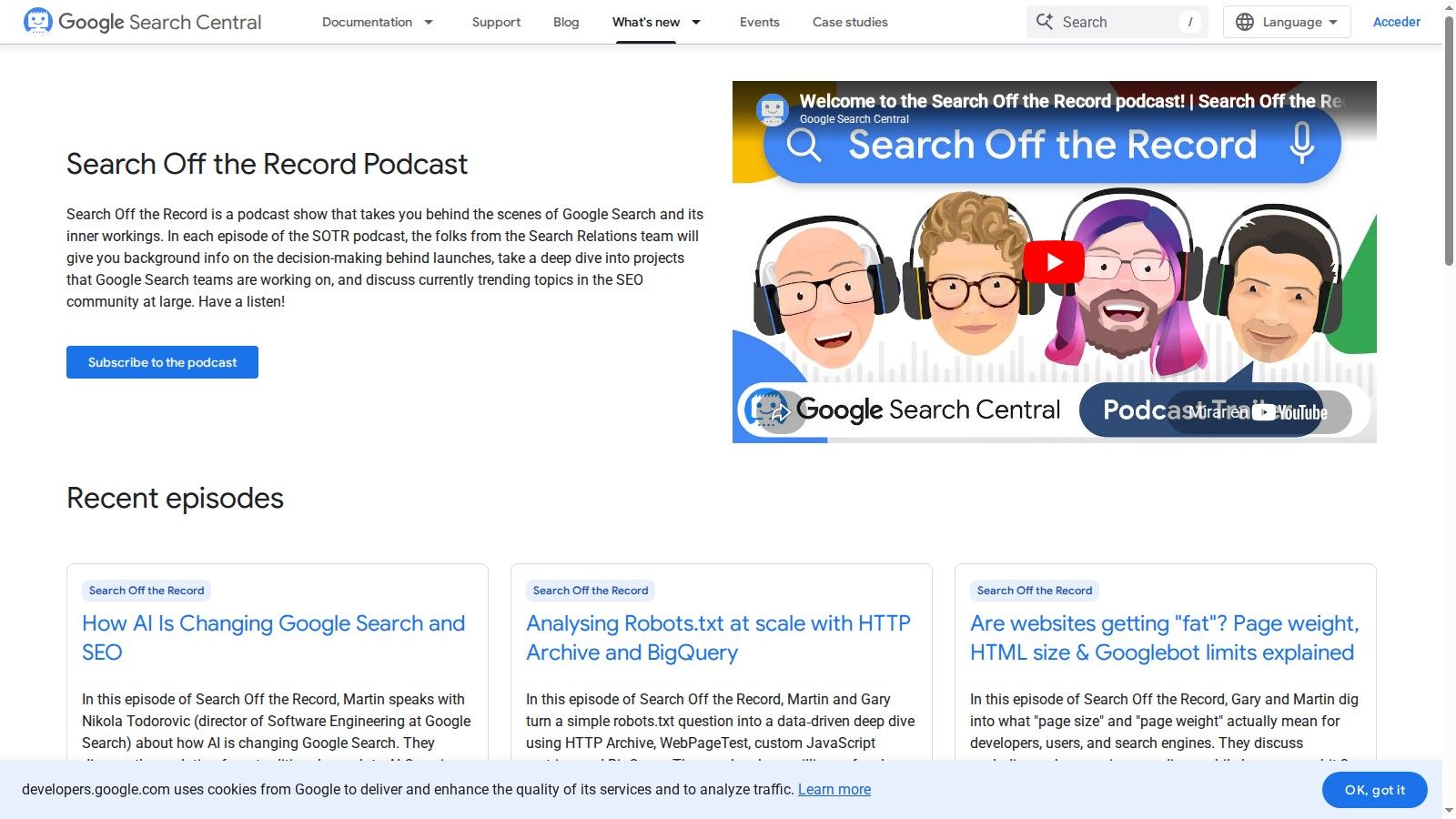
If I need to reset a team’s assumptions about how Google thinks about crawling, indexing, rendering, or search guidance, this is the first podcast I point them to. Search Off the Record is produced by Google’s Search Relations team, and that changes the value of the conversation immediately.
Gary Illyes, John Mueller, Martin Splitt, and Lizzi Sassman don’t give you growth hacks. They give you context. That distinction matters because a lot of SEO mistakes come from treating secondhand interpretations as facts.
Why it earns a spot
This is the most authoritative podcast in the list when you want direct explanations instead of industry paraphrasing. It’s especially useful for technical SEOs, developers, and content leads who need to understand the reasoning behind documentation, not just memorize snippets of it.
What works well here:
- Direct Google perspective: You hear how Google teams describe search systems, crawling, documentation, and product decisions in their own terms.
- Strong myth filtering: It helps separate durable guidance from SEO folklore.
- Transcript-friendly format: Google regularly provides transcripts, which makes it much easier to review exact language and turn episodes into internal notes.
What doesn’t:
- No quick-win framing: If you want “do these five things this week and win,” this isn’t that show.
- Cadence can vary: It’s not the most predictable feed if you rely on a strict listening routine.
Practical rule: Use this podcast to refine judgment, not to build a sprint backlog by itself.
A good way to use it is after a major search debate starts circulating online. If everyone is posting hot takes about JavaScript indexing, helpful content, AI overviews, or site quality, this show often gives you the calmer lens you need.
Best use case and workflow
I like this podcast most when paired with documentation review. Listen to an episode, open Search Console, then inspect one real issue on your site or client property while the discussion is still fresh. That’s usually enough to turn a broad concept into a concrete action.
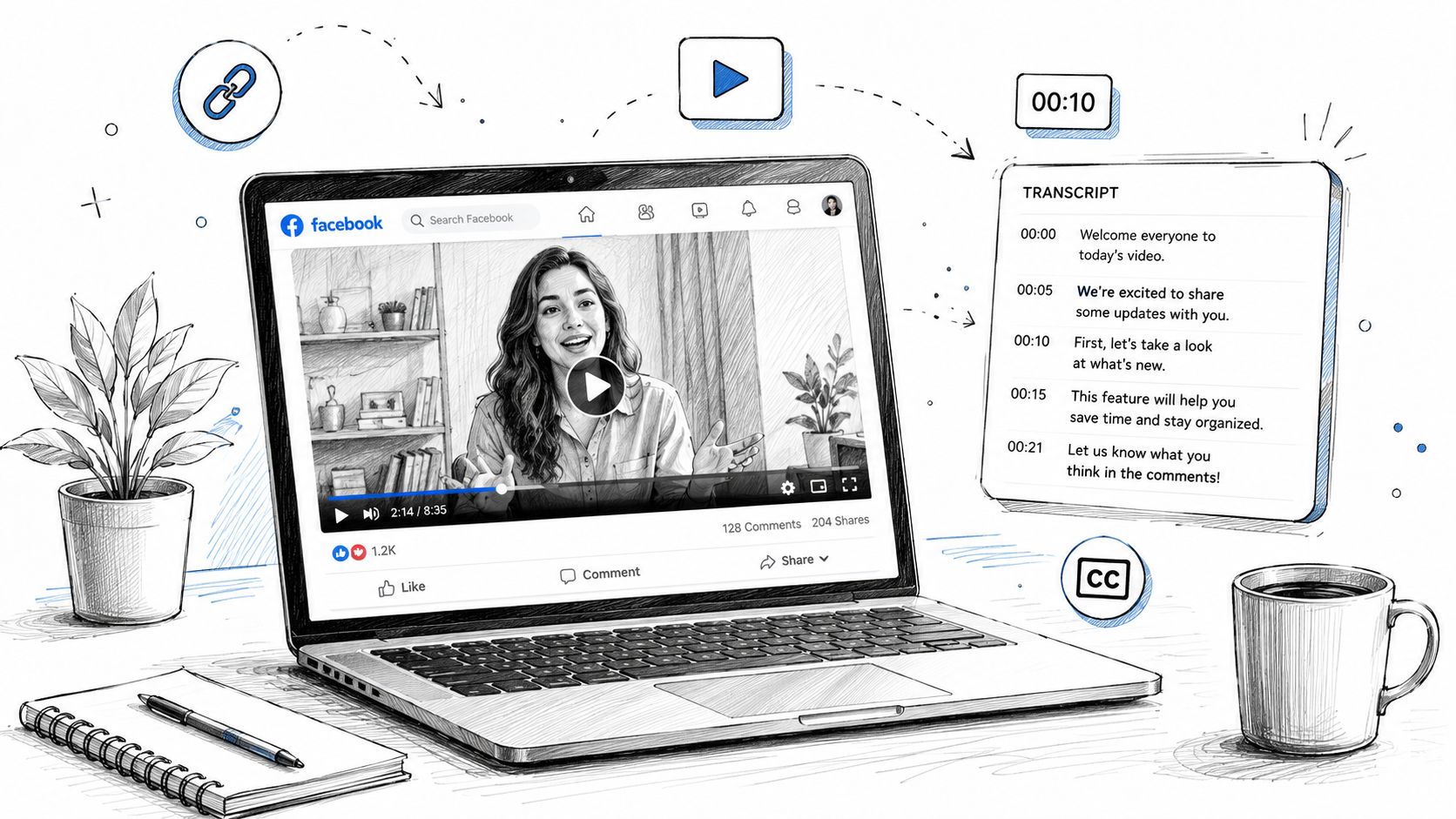
If you repurpose episodes into team notes, structure matters. A clean video transcript format for searchable notes makes it easier to pull out definitions, caveats, and implementation follow-ups without rereading a wall of text.
One more reason this type of podcast matters. Search keeps expanding beyond classic blue links, and understanding first-party search logic is more valuable than ever.
2. The Search Engine Journal Show
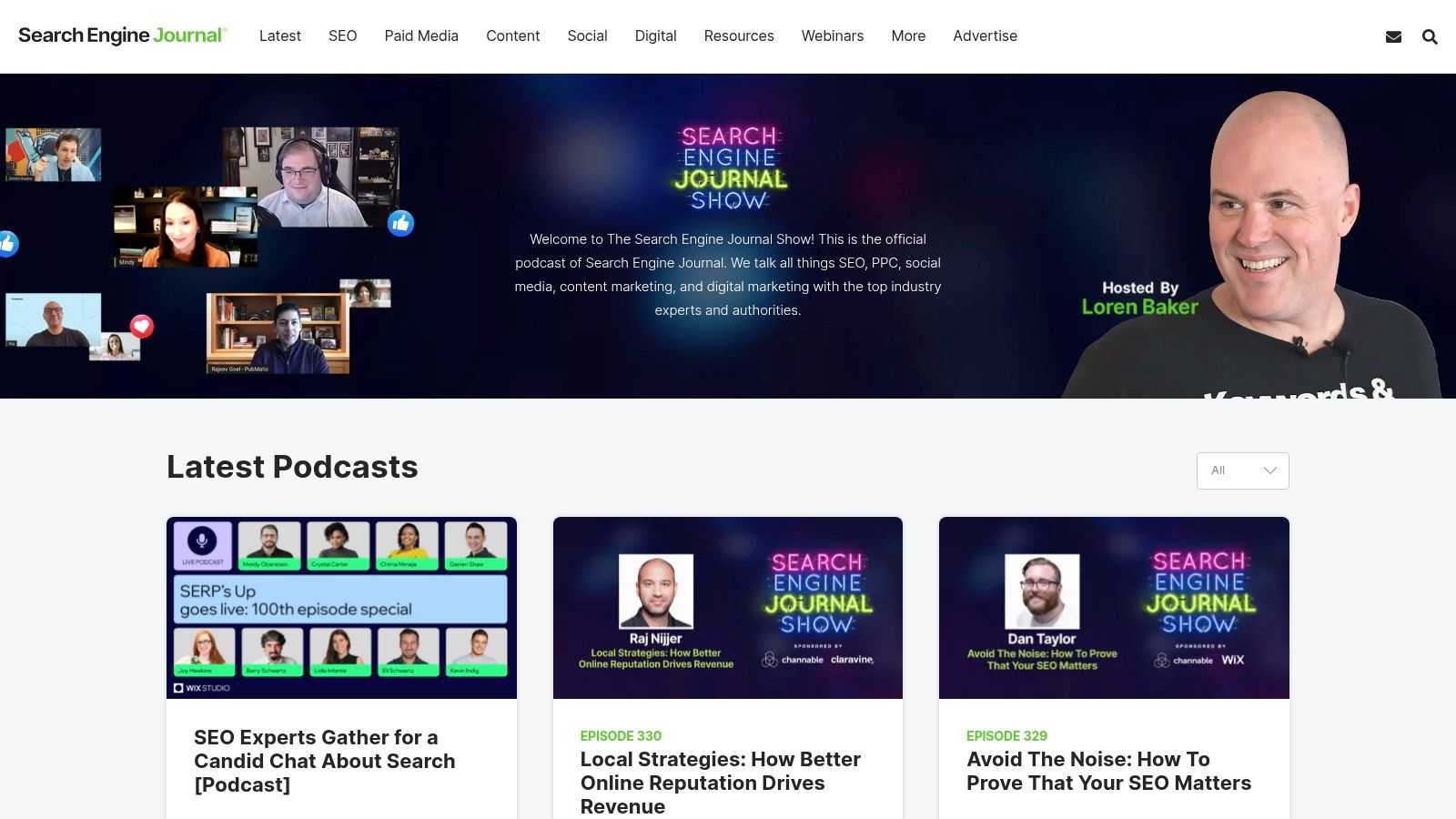
Monday morning, the SEO lead is chasing a traffic drop, the content manager wants clearer briefs, and paid search is asking why landing pages are underperforming. A single-topic SEO podcast will not help much in that moment. The Search Engine Journal Show is useful because it covers the overlap between SEO, content, PPC, and digital strategy.
That broader scope is the reason to listen, and the main drawback. You get more cross-functional context than you will from a pure technical SEO feed, but you also have to be selective because not every episode is equally tactical.
Best for cross-channel search teams
I recommend this show to in-house teams, agency strategists, and consultants who do more than rank pages. If your work includes content planning, reporting, SERP shifts, stakeholder communication, or coordination with paid media, this archive gives you more angles than a narrowly focused SEO podcast.
It also works well for mixed-seniority teams. Junior marketers can get exposure to how experienced operators frame decisions. More advanced listeners can cherry-pick guest episodes that match a live problem.
A few things make it worth keeping in rotation:
- Broad guest pool: You hear from SEOs, editors, founders, analysts, and paid media operators, not one recurring point of view.
- Useful archive structure: Category pages and show notes make it easier to find episodes tied to a current initiative.
- Good for strategic pattern recognition: The strongest interviews explain how search performance connects to content operations, audience targeting, and distribution.
The trade-off is consistency. Some episodes give you clear operating insight. Others are better for perspective than execution.
The episodes worth your time usually feature practitioners explaining decisions they made, constraints they faced, and what changed after implementation.
Episode selection and workflow
I would not listen to this feed in order. I would filter it by active priority. If the quarter is focused on editorial scale, pick episodes on content systems and audience development. If the issue is traffic quality or SERP volatility, prioritize interviews on intent, measurement, and search strategy.
For each episode, pull three things only: the core claim, one example that proves it, and one action worth testing on your own site. Then turn the audio into searchable text with a podcast transcription workflow so the useful parts do not disappear into a notebook or Slack thread. That is the difference between passive listening and an actual operating asset.
I also like this show for internal training. One good interview can become a short team memo, a revised brief template, or a list of questions for the next content audit. Used that way, the podcast stops being background content and starts feeding decisions.
3. Voices of Search
A packed calendar changes what you can realistically learn from podcasts. If I have 15 minutes between meetings and still want to keep a read on the SEO field, Voices of Search is one of the few feeds I will queue without hesitation.
The format is the reason. Benjamin Shapiro keeps episodes short, and the show often runs a topic across several days instead of forcing every angle into one long conversation. That structure works well for people managing clients, reporting to stakeholders, or switching between strategy and execution all day.
Best use case: staying current without blocking an hour
I would not use this show as a primary training resource for a junior SEO. I would use it for an experienced operator who already knows the basics and needs a steady flow of market signals, expert opinions, and recurring themes worth checking against live accounts.
That distinction matters.
Short episodes are good at helping you spot what the industry is debating right now. They are less reliable for teaching a full method from start to finish, especially if the topic needs examples, edge cases, and implementation detail.
What makes the podcast useful:
- Low time cost: Easy to fit into a commute, reporting block, or gap between calls.
- Strong topic sequencing: Multi-episode runs make it easier to follow one issue from different angles.
- Wide practitioner mix: You hear from agency operators, in-house teams, founders, and tool-side guests, which helps surface different incentives and blind spots.
The trade-off is straightforward. You get range and frequency, but not always depth.
Episodes to prioritize
I would not listen to this feed in order. I would pick episodes based on the problem on my desk.
If rankings are unstable, I look for episodes on SERP shifts, AI search behavior, and performance measurement. If the quarter is focused on content production, I look for conversations on editorial systems, content quality, and distribution. If I am working with an executive team that wants clearer reporting, I prioritize episodes on attribution, forecasting, and communicating SEO impact.
That filtering step keeps the show useful. Otherwise, a high-frequency feed turns into background noise.
How I turn short-form listening into actual work
This podcast is best treated as signal collection. After each episode, I log three items only: the claim, the supporting example, and the action worth testing. If none of those are clear, the episode does not make it into my notes.
For recurring themes or guest series, I convert the audio into text with a podcast transcription process that makes episodes searchable. Then I tag the transcript by topic, such as technical SEO, reporting, content ops, or AI. That gives me something I can search later when a client question or internal project maps to the same issue.
Voices of Search works best as a monitoring feed. Use it to catch patterns early, then validate those ideas against your own data before turning them into tasks.
That is why it stays on my list. It respects time, gives you broad market exposure, and becomes much more useful once you apply a clear filter and capture process.
4. Experts on the Wire (Dan Shure)
Some SEO podcasts feel like update streams. Experts on the Wire feels more like sitting in on a serious practitioner conversation. Dan Shure has long had a knack for pulling useful detail out of guests, which is why this show still holds up for SEOs who want nuanced takes instead of polished talking points.
This isn’t the podcast I’d use to skim headlines. It’s the one I’d pick when I want to think carefully about content strategy, technical diagnosis, audience research, or the way AI is changing search behavior.
Why advanced listeners tend to stick with it
The show’s biggest strength is depth. Dan Shure usually gives topics enough room to breathe, and that leads to more useful conversations about process, trade-offs, and implementation decisions.
That matters because a lot of SEO work isn’t about knowing the headline. It’s about knowing what to do when the headline meets your specific site, team, constraints, and business model.
A few things this podcast does well:
- Long-form detail: Better than average for unpacking how practitioners approach a problem in practice.
- Actionable frameworks: Guests often explain decision paths, not just outcomes.
- Real operator tone: The conversations usually feel grounded in work, not personal branding.
The obvious drawback is time. If you want something fast and snackable, this won’t be your default.
Where it fits in a real listening stack
I’d use this podcast as a weekly deep work companion, not a daily check-in. One episode can easily generate enough notes for a planning session, content refresh sprint, or client strategy review.
This is also one of the better formats for transcript-based review because longer interviews usually contain buried gems you won’t catch on a first listen. In practice, I’d pull out key moments under buckets like “tests,” “assumptions challenged,” and “ideas worth validating.”
When a podcast guest explains why they rejected an approach, that’s often more useful than hearing what they chose.
If you’re trying to build a listening stack with distinct roles, Experts on the Wire is your deep-dive pick. It won’t replace your news podcast. It gives you the substance your news podcast usually can’t.
5. EDGE of the Web
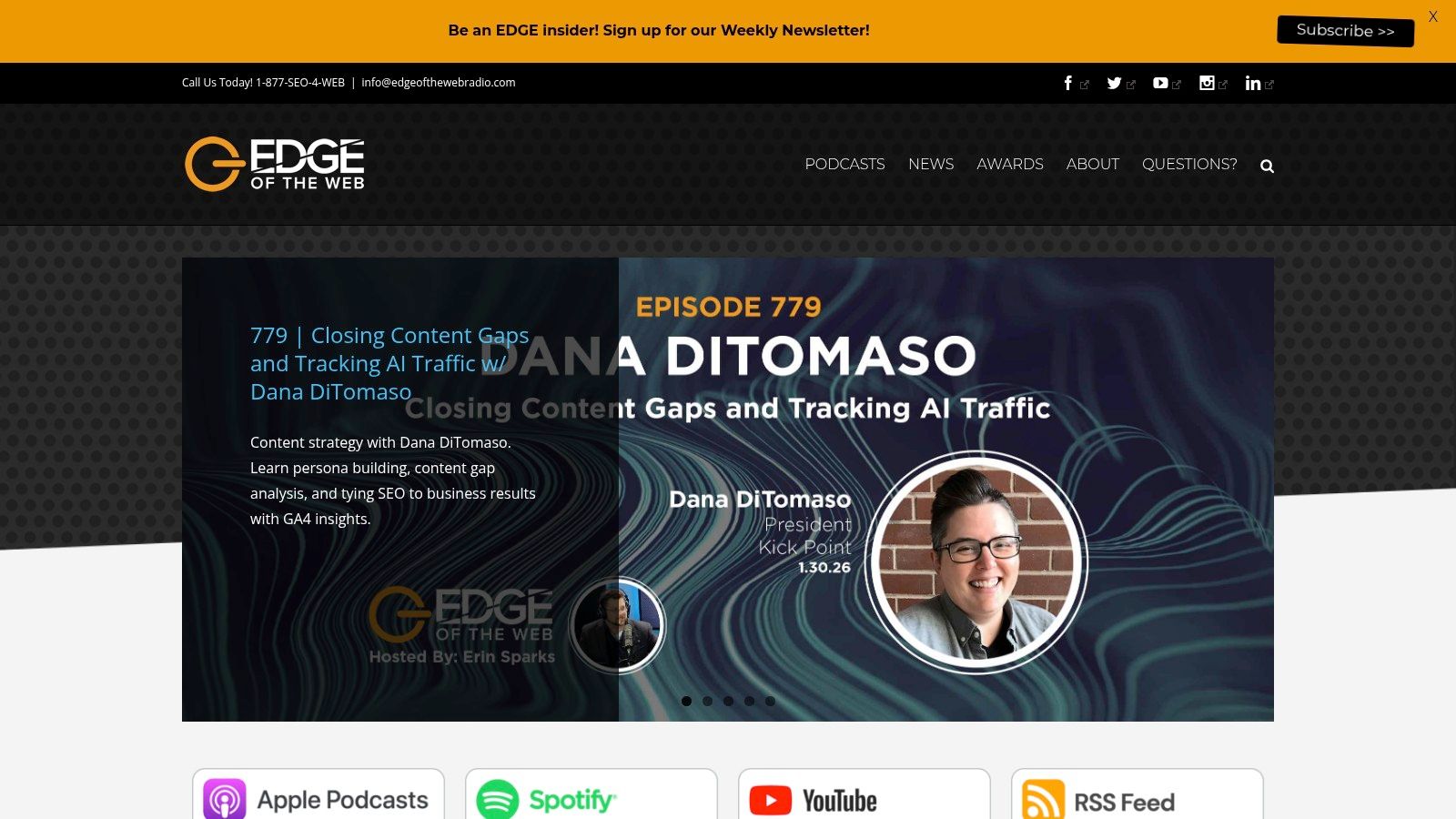
Monday morning, Slack is full of links about a ranking shakeup, a new AI search feature, and three hot takes that all say something different. That is the moment EDGE of the Web earns its spot.
This is one of the better weekly shows for sorting signal from chatter. Erin Sparks and the rotating mix of guests usually cover search, AI, and digital marketing with enough editorial distance to help you decide what matters now, what needs monitoring, and what can wait.
I use it as a manager's filter, not a breaking-news feed.
That distinction matters. A weekly format gives the hosts room to connect individual updates to broader patterns in search behavior, platform changes, and reporting implications. If you lead SEO inside a larger marketing function, that context is often more useful than hearing every development in real time.
Where it fits best
EDGE of the Web works well for teams that need weekly calibration across channels, not just isolated SEO commentary.
A few reasons it makes the list:
- Good meeting prep: Useful for deciding which search and AI topics deserve ten minutes in a team sync.
- Balanced format: News segments give you coverage, and interviews add interpretation.
- Broader marketing relevance: Helpful if your role touches content, paid media, analytics, or executive reporting along with SEO.
There is a trade-off. Some episodes cast a wider net than pure search specialists may want. If your listening stack is built around log files, crawl efficiency, and technical implementation, you will probably treat this as a secondary show rather than your main one.
How to get more value from it
The best way to use this podcast is to turn each episode into a triage pass.
I’d listen once at normal speed, mark any segment that suggests a real business implication, then run the transcript through Whisper AI or another transcription tool. From there, I sort notes into three buckets: "monitor," "test," and "brief leadership." That keeps broad industry discussion from turning into random task creation.
I also recommend pairing the show with one specific follow-up question per episode. For example: Does this change affect discovery, click-through rate, reporting, or team priorities? If you cannot answer one of those clearly, it probably stays in the monitor bucket.
This is a strong pick if your shortlist for the best seo podcast needs one reliable weekly synthesis show. It will not replace specialist listening. It will help you choose where to spend your specialist attention.
6. Authority Hacker Podcast
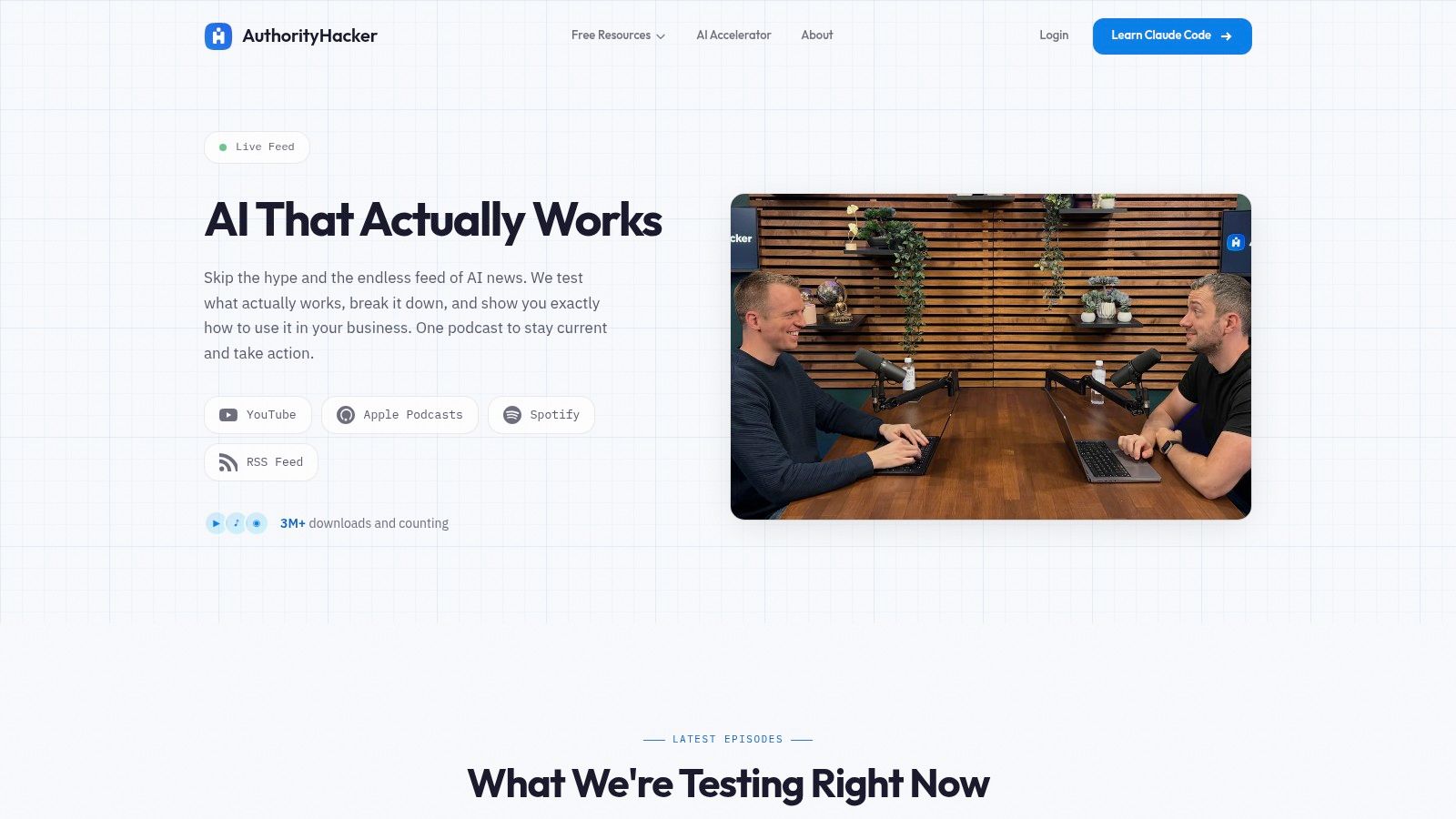
Not every SEO podcast is built for the same operating model. Authority Hacker Podcast is one of the clearest examples. If you run publisher-style sites, affiliate properties, content-heavy niche sites, or lean media brands, this show often feels more practical than enterprise-leaning SEO content.
Gael Breton and Mark Webster tend to focus on systems, execution, monetization, and operator choices. That gives the show a different texture from podcasts built around pure search commentary.
Who should listen closely
This is the best fit on the list for people who care about site economics as much as rankings. You’re not just hearing about visibility. You’re hearing about workflows, scaling content, building processes, and using automation without losing quality control.
That operator perspective is what makes it useful.
- Strong for content site owners: Keyword targeting, publishing systems, and growth mechanics are recurring themes.
- Helpful for monetization-minded SEOs: Useful if your work is tied to revenue, not just traffic.
- Good video companion content: Their YouTube versions can add clarity for tool and workflow discussions.
The limitation is obvious. If your world is enterprise SEO, large stakeholder groups, or highly technical architecture work, some episodes will feel too publisher-specific.
Practical trade-off
Authority Hacker is one of the better listens when you want executable ideas, but you have to translate them to your environment. A publishing workflow that works beautifully on an affiliate site won’t always map cleanly to SaaS, local SEO, ecommerce, or heavily regulated industries.
Still, that doesn’t reduce its value. Sometimes hearing how aggressive operators think about content production or process design helps in-house teams fix their own sluggish execution.
The broader context supports why this kind of workflow thinking matters. The Apple Podcasts listing for The Best SEO Podcast notes that SEO drives over 68% of online experiences, and that same source says The Best SEO Podcast has achieved over 5 million downloads. Even if this list isn’t centered on that show, those figures reinforce why SEO-focused audio has become such a serious learning channel for operators.
7. SEO 101 (WMR.FM / StepForth)
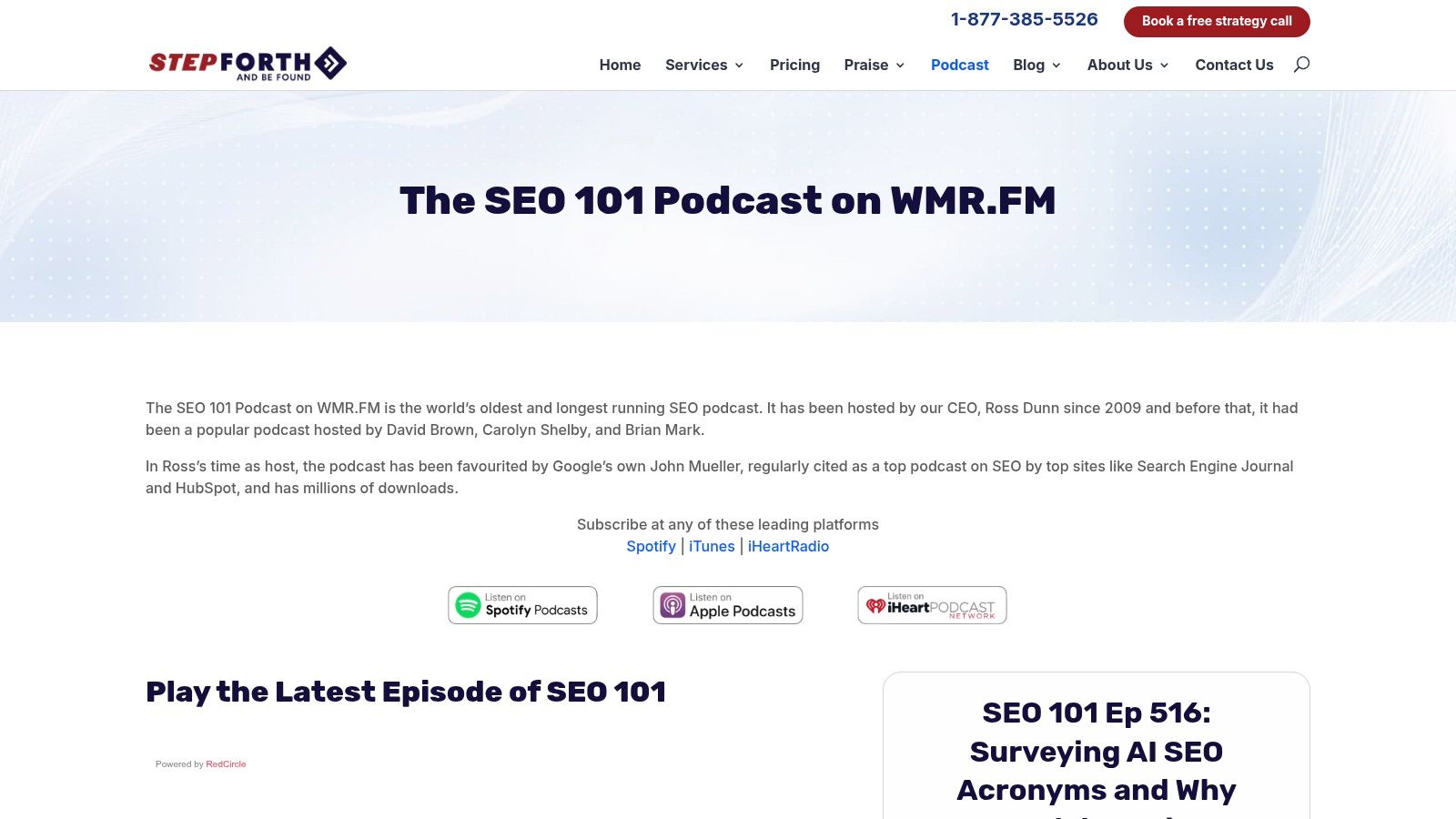
A new coordinator joins the team, sits in on an SEO meeting, and hears indexation, canonicals, topical authority, and crawl budget in the first ten minutes. If they do not have a clean starting point, senior staff spend the next month repeating definitions instead of solving problems. SEO 101 is useful because it reduces that drag.
Ross Dunn and Scott Van Achte keep the show understandable without talking down to the listener. That matters on teams where SEO touches content, dev, PR, client services, and account management, but only a few people work in search full time. The podcast gives those adjacent roles enough context to follow decisions and ask better questions.
Its real value is operational, not just educational.
I would not put SEO 101 at the top of the list for advanced technical analysis or edge-case strategy. I would use it as a dependable training layer. It works well for onboarding junior marketers, bringing non-SEO stakeholders up to speed, and giving clients a calmer explanation of changes that can otherwise sound more mysterious than they are.
A few strong use cases stand out:
- Onboarding new hires: Good for building baseline vocabulary before handing over audits, briefs, or reporting tasks.
- Cross-functional alignment: Useful for writers, designers, developers, and account leads who need SEO context without hours of documentation.
- Client education: Helpful when you need an external resource that explains core concepts in plain language.
- Fundamentals refresh: Worth revisiting if your team has drifted into tactic-first execution and needs stronger grounding.
There is a trade-off. Experienced SEOs will move past parts of the show quickly, especially if they spend their week in enterprise environments, technical audits, or complex migrations. That is not a weakness. It just means the show does a specific job, and it does that job well.
The best way to use SEO 101 is inside a listening system. Pick a few episodes that match recurring questions on your team. Run them through Whisper for transcription, save the transcript in your knowledge base, and tag the sections that explain terms people keep getting wrong. One beginner-friendly episode can become a reusable training asset, a glossary source, and a shortcut for manager time.
If you want this podcast to produce more than passive learning, assign one episode per role, ask each listener to pull out three takeaways, and turn those into action items, process notes, or QA checkpoints. That is how a fundamentals show earns a place on an experienced SEO team.
Top 7 SEO Podcasts Comparison
| Podcast | 🔄 Implementation Complexity | ⚡ Resource Requirements | ⭐ Expected Outcomes | 💡 Ideal Use Cases | 📊 Key Advantages |
|---|---|---|---|---|---|
| Search Off the Record (Google Search Relations) | 🔄🔄 Moderate, concepts are authoritative but may need engineering to act on | ⚡⚡ Moderate, developer/console access often required | ⭐⭐⭐⭐⭐ Clear, high‑confidence explanations of crawling/indexing | Teams needing authoritative Google rationale and policy clarity | Direct-from-Google insights and myth‑busting |
| The Search Engine Journal Show | 🔄🔄 Variable, depth depends on guest/topic | ⚡⚡ Moderate, time to audit episodes for value | ⭐⭐⭐⭐ Practical tactics plus industry news | Marketers wanting broad SEO/PPC/news coverage | Large back catalog and well‑known industry guests |
| Voices of Search | 🔄 Low, short, focused episodes that are easy to consume | ⚡ Low, designed for quick listening/scan | ⭐⭐⭐⭐ Regular, digestible updates and strategic takeaways | Busy pros who prefer frequent short briefings | High cadence with mixed perspectives (brand/agency/toolmakers) |
| Experts on the Wire (Dan Shure) | 🔄🔄🔄 High, long-form deep dives with tactical frameworks | ⚡⚡⚡ High, requires time and practitioner expertise to apply | ⭐⭐⭐⭐⭐ Actionable, advanced SEO and AI+SEO tactics | Experienced SEOs seeking nuanced, implementable guidance | Tactical, practitioner-centered content with detailed frameworks |
| EDGE of the Web | 🔄🔄 Moderate, mixes news and interviews with variable depth | ⚡⚡ Moderate, weekly listening commitment | ⭐⭐⭐⭐ Reliable updates on algorithm and AI impacts | Teams tracking weekly search/AI developments | Consistent weekly rhythm and comprehensive news roundups |
| Authority Hacker Podcast | 🔄🔄 Moderate, practical operational advice for publishers | ⚡⚡⚡ High, needs execution resources for monetization tests | ⭐⭐⭐⭐ Concrete playbooks for scaling and monetization | Site owners, affiliate publishers, and content operators | Strong focus on monetization, automation, and systems |
| SEO 101 (WMR.FM / StepForth) | 🔄 Low, beginner-friendly explanations and examples | ⚡ Low, minimal expertise/time required to benefit | ⭐⭐⭐ Foundational understanding and clear explanations | Onboarding teammates and beginner-to-intermediate learners | Plain‑English breakdowns and steady, accessible guidance |
From Audio to Action Maximize Your Podcast ROI
Monday morning, a stakeholder asks why rankings slipped on a money page cluster, and you remember a podcast segment from last week that covered almost the same pattern. If you cannot find the exact minute, the recommendation, or the follow-up task, the episode gave you awareness but not much operational value.
That is a true test for any best seo podcast. It should change a brief, a diagnostic process, a content refresh plan, or a reporting workflow.
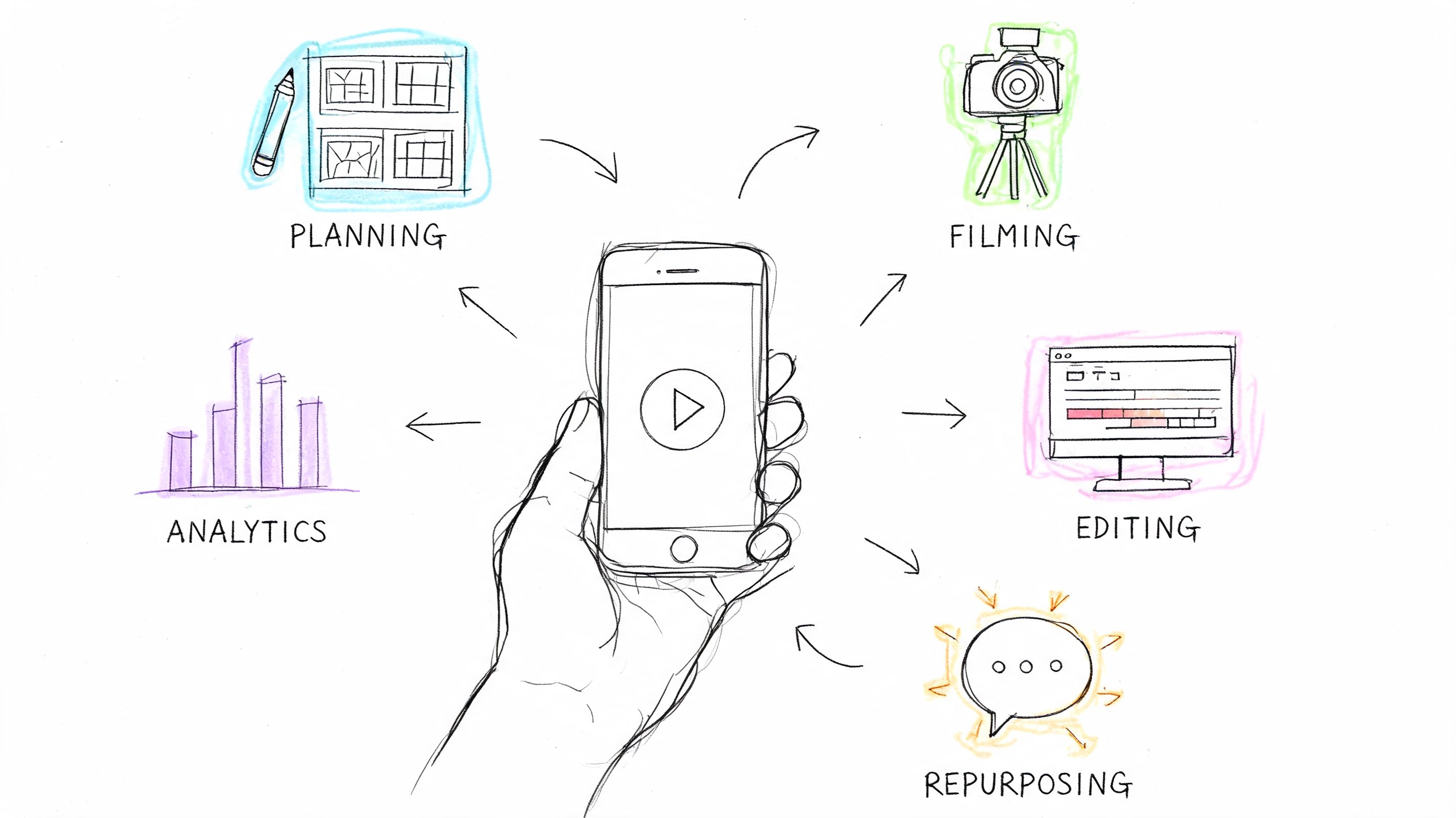
I treat podcast listening as input for active work, not background learning. The selection step matters, but the payoff comes from a repeatable system for capturing insight, validating it against your own data, and converting it into tasks a team can ship.
Start with one live problem. Pick an episode because you are dealing with indexation waste, internal link decay, content cannibalization, AI overview shifts, or a weak editorial process. Then listen with a narrow question: if this advice is right, what changes this week?
That question filters out a lot of noise.
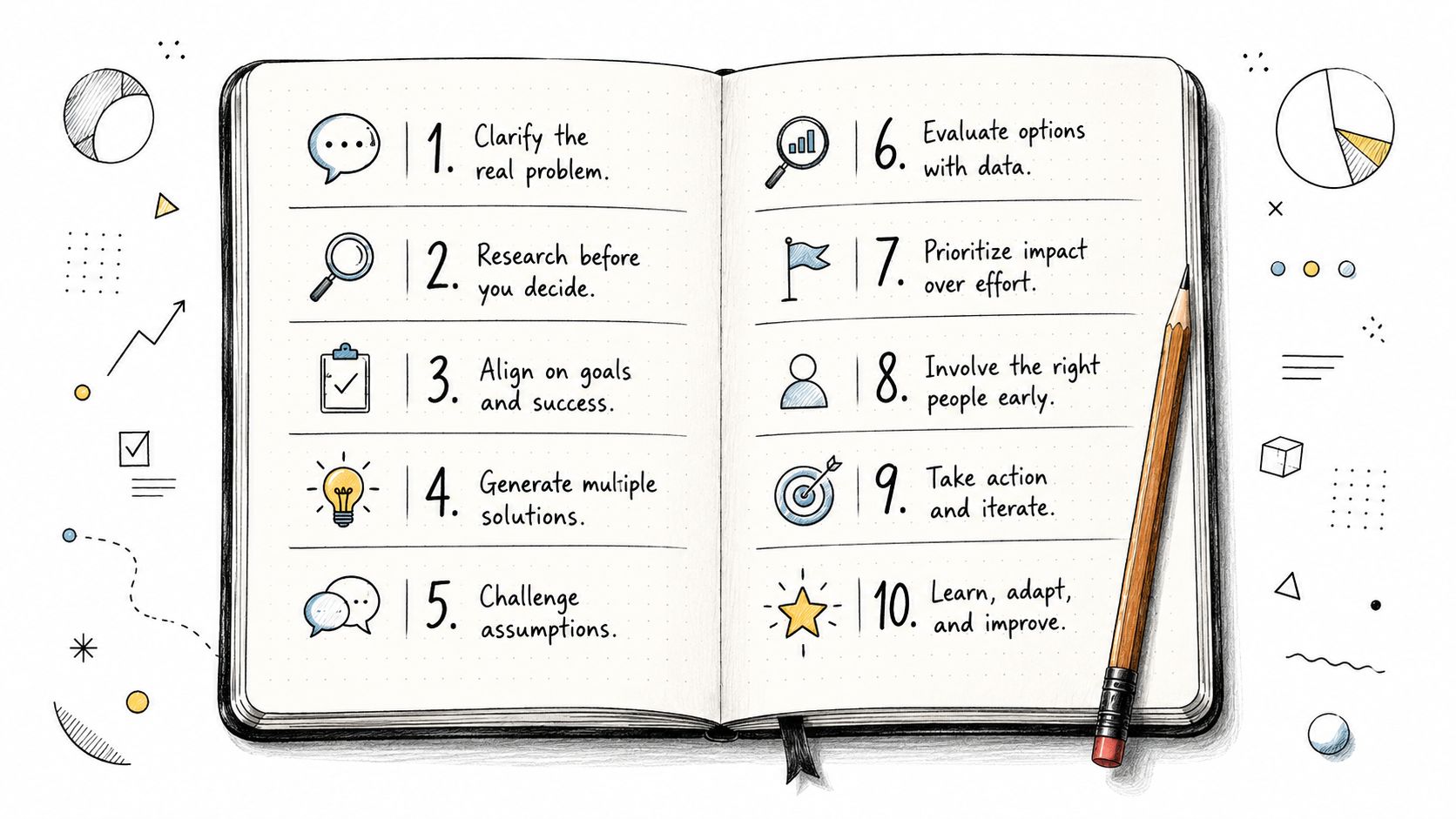
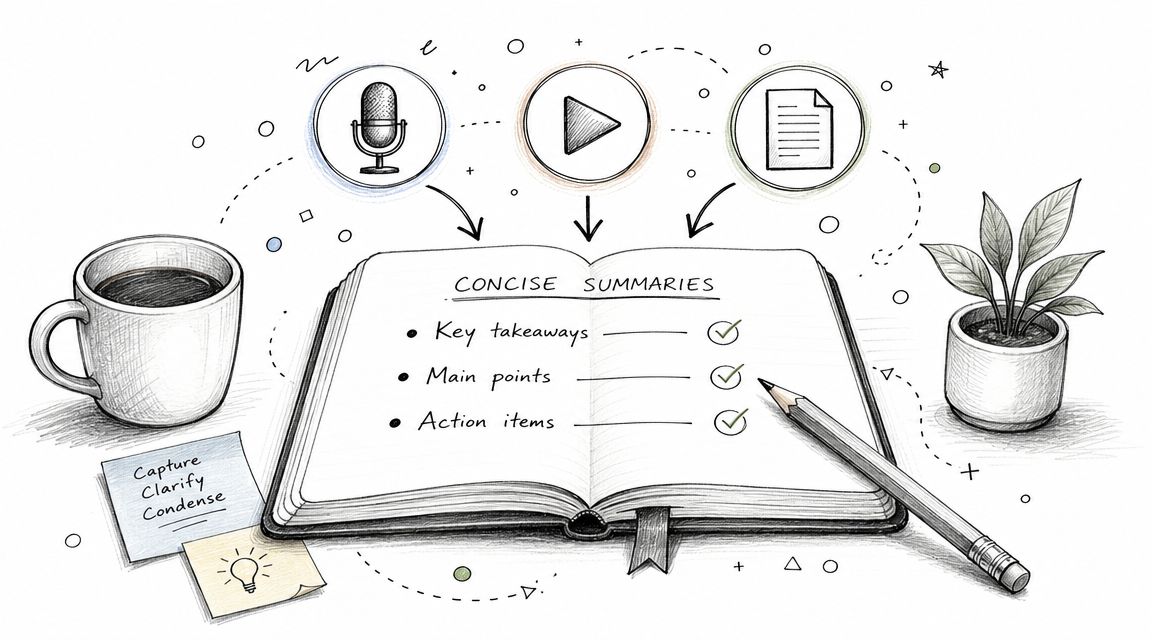
Notes need structure too. I use three fields: insight, implication, next action. A vague note like "good point on category pages" dies in a doc. "Review title tag patterns for category pages with CTR loss" becomes a task someone can own.
A simple workflow that holds up
Use a process like this:
- Match the episode to a current issue: Choose based on a real SEO problem, not general interest.
- Capture only decision-grade notes: Write down tests, risks, workflows, and recommendations you might act on.
- Turn insights into work objects: Create tickets, SOP updates, experiment ideas, content briefs, or stakeholder talking points.
- Check every claim against your own sources: Validate ideas in Search Console, analytics, crawl data, and rank tracking before rollout.
- Store by topic instead of show name: File notes under themes like crawling, refresh strategy, site architecture, AI search changes, or reporting.
Long interviews create a practical problem. Good advice is often buried inside side stories, examples, and forty minutes of context. Manual notes rarely catch the exact wording or timestamp you need later.
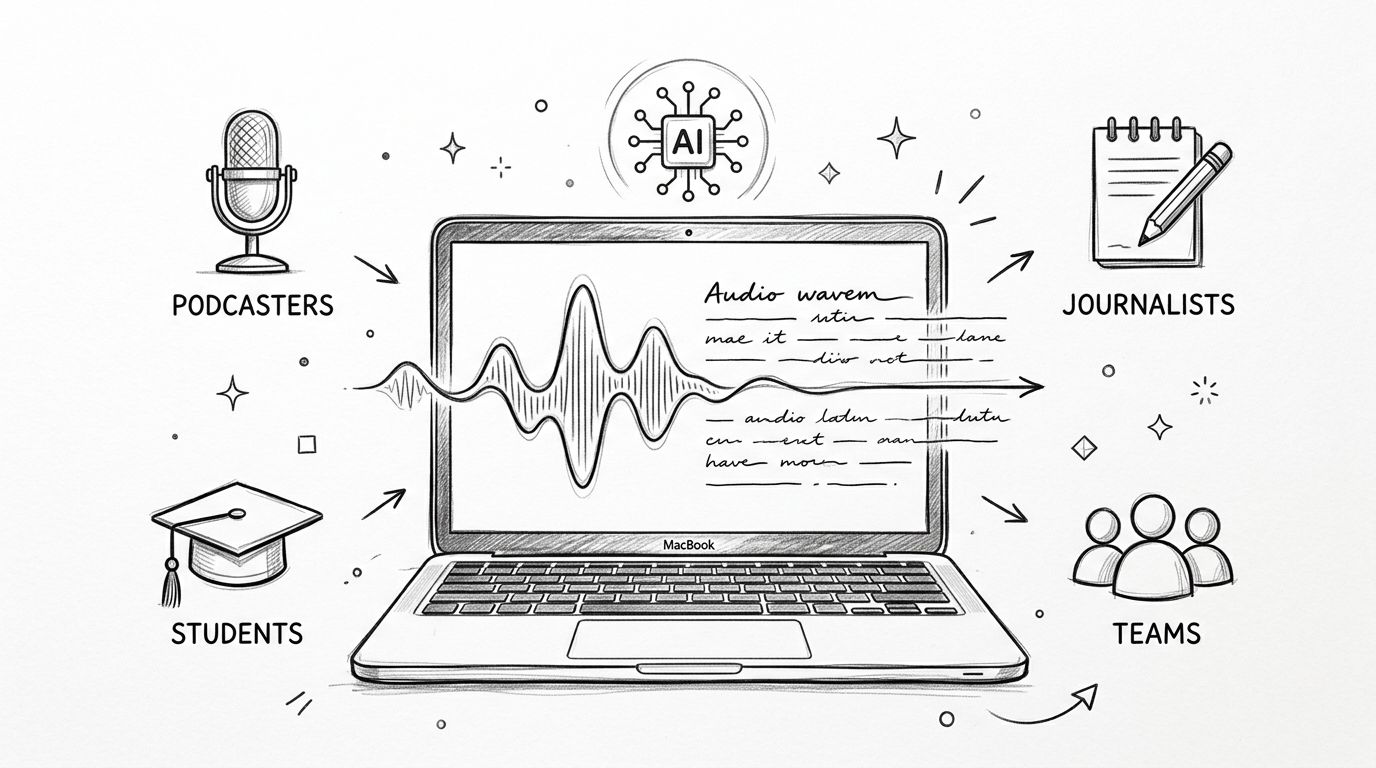
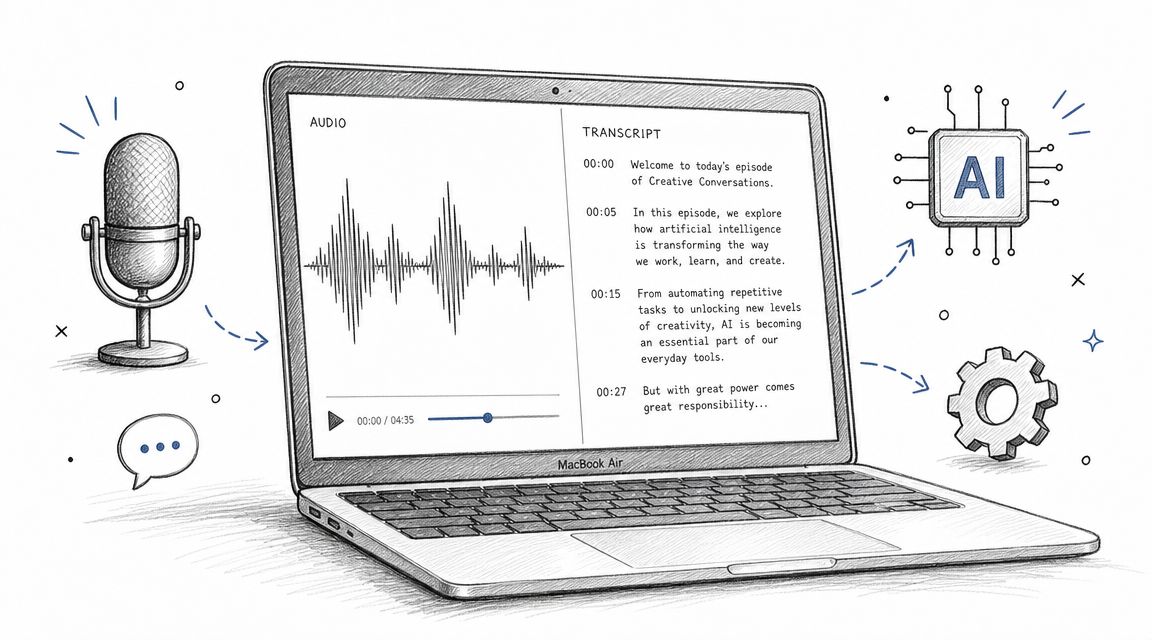
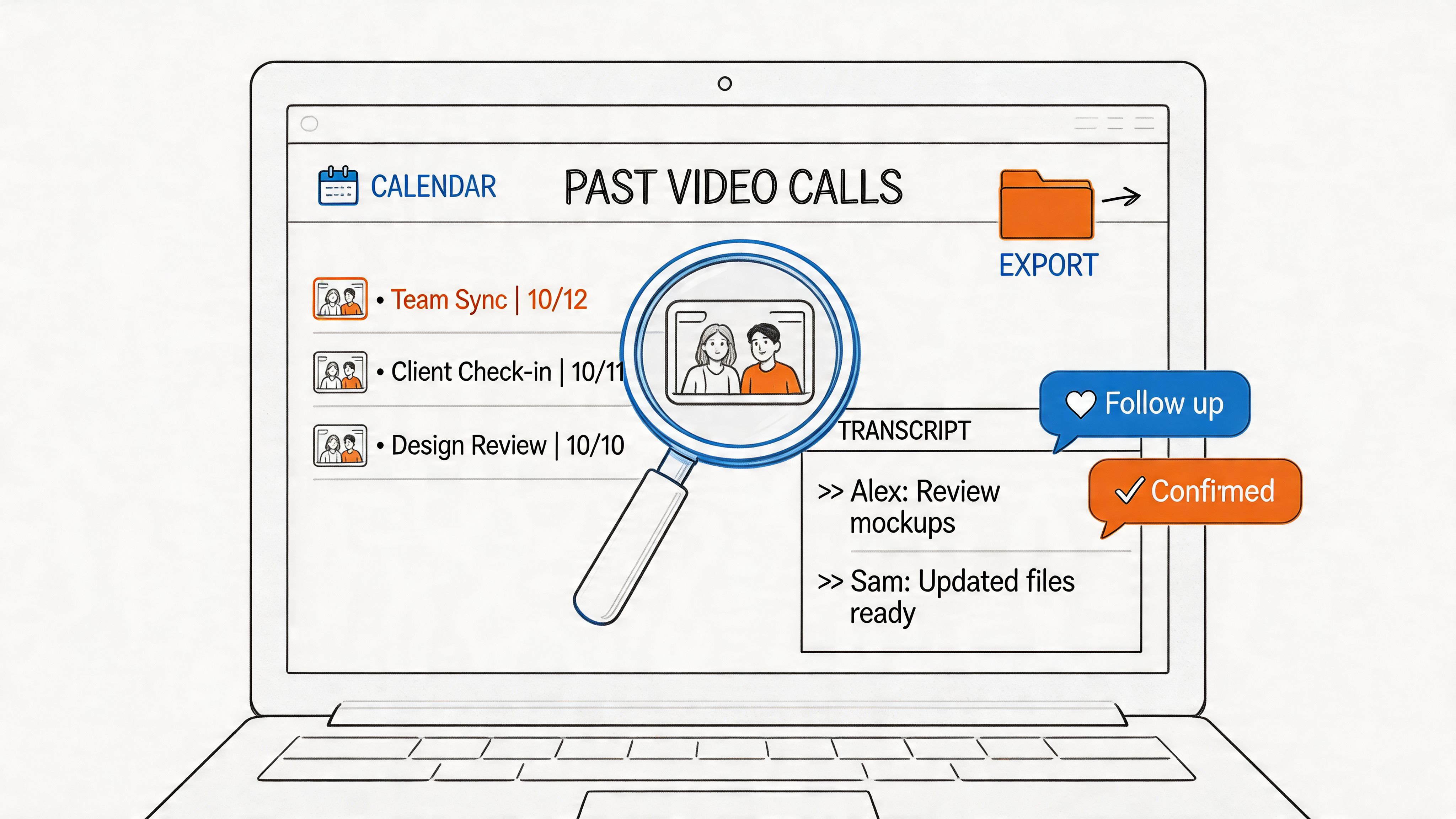
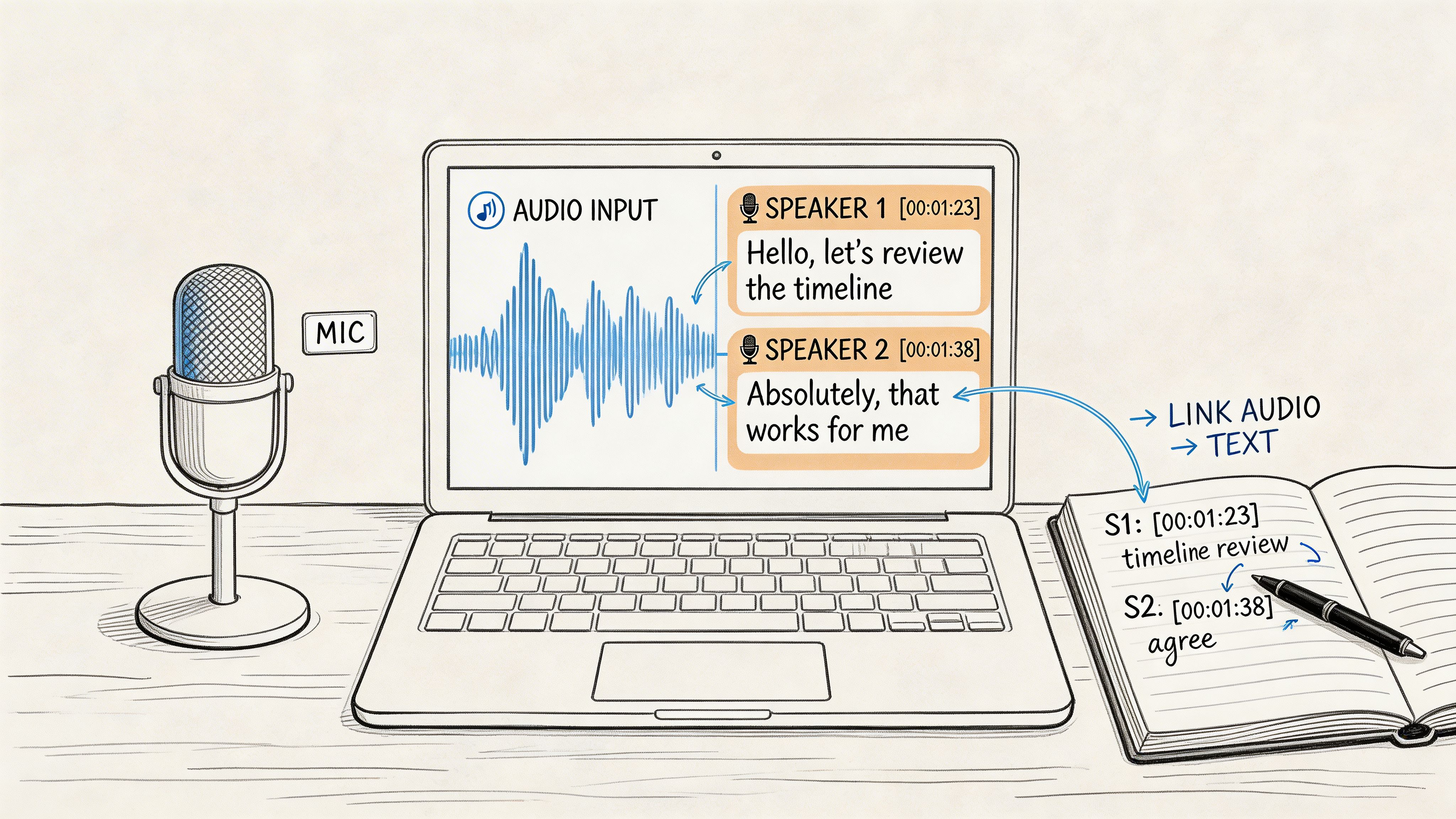
Whisper AI solves that part by turning a podcast, webinar, interview, or YouTube discussion into searchable text with timestamps, speaker labels, summaries, and highlight-ready excerpts. That gives you a working document instead of a one-time listen.
Searchable transcripts turn podcast ideas into reusable operating material.
My workflow is simple. Upload the audio or paste the link. Generate the transcript. Search for the topic tied to your project, pull the relevant passage into your notes, and turn it into a recommendation, test, or ticket. If the episode covers several themes, ask for a summary by topic so the useful parts are grouped before you export them to Docs, Word, PDF, TXT, or Markdown.
There is also a trade-off here. Transcription saves time during review, but it can create too much text if you archive everything without a filter. The fix is to save only episode sections that map to active priorities. I usually keep three things: the core claim, the supporting example, and the action I want the team to test.
That post-listen workflow is the part many podcast roundups skip, as noted earlier. They help you choose what to hear, but not how to reuse it. For working SEO teams, reuse is the actual ROI.
If you want to pressure-test this approach, keep it small. Pick one show from this list. Choose one episode tied to a live issue. Extract one idea worth testing, validate it against your own data, and document the result. Repeat that loop a few times and podcast listening stops being passive education. It becomes part of how your team improves process and decision-making.
And if you publish audio or video yourself, use the same system to drive B2B podcast authority with SEO by turning each episode into a searchable asset your audience and team can return to.
Whisper AI is the easiest way to turn SEO podcasts, interviews, webinars, and videos into something your team can search, summarize, and act on. Upload audio or video, get timestamps, speaker detection, concise summaries, and export-ready transcripts, then turn what you heard into briefs, tickets, show notes, or training docs without the manual cleanup.