Mastering Cross Examination Questions
You have a witness who won't give a straight answer. Or you're halfway through a podcast interview and your guest keeps drifting into polished talking points. Or you're reviewing a deposition and realizing the problem wasn't the answer. It was the question.
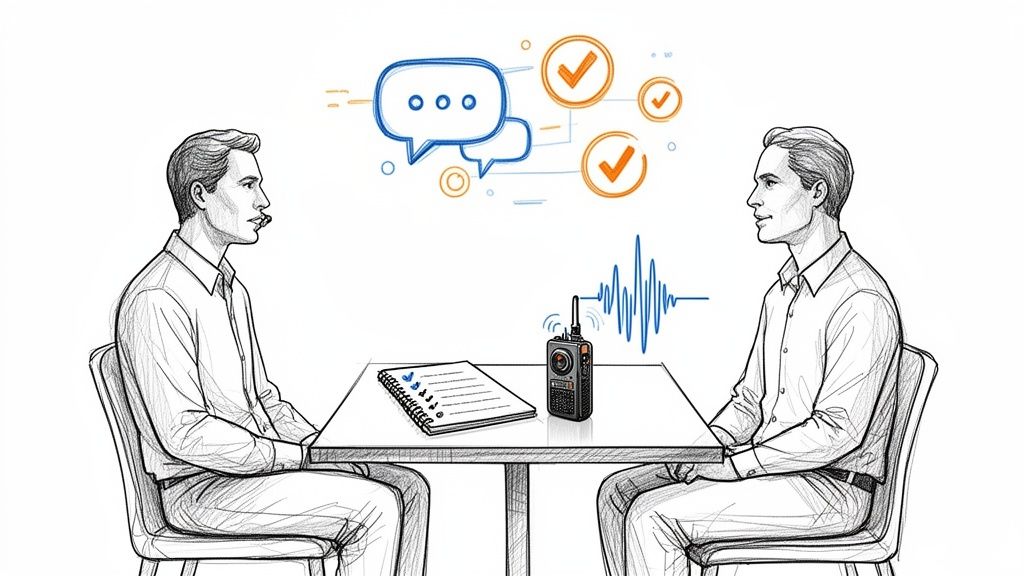
That's where many get cross examination questions wrong. They treat cross as information gathering. It isn't. In court, in an investigative interview, or in a hard internal business conversation, cross is controlled communication. You're not asking what happened. You're deciding what the audience needs to hear, then building questions that force the other person to confirm, narrow, or expose it.
Lawyers learn this in the adversarial system. Journalists, podcasters, founders, and researchers need it too. The tools carry over cleanly. Short questions. One fact at a time. No wasted detours. No invitation for speeches.
Beyond Asking Questions It's About Controlling the Narrative
A weak cross sounds like curiosity. A strong cross sounds like structure.
The difference shows up fast. A lawyer asks, "Can you explain why you changed your report?" The witness takes the opening, fills the air, and reframes the issue as thoughtful reconsideration. A better question is, "You issued one report in March and a different report in June, correct?" The witness can still resist, but the frame now belongs to the examiner.
That same shift matters outside the courtroom. A journalist interviewing a public official doesn't need to ask, "What happened?" if the timeline already exists. The sharper move is to lock in the timeline the audience needs: when the decision was made, who approved it, what was omitted, and what changed later. Podcasters run into the same problem with experienced guests who know how to stretch an answer until the original question disappears.
You're not discovering the story
On direct examination, or in a casual interview, open-ended questions help people tell their version. Cross serves a different function. You already know the terrain. The work is to select the point that matters and make the witness walk through it in manageable steps.
Practical rule: If you're still figuring out what you want to learn, you're not ready for cross. You're still preparing.
This is why cross examination questions often feel unnatural to beginners. They want the witness to do the storytelling. Skilled examiners don't. They tell the story themselves through tightly framed propositions the witness must accept, deny, or evade.
The audience is always part of the examination
Jurors are the obvious audience in court. In journalism, the audience may be viewers, listeners, editors, or investigators reviewing the tape later. In business, it may be a board, a compliance team, or the executive who has to decide what happened.
Your questions should be written for that audience. They should hear a clean sequence, not a private argument between examiner and witness. That means each question needs a job. If a question doesn't advance a point the audience can remember, cut it.
The practical mindset is simple: stop asking, "What should I ask next?" Start asking, "What must this witness admit for my version to become the most believable one in the room?"
Define Your Objectives and Central Theme
Most bad cross examination questions are written too early. The examiner starts drafting before deciding the destination.
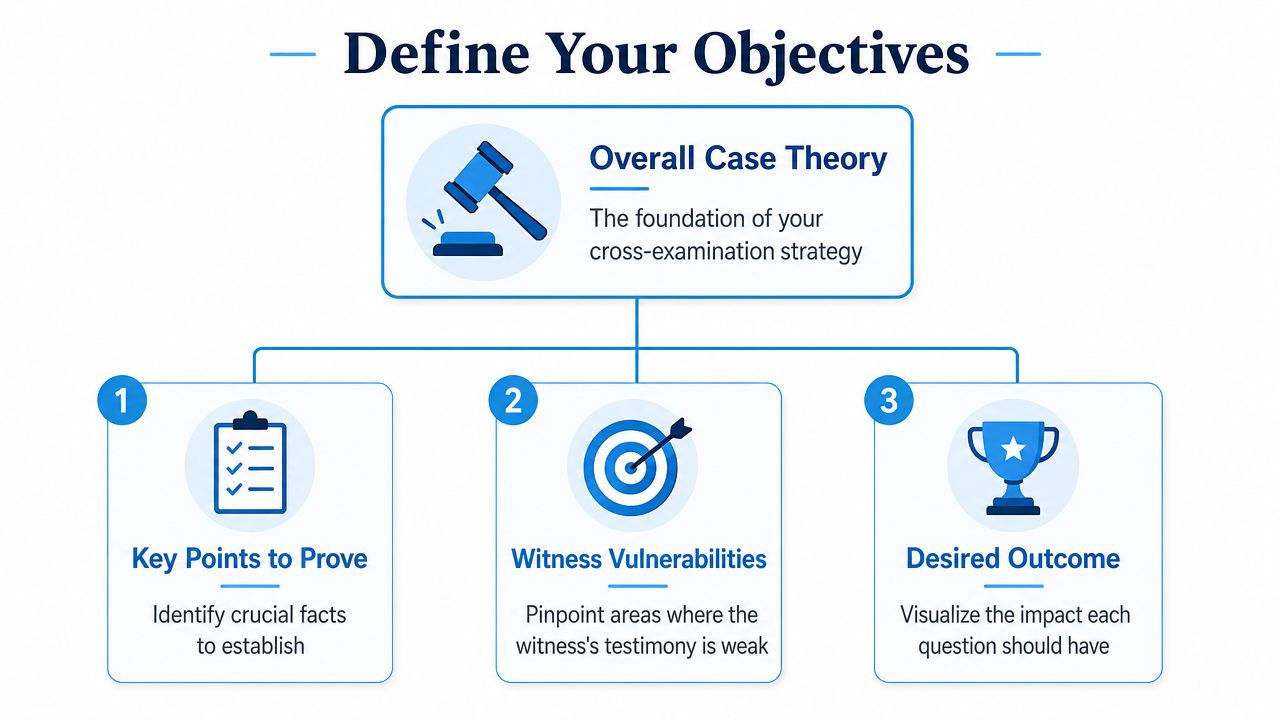
Strong cross starts backward. Take the final point you want the listener to remember, then trace the admissions needed to reach it. If your closing argument is "the expert didn't test enough," your cross shouldn't wander into every line of the report. If your interview thesis is "the company knew earlier than it admitted," your questions should keep returning to notice, timeline, and internal knowledge.
Build around a small number of themes
High-performing examiners deliberately limit the number of substantive lines per cross-examination to 3–5 key themes, and advocacy training data suggests that narrower, deeper crosses produce 20–25% higher verdict swing rates in simulated jury settings than broad, meandering ones, as discussed in this Law360 trial strategy piece hosted by Seyfarth.
That same discipline works in non-courtroom settings. If you're interviewing a startup founder after a product failure, maybe the only themes that matter are internal warnings, customer impact, and what changed after launch. Everything else is noise unless it supports one of those lines.
A practical framework for drafting
Use this sequence before you write a single question:
State your central theme in one sentence.
Not "the witness lacks credibility." That's too vague. Try "the witness approved the change before the public announcement."Choose the few admissions that prove it.
These are your building blocks. Date. Meeting attendance. Email receipt. Signature. Prior statement.Sort those admissions by source.
Put documents, transcripts, messages, and prior interviews next to each point. Cross falls apart when the question isn't anchored.Mark what doesn't matter.
This step saves more crosses than any clever phrasing ever will. A point can be true and still not deserve airtime.
A cross with five sharp admissions beats a cross with fifteen minor irritants.
Decide what the witness is for
Not every witness deserves a demolition job. Some exist to give you one clean concession. Others need to be narrowed, not attacked. Others should be left mostly alone because the risk of repetition outweighs the benefit of confrontation.
A simple table helps:
| Witness type | Best use | Common mistake |
|---|---|---|
| Friendly but adverse | Extract a few confirming facts | Asking hostile, unnecessary questions |
| Expert witness | Limit scope, assumptions, and confidence | Fighting over every technical detail |
| Hostile factual witness | Lock in timeline and contradictions | Asking "why" and inviting speeches |
| Media interview guest | Pin down public claims and omissions | Letting branding language replace facts |
Work backward from the ending
The cleanest way to draft cross examination questions is to script the line-ending admission first. Then build toward it.
If the final point is, "You never reviewed the full file," the sequence might cover what the witness did review, what was missing, and when the opinion was formed. In a business interview, if the target point is, "You had the complaint before the launch," your line may move through receipt, internal forwarding, and meeting attendance.
That backward method keeps your cross from becoming a list. It turns it into an argument disguised as questions.
Mastering the Craft of Leading Questions
A leading question is a statement wearing a question mark. That's why it works.
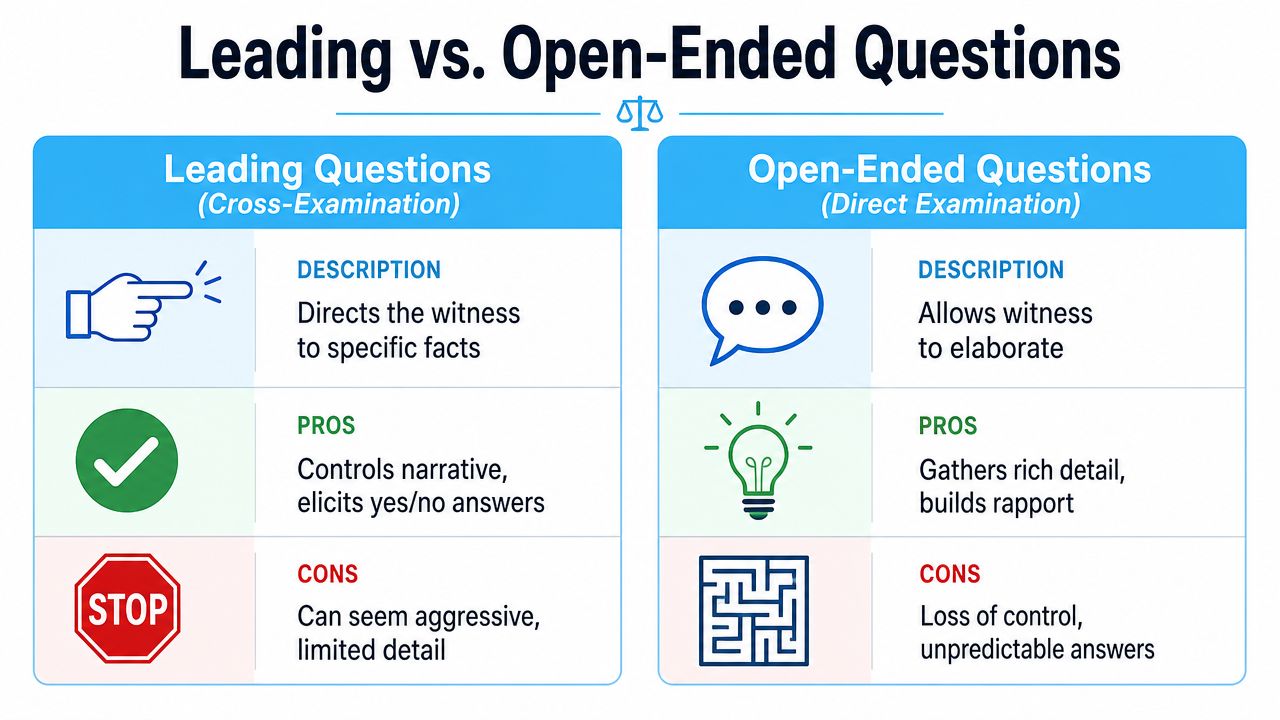
In cross, you don't want the witness composing. You want the witness confirming, denying, or exposing resistance in front of the audience. Leading questions are built for that purpose, and they're not some niche trick. Studies of trial transcripts show that about 70–90 percent of questions posed during cross-examination are leading, a pattern traced through common-law practice from English courts in the 1800s and summarized in this overview of cross-examination practice.
What a leading question actually does
It does three things at once:
- Supplies the fact so the witness isn't invited to invent the frame
- Limits the answer by pushing toward yes, no, or a narrow correction
- Signals relevance to the audience because the point arrives before the answer does
Compare these:
- Open-ended: "What did you do after the meeting?"
- Leading: "After the meeting, you called the vendor that same afternoon, correct?"
The second version isn't just shorter. It controls chronology, subject, and implication.
Good formulas for cross examination questions
These patterns hold up in court and outside it:
Timeline lock
"You received the email before the policy changed, correct?"Document anchor
"Page three of your report doesn't mention that test, does it?"Scope limit
"You didn't interview the supervisor yourself, right?"Prior statement setup
"At your deposition, you gave a different answer under oath, correct?"Hostile witness containment
"My question was whether you were present. You were present, yes?"
If you're adapting legal technique for interviews, Model Diplomat's cross-examination strategy is useful because it treats questioning as a structured exercise in claim testing rather than casual conversation.
Different witnesses require different pressure
An expert witness usually shouldn't be challenged with broad accusations. Pin the limits of the work instead. Ask what was reviewed, what wasn't, what assumptions were accepted, and what alternatives were not tested. The point is restraint. Let the incompleteness speak.
A factual witness with a prior inconsistent statement needs a firmer script. Confirm today's version first. Then tie the witness to the prior occasion. Then confront with the earlier words. Don't editorialize. The record does the damage.
For a media guest or executive interviewee, the danger is polished abstraction. Strip it away. Replace "We took that matter seriously" with "You did not notify customers until after the third complaint, correct?" Concrete questions beat reputation language every time.
What doesn't work
Bad leading questions usually fail for one of four reasons:
- They contain two facts at once, which gives the witness a place to escape
- They argue instead of ask, which sounds emotional and draws resistance
- They use loaded adjectives, which shifts attention from fact to tone
- They ask for explanation, often by sneaking in "why"
Short, neutral, factual questions feel less dramatic. They land harder.
The most effective leading questions don't sound clever. They sound inevitable.
The Art of Sequencing and Witness Control
A single strong question can help. A sequence wins.
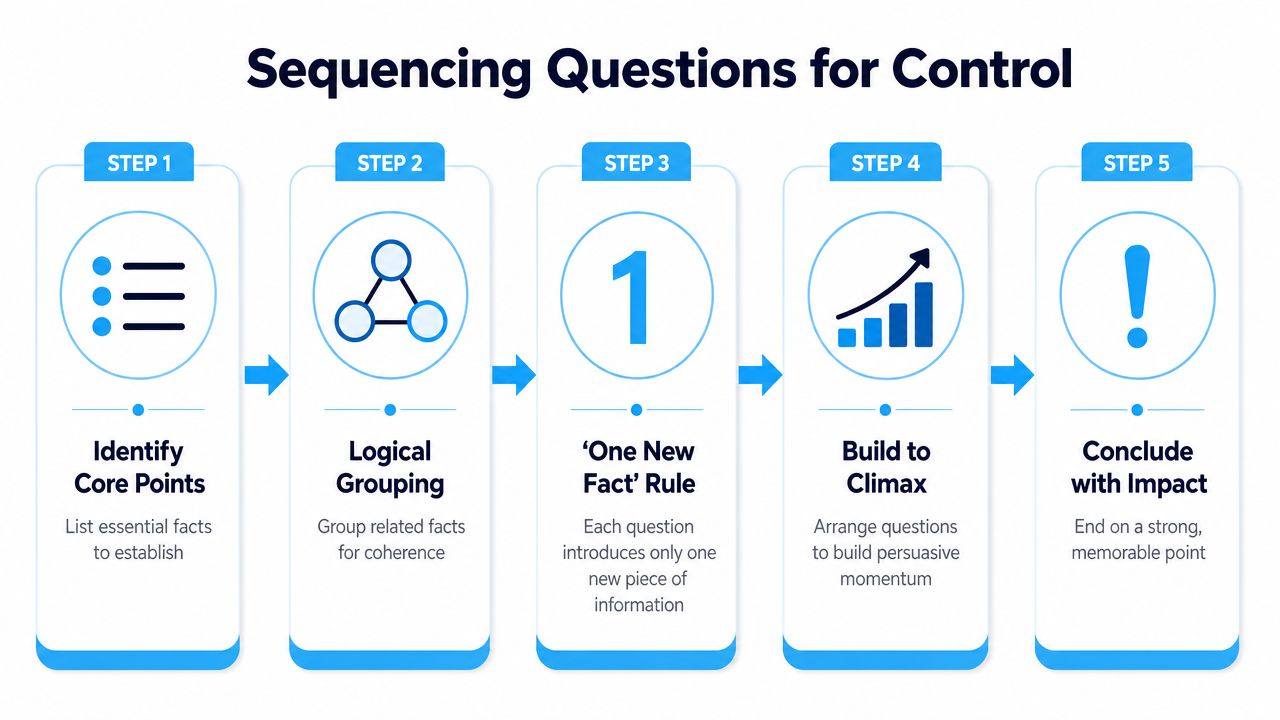
Cross examination questions work best when each one adds a brick. By the time you reach the final admission, the answer feels almost automatic because the witness has already accepted the premises. That's the discipline behind the old rule of one new fact per question. It isn't stylistic fussiness. It's control.
Empirical studies of mock trials show that examiners who keep a yes/no cadence across 80–90% of a cross achieve higher juror recall of targeted points, with 68–75% recall compared with 40–50% when questions allow explanations, according to research published through the University of South Carolina School of Law.
Build sequences that feel unavoidable
Suppose you're questioning a manager about a safety issue. Don't ask the conclusion first.
Weak version: "You ignored the warnings, didn't you?"
Better sequence:
- You received the first complaint in May.
- You received another in June.
- Neither complaint was forwarded to customers.
- The product remained on sale through July.
- So customers weren't warned during that period, correct?
Each question is easier to answer than the conclusion standing alone. That's the power of sequencing. You're not forcing a dramatic confession. You're removing room for retreat.
Use loops and transitions deliberately
Looping is one of the simplest control tools. You take a favorable word or phrase from the witness and feed it back into the next question.
Example:
- "You said the review was 'informal,' correct?"
- "That informal review wasn't documented anywhere, was it?"
- "And because it wasn't documented, nobody outside that meeting could verify it, right?"
The repeated phrase keeps the audience oriented and prevents drift. It also makes the witness live inside the language already used.
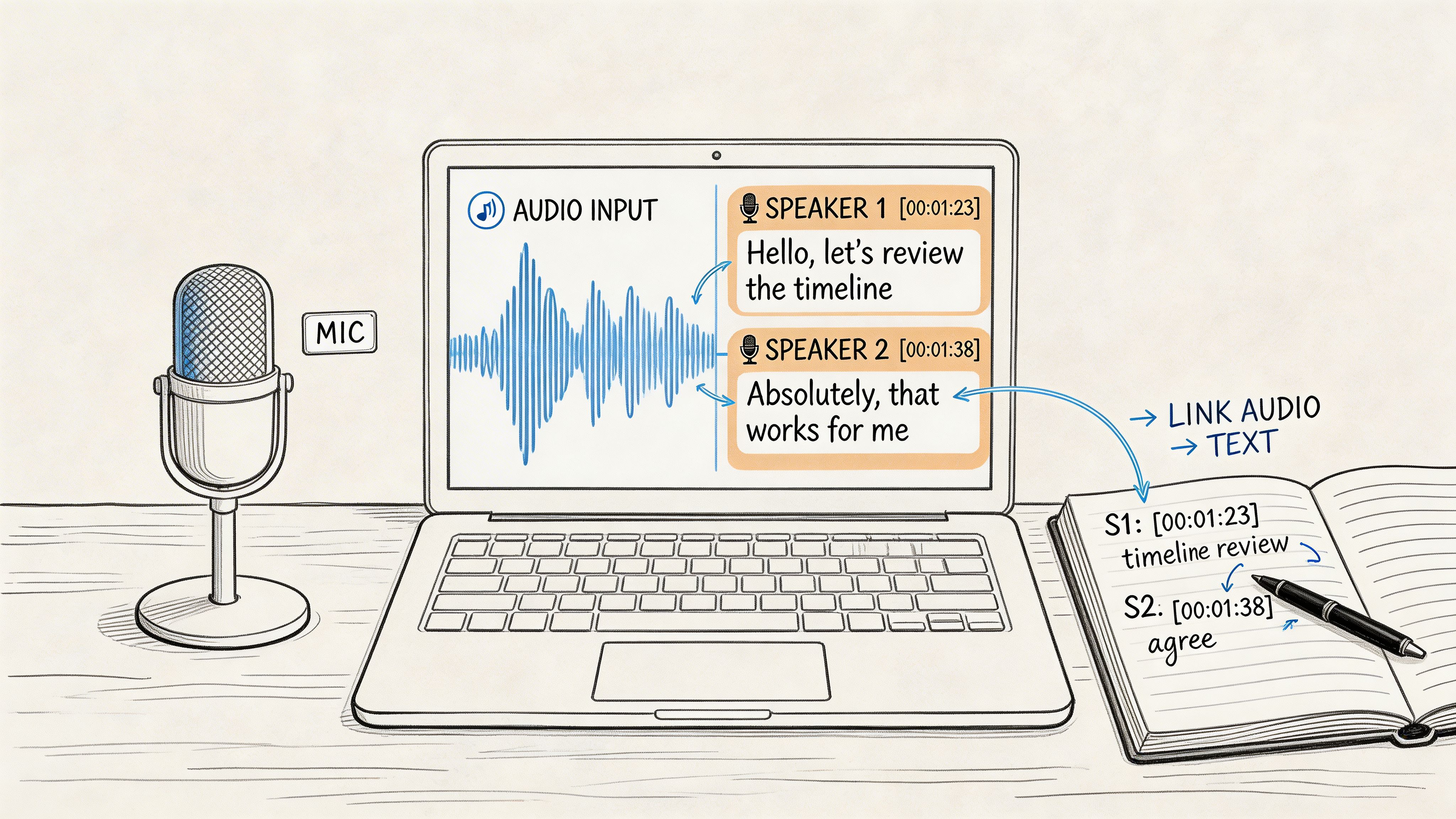
For interviewers working outside court, a transcript-first workflow helps expose where your sequences broke down. Reviewing prior conversations and preparing line-by-line follow-ups is much easier when you can search exact wording, which is why structured interview prep matters in guides like this piece on conducting effective interviews.
A practical sequencing checklist
Before any live cross or recorded interview, test each line against this checklist:
- Does each question contain one new fact? If not, split it.
- Can the witness answer with yes, no, or a narrow correction? If not, tighten it.
- Is the next question dependent on the prior answer? It should feel like a chain.
- Do you know the source for each fact? If not, don't ask it.
- Is the final question the strongest ending point? Save your clean takeaway.
Documents are part of the sequence
A document shouldn't appear as a surprise prop. It should arrive at the exact moment the witness has committed to a version that the record can test.
That means your sequence often looks like this:
| Stage | What you do |
|---|---|
| Commit | Get the witness to state the current version clearly |
| Authenticate context | Confirm date, meeting, report, email, or prior testimony |
| Confront | Show the exact contrary language or omission |
| Close | Ask the narrow question that matters |
This structure works in a courtroom and in journalism. A host confronting a guest with a prior clip is doing the same thing a lawyer does with a deposition page. The difference is medium, not method.
Control comes from pace. Ask, receive, move. Don't linger after the admission.
End while the point is clean
A lot of examiners ruin the moment by celebrating too early. They get the admission, then ask for agreement with the moral of the story. That's unnecessary and often dangerous.
If the witness has admitted the key timeline, contradiction, or omission, stop that line and move on. The audience can draw the conclusion. Your job is to make the path impossible to miss.
Handling Objections and Difficult Witnesses
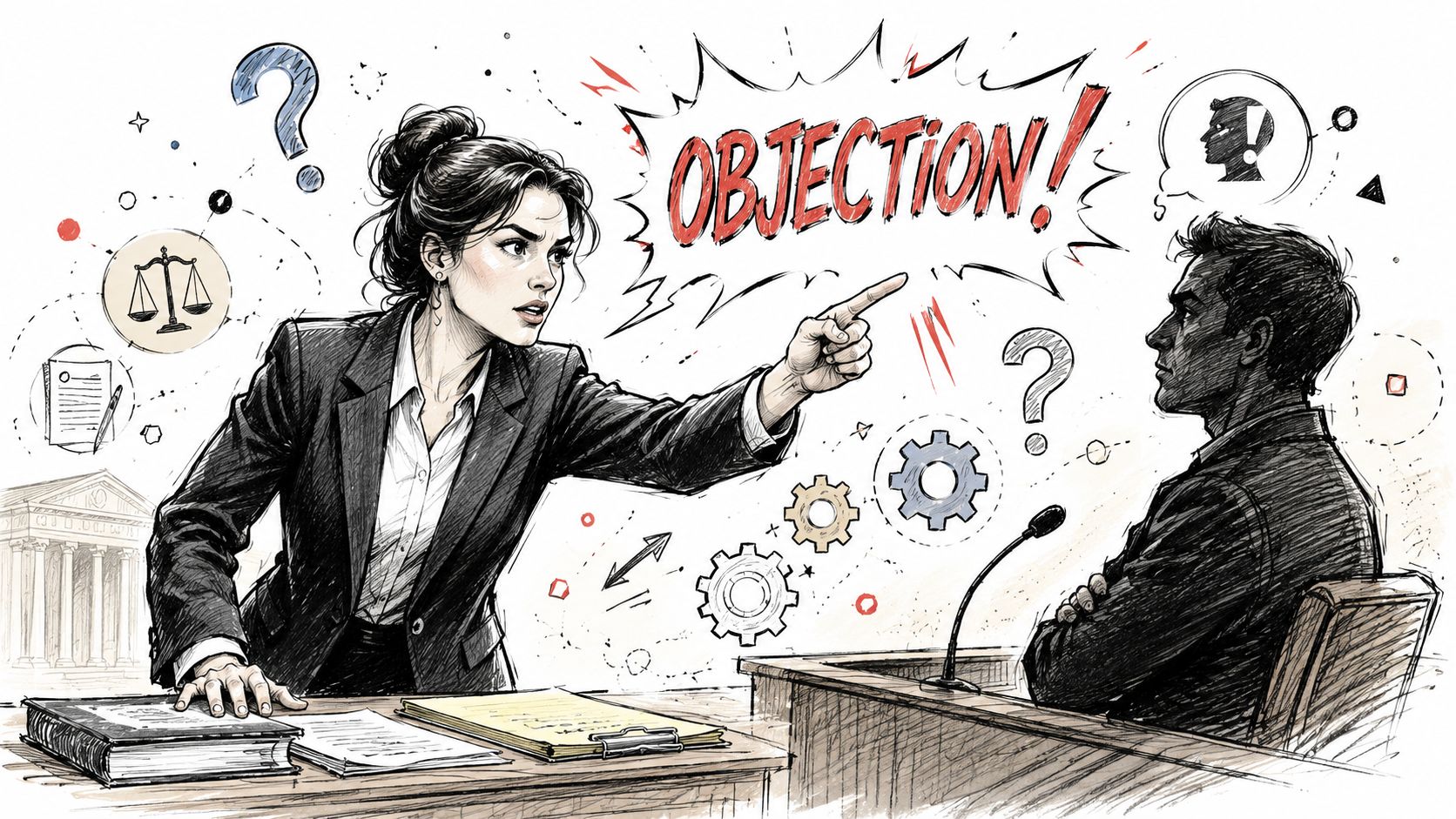
Even a tight script gets stress-tested in real time. Witnesses evade. Opposing counsel objects. Interview guests filibuster. The practical question isn't whether disruption happens. It's whether you know how to regain control without looking rattled.
Stop reading demeanor like it's evidence
A landmark meta-analysis found that people's ability to detect lies from nonverbal cues alone is only slightly better than chance, at about 54% accuracy, as discussed in the Texas Law Review analysis of cross-examination's limits. That matters because many inexperienced examiners waste energy trying to "read" fidgeting, eye contact, or confidence.
Don't build your strategy around body language. Build it around question structure. If the witness is slippery, the answer isn't amateur psychology. It's a narrower question, a firmer sequence, or a document.
Rephrase instead of fighting the objection
The common objection traps are predictable.
Argumentative questions
Bad: "So your entire story is nonsense, isn't it?"
Better: "Your account today differs from your earlier statement, correct?"
Assumes facts not in evidence
Bad: "When you hid the report, that was intentional, right?"
Better: "You received the report on Tuesday. You didn't forward it on Tuesday, correct?"
Compound questions
Bad: "You skipped the inspection and failed to notify the client, didn't you?"
Better: break it into two questions and make each stand alone.
A calm rephrase does more than satisfy the court. It tells the audience you know exactly what fact you need and don't need theatrics to get there.
How to handle evasive answers
Difficult witnesses usually fall into a few categories:
The explainer
Answers the question, then keeps talking. Cut gently but fast. "Thank you. My question is just whether the meeting happened on Friday."The detour artist
Responds to a different question. Bring it back without commentary. "I asked whether you approved the email."The memory shield
Uses "I don't recall" as cover. Test the claimed memory gap with surrounding facts, records, and prior statements. Don't accuse. Box it.The debater
Wants to argue with your phrasing. Narrow the proposition further until debate sounds unreasonable.
For lawyers dealing with especially combative testimony, these cross-examination skills for trials offer a solid practical lens on keeping difficult witnesses contained.
Listening is part of control
People think control means domination. It doesn't. It means hearing the exact word that changed your line and deciding whether to tighten, impeach, or move on. That's why disciplined examiners listen harder than they speak.
If you want sharper follow-ups in interviews or depositions, the same habits used in witness handling overlap with active listening skills that improve high-stakes conversations. You need to catch the hedge, the unexplained shift, and the phrase worth looping back.
A quick demonstration helps before watching live technique in action.
When a witness evades, don't show irritation first. Show precision first.
The audience notices composure. So does the witness. If you stay exact, the evasion often helps you more than a clean answer would.
Review and Refine Your Technique with Transcripts
Many believe the examination ends when the witness steps down or the recording stops. That's when crucial improvement starts.
If you want better cross examination questions next time, study the actual language from last time. Memory lies about performance. Transcripts don't. They show where you lost control, where you asked one question too many, where your phrasing invited explanation, and where a strong point got buried in clutter.
What to look for in the transcript
Start with a practical audit.
- Find your open-ended leaks. Where did you ask a question that let the witness narrate?
- Mark your strongest admissions. Which answers were clean and useful enough to reuse in argument, reporting, or follow-up content?
- Spot sequence failures. Where did a line jump too fast and invite resistance?
- Track repeated words. Sometimes your own phrasing reveals uncertainty, especially when you keep adding qualifiers.
- Note missed impeachment chances. A transcript often makes contradictions obvious that were harder to catch live.
Turn review into a repeatable training loop
The fastest improvement usually comes from comparing three things side by side: your outline, the transcript, and the exact moment the witness slipped your frame.
A simple review loop works well:
- Read the transcript once without editing.
- Highlight every answer that was longer than necessary.
- Rewrite the question above it into a tighter leading form.
- Identify one line you should have ended earlier.
- Save the best sequences as templates for future use.
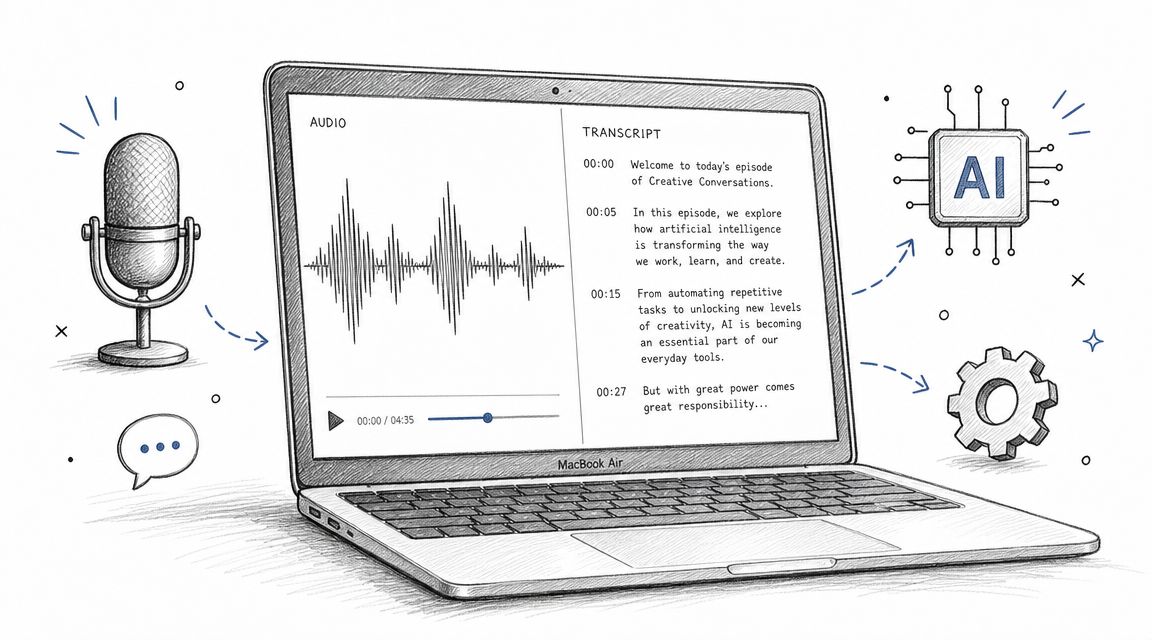
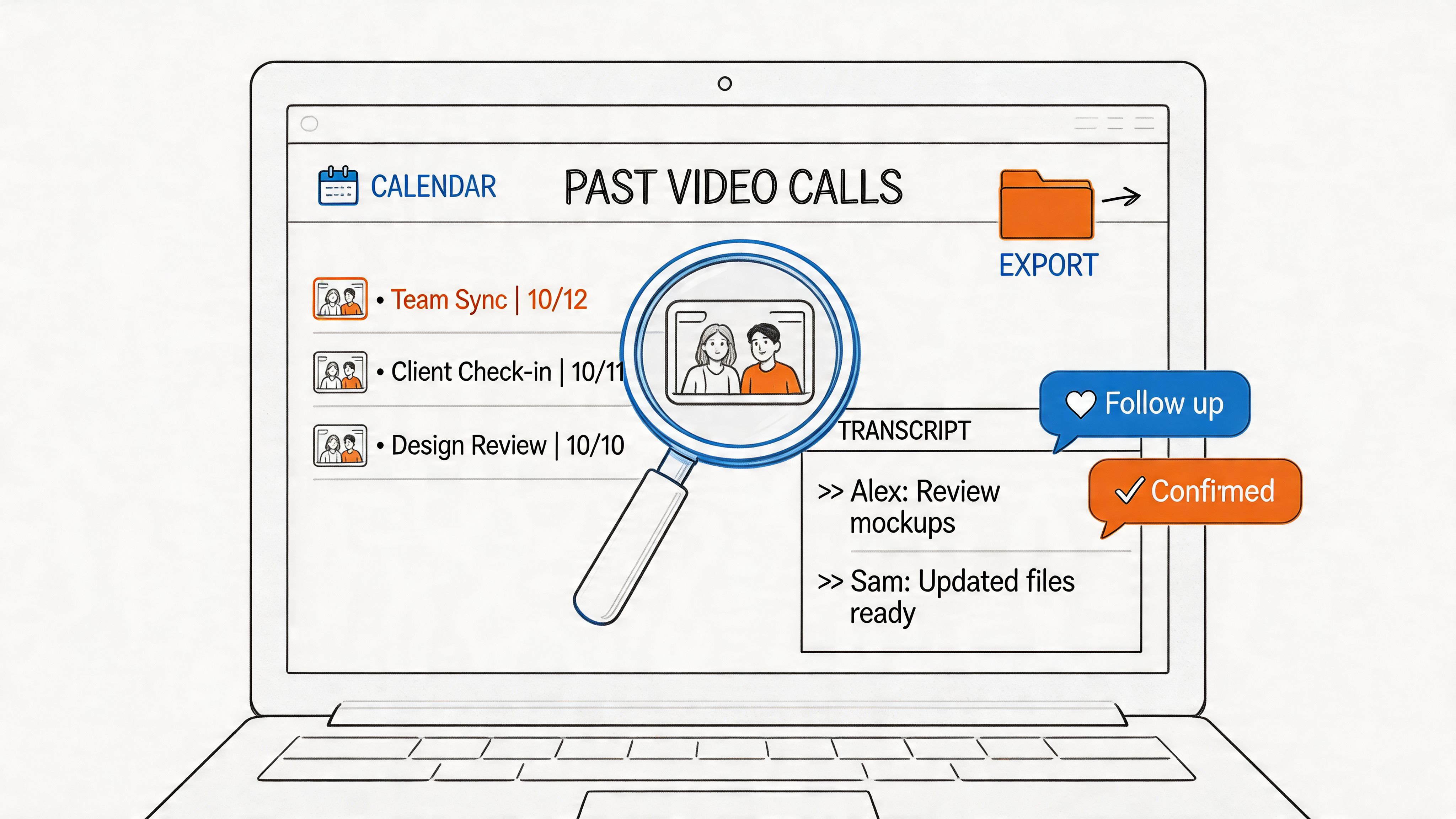
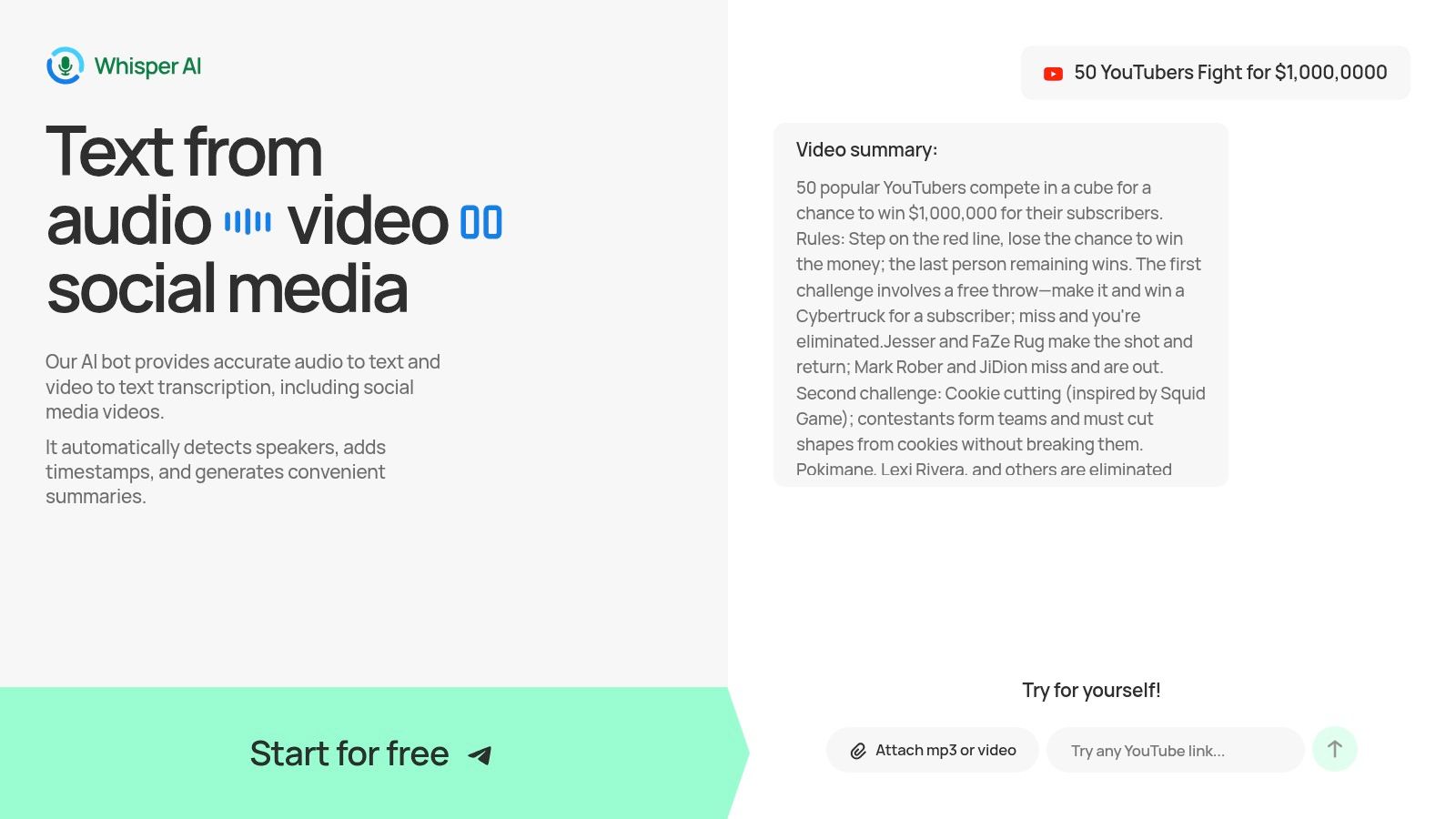
For deposition-heavy practice, searchable text offers a significant advantage. Instead of scrubbing through recordings manually, you can isolate one witness, one issue, or one phrase and study your technique at the sentence level. That's especially useful when reviewing a transcript of deposition workflow and turning raw testimony into a cleaner examination plan for trial or a sharper editorial interview.
Why this matters outside court too
Journalists can use transcript review to sharpen follow-up interviews. Podcasters can identify where guests hijacked the structure. Founders and operators can review internal interviews to see which questions produced vague assurances instead of accountable answers.
The point isn't perfection. It's pattern recognition. Once you see your own habits on the page, you stop guessing about what works.
A good cross rarely feels dramatic in the transcript. It feels controlled, spare, and easy to follow. That's the standard worth chasing.
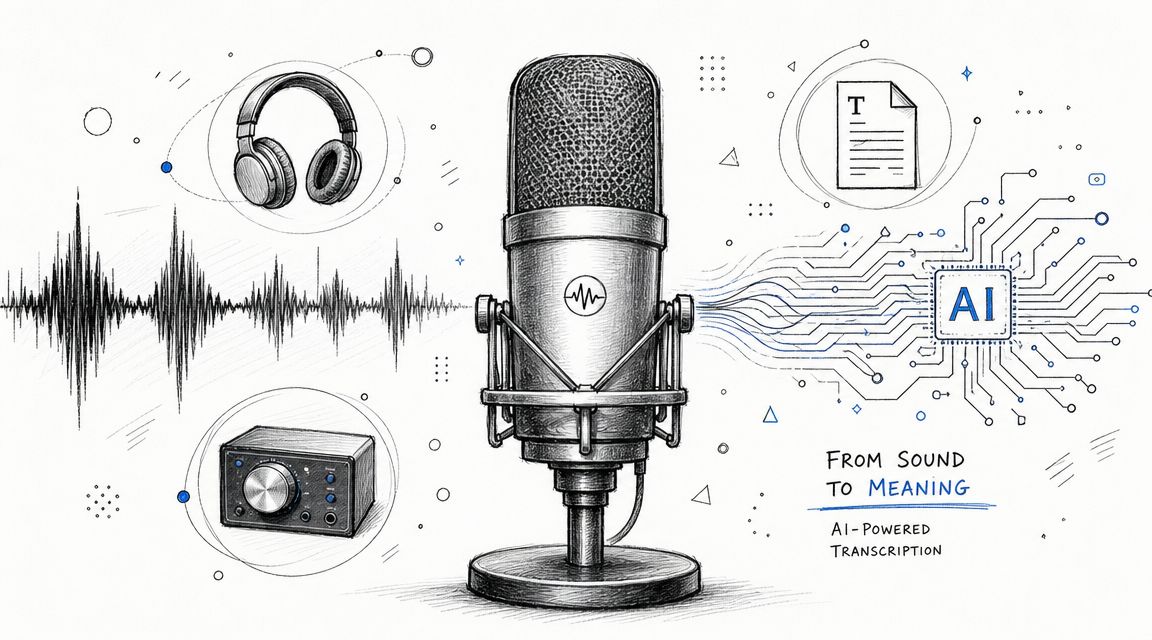
Whisper AI helps turn interviews, depositions, podcasts, and recorded meetings into searchable transcripts and concise summaries, so you can find admissions, trace themes, and refine your questioning without spending hours reviewing footage. If you want a faster way to study your own technique and prepare sharper follow-ups, try Whisper AI.