Unlock Impactful Executive Summary Writing
You've probably been here. The report is done, the meeting notes are messy, three stakeholders want different things, and someone says, “Can you turn this into an executive summary by noon?”
That request sounds simple until you remember what is at stake. The summary isn't a recap for people with extra time. It's the document that determines whether a budget gets approved, a proposal gets read, or a project gets delayed because nobody could see the point fast enough.
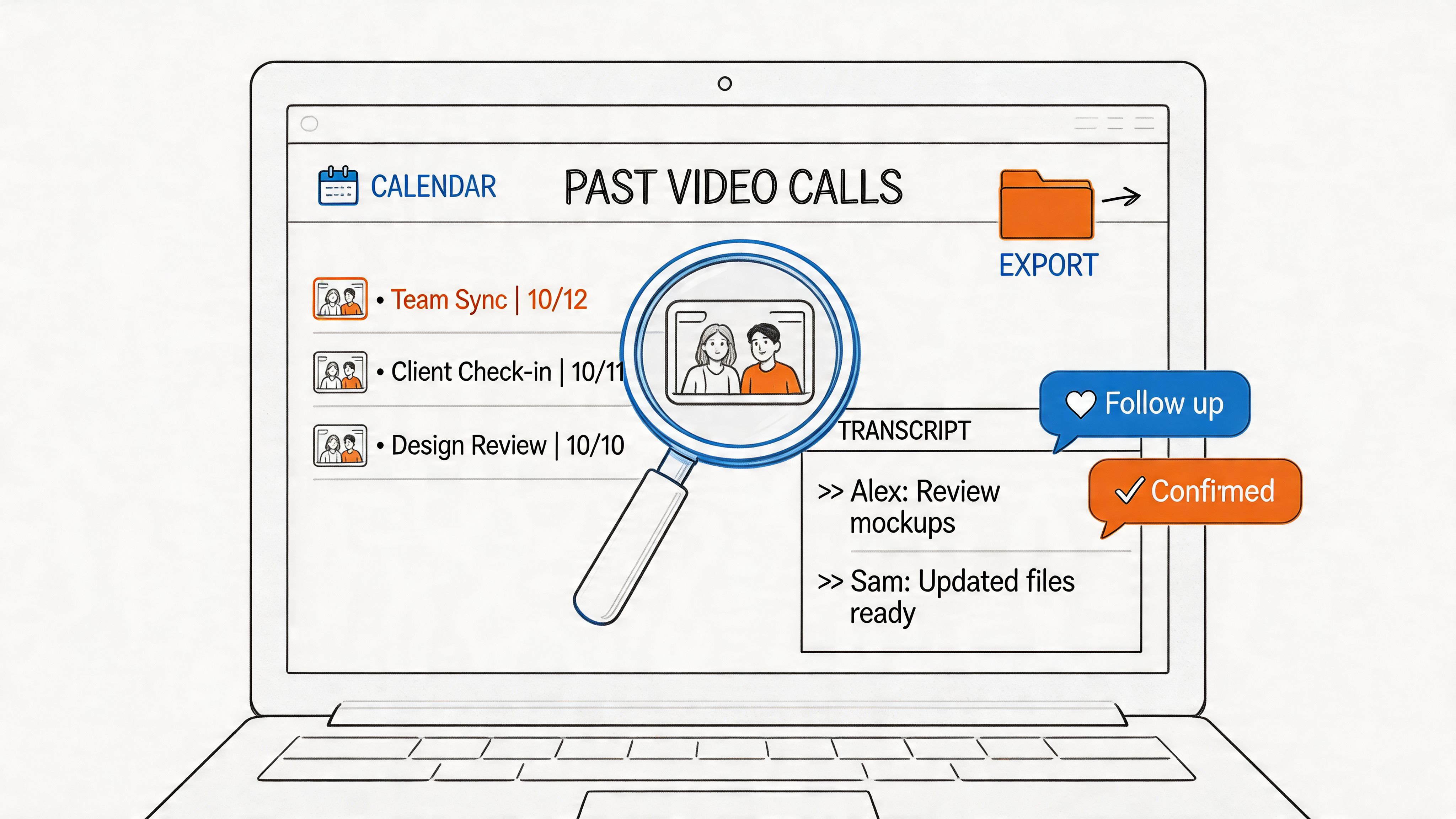
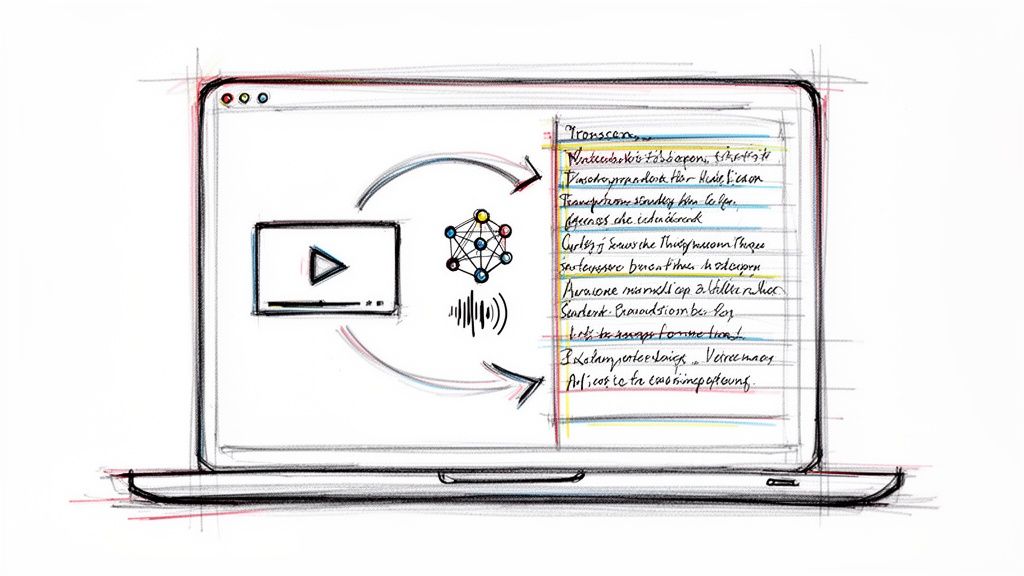
Executive summary writing has also changed. It's no longer just about condensing a clean report into a shorter version. Many teams now build summaries from board discussions, sales calls, interviews, workshops, and recorded meetings. The source material is often spoken, repetitive, and unstructured. Turning that into a crisp, decision-ready document is a different skill.
Why Your Executive Summary Is Make-or-Break
Monday, 8:30 a.m. A leadership team opens a 40-page proposal five minutes before a funding review. They do not read the full document. They read the summary, look for the recommendation, and decide whether the rest deserves attention.
That is why the executive summary carries more weight than the report behind it. In practice, it often becomes the report for the people who control budget, approval, or priority.
I have seen strong analysis lose support because the summary buried the decision under background. I have also seen rough source material, including meeting transcripts, interview recordings, and workshop notes, turned into a sharp summary that got a stalled initiative approved. The difference was not writing flair. The writer knew what executives needed to act.
It has one job
An executive summary needs to help a senior reader make a decision quickly and with confidence.
Writers get into trouble when they treat the summary like a mini version of everything. They try to prove they did the work. They include every caveat from the workshop, every side discussion from the transcript, and every intermediate finding from the analysis. That instinct is understandable. It also makes the document harder to use.
A CFO reviewing a cost reduction proposal wants a clear statement of the problem, the financial implications, the recommendation, and the risk of doing nothing. An executive sponsor reviewing a product strategy update wants the chosen direction, the reasons behind it, and the trade-offs. In both cases, the reader is scanning for a call they can support, challenge, or send back for revision.
The same rule shows up in other business writing that has to earn attention fast. Strong press release headline examples work because they communicate the point immediately. Executive summaries succeed for the same reason.
The stakes are higher than clarity
A weak summary does more than confuse people. It changes outcomes.
If the recommendation is vague, the project gets delayed. If the evidence is buried, stakeholders argue about facts that were already resolved. If the summary reflects the politics of the meeting instead of the conclusion, leaders leave with different interpretations and the team has to spend another week cleaning it up.
This gets harder when the source material is not a polished report. Many teams now build executive summaries from Zoom calls, customer interviews, board discussions, Slack threads, and live workshops. Useful insight is there, but it is scattered across spoken comments, repeated points, and unfinished thoughts. The writer has to decide what counts, what supports the recommendation, and what belongs in the appendix or nowhere at all.
That is a real trade-off. Summarize too loosely, and the document feels shallow. Include too much of the raw conversation, and the decision gets buried in noise.
What decision-makers look for
A summary earns trust when it does three things well:
- Defines the business issue clearly so the reader understands why this needs attention now
- Selects the evidence that matters instead of replaying every discussion that produced it
- Presents a specific recommendation with enough detail to approve, reject, or revise
Miss one of those, and the summary feels unfinished. Senior readers notice that fast.
The standard is not whether the summary sounds polished. The standard is whether someone can read it under time pressure and know what they are being asked to decide.
Planning Your Summary Before You Write a Word
Most bad executive summaries are doomed before the first sentence. The writer starts drafting without deciding who the summary is for, what decision it needs to support, or what belongs in the document.
That's why the best workflow starts before writing. And in practice, one rule matters more than is widely realized. A practical benchmark is to write the executive summary last, after the full document is complete, and to keep it at about 10% of the source document length, as noted in Swydo's guide to executive summaries.
Put the planning sequence in front of you first.

Start with the reader, not the document
A board member, a department head, and an investor can read the same report and care about different things.
A board member asks, “What decision am I being asked to make?”
An operations leader asks, “What changes on Monday?”
An investor asks, “Why is this commercially compelling?”
If you don't know the reader's lens, your summary drifts toward generic language. That's when writers fall back on phrases like “enhance efficiency” or “drive alignment,” which sound polished but say almost nothing.
Use a simple set of planning questions before you draft:
- What decision does this person need to make
- What do they care about most
- What objections are likely
- What information is essential for this audience
- What can be left in the main document
Define the one takeaway
A summary can include multiple findings. It cannot have multiple centers.
Before writing, force yourself to finish this sentence: After reading this, the audience should understand that...
If you can't finish it in one line, your thinking is still too loose.
Here's the difference in practice:
| Weak objective | Strong objective |
|---|---|
| Summarize the research project | Show why the project should move into implementation |
| Recap the stakeholder meeting | Clarify the final decision, unresolved risks, and next owners |
| Cover the vendor evaluation | Recommend one platform and explain why it wins |
The strong version gives the summary direction. It also tells you what to leave out.
Planning rule: If a detail doesn't help the reader make the intended decision, it probably belongs in the full report, not the summary.
Write it after the work is done
People resist this because they want the summary to guide the main document. That instinct makes sense, but it often produces summaries that overpromise, misstate findings, or lock onto points that later change.
Writing the summary last solves a common business problem. It keeps the top-level message aligned with what the evidence supports. That matters even more when your source material includes meeting recordings and transcript-based research, because the signal usually becomes clearer only after the analysis is complete.
A practical workflow looks like this:
- Finish the underlying material first. That may be a report, proposal, transcript review, or synthesis memo.
- Pull out the highest-stakes findings. Don't start with chronology. Start with the few points that affect the decision.
- Group supporting details under those findings. Facts, metrics, risks, and dependencies belong here.
- Draft the summary as a standalone document. Assume the reader won't open anything else.
- Cut hard. If the paragraph sounds like scene-setting rather than decision support, trim it.
This discipline makes executive summary writing cleaner, faster, and more credible. It also prevents a common mistake: a polished summary that doesn't quite match the actual report.
The Anatomy of a Powerful Executive Summary
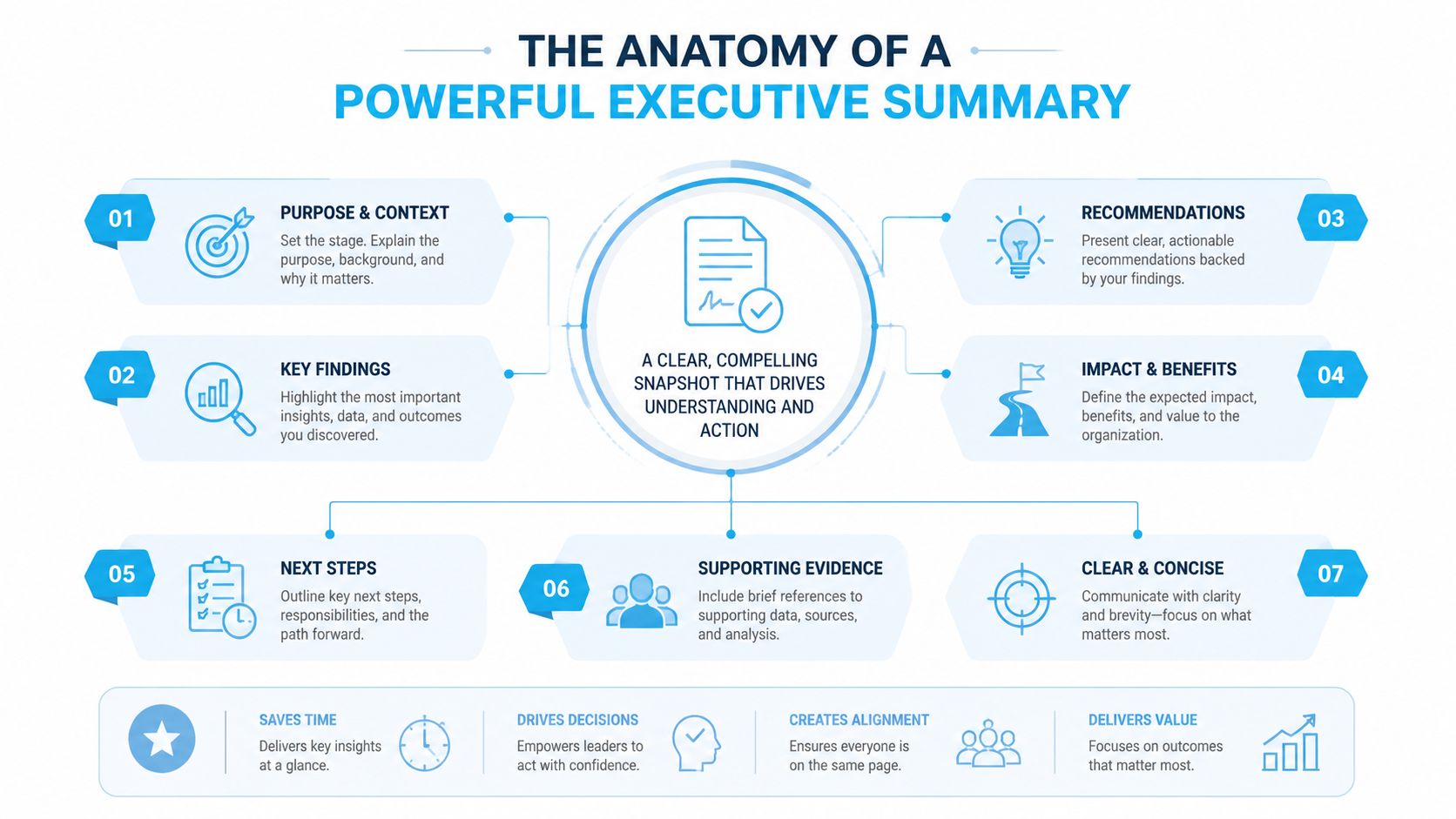
A strong executive summary follows a simple logic chain. What's the issue. What did you find. What should happen next. Most weak summaries break that chain somewhere in the middle.
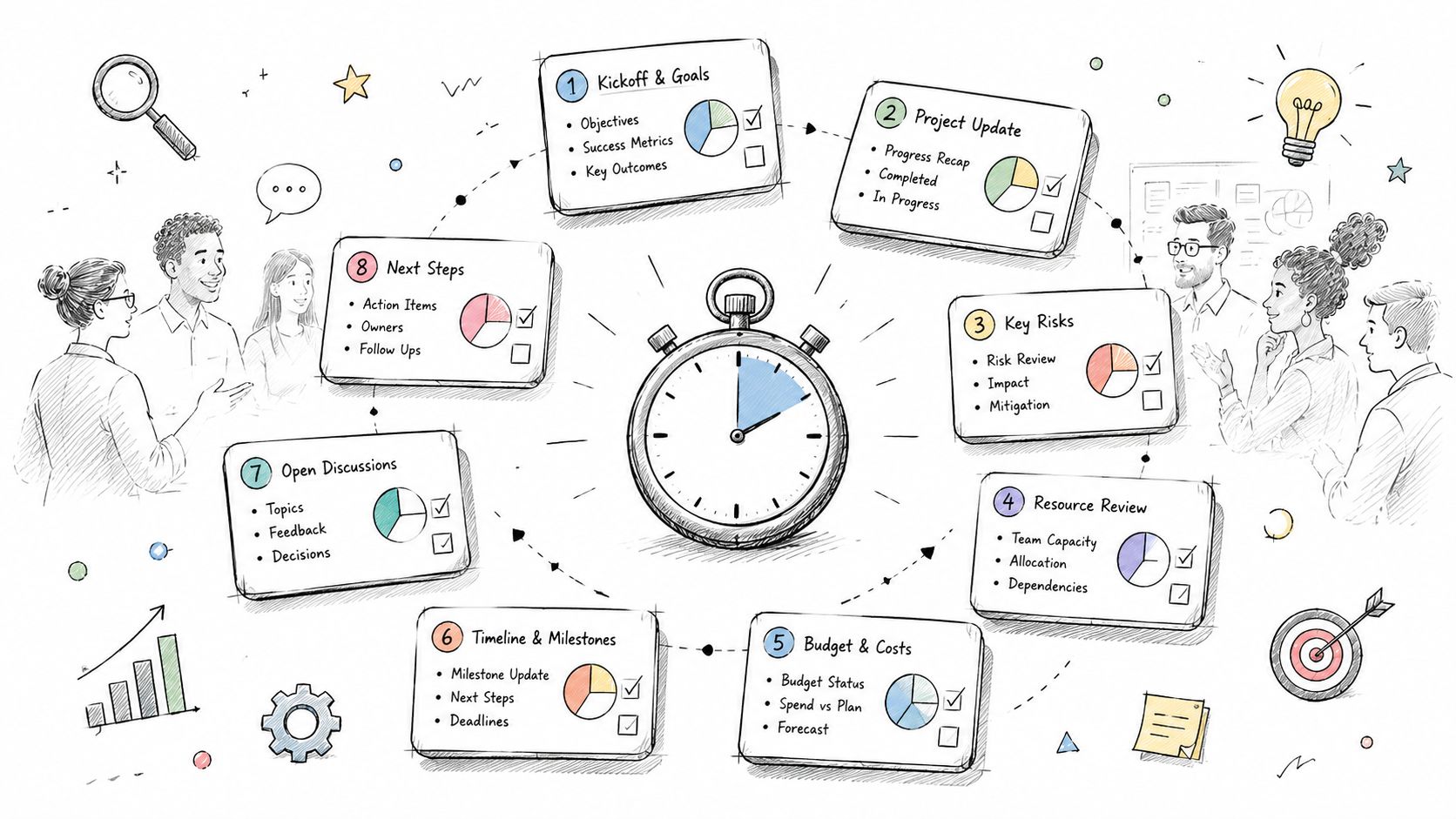
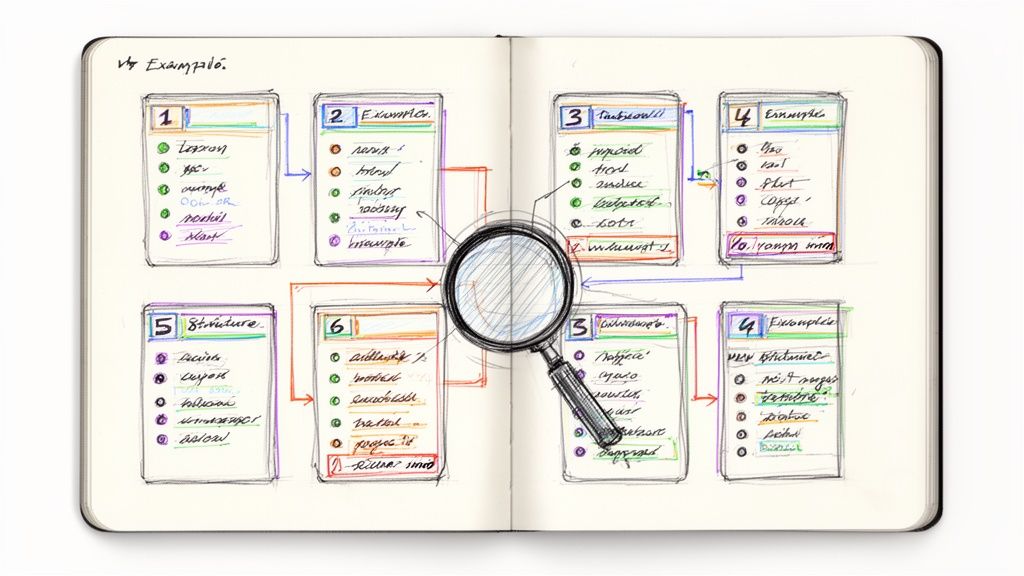
Current guidance is more structured than many people realize. Asana recommends a summary built around five core parts: introduction or problem statement, proposed solution, value and impact, key findings and analysis, and conclusion or next steps. It also recommends keeping the summary to about 5 to 10% of the main document's length in its executive summary examples guide.
Put the structure in front of the page before you write.
Open with the conclusion, not the warm-up
Most business summaries begin too early. They start with context, team background, market shifts, or a paragraph that politely circles the issue.
Don't do that.
Your first lines should identify the problem and the main conclusion. If the recommendation is to replace a marketing automation platform, say so. If the finding is that the current process is slowing sales follow-up, say that plainly.
A practical opening sounds like this:
The current marketing automation platform is limiting lead routing, reporting, and campaign speed. Based on the vendor review, the recommended next step is to approve migration to the shortlisted platform in the next planning cycle.
That opening gives the reader a frame. Everything else in the summary now has a job.
Make findings earn their place
The findings section is where most summaries either become persuasive or collapse into mush.
The point isn't to dump data. The point is to show the evidence that directly supports the recommendation. If your report includes twenty observations, the summary may only need three or four. Pick the ones that explain the decision.
Take a realistic business scenario. A company is evaluating a new marketing automation platform. The full report includes system limitations, stakeholder complaints, integration requirements, and implementation considerations.
In the executive summary, the findings might focus on:
- Operational friction: marketing ops can't build campaigns quickly because core workflows are too manual
- Reporting gaps: leadership can't get consistent funnel visibility across regions
- Scalability concerns: the current setup makes segmentation and lifecycle automation harder than it should be
That creates a line of reasoning. The recommendation no longer feels abrupt.
For teams that also create fundraising or strategic narrative materials, the same discipline appears in resources on building high-velocity investment decks. Strong decks and strong summaries both reward message hierarchy. Lead with the point, support it with proof, and don't bury the ask.
If you want an even sharper model for arranging information by importance, the inverted pyramid style of writing is useful. It forces the most decision-relevant information to the top, where busy readers will see it.
Recommendations should be explicit
A surprising number of summaries stop after the findings, as if the reader will assemble the next step on their own.
That's not strategic writing. That's unfinished analysis.
Your recommendation should answer four practical questions:
| Question | What the summary should provide |
|---|---|
| What should happen | The specific action or decision |
| Why now | The business reason for acting now rather than later |
| What result is expected | The intended operational or strategic outcome |
| What happens next | The immediate next step, owner, or approval needed |
A clean recommendation might say that leadership should approve vendor selection, authorize implementation planning, and assign cross-functional owners for migration. It doesn't need to include the entire project plan. It does need to remove ambiguity.
Keep the chain intact
A good summary reads like one argument, not three unrelated blocks.
The opening states the issue and direction.
The findings justify that direction.
The recommendation turns the analysis into action.
When this chain breaks, readers lose confidence fast. You can feel it when a summary presents serious findings and then closes with a vague line like “further discussion is recommended.” If the evidence is strong enough to summarize, it should usually be strong enough to support a clear next move.
How to Extract and Synthesize Key Information
Monday at 8:30 a.m., a leadership team wants a one-page executive summary before the 10 a.m. steering meeting. The source material is not a clean report. It is a board deck from last quarter, two customer interview recordings, a messy workshop transcript, scattered Slack notes, and a sales call where three people argued about pricing for twenty minutes. That is the true extraction problem.
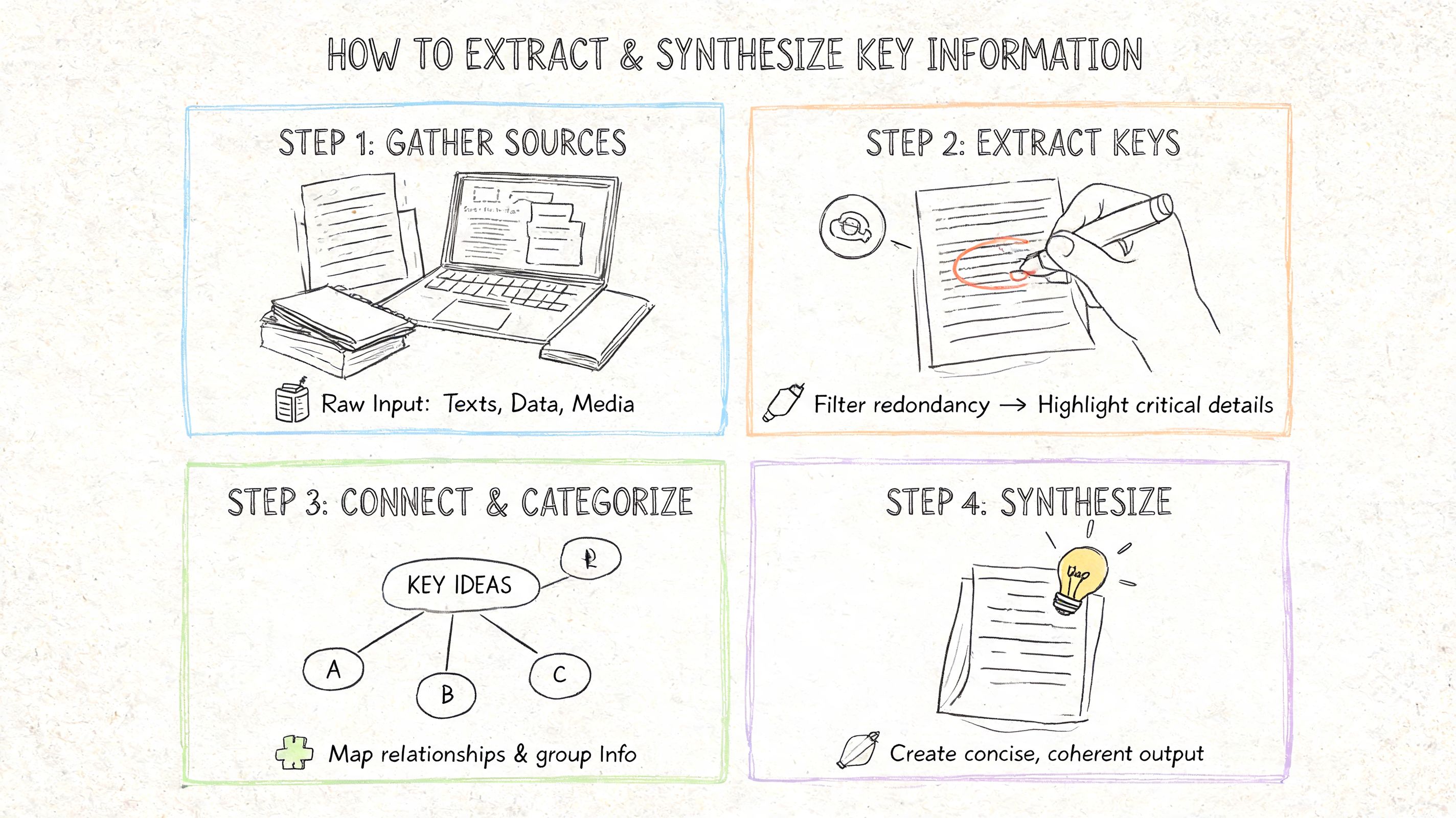
A strong executive summary starts before drafting. It starts with triage. The writer has to decide what affects a business decision and what only reflects discussion, history, or noise.
Pull signal from written reports
Written reports usually hide their most useful content under too much setup. I look for the decision question first, then scan for the evidence that changes the answer. Background stays in the source document unless it changes cost, risk, timing, or expected results.
Use a simple filter:
- Keep findings that change a decision, priority, budget, timeline, or risk profile
- Cut process detail and historical explanation that do not affect the recommendation
- Flag any mismatch between the evidence and the stated conclusion
This sounds obvious. It is where many summaries fail. Teams often mistake volume for support and pull in every chart, caveat, and side note. Senior readers do not need a compressed report. They need the few facts that justify a decision.
Spoken material needs a different standard
Transcripts, interviews, and live discussions create a different problem. People speak in half-formed ideas. They repeat themselves. They disagree, revise, and wander. If you condense that material line by line, the result reads like meeting notes, not an executive summary.
Treat spoken content as evidence to be sorted, not prose to be trimmed.
Look for these markers:
| Signal in transcript | Why it matters in the summary |
|---|---|
| Repeated concerns | Repetition usually points to operational pain or unresolved friction |
| Final decisions | These belong near the top because they shape the rest of the summary |
| Named action items | They show ownership and immediate next steps |
| Metrics or KPI references | They separate business evidence from opinion |
| Disagreements | They expose risk, dependency, or lack of alignment |
SPINS makes a useful point here. Strong executive summaries focus on agreed KPIs, then turn those measures into action in its guidance on writing an executive summary. That matters even more with transcripts because a one-hour meeting may contain pages of commentary and only a handful of numbers that should survive into the final summary.
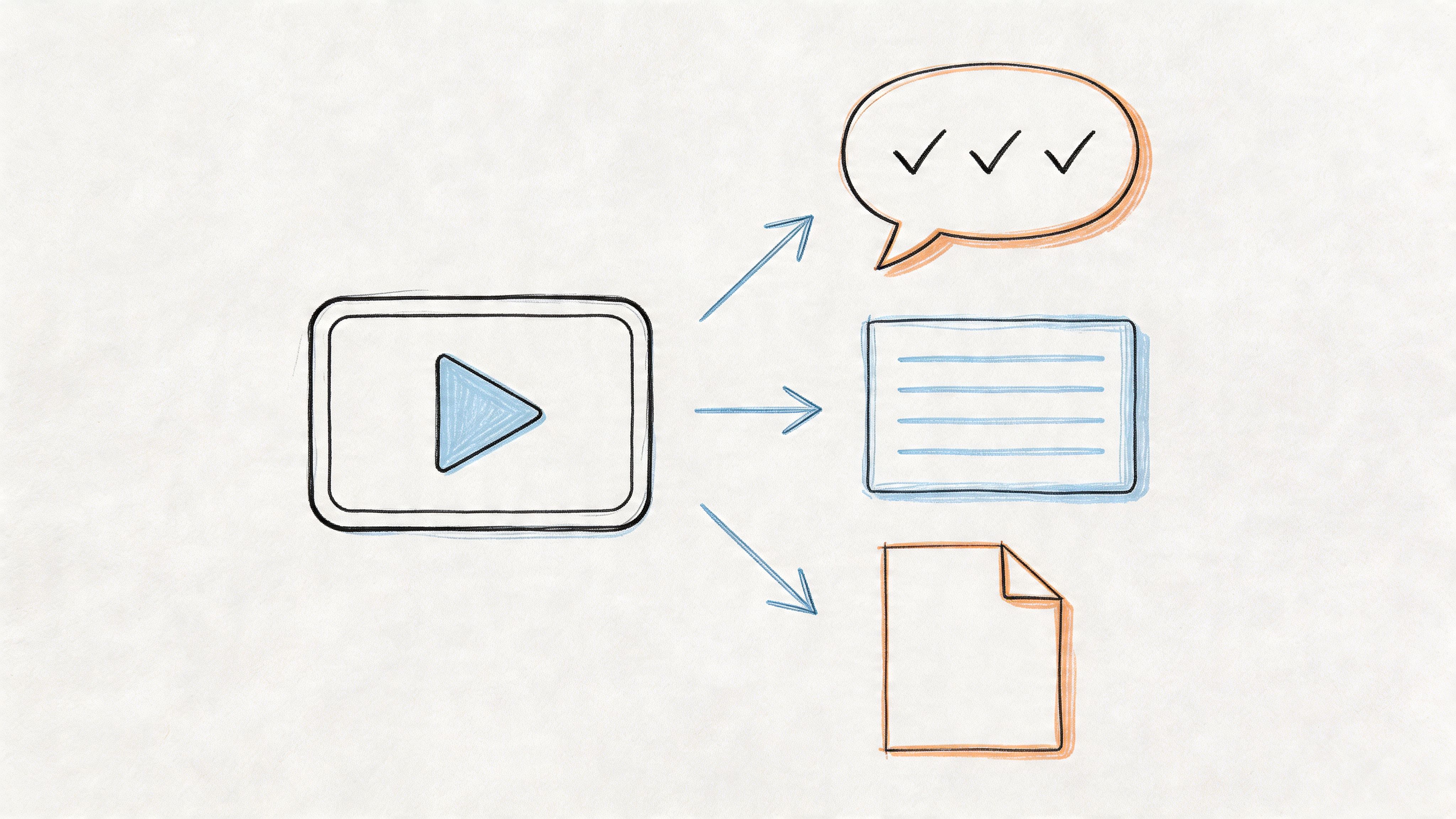
Summarize the decision, the evidence behind it, and the actions it created.
Turn fragments into a decision narrative
Once the material is extracted, the next job is synthesis. This is the part many capable analysts skip. They collect the right points, then present them as a list. Lists rarely persuade executives unless the decision is already made.
Group the material into three working buckets:
- What happened or was decided
- Why it matters to the business
- What needs to happen next
Consider a quarterly pipeline review. Sales says lead quality dropped. Marketing says campaign volume is up. Finance says conversion efficiency is weakening. A regional manager says reps are waiting too long to follow up. None of those comments belongs in the summary as-is.
The synthesized version is tighter and more useful: pipeline volume remains strong, but weak qualification and delayed follow-up are reducing conversion confidence; leadership should tighten routing rules and revise qualification criteria before the next campaign cycle.
That is the standard. The summary should show business logic, not replay discussion.
If you want a cleaner distinction between neutral condensation and decision-focused synthesis, this guide on how to write an objective summary is a useful reference before shifting into executive-level framing.
Use tools where they save real time
Audio and video sources create a practical constraint. Reviewing them manually is possible, but it is slow, expensive, and easy to get wrong under deadline pressure.
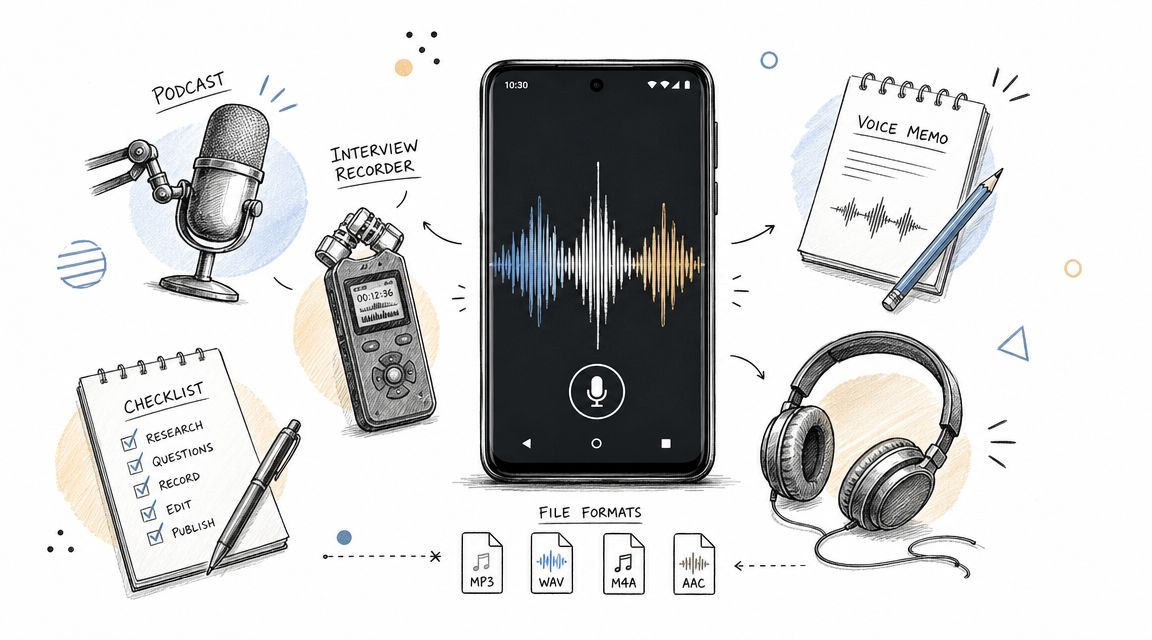
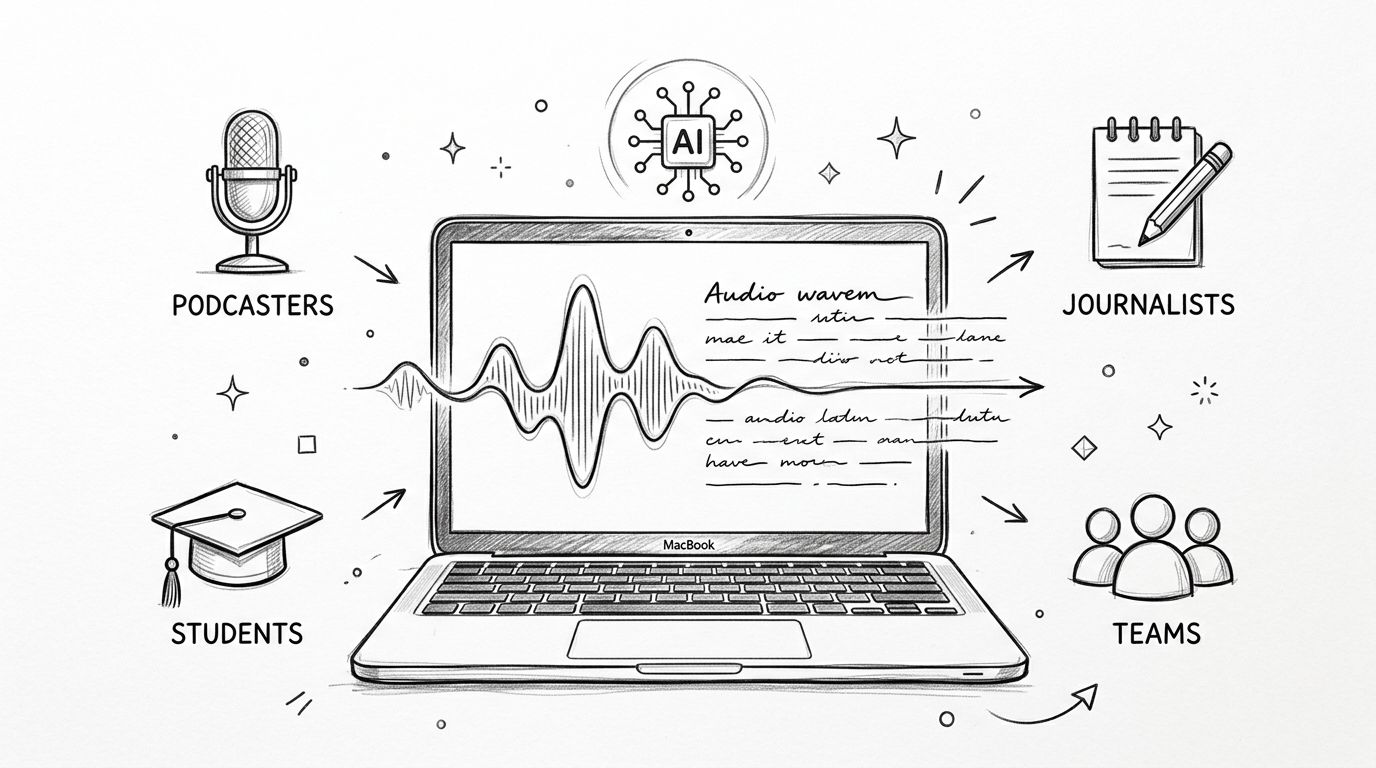
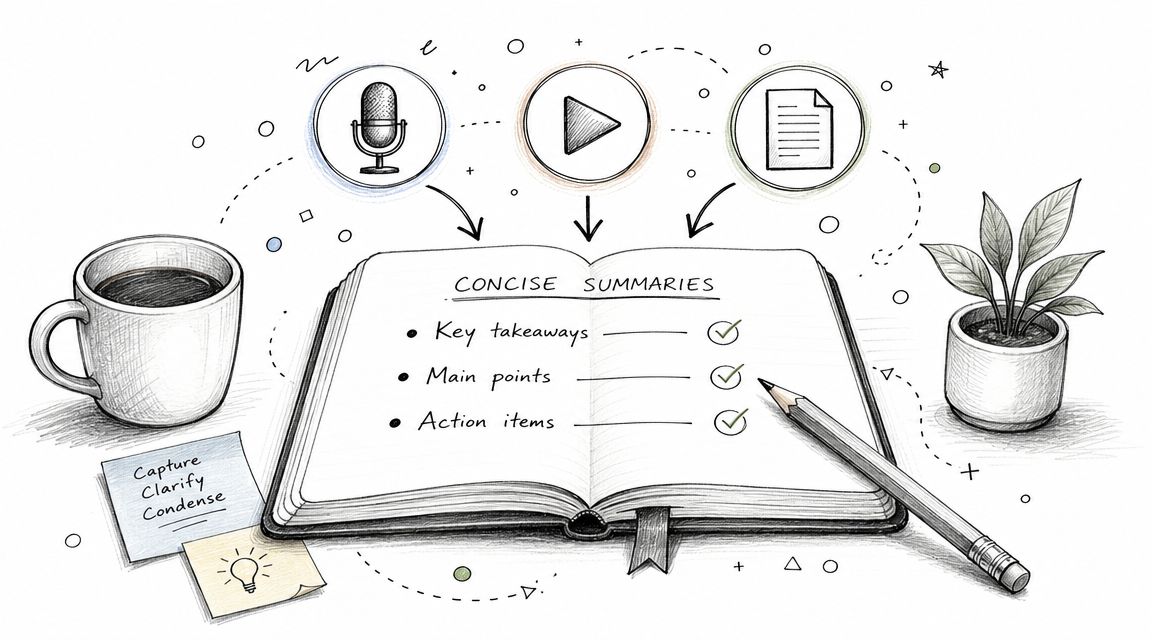
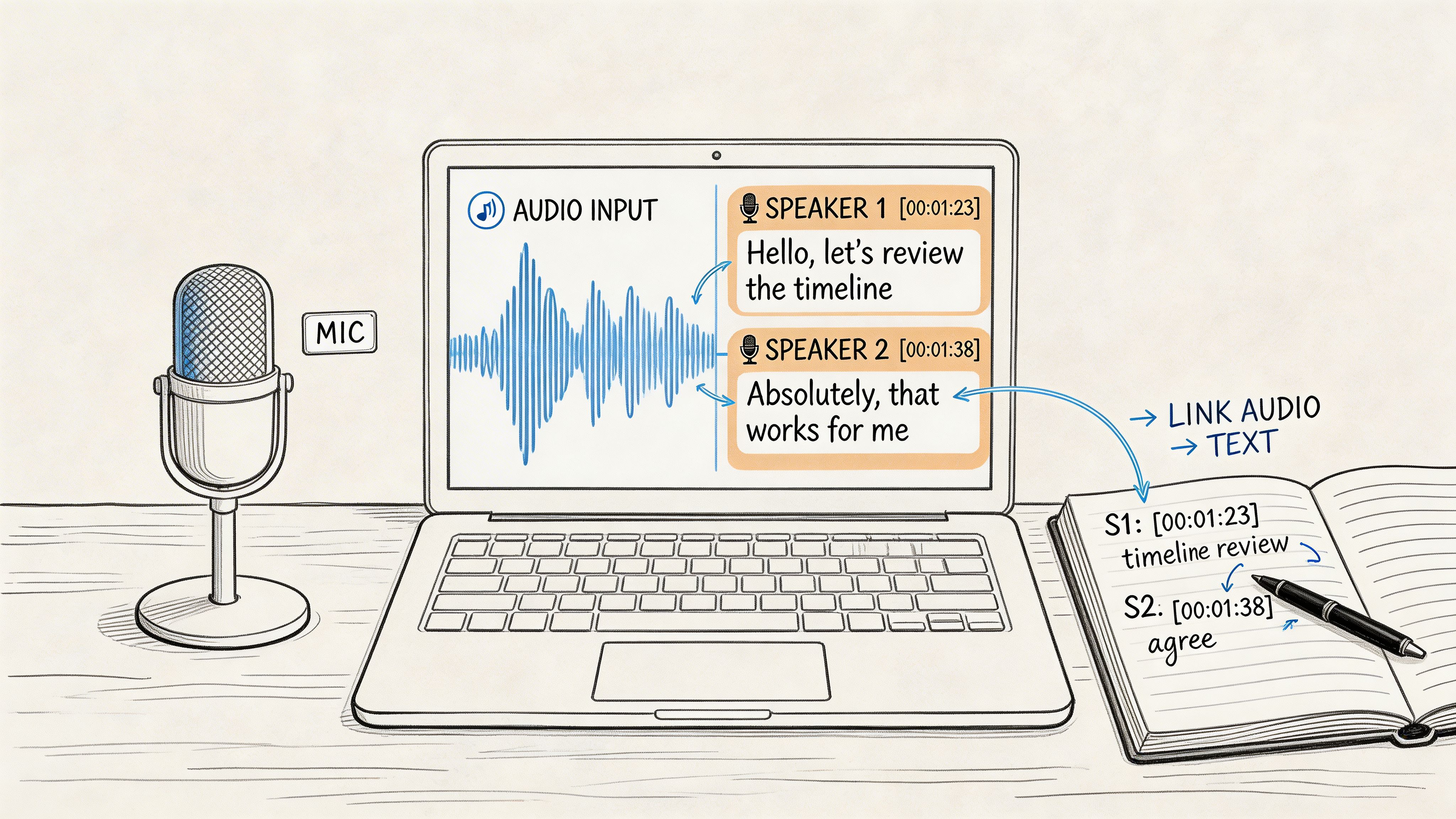
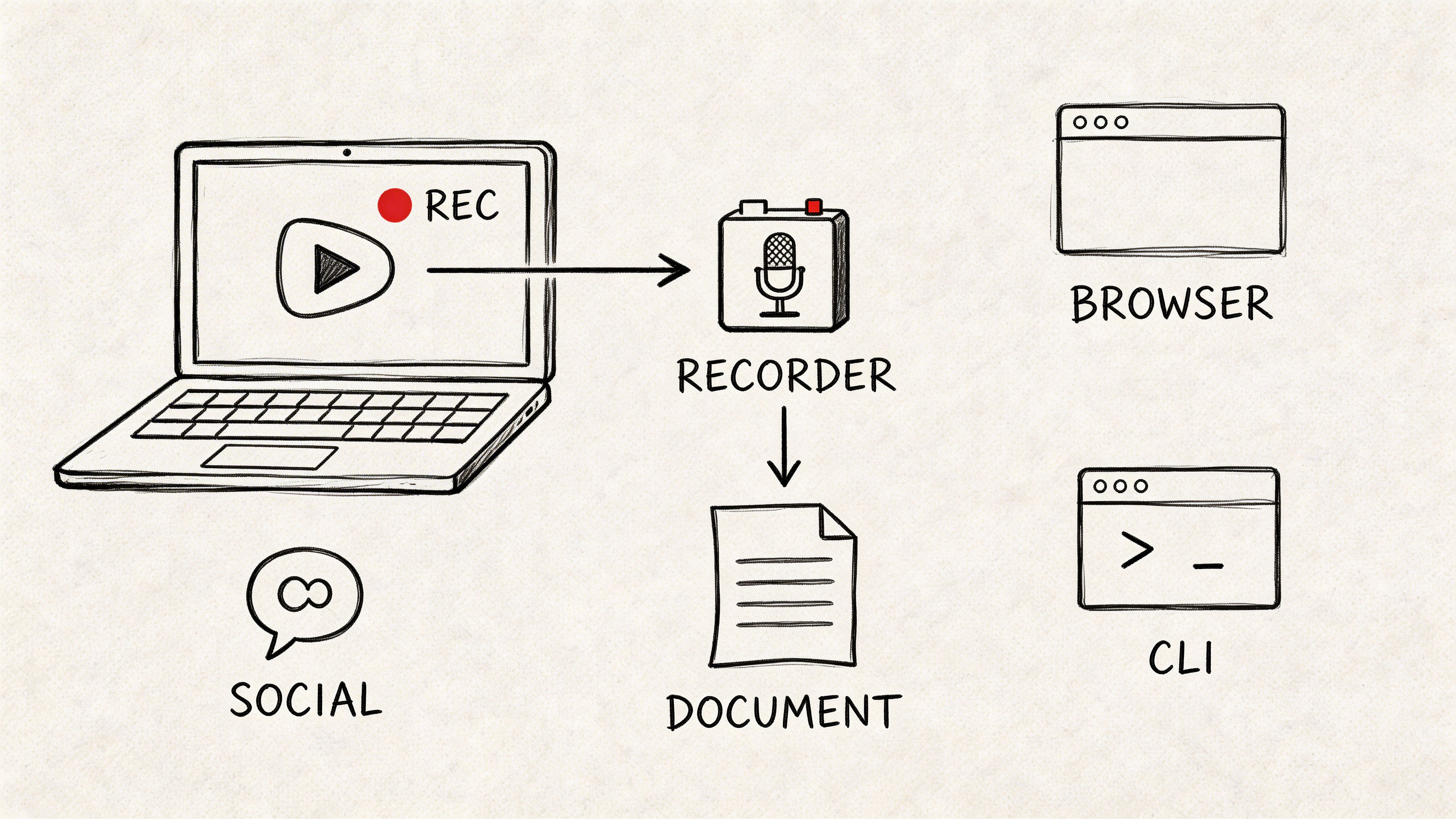
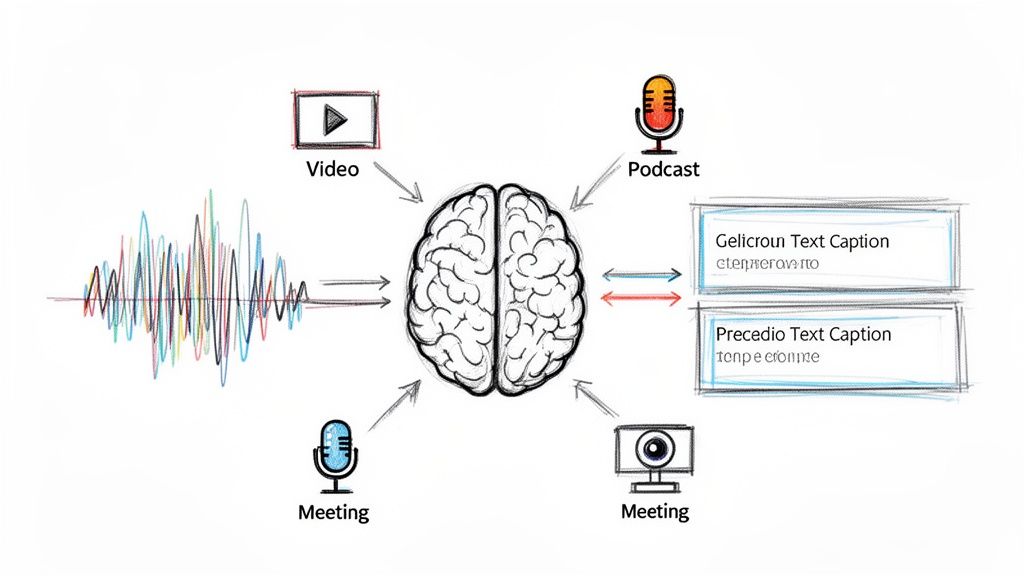
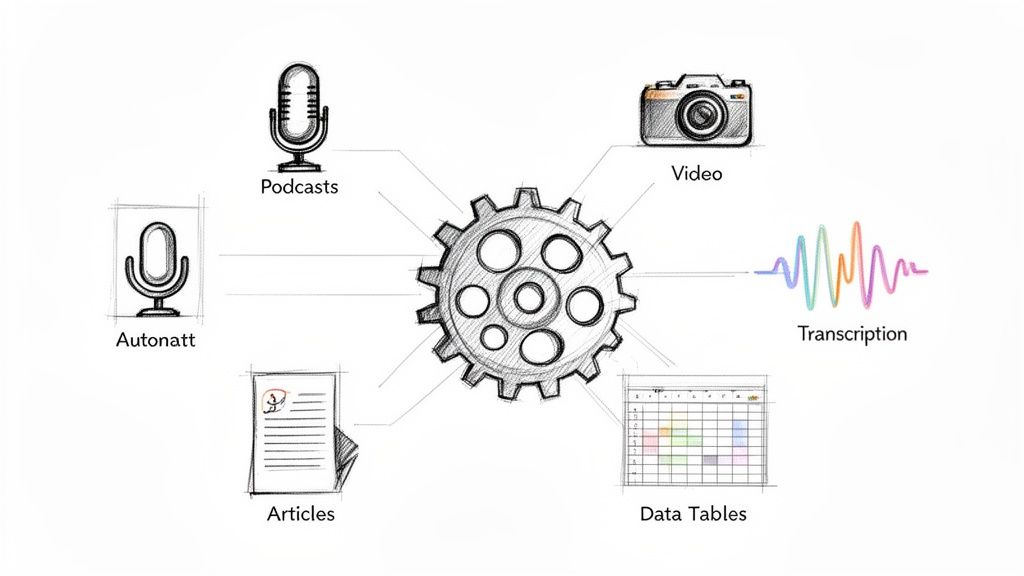
A workable process usually starts by converting spoken material into searchable text. Otter, Zoom transcripts, and meeting note systems help with capture. Whisper AI can also transcribe long-form audio or video into searchable text with speaker labels, timestamps, and summary-ready outputs, which makes it easier to locate decisions, metrics, and action items before drafting.
The trade-off is straightforward. Tools speed up extraction, but they do not judge importance. They can surface a quote, identify a speaker, and cluster recurring themes. They cannot reliably decide whether a tense exchange in minute 43 reflects real strategic risk or just one executive thinking out loud. That judgment still belongs to the writer.
What good synthesis looks like
A solid synthesis pass does five things:
- Removes repetition while preserving the meaning
- Separates fact from speculation so confidence levels stay honest
- Selects the few metrics that matter instead of pasting in every number mentioned
- States unresolved issues directly rather than smoothing over disagreement
- Builds a clear path from messy inputs to a business recommendation
That is the modern challenge in executive summary writing. The job is no longer limited to compressing polished documents. It often means extracting usable business logic from transcripts, interviews, recordings, and live discussions that were never designed to be read by an executive.
Writing, Polishing, and Avoiding Common Mistakes
Once the structure is set and the evidence is clear, the writing itself should feel tight. Many summaries improve fast at this stage, because the fixes are often mechanical. Cut filler. Replace jargon. Make every sentence do work.
The biggest failure modes are rarely about style alone. ProjectWizards notes recurring structural and evidence problems, including vague language, excessive background detail, internal contradictions, unsupported concepts, and overlength, with the 10% rule often cited as a guide in its discussion of executive summary pitfalls.
Write like someone who knows what they're recommending
Hedging kills momentum. So does corporate fog.
Compare these two sentences:
- The team explored several possible avenues that may support improved workflow efficiency.
- The review found that handoffs between teams are slowing approvals, and the recommended fix is a simpler approval path with named owners.
The second sentence is better because it names the problem and points to action. That's what leaders need.
Executive Summary Makeover Before and After
| Before (Weak) | After (Strong) | Key Improvement |
|---|---|---|
| The organization has been evaluating several areas of potential optimization over a period of time and has identified a number of possible considerations that may improve reporting consistency. | Reporting is inconsistent across teams, which limits leadership visibility. The recommended next step is to standardize reporting inputs and assign one reporting owner per function. | Clear problem, direct recommendation |
| Based on multiple conversations and ongoing analysis, it appears there are some challenges in the current process that should likely be addressed in the near future. | Current handoffs are creating delays and confusion. Addressing role ownership now will reduce rework and speed execution. | Removed hedging and filler |
| The meeting covered several strategic topics related to customer experience, digital operations, team coordination, and future priorities. | The meeting produced two decisions: simplify the customer escalation path and revise support ownership for digital channels. | Focused on outcomes, not agenda recap |
| There are a variety of factors that could potentially influence whether the proposal is successful over time. | Success depends on two factors: executive approval and clear implementation ownership. | Replaced vague abstraction with concrete conditions |
Edit for density, not decoration
A polished summary is not one with the nicest phrasing. It's one with the highest ratio of useful information to words.
Use this checklist during revision:
- Cut opener clutter: remove lines that merely announce the topic
- Replace abstract nouns: swap “optimization” for the actual change
- Check evidence flow: every recommendation should trace back to support in the main material
- Delete unsupported claims: if the report doesn't prove it, the summary can't assert it
- Shorten paragraphs: executives scan before they read thoroughly
Revision test: If a sentence can be removed without changing the decision, remove it.
Common mistakes that quietly weaken good work
Some mistakes are obvious. Others look polished but still damage the summary.
- Too much background: context matters, but a full origin story does not.
- New information: if the summary introduces claims not supported in the source material, credibility drops.
- No recommendation: findings without a clear ask leave the reader doing your job.
- Transcript dumping: raw meeting language pasted into a summary is usually a sign that no synthesis happened.
- Verbatim dependence: copying body text into the summary often creates a stitched-together draft with no top-level logic.
If you're reviewing AI-assisted drafts, they often need the most human correction in this area. A tool can condense language quickly, but it may preserve weak hierarchy or include details that are technically present yet strategically irrelevant. This article on using an automatic summarization tool is useful if your workflow includes machine-generated first drafts.
The best polish is ruthless, not elegant. You are not trying to sound smart. You are trying to make the decision easy to understand.
Conclusion: Your Summary as a Strategic Decision Tool
A leadership team leaves a 45-minute review with three different interpretations of what happened, what matters, and what should happen next. By the time the written summary reaches the executive sponsor, the window for a clean decision is already shrinking. That is why executive summary writing carries real strategic weight.
A strong summary gives decision-makers enough context to act without forcing them back into the full report, meeting transcript, interview notes, or webinar recording. As noted earlier, standard guidance on executive summaries is simple: they need to stand on their own. In practice, that means one page has to do a hard job. It has to frame the issue, surface the evidence that matters, and make the recommendation clear enough that a reader can approve, reject, or ask one sharper follow-up question.
That requirement matters even more now because the source material is messier than it used to be. I increasingly see summaries built from call recordings, board meeting transcripts, customer interviews, workshop notes, and Slack-heavy decision trails instead of a neat analyst memo. The skill is no longer just writing well. It is extracting signal from unstructured inputs, then turning that signal into a decision document.
The business value is straightforward. Good summaries shorten the distance between information and action.
The same principle shows up outside formal reports. Teams writing internal updates, client recaps, or public-facing leadership posts still need to lead with the point, not the backstory. A useful example appears in this guide to LinkedIn posting strategy. Different format, same discipline. Respect the reader's time and make the takeaway obvious.
If your raw material lives in recorded conversations, Whisper AI can help convert audio and video into searchable transcripts and draft summary inputs faster. That does not replace judgment. It gives you a cleaner starting point for finding decisions, evidence, risks, and action items without scrubbing through raw media by hand.
People notice who makes the decision easier. That is the key advantage of a strong executive summary.