Ohio Phone Recording Laws a 2026 Practical Guide
Ohio is a one-party consent state, so you can generally record a phone call you're part of without telling the other person. But that simple rule stops being simple once the call crosses state lines, involves a private setting you're not part of, or gets shared, stored, or used the wrong way.
That's the spot many journalists, podcasters, founders, and client-facing teams end up in. You need an accurate record of a conversation. You want clean notes, a transcript, or a quote you can verify later. Ohio law gives you room to do that, but only if you understand where the permission comes from, who counts as a participant, and what happens when a legally shaky recording enters your workflow.
Can You Legally Record a Phone Call in Ohio
If you're on the call, the short answer is usually yes.
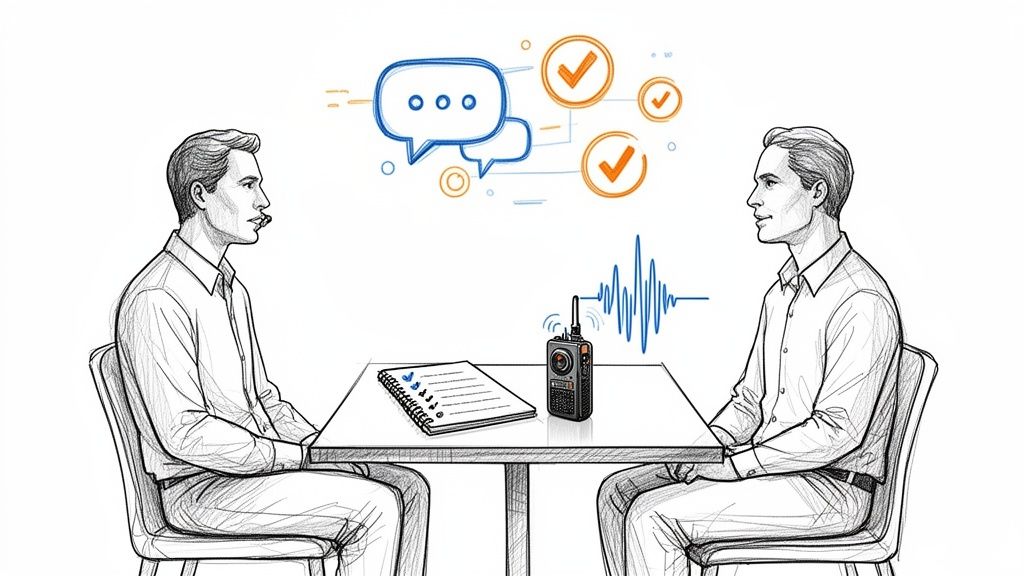
Under Ohio phone recording laws, the core rule is straightforward. Ohio follows one-party consent, which means one participant in the conversation can consent to the recording. If that participant is you, you usually don't need to announce the recording before you hit record.
That's why an Ohio-based reporter can often record an interview call, and why a business owner can often record a client call they personally joined. The legal permission comes from participation plus consent from one party. In many everyday situations, that one party is the person doing the recording.
Where people get into trouble
The legal risk usually starts with one of three mistakes:
- Recording a call you are not part of: If you're a bystander, manager, producer, or assistant who isn't participating, the analysis changes fast.
- Assuming Ohio's rule controls every interstate call: It doesn't. Cross-border calls can trigger stricter laws.
- Treating recording, transcription, sharing, and publishing as the same thing: They're not. Each step carries its own risk.
Practical rule: If you are a participant in the call, Ohio is generally favorable. If you are not a participant, stop and reassess before recording anything.
There's also a difference between wanting a reliable record and wanting a secret record. In practice, secret recordings create more friction than they solve, especially in business settings. Even where the recording may be lawful, poor documentation can leave you arguing later about consent, speaker identity, or whether the call involved another state with stricter rules.
The safer working assumption
For anyone who records calls regularly, the workable standard is this:
- Confirm you're a participant.
- Identify where the other person is.
- Decide whether a simple disclosure is the lower-risk move.
- Keep a record of what was said at the start of the call.
That approach fits how Ohio law works and avoids the biggest preventable mistakes.
Ohios One-Party Consent Rule Explained
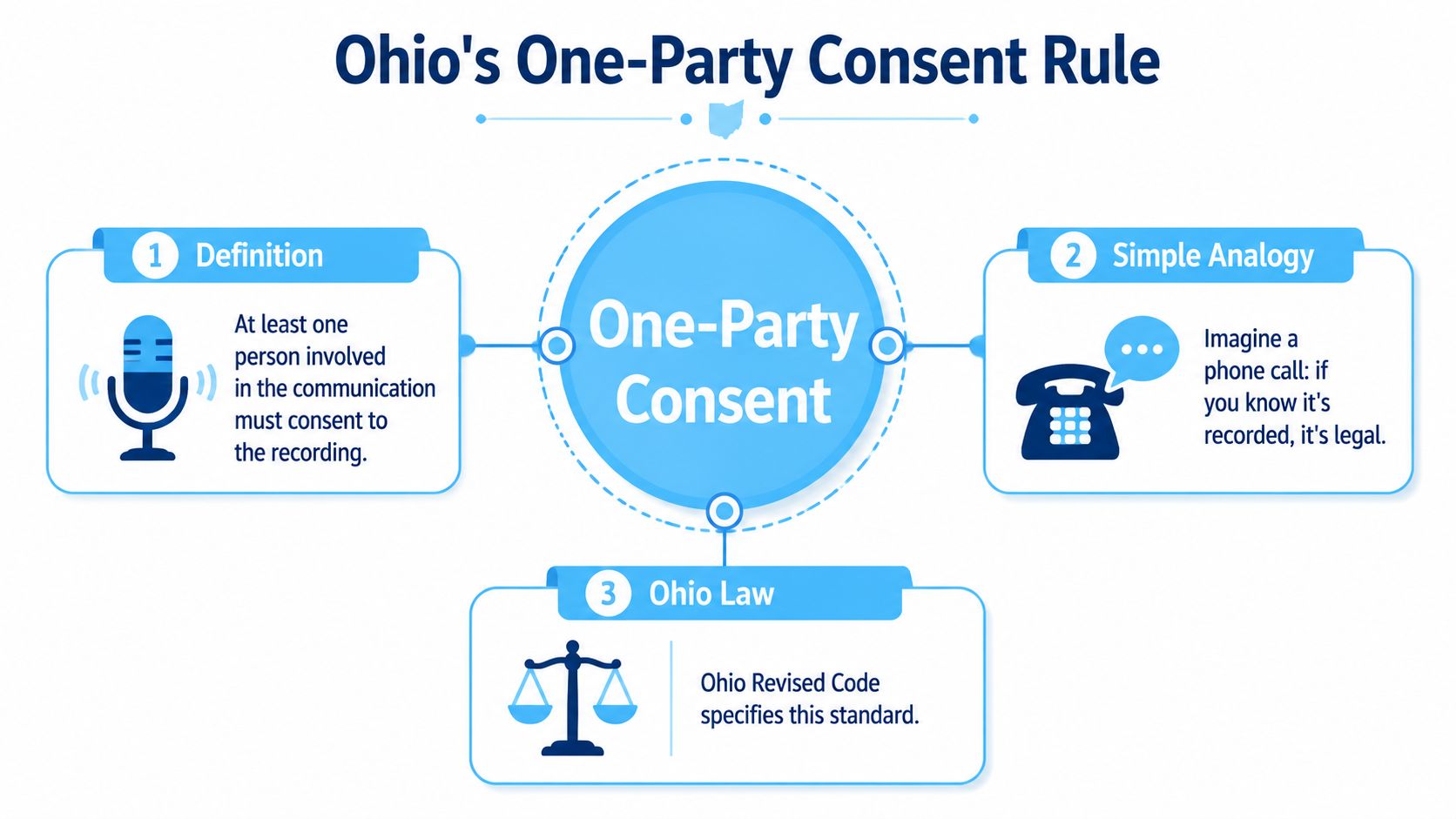
One-party consent means only one person involved in the communication has to consent to the recording. In plain English, it works a lot like taking your own notes during a meeting. If you're in the conversation, Ohio generally lets you create your own record of it.
Ohio's rule is grounded in Ohio Revised Code § 2933.52(B)(4), which allows recording when the recorder is a party to the communication or has consent from one party, as explained in the Reporters Committee guide to Ohio recording law.
What the rule means in real life
If you call a source, a customer, a contractor, or a colleague, and you are one of the people speaking on that call, Ohio usually lets you record it without a separate announcement to the other side.
If you are not one of the people on the call, that protection disappears. A producer can't record someone else's private call because the host would have been allowed to do it. Participation matters.
That distinction becomes even more important with remote workflows. Teams often assume that because a company set up the Zoom, conference bridge, or phone system, anyone on the team can capture the call. That isn't a safe assumption under Ohio law.
The privacy line that matters
Ohio also draws a practical line around reasonable expectation of privacy.
A private phone call is treated differently from comments made out in the open. In public spaces where there is no reasonable expectation of privacy, consent usually isn't required for oral communications. But phone calls and electronic communications are treated as private by nature, so the consent framework applies.
Use this mental model:
- Private call with a client: Consent from at least one participant is required.
- Conversation in your living room: Privacy expectations are high.
- Comments shouted in a crowded public park: Privacy expectations are low.
If the communication is private and you are not a party to it, Ohio law is not forgiving.
Why this matters for creators and newsrooms
For journalists and podcasters, Ohio is comparatively workable because you don't need an all-party release just to make the recording itself in most Ohio-only calls. That helps with speed. It also reduces the friction that can kill natural interviews.
But one-party consent is not a blank check. It doesn't erase privacy expectations, and it doesn't solve interstate conflicts. It provides the starting rule inside Ohio when you're dealing with a private communication and at least one participant consents.
Criminal and Civil Penalties for Illegal Recording
The penalty discussion is where Ohio phone recording laws stop sounding technical and start sounding expensive.
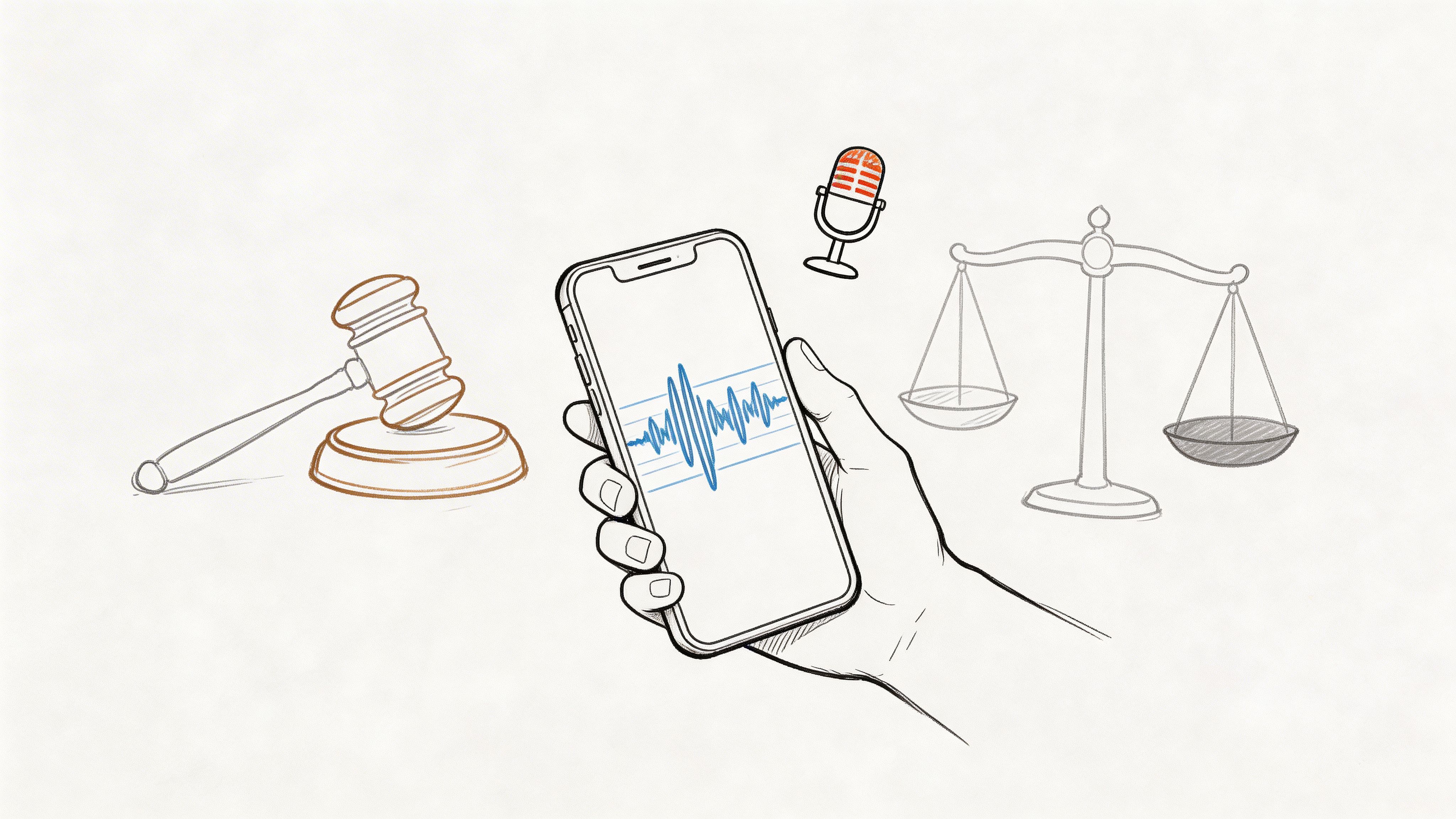
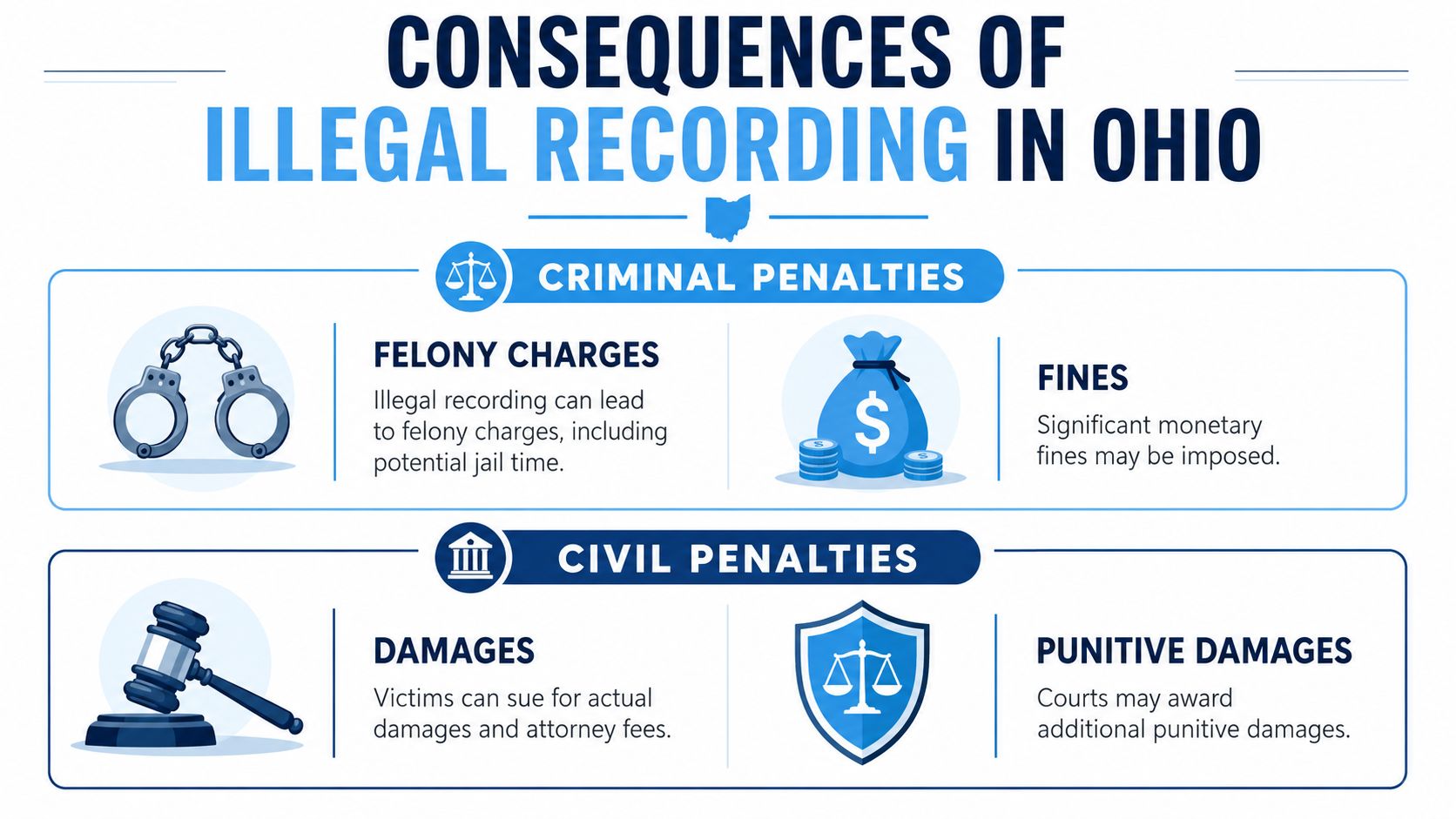
Under Ohio Revised Code § 2933.52, illegal interception of wire, oral, or electronic communications is a felony of the fourth degree, and Ohio Revised Code § 2933.65 allows civil suits for damages up to $10,000, as summarized in this Ohio recording law overview.
Criminal exposure
When people hear “wiretapping,” they often think of advanced surveillance equipment. In practice, a simple recording setup can still create criminal exposure if the underlying interception is unlawful.
The verified Ohio framework also notes that later offenses can carry Class 2 felony penalties including a 3-7 year prison term and a $25,000 fine under the statutory scheme described in the verified data. That's not the kind of risk to treat as a technicality.
Civil exposure
The civil side can be just as painful. Ohio law allows a victim to pursue the greater of:
- Actual damages
- $200 per day of violation
- $10,000
The statute also permits punitive damages and attorney fees under the verified Ohio framework.
That matters because many recording disputes don't begin with prosecutors. They begin with an angry employee, former partner, ex-spouse, customer, or source who learns a private conversation was captured without legal consent.
Why businesses should care: Criminal liability hits the person who records. Civil liability often widens the problem and turns a bad process into a costly dispute.
If you need a plain-English refresher on how consequences differ when conduct triggers criminal exposure versus a private lawsuit, this overview of Ohio civil vs criminal matters is useful context.
What doesn't work as a defense
These arguments usually fail in practice:
- “I only needed it for my records.” Motive doesn't erase an unlawful interception.
- “I didn't publish it.” Liability can exist before publication.
- “Someone sent me the file.” Possessing or using unlawfully obtained content can create separate problems.
The point isn't to scare people away from lawful recording. It's to show that recording first and sorting out consent later is a bad compliance habit.
Navigating Multi-State and Federal Recording Laws
The hardest calls are usually not Ohio-only calls. They're the ordinary business calls where one person is in Columbus and the other is somewhere else.
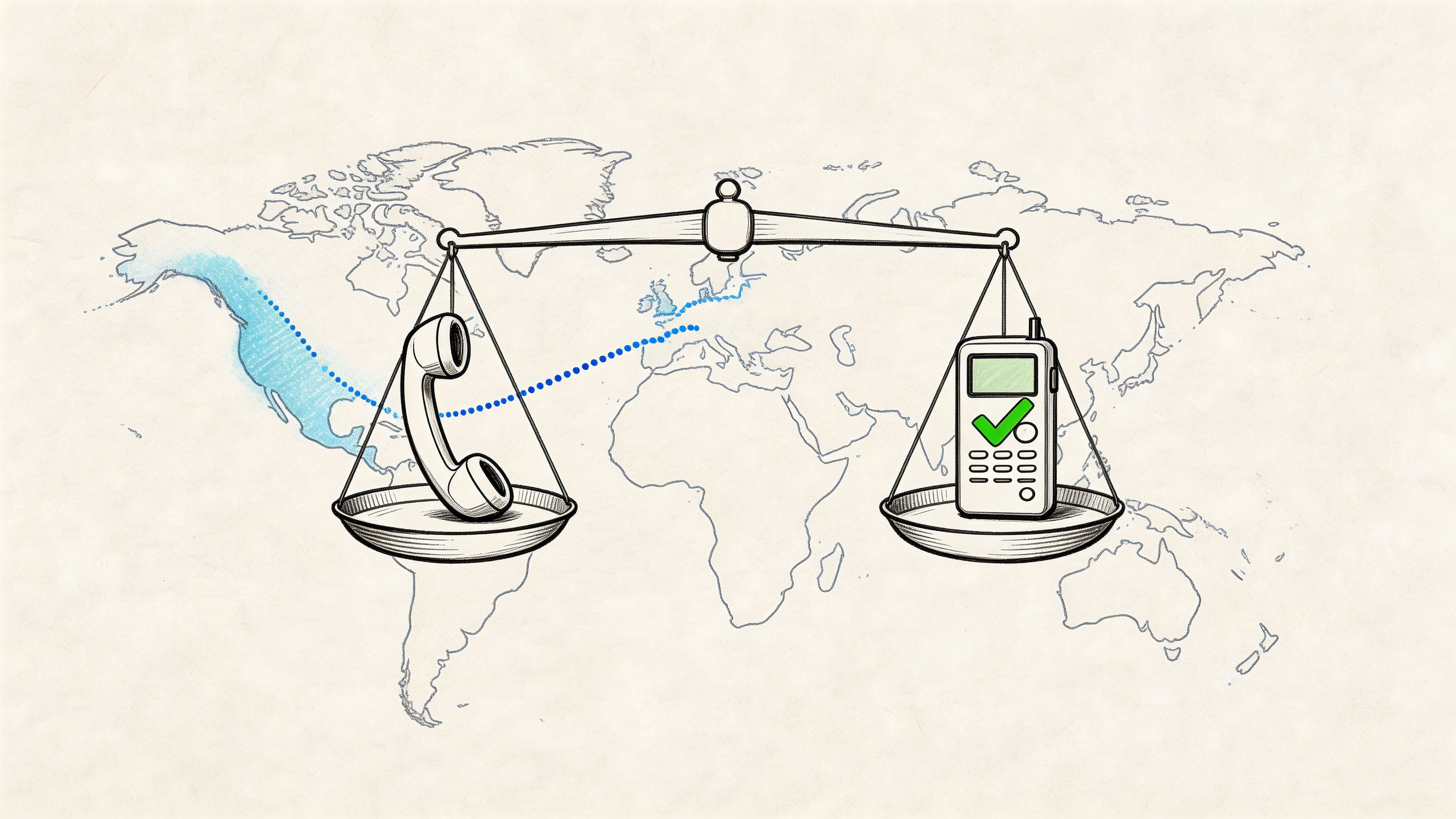
If you are in Ohio and the other caller is in a stricter state, Ohio's permissive rule may not protect you. That's the trap.
The strictest-law problem
Ohio is one-party consent, but 12 states require all-party consent, which creates a real compliance gap in interstate calls, especially with states such as California or Florida, as shown in the 50-state recording chart.
For practical compliance, many lawyers and risk managers use the same working rule: follow the strictest law that could apply.
A simple example:
- You are in Ohio.
- Your client is in California.
- You want to record the call.
The low-risk answer is to get express consent from everyone on the line before recording. If you rely only on Ohio's one-party rule, you may be building your process on the wrong law.
Recording law quick reference
| Law Type | Consent Required | Example Jurisdictions |
|---|---|---|
| One-party consent | One participant in the communication | Ohio |
| All-party consent | Every participant must consent | California, Florida |
| Federal baseline | One-party consent framework, but state law can be stricter | Interstate analysis often still requires stricter state compliance |
That's why teams that sell nationally shouldn't train staff on Ohio law alone. They should train staff to identify the other participant's location before recording starts.
What businesses should actually do
For recurring interstate calls, build a repeatable rule instead of a memory-based one.
- Use one script everywhere: Ask for consent at the start of every recorded call, even when Ohio alone would allow recording.
- Flag participant location: Intake forms, CRM records, booking forms, and call notes should identify the state of the other party.
- Train for edge cases: Sales teams, recruiters, reporters, and producers should know that a lawful Ohio-only process may fail on an interstate call.
A broader comparison of state-by-state issues appears in this guide on whether it's legal to record calls.
Interstate calls are where “I thought Ohio allowed this” turns into “why is opposing counsel asking where the caller was located?”
Federal law adds another layer, but for daily operations the useful takeaway is simple. If multiple jurisdictions may apply, use the highest-consent standard in the group.
Recording Laws in Common Scenarios
Legal rules become easier to apply when you attach them to actual jobs. Most recording mistakes happen in routine work, not dramatic surveillance cases.

For journalists interviewing a source
If you are on the call and the interview is an Ohio-only call, Ohio's one-party rule is generally favorable. But from a newsroom practice standpoint, it's still smart to disclose the recording. It avoids later fights over whether the source understood the conversation was on the record, whether the file was authentic, and whether publication created a separate dispute.
Consent to record also isn't automatically consent to broad reuse. A source may tolerate recording for accuracy but object to public posting, excerpting, or repurposing in a trailer clip.
For podcasters and YouTubers
A host recording their own remote interview usually starts from a stronger position than a producer trying to capture a call from the sidelines. If your workflow uses iPhone-based capture, this overview of a free iPhone call recorder workflow can help on the technical side, but the legal side still turns on consent and participant status.
The practical mistake here is assuming platform access equals legal authority. Being the meeting owner, room host, or show producer doesn't automatically mean every recording setup is compliant.
For employers monitoring calls
Businesses often have a legitimate reason to record customer-service or sales calls. The legal issue is less about business purpose and more about how the system is configured and who is notified.
Good practice usually includes:
- Business-call separation: Keep customer or support lines distinct from personal employee communications.
- Recorded notices: Use a clear opening disclosure, especially for interstate calls.
- Policy discipline: Make sure supervisors, QA staff, and contractors know who may access recordings and why.
For founders and client-facing teams
Recording a client meeting can be useful for deliverables, approvals, and scope control. What works is a clean opening statement, visible process, and documented follow-up. What doesn't work is secretly recording a call and hoping nobody asks later.
A lawful recording process is usually the same process that produces the best transcript, the clearest notes, and the least argument afterward.
How to Record Legally and Document Consent
The strongest compliance workflows are boring on purpose. They use the same language every time, they identify who is on the call, and they preserve a clean record.
For phone calls and electronic communications, including video chats, Ohio requires consent from at least one party because the medium implies privacy, and that's why participant verification matters under Ohio Revised Code § 2933.51.
A workable compliance checklist
Start every recording with a short process, not a guess.
Confirm participation
Make sure the person activating the recording is a participant in the call or has valid consent from a participant.Identify location risk
If the other person may be outside Ohio, treat the call as potentially subject to a stricter law.Use a clear opener
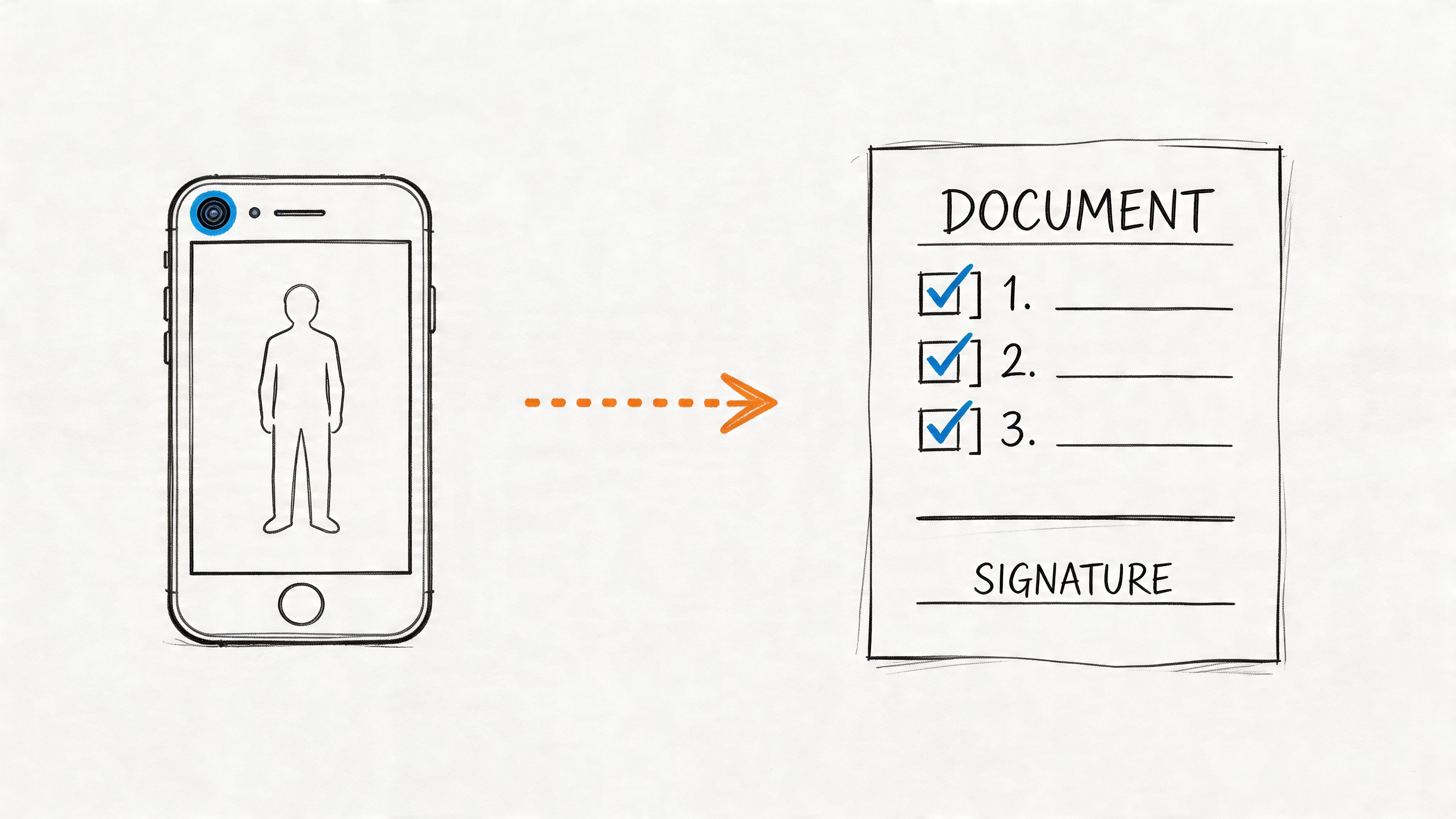
Say exactly what is happening. For example: “I'm recording this call for my notes. Is that okay with you?”
On a multi-party call: “Before we begin, I'd like to record this conversation. Does everyone consent?”Capture the response
Don't settle for silence if you need all-party consent. Get an audible yes from each participant when the situation calls for it.Keep the consent in the file
Don't trim off the beginning. The opening seconds of a recording often become the most important part later.
What good documentation looks like
A compliant record usually includes:
- The opening consent exchange
- The date and time of the call
- The names of participants
- Notes on where participants were located if interstate issues may matter
- A preserved transcript or summary tied to the original audio
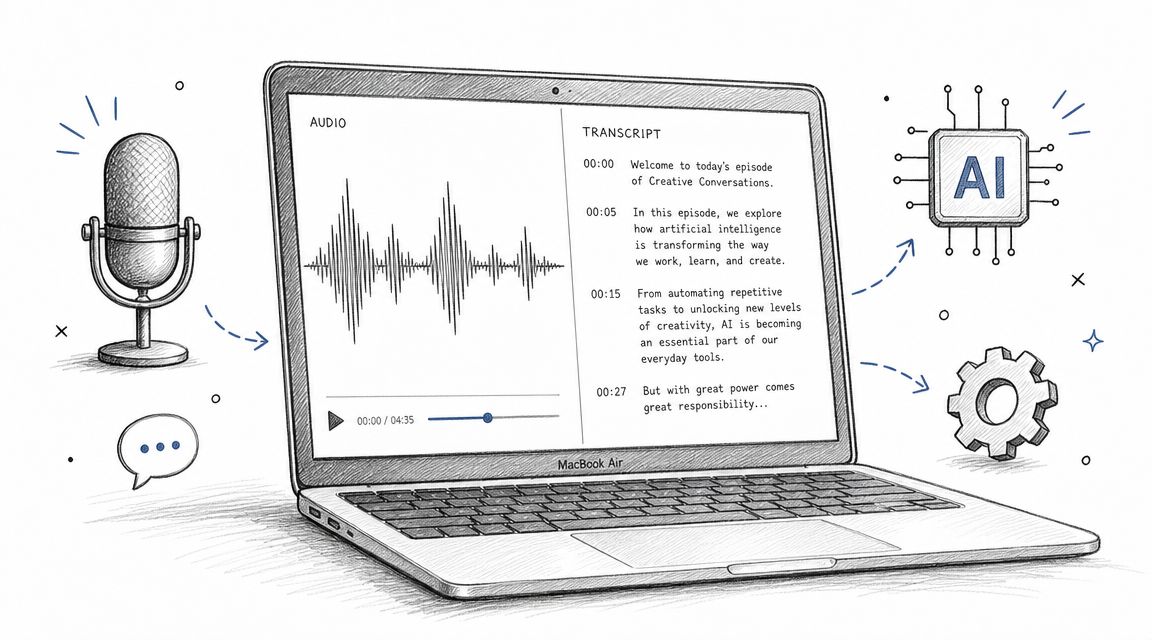
That final point matters more than people think. A transcript isn't just a convenience. It's often the easiest way to find and prove the moment consent was given.
If you need a practical walkthrough on the capture side, this guide on how to record a phone conversation is a useful operational reference.
What to avoid
Some habits create unnecessary risk:
- Bystander recording: A teammate records a private call they are not part of.
- Consent by assumption: You assume prior business dealings mean future consent.
- Detached summaries: Notes or AI summaries exist, but nobody kept the source audio or consent segment.
- Post hoc cleanup: You try to fix a bad recording process after a complaint arrives.
Operational advice: Build your process so a stranger reviewing the file can tell who recorded, who consented, and when that happened.
That's the standard that holds up best.
Frequently Asked Questions About Ohio Recording Laws
Can I use an AI-generated summary of an illegally recorded call as evidence
Usually, that's a bad bet. Legal analysis suggests that while publication of truthful material on matters of public concern may receive First Amendment protection in some contexts, Ohio civil courts often exclude evidence obtained through illegal wiretapping, including AI-generated summaries, under the analysis discussed in the earlier Ohio authority. In plain terms, an AI summary doesn't usually “clean” an illegal recording.
What should I do if someone sends me a recording I believe was made illegally
Don't assume distance from the original recording makes the problem disappear. Ohio law also reaches the use or attempted use of unlawfully obtained content when the user knows, or has reason to know, it came from illegal interception. The safest move is to pause distribution, avoid operational use, and get legal advice before relying on the file in a newsroom, HR matter, or dispute.
Does consent to record mean consent to publish or broadcast
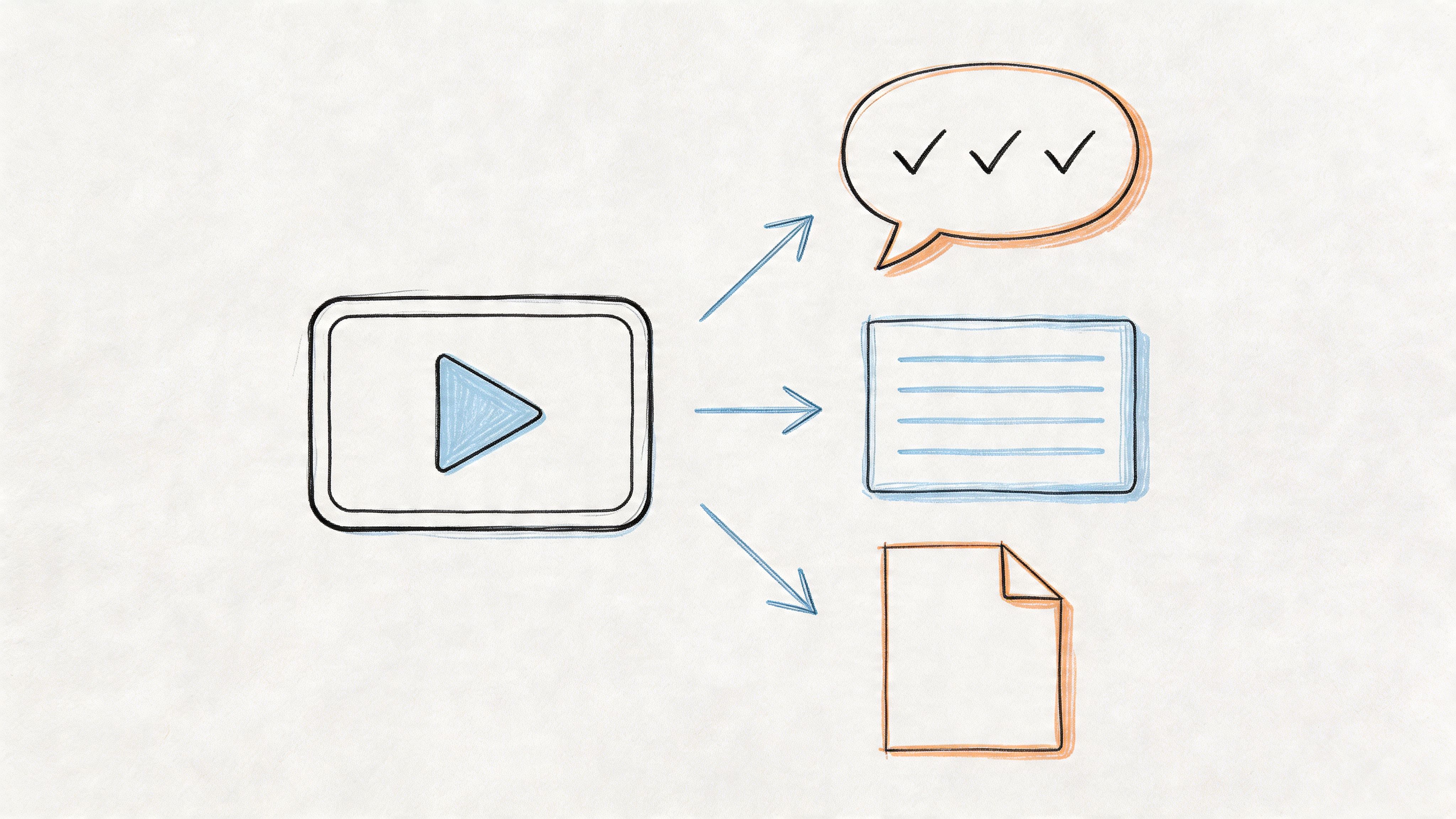
Not necessarily. Recording consent answers one question. Publication, distribution, licensing, internal sharing, and public reposting can raise others. That's especially true for creators who want to turn one recorded call into a podcast episode, a social clip, a YouTube short, and a newsletter excerpt.
If I'm in Ohio, should I just ask for consent anyway
In many professional settings, yes. It creates a better record, reduces interstate uncertainty, and makes later disputes easier to resolve. The legal minimum and the operational best practice are not always the same thing.
Can a public conversation be recorded without consent
Sometimes yes, if there is no reasonable expectation of privacy. But that public-private distinction is much less helpful for phone calls, because calls and electronic communications are typically treated as private by nature. For most phone recording workflows, treat consent as the central issue.
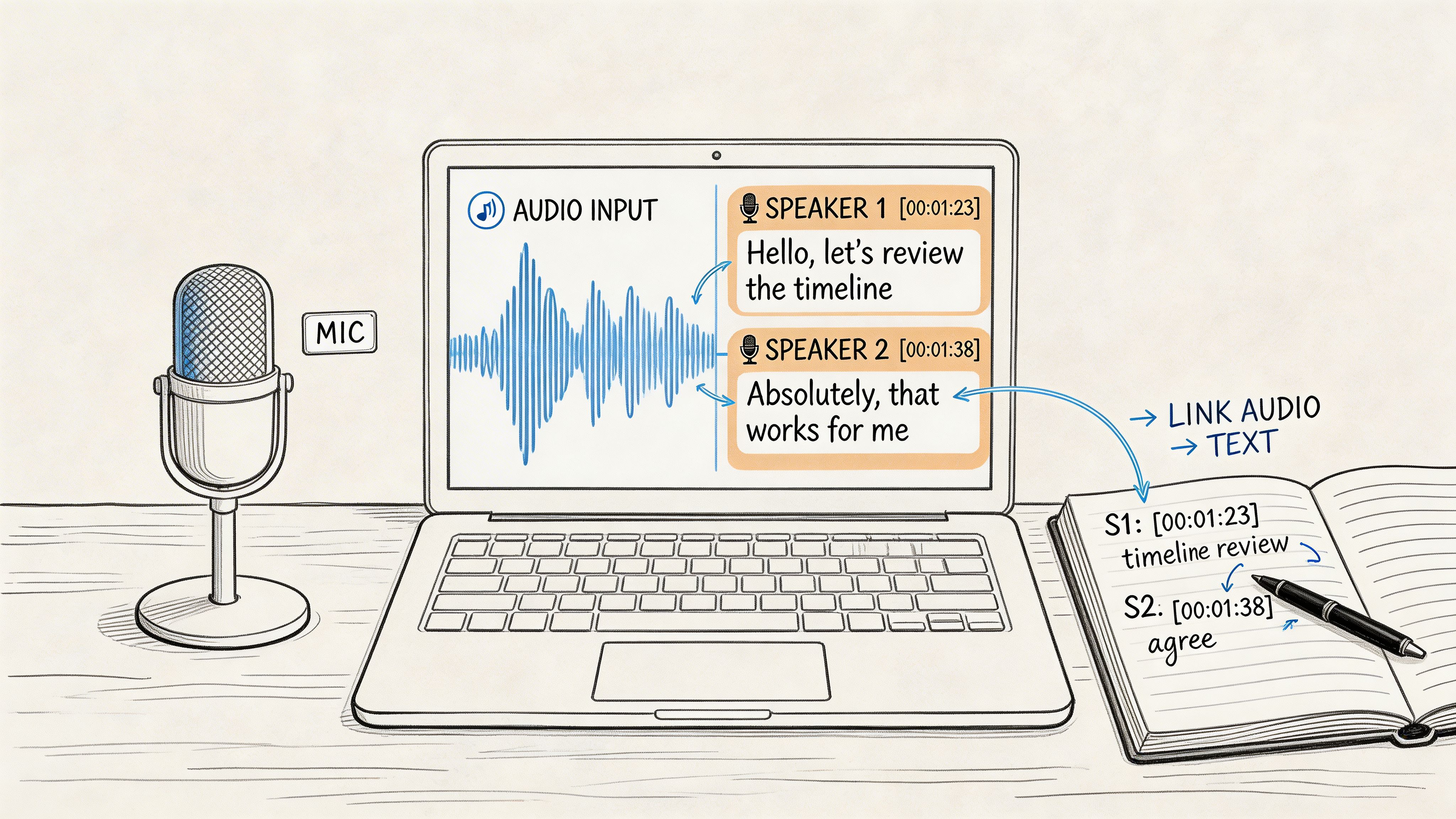
If you record interviews, client calls, meetings, or podcast conversations, Whisper AI helps turn lawfully recorded audio into searchable transcripts, timestamps, summaries, and exportable notes. That makes it easier to preserve the consent portion of the call, verify quotes, and keep a usable record without digging through raw audio later.