What Is Natural Language Processing? A Guide For Creators
Ever tried to get a smart speaker to understand sarcasm? You quickly realize it needs to grasp more than just the literal words—it has to get the context, the tone, and the unsaid meaning. That, in a nutshell, is the challenge at the heart of Natural Language Processing (NLP).
NLP is a field of artificial intelligence that teaches computers how to read, understand, and even generate human language in a way that’s actually useful. From my own experience working with AI tools for content, it's the technology that turns tedious tasks into automated workflows, freeing you up to focus on the creative side of things.
What Is Natural Language Processing In Simple Terms?
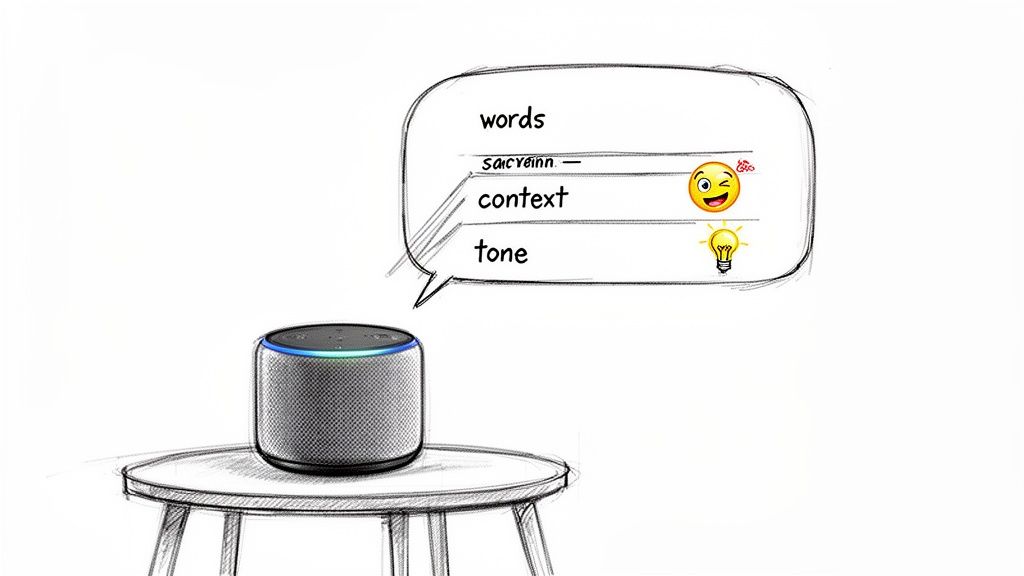
Think of NLP as the essential bridge between our messy, nuanced human language and a computer's rigid, logical world. Human communication is full of ambiguity, idioms, and inside jokes—all the things that make code break. NLP gives computers the framework to navigate this complexity.
It's like teaching a computer a foreign language, but instead of just handing it a dictionary, you're teaching it grammar, cultural context, and how to read the room. This is the magic behind countless tools we rely on daily, often without realizing it.
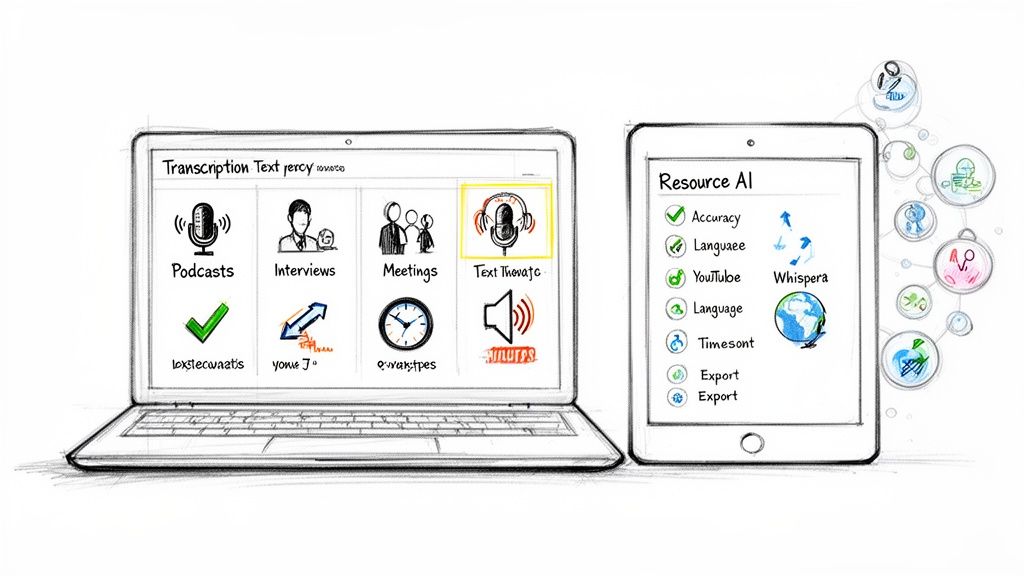
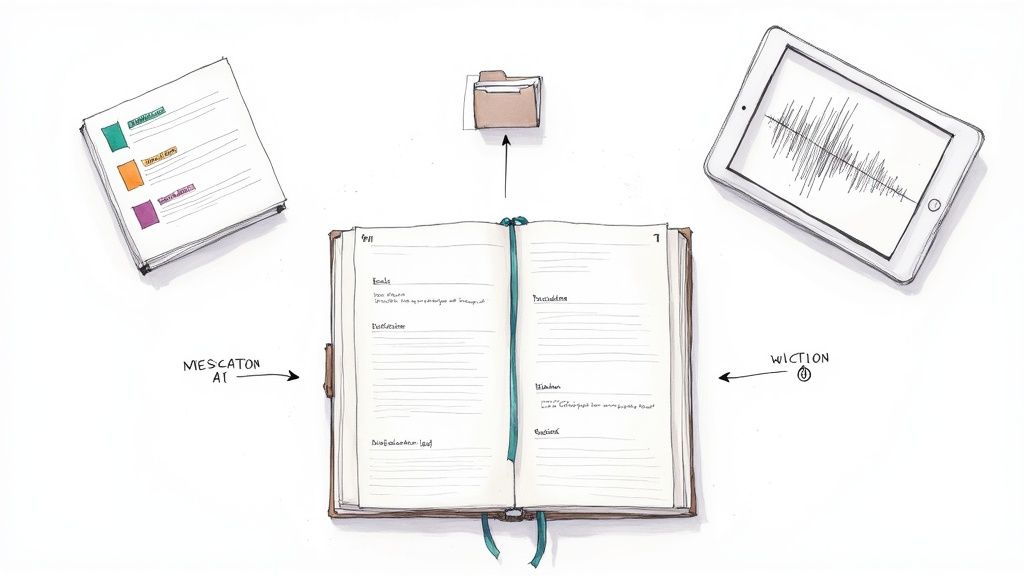
To help break it down, here’s a quick overview of the core ideas behind NLP and how they appear in the real world.
Natural Language Processing at a Glance
These concepts work together, allowing the technology to both comprehend what you're saying and respond in a way that makes sense.
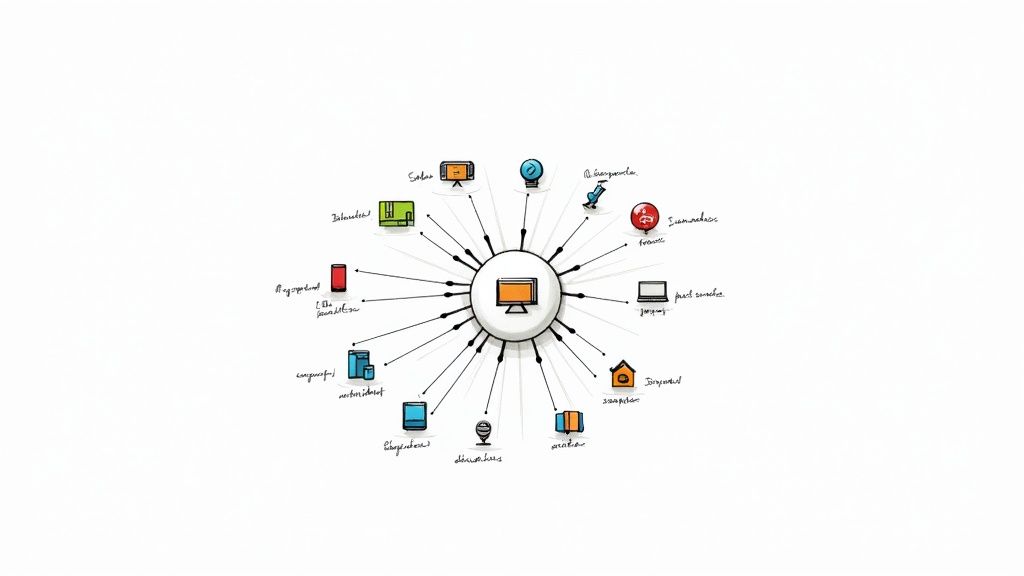
How NLP Shows Up In Your Daily Life
You’ve definitely used NLP today, probably multiple times. It’s the silent engine running in the background of so many apps. For creators, seeing where it’s already at work is the first step to imagining its potential for your own projects.
Here are a few common places you'll find it:
- Autocorrect and Predictive Text: When my phone fixes a typo or suggests the next word, that’s NLP predicting my intent based on common phrases and my own writing habits.
- Email Spam Filters: Services like Gmail don't just look for keywords; they analyze the tone, structure, and intent of an email to decide if it's junk.
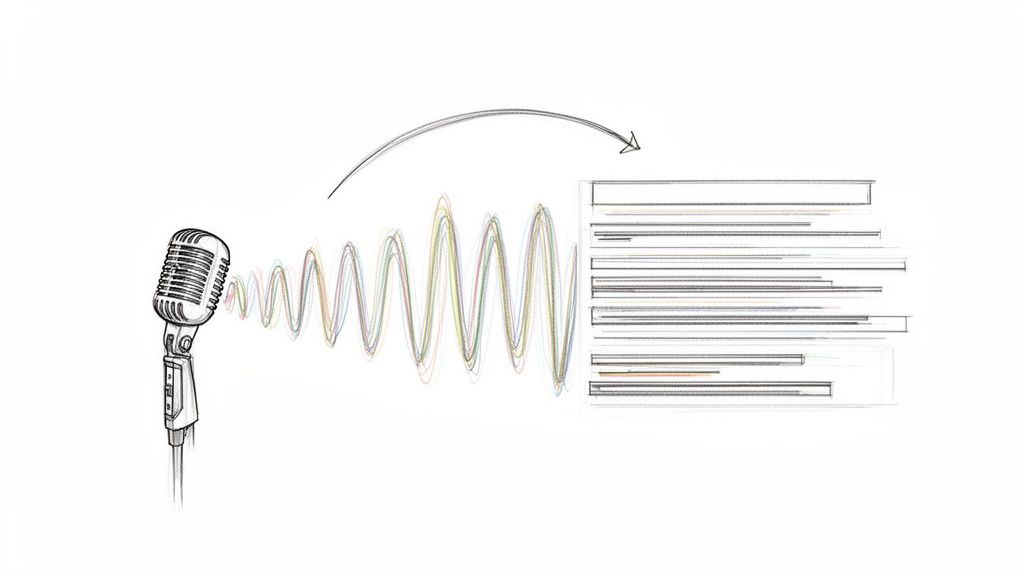
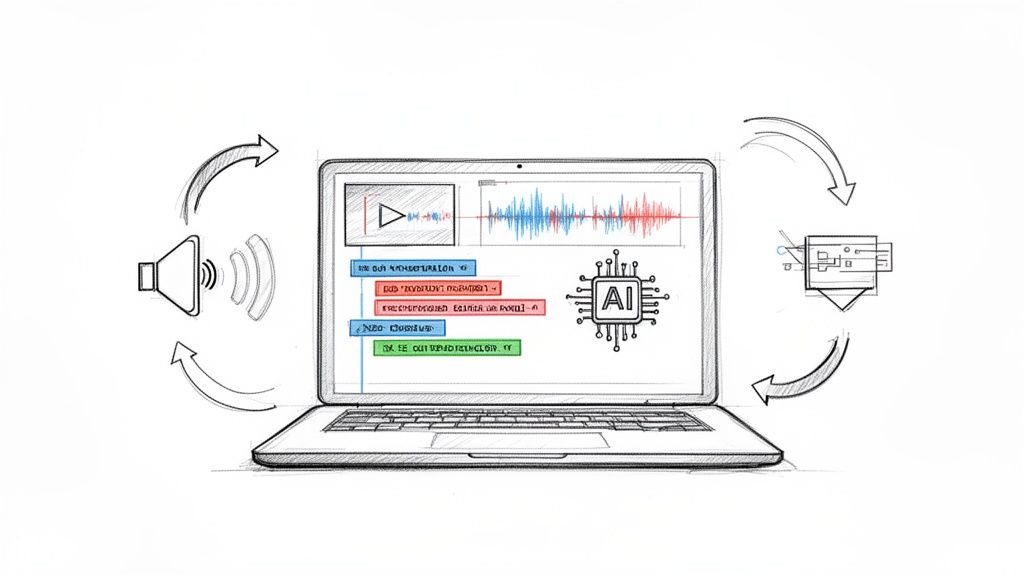
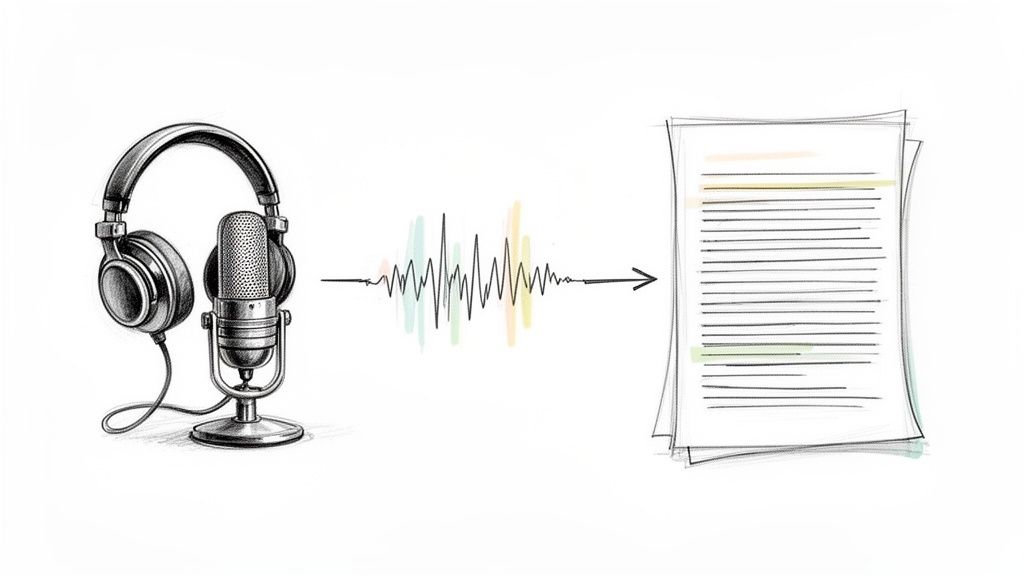
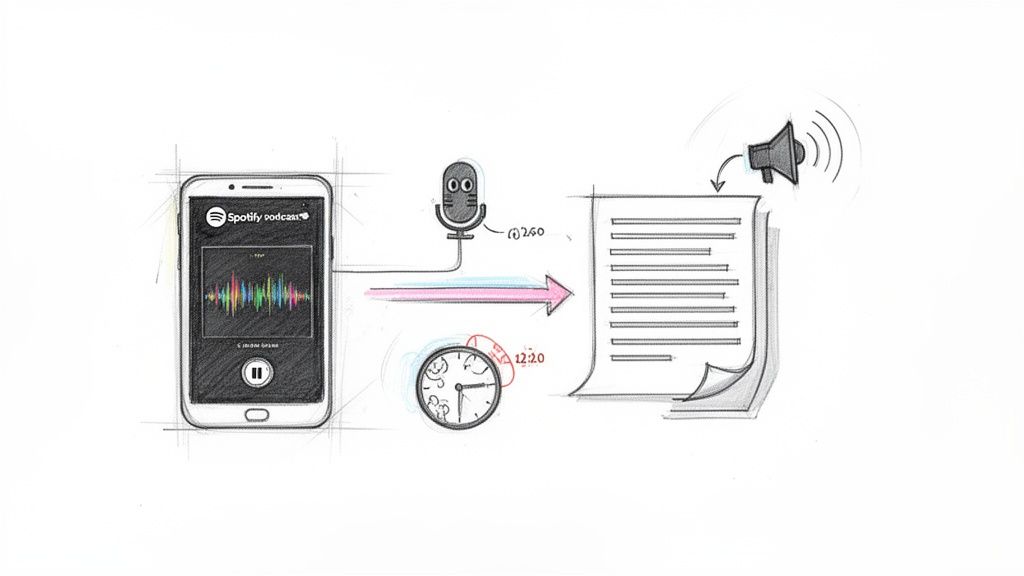
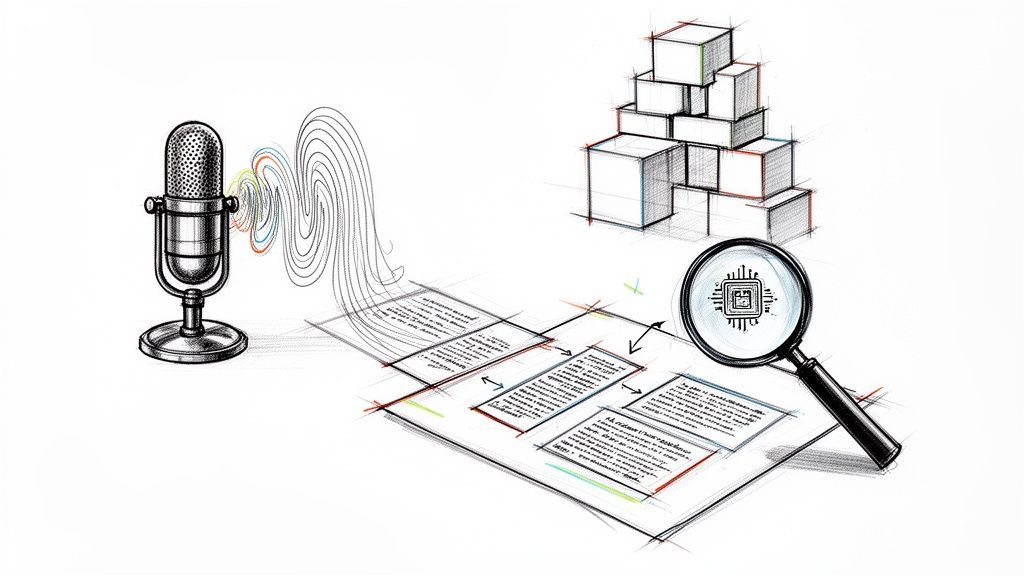
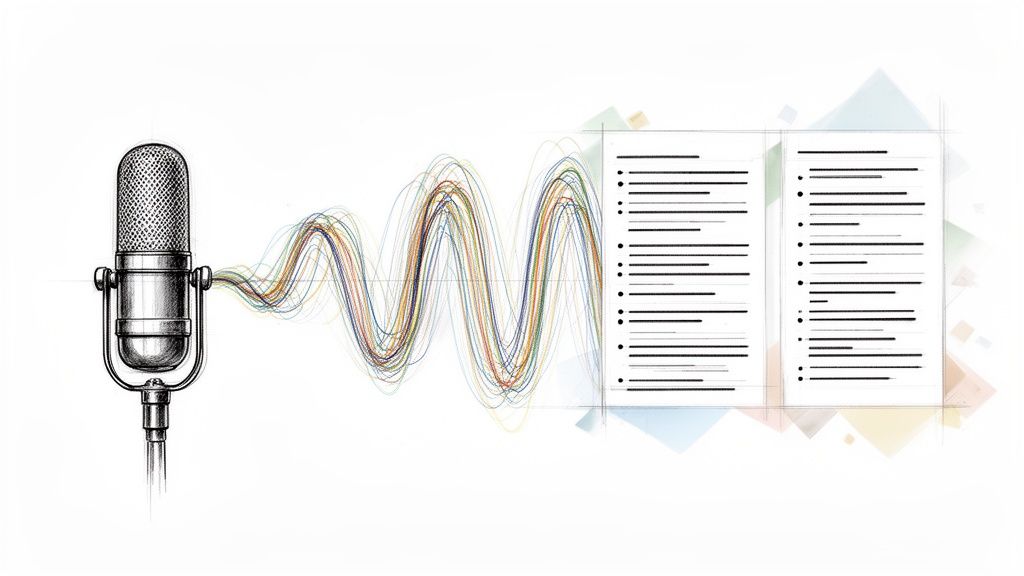
- Voice Assistants: When you talk to Siri or Alexa, NLP first translates your speech into text, then figures out what you're asking for, finds the answer, and finally generates a spoken response.
Natural language processing considers the hierarchical structure of language: several words make a phrase, several phrases make a sentence and, ultimately, sentences convey ideas. By analyzing language for its meaning, NLP systems fill useful roles, from correcting grammar to converting speech to text.
Why NLP Is A Game-Changer For Creators
For anyone making content, this technology is far more than a cool party trick—it’s a powerful assistant. It can handle tedious tasks, surface valuable insights from your audience, and ultimately help you connect with people more effectively.
Interestingly, a recent study showed that the internal workings of AI models like Whisper AI align surprisingly well with how the human brain processes speech. This isn't just a technical detail; it’s why modern NLP tools are so good at what they do.
Because they can process language with a degree of contextual understanding, they can:
- Transcribe audio and video with remarkable accuracy.
- Summarize long interviews or articles into need-to-know bullet points.
- Analyze audience comments to spot recurring themes and overall sentiment.
Getting a handle on what is natural language processing is the first step toward putting it to work. It’s all about turning the beautiful chaos of human language into structured information that helps you create better, faster.
The Evolution of NLP From Rigid Rules to Smart AI
To really get a feel for what natural language processing can do today, it helps to look back at where it came from. This isn't just a stuffy history lesson; it's a story of early excitement, major setbacks, and the game-changing breakthroughs that led to the smart AI tools we have now. The story of NLP really kicks off with a bang in the 1950s.
The initial buzz started with the Georgetown-IBM experiment in 1954, a landmark event that made it seem like automatic translation was right around the corner. Researchers from Georgetown University and IBM wowed the public by translating over 60 Russian sentences into English using a system of predefined rules. The demo was so convincing that experts confidently predicted machine translation would be a solved problem in three to five years. You can dive deeper into this fascinating period and its challenges in this overview of LLM history.
The AI Winter and the Limits of Rules
Of course, that early optimism didn't last. Progress hit a wall, and the core problem was the approach itself. Early NLP was built on what’s called symbolic AI, which meant linguists had to manually write out incredibly complex sets of grammatical rules. Just imagine trying to create a rulebook that covers every single nuance of the English language—every idiom, every exception, every sarcastic comment. It’s a truly impossible task.
This rule-based method was incredibly fragile and just couldn't cope with the messy, ambiguous way people actually talk and write. A computer fed rigid rules might parse "The cat sat on the mat" perfectly, but it would be completely stumped by "That new song is fire." The system had no ability to understand context or learn from new information.
The sheer complexity of human language quickly overwhelmed these early systems. By 1966, the influential ALPAC report delivered a sobering verdict: after years of research and millions in funding, machine translation was still slower, more expensive, and less accurate than human translators. The report effectively triggered the first "AI winter," a long period where funding evaporated and progress in language technology ground to a halt.
This failure was a critical turning point. It forced the entire field to step back and rethink everything. The big lesson was that teaching a computer a language isn't like giving it a dictionary and a grammar book. It's about giving it the ability to learn from experience, much like a person does.
The Statistical Revolution Changes Everything
The next giant leap forward arrived in the 1980s and 1990s with the shift to statistical NLP. Instead of trying to write perfect, handcrafted rules, researchers took a completely different path. They began feeding computers massive amounts of text—books, articles, and news reports—and let them figure out the patterns on their own. This was a fundamental shift from programming rules to learning from data.
By analyzing how words and phrases appeared together across millions of documents, these new statistical models could make educated guesses. They could predict the most likely word to follow another, spot common topics in a body of text, and even infer the sentiment behind a sentence. This data-first approach was far more resilient and flexible, paving the way for the powerful NLP tools that creators and professionals rely on today.
How Do Computers Understand Language?
Ever wonder how a computer goes from seeing a block of text to actually understanding it? It's not magic, but it does follow a logical path that’s surprisingly similar to how we learn a new language. You have to start with the basics—the letters, the words, the grammar—before you can ever get to the good stuff like understanding jokes or analyzing poetry.
For a computer, this journey begins by taking our messy, nuanced human language and breaking it down into tiny, analyzable pieces. From there, it builds its understanding layer by layer. It moves from simply identifying individual words to grasping complex ideas like context, emotion, and intent.
This is the process that can turn a rambling interview transcript into a neat summary or help a journalist quickly sift through thousands of documents for key names and places. The evolution from clunky, old-school systems to the sophisticated AI we have today is what makes all this possible.
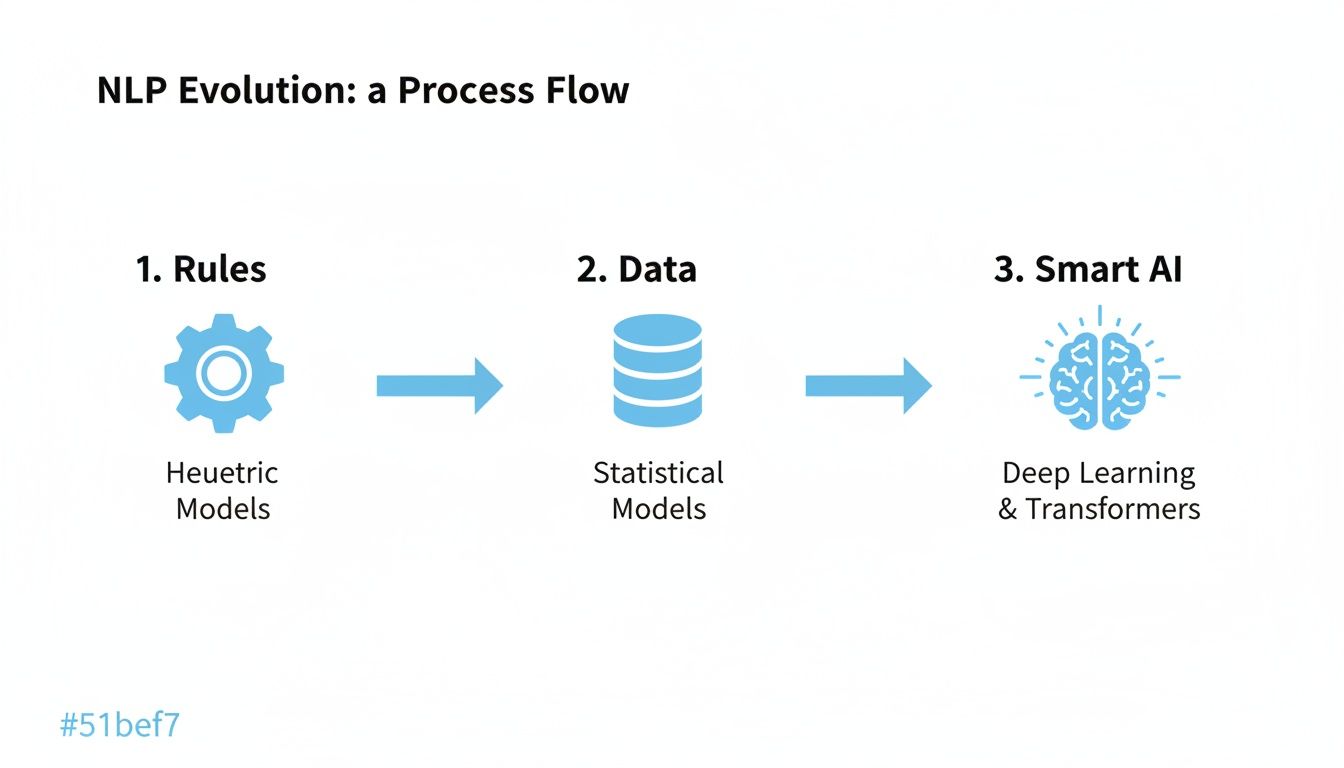
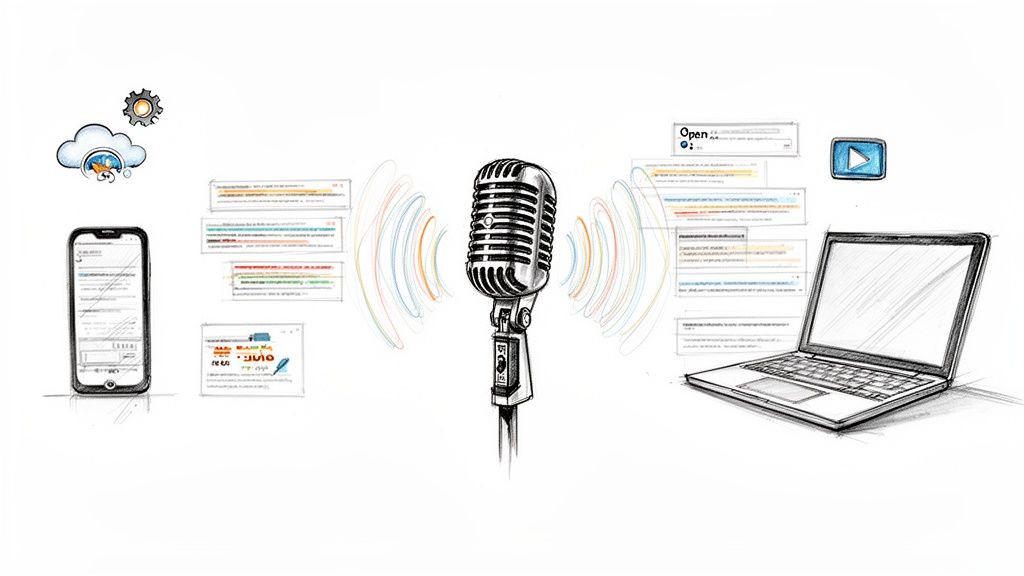
As you can see, we've moved from rigid, hand-coded rules to systems that learn from massive amounts of data, and now to modern AI that can practically think for itself.
Breaking Down Sentences Into Core Components
The first job for any NLP model is to chop up a sentence into manageable parts. This is called tokenization. Think of it as a computer learning its ABCs and vocabulary.
It takes a sentence like, "This podcast episode is fantastic!" and splits it into individual words or "tokens." The result looks something like this: ["This", "podcast", "episode", "is", "fantastic", "!"].
Once the sentence is tokenized, the AI needs to figure out what each word is doing. This is where part-of-speech (POS) tagging comes into play. It’s the grammar lesson. The computer labels each token, identifying it as a noun, verb, adjective, and so on.
- Noun:
podcast,episode - Verb:
is - Adjective:
fantastic - Punctuation:
!
This grammatical foundation is the bedrock for everything else. It’s what allows a system to move from just seeing words to understanding their structural relationship, powering everything from basic grammar checkers to sophisticated analysis. For a closer look at how this applies to spoken words, check out our guide on how voice-to-text AI operates.
From Grammar to Grasping Meaning
With a solid grasp of grammar, the NLP system can finally start to figure out what the text actually means. This is where the real value lies. The goal is to identify not just what the words are, but what they represent in the real world.
At its core, natural language processing aims to move beyond treating text as just a sequence of characters. By analyzing the hierarchical structure of language, where words form phrases and sentences convey ideas, NLP systems can perform truly useful functions.
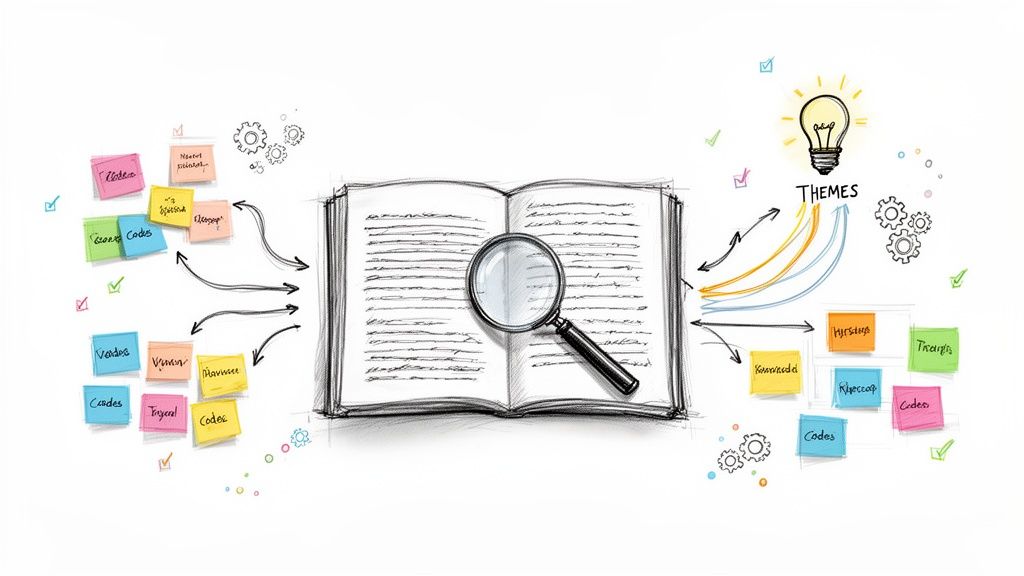
One of the most powerful techniques is Named Entity Recognition (NER). This is where the AI learns to spot and categorize important pieces of information in a text, like a detective pulling out key clues.
- People: "Elon Musk," "Oprah Winfrey"
- Organizations: "Google," "The Red Cross"
- Locations: "New York City," "Mount Everest"
- Dates: "October 26," "next Tuesday"
Another vital skill is Sentiment Analysis, which lets a computer read the room. By looking at word choices and context, the model can determine if a piece of text—like a customer review or a social media post—is positive, negative, or neutral. This is incredibly useful for creators and brands who need to gauge audience feedback at scale without manually reading thousands of comments.
Together, these steps are how NLP bridges the gap between simply reading words and truly understanding the message behind them.
Now that we've peeked under the hood at the mechanics of NLP, let's talk about what really matters: how you can actually use it. The theory is interesting, but the real magic happens when this technology saves you time, uncovers new insights, and opens up creative avenues you didn't have before.
For anyone creating content today, NLP is already changing the game. It’s turning the most tedious parts of our jobs into automated, almost effortless processes.
From Audio Chaos to Organized Content
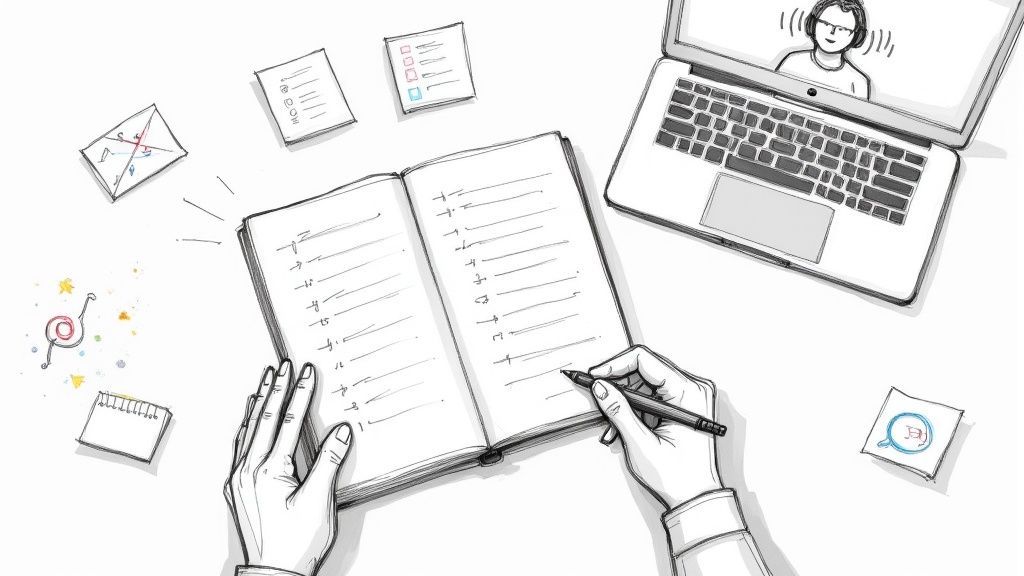
If you're a podcaster or YouTuber, you know the drill. You wrap up an amazing two-hour interview, and your next step is a mountain of work: hours of manually transcribing dialogue, re-listening to find the best quotes, and then trying to spin that into promotional material. It's a grind.
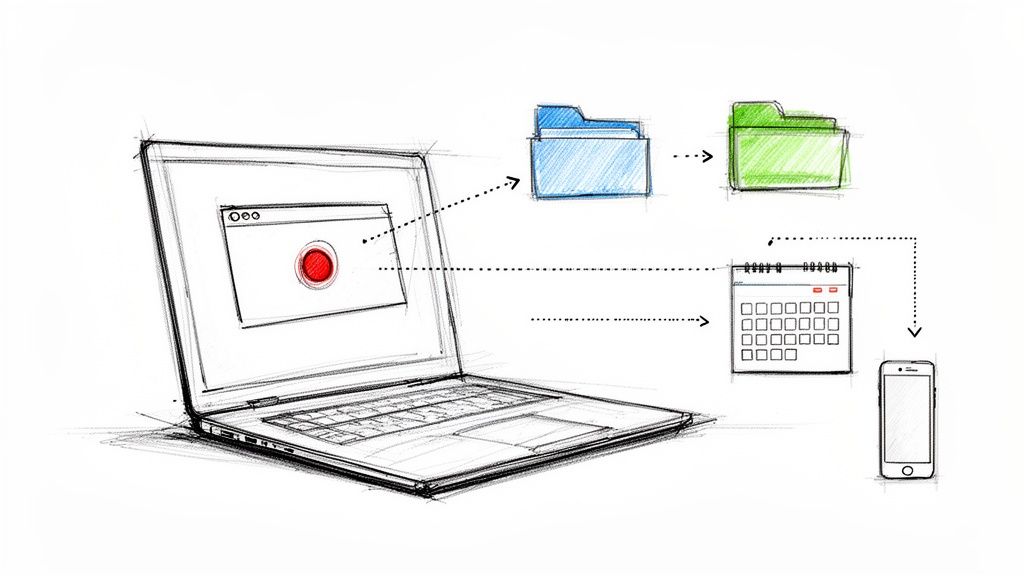
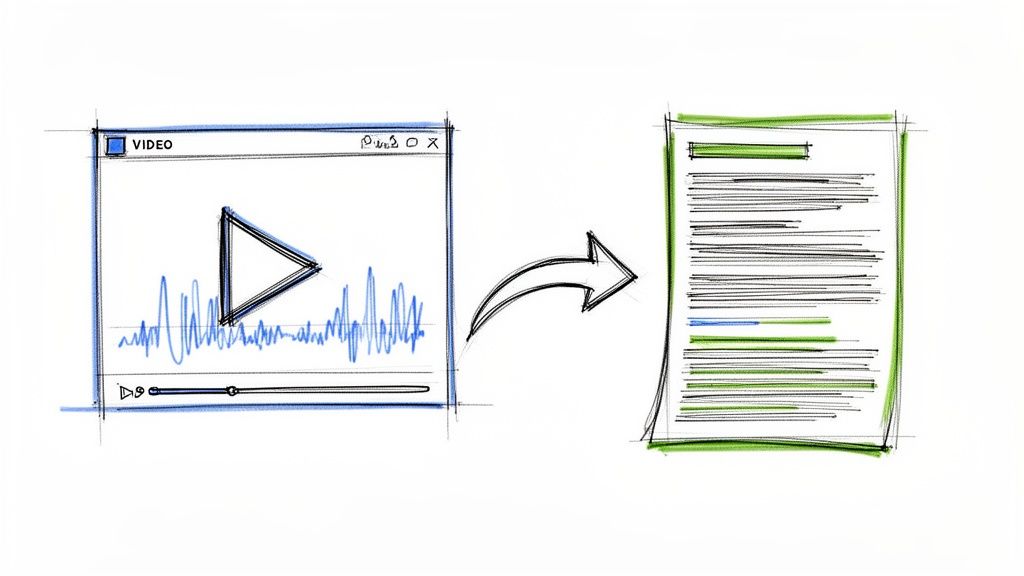
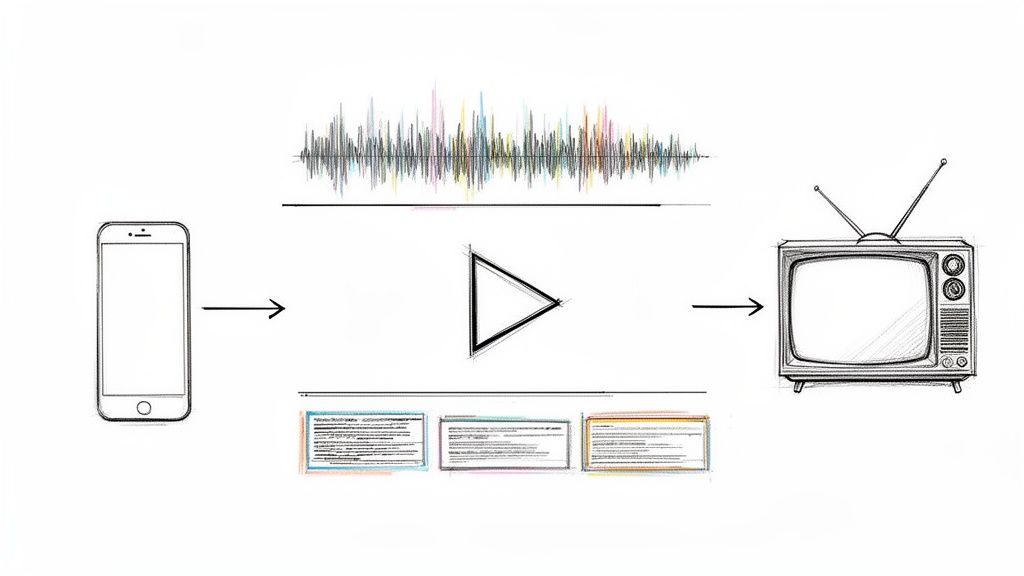
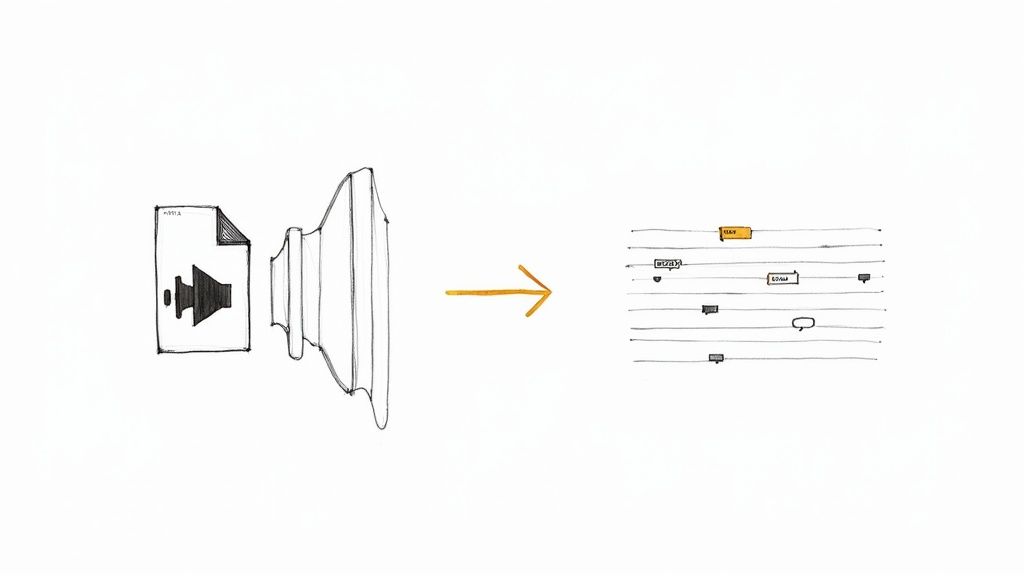
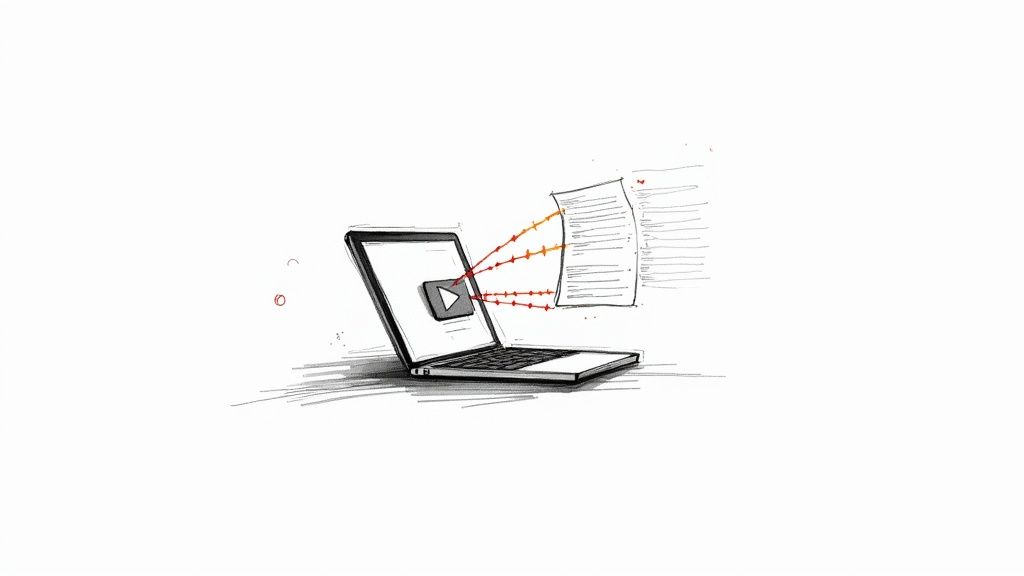
Modern NLP tools completely flip that script. Now, you just upload your audio or video file, and an AI-powered service does the heavy lifting for you.
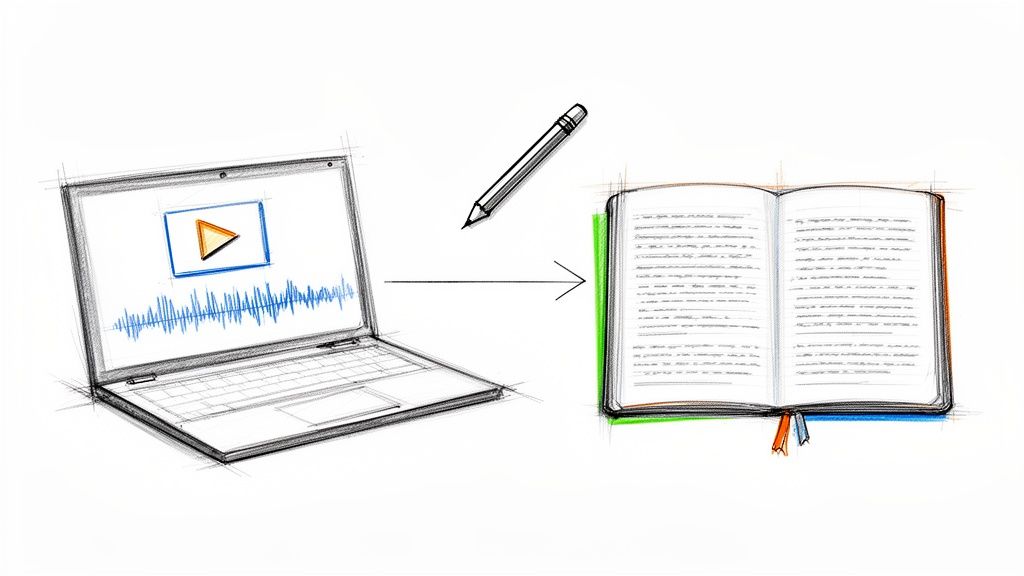
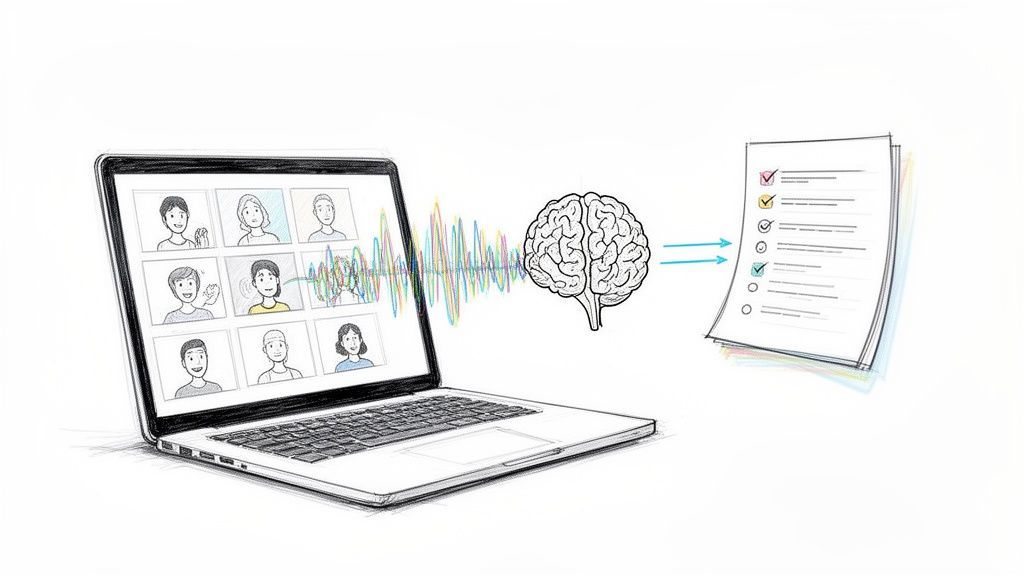
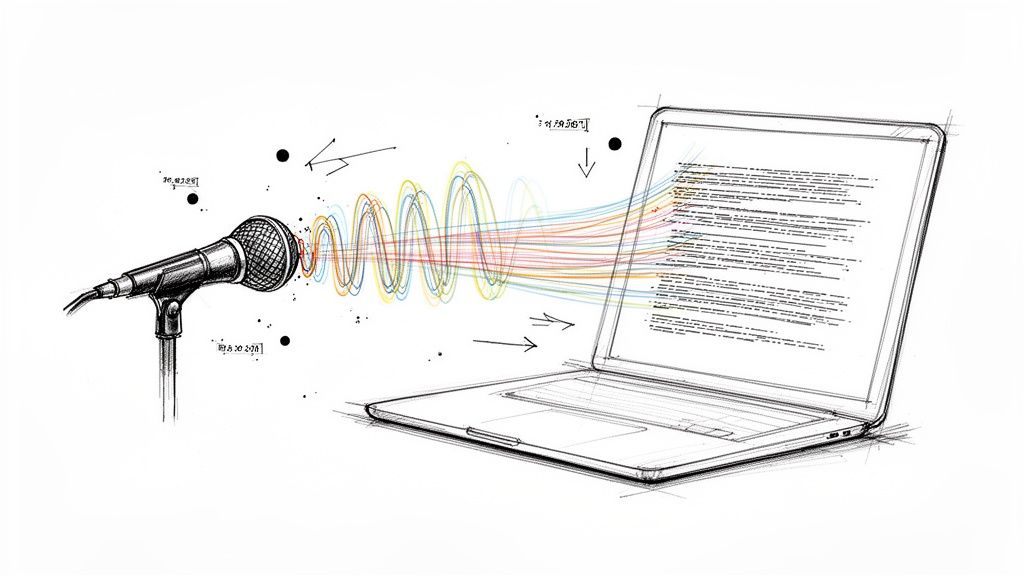
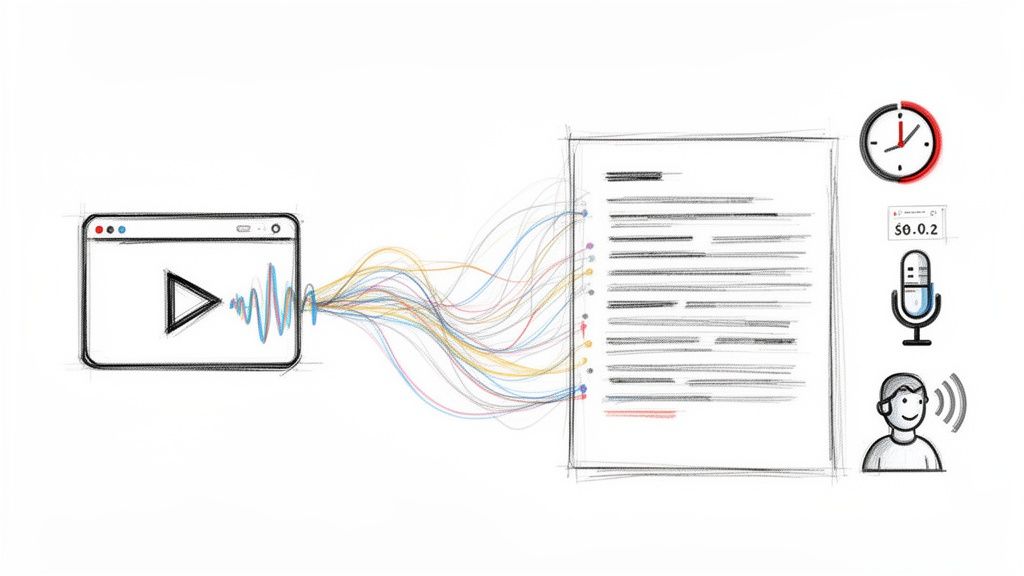
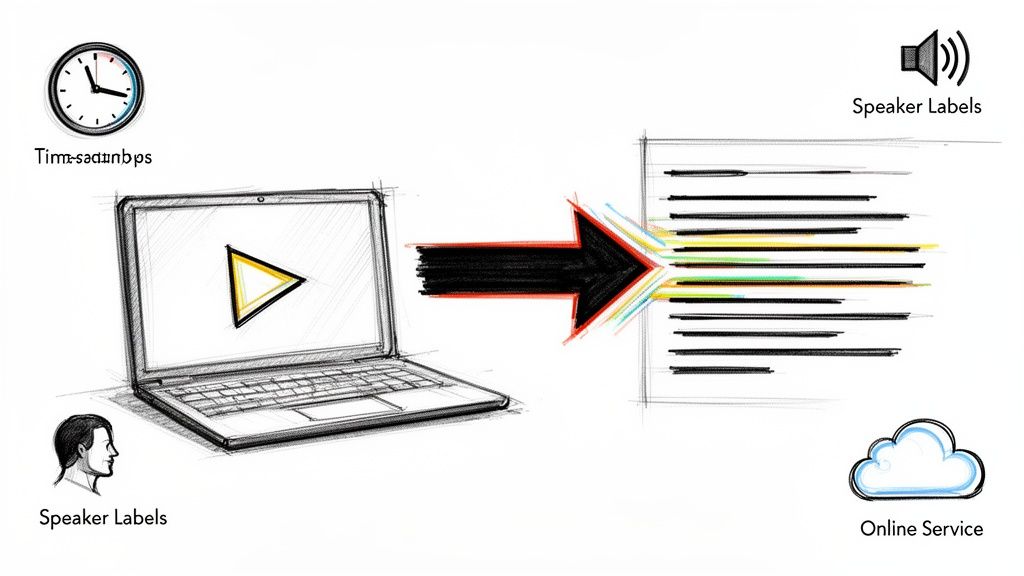
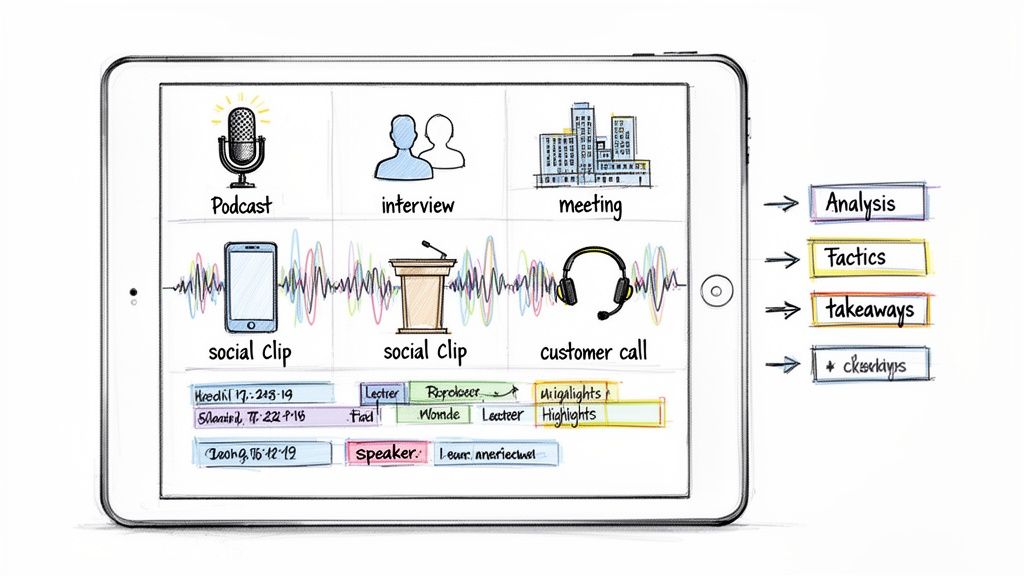
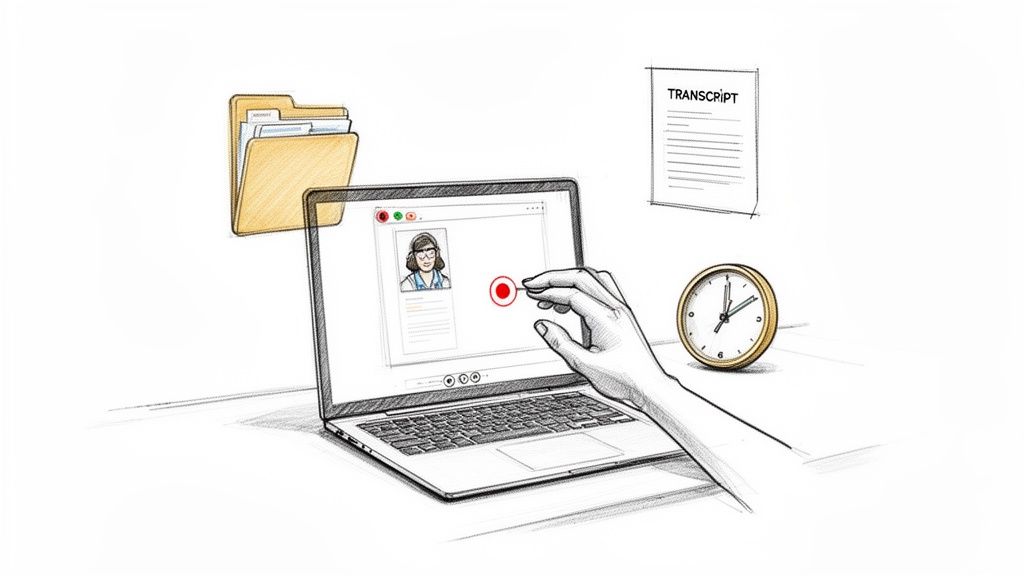
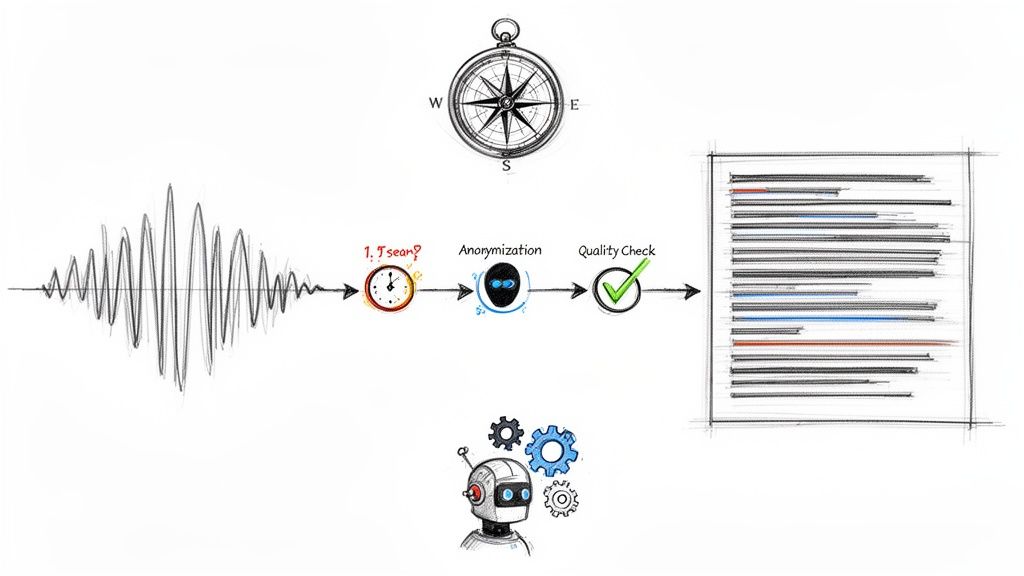
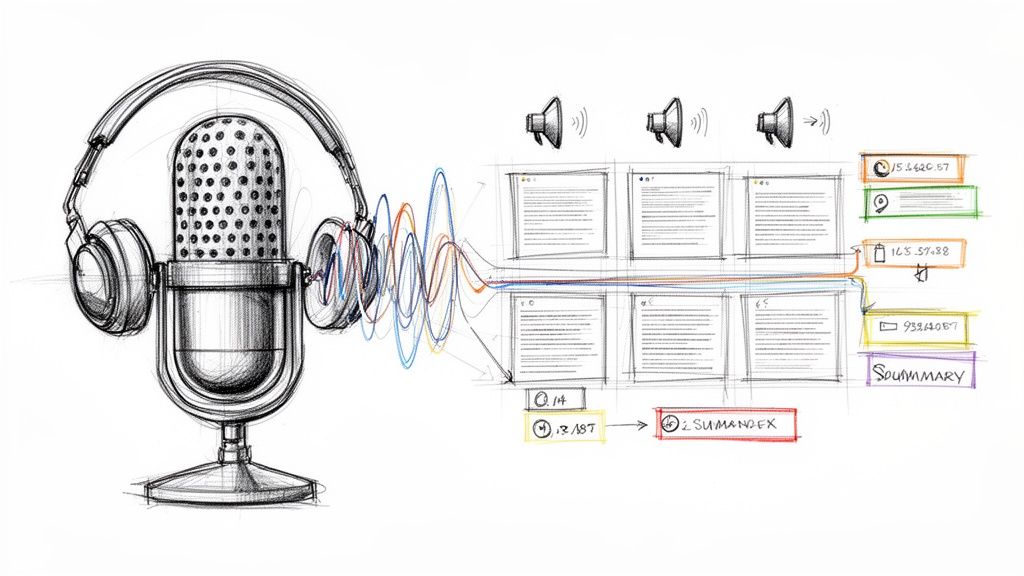
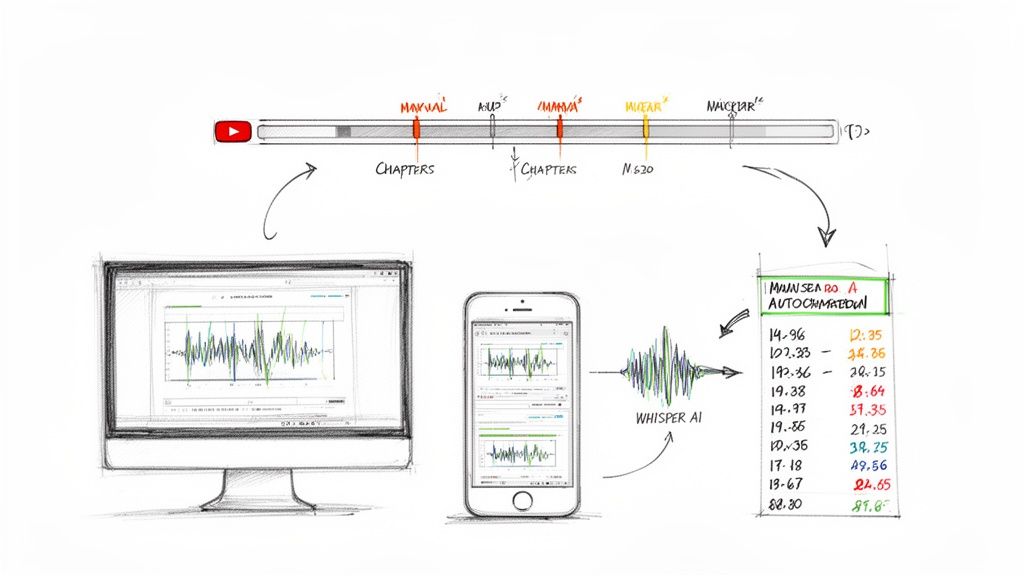
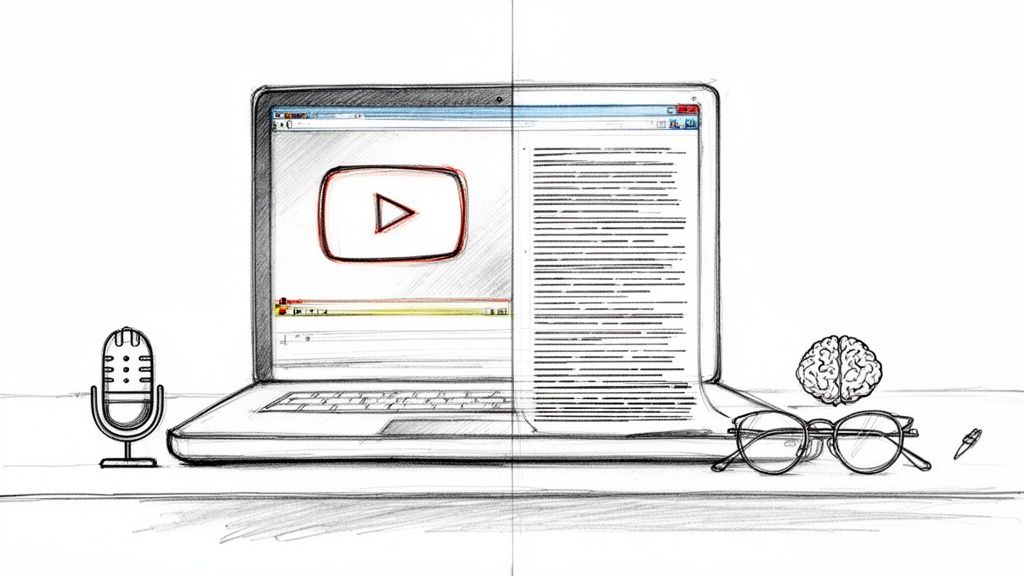
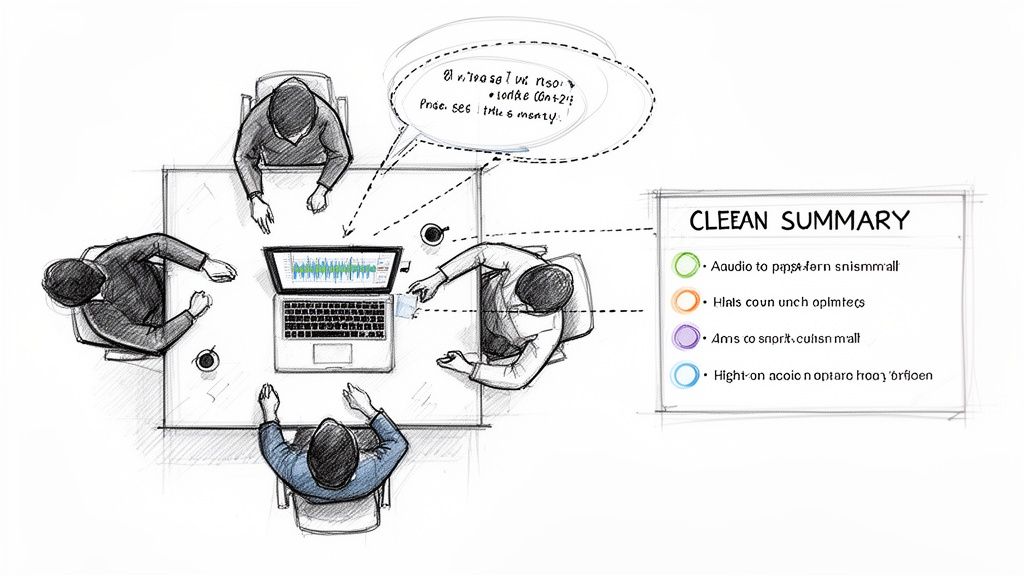
What does that look like in practice? An AI can "listen" to your recording and produce a remarkably accurate, time-stamped transcript in just a few minutes. But this isn't just about getting the words down on paper. It's about making your audio and video content instantly searchable, accessible, and ready to be repurposed.
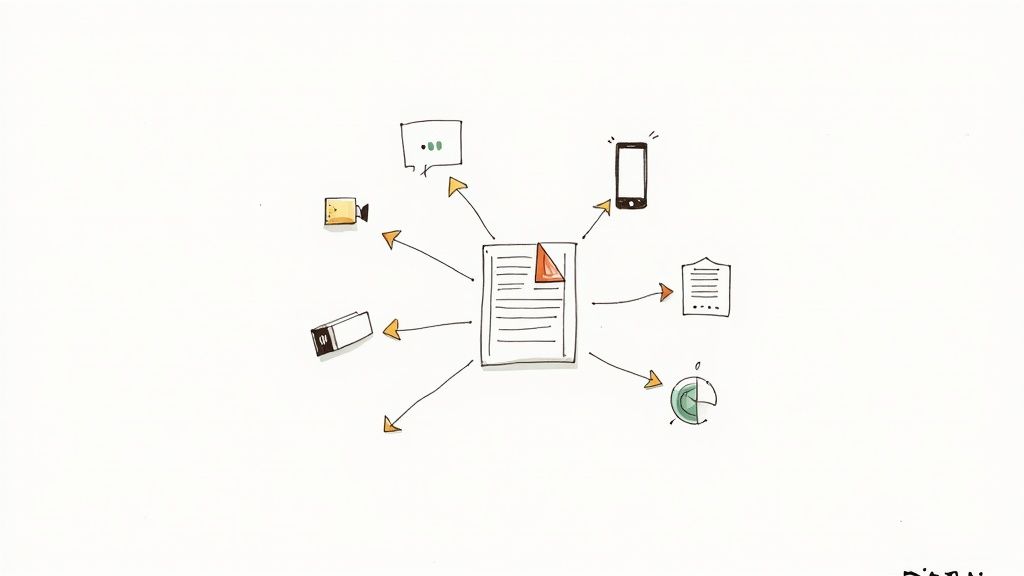
Suddenly, that two-hour interview becomes:
- An Instant Blog Post: The transcript can be quickly polished into a detailed article, ready for your website and optimized for search engines.
- Shareable Highlights: The AI can spot the most compelling parts of the conversation and generate concise summaries or bullet-point takeaways. These are perfect for show notes, email newsletters, or a whole week's worth of social media posts. You can see just how a video summarizer turns long content into short clips to get a better idea.
- Effortless Quote Finding: Remember that one perfect soundbite from your guest? Instead of scrubbing through the timeline for 20 minutes, you can just use "Ctrl+F" on the transcript and find it in seconds.
Uncovering Insights in Your Data
For journalists, researchers, and marketers, NLP is like having a superpower for finding the needle in a digital haystack. Trying to manually analyze thousands of documents, customer reviews, or social media comments is an impossible task. NLP automates this process, spotting trends and pulling out critical information at a speed no human ever could.
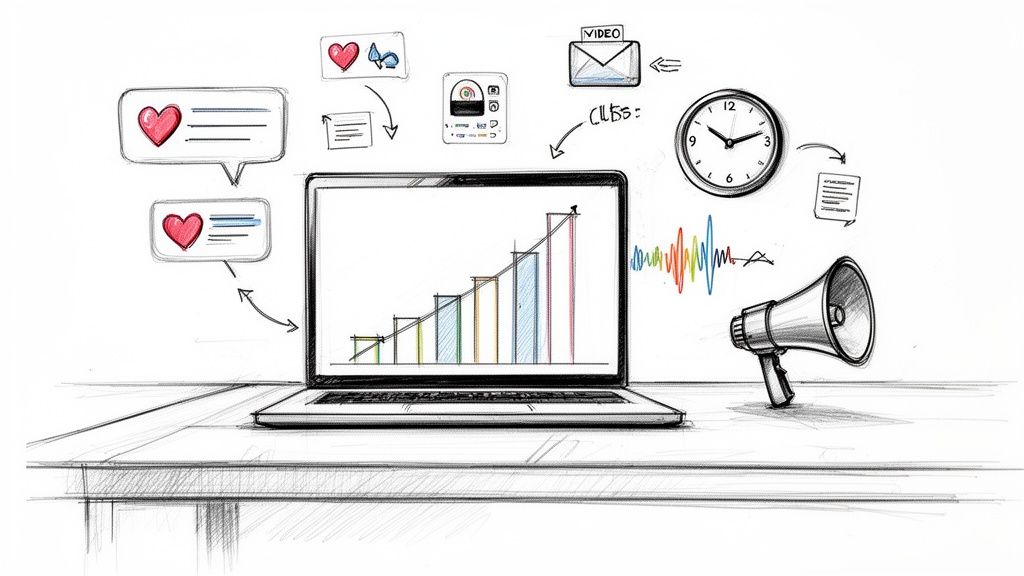
A perfect example of this is sentiment analysis. Instead of just guessing how my latest video landed with my audience, I can get a data-backed picture of their emotional response. It’s possible to extract YouTube comments for sentiment analysis and see what my community is really thinking, beyond just likes and view counts.
This means marketers can monitor brand perception in real-time by analyzing social media mentions, while journalists can sift through massive caches of leaked documents to identify key names and connections in minutes, not months. The 'before' was manual reading; the 'after' is AI-driven discovery.
The following table breaks down how these different NLP tasks directly translate into powerful features that content creators can use to streamline their work and gain a deeper understanding of their audience.
NLP Techniques and Their Impact on Content
Each of these techniques takes a complex, time-consuming manual task and transforms it into a fast, automated process, freeing you up to focus on what you do best: creating great content.
How Whisper AI Puts Natural Language Processing to Work for You
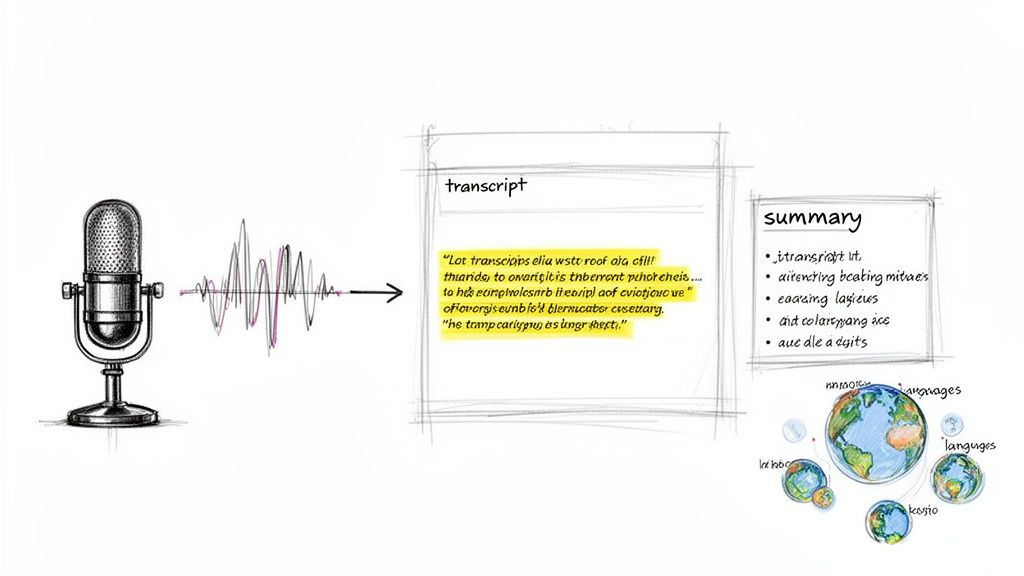
It’s one thing to talk about NLP in theory, but it’s another to see it solve real-world problems. For creators, this is where the rubber meets the road. Tools like Whisper AI take the complex machinery of language models and turn them into practical solutions that save you time and spark new ideas.
Think about it this way: instead of just being an academic term, natural language processing becomes the answer to the content treadmill. Imagine turning a one-hour podcast interview into a perfect transcript, a list of pull-quotes, and a dozen social media posts—all in just a few minutes. That’s NLP in action, giving you back your most valuable resource: time.
Top-Tier Transcription Accuracy
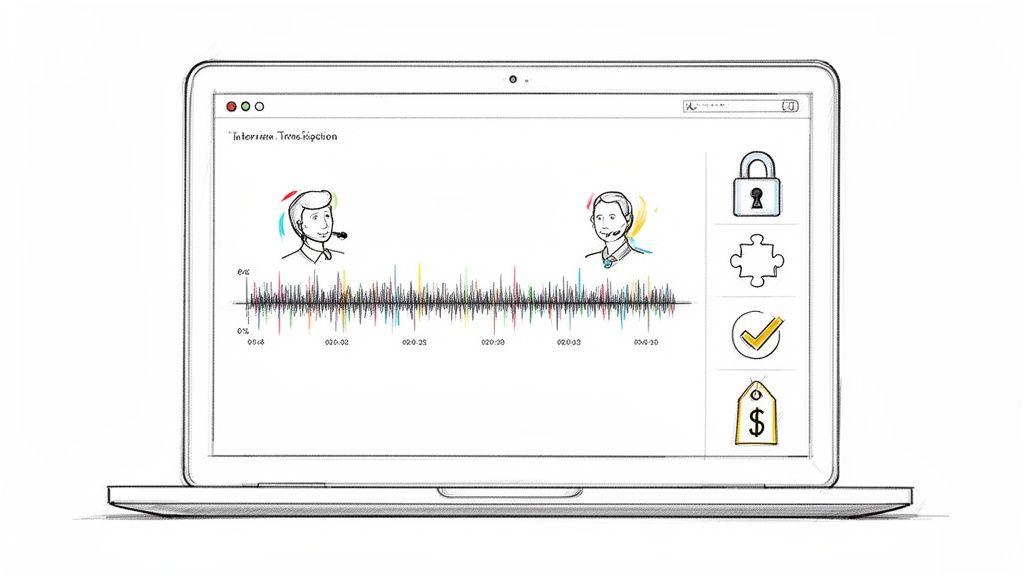
At its heart, Whisper AI is built on powerful speech-to-text models that deliver incredibly accurate transcriptions. We're not talking about basic, word-for-word conversion. The AI is specifically trained to navigate the messy reality of audio production, where other services often stumble.
It's particularly good at handling:
- Heavy background noise or less-than-perfect audio.
- Multiple speakers, even when they talk over each other.
- Strong regional accents and fast-paced conversations.
This level of reliability is the direct result of a fundamental shift in NLP that started decades ago. Back in the 1980s and 90s, the field moved away from rigid, rule-based systems—which would fail on 80-90% of real-world sentences—toward data-driven models. These new systems learned from huge amounts of text, leading to breakthroughs like Hidden Markov Models (HMMs) that improved speech recognition accuracy by 30-50%.
That evolution from hand-coded rules to statistical learning is exactly why Whisper AI can distinguish between speakers in an interview or add precise timestamps to your video. It’s not just hearing words; it’s understanding them in context.
From Hours of Audio to Instant Highlights
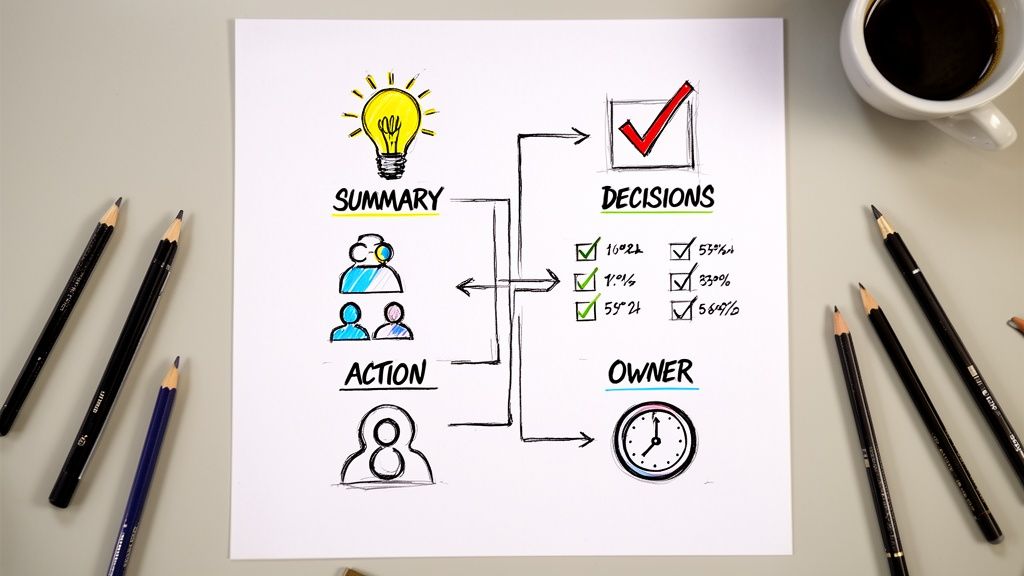
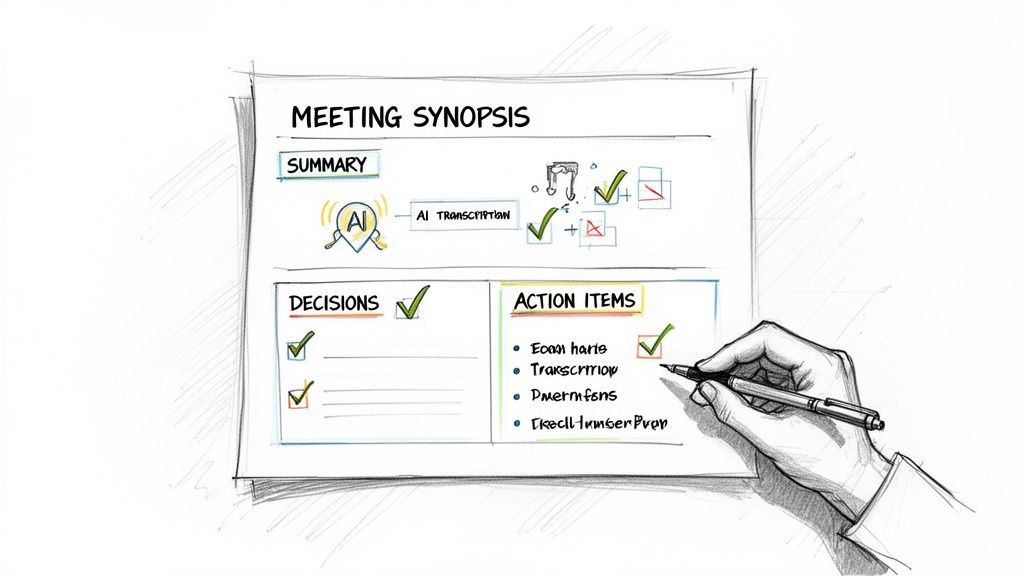
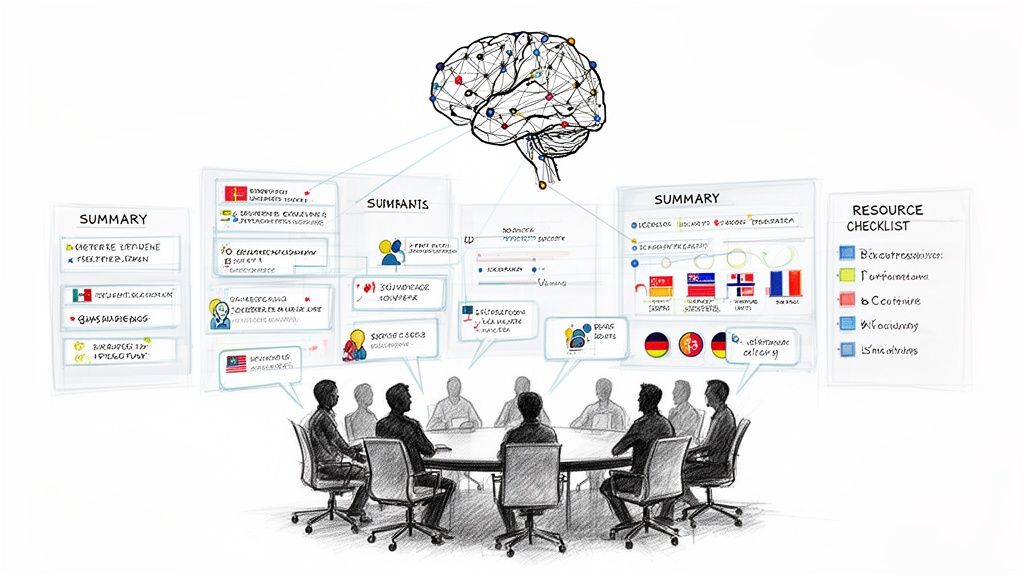
Whisper AI goes well beyond just transcription. It uses advanced summarization techniques to pinpoint the most important ideas in your content. The platform doesn’t just trim down the word count; it identifies the main arguments and organizes them into clear, usable formats.
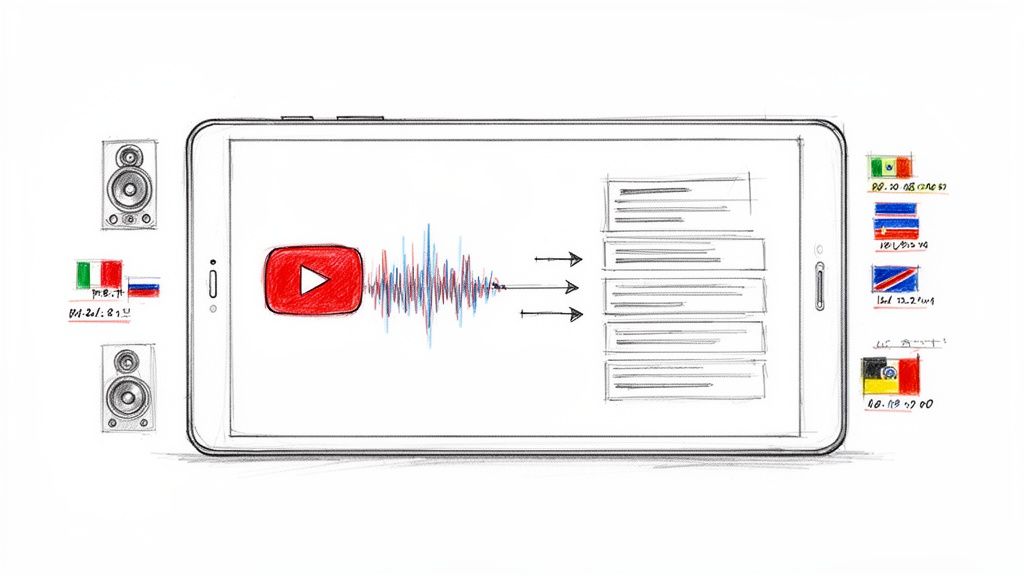
With support for over 90 languages and a firm commitment to data privacy, Whisper AI makes powerful natural language processing practical and safe for creators everywhere.
This means you can instantly generate a concise summary, a set of bullet-point highlights, or a list of the key topics discussed. For anyone trying to keep up with the demands of a consistent online presence, the ability to repurpose content this quickly is a massive advantage.
Want to see more? You can find out how Whisper AI works in our detailed overview.
The Future of NLP and Its Challenges
Natural language processing has come a long way, but it's important to keep a level head. The technology is impressive, but it's not magic. To really grasp what is natural language processing, we have to look at its rough edges—the current limitations and the serious ethical questions that come with it.
Even the most sophisticated AI models can get tripped up by the very things that make human language so rich. Sarcasm, cultural inside jokes, and conversations that rely heavily on shared context can fly right over their heads. This happens because these models are trained on massive datasets, and if that data is skewed, the AI’s output will be skewed, too.
One of the biggest hurdles for NLP is dealing with the biases baked into its training data. If a model learns language primarily from one specific group of people, it will naturally struggle to understand—or worse, will misrepresent—language from other groups, perpetuating harmful stereotypes in the process.
Beyond bias, the very act of using our data to train these systems brings up thorny issues around privacy. As NLP becomes more woven into our daily tools and routines, figuring out how to handle personal data responsibly is a challenge we can't afford to ignore.
What Comes Next for Language AI
Despite these hurdles, the road ahead is genuinely exciting. The next big breakthroughs are already taking shape, led by two major developments: the next generation of large language models (LLMs) and multimodal AI.
Multimodal AI is a huge step forward because it can process and connect information from different sources all at once—text, images, audio, and video—much like our own brains do. This capability is set to unlock a whole new class of creative tools.
- Hyper-Personalized Experiences: Imagine AI that can analyze how your audience engages with your videos, podcasts, and articles to help you create content that truly hits home.
- Advanced Content Generation: Picture an AI that can watch one of your videos, listen to the audio, and then write a blog post that perfectly captures its theme, even suggesting relevant images to go with it.
- Deeper Insights: By linking what people are saying in the comments to the exact moments in a video that sparked those reactions, creators can get a much clearer picture of what their audience loves.
As we look to the horizon, it's clear the AI revolution's impact on job markets and the economy will be significant. As NLP continues to get better, it’s set to redefine not just how we create content, but the foundations of entire industries.
Answering Your NLP Questions
As we wrap up, it's natural to have a few lingering questions. Let's tackle some of the most common ones that come up when people are first getting to grips with natural language processing.
Is NLP Just Another Word for AI?
Not exactly, but they're closely related. A good way to think about it is to picture Artificial Intelligence (AI) as a huge, sprawling field of study—the entire science of making machines smart. Within that massive field, Natural Language Processing (NLP) is a specialized discipline focused entirely on language.
So, while every NLP application is a type of AI, not all AI deals with language. A self-driving car's navigation system, for instance, is AI, but it's not NLP.
How Can I Actually Use NLP for My Content?
Chances are, you already are! If you've ever used a grammar checker, seen a social media platform analyze comment sentiment, or used your phone's auto-correct, you've benefited from NLP.
For creators and journalists looking to do more, you don't need a degree in computer science. Platforms like Whisper AI are built to make this technology accessible. You can transcribe hours of interviews or summarize a lengthy podcast with just a few clicks. Simply upload your file, and the NLP models do all the heavy lifting in the background, delivering accurate transcripts and concise summaries in minutes.
A key concern for many creators is data privacy. Some services may use your content to train their AI models, which is why choosing a platform with a transparent privacy policy is so important.
What Are the Privacy Risks I Should Worry About?
This is a really important question, and the answer comes down to the provider you choose. Your content is your intellectual property, so you need to be careful about who you trust with it.
That’s why you should always read the privacy policy. At Whisper AI, we built our service with privacy at its core. We process your files securely, never use your data for training our models, and don't hold onto your files longer than needed. Your content always remains your own.
Ready to see how AI can streamline your content workflow? Try Whisper AI today and get your first transcript and summary in minutes. Visit our website to get started.