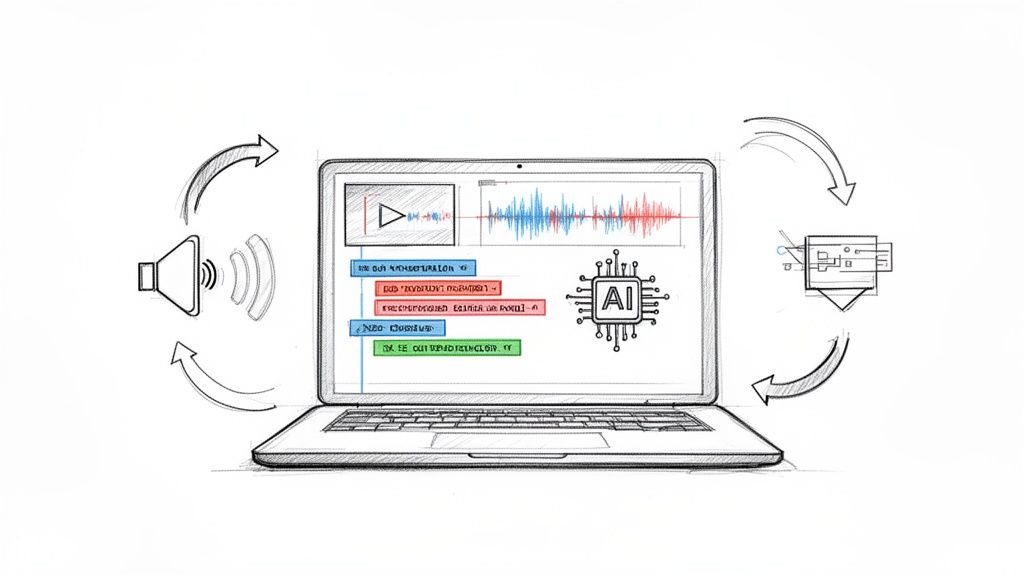
Translation vs Transcription: What's the Difference and Which Do You Need?
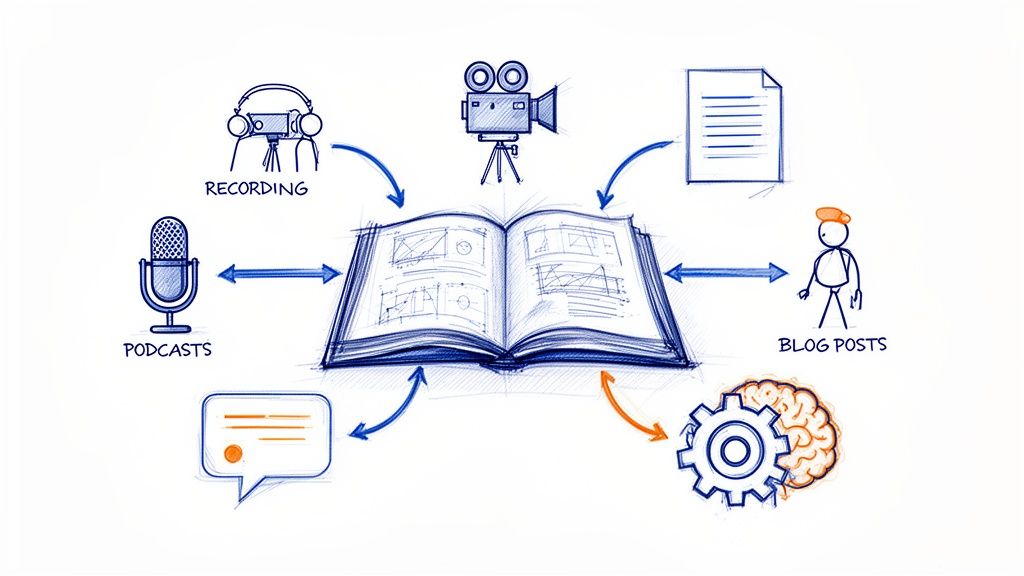
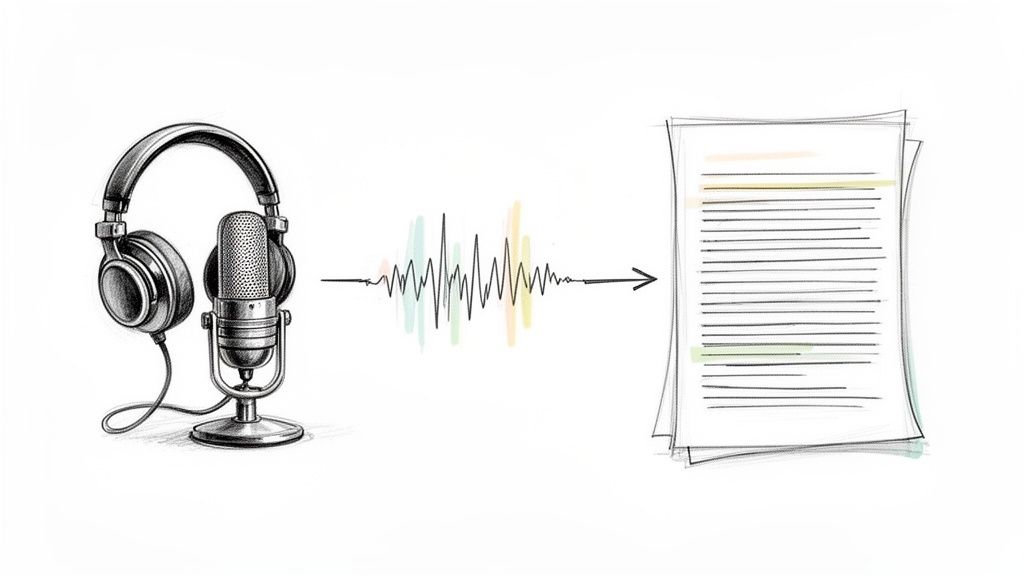
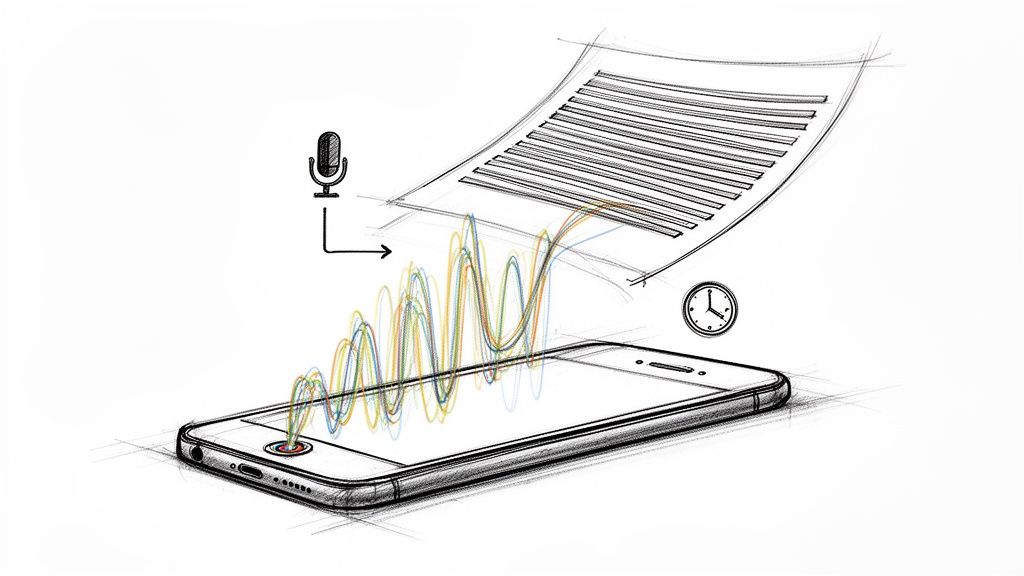
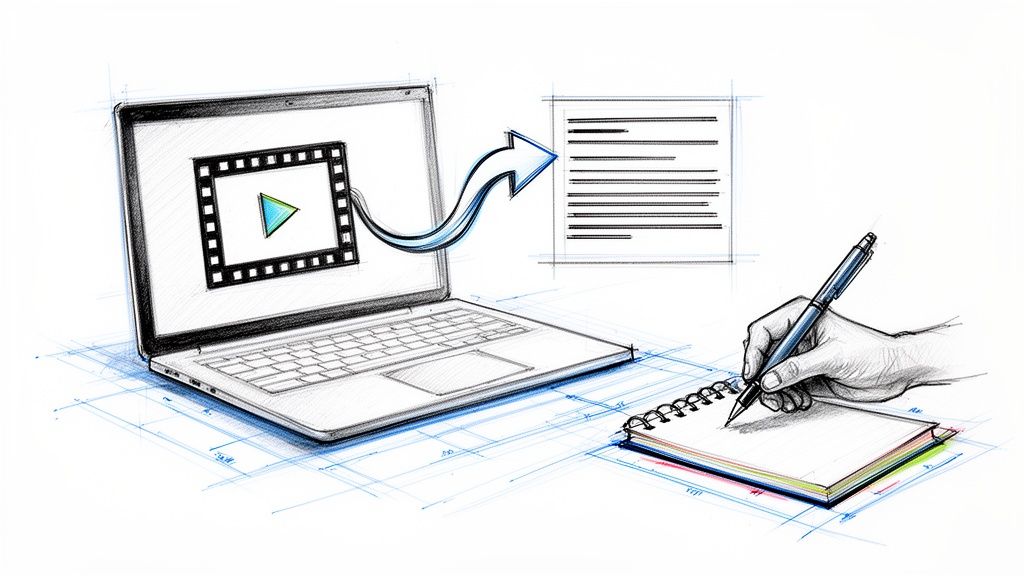
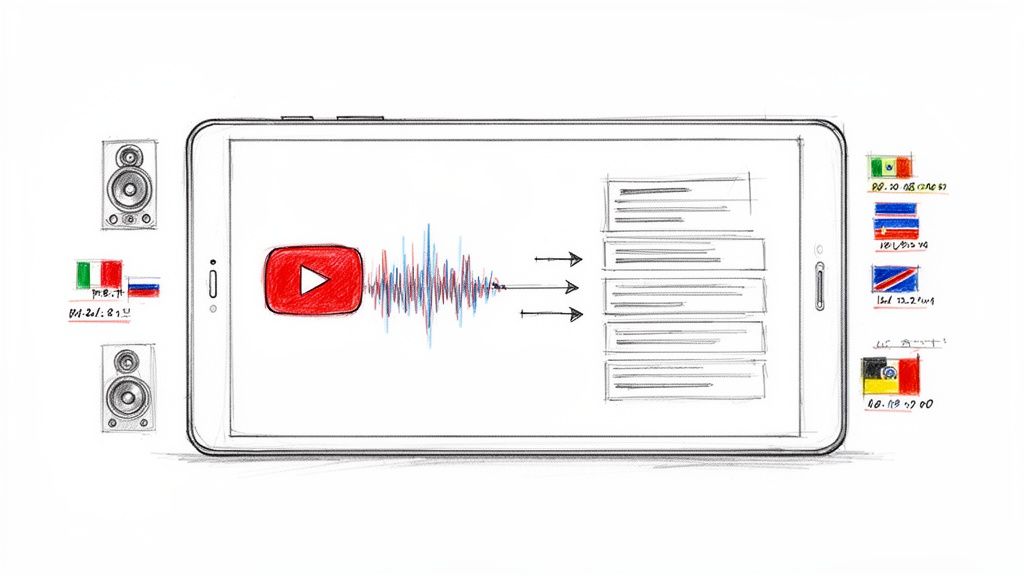
It’s easy to confuse transcription and translation. They sound similar, and both deal with language. But if you’re creating content, you need to know the difference. Here’s the simple answer: transcription turns spoken audio into written text in the same language, while translation takes written text and converts it into a different language.
One creates a written record of what was said; the other bridges a language gap. But knowing the basic definition is just the start. The real insight comes from understanding which one to use for your specific project, when to use it, and how they can work together to give your content global reach.
Unpacking the Core Difference
Both processes handle words, but their goals are fundamentally different. I like to think of it this way: transcription is about documentation, and translation is about communication.
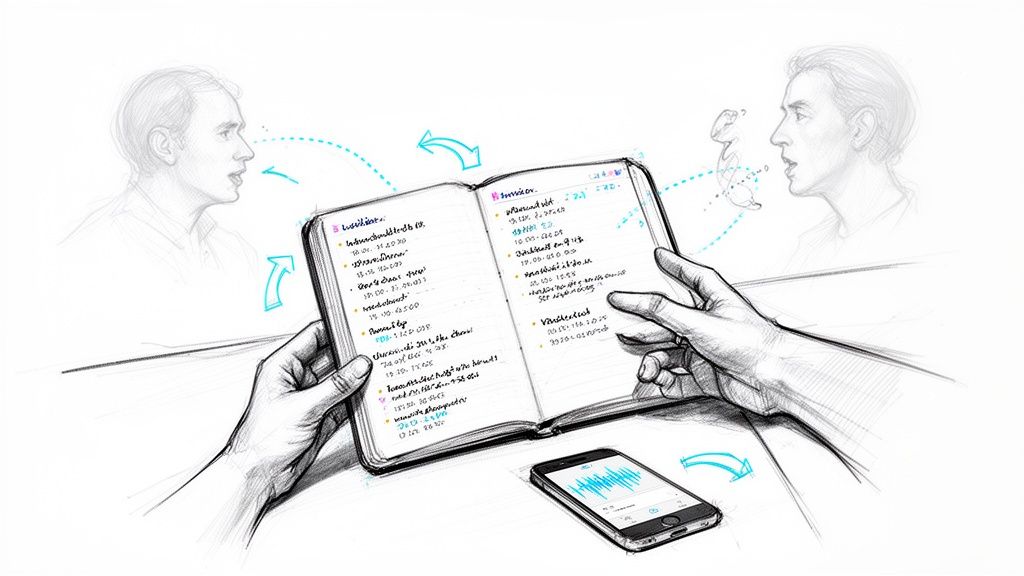
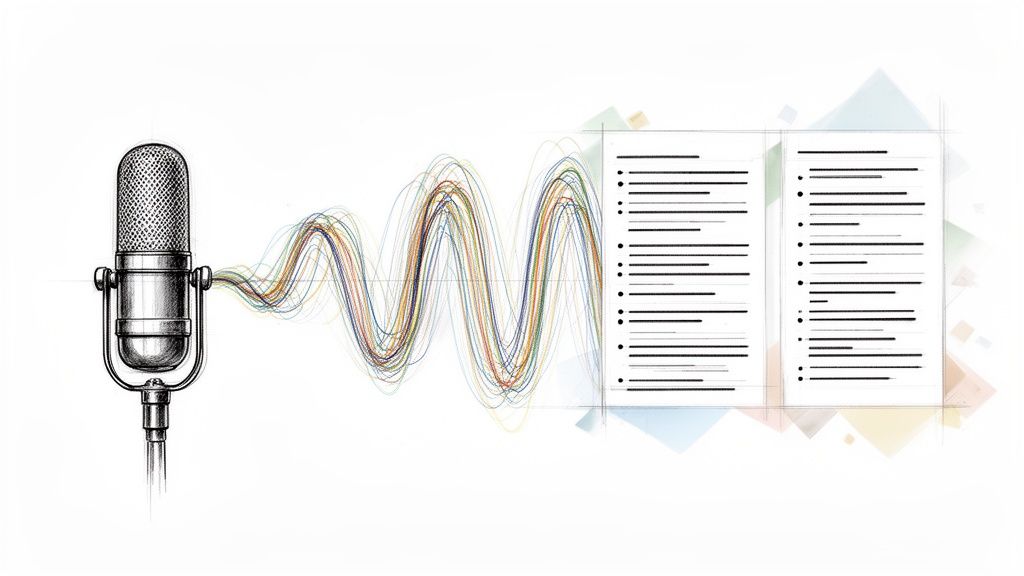
Transcription is a single-language process. You start with an audio or video file—like a podcast interview, a business meeting, or a webinar recording—and you type out what was said. The primary goal is accuracy. You're creating a faithful text version of the original audio. I've used transcripts to create show notes for podcasts, generate legal records, and make video content searchable on Google.
Translation, on the other hand, always involves at least two languages. It usually picks up where transcription leaves off, starting with a completed text document. A translator's job is much more than just swapping words one-for-one. From my experience working with translators, their real skill is capturing the original meaning, tone, and cultural nuances and then rebuilding them in a completely new language for a new audience. It's an art of interpretation and cultural adaptation.
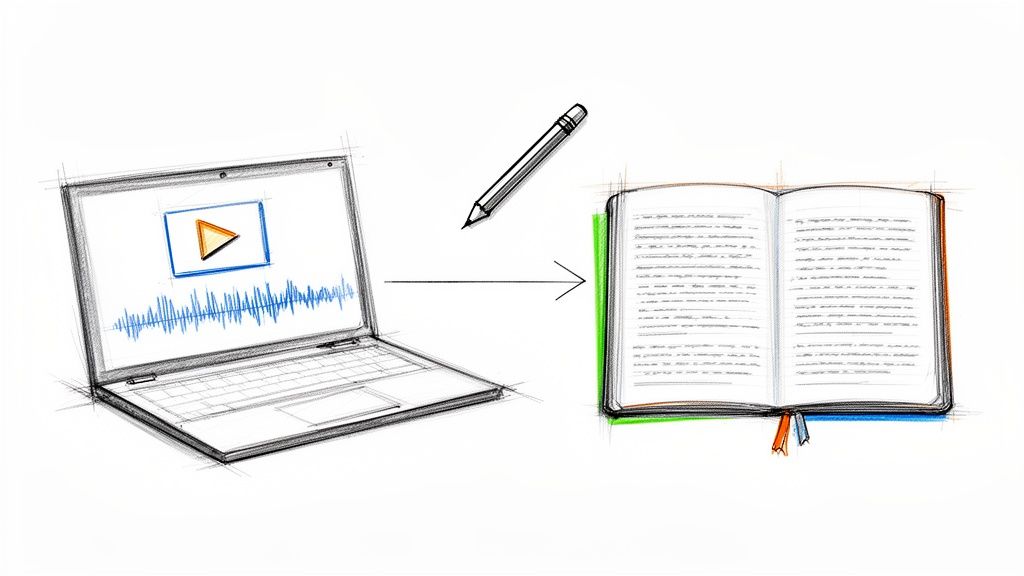
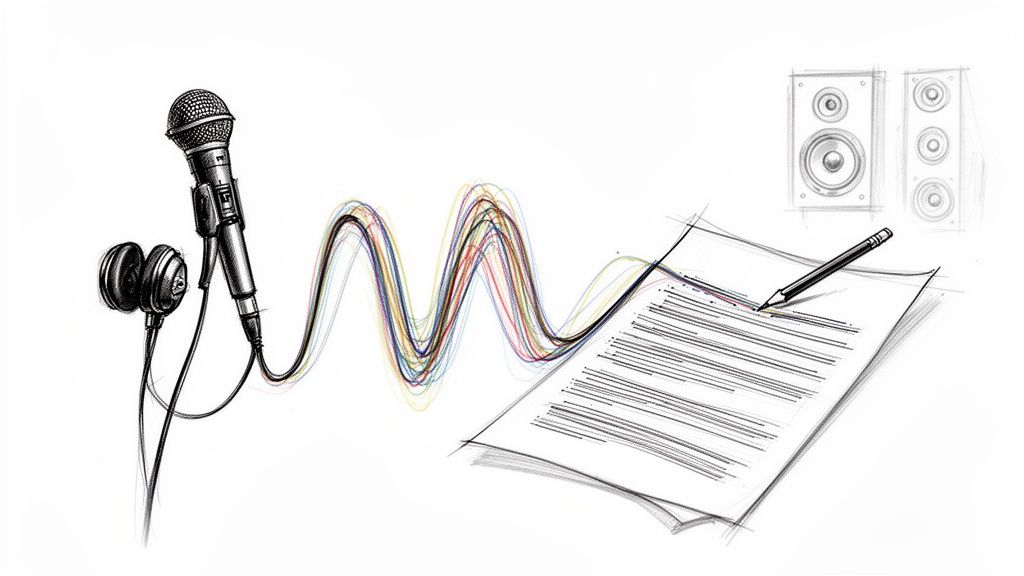
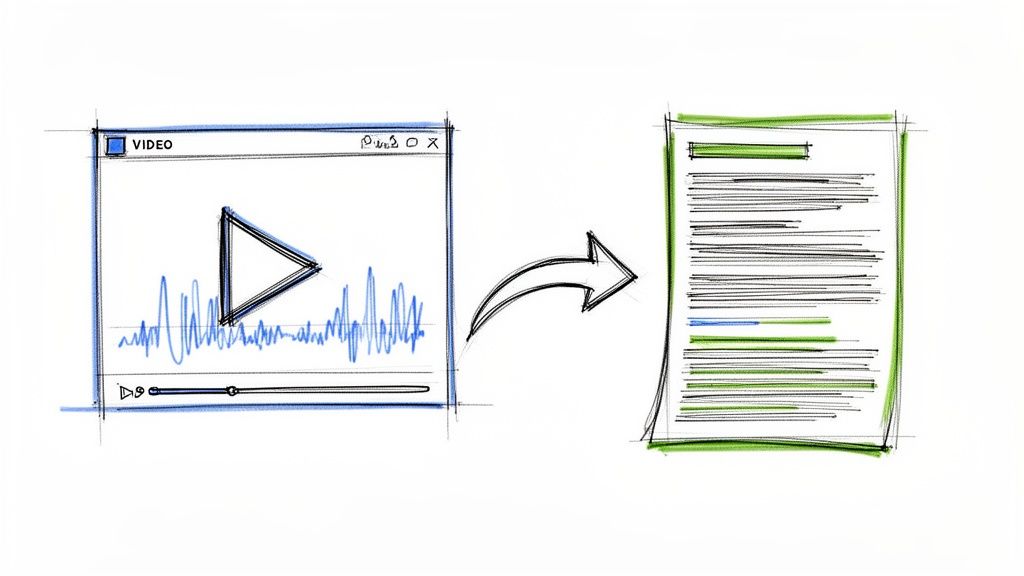
Key Takeaway: The simplest way I've found to remember the difference is this: transcription changes the medium (from spoken audio to written text), while translation changes the language.
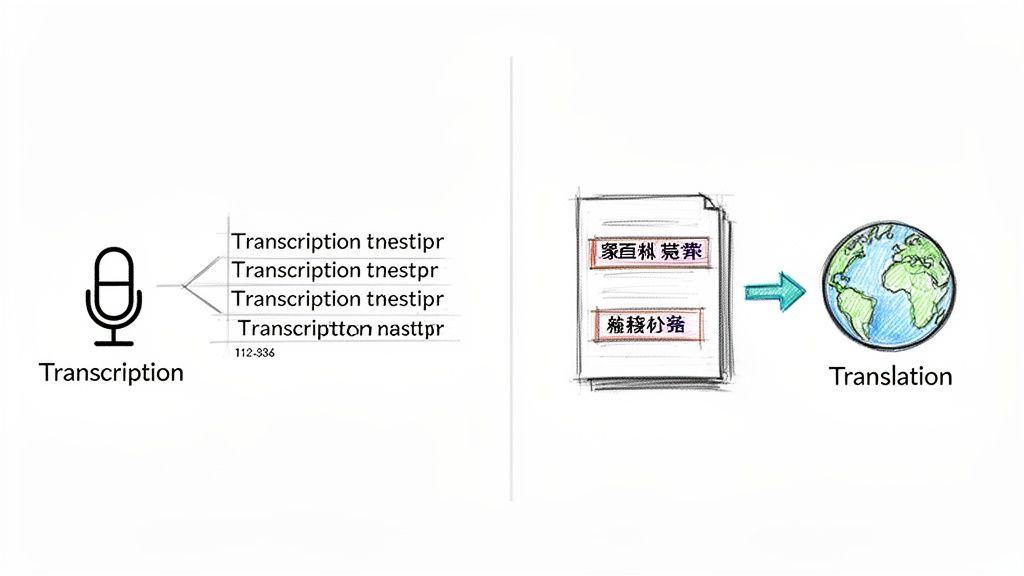
To make this even clearer, let's lay out the differences side-by-side.
Key Differences at a Glance Transcription vs Translation
This table offers a direct comparison of the essential distinctions between transcription and translation, covering their primary goal, typical input, final output, and the fundamental challenge of each process.
Ultimately, choosing between the two depends entirely on what you want to achieve. Do you need a searchable, written version of your podcast? Start with transcription. Want to share that podcast with a Spanish-speaking audience? That's when you'll need translation.
What Is Transcription? Capturing Verbatim Truth
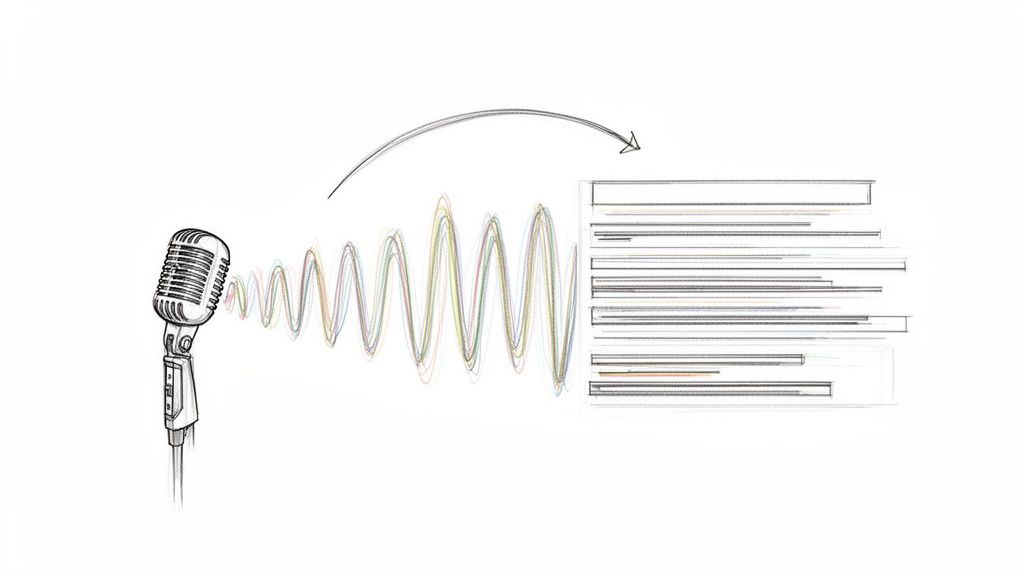
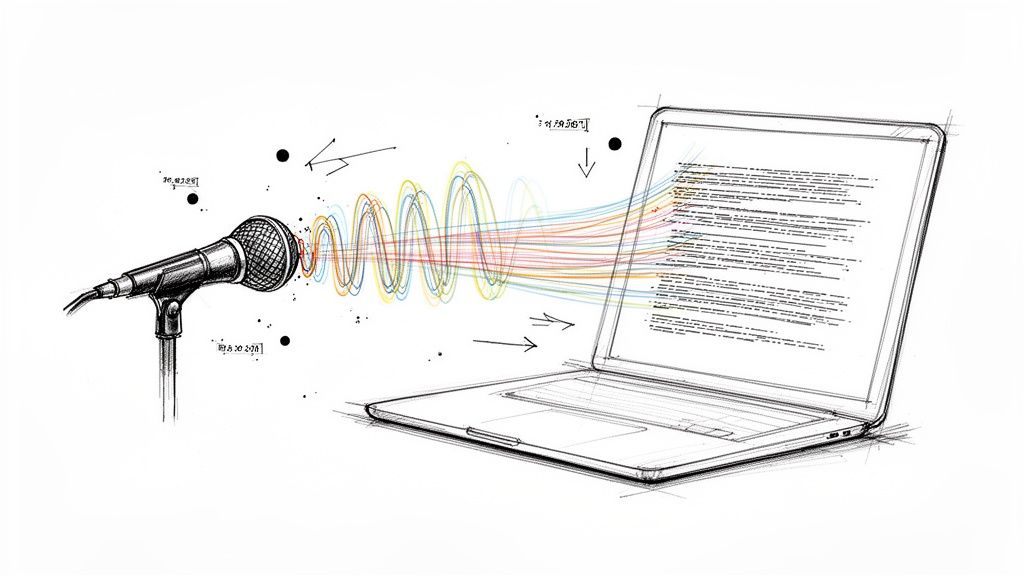
At its core, transcription is the process of converting spoken words from an audio or video file into written text. Think of it as creating the definitive record of what was said. From my experience, when a journalist needs an exact quote for a story or a podcaster wants a searchable script of their latest episode, they’re relying on transcription to create that single source of truth.
This isn't a niche process; it’s booming. The demand for accurate transcripts is exploding, driven by creators, educators, and businesses all needing to turn their media into text, fast. The U.S. transcription market was valued at an incredible USD 30.42 billion in 2024 and is projected to climb to USD 41.93 billion by 2030, according to research from Grand View Research.
Verbatim vs. Clean Read Transcription
Not all transcripts serve the same purpose. Based on projects I’ve managed, the first decision you have to make is whether you need a verbatim or a clean read transcript. The choice really comes down to what you plan to do with the text.
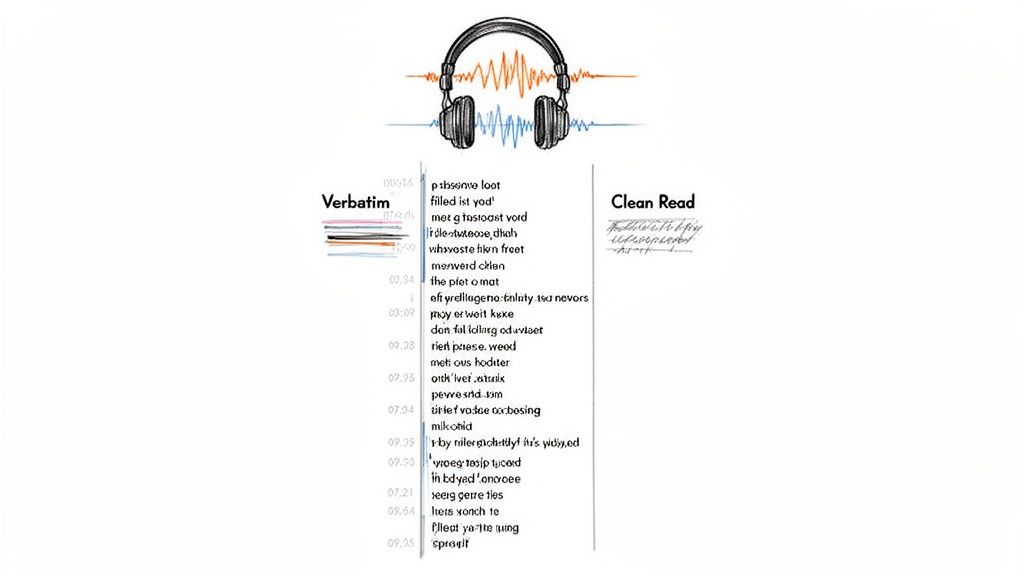
Verbatim Transcription: This is the most literal style. It captures every single word, sound, and hesitation—filler words like "um" and "ah," false starts, and even non-verbal sounds like [laughs] or [crosstalk]. This level of detail is critical in legal settings or for academic research where every nuance matters.
Clean Read Transcription: Often called "intelligent verbatim," this version is polished for readability. It removes all the stutters, repetitions, and filler words, giving you a clean, easy-to-read document. Most content creators I work with prefer this for creating blog posts, show notes, and video subtitles. You can learn more in our guide on what a transcription is.
A key difference in the translation vs. transcription debate is that transcription’s goal is pure fidelity to the original audio. Translation's goal, in contrast, is fidelity to the original meaning, which often requires changing the words.
A YouTuber, for instance, would use a clean read transcript to generate accurate closed captions (CC). This not only makes their content accessible but also gives search engines indexable text, a huge boost for SEO. A journalist, on the other hand, might want a verbatim transcript of an interview to analyze a speaker's exact phrasing and hesitations.
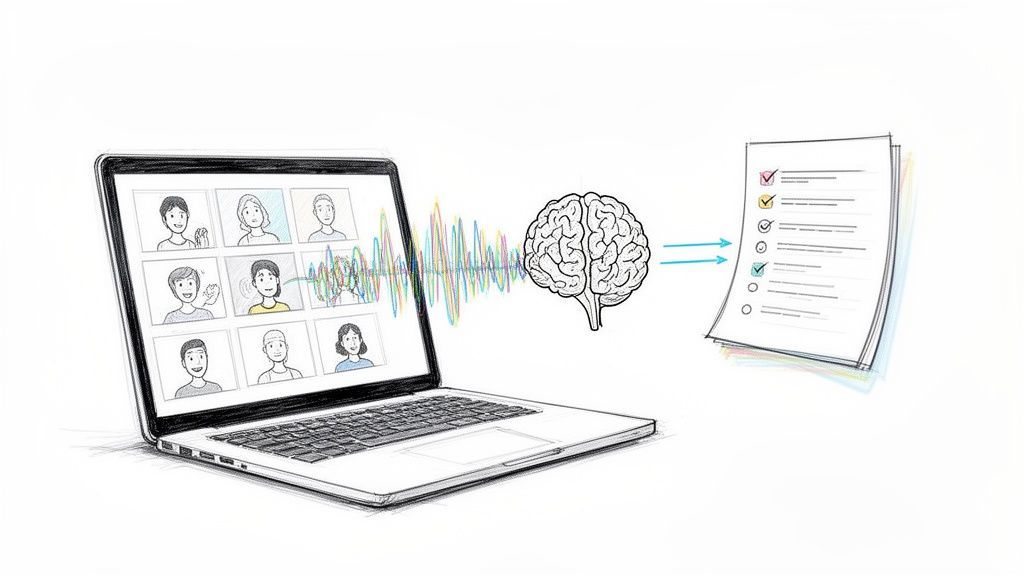
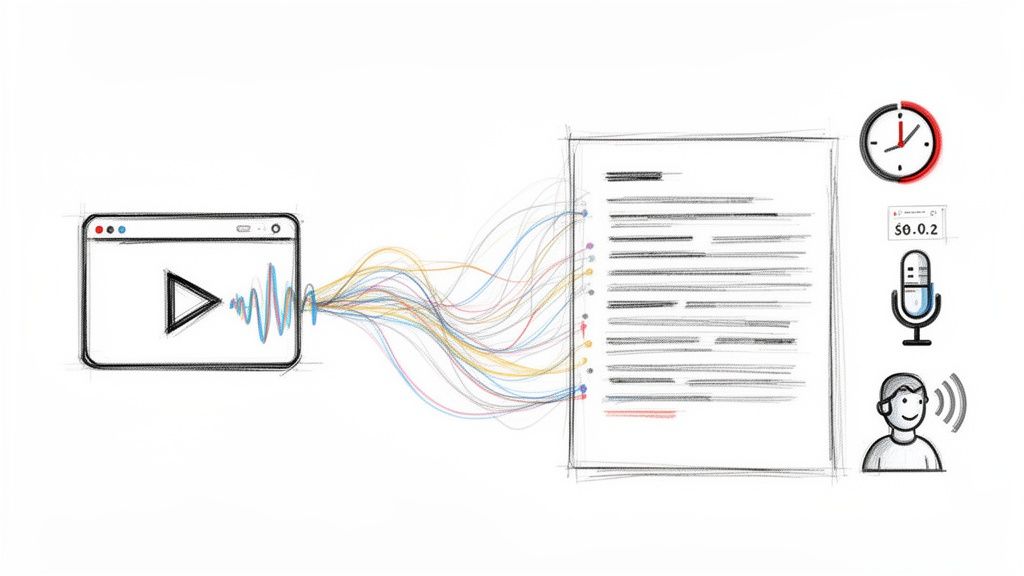
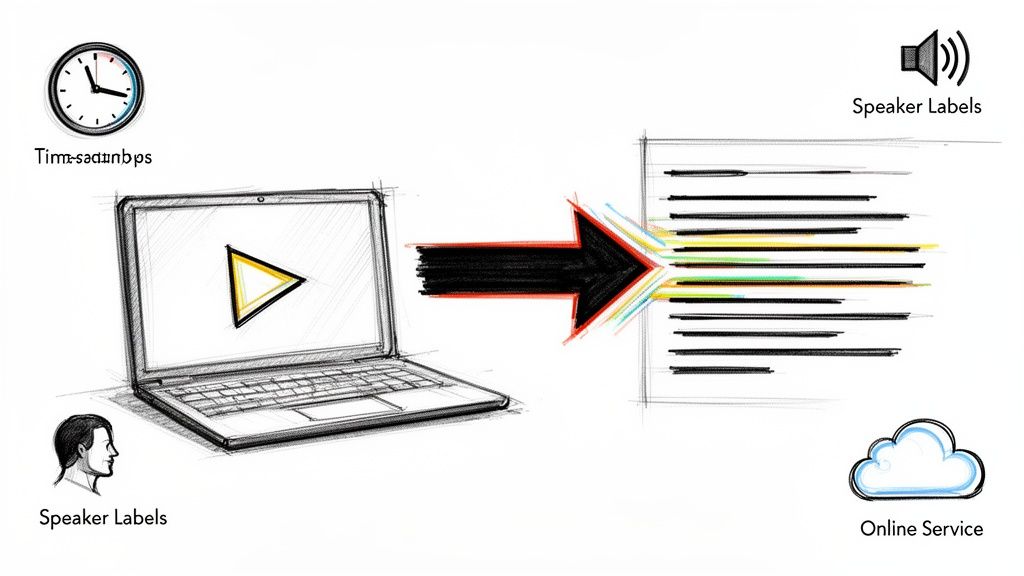
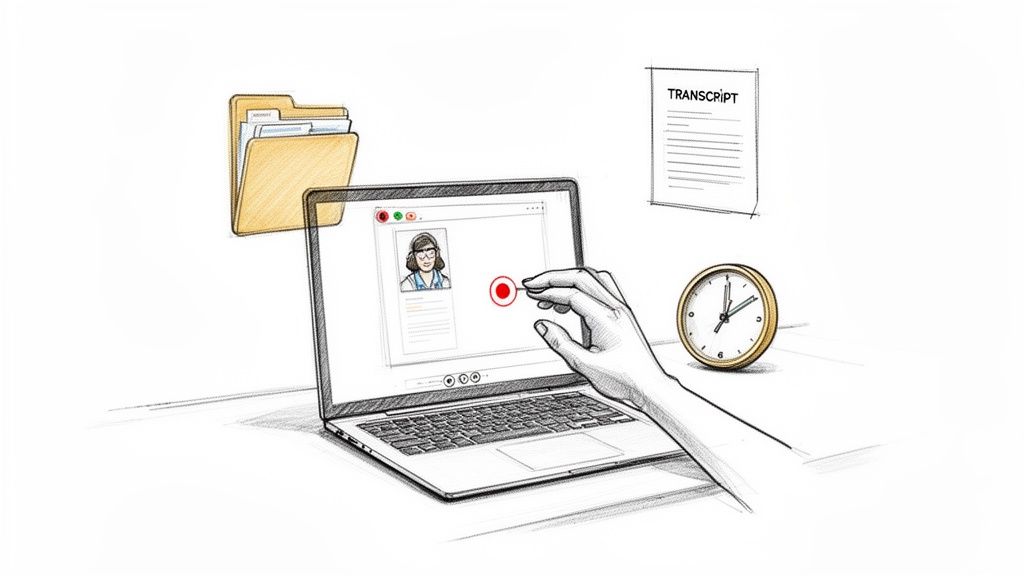
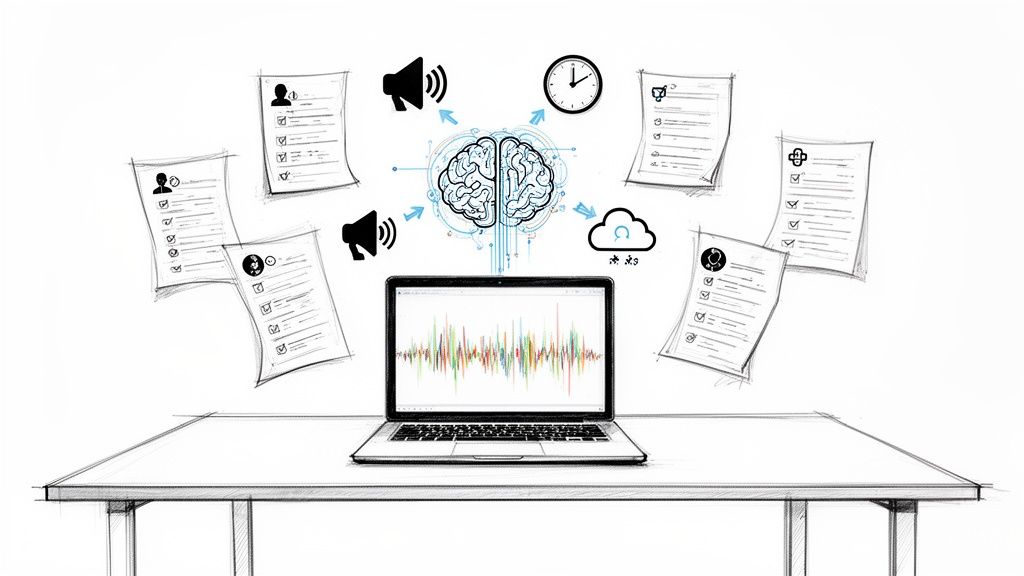
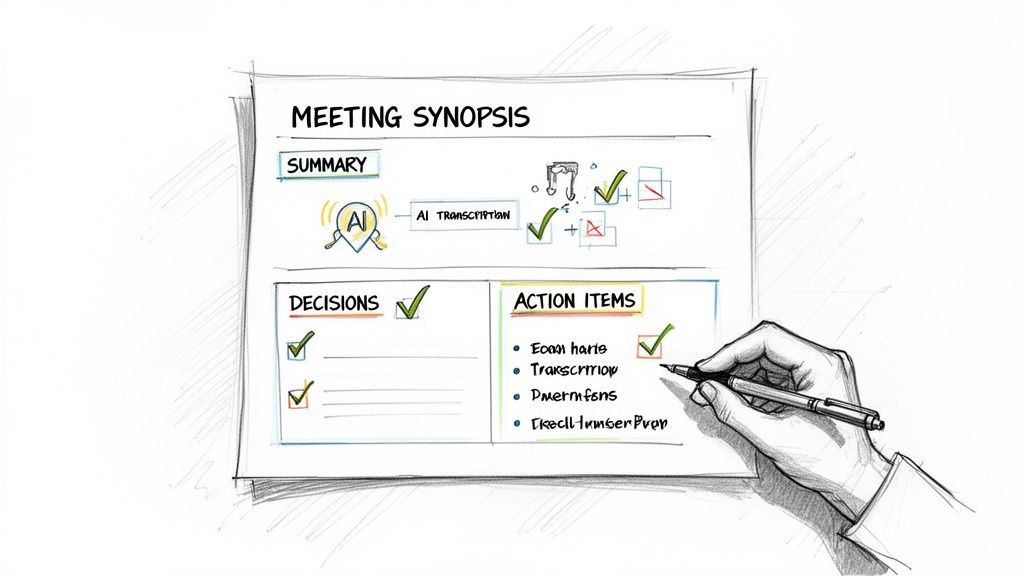
This is where AI tools like Whisper AI have become game-changers. They can generate incredibly accurate transcripts in minutes, complete with speaker labels and timestamps. This technology handles the heavy lifting, making it much easier to produce either a perfectly polished clean read or a detailed verbatim record.
What Is Translation? Conveying Nuanced Meaning
If transcription is about capturing what was said, translation is all about conveying its true meaning in another language. It's the craft of taking written content, say from English, and thoughtfully converting it into a target language, like Japanese. Based on my experience working on international projects, this is never a simple word-for-word exchange; it's a creative process that blends cultural fluency with linguistic precision.

A great translation preserves the original message's intent, tone, and emotional impact. Here’s the real crux of the translation vs. transcription debate: translation demands a deep understanding of two cultures, not just two vocabularies. A translator has to be a problem-solver, finding clever ways to handle idioms, slang, and technical terms that have no direct equivalent in the target language.
This work is essential for any business operating on a global scale. While transcription demand has surged, the language services market, which includes translation, is a specialized field. Valued at roughly USD 26.6 billion in 2022, it's expected to hit USD 65.5 billion by 2026, reflecting a steady, focused need for high-quality cross-cultural communication.
Literal Translation vs. Localization
When it comes to translation, you have two main approaches to choose from: literal translation and localization. The right choice depends entirely on your content and who you're trying to reach.
Literal Translation: This approach sticks as closely as possible to the source text's structure and wording. It's the right choice for technical manuals, legal contracts, or scientific papers where creative interpretation is a liability and absolute precision is key.
Localization: This goes much deeper. Localization adapts everything—text, images, cultural references, and even currencies or date formats—to make the content feel like it was created specifically for the local audience.
Localization isn't just about changing the language; it's about changing the experience. When a brand localizes its website, it doesn't just translate product descriptions; it adapts its marketing message to resonate with local values and customs.
Think about a filmmaker preparing subtitles for a global release. A literal translation might make the dialogue understandable, but localizing a joke or a cultural reference ensures it actually lands with viewers everywhere. This sophisticated linguistic work is increasingly powered by AI; you can learn more about the underlying technology in our guide on what natural language processing is.
A Detailed Comparison of Process, Skills, and Tools
To really understand the difference between transcription and translation, you have to look beyond the final document and examine the work itself. While both revolve around language, the skills, workflows, and tools are completely different. They are two distinct disciplines, each demanding a unique type of expertise.
From my experience, a transcriber’s world is auditory. Their most critical skill is exceptional listening comprehension. They have to untangle rapid dialogue, parse thick accents, separate overlapping speakers, and pull clear words from a muddy audio file. It’s a job that demands intense focus, a fast typing speed, and an obsessive attention to detail.
A translator, on the other hand, lives in a world of culture and context. Their foundation is bilingual and bicultural fluency. It's not enough to just know the words in two languages; a great translator understands the idioms, the humor, and the unspoken cultural assumptions behind them. Their work is interpretive and often requires deep research to find the perfect phrase for something that has no direct equivalent.
Contrasting Workflows and Core Challenges
This difference in focus leads to completely different daily routines. For a transcriber, the process is mostly linear: you listen, you type, you review. You work your way through the audio file from start to finish. The biggest challenges are usually technical.
The real challenge in transcription is staying true to the source audio. Success is measured by how well you overcome bad recording quality, background noise, or mumbled dialects to create a perfect written record.
Translation is a much more cyclical and creative process. A translator might read the entire source text first, then draft a translation, circle back to research a tricky phrase, and refine sentences over and over. They’re aiming to preserve the original tone, style, and intent. Their struggle is with meaning itself.
For a translator, the main hurdle is navigating ambiguity. They wrestle with cultural nuances, untranslatable idioms, and the subtle intent behind the words to ensure the new text hits the target audience with the same impact as the original.
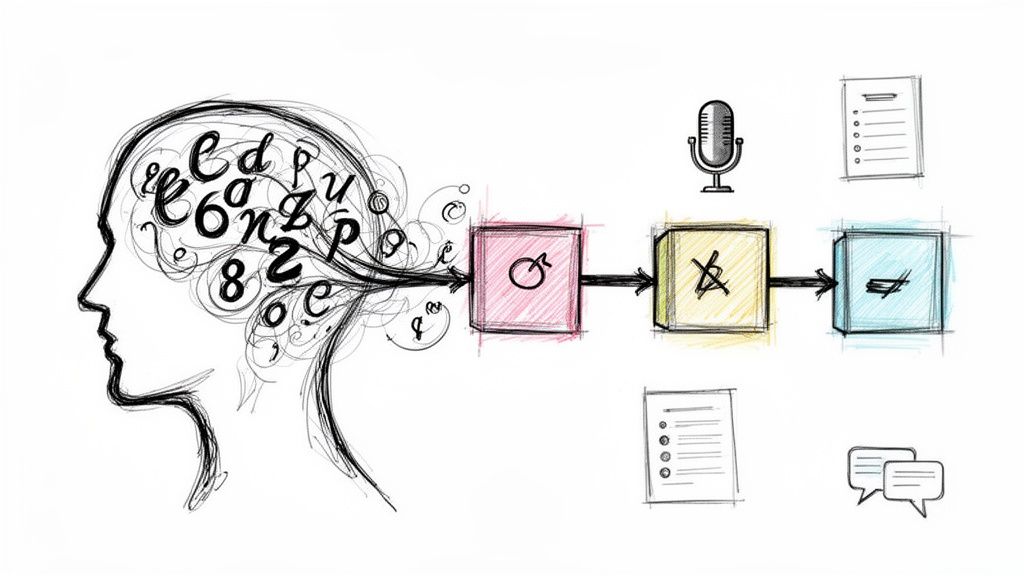
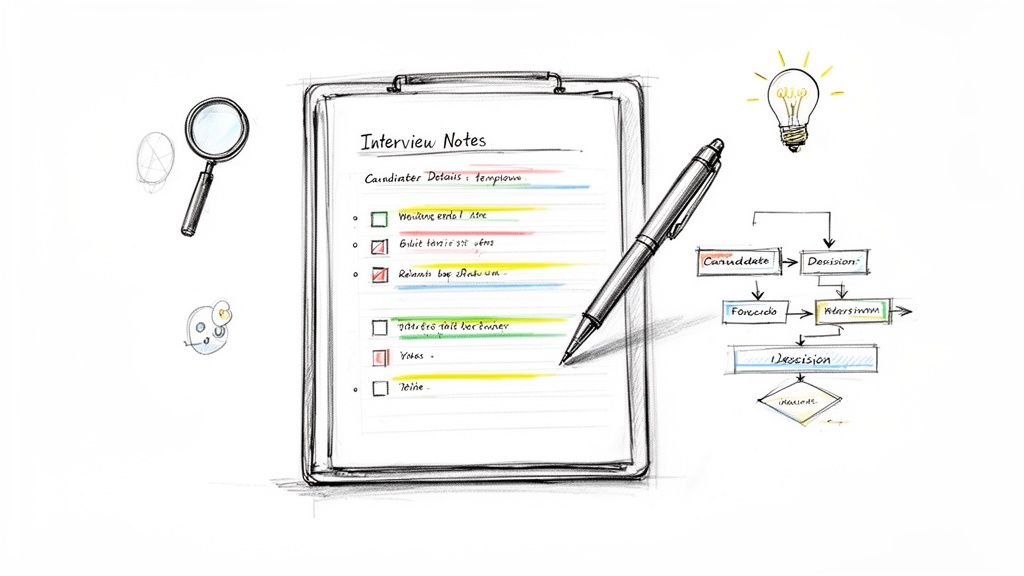
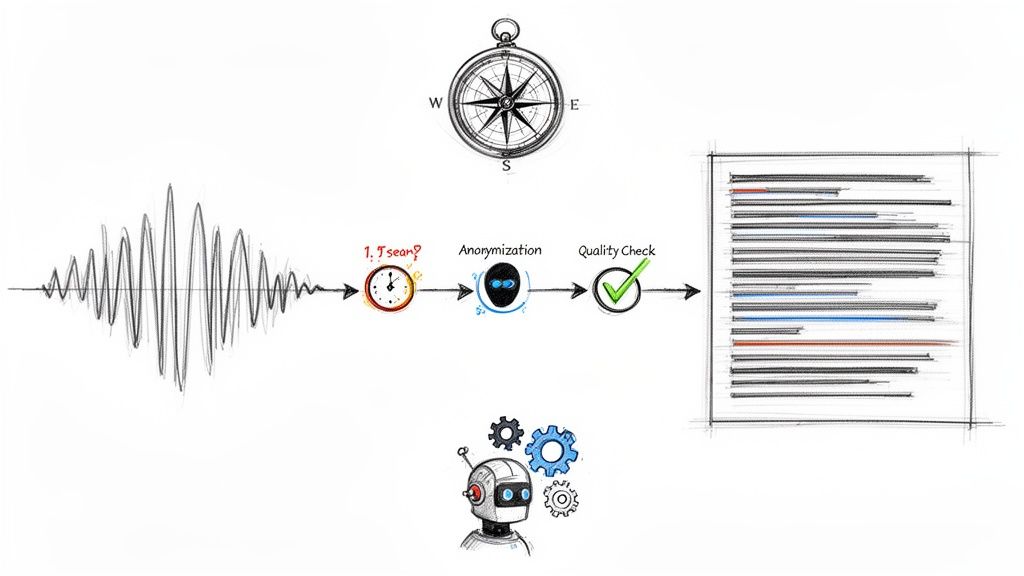
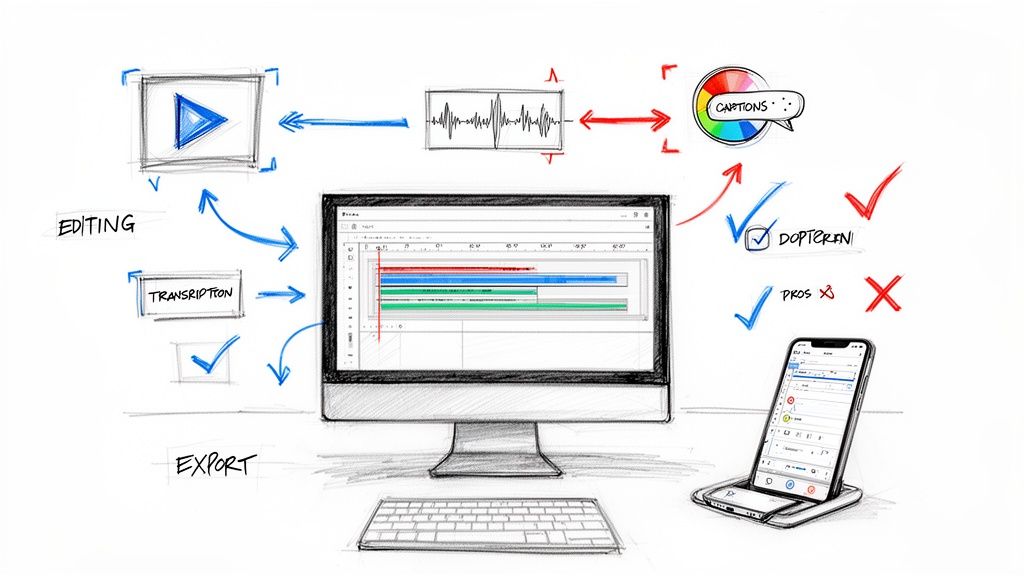
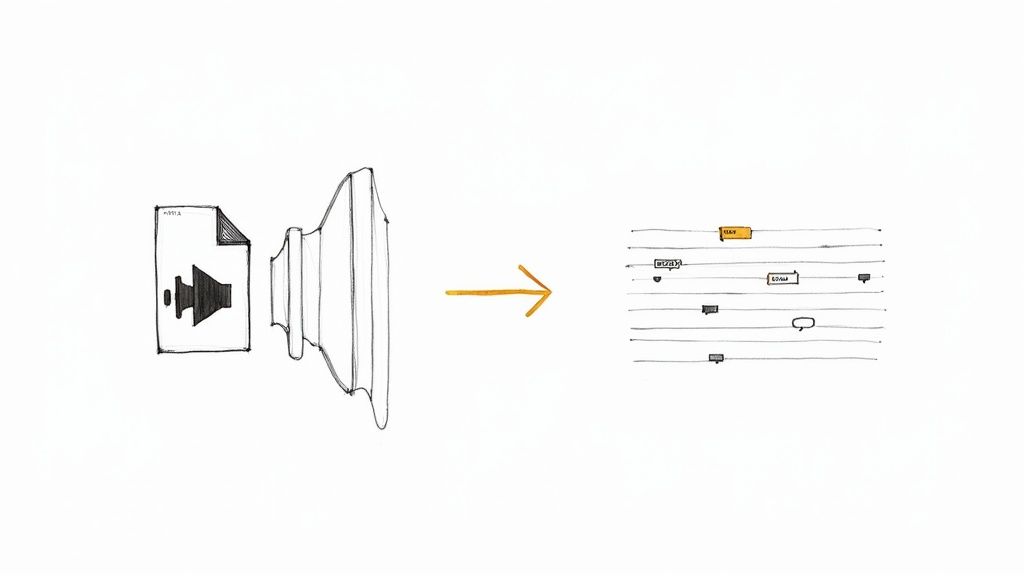
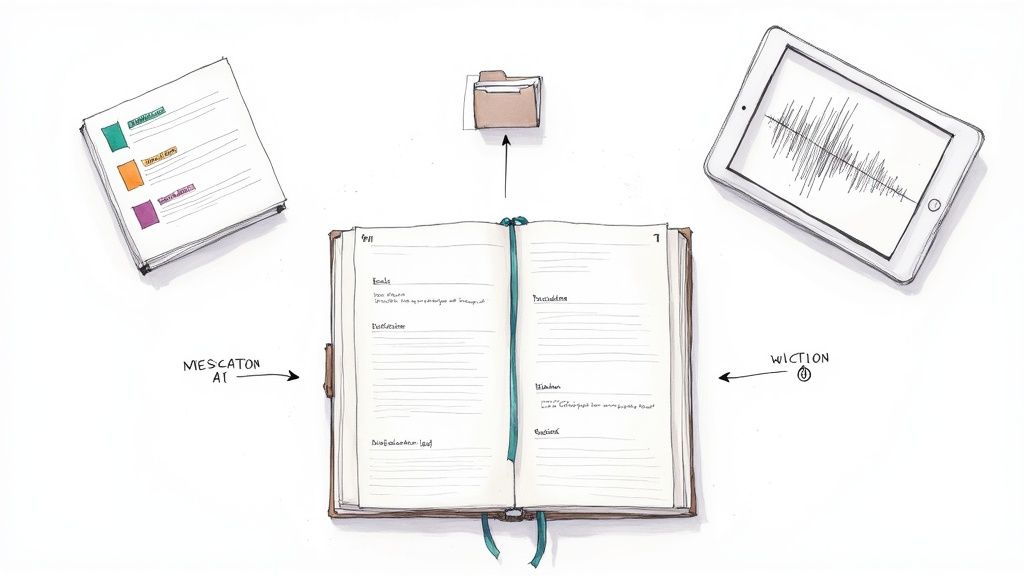
This flowchart breaks down the decision-making process, helping you figure out where to start based on your end goal.
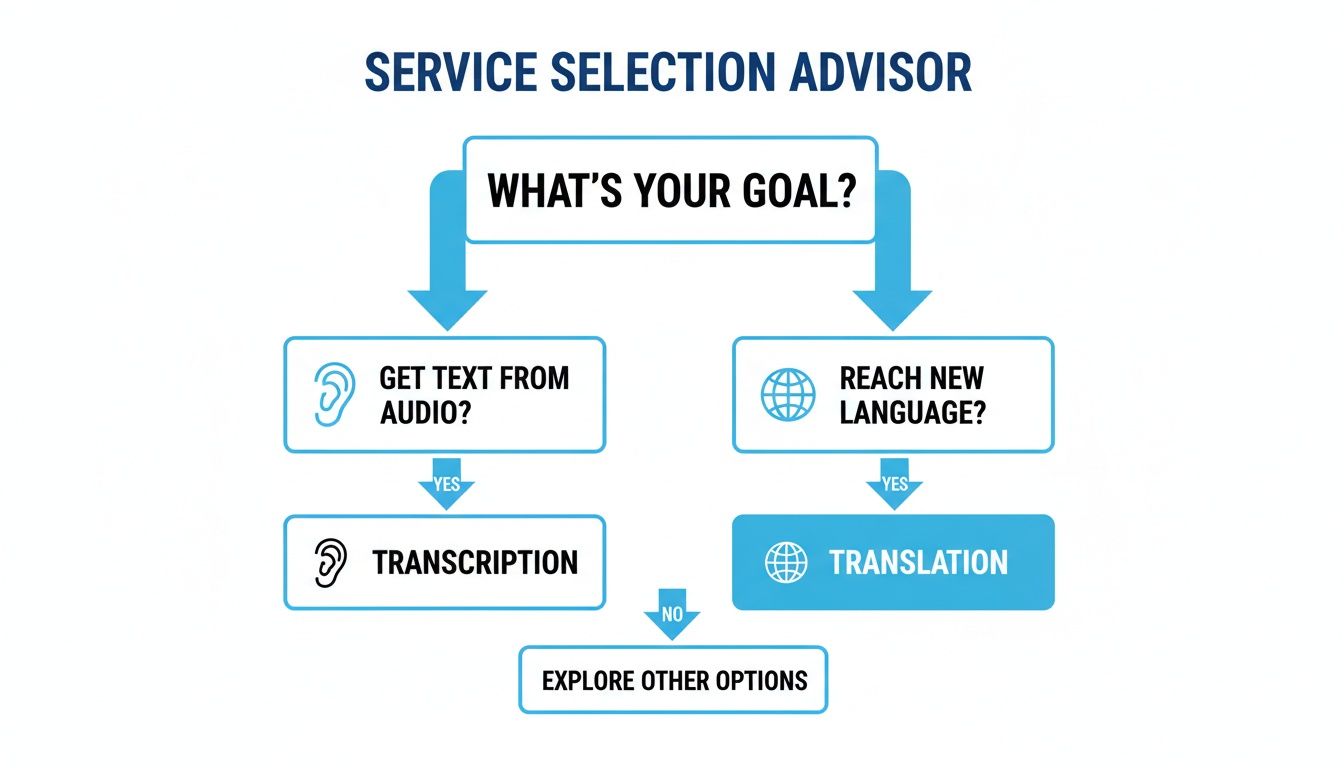
As the decision tree shows, it’s pretty straightforward. If you have an audio or video file and you need it in text format, you start with transcription. If you need that message to reach a new audience in a different language, translation is the next step.
The Toolsets That Power Each Process
The tools used in each field also highlight the differences. Transcribers use software and hardware that make listening easier and typing faster.
Common Transcription Tools:
- AI Transcription Platforms: Services like Whisper AI are now the industry standard, using powerful speech recognition to create highly accurate transcripts with speaker labels and timestamps in just minutes.
- Foot Pedals: This is a classic tool for a reason. Professionals use them to control audio playback (play, pause, rewind) with their feet, keeping their hands on the keyboard for a seamless workflow.
- Text Editors: Many professionals use specialized editors with shortcuts for adding timestamps and speaker IDs on the fly.
In the age of AI, transcription technology has made staggering leaps. Top automated platforms now reach up to 99% accuracy and can return a file in minutes that used to take a human transcriber hours. This progress is driving huge market growth, as reflected in these automated transcription statistics on Sonix.ai.
Translation tools are all about maintaining consistency and managing complex terminology across large projects.
Common Translation Tools:
- CAT (Computer-Assisted Translation) Tools: Don't confuse these with pure machine translation. CAT tools are sophisticated workbenches for human translators. They use translation memories (TMs) to store and reuse previously translated phrases and termbases (TBs) to act as a project-specific dictionary.
- Glossaries and Style Guides: These are the translator's bible, ensuring the right brand voice, tone, and specific terminology are used consistently every time.
- Machine Translation (MT) Engines: These are often used as a "first draft" tool. A human translator then edits and refines the machine's output in a process called post-editing machine translation (PEMT).
Choosing the Right Service for Your Content Goal
When you're looking at your options, the whole translation vs. transcription decision can seem complicated. It’s not. The real question isn't which service to pick, but what you're trying to achieve with your content. Your goal is the only thing that matters.
If you have a video or podcast and want to make it searchable, accessible, or just easier to repurpose into new content, you need transcription. In my experience, this is almost always the first step in any modern content strategy—it turns your spoken words into a text-based asset you can actually work with.
Now, if you want to take that content and introduce it to an audience that speaks a completely different language, you're talking about translation. But here's what many people miss: great translation almost always begins with a rock-solid transcript.
When to Choose Transcription for Immediate Impact
Think of transcription as the key that unlocks the value trapped inside your audio and video files. It’s your go-to for getting more mileage out of the content you’ve already created for your current audience.
You absolutely need transcription if you want to:
- Show Up in Search Results: Google can't listen to your podcast or watch your video, but it can crawl text. A transcript makes every spoken word on your recording indexable, giving you a serious SEO advantage.
- Make Your Content Accessible: For viewers who are deaf or hard of hearing, accurate closed captions (CC) are essential. Generating those captions from a clean transcript is the best way to ensure they are truly accurate.
- Create More Content, Faster: A transcript is a content goldmine. I've seen clients turn a single one-hour podcast episode into a blog post, a dozen social media quotes, a detailed newsletter, and a full set of show notes—all from one transcript.
Scenario: A YouTuber wants to grow their channel. They start by transcribing their videos to generate perfect English captions. This not only makes their content accessible but also helps it rank better on YouTube and Google. From that same transcript, they pull out the best one-liners to create short, punchy clips for TikTok and Reels.
When to Choose Translation for Global Reach
Translation, on the other hand, is your ticket to new markets. You use it when you have a message that’s already working and you want to see if it connects with a new group of people in their native language.
Translation is the right move when your objective is to:
- Expand into New Countries: A software company looking to launch in Germany will need its website, product guides, and marketing campaigns translated to build trust and make sales.
- Connect with a Multilingual Community: A filmmaker can add Spanish and French subtitles to their documentary, opening it up to millions of potential viewers who otherwise couldn't watch it.
- Publish Work for a Global Audience: A scientist might first transcribe interviews for their research records, but they’ll need to translate their final paper to publish it in an international journal.
Industry data paints a clear picture of this dynamic. The global transcription market was already worth USD 21.6 billion in 2022, driven by the massive need for media companies to repurpose their content at scale. Translation's ecosystem is vast but geared toward more specialized, cross-language communication. You can see more on how professionals use these tools in these transcription industry statistics on wifitalents.com.
The Combined Workflow for Maximum Reach
Here’s the thing: the smartest content strategies don’t treat this as an "either/or" choice. They see it as a "this, then that" process. Transcription builds the foundation, and translation builds the bridge to a new audience.
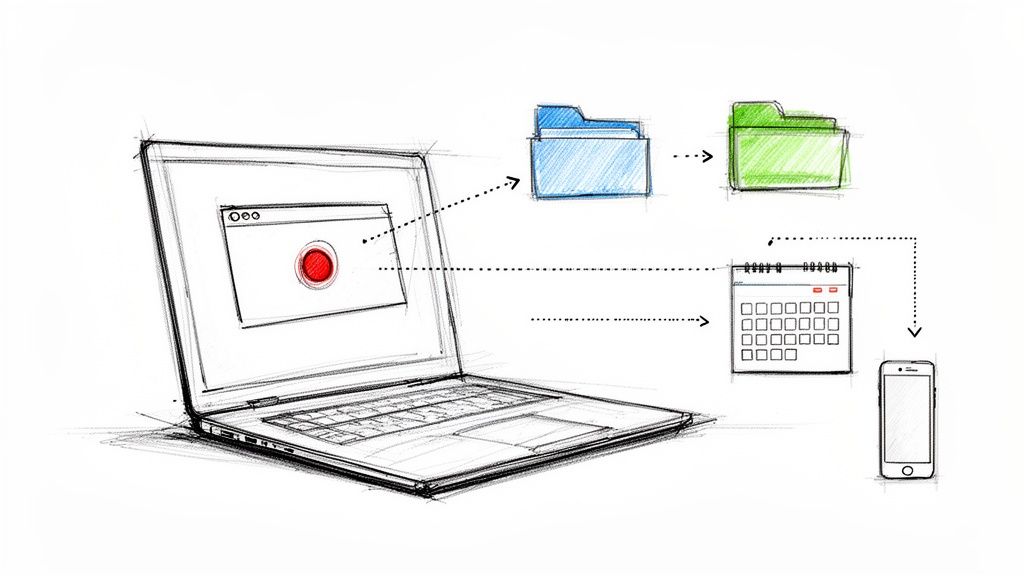
The professional workflow almost always looks like this:
- Start with a Flawless Transcription: First, get an accurate, clean transcript from your original audio or video file. This text is your "source of truth."
- Translate the Verified Transcript: Hand that clean source text over to your translator or translation service. This step is crucial because it eliminates any guesswork. They're working from a perfect script.
- Adapt and Deploy: The translated text can now become anything you need—foreign-language subtitles, a script for a dubbed voice-over, or a fully localized blog post.
Following this sequence is the best practice to ensure your message is not only accurate but also lands with the right cultural tone, giving your content a real shot at succeeding anywhere in the world.
How Whisper AI Accelerates Your Content Workflow
In content creation, speed is a competitive advantage. Knowing whether you need translation vs transcription clarifies your goal, but the tools you use dictate how fast you get there. For anyone juggling multiple projects, I know from experience that manual transcription is a huge bottleneck. It's slow, and accuracy can be inconsistent, especially with real-world audio challenges.
This is where AI-powered platforms like Whisper AI have made a massive difference. By automating the most time-intensive part of the process, it turns a job that used to take hours into a quick step in your workflow. The technology is built to handle the messy reality creators face, from background noise in a coffee shop interview to a guest with a thick accent.
Overcoming Common Transcription Hurdles
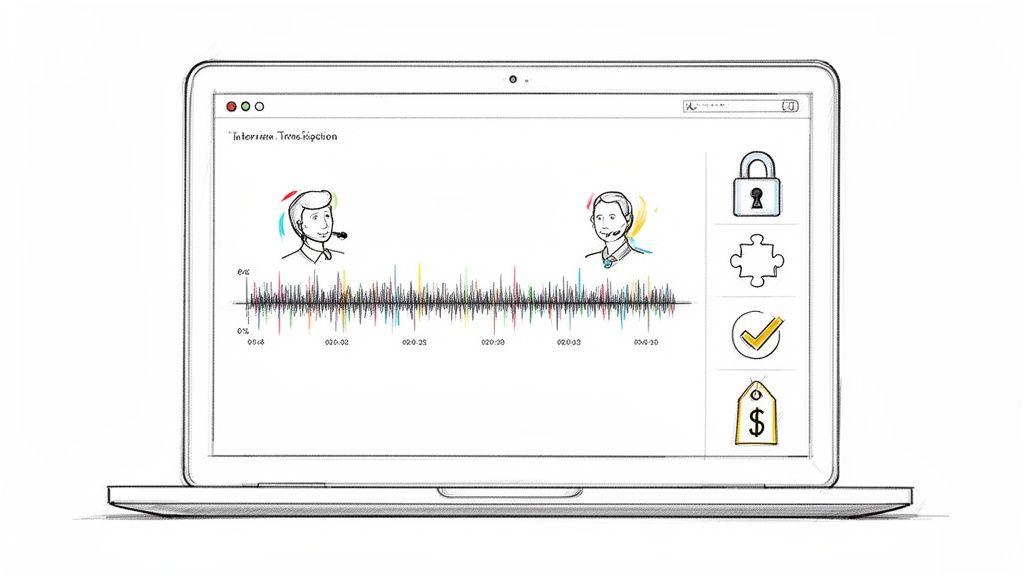
Whisper AI is much more than a simple speech-to-text tool; it’s designed for the kind of complex audio that would normally require a ton of manual cleanup. Its features solve the exact problems that used to take hours to fix by hand.
Here's how it helps:
- Multilingual Mastery: With support for over 92 languages, you can process content from around the world without needing separate services. Whether you’re transcribing an English podcast or a Spanish documentary, the process is the same. You can learn more in our deep dive on how Whisper AI works.
- Automatic Speaker Identification: For interviews, panel discussions, or team meetings, the platform automatically figures out who is speaking and labels them. This alone saves hours of tedious work, making it easy to pull quotes or analyze the conversation.
- Precision Timestamps: Every single word is time-coded. This is essential for creating accurate video captions or for jumping to a specific moment in your audio to grab a clip.
Think of Whisper AI as the foundation for your entire content strategy. It gives you the clean, structured text you need for everything else—from generating subtitles to repurposing a video script for translation.
From Transcription to Content Repurposing
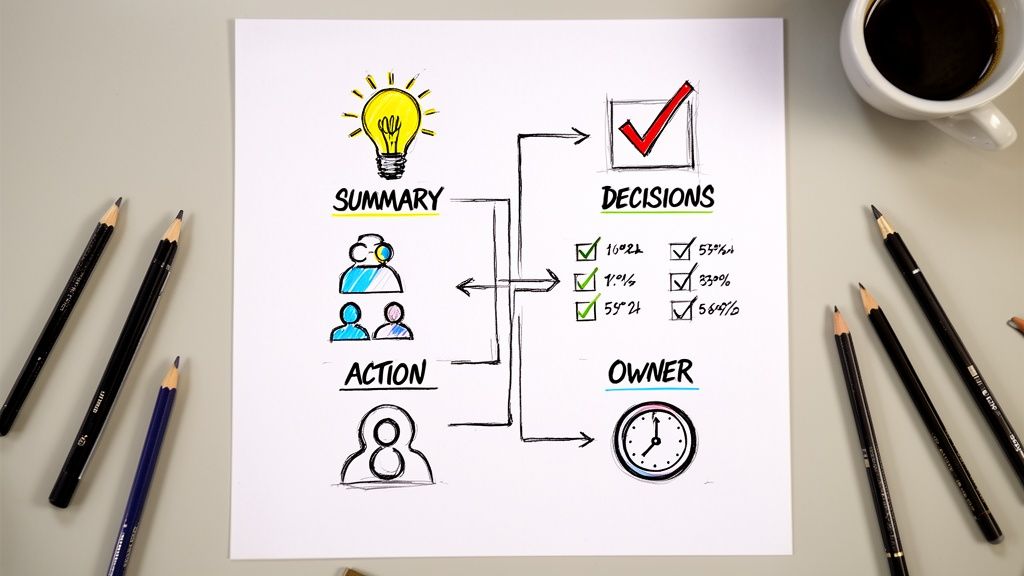
Beyond just getting the words down, Whisper AI includes tools that speed up the whole content creation cycle. For busy marketers and creators, its ability to generate a quick summary or bullet-point highlights from a long recording is a lifesaver. You can take the key points from an hour-long webinar and have them ready for social media posts, a newsletter, or a blog outline in minutes.
And, importantly, privacy is handled correctly. If you're a journalist working with sensitive interviews or a company discussing internal plans, your files are processed securely and are never stored or seen by anyone. This blend of speed, accuracy, and security makes it a dependable part of any workflow that needs to scale. For a broader look at how AI is influencing language-based fields, it's worth exploring resources on AI in language learning.
Frequently Asked Questions
After breaking down the differences between transcription and translation, a few practical questions almost always come up. Here are direct answers to the most common ones I hear from creators and teams.
Can I Use Machine Translation on My Transcript for Subtitles?
Technically, you can, but I would strongly advise against it for any public-facing content. Automated translation tools are great for getting the general gist of a text for your own internal use, but they are not built for the nuance and accuracy your brand deserves.
When you use raw machine translation for subtitles, you risk awkward, confusing, or even offensive errors. These tools often miss cultural nuances, idioms, and specific phrasing that make your content unique. This can damage your brand's credibility. It’s better to use it for quick internal drafts, not the final version your audience will see.
Which Service Is More Expensive: Transcription or Translation?
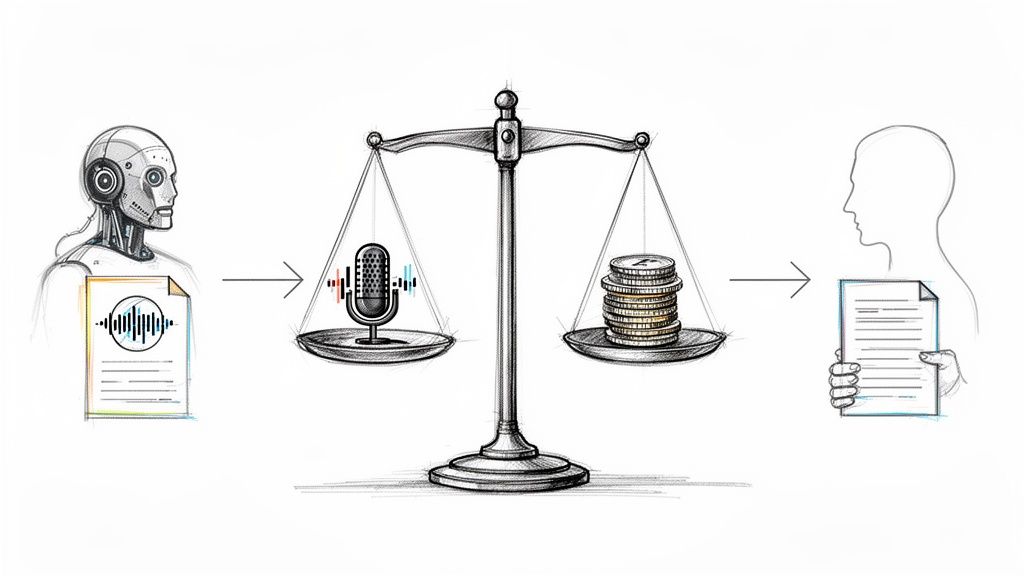
Translation almost always costs more, though they use different pricing models. Transcription is typically priced by the audio minute, while professional translation is priced by the word.
The price difference comes down to the skill involved. Translation requires deep linguistic expertise, cultural fluency, and often, specialized subject matter knowledge. That expertise naturally comes at a higher price. That said, AI is making both services much more affordable and accessible than they were just a few years ago.
Do I Have to Transcribe a Video Before Translating It?
Yes, you absolutely should. Creating a clean, accurate transcript is the first and most critical step in any professional translation workflow. Trying to skip it is a recipe for errors and inefficiency.
Giving a translator a verified transcript provides them with an accurate, time-coded source document to work from. This single step ensures that nothing gets lost in translation from the very beginning. From my experience, it leads to a faster, more accurate, and higher-quality final product, making sure your message is clear and powerful in any language.
Ready to turn your audio and video into accurate, ready-to-use text? Whisper AI provides fast, precise transcription with automatic speaker detection and timestamps, making it the perfect starting point for your content workflow. Get your first transcript in minutes at https://whisperbot.ai.